




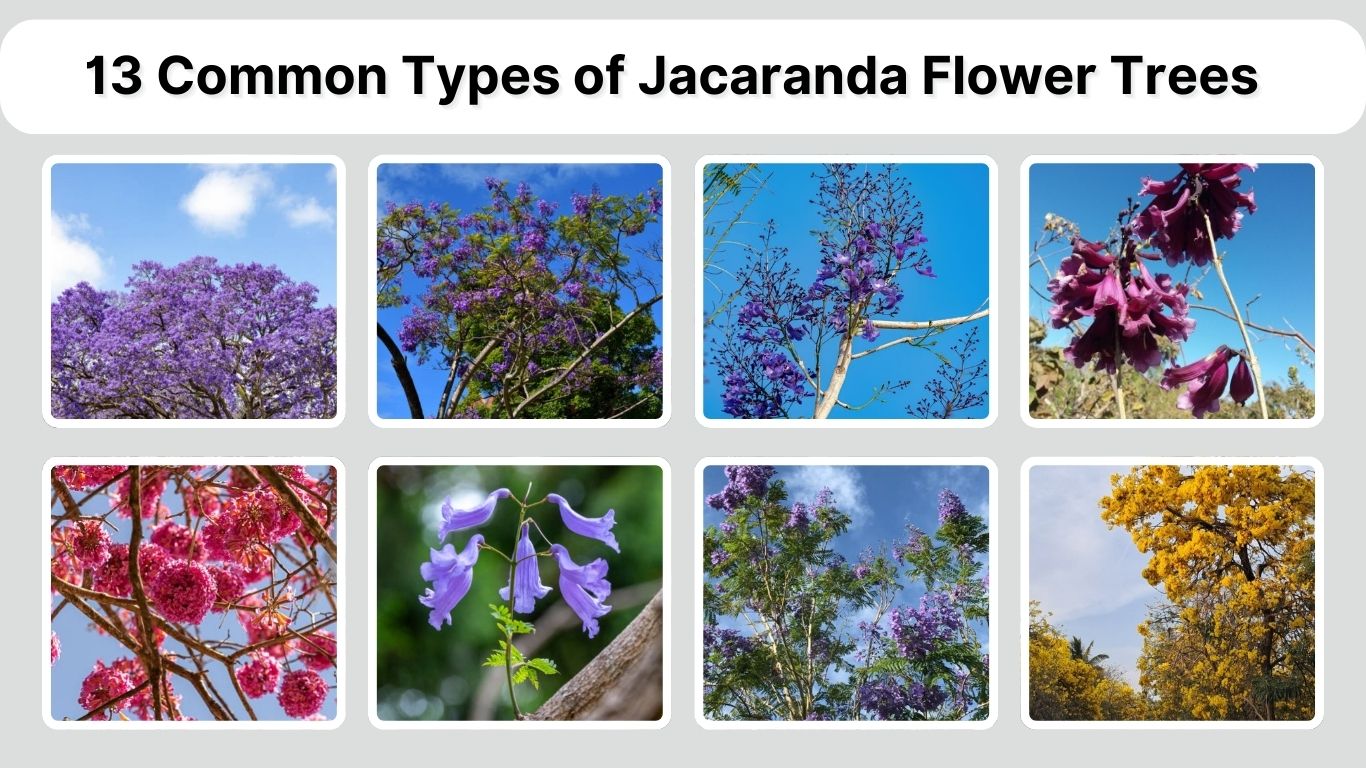
Jacaranda flower trees are celebrated worldwide for their stunning blue-purple blossoms and graceful, fern-like foliage. Native mainly to Central and South America, these trees transform streets, parks, and gardens into colorful landscapes during their blooming season. While Jacaranda mimosifolia is the most famous, many other species display unique growth habits, flower shades, and ecological roles. This guide introduces 13 common types of Jacaranda flower trees, highlighting the diversity found within this beautiful and ornamental genus.
1. Jacaranda mimosifolia (Blue Jacaranda)

Jacaranda mimosifolia, commonly known as the Blue Jacaranda, is the most famous and widely cultivated Jacaranda species in the world. It is best known for its breathtaking displays of violet-blue, trumpet-shaped flowers that often blanket the tree and the ground beneath it. Native to South America, this tree is now planted across tropical and subtropical regions as a premier ornamental flowering tree.
Identification
- Medium to large deciduous or semi-evergreen tree
- Typically grows 10 to 20 meters tall
- Smooth gray to light brown bark
- Finely divided, fern-like bipinnate leaves
- Lavender to blue-violet trumpet-shaped flowers
- Flowers appear in large, upright terminal clusters
- Blooming mainly in spring to early summer
Flower Characteristics
The flowers are tubular and bell-shaped with five soft lobes, usually forming large pyramidal clusters. Their blue to violet tones create one of the most iconic flowering displays in ornamental trees. The blooms are lightly fragrant and highly attractive to bees and other pollinators.
Habitat and Growth
Jacaranda mimosifolia grows best in warm climates with full sun exposure. It prefers well-drained, sandy or loamy soils and moderate watering. Once established, the tree shows good drought tolerance and adapts well to streets, parks, and large garden spaces.
Uses and Importance
This species is primarily planted as an ornamental and shade tree. It is widely used in urban landscaping, avenue planting, and park design. Ecologically, it provides nectar for pollinators and seasonal shelter for birds and beneficial insects.
2. Jacaranda cuspidifolia (Cuspid Jacaranda)

Jacaranda cuspidifolia is a lesser-known but beautiful Jacaranda species admired for its soft lavender-blue flowers and elegant branching habit. Native to parts of South America, this tree blooms seasonally, producing eye-catching floral clusters that resemble the classic jacaranda display, though usually on a slightly smaller scale.
Identification
- Medium-sized deciduous flowering tree
- Usually grows 8 to 15 meters tall
- Gray to brown bark, lightly fissured with age
- Finely divided bipinnate leaves
- Pale blue to lavender trumpet-shaped flowers
- Flowers appear in loose terminal clusters
- Flowering season mainly in spring
Flower Characteristics
The flowers are tubular, soft blue to lavender, and form open clusters at the ends of branches. Though not as dense as Jacaranda mimosifolia, the blooms are delicate and highly ornamental, adding a gentle splash of color to landscapes.
Habitat and Growth
Jacaranda cuspidifolia naturally grows in subtropical forests and open woodland areas. It prefers full sun, warm temperatures, and well-drained soil. Once established, it tolerates light drought and performs well in parks and large garden settings.
Uses and Importance
This species is mainly grown as an ornamental tree in botanical gardens and specialty landscapes. It contributes to pollinator support and adds species diversity to flowering tree collections.
3. Jacaranda copaia (White Jacaranda)

Jacaranda copaia, often called the White Jacaranda, is a tall tropical tree distinguished by its pale, creamy-white to light lavender flowers and impressive forest form. Native to Central and South America, this species is more commonly found in natural forests than in ornamental plantings, but it is increasingly valued for its graceful appearance and ecological importance.
Identification
- Large deciduous to semi-evergreen tree
- Commonly grows 20 to 30 meters tall
- Straight trunk with gray-brown bark
- Large bipinnate leaves with many small leaflets
- Pale white to light lavender trumpet-shaped flowers
- Flowers arranged in broad terminal clusters
- Flowering usually occurs during the dry season
Flower Characteristics
The flowers are tubular and lighter in color than most jacarandas, ranging from creamy white to very pale lavender. They form wide clusters that give the tree a soft, cloud-like appearance when in bloom.
Habitat and Growth
Jacaranda copaia naturally grows in tropical rainforests, riverbanks, and lowland forest regions. It prefers full sun to partial shade, high humidity, and fertile, well-drained soils. The tree grows quickly under warm, moist conditions.
Uses and Importance
This species is important in tropical ecosystems, providing habitat and food for insects and birds. It is sometimes planted as a shade or restoration tree and is valued for its fast growth and forest canopy contribution.
4. Jacaranda obtusifolia (Bluntleaf Jacaranda)
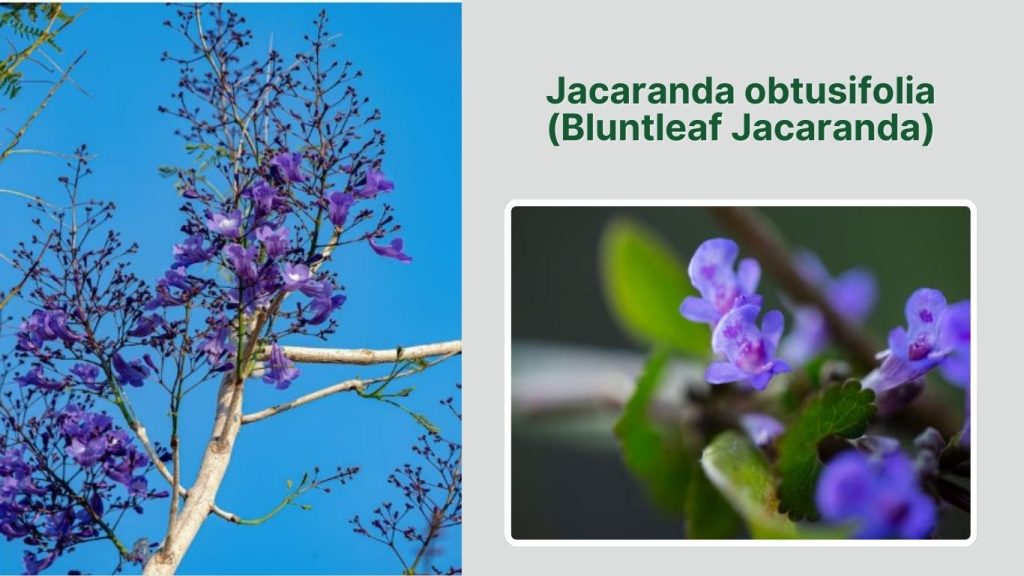
Jacaranda obtusifolia is a tropical Jacaranda species known for its broader leaflets and soft lavender to pale blue flowers. Native to Central and northern South America, this tree produces seasonal floral displays and is more often found in natural forests, though it is occasionally cultivated in large landscapes.
Identification
- Medium to large deciduous flowering tree
- Typically grows 12 to 25 meters tall
- Gray to brown bark, becoming lightly fissured with age
- Bipinnate leaves with broader, blunt-tipped leaflets
- Pale blue to lavender trumpet-shaped flowers
- Flowers borne in loose terminal clusters
- Flowering season generally during the dry period
Flower Characteristics
The flowers are tubular and softly colored, usually pale lavender or light blue, forming airy clusters at the ends of branches. Their subtle tones create a gentle ornamental effect compared to the deeper blues of common jacarandas.
Habitat and Growth
Jacaranda obtusifolia naturally grows in tropical lowland forests and woodland edges. It prefers warm temperatures, full sun, and well-drained fertile soils. The tree shows moderate drought tolerance once established.
Uses and Importance
This species plays a role in native forest ecosystems by supporting insects and birds. It is occasionally used as a shade and ornamental tree in spacious gardens and botanical collections.
5. Jacaranda ulei (Ule’s Jacaranda)
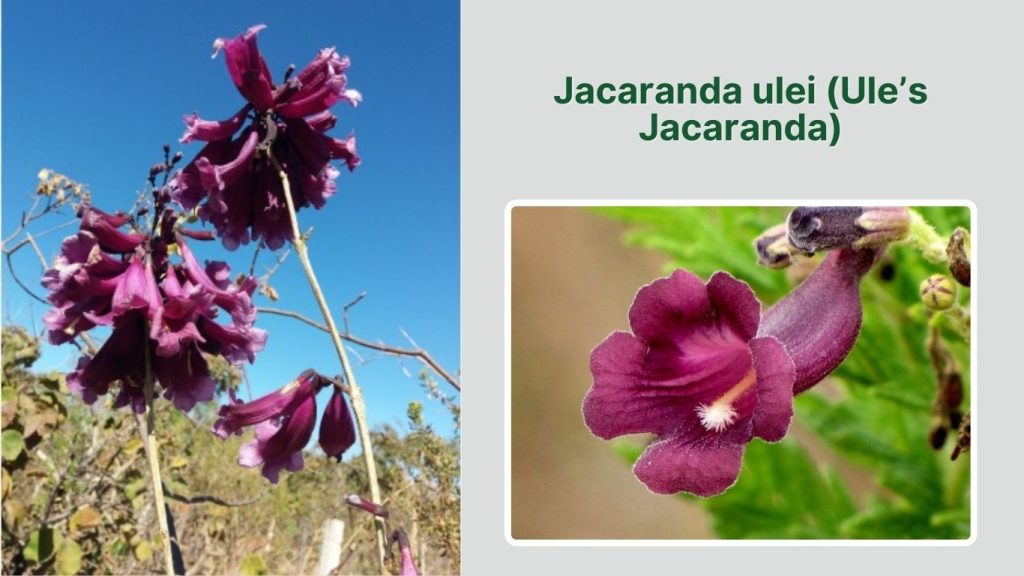
Jacaranda ulei is a lesser-known Jacaranda species admired for its soft purple to lavender-blue flowers and graceful growth habit. Native to parts of South America, this tree is mainly found in natural habitats but is sometimes cultivated in botanical gardens and specialty collections.
Identification
- Medium-sized deciduous flowering tree
- Usually grows 8 to 18 meters tall
- Gray-brown bark, lightly textured
- Finely divided bipinnate leaves
- Lavender to soft purple trumpet-shaped flowers
- Flowers borne in loose terminal clusters
- Blooming mainly during the dry season
Flower Characteristics
The flowers are tubular and gently colored, ranging from pale lavender to soft purple. They form light, open clusters that create a delicate floral display and attract bees and other pollinators.
Habitat and Growth
Jacaranda ulei naturally grows in tropical forests and woodland areas. It prefers full sun, warm climates, and well-drained soils. The tree adapts well to seasonal rainfall patterns and moderate dry periods.
Uses and Importance
This species is valued mainly for ornamental and conservation plantings. Ecologically, it supports pollinators and contributes to the biodiversity of native forest ecosystems.
6. Jacaranda decurrens (Cerrado Jacaranda)
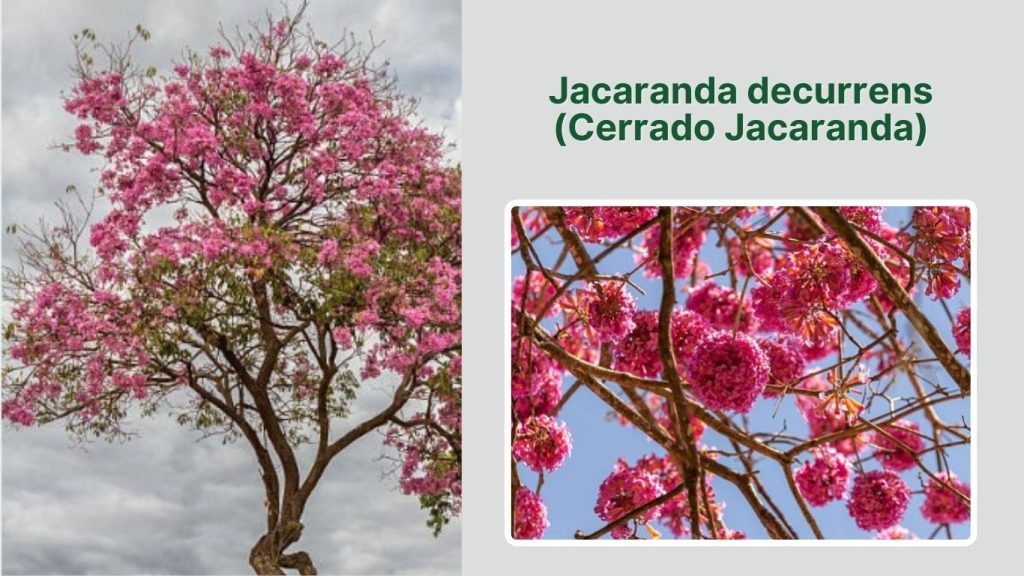
Jacaranda decurrens is a distinctive Jacaranda species native to Brazil, especially the cerrado (savanna) regions. Unlike the tall, tree-form jacarandas, this species often grows as a small tree or large shrub and is admired for its purple-blue flowers and medicinal importance in traditional practices.
Identification
- Small tree or large shrub, often multi-stemmed
- Usually grows 3 to 8 meters tall
- Rough gray to brown bark
- Bipinnate leaves with narrow leaflets
- Purple to violet trumpet-shaped flowers
- Flowers appear in terminal clusters
- Flowering commonly in the dry season
Flower Characteristics
The flowers are tubular, rich purple to bluish-violet, and produced in showy clusters above the foliage. Their bright coloration makes this species highly noticeable despite its smaller size.
Habitat and Growth
Jacaranda decurrens naturally grows in open savannas, scrublands, and rocky soils. It prefers full sun, well-drained ground, and is highly adapted to drought and seasonal fire conditions.
Uses and Importance
This species is widely known in traditional medicine in Brazil and is sometimes cultivated in botanical and native plant gardens. Ecologically, it provides nectar for pollinators and supports savanna biodiversity.
7. Jacaranda caroba (Caroba Jacaranda)
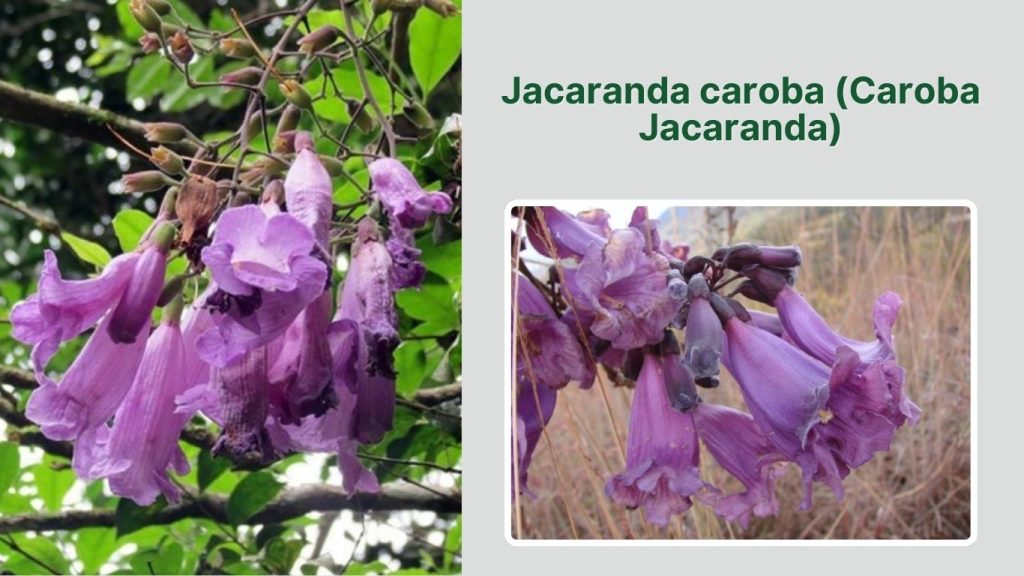
Jacaranda caroba is a South American Jacaranda species known for its purple to bluish flowers and its historical use in traditional herbal practices. Native mainly to Brazil, this plant can grow as a small tree or large shrub and produces attractive floral displays during its blooming season.
Identification
- Small to medium-sized tree or large shrub
- Common height ranges from 4 to 10 meters
- Gray-brown bark, slightly rough
- Bipinnate leaves with finely divided leaflets
- Purple to bluish trumpet-shaped flowers
- Flowers arranged in terminal clusters
- Flowering usually occurs in the dry season
Flower Characteristics
The flowers are tubular and rich purple to blue, forming loose but showy clusters. Their bright color attracts bees and other pollinators, making the plant valuable for supporting local insect life.
Habitat and Growth
Jacaranda caroba naturally grows in savannas, open woodlands, and forest margins. It prefers full sun, well-drained soils, and warm climates, and it tolerates seasonal drought well.
Uses and Importance
This species is valued for traditional medicinal use and native landscaping. It is sometimes planted in botanical gardens and ecological restoration projects to support biodiversity.
8. Jacaranda brasiliana (Brazilian Jacaranda)
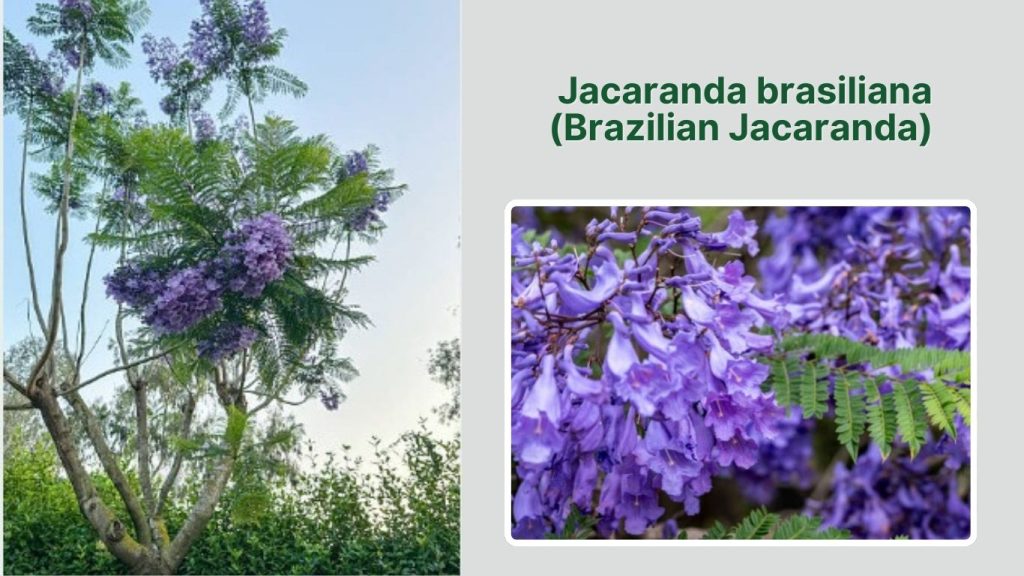
Jacaranda brasiliana is a native Brazilian Jacaranda species admired for its soft lavender to bluish-purple flowers and elegant, upright growth form. It is less commonly cultivated than the famous blue jacaranda but is valued in botanical collections and native plant landscapes.
Identification
- Medium-sized deciduous flowering tree
- Typically grows 8 to 18 meters tall
- Gray to light brown bark, lightly fissured
- Bipinnate leaves with delicate, fern-like leaflets
- Lavender to bluish-purple trumpet-shaped flowers
- Flowers borne in terminal clusters
- Blooming mainly in the dry to early rainy season
Flower Characteristics
The flowers are tubular and softly colored, usually lavender to bluish-purple, forming attractive clusters that brighten the canopy. Their nectar attracts bees, butterflies, and other pollinators.
Habitat and Growth
Jacaranda brasiliana naturally grows in tropical forests and open woodland regions. It prefers full sun, warm temperatures, and fertile, well-drained soils. The tree is moderately drought-tolerant once established.
Uses and Importance
This species is mainly planted in botanical gardens and native restoration projects. It supports pollinators and contributes to the biodiversity of South American forest ecosystems.
9. Jacaranda puberula (Downy Jacaranda)
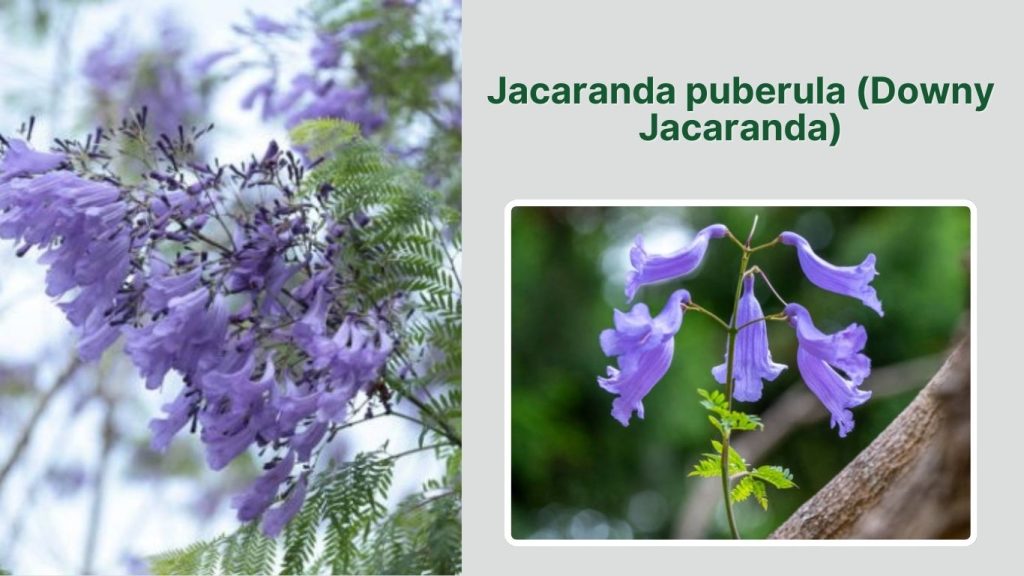
Jacaranda puberula, known as the Downy Jacaranda, is recognized for the fine hairs on its young leaves and flower parts, as well as its soft purple to lavender blooms. Native to South America, this species produces attractive seasonal flowering displays and is valued mainly for ecological and ornamental purposes.
Identification
- Medium-sized deciduous flowering tree
- Usually grows 10 to 20 meters tall
- Gray-brown bark, lightly fissured
- Bipinnate leaves with fine hairs on young growth
- Lavender to soft purple trumpet-shaped flowers
- Flowers borne in terminal clusters
- Flowering mainly in the dry season
Flower Characteristics
The flowers are tubular and gently colored, ranging from pale lavender to soft purple. Their slightly fuzzy texture and subtle hues give the tree a delicate appearance when in bloom.
Habitat and Growth
Jacaranda puberula naturally grows in tropical and subtropical forests, especially along forest edges. It prefers full sun to light shade, warm climates, and well-drained soils, and tolerates seasonal dryness.
Uses and Importance
This species supports native pollinators and contributes to forest biodiversity. It is occasionally planted in botanical gardens and restoration projects rather than general urban landscaping.
10. Jacaranda micrantha (Small-flowered Jacaranda)
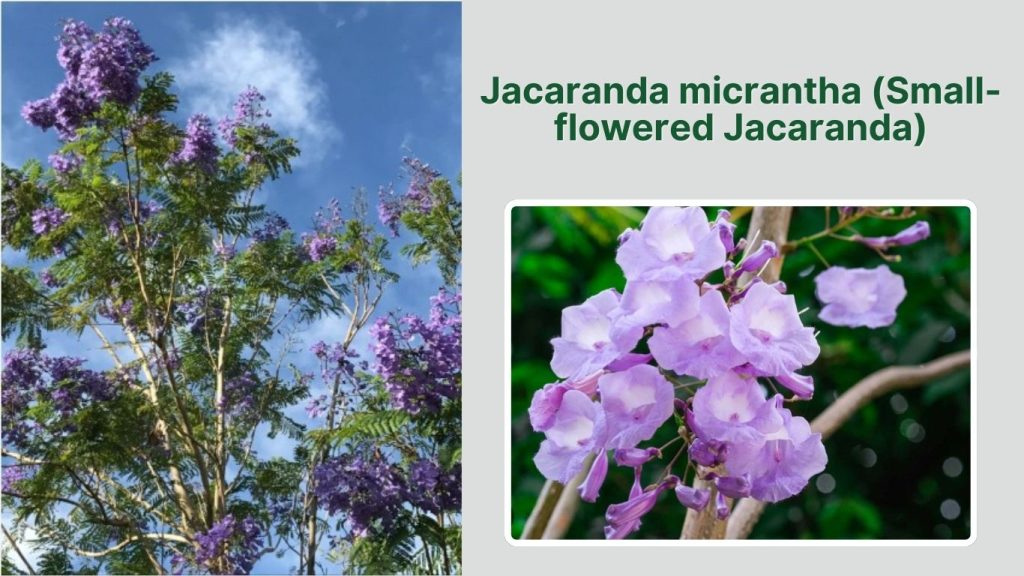
Jacaranda micrantha is a South American Jacaranda species known for its comparatively smaller flowers and graceful, upright form. Though its blossoms are not as large as those of the common blue jacaranda, they still create an attractive lavender-blue display during the flowering season.
Identification
- Medium-sized deciduous flowering tree
- Typically grows 10 to 20 meters tall
- Gray to brown bark, lightly fissured
- Bipinnate leaves with fine, feathery leaflets
- Small, lavender to bluish trumpet-shaped flowers
- Flowers arranged in loose terminal clusters
- Blooming usually occurs in the dry season
Flower Characteristics
The flowers are tubular and more delicate in size, usually pale lavender to soft blue. They form light clusters that give the tree a refined, airy look compared to more densely flowering jacaranda species.
Habitat and Growth
Jacaranda micrantha naturally grows in tropical and subtropical forests. It prefers warm temperatures, full sun, and fertile, well-drained soils. The tree is moderately drought-tolerant once established.
Uses and Importance
This species is mainly of ecological and ornamental interest in native and botanical settings. It supports pollinators and adds diversity to flowering tree collections.
11. Jacaranda jasminoides (Jasmine Jacaranda)
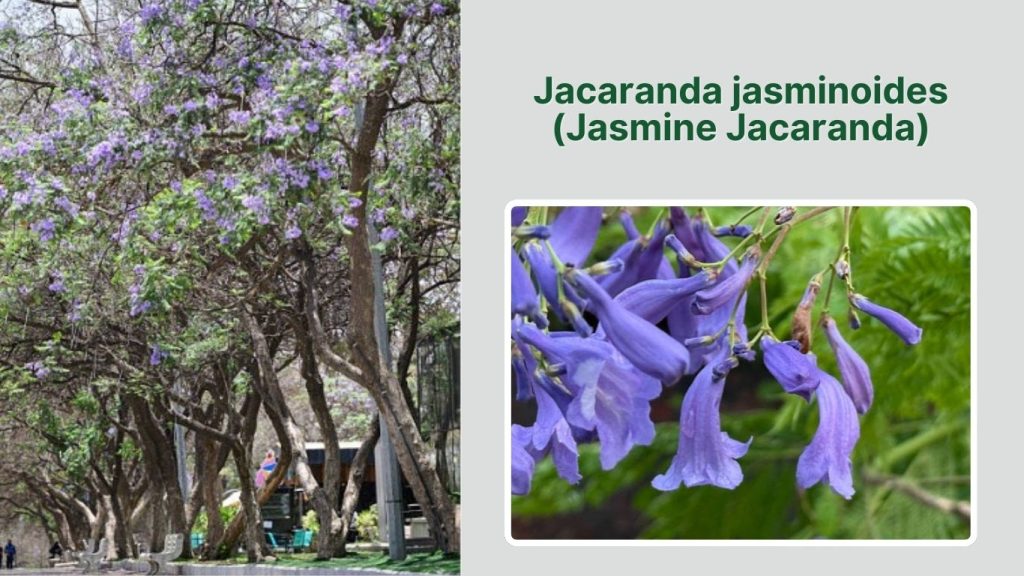
Jacaranda jasminoides is a distinctive Jacaranda species named for its somewhat jasmine-like floral appearance. It is native to South America and is valued for its soft purple to bluish flowers and its graceful ornamental potential.
Identification
- Medium-sized deciduous flowering tree
- Commonly grows 8 to 15 meters tall
- Smooth gray to light brown bark
- Bipinnate leaves with fine, fern-like leaflets
- Soft purple to bluish trumpet-shaped flowers
- Flowers borne in terminal clusters
- Flowering mainly during the dry to early rainy season
Flower Characteristics
The flowers are tubular, gently flared, and pale purple to bluish in tone. They form elegant clusters that give the tree a light, ornamental canopy when in bloom and attract bees and other pollinators.
Habitat and Growth
Jacaranda jasminoides naturally grows in tropical forests and woodland regions. It prefers full sun, warm temperatures, and well-drained soils. Once established, it tolerates short dry periods.
Uses and Importance
This species is mostly planted in botanical collections and specialty landscapes. It supports pollinators and contributes to native biodiversity where it naturally occurs.
12. Jacaranda rufa (Rufous Jacaranda)
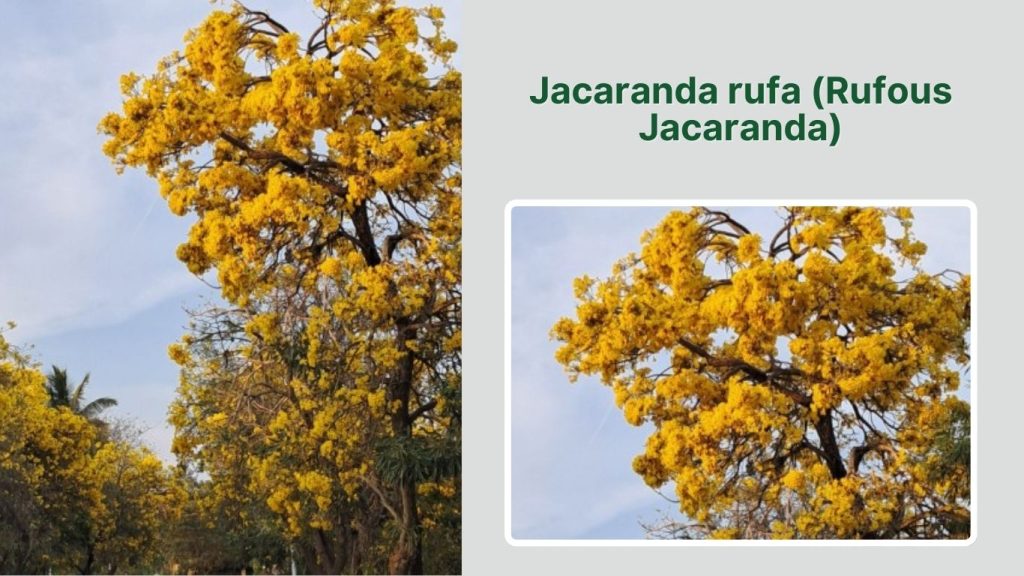
Jacaranda rufa is a South American Jacaranda species distinguished by its slightly reddish-brown (rufous) hairs on young shoots and leaves, along with its soft lavender to purple flowers. It is mainly found in natural habitats and is less commonly cultivated than ornamental jacarandas.
Identification
- Medium-sized deciduous flowering tree
- Typically grows 8 to 18 meters tall
- Gray-brown bark, lightly fissured
- Bipinnate leaves with rufous hairs on young growth
- Lavender to soft purple trumpet-shaped flowers
- Flowers arranged in terminal clusters
- Flowering generally during the dry season
Flower Characteristics
The flowers are tubular and softly colored, usually pale purple to lavender. Their delicate form and subtle coloring create an understated but attractive floral display.
Habitat and Growth
Jacaranda rufa naturally grows in tropical forests, savannas, and woodland edges. It prefers full sun, warm climates, and well-drained soils, and tolerates seasonal drought.
Uses and Importance
This species is important ecologically, supporting insects and forest biodiversity. It is sometimes included in botanical gardens and native restoration plantings.
13. Jacaranda caucana (Cauca Jacaranda)
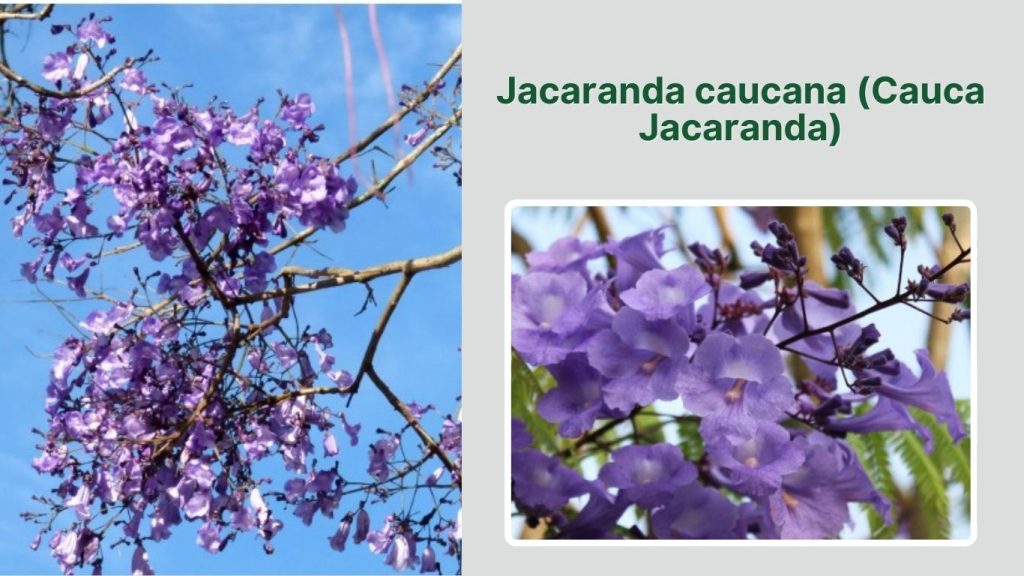
Jacaranda caucana, commonly known as the Cauca Jacaranda, is a tropical species native to Colombia and parts of Central America. It is admired for its soft lavender-blue flowers and its adaptability to warm lowland climates, making it a valued ornamental and shade tree in suitable regions.
Identification
- Medium to large deciduous flowering tree
- Typically grows 12 to 25 meters tall
- Gray to brown bark, lightly fissured
- Bipinnate leaves with fine, feathery leaflets
- Lavender-blue trumpet-shaped flowers
- Flowers borne in large terminal clusters
- Blooming mainly in the dry to early rainy season
Flower Characteristics
The flowers are tubular and pale lavender to bluish in tone, forming broad clusters that create a soft, colorful canopy. Their nectar-rich blossoms attract bees and other pollinators.
Habitat and Growth
Jacaranda caucana naturally grows in tropical lowland forests and along river valleys. It prefers full sun, warm temperatures, and fertile, well-drained soils. The tree grows quickly under favorable conditions.
Uses and Importance
This species is planted as an ornamental and shade tree in tropical landscapes. Ecologically, it supports pollinators and contributes to habitat diversity in its native range.