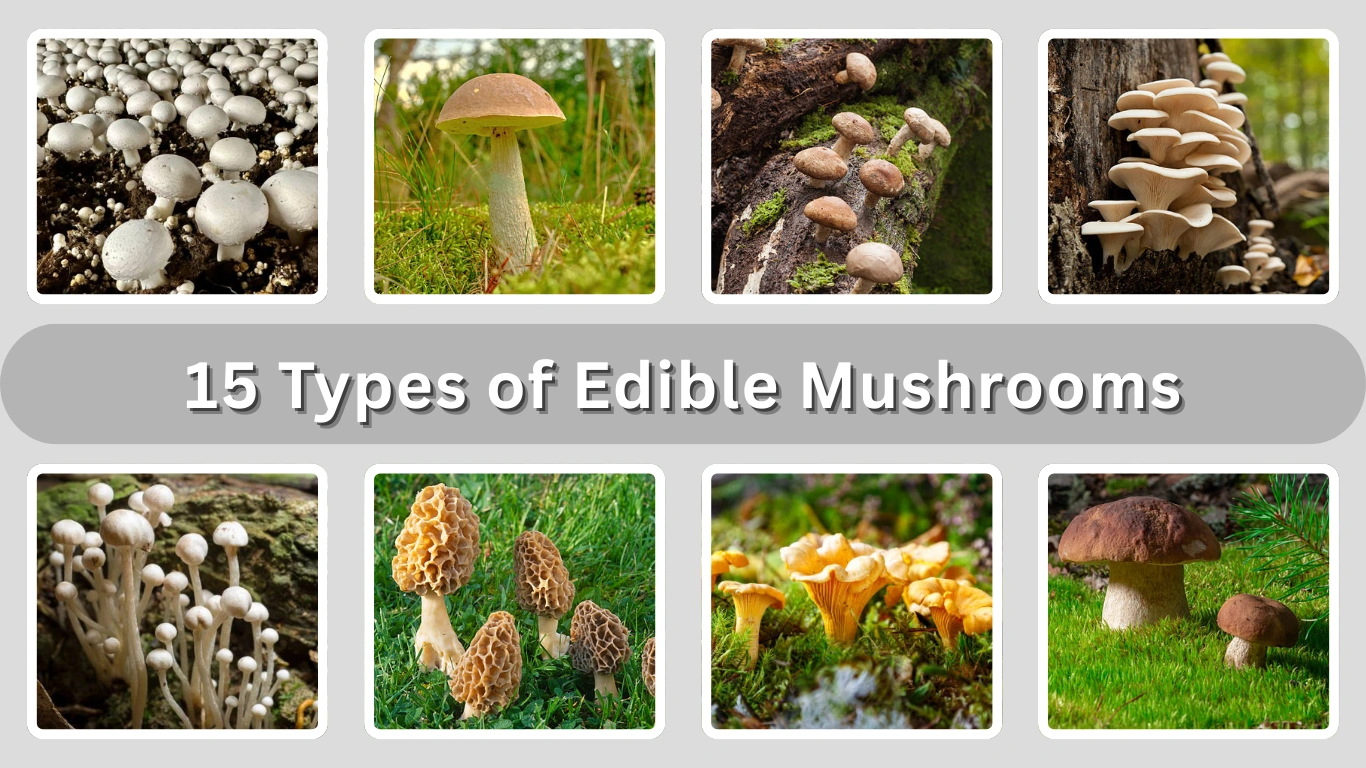





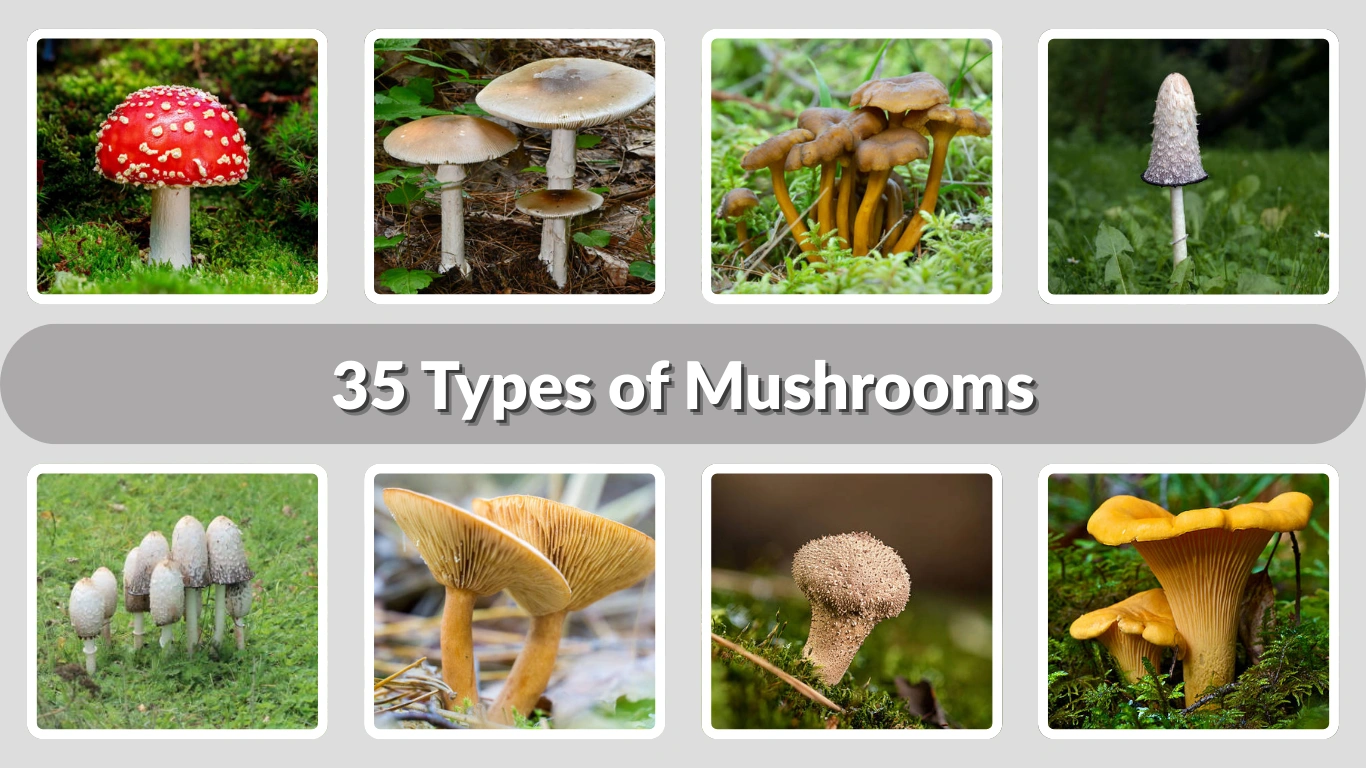
Mushrooms are a fascinating and diverse group of fungi, offering a wide range of flavors, textures, and nutritional benefits. From common edible varieties like button and shiitake to exotic wild types like morels and matsutake, each mushroom has unique characteristics and culinary uses. Some are prized for their medicinal properties, while others are toxic and should be avoided. Exploring different mushrooms enhances both cooking and foraging knowledge.
1. Button Mushroom (Agaricus bisporus)
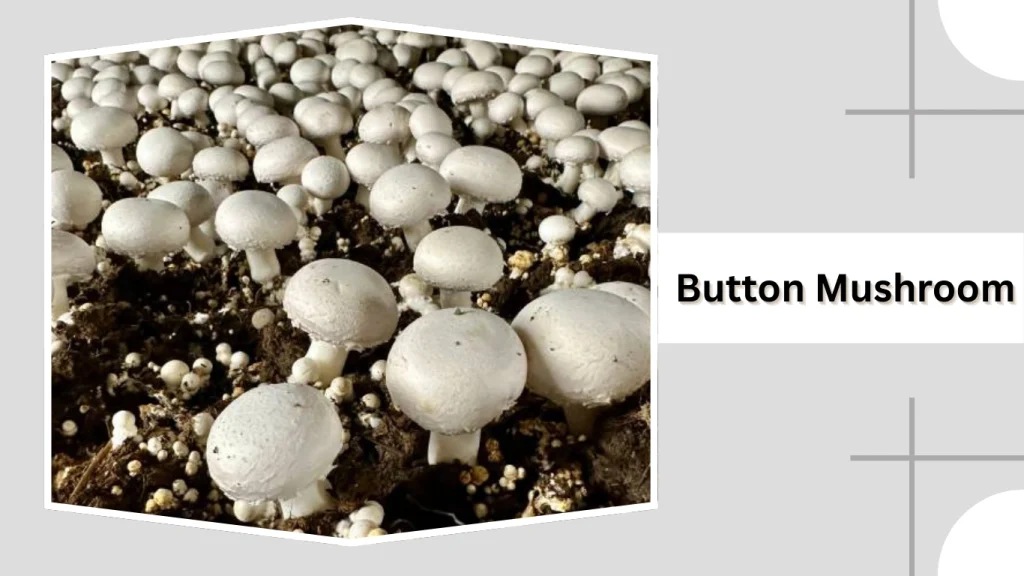
Button mushroom is one of the most widely consumed mushrooms in the world. Known for its mild flavor and firm texture, it is commonly used in salads, soups, stir-fries, pizzas, and many everyday dishes. This mushroom is actually the youngest stage of the same species that later becomes cremini and portobello mushrooms. Because of its neutral taste, it easily absorbs flavors from spices, sauces, and cooking methods, making it extremely versatile in kitchens worldwide.
Identification
- Small to medium-sized cap, usually 2–5 cm wide
- Smooth, round cap with a white or off-white color
- Short, thick stem with a firm texture
- Gills are pink when young and turn dark brown as it matures
- Mild, slightly earthy smell
Habitat
Button mushrooms are not usually found growing wild for consumption. They are commercially cultivated in controlled environments using composted organic matter. Naturally, their wild relatives grow in grasslands, fields, and nutrient-rich soils, often appearing after rainfall.
Uses
Button mushrooms are commonly eaten both raw and cooked. They are popular in salads, sandwiches, omelets, soups, and pasta dishes. When cooked, they release moisture and develop a slightly deeper, savory flavor, making them suitable for sautéing, roasting, and grilling.
Nutrition
These mushrooms are low in calories and fat while providing useful nutrients. They contain small amounts of protein, dietary fiber, B vitamins, potassium, and antioxidants. Because of their light taste and soft texture, they are often recommended for everyday meals and beginner mushroom recipes.
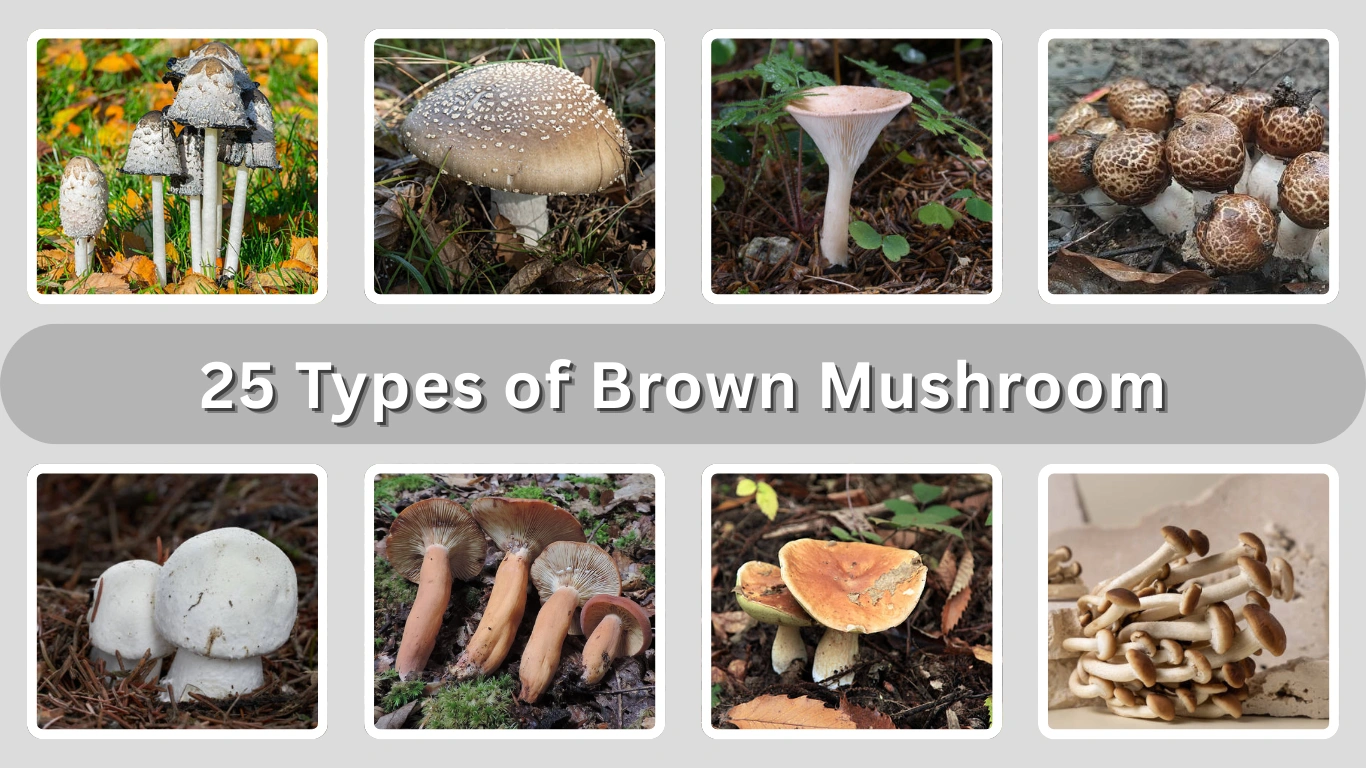
2. Cremini Mushroom (Agaricus bisporus)

Cremini mushroom, also known as brown mushroom or baby bella, is a more mature version of the button mushroom. It has a firmer texture and a slightly deeper, earthier flavor compared to white button mushrooms. Because of its balanced taste and versatility, cremini mushrooms are widely used in both home cooking and professional kitchens, especially in savory dishes that need richer flavor.
Identification
- Medium-sized cap, usually 3–7 cm wide
- Light to dark brown cap with a smooth surface
- Short, sturdy stem with a dense texture
- Gills start light brown and darken as the mushroom matures
- Mild to earthy aroma, stronger than button mushrooms
Habitat
Cremini mushrooms are mainly cultivated rather than foraged. They grow best in controlled environments using composted organic material. In the wild, related forms of this species are found in grasslands, meadows, and fertile soils, especially in temperate regions.
Uses
Cremini mushrooms are commonly used in soups, sauces, risottos, stir-fries, and meat-based dishes. Their firmer flesh allows them to hold shape well during cooking. They are often sautéed, roasted, or grilled to bring out their rich, umami-like flavor.
Nutrition
Cremini mushrooms are low in calories but provide beneficial nutrients. They contain B vitamins, selenium, potassium, and antioxidants. Compared to button mushrooms, they offer slightly higher nutritional density, making them a popular choice for healthy and flavorful meals.
3. Portobello Mushroom (Agaricus bisporus)
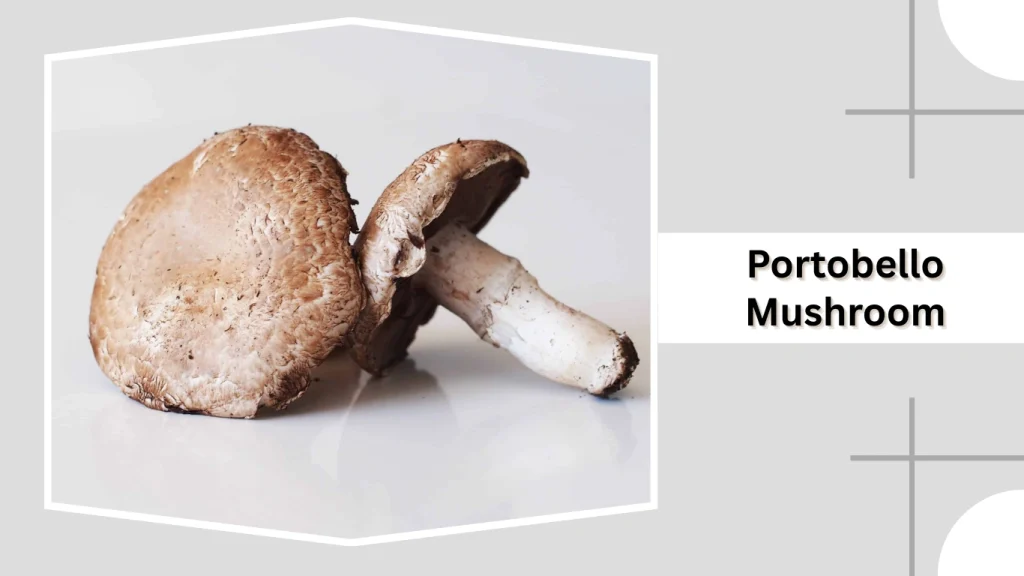
Portobello mushroom is the fully mature form of the same species as button and cremini mushrooms. It is known for its large size, meaty texture, and rich, earthy flavor. Because of its dense flesh, portobello is often used as a meat substitute in vegetarian and vegan dishes. Its broad cap absorbs marinades well and develops a deep umami taste when cooked.
Identification
- Large, flat cap, usually 10–15 cm or wider
- Dark brown to deep tan cap with a smooth or slightly wrinkled surface
- Thick, sturdy stem that is often removed before cooking
- Fully developed dark brown gills visible under the cap
- Stronger earthy aroma compared to younger stages
Habitat
Portobello mushrooms are primarily cultivated in controlled environments using compost-based growing media. In nature, wild forms of this species grow in open fields, grasslands, and nutrient-rich soils, often appearing after periods of rain in temperate climates.
Uses
Portobello mushrooms are widely used in grilling, roasting, and baking. They are popular as burger substitutes, steak alternatives, and pizza toppings. The cap can be stuffed with vegetables, cheese, or grains, making it a favorite choice for hearty, plant-based meals.
Nutrition
Portobello mushrooms are low in calories and fat while offering fiber, protein, and essential nutrients. They provide B vitamins, potassium, selenium, and antioxidants. Due to their size and texture, they are especially satisfying in meals focused on balanced nutrition and reduced meat consumption.
4. Shiitake Mushroom (Lentinula edodes)
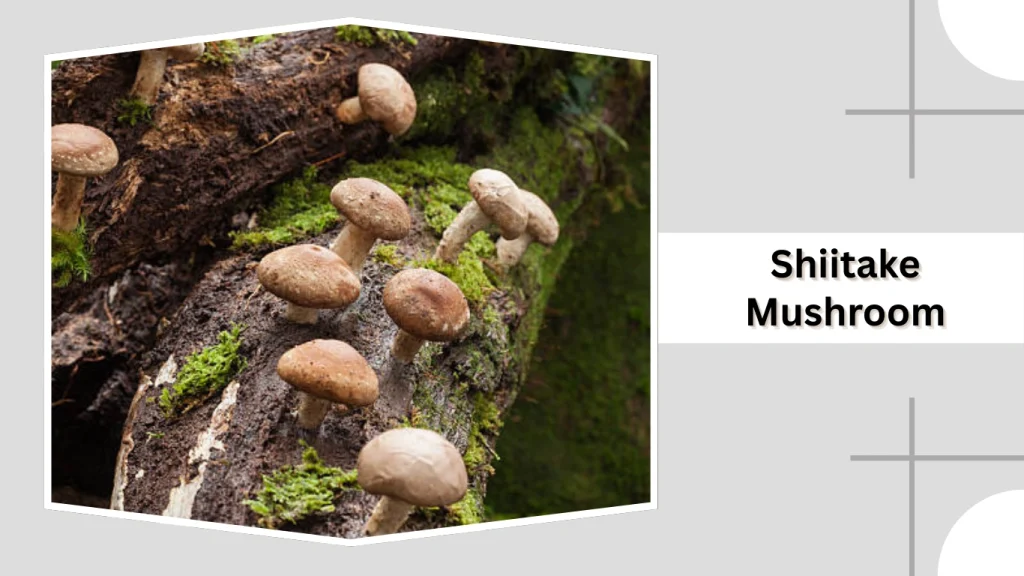
Shiitake mushroom is a popular edible mushroom known for its rich, smoky, and savory flavor. Widely used in Asian cuisine, it has a firmer texture than button mushrooms and develops a deeper umami taste when cooked. Shiitake mushrooms are valued not only for their culinary appeal but also for their long history of use in traditional diets.
Identification
- Medium-sized cap, typically 5–10 cm wide
- Brown to dark brown cap with a slightly cracked or scaly surface
- Cream-colored gills underneath the cap
- Tough, fibrous stem that is often removed before cooking
- Distinct earthy, slightly smoky aroma
Habitat
Shiitake mushrooms naturally grow on decaying hardwood trees, especially oak, chestnut, and beech. They are commonly cultivated on logs or hardwood sawdust blocks in humid, shaded environments. Native to East Asia, they are now grown worldwide under controlled conditions.
Uses
Shiitake mushrooms are commonly used in soups, stir-fries, noodles, rice dishes, and sauces. They can be eaten fresh or dried, with dried shiitake offering a more concentrated flavor. Before cooking dried shiitake, they are usually soaked in water to soften and release their aroma.
Nutrition
Shiitake mushrooms are low in calories and provide dietary fiber, B vitamins, copper, and selenium. They also contain natural compounds that support overall wellness. Because of their strong flavor, a small amount can significantly enhance the taste of many dishes.
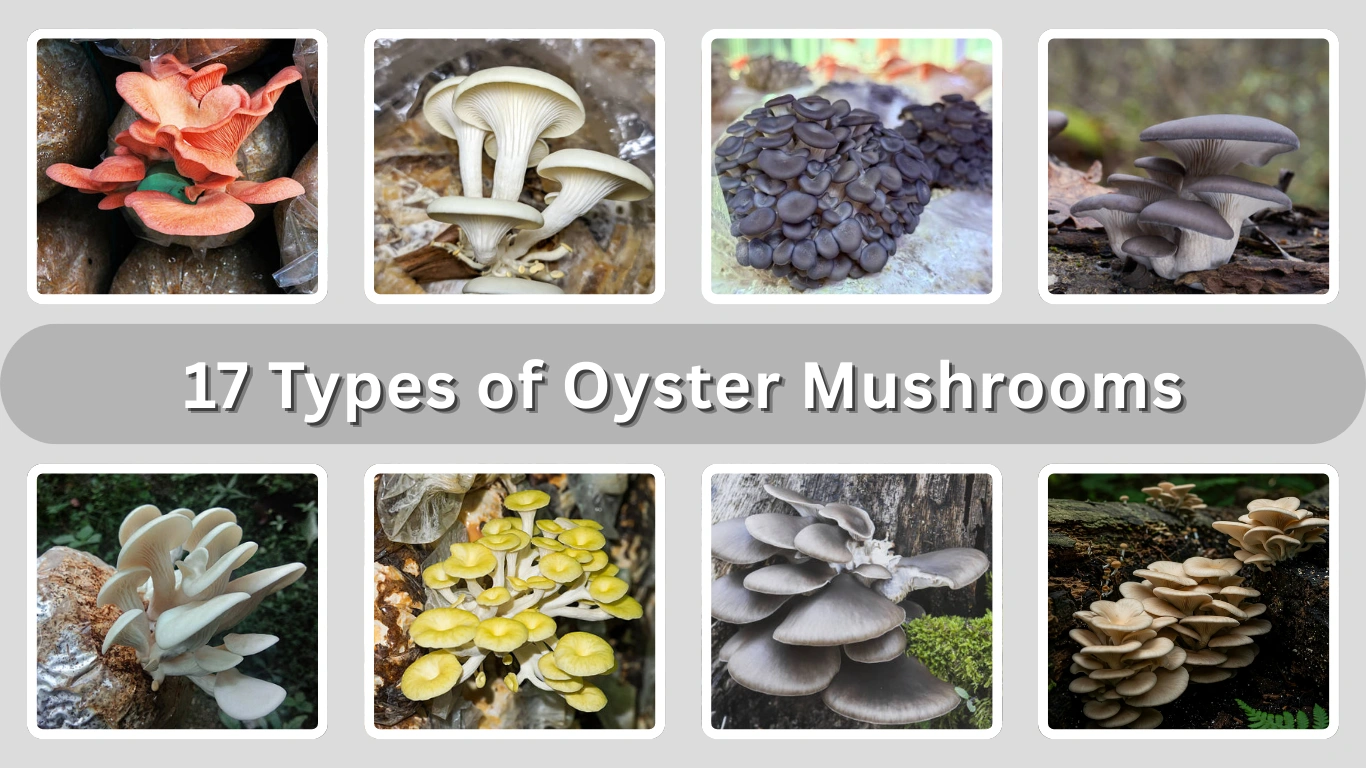
5. Oyster Mushroom (Pleurotus ostreatus)
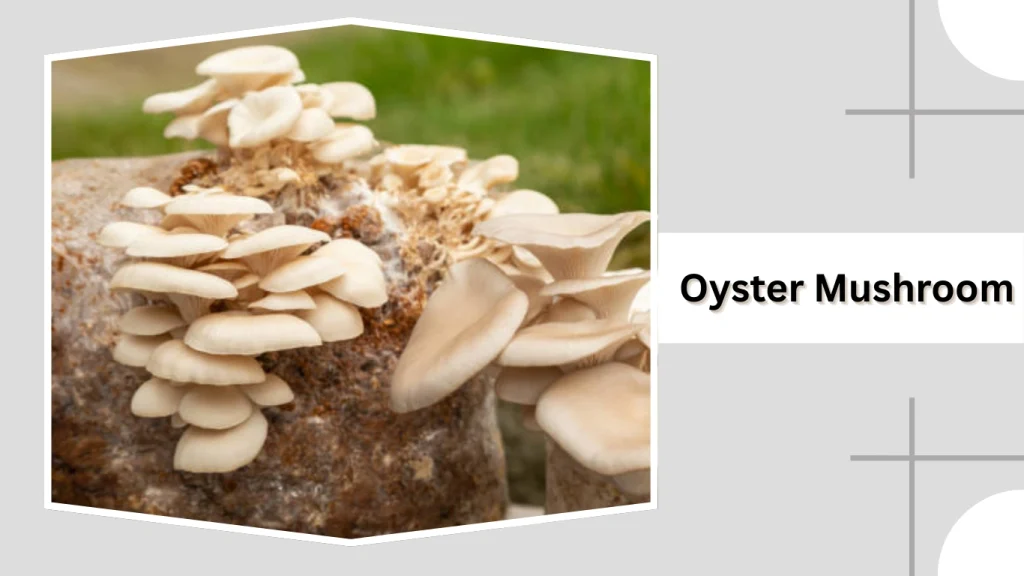
Oyster mushroom is a popular edible mushroom known for its soft texture and mild, slightly sweet flavor. It gets its name from the oyster-shaped cap and is widely used in many cuisines around the world. This mushroom cooks quickly and absorbs flavors well, making it a favorite for stir-fries, soups, and light sautéed dishes.
Identification
- Fan-shaped or oyster-like cap, usually 5–15 cm wide
- Cap color ranges from white and cream to gray or light brown
- Short or nearly absent stem, often off-center
- White to pale gills that run down the stem
- Smooth surface with a delicate, velvety feel
Habitat
Oyster mushrooms naturally grow on dead or decaying hardwood trees and logs. They are commonly found in forests, especially on beech, oak, and other broadleaf trees. Commercial cultivation is widespread, using straw, sawdust, or agricultural waste in humid, controlled environments.
Uses
Oyster mushrooms are commonly used in stir-fries, soups, curries, and noodle dishes. Their tender texture makes them ideal for quick cooking methods. They can also be grilled, roasted, or used as a meat alternative in vegetarian recipes due to their mild umami flavor.
Nutrition
Oyster mushrooms are low in calories and fat while providing protein, fiber, and essential nutrients. They are a good source of B vitamins, potassium, iron, and antioxidants. Because of their light texture and nutritional value, they are often included in balanced and health-focused diets.
6. King Oyster Mushroom (Pleurotus eryngii)
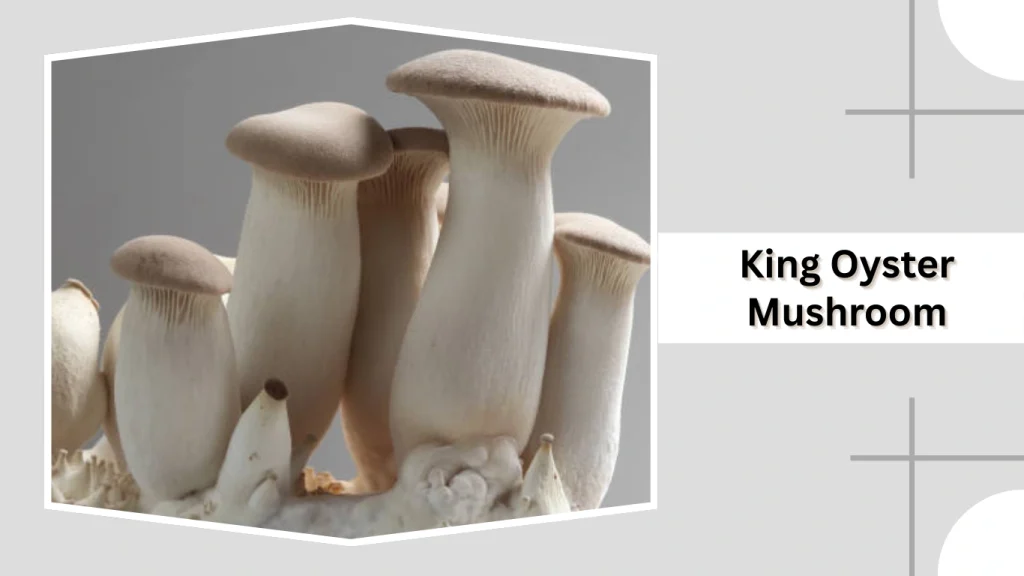
King oyster mushroom, also known as king trumpet mushroom, is the largest and meatiest member of the oyster mushroom family. It is highly valued for its thick stem, firm texture, and mild yet savory flavor. Unlike common oyster mushrooms, the stem is the main edible part and remains tender even after cooking, making it popular in gourmet and plant-based dishes.
Identification
- Thick, cylindrical white stem that makes up most of the mushroom
- Small, light brown to tan cap on top of the stem
- Firm, dense flesh with a smooth surface
- White gills that run slightly down the stem
- Mild, pleasant aroma
Habitat
King oyster mushrooms naturally grow in Mediterranean regions, often associated with the roots of certain plants. Today, they are mostly cultivated commercially in controlled environments using sawdust or agricultural substrates. They require stable humidity and moderate temperatures for optimal growth.
Uses
King oyster mushrooms are commonly sliced and grilled, sautéed, or roasted. Their firm texture makes them suitable for dishes that mimic scallops, steaks, or other meat-based foods. They are also used in stir-fries, noodle dishes, and risottos, where they retain shape and flavor well.
Nutrition
King oyster mushrooms are low in calories and fat while providing protein, dietary fiber, and important minerals. They contain B vitamins, potassium, phosphorus, and antioxidants. Because of their satisfying texture and nutritional balance, they are popular in healthy and vegetarian diets.
7. Enoki Mushroom (Flammulina velutipes)
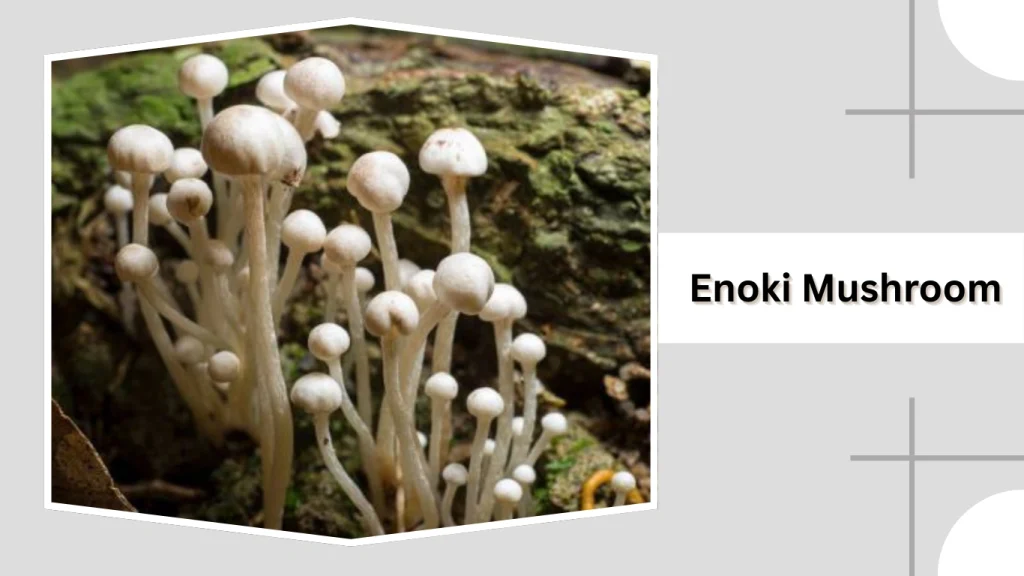
Enoki mushroom is a delicate, long-stemmed mushroom recognized for its crisp texture and mild, slightly sweet flavor. It is commonly used in East Asian cuisine and is especially popular in soups, hot pots, and salads. Unlike many other mushrooms, enoki is often eaten lightly cooked or even raw, allowing it to retain its crunchy bite.
Identification
- Very long, thin white stems growing in clusters
- Small, rounded caps at the top of each stem
- Smooth, shiny surface with a fragile appearance
- White gills that are tightly packed
- Mild, fresh aroma
Habitat
In the wild, enoki mushrooms grow on decaying hardwood trees, particularly elm, mulberry, and beech. Wild forms are darker in color, while cultivated enoki are white due to low-light growing conditions. They thrive in cool temperatures and high humidity.
Uses
Enoki mushrooms are commonly added to soups, hot pots, ramen, stir-fries, and salads. They cook very quickly and are often added at the final stage of cooking. Their crisp texture also makes them suitable for light sautéing or as a garnish in various dishes.
Nutrition
Enoki mushrooms are low in calories and fat and provide fiber, protein, and essential nutrients. They contain B vitamins, potassium, iron, and antioxidants. Because of their light texture and subtle flavor, they are often included in low-calorie and balanced meals.
8. Maitake Mushroom (Grifola frondosa)
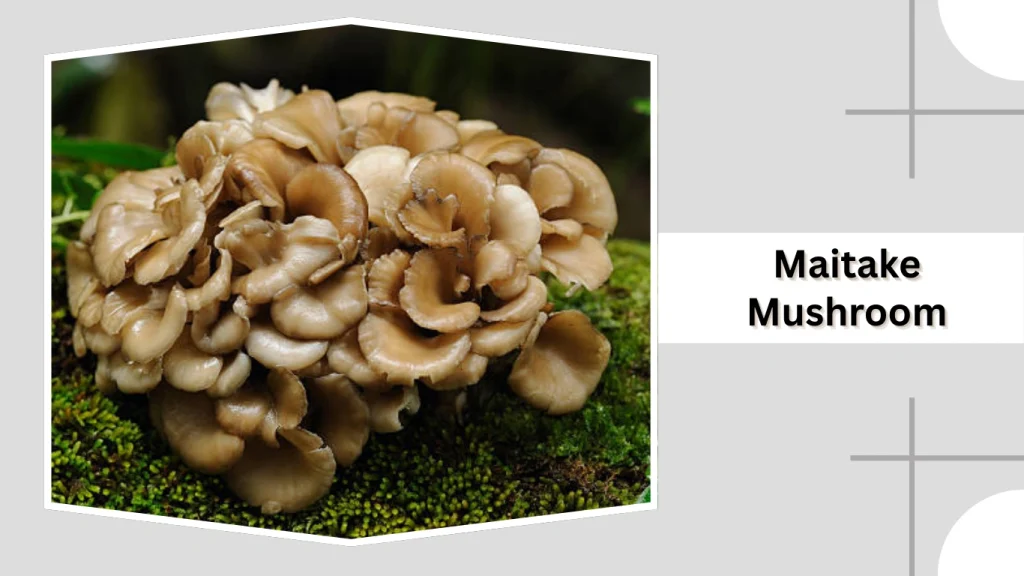
Maitake mushroom, often called hen of the woods, is known for its large, clustered appearance and rich, earthy flavor. It has a tender yet slightly firm texture and becomes more aromatic when cooked. Maitake is popular in Asian and Western cuisines and is valued for both its culinary versatility and nutritional profile.
Identification
- Large, multi-capped clusters forming a rosette shape
- Gray to brown, fan-shaped caps with wavy edges
- Short, branching stems connected at the base
- White underside with tiny pores instead of gills
- Strong, earthy aroma
Habitat
Maitake mushrooms naturally grow at the base of hardwood trees, especially oak and maple. They are commonly found in forests during late summer and autumn. Commercial cultivation is also common, using controlled environments that mimic natural growing conditions.
Uses
Maitake mushrooms are used in stir-fries, soups, stews, and roasted vegetable dishes. Their layered structure absorbs sauces well, making them ideal for sautéing and braising. They can also be grilled or added to rice and noodle dishes for deeper flavor.
Nutrition
Maitake mushrooms are low in calories while providing fiber, protein, and essential minerals. They are a good source of B vitamins, potassium, and antioxidants. Their rich flavor allows them to enhance dishes without the need for heavy seasoning.
9. Lion’s Mane Mushroom (Hericium erinaceus)
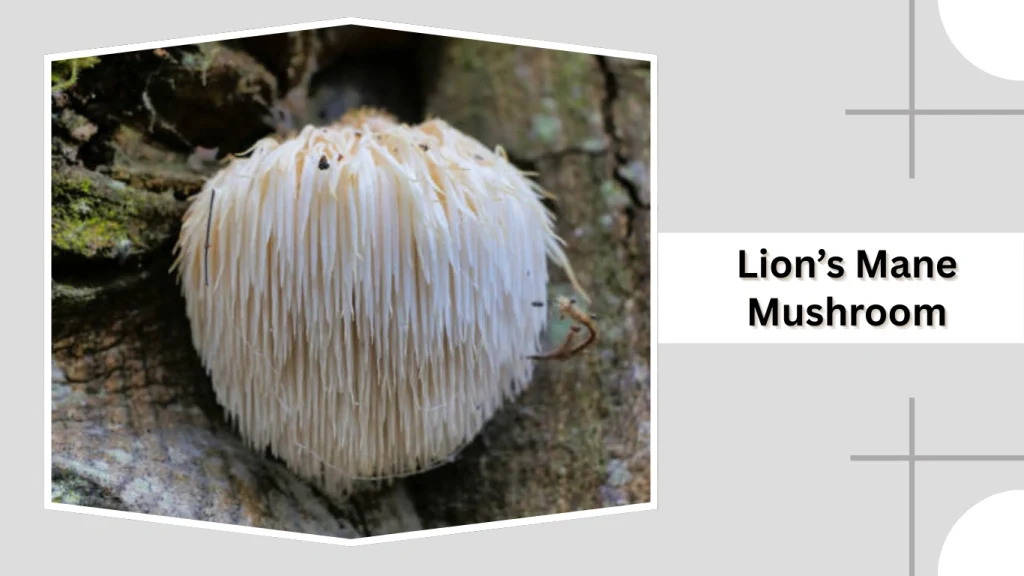
Lion’s mane mushroom is a unique edible mushroom recognized for its shaggy, white appearance that resembles a lion’s mane. It has a mild, slightly sweet flavor often compared to seafood, especially crab or lobster. This mushroom is popular in gourmet cooking and is also widely appreciated for its nutritional and functional value.
Identification
- White, cascading spines hanging downward
- Rounded or clump-like growth with no distinct cap
- Soft, shaggy, pom-pom–like appearance
- Firm but tender flesh when fresh
- Mild, slightly sweet aroma
Habitat
Lion’s mane mushrooms naturally grow on dead or dying hardwood trees such as oak, beech, and maple. They are commonly found in temperate forests during late summer and autumn. Today, they are also widely cultivated indoors using hardwood sawdust substrates under controlled humidity.
Uses
Lion’s mane mushrooms are commonly sautéed, pan-fried, or used in soups and stir-fries. Their texture makes them suitable as a seafood substitute in vegetarian dishes. They absorb flavors well and are often paired with butter, garlic, or light sauces.
Nutrition
Lion’s mane mushrooms are low in calories and provide protein, fiber, and essential minerals. They contain B vitamins, potassium, and antioxidants. Because of their pleasant taste and dense texture, they are often included in balanced diets and specialty culinary recipes.
10. Chanterelle Mushroom (Cantharellus cibarius)
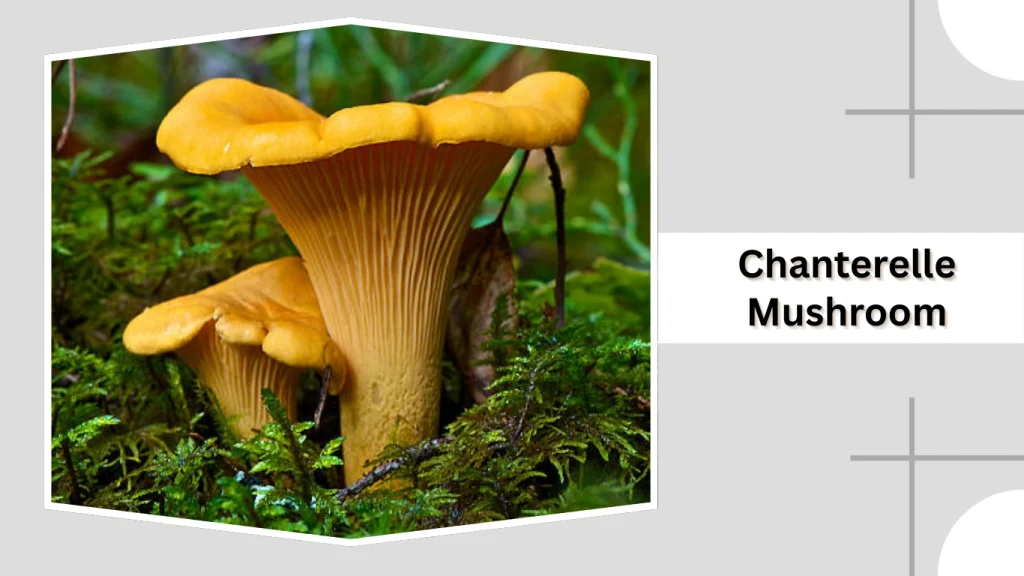
Chanterelle mushroom is a highly prized wild mushroom known for its golden-yellow color and fruity, peppery flavor. It has a firm yet tender texture and releases a pleasant aroma when cooked. Chanterelles are considered a delicacy in many European and North American cuisines and are often foraged rather than cultivated.
Identification
- Funnel-shaped cap with wavy, irregular edges
- Bright yellow to golden-orange coloration
- Thick, blunt ridges instead of true gills
- Solid, pale yellow stem that blends with the cap
- Distinct fruity scent, sometimes compared to apricot
Habitat
Chanterelle mushrooms grow in forests, forming symbiotic relationships with trees such as oak, pine, beech, and birch. They are commonly found on the forest floor in moist, well-drained soil during summer and early autumn. Cultivation is difficult, so most chanterelles are wild-harvested.
Uses
Chanterelle mushrooms are commonly sautéed in butter, added to pasta, rice dishes, sauces, and omelets. Their delicate flavor pairs well with simple ingredients. Overcooking is usually avoided to preserve their texture and natural aroma.
Nutrition
Chanterelles are low in calories and fat while providing fiber and essential nutrients. They contain vitamin D, B vitamins, potassium, and antioxidants. Their rich flavor and nutritional value make them a popular choice in gourmet and seasonal cooking.
11. Morel Mushroom (Morchella esculenta)
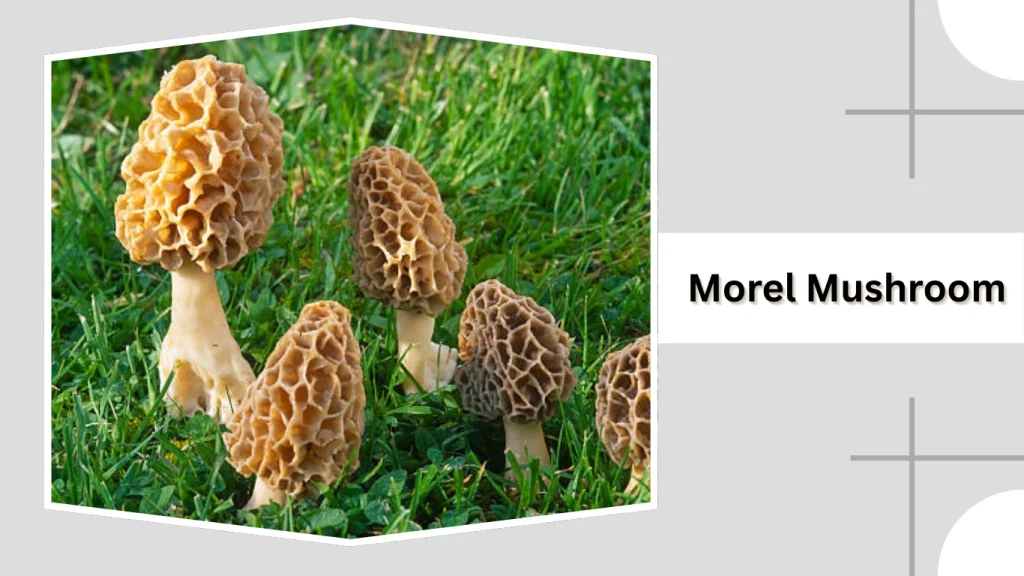
Morel mushroom is a highly sought-after wild mushroom famous for its honeycomb-like cap and deep, earthy flavor. It has a meaty yet delicate texture and is considered a gourmet ingredient in many cuisines. Morels are seasonal and difficult to cultivate, which makes them especially valued by foragers and chefs alike.
Identification
- Cone-shaped or oval cap with deep honeycomb pits
- Brown to dark tan coloration
- Cap attached directly to the stem
- Hollow interior from tip to base
- Earthy, nutty aroma
Habitat
Morel mushrooms grow in forests, woodlands, and old orchards, often near ash, elm, oak, and apple trees. They typically appear in spring, especially after rainfall. Morels thrive in moist soil and are commonly found in areas affected by fire or natural disturbance.
Uses
Morel mushrooms are usually cooked before eating, as raw morels can cause stomach discomfort. They are commonly sautéed, stuffed, or added to sauces, pasta, and meat dishes. Cooking enhances their rich flavor and tender texture.
Nutrition
Morels are low in calories and rich in nutrients. They provide protein, dietary fiber, iron, copper, phosphorus, and antioxidants. Their strong flavor allows small amounts to add depth and complexity to many dishes.
12. Porcini Mushroom (Boletus edulis)
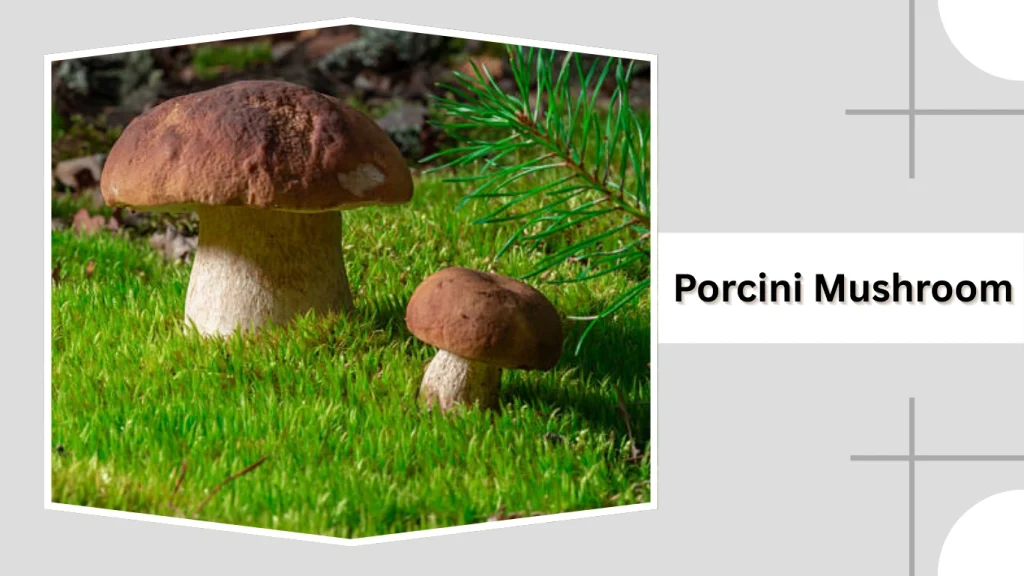
Porcini mushroom is a highly valued wild mushroom known for its thick, meaty texture and rich, nutty flavor. It is especially popular in Italian and European cooking, where it is used to enhance the taste of pasta, risotto, and sauces. Porcini mushrooms are often dried to preserve their intense aroma and deep umami profile.
Identification
- Large, rounded brown cap with a smooth surface
- Thick, pale stem with a slightly bulbous shape
- White to yellowish pores under the cap instead of gills
- Firm, dense flesh that stays white when cut
- Strong, earthy and nutty aroma
Habitat
Porcini mushrooms grow in forests and woodlands, forming symbiotic relationships with trees such as pine, spruce, oak, and beech. They are commonly found in temperate regions during late summer and autumn. Cultivation is difficult, so most porcini are collected from the wild.
Uses
Porcini mushrooms are widely used in risottos, pasta dishes, soups, and sauces. Fresh porcini can be sautéed or grilled, while dried porcini are rehydrated and used for their concentrated flavor. The soaking liquid is often added to dishes for extra depth.
Nutrition
Porcini mushrooms are low in fat and calories while providing protein, fiber, and important minerals. They contain B vitamins, potassium, selenium, and antioxidants. Their intense flavor and nutritional value make them a favorite in gourmet and traditional cooking.
13. Reishi Mushroom (Ganoderma lucidum)
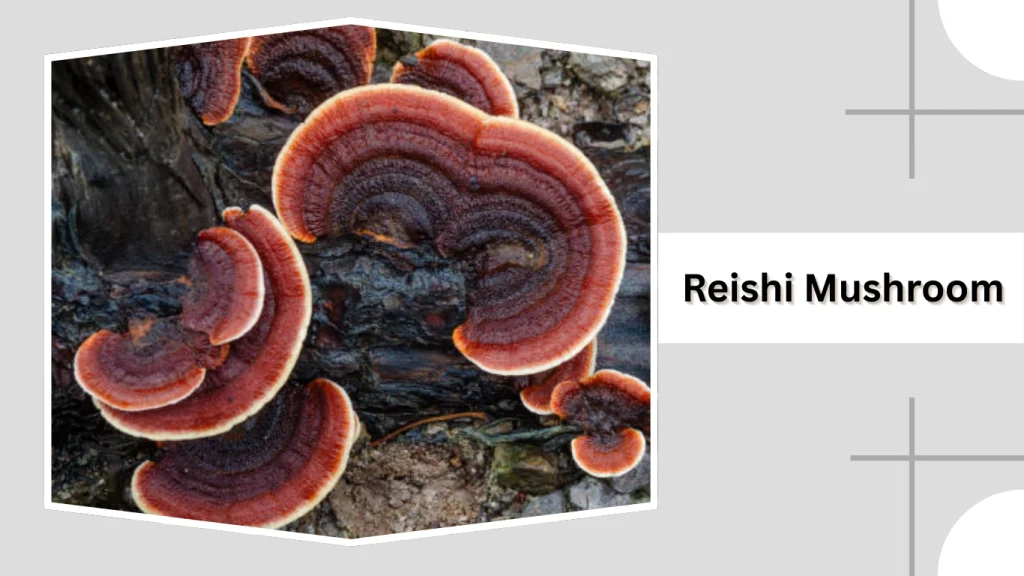
Reishi mushroom is a distinctive mushroom known for its glossy surface and woody texture. Unlike most edible mushrooms, it is not commonly eaten fresh because of its bitterness and toughness. Instead, reishi is traditionally dried and used in teas, powders, or extracts. It has a long history of use in East Asian cultures and is often referred to as a functional or medicinal mushroom.
Identification
- Kidney-shaped or fan-like cap with a shiny, lacquered surface
- Color ranges from reddish-brown to dark brown
- Tough, woody texture that is not soft when fresh
- White to brown pore surface underneath the cap
- Bitter taste and mild earthy smell
Habitat
Reishi mushrooms grow on dead or decaying hardwood trees, especially oak and maple. They are commonly found in warm, humid forests. Today, reishi is widely cultivated on logs or sawdust blocks in controlled environments to meet global demand.
Uses
Reishi mushrooms are mainly used in dried or powdered form. They are commonly brewed into tea, added to soups for long simmering, or processed into capsules and extracts. Because of their bitterness, they are rarely used in everyday cooking like other mushrooms.
Nutrition
Reishi mushrooms are low in calories and contain fiber, polysaccharides, and antioxidants. They also provide trace minerals. While not consumed as a regular food mushroom, they are valued for their unique compounds and traditional dietary uses.
14. Turkey Tail Mushroom (Trametes versicolor)
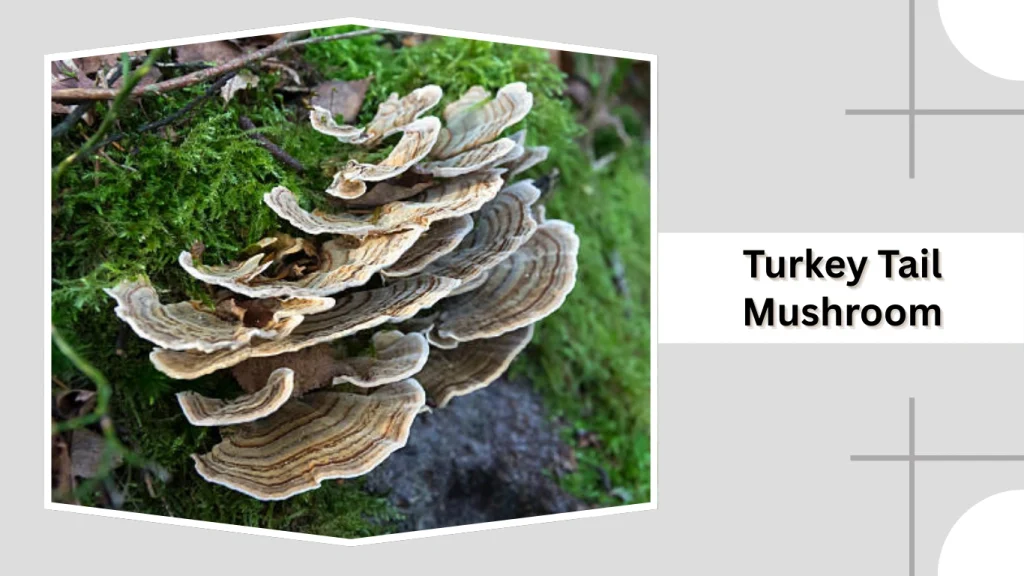
Turkey tail mushroom is a thin, fan-shaped mushroom named for its colorful, layered rings that resemble a turkey’s tail feathers. It has a leathery texture and is not typically eaten as a regular food. Instead, it is commonly dried and used in teas or powdered forms. This mushroom is well known for its widespread presence and distinctive appearance.
Identification
- Thin, fan-shaped caps growing in overlapping clusters
- Concentric rings of brown, gray, blue, and cream colors
- Velvety or slightly fuzzy surface texture
- White pore surface underneath instead of gills
- Tough, leathery consistency
Habitat
Turkey tail mushrooms grow on dead or decaying hardwood logs, stumps, and fallen branches. They are extremely common in forests and woodlands across the world and can be found year-round, especially in moist, shaded environments.
Uses
Turkey tail mushrooms are usually dried and used to make tea or ground into powder. They are sometimes added to soups or broths during long cooking times, though they remain tough. They are not typically eaten whole due to their fibrous texture.
Nutrition
Turkey tail mushrooms are low in calories and contain fiber and various natural compounds. They also provide antioxidants and trace minerals. Because of their tough texture, they are mainly consumed in extracted or powdered forms rather than as whole food.
15. Honey Mushroom (Armillaria mellea)
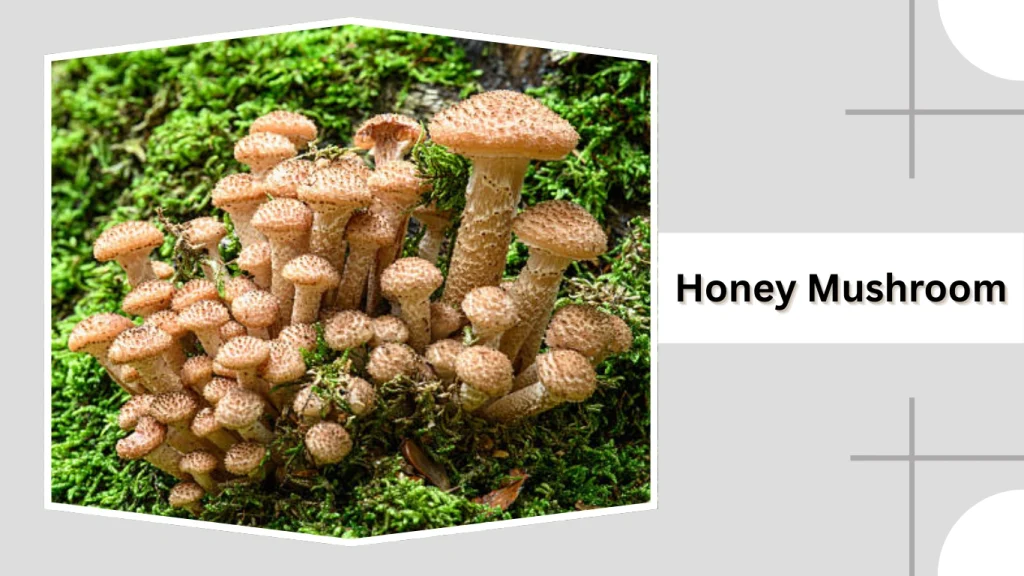
Honey mushroom is a wild edible mushroom known for its honey-colored cap and clustered growth. It has a firm texture and a slightly sweet, earthy flavor when properly cooked. Although edible, honey mushrooms must always be cooked thoroughly, as raw or undercooked specimens can cause digestive discomfort. They are popular in foraged mushroom dishes in many regions.
Identification
- Honey-yellow to light brown cap, often darker in the center
- Smooth or slightly scaly cap surface
- Long, pale stem with a noticeable ring
- White to cream-colored gills
- Grows in dense clusters at the base of trees
Habitat
Honey mushrooms grow on living or dead trees, stumps, and roots, especially hardwoods. They are common in forests, woodlands, and even gardens. This species is parasitic and can spread underground through root systems, appearing in the same area year after year.
Uses
Honey mushrooms are typically boiled first and then sautéed, fried, or added to soups and stews. Cooking removes bitterness and improves texture. They are often used in traditional recipes, pickled preparations, or mixed mushroom dishes where their firm bite adds contrast.
Nutrition
Honey mushrooms are low in calories and provide dietary fiber, protein, and minerals. They contain B vitamins, potassium, and antioxidants. When properly prepared, they can be a nutritious addition to seasonal and foraged meals.
16. Puffball Mushroom (Lycoperdon perlatum)
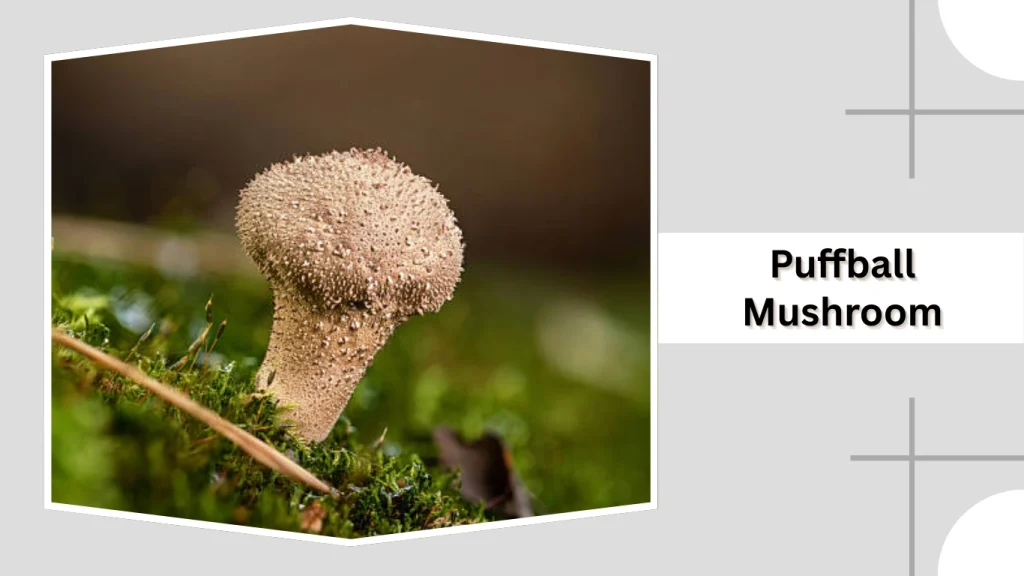
Puffball mushroom is easily recognized by its round or pear-shaped body and lack of visible gills or cap. When young, it has a soft, white interior and a mild flavor, making it suitable for cooking. As it matures, the inside turns yellow or brown and releases spores, at which point it is no longer edible.
Identification
- Round to pear-shaped fruiting body
- White to off-white outer surface, sometimes with small spines
- No visible cap, stem, or gills
- Interior is pure white when young and edible
- Produces a cloud of spores when mature
Habitat
Puffball mushrooms grow on soil in grasslands, meadows, forest floors, and sometimes along trails. They usually appear after rainfall in late summer and autumn. Some species grow singly, while others appear in small groups.
Uses
Young puffball mushrooms are sliced and cooked by frying, sautéing, or baking. Their mild flavor pairs well with herbs, eggs, and simple seasonings. They should always be cooked before eating and checked carefully to ensure the interior is fully white.
Nutrition
Puffball mushrooms are low in calories and fat while providing protein and dietary fiber. They also contain small amounts of potassium, phosphorus, and antioxidants, making them a light and nutritious seasonal food.
17. Black Trumpet Mushroom (Craterellus cornucopioides)
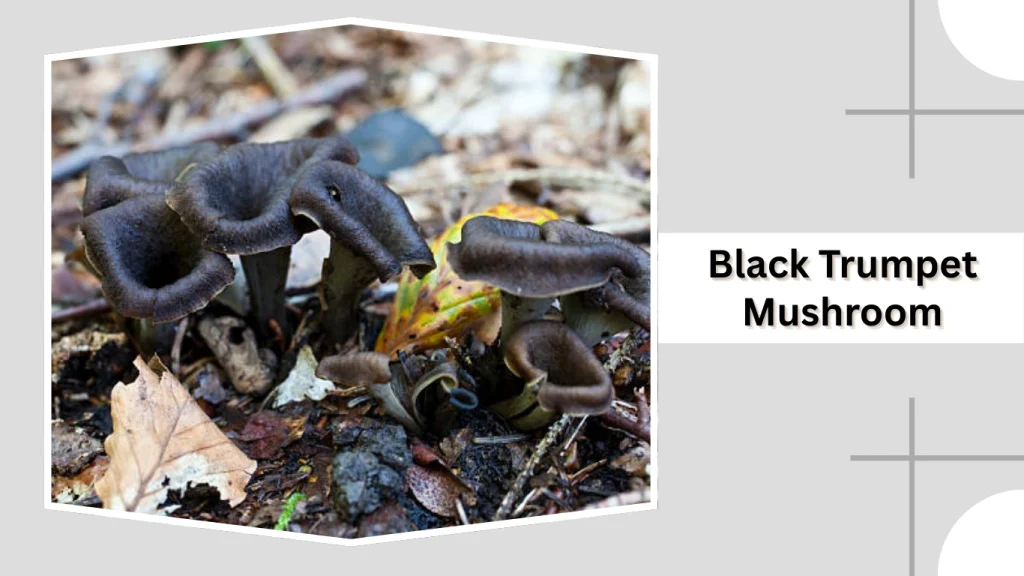
Black trumpet mushroom is a distinctive wild mushroom known for its dark color and trumpet-like shape. Despite its thin and fragile appearance, it has a rich, smoky, and slightly fruity flavor. Because of its intense taste, a small amount can greatly enhance dishes, making it a favorite among chefs and experienced foragers.
Identification
- Trumpet- or funnel-shaped body with a hollow center
- Dark gray to black coloration
- Thin, fragile flesh with smooth outer surface
- No true gills; underside is wrinkled or smooth
- Pleasant, earthy aroma
Habitat
Black trumpet mushrooms grow in moist forests, often near oak, beech, or other hardwood trees. They are usually found on the forest floor, blending in with leaf litter. These mushrooms typically appear in summer and autumn after periods of rain.
Uses
Black trumpet mushrooms are commonly dried to preserve their flavor. They are used in sauces, soups, pasta, risottos, and meat dishes. When rehydrated, they release a dark, flavorful liquid that adds depth and aroma to recipes.
Nutrition
Black trumpet mushrooms are low in calories and fat while providing dietary fiber and minerals. They contain iron, potassium, and antioxidants. Their strong flavor and nutritional value make them ideal for enhancing dishes without adding extra calories.
18. Lobster Mushroom (Hypomyces lactifluorum)
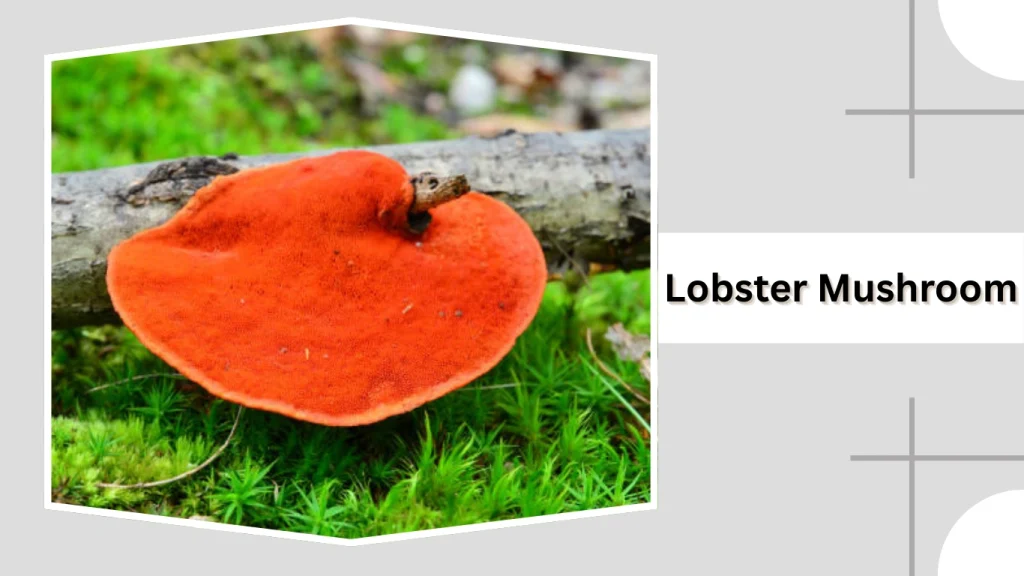
Lobster mushroom is a unique wild mushroom that results from a parasitic fungus colonizing another mushroom, usually a Russula or Lactarius species. This process gives it a bright reddish-orange color and a firm, meaty texture. It has a seafood-like flavor, which is why it is commonly referred to as “lobster” mushroom.
Identification
- Bright reddish-orange, rough, or bumpy outer surface
- Firm, dense flesh inside
- Deformed shape due to parasitic overgrowth
- White to pale gills underneath, often hidden or deformed
- Distinct seafood-like aroma
Habitat
Lobster mushrooms grow in forests, particularly in areas with coniferous or mixed hardwood trees. They are commonly found on the ground during late summer and autumn. They are naturally occurring and not cultivated commercially.
Uses
Lobster mushrooms are commonly sautéed, roasted, or added to soups and stews. Their firm texture allows them to hold up well in cooking, and their seafood-like flavor makes them a popular choice in vegetarian dishes as a substitute for shellfish.
Nutrition
Lobster mushrooms are low in calories and fat while providing protein, fiber, and essential minerals. They contain B vitamins, potassium, and antioxidants. Their rich flavor and firm texture make them both a culinary and nutritious addition to seasonal dishes.
19. Milk Cap Mushroom (Lactarius deliciosus)
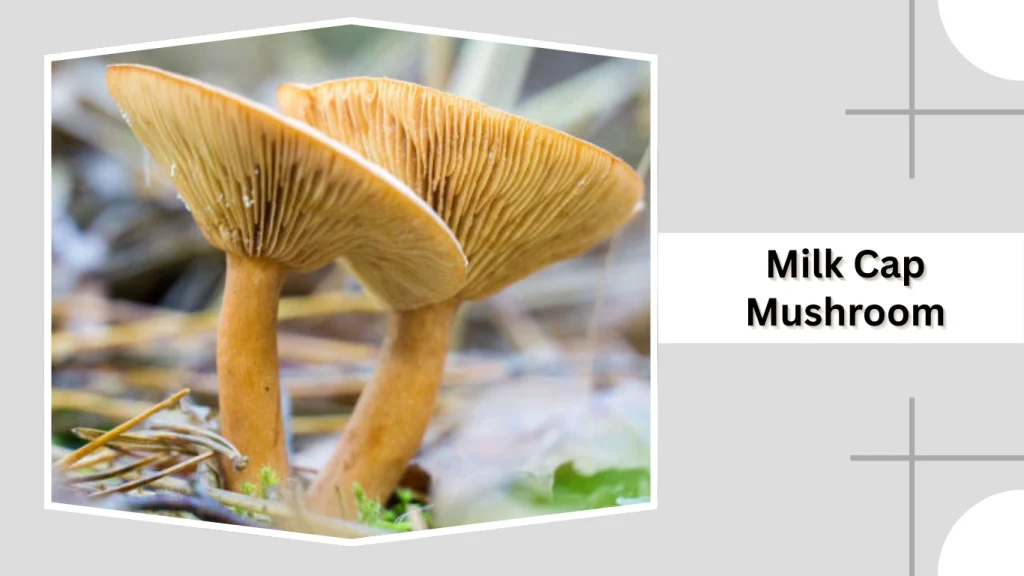
Milk cap mushroom, also known as saffron milk cap, is a wild edible mushroom known for its orange color and unique “milky” latex that oozes when the flesh is cut. It has a firm texture and a slightly peppery, nutty flavor. Milk caps are popular in European and Asian cuisines, often pickled, sautéed, or roasted.
Identification
- Bright orange to reddish-orange cap with concentric rings
- Firm, cylindrical stem, often hollow or slightly spongy
- Gills are closely spaced and release orange or carrot-colored latex when cut
- Smooth surface with slight depressions in the center
- Distinct earthy aroma with a slightly bitter undertone
Habitat
Milk cap mushrooms grow in coniferous and mixed forests, forming symbiotic relationships with pine and other trees. They are usually found in clusters on forest floors in late summer and autumn, especially after rainfall.
Uses
Milk caps are often sautéed, roasted, pickled, or added to soups and stews. Their firm texture allows them to hold shape during cooking, and the unique flavor pairs well with garlic, butter, and herbs. The latex is edible but may be slightly bitter.
Nutrition
Milk cap mushrooms are low in calories and fat and provide protein, fiber, and minerals. They contain potassium, B vitamins, and antioxidants. Their distinct taste and nutritional profile make them a valued choice for foraged and gourmet dishes.
20. Hedgehog Mushroom (Hydnum repandum)
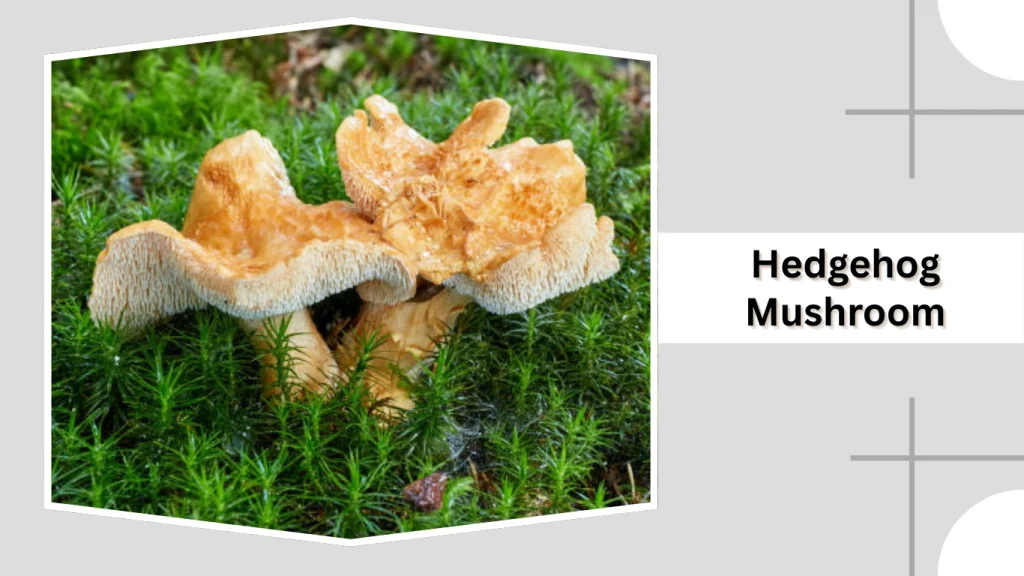
Hedgehog mushroom is a wild edible mushroom recognized for its spiny, tooth-like structures under the cap instead of gills. It has a firm texture and a nutty, slightly peppery flavor. Hedgehog mushrooms are prized by foragers and chefs alike and are suitable for a variety of cooked dishes.
Identification
- Irregularly shaped cap, usually beige to light brown
- Underside covered with soft, downward-pointing spines instead of gills
- Firm, fleshy stem that blends with the cap color
- Thick, meaty flesh
- Pleasant, slightly nutty aroma
Habitat
Hedgehog mushrooms grow in forests, particularly under coniferous and deciduous trees. They are commonly found in temperate regions during late summer and autumn. They form mycorrhizal relationships with tree roots and prefer moist, well-drained soil.
Uses
Hedgehog mushrooms are typically sautéed, roasted, or added to soups and risottos. Their firm texture allows them to hold up well during cooking. They pair nicely with butter, garlic, cream sauces, and herbs, enhancing the flavor of various dishes.
Nutrition
Hedgehog mushrooms are low in calories and fat while providing dietary fiber, protein, and minerals. They are rich in B vitamins, potassium, and antioxidants. Their firm texture and savory flavor make them a nutritious and versatile choice in gourmet cooking.
21. Wood Ear Mushroom (Auricularia auricula-judae)
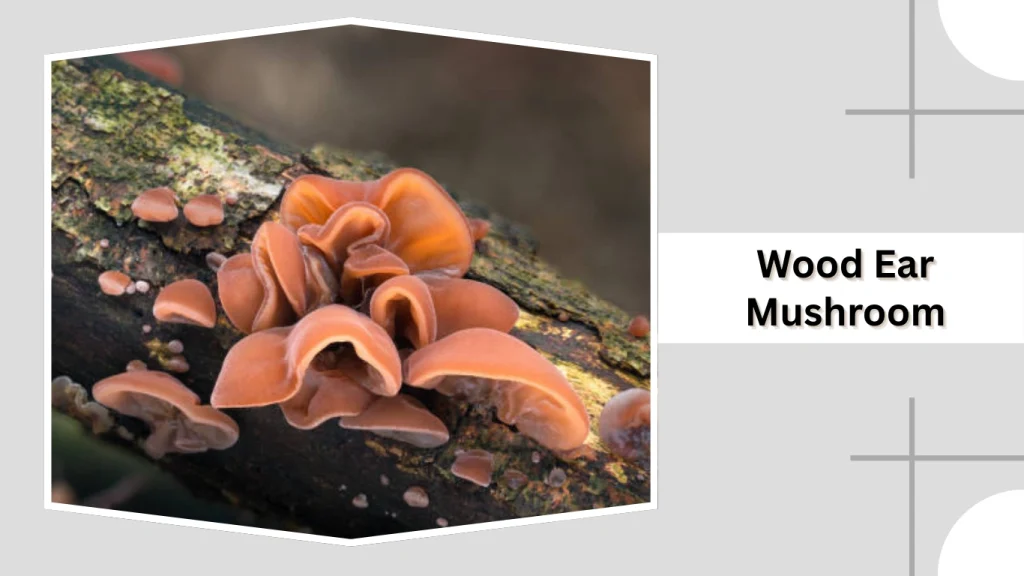
Wood ear mushroom, also known as black fungus or cloud ear, is a popular edible mushroom in Asian cuisine. It has a unique gelatinous texture and a mild, slightly earthy flavor. Wood ear mushrooms are often used in soups, stir-fries, and salads for their crunchy texture rather than strong taste.
Identification
- Thin, ear-shaped fruiting body
- Dark brown to black color
- Smooth or slightly wrinkled surface
- Tough, rubbery, gelatinous texture
- Mild, neutral aroma
Habitat
Wood ear mushrooms grow on dead or decaying hardwood trees, especially elder, oak, and beech. They are commonly found in temperate and subtropical forests. Cultivation on logs or sawdust substrates is widespread for commercial production.
Uses
Wood ear mushrooms are used in soups, hot pots, stir-fries, and salads. They are typically soaked in water before cooking to rehydrate them. Their unique texture adds crunch to dishes without overpowering flavors.
Nutrition
Wood ear mushrooms are low in calories and fat while providing fiber and small amounts of protein. They contain iron, potassium, and antioxidants. Their gelatinous texture and mild flavor make them ideal for adding variety and nutritional benefits to dishes.
22. Beech Mushroom (Hypsizygus tessellatus)
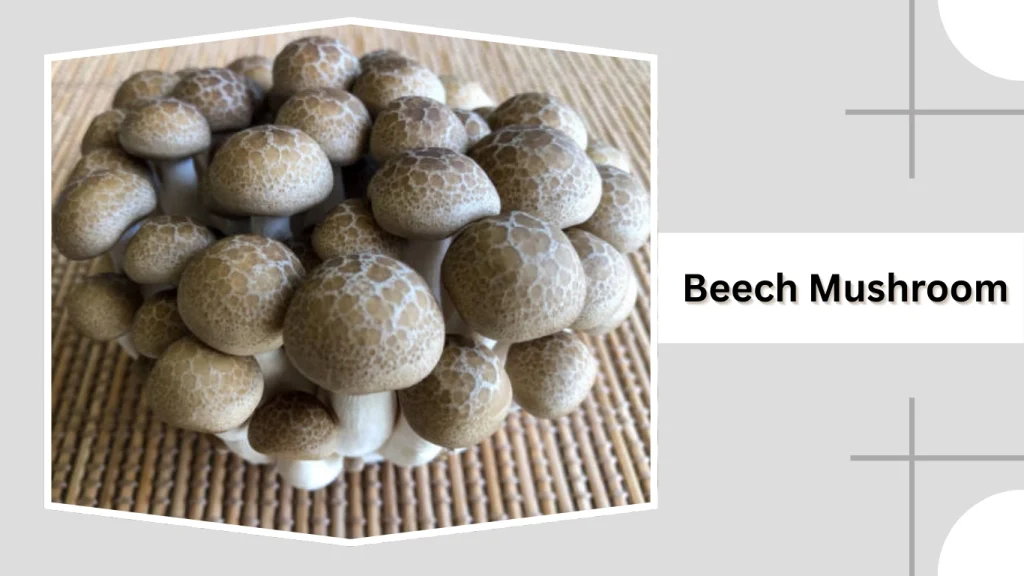
Beech mushroom, also known as shimeji, is a cluster-growing edible mushroom popular in Japanese, Korean, and Chinese cuisines. It has a firm texture and a slightly nutty, umami-rich flavor. Beech mushrooms are versatile and hold their shape well when cooked, making them ideal for stir-fries, soups, and hot pots.
Identification
- Small to medium-sized caps, usually 1–3 cm wide
- Light brown to beige caps with a smooth surface
- Long, thin, white stems that grow in dense clusters
- White gills running down part of the stem
- Mild, pleasant aroma
Habitat
Beech mushrooms naturally grow on decaying hardwoods, especially beech, oak, and chestnut trees. They are commonly found in temperate forests and are also widely cultivated on sawdust or wood-based substrates in controlled environments.
Uses
Beech mushrooms are commonly used in stir-fries, soups, noodle dishes, and hot pots. They are often sautéed or lightly boiled to maintain their firm texture and enhance their umami flavor. The clusters can be separated before cooking for even heat distribution.
Nutrition
Beech mushrooms are low in calories and fat while providing protein, dietary fiber, and essential minerals. They are rich in B vitamins, potassium, and antioxidants, making them a nutritious addition to balanced meals.
23. Nameko Mushroom (Pholiota nameko)
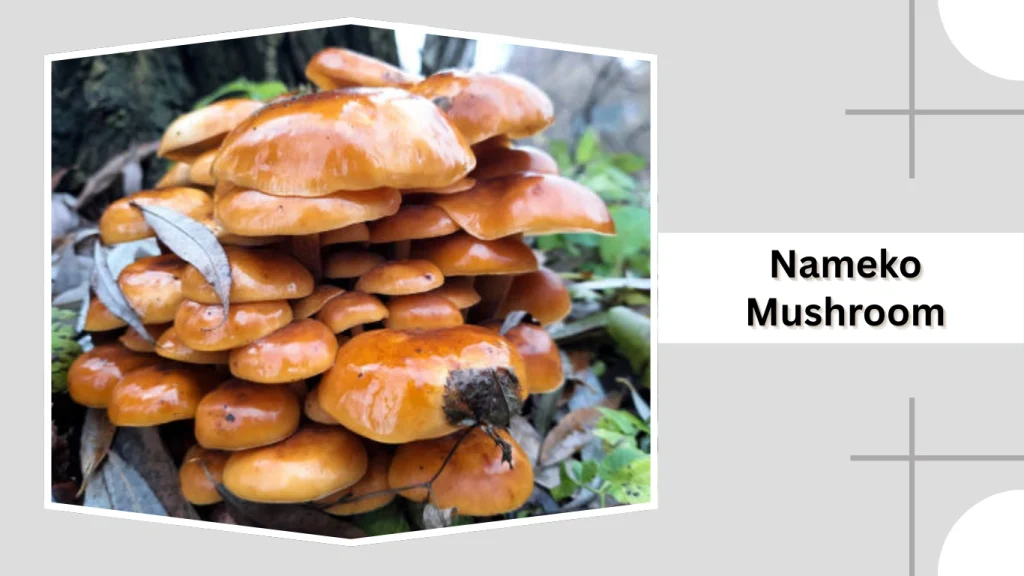
Nameko mushroom is a small, amber-brown mushroom known for its slightly gelatinous coating and mild, nutty flavor. It is especially popular in Japanese cuisine, where it is commonly used in miso soup, stir-fries, and noodle dishes. Nameko mushrooms have a delicate texture that softens when cooked while releasing a subtle umami taste.
Identification
- Small, convex to slightly flattened cap, 2–5 cm wide
- Amber-brown color with a slightly sticky, gelatinous surface
- Thin, white to light brown stem
- White gills underneath the cap
- Mild, nutty aroma
Habitat
Nameko mushrooms grow on decaying hardwood logs, especially oak and maple. They are native to East Asia and are mostly cultivated today on sterilized sawdust or wood-based substrates. They thrive in cool, humid environments.
Uses
Nameko mushrooms are commonly added to soups, stir-fries, and noodle dishes. They can also be sautéed or lightly simmered, often with soy sauce, mirin, and other seasonings. Their gelatinous coating adds a unique texture to dishes.
Nutrition
Nameko mushrooms are low in calories and fat and provide dietary fiber, protein, and essential minerals. They contain B vitamins, potassium, and antioxidants. Their delicate flavor and texture make them suitable for light and healthy meals.
24. Shaggy Mane Mushroom (Coprinus comatus)
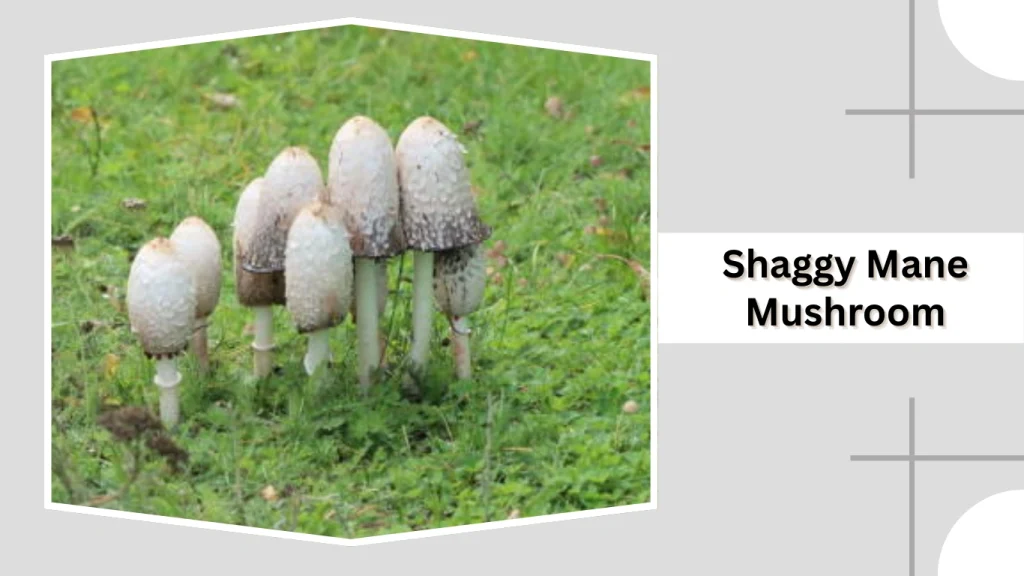
Shaggy mane mushroom, also known as lawyer’s wig, is a distinctive edible mushroom with a tall, cylindrical cap covered in white scales. It has a delicate texture and a mild, nutty flavor when young. Shaggy mane mushrooms must be consumed shortly after harvesting, as they deteriorate quickly and auto-digest into a black, inky liquid.
Identification
- Tall, cylindrical cap, 5–15 cm long, covered with shaggy white scales
- White to cream-colored stem, hollow and fragile
- Gills start white, then turn black and liquefy as it matures
- Flesh soft and delicate
- Mild, earthy aroma
Habitat
Shaggy mane mushrooms grow in grassy areas, lawns, meadows, and along roadsides. They commonly appear in spring and autumn, often after rainfall. They can also grow in disturbed soils and urban areas.
Uses
Shaggy mane mushrooms are best cooked immediately after harvesting. They can be sautéed, added to soups, or lightly fried. Because of their rapid autodigestion, preservation is difficult, and they are rarely stored for later use.
Nutrition
Shaggy mane mushrooms are low in calories and fat while providing protein, fiber, and minerals. They contain B vitamins, potassium, and antioxidants. Their delicate flavor makes them a sought-after seasonal ingredient in fresh mushroom dishes.
25. Matsutake Mushroom (Tricholoma matsutake)
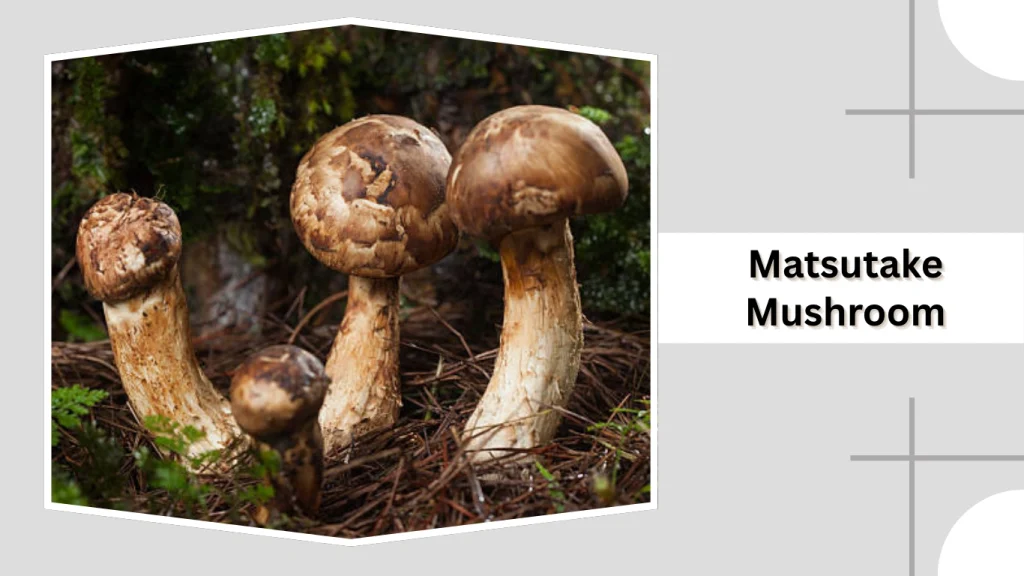
Matsutake mushroom is a highly prized wild mushroom known for its distinctive spicy-aromatic fragrance and firm texture. It is considered a delicacy in Japanese, Korean, and Chinese cuisines. Matsutake mushrooms are rare and expensive due to their limited growth habitat and slow maturation, making them a symbol of gourmet cooking.
Identification
- Convex to flat cap, 5–15 cm wide, brownish or reddish-brown in color
- Thick, sturdy stem with a bulbous base
- White gills underneath the cap, closely spaced
- Flesh firm and white
- Strong, spicy-aromatic fragrance
Habitat
Matsutake mushrooms grow under pine and mixed forests, forming symbiotic relationships with tree roots. They are commonly found in temperate regions of Japan, Korea, China, and North America. They prefer well-drained, sandy soil and appear in autumn.
Uses
Matsutake mushrooms are typically grilled, steamed, or added to rice dishes, soups, and hot pots. Their aromatic flavor is delicate and highly sought after, often requiring minimal seasoning to preserve their unique taste.
Nutrition
Matsutake mushrooms are low in calories and fat while providing protein, dietary fiber, and essential minerals. They contain B vitamins, potassium, and antioxidants. Their rarity and strong flavor make them a prized choice in gourmet and traditional dishes.
26. Velvet Foot Mushroom (Flammulina velutipes)
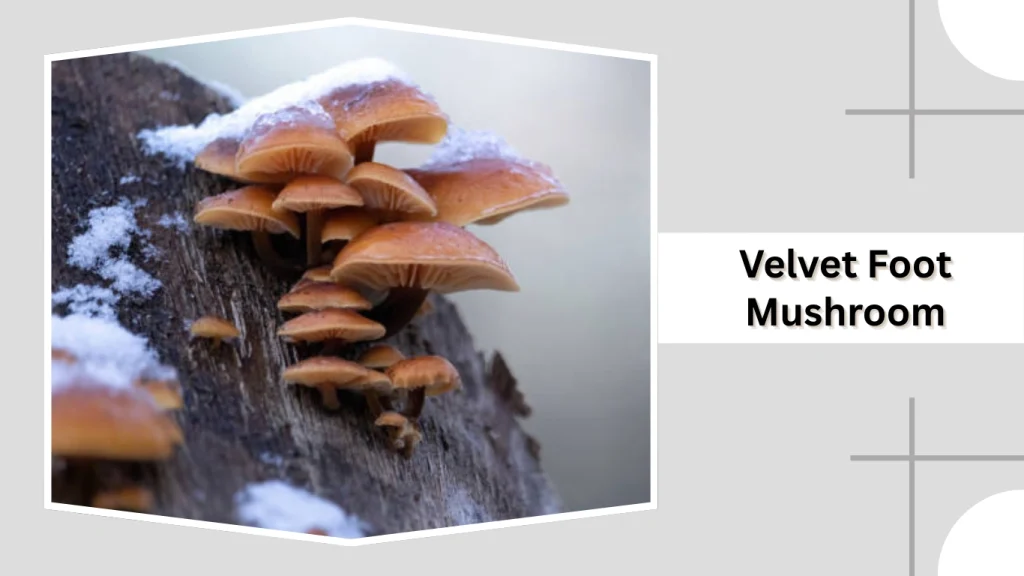
Velvet foot mushroom, also known as velvet shank, is a small, edible mushroom notable for its velvety stem and mild, slightly sweet flavor. It is related to the enoki mushroom but has a thicker stem and broader cap. Velvet foot mushrooms are often used in Asian cuisine and can be eaten cooked or dried.
Identification
- Small to medium cap, 2–5 cm wide, light brown to tan
- Velvety, reddish-brown stem
- White gills running slightly down the stem
- Firm but tender flesh
- Mild, earthy aroma
Habitat
Velvet foot mushrooms grow on dead or decaying wood, particularly hardwoods such as elm or oak. They are commonly found in clusters during late autumn and winter. They thrive in cold, humid environments and are also cultivated commercially.
Uses
Velvet foot mushrooms are used in soups, stir-fries, hot pots, and sautéed dishes. They can also be dried and rehydrated for later use. Their mild flavor complements a variety of ingredients, including vegetables, meat, and noodles.
Nutrition
Velvet foot mushrooms are low in calories and fat while providing dietary fiber, protein, and minerals. They contain B vitamins, potassium, and antioxidants. Their tender texture and gentle flavor make them suitable for nutritious and light meals.
27. Ink Cap Mushroom (Coprinopsis atramentaria)
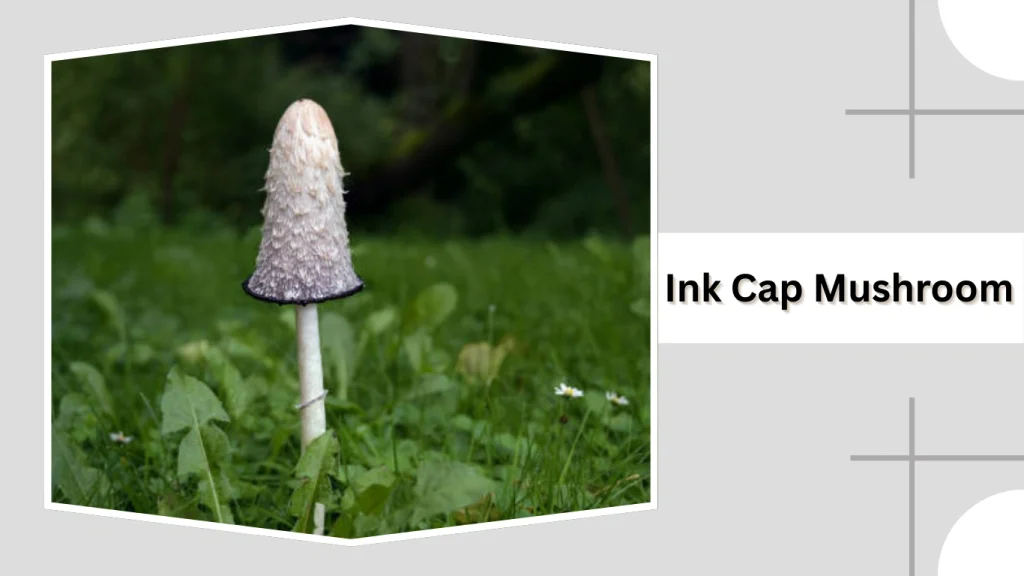
Ink cap mushroom, also known as inky cap, is a unique mushroom recognized for its delicate, elongated cap and rapid autodigesting ability. When mature, the cap dissolves into a black, inky liquid, giving it its name. It has a mild flavor when young but must be eaten fresh and cooked properly.
Identification
- Tall, conical to bell-shaped cap, white to grayish
- Cap surface smooth when young, becomes shaggy with age
- White gills that turn black and liquefy as the mushroom matures
- Thin, fragile stem
- Mild, earthy aroma
Habitat
Ink cap mushrooms grow on rich soil, lawns, gardens, and wood chips. They are commonly found in clusters during spring and autumn. They are saprophytic, feeding on decaying organic matter, and are widespread in temperate regions.
Uses
Young ink cap mushrooms are sautéed, fried, or added to soups and sauces. They must be cooked fresh, as the mushroom deteriorates quickly. Consumption with alcohol should be avoided due to potential toxic reactions with certain species.
Nutrition
Ink cap mushrooms are low in calories and fat, providing fiber, protein, and minerals. They contain B vitamins and antioxidants. Because of their delicate nature, they are best consumed promptly after harvesting.
28. Coral Mushroom (Ramaria species)
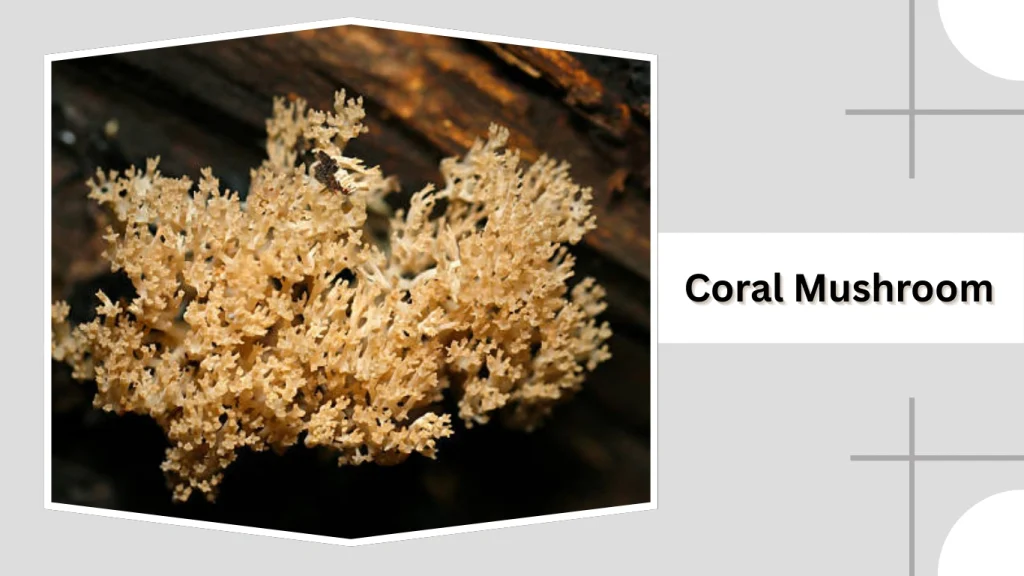
Coral mushrooms are a group of wild mushrooms known for their striking branching appearance, resembling underwater coral. They come in various colors, including white, yellow, orange, and pink. They have a firm texture and a mild to slightly nutty flavor, making them popular among foragers and chefs for both visual appeal and taste.
Identification
- Branching, coral-like structure with multiple thin arms
- Color varies: white, yellow, orange, or pink
- Firm, brittle flesh
- No traditional cap or gills; spore-producing surfaces on branches
- Mild, earthy aroma
Habitat
Coral mushrooms grow on soil, decaying wood, or forest litter, often in coniferous or mixed forests. They are typically found in temperate regions during late summer and autumn. Some species are mycorrhizal, forming symbiotic relationships with trees.
Uses
Coral mushrooms are used in soups, stews, stir-fries, and sautéed dishes. They are often sliced or broken into smaller pieces before cooking. Their delicate flavor pairs well with simple seasonings to highlight their texture and visual appeal.
Nutrition
Coral mushrooms are low in calories and fat while providing protein, fiber, and essential minerals. They contain B vitamins, potassium, and antioxidants. Their unique structure and nutritional benefits make them an attractive choice for foraged and gourmet meals.
29. Straw Mushroom (Volvariella volvacea)
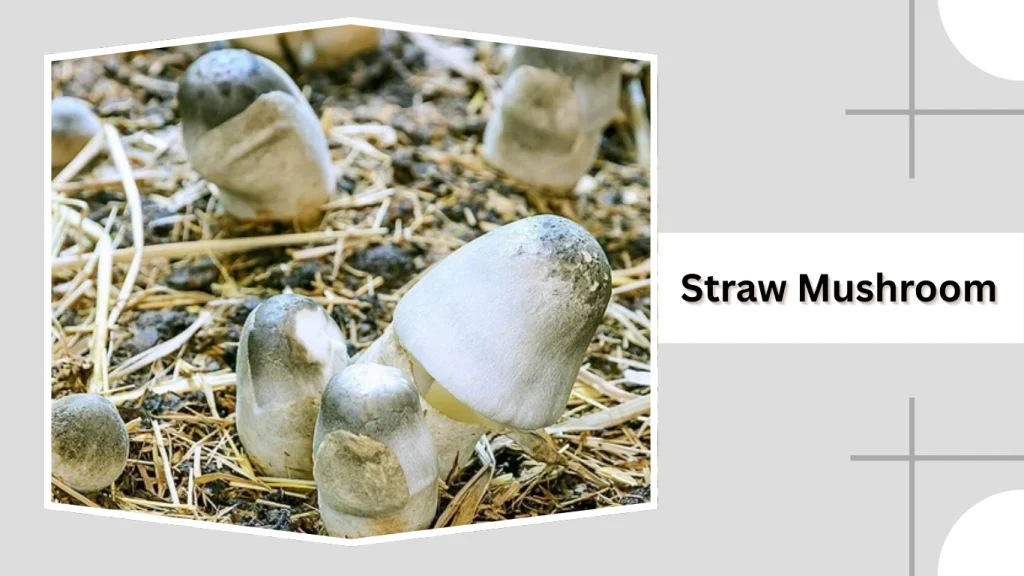
Straw mushroom is a popular edible mushroom in Asian cuisine, especially in Chinese, Thai, and Vietnamese dishes. It is known for its small, rounded cap and mild, delicate flavor. Straw mushrooms are often used fresh, canned, or dried and are valued for their tender texture and quick cooking time.
Identification
- Small to medium-sized rounded cap, 2–5 cm wide
- White to grayish when young, turning darker with age
- Short, thick stem
- Gills covered with a volva when immature, turning pink to dark brown
- Mild, earthy aroma
Habitat
Straw mushrooms grow on decaying straw, rice husks, and other agricultural waste. They are primarily cultivated in Southeast Asia but can occasionally be found in the wild. They prefer warm, humid conditions and are often grown year-round in controlled environments.
Uses
Straw mushrooms are commonly added to soups, stir-fries, curries, and hot pots. Their tender texture makes them ideal for quick cooking methods. They are also canned or pickled for preservation and convenience.
Nutrition
Straw mushrooms are low in calories and fat while providing protein, fiber, and essential nutrients. They contain B vitamins, potassium, and antioxidants. Their mild flavor and soft texture make them versatile and suitable for everyday meals.
30. Yellow Foot Mushroom (Craterellus tubaeformis)

Yellow foot mushroom, also known as winter chanterelle or funnel chanterelle, is a small, edible wild mushroom with a mild, slightly peppery flavor. It is prized for its firm texture and versatility in cooking. The mushroom gets its name from the distinctive yellowish stem that contrasts with its darker cap.
Identification
- Small to medium-sized funnel-shaped cap, brown to dark brown
- Bright yellow to orange stem
- Hollow, slender stem
- Smooth or slightly wrinkled cap surface
- Mild, slightly fruity aroma
Habitat
Yellow foot mushrooms grow in moist forests, particularly under conifers and mossy areas. They are common in temperate regions of North America and Europe, often appearing in autumn. They are saprophytic, feeding on decomposing organic matter in soil and leaf litter.
Uses
Yellow foot mushrooms are used in soups, risottos, pasta, and sautéed dishes. They can be dried to preserve flavor and rehydrated for later use. Their firm texture allows them to hold shape during cooking, enhancing both flavor and presentation.
Nutrition
Yellow foot mushrooms are low in calories and fat while providing protein, fiber, and essential minerals. They contain B vitamins, potassium, and antioxidants. Their delicate taste and firm texture make them a valued addition to wild mushroom dishes.
31. Bay Bolete Mushroom (Imleria badia)
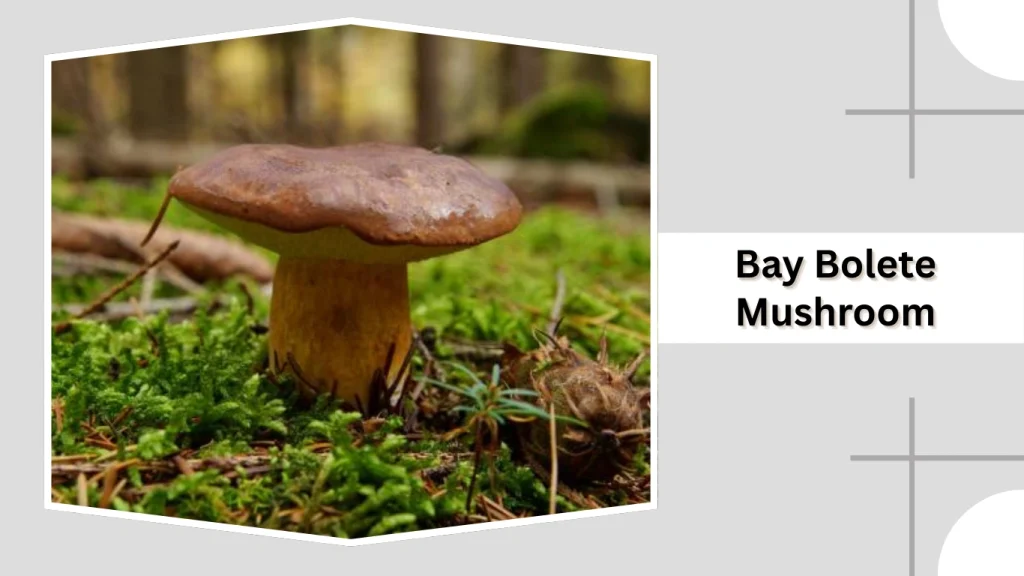
Bay bolete mushroom is an edible wild mushroom known for its smooth, chestnut-brown cap and firm, spongy texture. It has a mild, nutty flavor and is commonly used in European cuisine, especially in soups, sauces, and sautéed dishes. Bay boletes are popular among foragers due to their abundance and ease of identification.
Identification
- Convex to slightly flat cap, 5–15 cm wide, brown to chestnut color
- Thick, stout stem, pale yellow to light brown
- Spongy pores underneath instead of gills, yellowish turning olive with age
- Firm, white to cream-colored flesh
- Mild, earthy aroma
Habitat
Bay bolete mushrooms grow in coniferous and mixed forests, forming symbiotic relationships with trees such as pine, spruce, and fir. They are typically found on the forest floor in late summer and autumn, often near moss or leaf litter.
Uses
Bay boletes are commonly sautéed, roasted, or added to soups, stews, and pasta dishes. They hold their shape well during cooking, making them ideal for dishes where texture is important. Drying the mushroom is also common to preserve its flavor for later use.
Nutrition
Bay bolete mushrooms are low in calories and fat, providing dietary fiber, protein, and essential minerals. They are rich in B vitamins, potassium, and antioxidants. Their mild, nutty flavor makes them a versatile choice in seasonal and gourmet cooking.
32. False Morel Mushroom (Gyromitra esculenta)
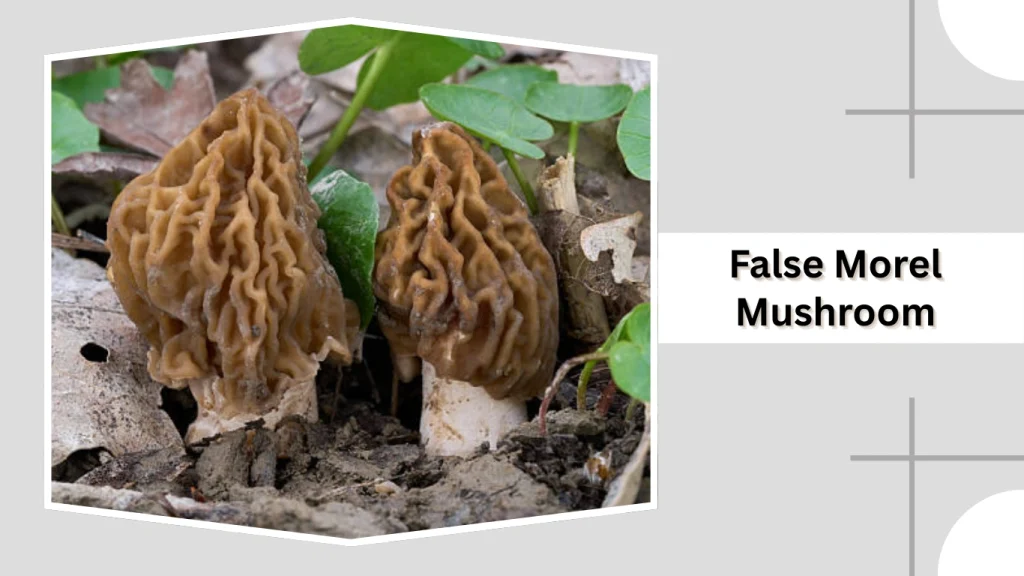
False morel mushroom is a wild mushroom that resembles the true morel but is highly toxic if eaten raw or improperly prepared. It has a brain-like, wrinkled cap and contains compounds that can cause severe poisoning. Despite its toxicity, some cultures consume it after careful preparation, but it is generally considered dangerous and should be avoided by most foragers.
Identification
- Irregular, lobed, wrinkled, or brain-like cap, reddish-brown to dark brown
- Hollow or chambered stem, pale in color
- Flesh soft and brittle
- No true gills; spore-producing surface under the cap
- Strong, earthy aroma
Habitat
False morels grow in sandy soils, forest edges, and near coniferous trees. They appear in spring and early summer in temperate regions. They are commonly found in areas disturbed by human activity or natural events.
Uses
Due to their toxicity, false morels are generally avoided. In rare traditional practices, they are boiled multiple times to reduce toxins, but even then, consumption carries significant risk. They are mostly studied for identification purposes and for warning foragers.
Nutrition
False morel mushrooms are not considered safe for dietary use. Consuming them improperly can lead to serious illness or death. Knowledge of their appearance is essential for distinguishing them from edible morels.
33. Destroying Angel Mushroom (Amanita virosa / Amanita bisporigera)
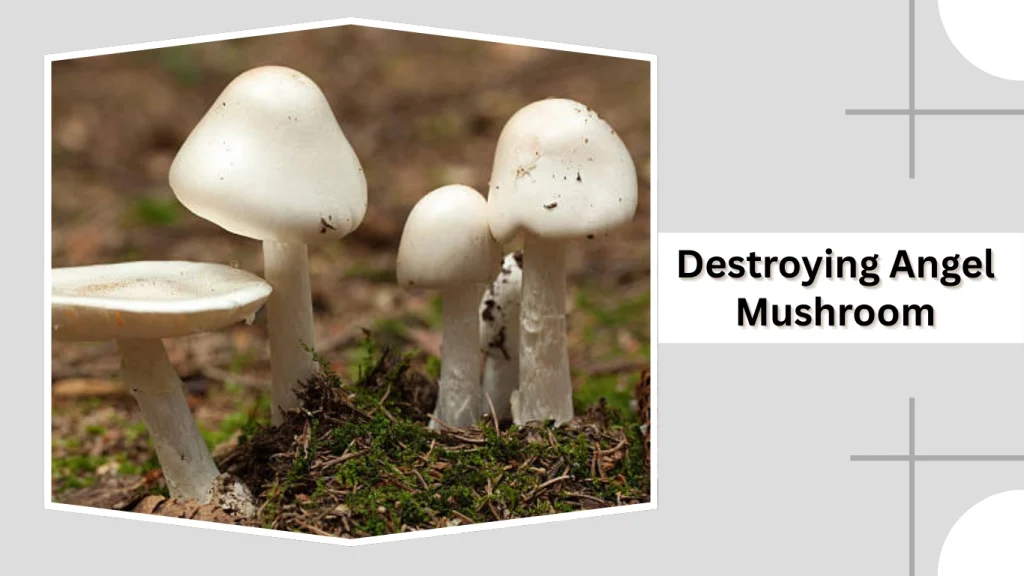
Destroying angel mushroom is a deadly poisonous mushroom that resembles edible white mushrooms but is extremely toxic. It contains potent toxins that can cause liver and kidney failure, and even small amounts can be fatal. This mushroom is important for foragers to recognize to avoid accidental ingestion.
Identification
- Pure white, smooth, convex to flat cap, 5–15 cm wide
- White gills underneath the cap
- Thick, white stem with a bulbous base
- Presence of a volva (cup-like structure) at the base
- Odorless or faintly sweet aroma
Habitat
Destroying angel mushrooms grow in forests, woodland edges, and grassy clearings, often near deciduous and coniferous trees. They appear in spring and autumn in temperate regions. They are saprophytic and mycorrhizal, forming associations with tree roots.
Uses
Destroying angel mushrooms are not edible and should never be consumed. They are important for educational purposes and identification training for foragers. Even small amounts can be deadly if ingested.
Nutrition
Destroying angel mushrooms have no safe nutritional use due to their extreme toxicity. Awareness of their appearance is critical for mushroom foraging safety.
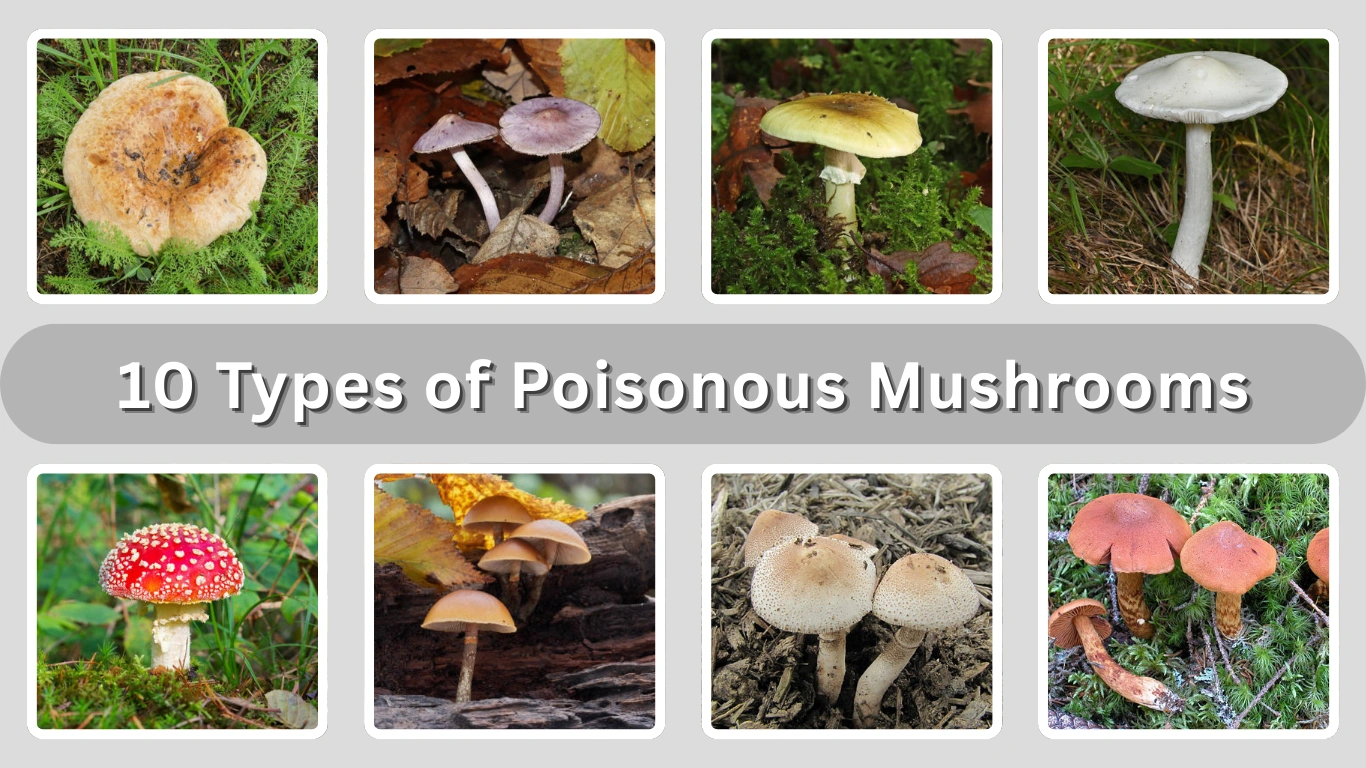
34. Fly Agaric Mushroom (Amanita muscaria)
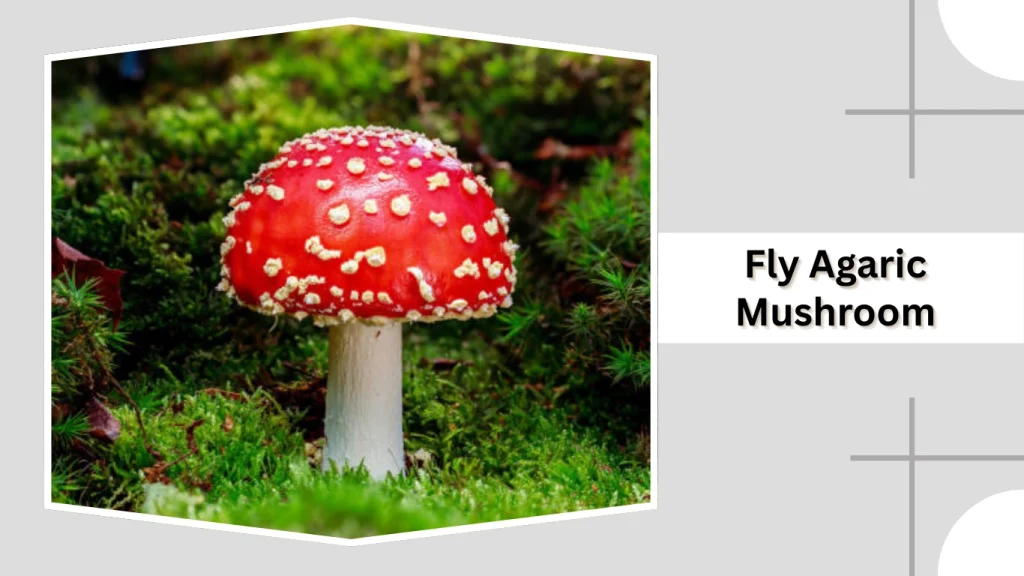
Fly agaric mushroom is one of the most iconic mushrooms, easily recognizable by its bright red cap with white spots. While famous for its striking appearance, it is toxic and can cause hallucinations, nausea, and other symptoms if ingested. It has a long history in folklore, art, and traditional rituals.
Identification
- Bright red cap, 5–20 cm wide, with scattered white warts
- White gills underneath the cap
- Thick white stem with a ring and bulbous base
- White, powdery spores
- Distinctive, slightly sweet odor
Habitat
Fly agaric mushrooms grow in temperate and boreal forests, often forming symbiotic relationships with pine, spruce, and birch trees. They are commonly found in Europe, Asia, and North America during late summer and autumn.
Uses
Fly agaric mushrooms are not considered edible due to their toxicity. Historically, they have been used in shamanic and traditional rituals for their psychoactive properties, but consumption is dangerous and strongly discouraged.
Nutrition
Fly agaric mushrooms have no safe nutritional value and should never be eaten. Identification knowledge is essential to avoid accidental poisoning, especially because they can resemble edible species to the untrained eye.
35. Death Cap Mushroom (Amanita phalloides)
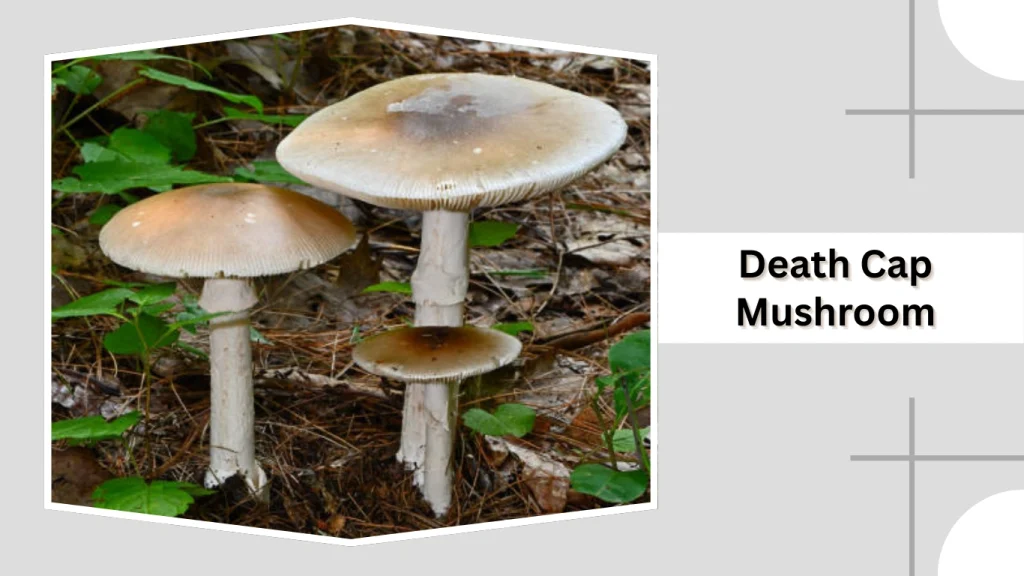
The death cap mushroom is one of the most dangerous mushrooms in the world. It is highly toxic, and ingestion of even a small amount can lead to liver and kidney failure and death. It is responsible for the majority of fatal mushroom poisonings worldwide, making it crucial for foragers to recognize and avoid it.
Identification
- Smooth, greenish to yellowish cap, 5–15 cm wide
- White gills underneath the cap
- Thick white stem with a bulbous base and volva
- White spore print
- Slightly sweet, faint odor when fresh
Habitat
Death cap mushrooms grow in forests, woodlands, and grassy areas, often in association with oak, chestnut, pine, and other trees. They are found in temperate regions of Europe, North America, and other parts of the world, typically appearing in late summer and autumn.
Uses
Death cap mushrooms are not edible and should never be consumed. Awareness of their appearance is critical for safe mushroom foraging. They are studied primarily for identification and toxicology purposes.
Nutrition
Death cap mushrooms have no safe nutritional value due to their extreme toxicity. Education and caution are essential to prevent accidental ingestion and poisoning.
FAQs
What is the safest way to identify edible mushrooms?
Identifying edible mushrooms requires careful observation of their size, shape, color, gills, stem, and habitat. Using reliable field guides, consulting experts, and avoiding wild mushrooms that resemble toxic species are essential steps. Never consume mushrooms unless you are 100% certain of their identity.
Can all mushrooms be eaten raw?
No, not all mushrooms are safe to eat raw. Some, like button mushrooms and enoki, can be eaten raw in small amounts, while others, such as shiitake or shaggy mane, should be cooked to improve digestibility and remove potential toxins. Cooking also enhances flavor and texture.
How should wild mushrooms be stored?
Wild mushrooms should be stored in a paper bag in the refrigerator to absorb moisture and prevent spoilage. Avoid plastic bags, which trap moisture and can cause mold. Most wild mushrooms are best consumed within a few days of harvesting or dried for long-term storage.
Are all brightly colored mushrooms poisonous?
Not all brightly colored mushrooms are poisonous, but many, such as fly agaric and some false morels, use bright colors as a warning. Brightly colored mushrooms should be treated with caution, and proper identification is crucial before considering consumption.
What are some common toxic mushrooms to avoid?
Some of the most dangerous mushrooms include death cap (Amanita phalloides), destroying angel (Amanita virosa), fly agaric (Amanita muscaria), and false morels (Gyromitra species). These mushrooms can cause severe illness or death and should never be consumed.