






Orange trees are one of the most popular and rewarding fruit trees to grow. Their glossy green leaves, fragrant white blossoms, and bright fruit make them both beautiful and productive. Whether you’re planting a tree in your garden or curious about orange varieties in the market, it helps to know the differences between types.
Not all oranges are the same—some are better for eating fresh, others for juicing, and a few are best used in marmalades or cooking. Each variety has its own flavor, harvest time, and growing preferences.
In this article, you’ll learn about 13 popular types of orange trees. Each section includes a simple overview, how to identify the tree, when to harvest the fruit, and growing tips. Let’s start with one of the best-known juicing oranges—Valencia.
1. Valencia Orange Tree

Valencia oranges are the leading choice for fresh orange juice. They produce sweet, juicy fruit and are widely grown in warm regions like Florida, California, and parts of the Mediterranean. The tree is reliable and produces a heavy crop, often with fruit hanging into the summer months.
Identification
- Medium to large round fruit with a thin, smooth orange skin
- Deep orange flesh, very juicy
- Evergreen tree with dark green, oval-shaped leaves
- White, fragrant blossoms in spring
- Grows 12–20 feet tall depending on rootstock and pruning
- Often has both flowers and ripening fruit at the same time
Taste
Rich, sweet, and slightly tangy juice—ideal for fresh-squeezed orange juice with excellent flavor balance.
Harvest Time
Late-season variety; typically harvested from March to July, depending on location. Fruit may stay on the tree into summer without losing quality.
Growing and Storage Tips
Valencia orange trees need full sun and well-drained soil. They grow best in USDA zones 9–11 and need consistent watering during fruit development.
Once harvested, Valencia oranges can be kept at room temperature for up to a week or stored in the refrigerator for 2–3 weeks. They continue to sweeten slightly on the tree if left longer.
2. Navel Orange Tree
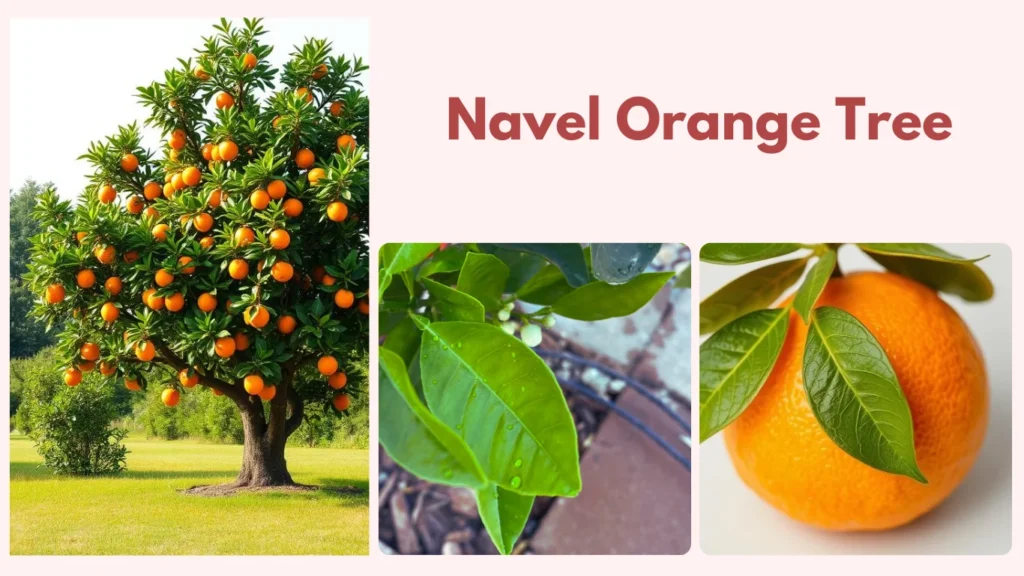
Navel oranges are one of the most popular oranges for fresh eating. They are named after the small “navel” at the bottom of the fruit, which resembles a belly button. These oranges are easy to peel, seedless, and perfect for snacking.
Identification
- Medium to large round fruit with a slightly thick, easy-to-peel skin
- Distinctive navel formation on the blossom end
- Bright orange flesh, seedless
- Compact, rounded tree with dark green leaves
- Grows 12–15 feet tall as a semi-dwarf
- Blooms in spring with white, fragrant flowers
Taste
Sweet, mild, and juicy with low acidity—best for eating fresh or adding to salads and desserts.
Harvest Time
Early to mid-season variety; typically harvested from November to January. Fruit holds well on the tree but should be picked before over-ripening.
Growing and Storage Tips
Navel oranges grow well in warm climates with full sun. They prefer well-drained soil and benefit from regular watering during fruiting.
Freshly picked Navel oranges can last up to 3–4 weeks in the refrigerator. They don’t store as long as juice oranges but stay fresh longer than softer-fleshed varieties.
3. Cara Cara Orange Tree
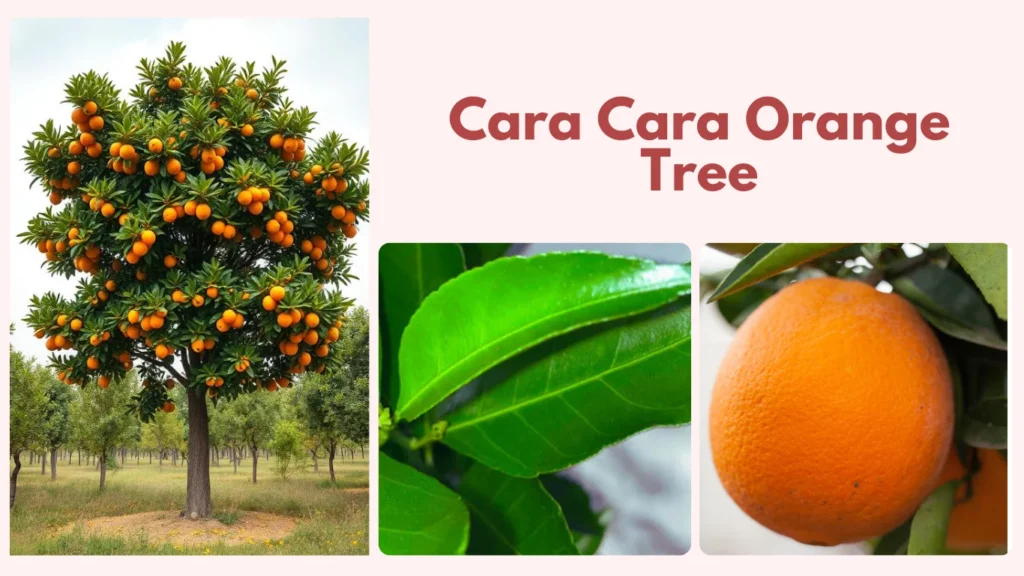
Cara Cara is a special type of navel orange known for its vibrant pink flesh. It’s a natural mutation of the Washington Navel and offers a sweeter, lower-acid flavor with berry-like notes.
Identification
- Medium-sized round fruit with the classic navel at the bottom
- Smooth orange skin with deep pink to reddish flesh
- Tree shape and foliage similar to standard Navel trees
- Blooms in spring, with fruit maturing in winter
- Grows 12–15 feet tall on semi-dwarf rootstock
Taste
Very sweet and juicy with subtle hints of berry and cherry—low in acid and refreshing to eat.
Harvest Time
Mid-season variety; typically ready to harvest from December to February, depending on your region.
Growing and Storage Tips
Cara Cara trees need full sun, good drainage, and moderate watering. They perform well in zones 9–11 and benefit from light pruning to shape the tree.
Once harvested, the fruit stays fresh for 2–3 weeks at room temperature or up to a month when refrigerated. Best enjoyed fresh for its unique color and flavor.
4. Blood Orange Tree

Blood oranges are known for their striking red or deep pink flesh and a rich, berry-like flavor. Native to the Mediterranean, these oranges grow best in areas with warm days and cool nights.
Identification
- Medium-sized fruit with orange skin and sometimes a reddish blush
- Deep red to dark pink flesh, depending on the variety
- Includes types like Moro, Tarocco, and Sanguinello
- Trees are dense with dark green foliage and fragrant spring blossoms
- Height ranges from 10–15 feet depending on variety and pruning
Taste
Sweet and tangy with raspberry or berry-like undertones—great for fresh eating, drinks, or garnishes.
Harvest Time
Mid to late-season variety; typically harvested from January to March, although exact timing varies by variety and climate.
Growing and Storage Tips
Blood orange trees thrive in full sun and prefer cool winters to develop their deep red color. Good drainage and regular watering help ensure a healthy crop.
Store harvested blood oranges in the fridge for 2–4 weeks. Color and flavor continue to deepen slightly even after picking, especially if allowed to ripen fully on the tree.
5. Seville Orange Tree

Seville oranges are best known for their bold, bitter flavor and are widely used in marmalades and culinary recipes. Originating in Spain, this variety is highly aromatic and ornamental, often grown for both its looks and kitchen value.
Identification
- Medium-sized, round fruit with thick, dimpled orange skin
- Bright orange flesh packed with seeds
- Glossy dark green leaves on a rounded, dense canopy
- Fragrant white blossoms appear in spring
- Tree grows 12–18 feet tall, with a symmetrical shape
Taste
Very bitter and tangy—ideal for marmalade, marinades, sauces, and liqueurs but not eaten raw.
Harvest Time
Mid to late-season variety; typically harvested from January to March once fully orange and slightly softened.
Growing and Storage Tips
Seville orange trees are cold-hardy and grow well in a variety of soils. They thrive in full sun and need consistent moisture during fruit development.
Once picked, the fruit can be refrigerated for 2–3 weeks or used immediately for preserving. The peels and juice are highly fragrant and commonly used in homemade syrups and zesting.
6. Hamlin Orange Tree

Hamlin oranges are a reliable, early-season variety popular in Florida and other warm regions. The trees are cold-tolerant and productive, making them ideal for home gardeners and commercial groves alike.
Identification
- Small to medium-sized round fruit with smooth, thin orange skin
- Pale orange flesh with few or no seeds
- Upright tree with dense, dark green foliage
- Blooms early in spring with white flowers
- Semi-dwarf trees grow 10–15 feet tall
Taste
Mild, sweet, and very juicy—best for juicing, though it can be eaten fresh.
Harvest Time
Early-season variety; fruit ripens and is ready to harvest from October to December, making it one of the first oranges of the season.
Growing and Storage Tips
Hamlin trees grow well in full sun and are more cold-tolerant than many other sweet orange varieties. They’re highly productive and resistant to many diseases.
Fresh Hamlin oranges don’t store as long as thicker-skinned types. For best quality, consume or juice within 1–2 weeks of harvest, or refrigerate to extend shelf life.
7. Pineapple Orange Tree
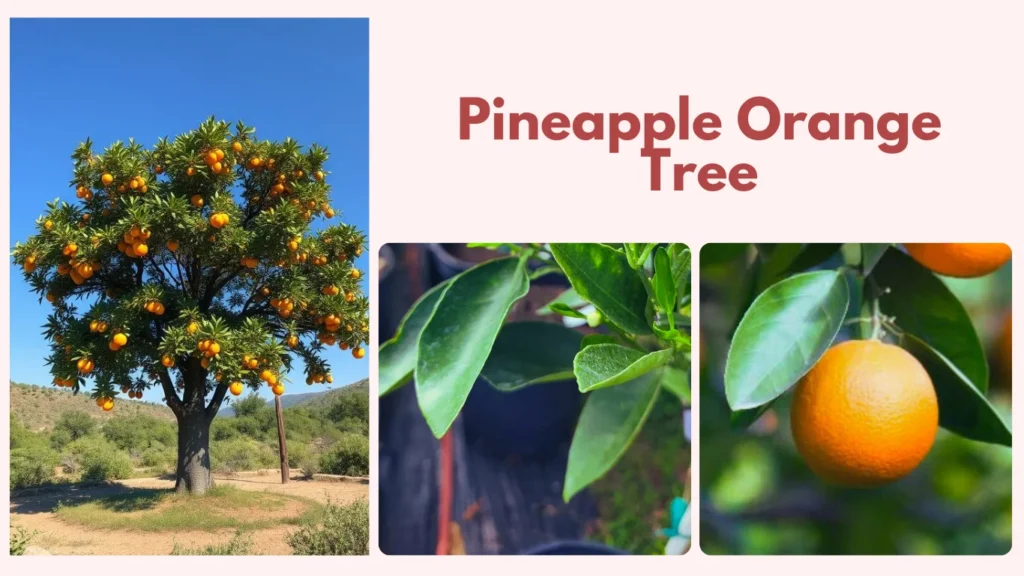
Pineapple oranges are a unique variety with a slight tang and tropical aroma. Though not related to pineapples, their flavor has a hint of citrus complexity that sets them apart.
Identification
- Medium-sized fruit with bumpy, slightly thick orange skin
- Bright orange flesh with noticeable juice and a few seeds
- Tree has a spreading canopy and large green leaves
- Blooms mid to late spring
- Grows 12–16 feet tall in standard or semi-dwarf form
Taste
Sweet with a mild tartness and a tropical, pineapple-like aftertaste—great for juicing and fresh use.
Harvest Time
Mid-season variety; usually harvested between December and February, depending on region and weather.
Growing and Storage Tips
Pineapple orange trees do best in sunny, warm climates. They prefer well-drained soil and consistent moisture but are relatively easy to maintain.
Once picked, the fruit keeps for about 2–3 weeks at room temperature or longer in refrigeration. Flavor is best when consumed fresh or juiced within a few days of harvesting.
8. Jaffa Orange Tree

Jaffa oranges, also known as Shamouti oranges, are famous for their sweetness and thick skin. Originally from Israel, they are grown mostly in Mediterranean climates and are known for being easy to peel and nearly seedless.
Identification
- Medium to large fruit with oval to slightly oblong shape
- Thick, bumpy orange skin that peels easily
- Orange-colored flesh with minimal seeds
- Tree has an upright structure with glossy green leaves
- Flowers bloom in spring
- Can grow 12–18 feet tall depending on conditions
Taste
Sweet, mild, and low in acidity—perfect for fresh eating and juicing with a smooth texture.
Harvest Time
Mid to late-season variety; typically harvested from January to March, when the fruit is fully orange and slightly soft to the touch.
Growing and Storage Tips
Jaffa orange trees thrive in warm, dry climates with full sun and deep watering. They’re well-suited for Mediterranean and desert-like regions.
The fruit stores well for 2–3 weeks at room temperature and even longer in refrigeration. The thick skin helps protect it during handling and shipping.
9. Parson Brown Orange Tree

Parson Brown is one of the earliest maturing sweet orange varieties and was once the most popular juice orange in Florida before Valencia took the lead. It is known for reliable production and a balanced flavor.
Identification
- Medium-sized round fruit with a slightly rough, dull orange skin
- Juicy flesh with several seeds per fruit
- Compact, bushy tree with dense foliage
- Early blooming in spring
- Grows about 12–16 feet tall in most gardens
Taste
Mildly sweet with light acidity—great for juicing or eating fresh if harvested early in the season.
Harvest Time
Early-season variety; typically harvested from October to December, making it one of the first oranges to ripen.
Growing and Storage Tips
Parson Brown orange trees are hardy, adaptable, and do well in Florida-type climates. They prefer full sun and regular watering during fruit development.
Although not as long-lasting as seedless varieties, the fruit can be refrigerated for 2–3 weeks after harvest. Best used fresh or juiced soon after picking.
10. Trovita Orange Tree
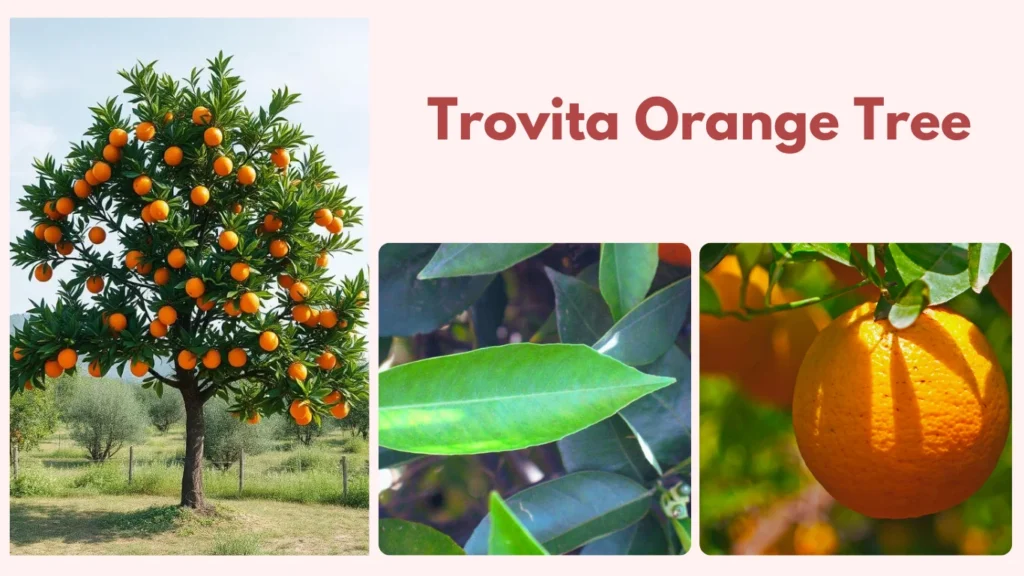
Trovita is a sweet orange variety ideal for dry, desert regions. Originally developed in California, it produces sweet, seedless fruit and can even thrive in containers when grown on dwarf rootstock.
Identification
- Medium-sized round fruit with smooth, thin orange skin
- Juicy, nearly seedless flesh
- Tree has a rounded canopy with medium green leaves
- White, fragrant blossoms appear in spring
- Grows 10–15 feet tall, or smaller in containers
Taste
Sweet, juicy, and mild—great for fresh eating or juicing, especially in hot, dry climates.
Harvest Time
Mid-season variety; harvested from February to April, depending on the region. Fruit often stays on the tree longer than other varieties.
Growing and Storage Tips
Trovita orange trees are ideal for regions with hot summers and mild winters. They need full sun, occasional deep watering, and benefit from occasional fertilization.
The fruit can remain on the tree for extended periods without losing quality. After harvest, it can be stored in the fridge for up to 4 weeks while maintaining sweetness and freshness.
11. Salustiana Orange Tree
The Salustiana orange is a Spanish variety prized for its sweet, low-acid juice. It’s nearly seedless and less tangy than other oranges, making it a favorite for juicing in European markets.
Identification
- Medium to large round fruit with smooth, bright orange skin
- Pale orange, seedless flesh that’s very juicy
- Tree has an upright, slightly open form
- Blossoms appear mid-spring
- Semi-dwarf trees grow about 12–15 feet tall
Taste
Sweet and mild with very low acidity—ideal for juicing or drinking straight with no added sugar.
Harvest Time
Mid-season variety; harvested from January to March, depending on the climate. Fruit should be picked when fully colored and slightly soft to the touch.
Growing and Storage Tips
Salustiana trees need full sun, good drainage, and thrive in warm, dry climates. Regular deep watering during fruiting season improves yield and juice quality.
Freshly harvested fruit can be stored in cool, dry conditions for 2–3 weeks. Best used for juicing within days of picking for maximum flavor.
12. Dream Navel Orange Tree
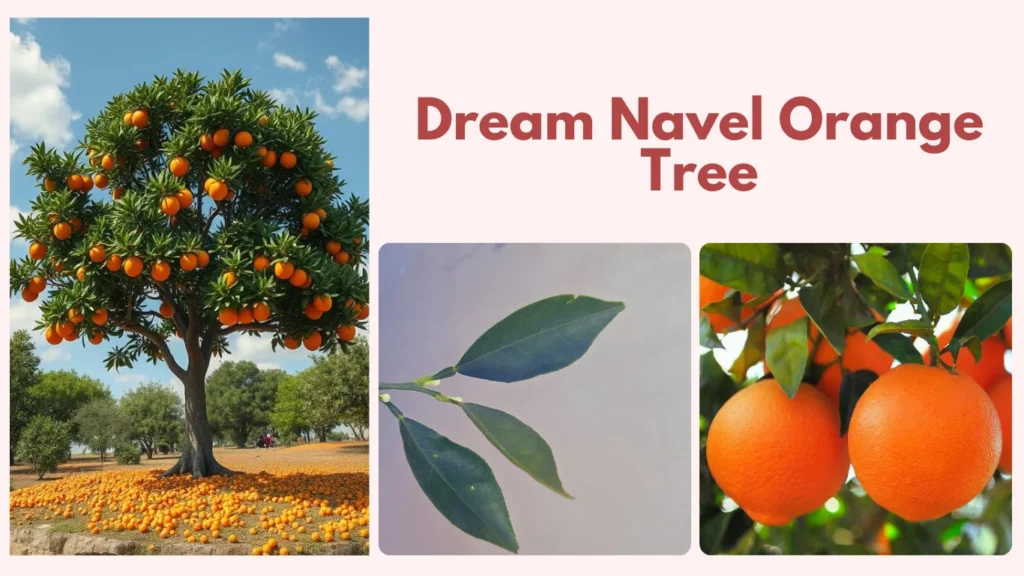
Dream Navel is a sweeter and lower-acid version of the traditional navel orange. It’s a Florida-developed variety known for rich flavor and excellent texture, perfect for those who prefer smooth, less tangy oranges.
Identification
- Medium-sized round fruit with a small navel and thin, easy-to-peel skin
- Deep orange, seedless flesh
- Tree is compact with dense, rounded foliage
- Blooms mid-spring
- Grows 10–15 feet tall, suitable for small yards or containers
Taste
Extra sweet with very low acidity and a rich, smooth flavor—excellent for eating fresh and juicing.
Harvest Time
Mid to late-season variety; typically harvested from December to February. Fruit ripens evenly and holds well on the tree for weeks.
Growing and Storage Tips
Dream Navel trees grow best in full sun and warm climates. They need regular watering, especially in dry seasons, and benefit from light pruning.
The fruit stores well in the refrigerator for up to 4 weeks. For best flavor, consume within 10–14 days of picking.
13. Chinotto Orange Tree

Chinotto oranges are small, bitter fruits often used in flavoring, bitters, and Italian soft drinks. Though not typically eaten fresh, they’re valued for their ornamental appeal and culinary use.
Identification
- Small, round fruit with thick, bright orange skin
- Very bitter flesh with many seeds
- Compact, bushy tree with small, glossy leaves
- White flowers bloom heavily in spring and may repeat in summer
- Grows 6–10 feet tall, ideal for pots or patios
Taste
Strongly bitter with citrusy, herbal undertones—used for making liqueurs, extracts, and soda flavoring.
Harvest Time
Late-season variety; harvested from November to January. Fruit should be fully orange and firm before picking.
Growing and Storage Tips
Chinotto trees thrive in full sun to partial shade and are excellent for container gardening. They’re tolerant of pruning and make attractive landscape plants.
The fruit is best used shortly after harvest in syrups, marinades, or as a garnish. It keeps for up to 2 weeks in the fridge.
Summary
Orange trees come in a wide variety of types, each offering something unique—whether it’s the sweet juiciness of a Valencia, the pink flesh of a Cara Cara, or the bold bitterness of a Seville. From early-season varieties like Hamlin and Parson Brown to late-season favorites like Valencia and Chinotto, there’s an orange tree to suit every taste and garden.
When choosing the right type for your home or orchard, consider how you plan to use the fruit—fresh eating, juicing, cooking, or preserving. Also take into account your local climate, available space, and whether you need a tree that’s ornamental or highly productive.
With the right variety and a little care, an orange tree can provide beauty, fragrance, and fresh fruit for many years to come.