






Passion flowers are among the most exotic and visually striking flowering vines in the world, known for their intricate petal structures, colorful corona filaments, and symbolic beauty. With hundreds of species found across tropical and subtropical regions, each type offers unique flower shapes, colors, and growth habits. This guide explores 17 popular types of passion flower, highlighting their diversity—from bold red tropical blooms to delicate highland varieties admired in gardens worldwide.
1. Passiflora caerulea (Blue Passion Flower)
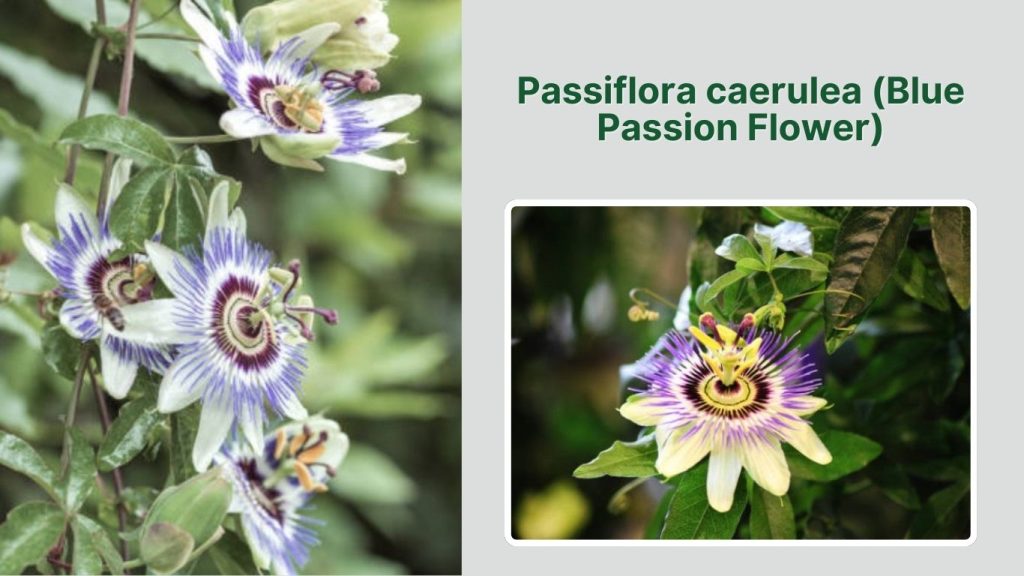
Passiflora caerulea, commonly known as the blue passion flower, is one of the most popular and widely cultivated passionflower species. It is admired for its striking blue, white, and purple floral patterns and its fast-growing, climbing habit. This species is often grown on fences, trellises, and garden walls, where its large, exotic-looking blooms create a dramatic tropical effect.
Identification
- Vigorous climbing vine with curling tendrils
- Flowers about 8–10 cm wide with blue, white, and purple filaments
- Deep green, palm-shaped leaves with 5 lobes
- Produces small, orange, egg-shaped fruits
- Strong ornamental appeal with a mild, sweet fragrance
Flower Characteristics
The flowers of Passiflora caerulea are highly distinctive, featuring a complex central corona made up of colorful filaments that radiate outward. The petals and sepals are usually pale blue to white, forming a bold contrast with the darker inner rings. Each bloom lasts only a short time, but the plant produces flowers continuously during the warm season.
Habitat and Growth
Blue passion flower is native to South America but is now grown worldwide in warm and temperate regions. It thrives in sunny locations with well-drained soil and moderate moisture. This species is relatively hardy compared to many other passionflowers and can tolerate light frost, making it suitable for both tropical and mild climates.
Blooming Season and Uses
Passiflora caerulea typically blooms from late spring through early autumn, producing waves of showy flowers. It is mainly cultivated as an ornamental vine for gardens and landscapes, but it is also valued for attracting bees and butterflies. In some regions, it is used in traditional herbal practices for its calming properties.
2. Passiflora edulis (Purple Passion Flower)

Passiflora edulis is one of the most economically important passion flower species, best known for producing the popular passion fruit. Along with its edible value, this vine is also admired for its attractive white-and-purple flowers. It is widely cultivated in tropical and subtropical regions for both ornamental gardening and fruit production.
Identification
- Fast-growing climbing vine with strong tendrils
- White petals with deep purple and blue corona filaments
- Glossy, three-lobed green leaves
- Produces round or oval purple/yellow fruits
- Flowers usually 6–9 cm wide
Flower Characteristics
The flowers of Passiflora edulis are highly decorative, featuring a layered corona that forms a striking purple-and-white ring. The central structure is complex, with prominent stamens and styles that rise above the petals. These blooms are lightly fragrant and visually attractive to pollinators such as bees.
Habitat and Growth
This species is native to South America and thrives in warm, sunny climates. It prefers well-drained soil, regular watering, and open spaces where the vine can climb freely. With proper support, it can quickly cover fences, trellises, and garden structures.
Blooming Season and Uses
Passiflora edulis usually blooms from spring through autumn. Beyond its ornamental beauty, it is widely grown for passion fruit, which is used in juices, desserts, and flavorings. The flowers also support local ecosystems by attracting insects and beneficial pollinators.
3. Passiflora incarnata (Maypop Passion Flower)

Passiflora incarnata, commonly called maypop, is a hardy passion flower species native to North America. It is known for its delicate lavender-purple flowers and its ability to survive in cooler climates compared to many tropical passionflowers. This plant is often grown in wildlife gardens and natural landscapes.
Identification
- Trailing or climbing vine with slender stems
- Soft purple and white flowers with frilled corona
- Three-lobed, medium-green leaves
- Produces green to yellow egg-shaped fruits
- Flowers typically 5–8 cm wide
Flower Characteristics
The flowers of Passiflora incarnata display soft lavender petals with intricate, wavy filaments forming a decorative crown. The central reproductive structures are raised and highly visible, giving the bloom a star-like appearance. Each flower opens for a short time but appears repeatedly during the season.
Habitat and Growth
This passion flower grows naturally in open fields, woodland edges, and along roadsides. It prefers full sun to partial shade and well-drained soil. Unlike many species, it can tolerate colder winters, dying back and regrowing from the roots each year.
Blooming Season and Uses
Maypop typically blooms from late spring through summer. It is popular in native plant gardens and is also valued in traditional herbal practices. The flowers attract butterflies, bees, and other pollinators, making it beneficial for biodiversity.
4. Passiflora alata (Winged-Stem Passion Flower)

Passiflora alata is a highly ornamental passion flower species, famous for its large, intensely fragrant blossoms. The vine is recognized by its winged stems and glossy green leaves, making it a favorite choice for tropical gardens and decorative trellises. Its bold red-and-purple flowers are among the most visually striking in the entire Passiflora genus.
Identification
- Climbing vine with distinctive winged (flattened) stems
- Very large, showy flowers with red, white, and purple tones
- Broad, shiny, oval-shaped green leaves
- Strong sweet fragrance, especially in the evening
- Produces oval, edible fruits in warm climates
Flower Characteristics
The flowers of Passiflora alata are large and dramatic, often reaching up to 10–12 cm across. They feature deep red petals contrasted by a richly colored purple-and-white corona. The floral scent is one of the strongest among passion flowers, which helps attract pollinators such as bees and butterflies.
Habitat and Growth
This species is native to Brazil and grows best in tropical to subtropical climates. It prefers full sun to partial shade, fertile soil, and regular watering. Given proper support, it climbs vigorously and can quickly cover pergolas, fences, and arches.
Blooming Season and Uses
Passiflora alata blooms mainly from late spring through summer, with flowers opening during the day and releasing fragrance as evening approaches. It is mainly grown as an ornamental vine, but its fruits are also edible and used locally in drinks and desserts.
5. Passiflora ligularis (Sweet Granadilla)
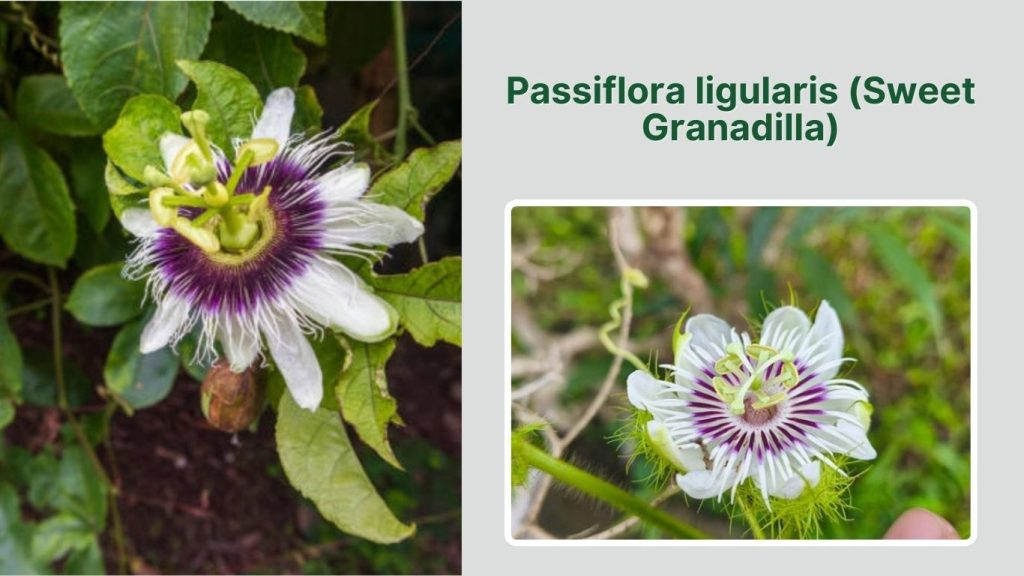
Passiflora ligularis, commonly called sweet granadilla, is valued for both its attractive flowers and its sweet, aromatic fruit. The blooms are elegant and less bold than some other passion flowers, but their delicate structure and color patterns make them appealing in fruit gardens and conservatories.
Identification
- Vigorous climbing vine with smooth green stems
- White to pale purple flowers with striped corona filaments
- Large, heart-shaped green leaves
- Produces round, orange fruits with sweet pulp
- Moderate flower size with a mild fragrance
Flower Characteristics
The flowers of Passiflora ligularis display pale petals surrounded by neatly arranged corona filaments that show bands of purple, white, and blue. The central floral column stands upright, giving the bloom a refined and symmetrical look. The overall appearance is softer compared to the dramatic red or blue species.
Habitat and Growth
This passion flower is native to Central and South America and grows well in warm, humid regions. It prefers bright light, well-drained soil, and consistent moisture. The vine climbs readily and performs well on trellises, arbors, and greenhouse structures.
Blooming Season and Uses
Passiflora ligularis blooms mainly during warm months. It is cultivated widely for its sweet granadilla fruit, which is eaten fresh or used in beverages and desserts. The flowers also attract pollinators, supporting healthy garden ecosystems.
6. Passiflora quadrangularis (Giant Granadilla)
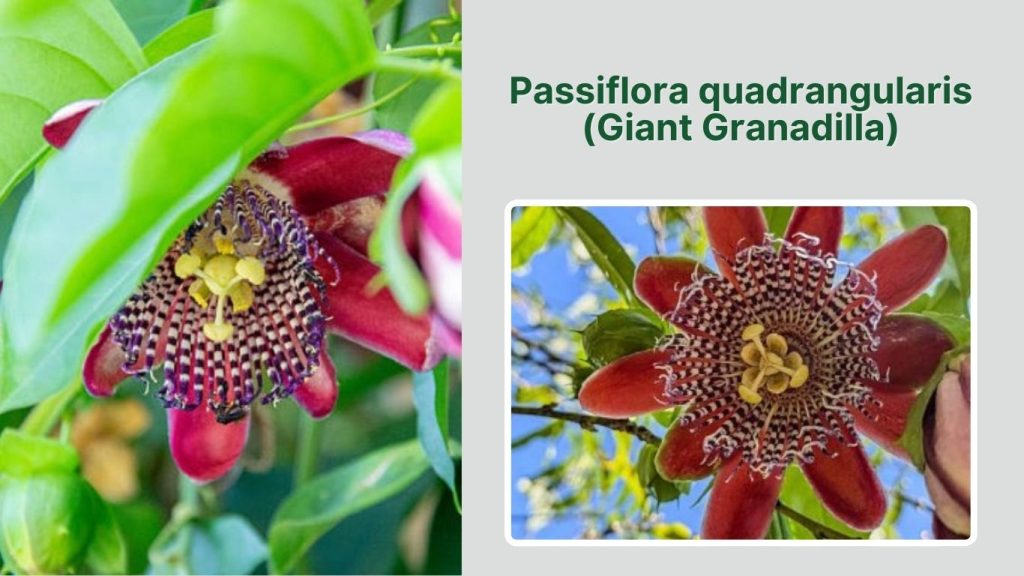
Passiflora quadrangularis is the largest passion flower species and is famous for producing some of the biggest flowers and fruits in the entire genus. It is easily recognized by its thick, four-angled stems and massive, tropical-looking blooms. This species is often grown in warm regions for both ornamental beauty and edible fruit.
Identification
- Very large climbing vine with thick, four-sided stems
- Huge, showy flowers with pink, purple, and white tones
- Broad, glossy, dark-green leaves
- Produces extremely large, oval fruits
- Strong fragrance from fully opened flowers
Flower Characteristics
The flowers of Passiflora quadrangularis can reach up to 12–15 cm in diameter. They feature soft pink petals combined with a richly colored purple-and-white corona. The large size, layered structure, and pleasant fragrance make each bloom highly decorative and visually dramatic.
Habitat and Growth
This species is native to tropical America and thrives in hot, humid climates. It requires full sun, fertile soil, and plenty of space to climb. Because of its vigorous growth and heavy stems, strong support structures such as pergolas or thick trellises are recommended.
Blooming Season and Uses
Giant granadilla blooms mainly in warm seasons, producing impressive flowers followed by very large edible fruits. Besides its ornamental value, the fruit is used fresh and in juices. The plant also attracts pollinators, especially large bees.
7. Passiflora foetida (Stinking Passion Flower)
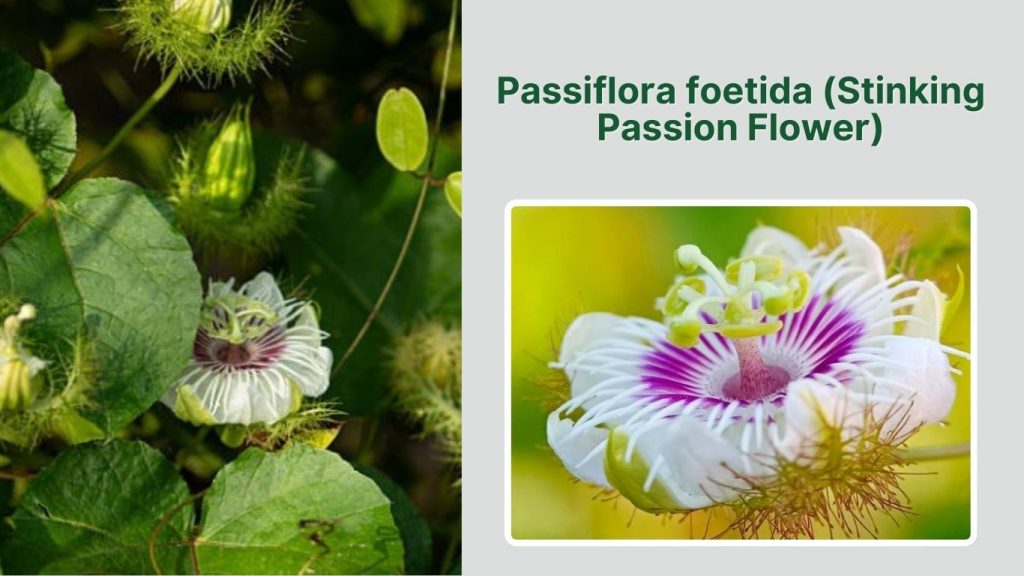
Passiflora foetida is a unique passion flower species known for its delicate flowers and hairy, net-like bracts that surround the buds and fruits. Despite its common name, the flowers themselves are quite attractive, usually small, soft-colored, and intricately structured.
Identification
- Slender, fast-growing vine with hairy stems
- Small white to pale yellow flowers with purple centers
- Distinctive feathery bracts around buds and fruits
- Soft, lobed green leaves
- Produces small, round fruits enclosed in netted bracts
Flower Characteristics
The flowers of Passiflora foetida are smaller than many other species but are finely detailed. They usually have pale petals and a contrasting purple corona that gives the bloom a delicate, lace-like appearance. The surrounding bracts make the flower buds especially ornamental.
Habitat and Growth
This passion flower is native to the Americas and grows widely in tropical and subtropical regions. It adapts well to open fields, roadsides, and gardens. The vine prefers sunny locations and well-drained soil and often spreads easily where conditions are favorable.
Blooming Season and Uses
Passiflora foetida blooms through much of the warm season. It is often grown as an ornamental curiosity plant and is also known in traditional uses in some cultures. The flowers attract insects, while the unusual bracts add visual interest to natural landscapes.
8. Passiflora racemosa (Red Cluster Passion Flower)
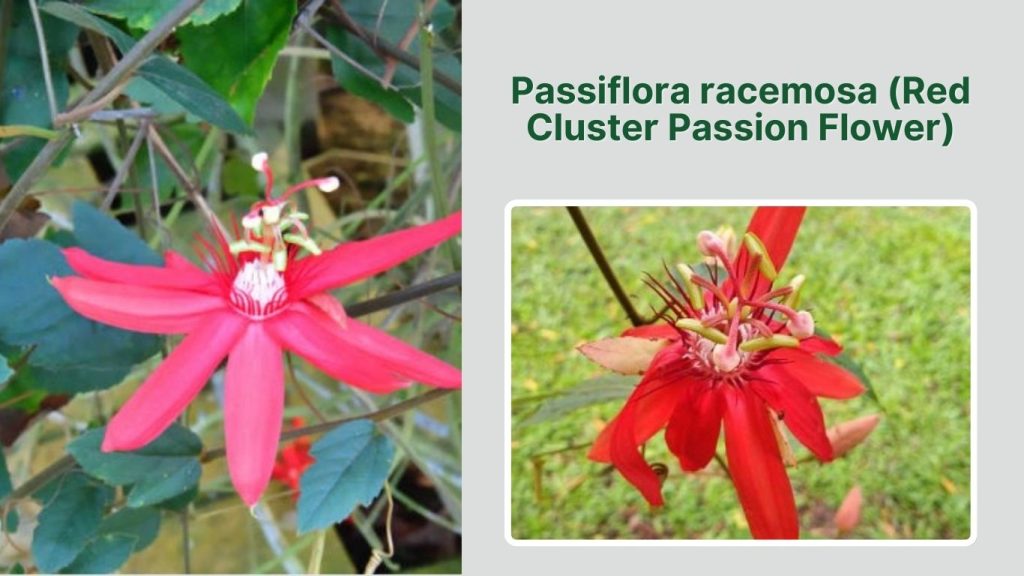
Passiflora racemosa is a spectacular passion flower species best known for its long, hanging clusters of bright red flowers. Unlike many other passion flowers that bloom singly, this species produces multiple blossoms along drooping stems, creating a dramatic waterfall effect. It is widely grown in tropical gardens for its vivid color and ornamental appeal.
Identification
- Climbing vine with long, pendulous flowering clusters
- Bright red, tubular to star-shaped flowers
- Smooth green leaves with a leathery texture
- Slender twining stems with strong tendrils
- Highly ornamental raceme-style blooms
Flower Characteristics
The flowers of Passiflora racemosa are rich crimson to scarlet red and are arranged in cascading clusters. Each bloom has narrow petals and a contrasting central corona, giving the plant a bold, exotic look. The clustered flowering habit makes this species especially striking when in full bloom.
Habitat and Growth
This species is native to Brazil and thrives in warm, humid environments. It prefers full sun to light shade and fertile, well-drained soil. Given space and support, it can climb high into trellises and pergolas, producing long strings of flowers.
Blooming Season and Uses
Passiflora racemosa typically blooms from late spring through summer. It is mainly grown as an ornamental vine for vertical gardens and landscape features. The bright flowers attract hummingbirds, butterflies, and other pollinators.
9. Passiflora vitifolia (Crimson Passion Flower)
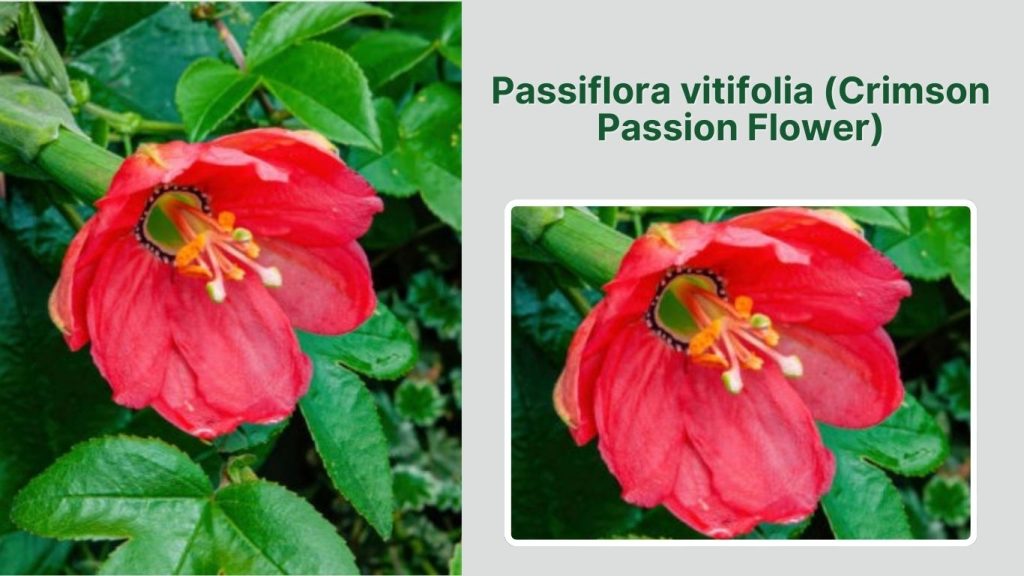
Passiflora vitifolia is admired for its brilliant scarlet-red flowers and grapevine-like leaves, which give the plant its species name. It is considered one of the most visually intense passion flowers and is frequently used to add strong color contrast to tropical landscapes.
Identification
- Vigorous climbing vine with tendrils
- Bright crimson-red flowers with dark central rings
- Leaves shaped similar to grape leaves
- Thick green stems with a climbing habit
- Large, eye-catching blooms
Flower Characteristics
The flowers of Passiflora vitifolia are large and intensely red, often highlighted by darker central markings and a contrasting corona. The bold coloration makes each bloom stand out sharply against the foliage, creating a dramatic visual display.
Habitat and Growth
Native to Central America and parts of South America, this passion flower prefers warm temperatures, high humidity, and bright light. It grows well on trellises, fences, and arches where its flowers can hang freely and remain visible.
Blooming Season and Uses
Passiflora vitifolia blooms mainly during warm months. It is grown almost entirely for ornamental purposes, prized for its rich red flowers and tropical appearance. The blooms are attractive to pollinators and add vibrant color to garden designs.
10. Passiflora coccinea (Scarlet Passion Flower)
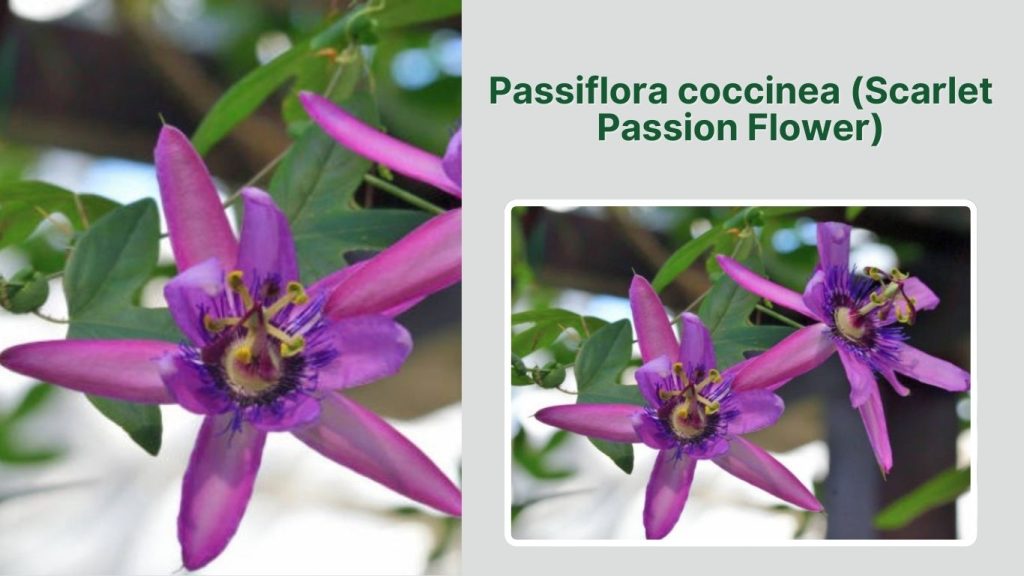
Passiflora coccinea is a striking tropical passion flower known for its bright scarlet-red blossoms and lush green foliage. The bold flower color and large bloom size make it a popular ornamental vine in warm-climate gardens. It is closely related to other red-flowering species but stands out for its intense color and elegant floral structure.
Identification
- Vigorous climbing vine with smooth, green stems
- Large scarlet-red flowers with a prominent central column
- Broad, glossy, dark-green leaves
- Long tendrils for climbing and support
- Showy, open-faced tropical blooms
Flower Characteristics
The flowers of Passiflora coccinea are large and radiant, with wide red petals and a contrasting central corona. The upright stamens and styles form a dramatic centerpiece. The vivid scarlet coloration makes this species highly visible in the landscape.
Habitat and Growth
This passion flower is native to South America and thrives in hot, humid conditions. It prefers full sun, rich soil, and consistent moisture. With adequate support, it climbs quickly and produces repeated flowering cycles during warm seasons.
Blooming Season and Uses
Passiflora coccinea blooms from late spring through summer and sometimes into early autumn. It is primarily grown as an ornamental vine for walls, trellises, and pergolas. The flowers attract butterflies and other pollinating insects.
11. Passiflora suberosa (Corkystem Passion Flower)
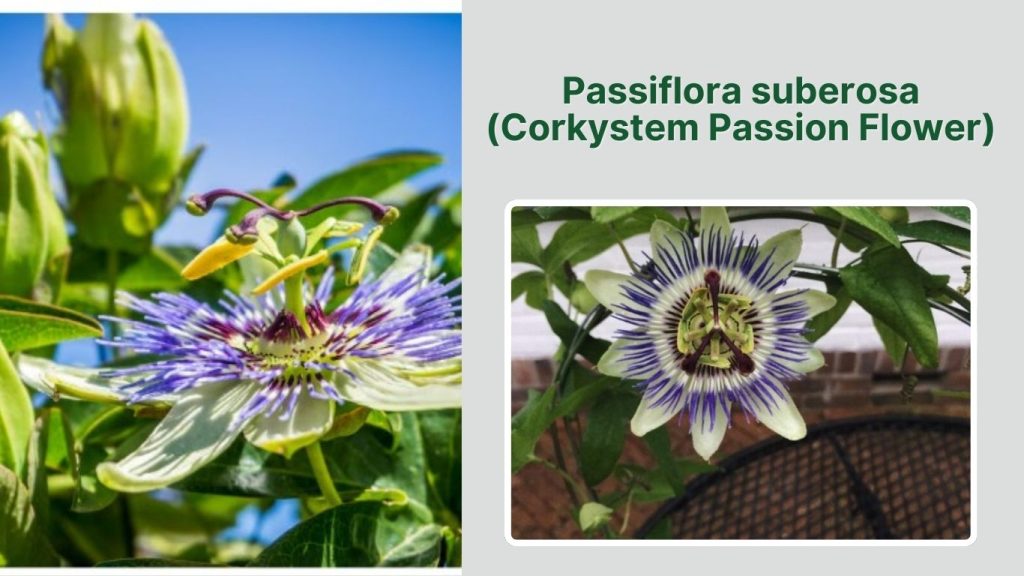
Passiflora suberosa is a smaller-flowered passion flower species, valued more for its adaptability and ecological role than for showy blooms. It features subtle greenish-yellow flowers and distinctive corky stems as the plant matures, making it unique within the genus.
Identification
- Slender climbing or trailing vine
- Small greenish-yellow flowers with simple structure
- Dark green, sometimes three-lobed leaves
- Corky, rough-textured older stems
- Produces small, dark purple to black fruits
Flower Characteristics
The flowers of Passiflora suberosa are modest in size and coloration, usually lacking the bold filaments seen in many other species. They have a simple, delicate form with a small central structure, giving them a quiet, understated appearance.
Habitat and Growth
This species is native to the Americas and is widely distributed in tropical and subtropical regions. It grows easily in forests, hedges, and disturbed areas. It tolerates a range of light conditions, from full sun to partial shade.
Blooming Season and Uses
Passiflora suberosa blooms intermittently through warm periods. It is often used in naturalistic and wildlife gardens, as its fruits are eaten by birds and small animals. The plant also serves as a host for butterfly larvae.
12. Passiflora mollissima (Banana Passion Flower)
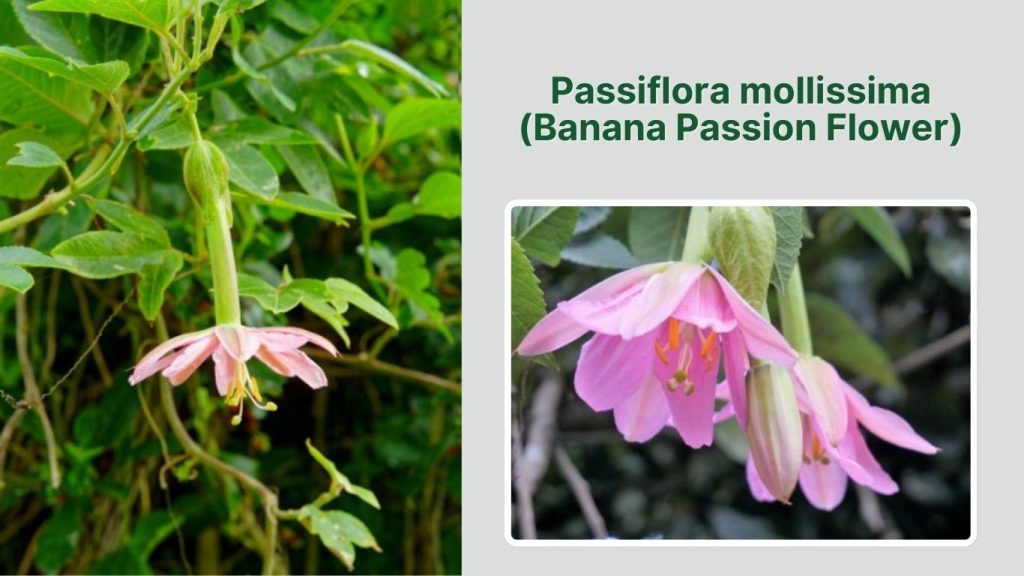
Passiflora mollissima, also known as the banana passion flower, is a vigorous climbing species famous for its soft pink, tubular flowers and elongated edible fruits. It is especially popular in cooler highland regions, where many tropical passion flowers struggle to grow.
Identification
- Fast-growing vine with slender, flexible stems
- Soft pink to rose-colored tubular flowers
- Long, narrow green leaves with fine hairs
- Produces elongated, banana-shaped fruits
- Lightly fragrant blooms
Flower Characteristics
The flowers of Passiflora mollissima are long and tubular, usually pale pink to rosy in color. They hang gracefully from the vine and have a softer, more delicate appearance than the wide, flat flowers of many other passion species. Their form is well adapted to pollination by hummingbirds.
Habitat and Growth
This species is native to the Andean regions of South America. It prefers cool to mild climates, bright light, and moist, well-drained soil. It grows rapidly and can cover large supports, making it suitable for fences and arbors.
Blooming Season and Uses
Passiflora mollissima blooms mainly from spring through summer. It is grown both as an ornamental vine and for its edible fruit, which is used in juices and desserts. The flowers attract birds and beneficial insects.
13. Passiflora laurifolia (Water Lemon Passion Flower)
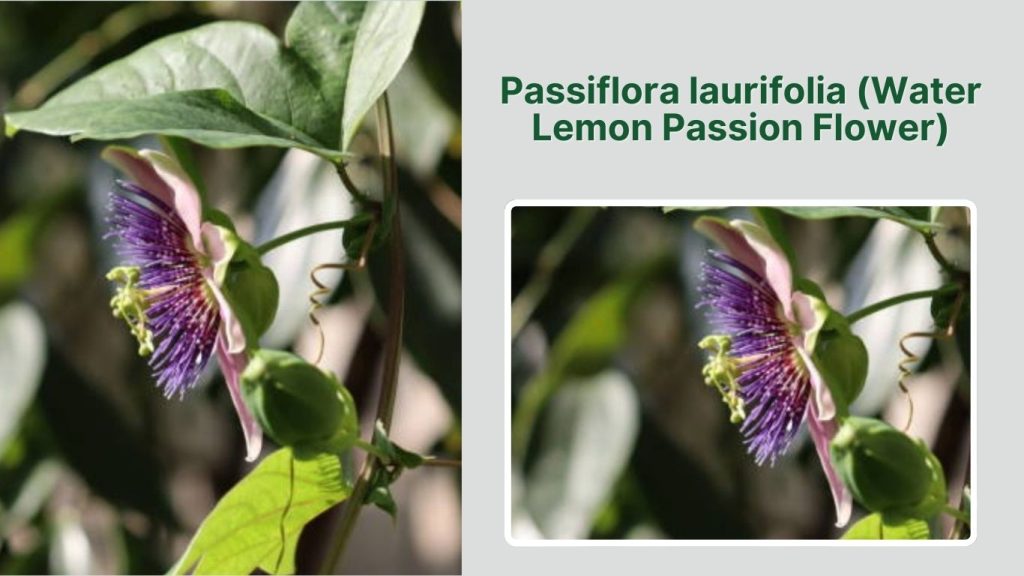
Passiflora laurifolia is a tropical passion flower admired for its elegant flowers and glossy, laurel-like leaves. It produces sweet, aromatic fruits and is commonly cultivated in warm regions for both decorative and culinary purposes.
Identification
- Climbing vine with smooth, green stems
- Pale yellow to white flowers with purple-striped corona
- Shiny, oval leaves resembling laurel leaves
- Produces round to oval, fragrant fruits
- Moderately sized, attractive blooms
Flower Characteristics
The flowers of Passiflora laurifolia feature soft-colored petals combined with a finely banded corona in shades of purple and white. The blooms appear delicate yet structured, with a balanced, symmetrical form typical of many classic passion flowers.
Habitat and Growth
This species is native to the Caribbean and northern South America. It thrives in hot, humid climates and prefers full sun to partial shade. It grows well on trellises, pergolas, and fences where air circulation is good.
Blooming Season and Uses
Passiflora laurifolia blooms through warm months of the year. It is cultivated for its sweet fruit, often eaten fresh or used in drinks. The flowers also contribute ornamental value and attract pollinators.
14. Passiflora manicata (Red-Haired Passion Flower)
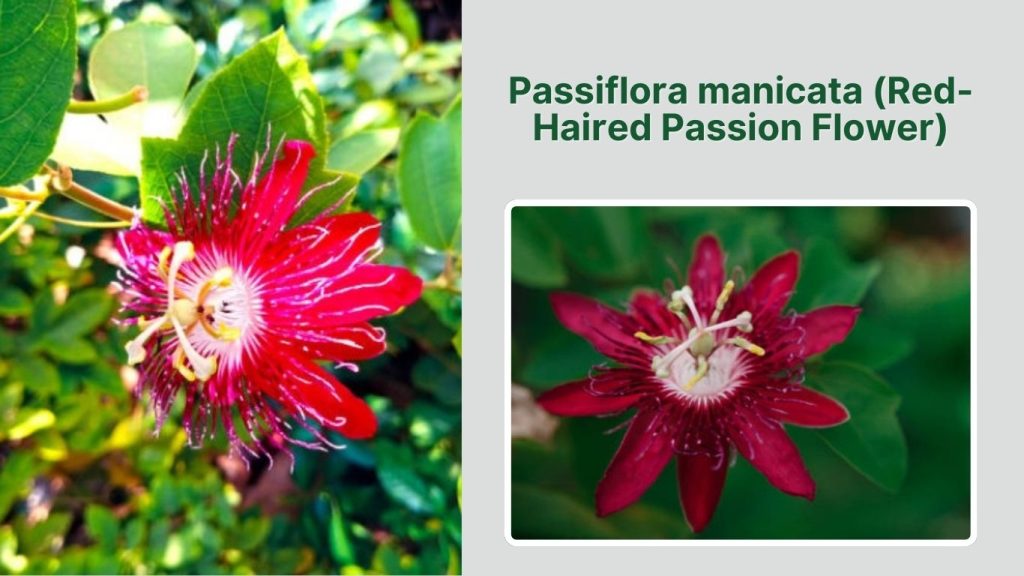
Passiflora manicata is a beautiful tropical passion flower known for its vivid red blooms and slightly hairy floral structures. Its bright coloration and vigorous climbing habit make it a popular ornamental vine in warm-climate gardens.
Identification
- Climbing vine with strong tendrils
- Bright red to orange-red flowers
- Slightly hairy floral parts and stems
- Broad green leaves with a smooth surface
- Medium to large, eye-catching blooms
Flower Characteristics
The flowers of Passiflora manicata are bold and richly colored, usually appearing in shades of red with a contrasting central corona. The fine hairs around parts of the flower add texture and depth, giving the bloom a soft yet dramatic appearance.
Habitat and Growth
Native to Brazil, this species prefers warm temperatures, high humidity, and bright light. It grows best in fertile, well-drained soil and climbs rapidly when provided with strong support structures.
Blooming Season and Uses
Passiflora manicata blooms mainly during warm seasons. It is grown almost entirely as an ornamental vine, valued for its bright flowers and tropical effect. The blooms attract butterflies and other pollinators.
15. Passiflora tripartita (Three-Lobed Passion Flower)
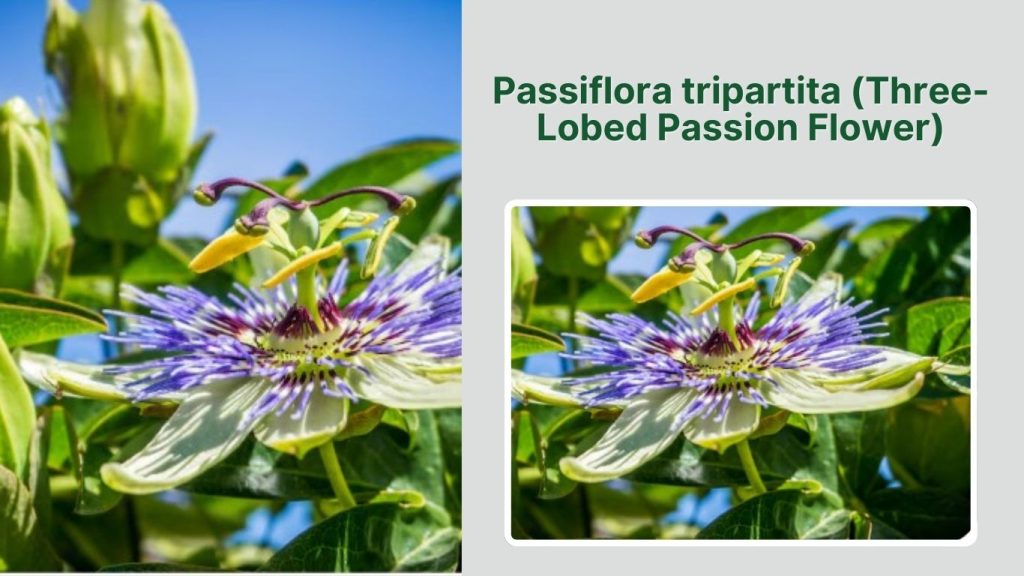
Passiflora tripartita is a distinctive species recognized for its three-lobed leaves and soft, tubular flowers. It is closely related to banana passion flowers and is often cultivated in mild, highland tropical regions.
Identification
- Climbing vine with clearly three-lobed leaves
- Soft pink to salmon-colored tubular flowers
- Slender green stems with tendrils
- Produces elongated edible fruits
- Graceful, hanging blooms
Flower Characteristics
The flowers of Passiflora tripartita are elongated and tube-shaped, usually in pale pink or salmon tones. They hang gently from the vine and have a refined appearance. The floral structure is adapted to bird pollination, especially hummingbirds.
Habitat and Growth
This species is native to the Andean regions of South America. It thrives in cool to moderate climates with bright light and moist, well-drained soil. It is well suited for trellises, fences, and arbors.
Blooming Season and Uses
Passiflora tripartita blooms mainly from spring to summer. It is grown both as an ornamental vine and for its edible fruits. The flowers attract birds and add a soft tropical beauty to gardens.
16. Passiflora ambigua (Variable Passion Flower)
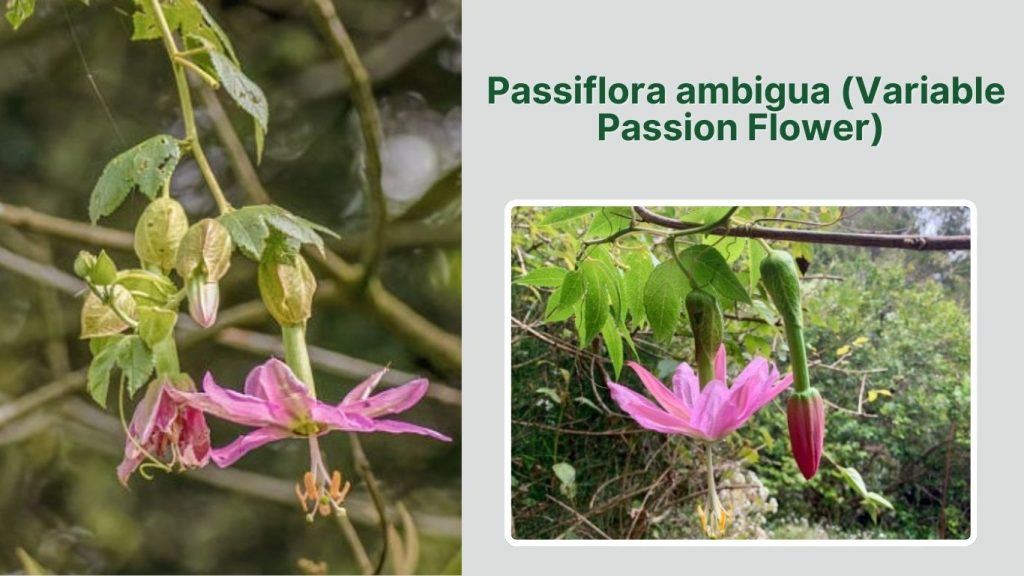
Passiflora ambigua is a lesser-known but attractive passion flower species, valued for its variable flower forms and adaptable growth habit. The blooms often show soft color transitions, making this species interesting for collectors and botanical gardens.
Identification
- Climbing vine with slender, flexible stems
- Pale pink to lavender flowers with a soft corona
- Smooth, green, oval to slightly lobed leaves
- Medium-sized blooms with delicate structure
- Twining tendrils for climbing support
Flower Characteristics
The flowers of Passiflora ambigua are typically soft-toned, ranging from light pink to pale violet. The corona filaments are gently colored and finely arranged, giving the bloom a refined and subtle beauty rather than a bold, dramatic look.
Habitat and Growth
This species is native to parts of Central and South America. It grows in warm, humid environments and prefers bright light with some protection from intense midday sun. Well-drained soil and moderate moisture encourage healthy flowering.
Blooming Season and Uses
Passiflora ambigua blooms mainly during warm months. It is mostly cultivated as an ornamental and collector’s plant. The flowers attract small pollinators, making it useful in biodiversity-friendly gardens.
17. Passiflora tenuifila (Fine-Leaved Passion Flower)
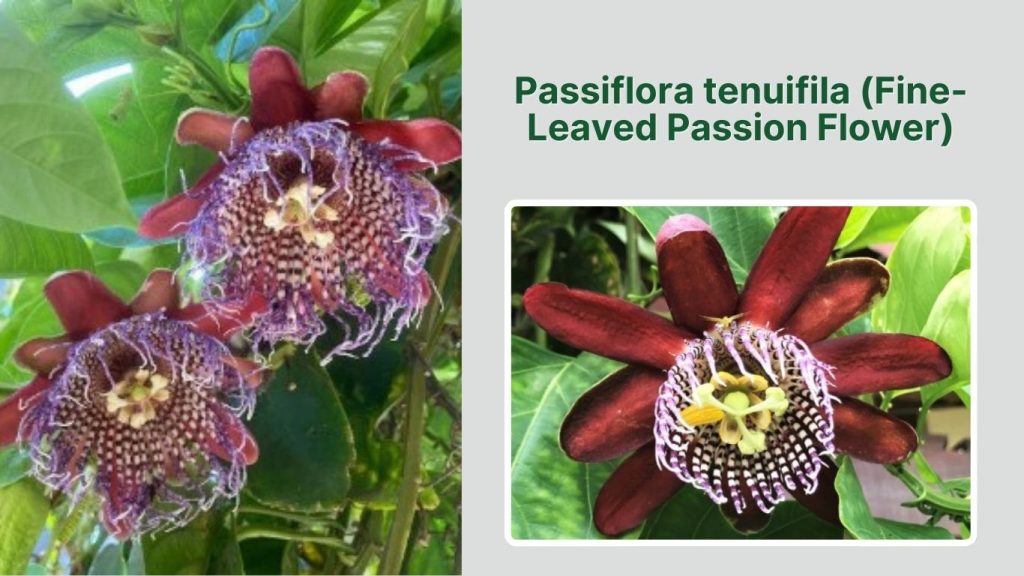
Passiflora tenuifila is recognized for its slender foliage and delicate flowers. Compared to many robust passion flowers, this species has a lighter, more graceful appearance, making it suitable for naturalistic and specialty gardens.
Identification
- Thin, climbing vine with very fine, narrow leaves
- Small to medium-sized flowers with pale coloration
- Light green stems and fine tendrils
- Airy, delicate overall growth form
- Subtle, decorative blooms
Flower Characteristics
The flowers of Passiflora tenuifila are modest in size and usually light in color, often white to pale lavender. The fine corona filaments and narrow petals give the bloom a soft, intricate appearance that contrasts with the heavier flowers of many other passion species.
Habitat and Growth
This passion flower is native to South America and grows in warm regions with good light and well-drained soil. It prefers open, airy positions where its slender foliage and flowers can spread without crowding.
Blooming Season and Uses
Passiflora tenuifila flowers during warm seasons of the year. It is mainly grown as an ornamental vine, appreciated for its delicate beauty rather than fruit production. The flowers help support local pollinators and add subtle elegance to garden spaces.