




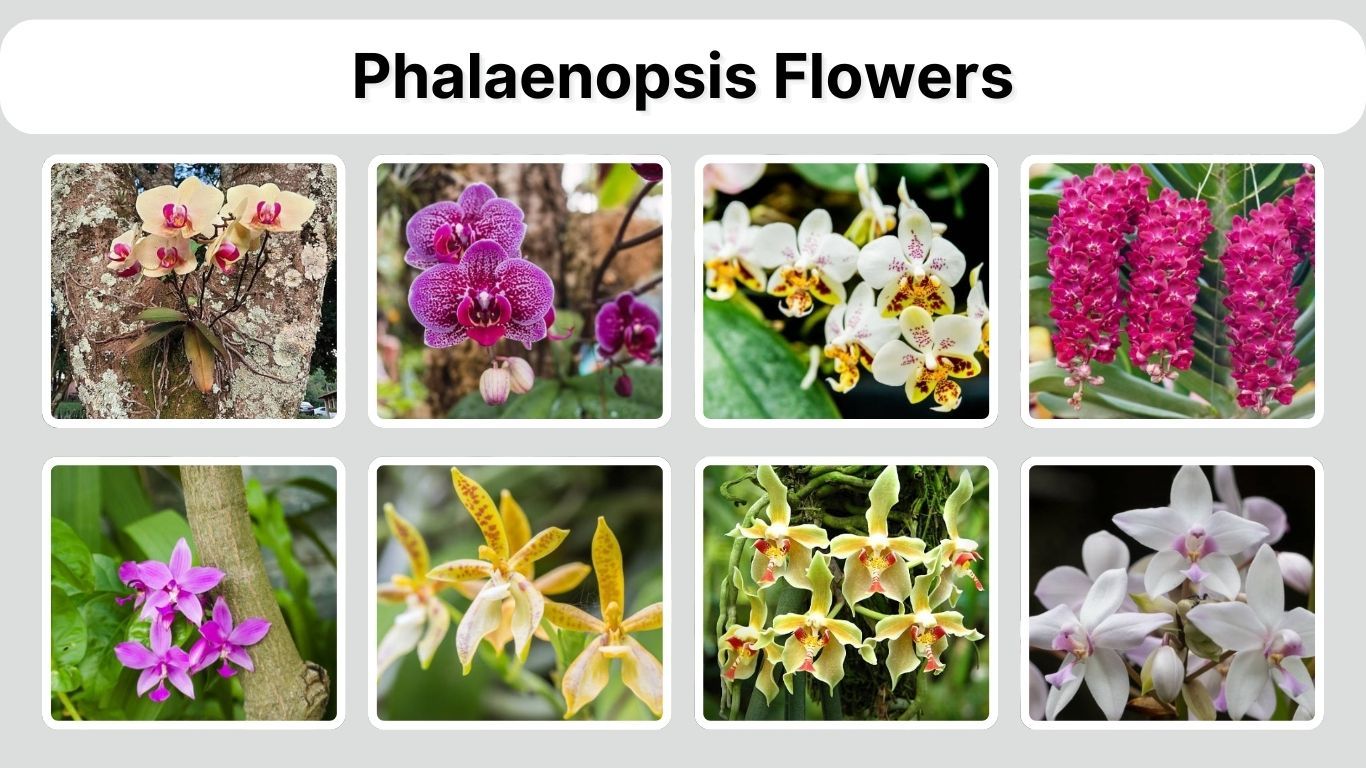
Phalaenopsis, commonly known as moth orchids, are among the most popular and widely grown orchids in the world. They are loved for their elegant, butterfly-like flowers, long-lasting blooms, and ability to thrive indoors. Native mainly to Southeast Asia and nearby regions, Phalaenopsis species show an incredible range of colors, patterns, and fragrances. This guide explores 27 important types of Phalaenopsis flowers, focusing on natural species that form the foundation of today’s countless hybrid moth orchids.
1. Phalaenopsis amabilis (Moth Orchid)
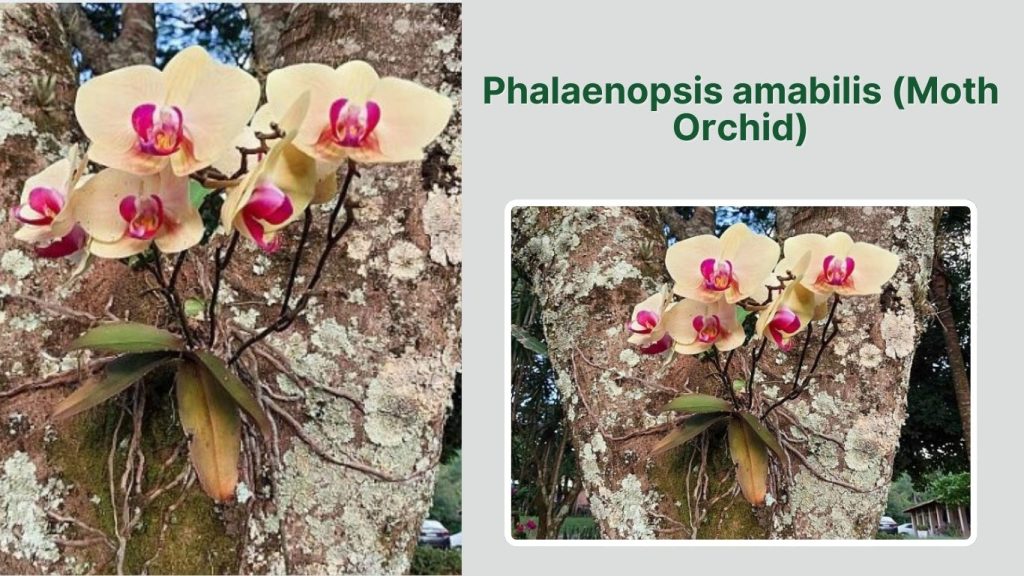
Phalaenopsis amabilis is one of the most famous and widely cultivated moth orchids in the world. Often called the “moon orchid,” it is admired for its large, pure white flowers, long arching flower spikes, and long-lasting blooms. This species is a primary ancestor of many modern Phalaenopsis hybrids found in homes and greenhouses.
Identification (Flower Traits)
Phalaenopsis amabilis produces broad, rounded white petals with a smooth, waxy surface. The lip is usually white with yellow and pale purple markings near the center. Flowers are arranged along arching spikes and can reach 3–4 inches across, giving the plant a very graceful appearance.
Flower Color & Structure
The flowers are mainly bright white, sometimes with a faint greenish tint when newly opened. The central lip shows yellow tones with soft pink or lavender accents, creating a gentle contrast. The overlapping petals form the classic “moth-like” shape that gives the genus its common name.
Blooming Season & Flowering Habit
Phalaenopsis amabilis usually blooms from late winter through summer. Each flower spike can carry many blooms that open in succession, allowing the plant to stay in flower for several months under good growing conditions.
Habitat & Natural Range
This species is native to Southeast Asia, including Indonesia, the Philippines, and northern Australia. It grows naturally as an epiphyte on tree trunks in warm, humid forests, where it receives filtered light, good air movement, and regular moisture.
2. Phalaenopsis aphrodite
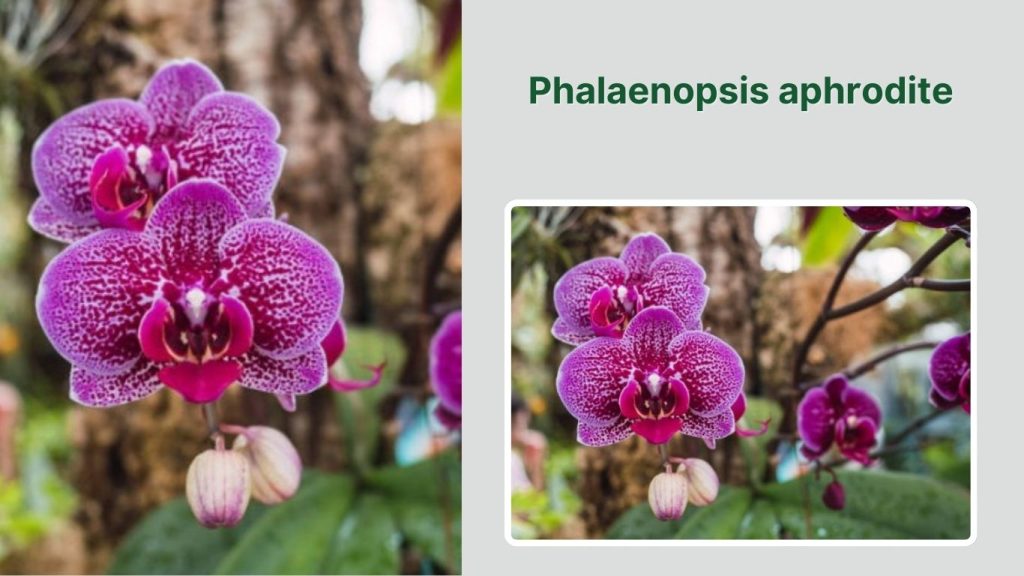
Phalaenopsis aphrodite is a graceful moth orchid species closely related to Phalaenopsis amabilis. It is admired for its elegant white flowers, long-lasting blooms, and refined lip markings, making it an important parent of many modern hybrids.
Identification (Flower Traits)
- Broad, rounded white petals
- Softly waxy flower texture
- Yellow center with light pink or purple accents on the lip
- Arching flower spikes with multiple blooms
- Thick, dark green, leathery leaves
Flower Color & Structure
The flowers are primarily pure white, often with a faint creamy tone. The central lip features yellow markings with subtle pink or lavender highlights, giving the bloom a delicate and balanced appearance.
Blooming Season & Flowering Habit
Phalaenopsis aphrodite usually blooms from late winter to spring, though cultivated plants may flower at other times. Each spike carries many flowers that open gradually, allowing blooms to last for several weeks.
Habitat & Natural Range
This species is native to Taiwan, southern China, and parts of Southeast Asia. It grows as an epiphyte in warm, humid forests, attached to trees where it receives filtered light and steady airflow.
3. Phalaenopsis schilleriana
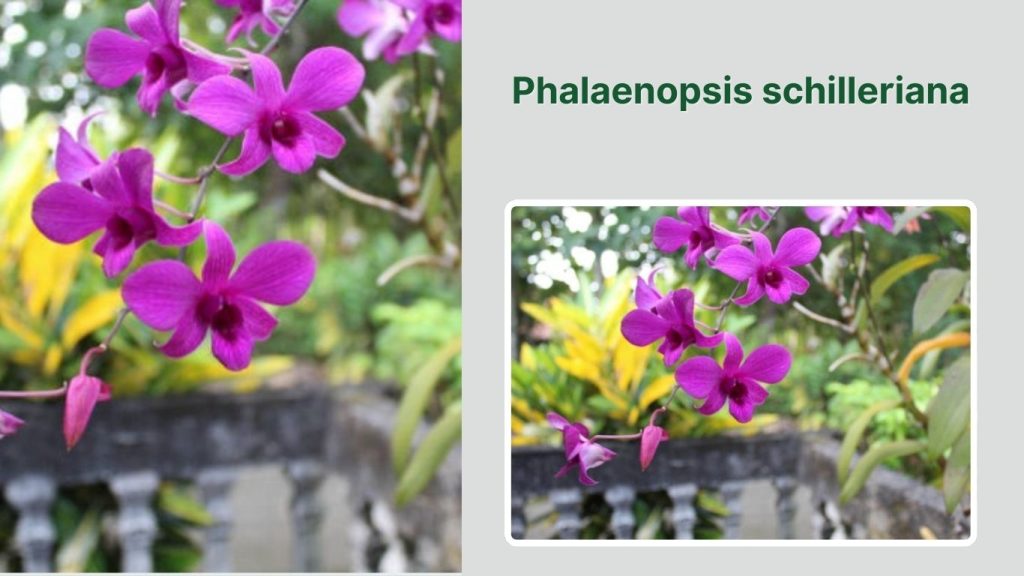
Phalaenopsis schilleriana is a highly ornamental moth orchid species famous not only for its flowers but also for its beautifully mottled leaves. It is one of the most valued species in Phalaenopsis breeding.
Identification (Flower Traits)
- Medium-sized, rounded flowers
- Soft pink petals with gentle fragrance
- Yellow and red markings on the lip
- Long, arching flower spikes carrying many blooms
- Distinctive silver-marbled green leaves
Flower Color & Structure
Flowers are usually soft pink to rosy lavender, often with deeper pink shading near the center. The lip is decorated with yellow, red, and sometimes orange tones, adding strong visual interest.
Blooming Season & Flowering Habit
Phalaenopsis schilleriana commonly blooms from late winter through spring. Mature plants can produce large sprays of flowers, sometimes carrying dozens of blooms on a single spike.
Habitat & Natural Range
This species is native to the Philippines, where it grows as an epiphyte in warm, humid lowland forests, often near rivers and coastal areas.
4. Phalaenopsis stuartiana
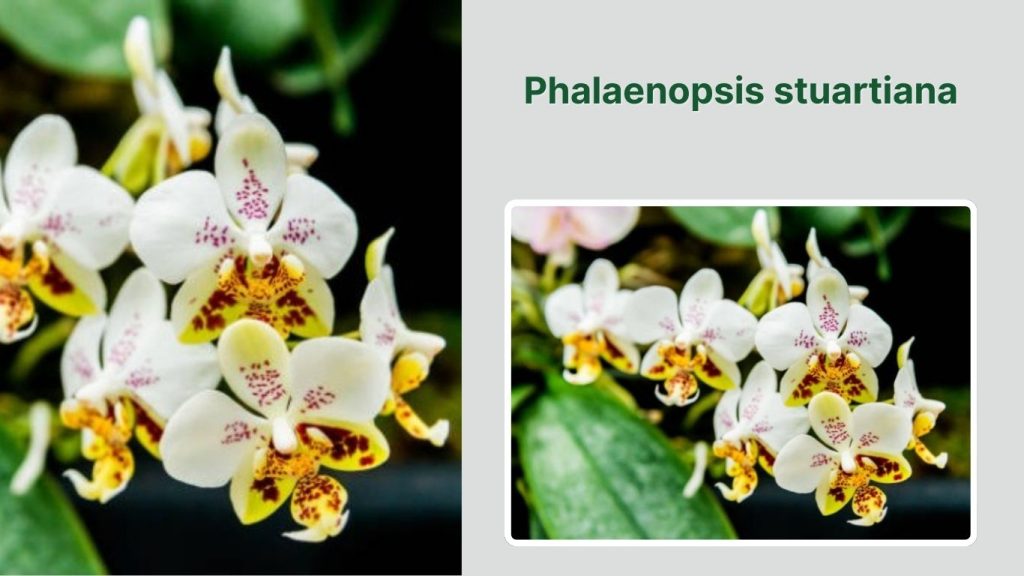
Phalaenopsis stuartiana is a striking moth orchid species best known for its white flowers patterned with colorful spots and its beautifully marbled foliage. It is highly valued by orchid collectors and breeders.
Identification (Flower Traits)
- Rounded white petals
- Numerous yellow, orange, and red spots
- Prominent three-lobed lip with yellow center
- Arching flower spikes with many blooms
- Mottled green and silver leaves
Flower Color & Structure
The flowers are white with scattered yellow and reddish spots, especially on the lower petals. The lip is bright yellow with red markings, creating a vivid contrast against the white background.
Blooming Season & Flowering Habit
Phalaenopsis stuartiana usually blooms from winter into spring. Large, mature plants can carry long, arching spikes with many flowers opening over several weeks.
Habitat & Natural Range
This species is native to the Philippines, where it grows as an epiphyte on trees in warm, humid forest environments.
5. Phalaenopsis equestris
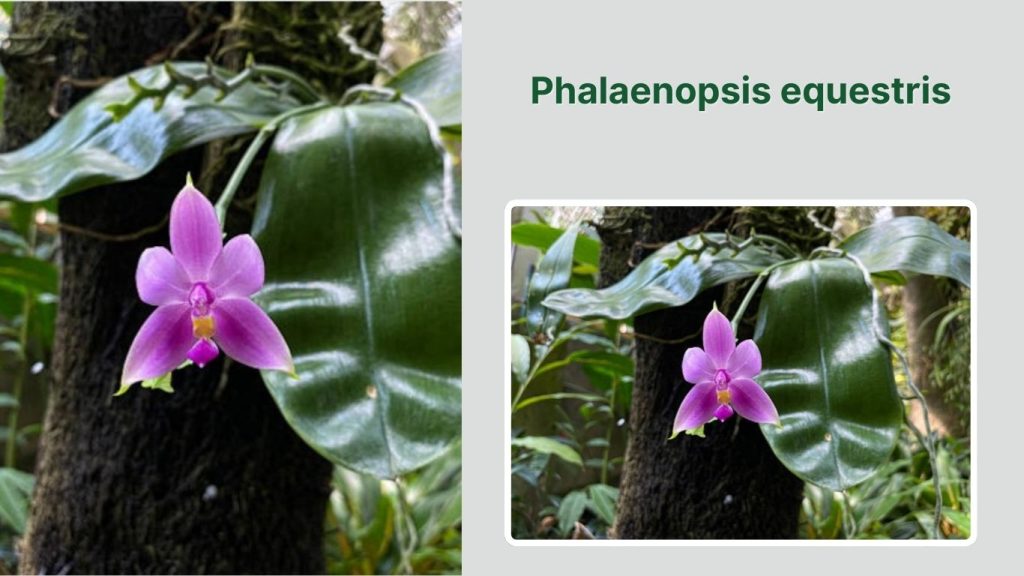
Phalaenopsis equestris is a compact and free-flowering moth orchid species famous for its ability to bloom repeatedly and for its wide range of color forms.
Identification (Flower Traits)
- Small to medium-sized rounded flowers
- Pink, lavender, or purple petals
- Brightly colored lip, often deeper than petals
- Slender arching spikes with many blooms
- Thick, glossy green leaves
Flower Color & Structure
Flowers are most often shades of pink or lavender, sometimes with deeper purple centers. The lip is usually brighter, showing yellow and magenta markings that add contrast.
Blooming Season & Flowering Habit
Phalaenopsis equestris can bloom several times a year under good conditions. Its spikes often branch and continue producing new flowers over long periods.
Habitat & Natural Range
This species is native to Taiwan and the Philippines, where it grows in warm, humid forests, attached to trees and rocks.
6. Phalaenopsis gigantea
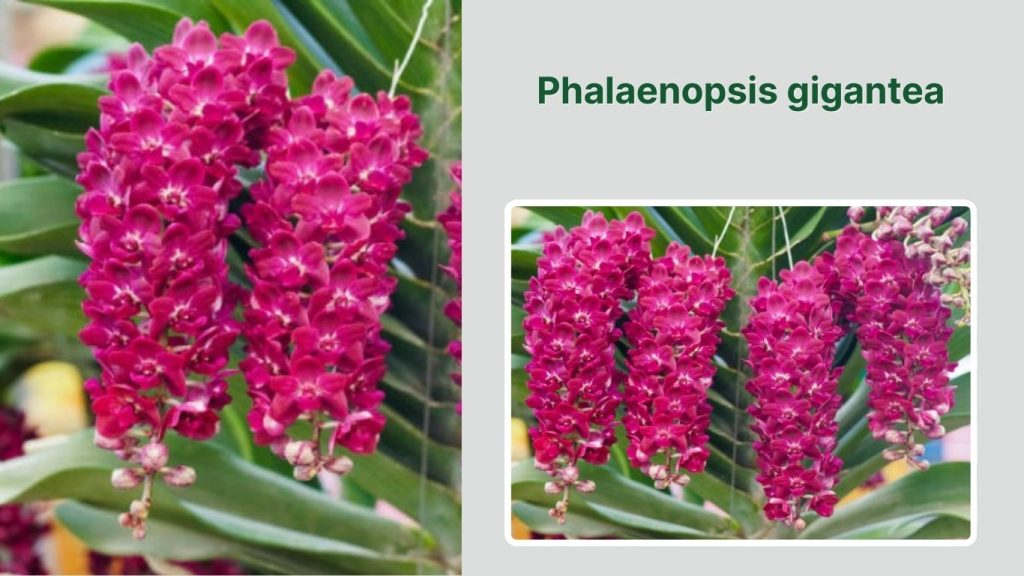
Phalaenopsis gigantea is one of the largest species in the genus, best known for its enormous, drooping leaves and long, cascading flower spikes. It is slow-growing but extremely impressive when mature.
Identification (Flower Traits)
- Medium-sized, rounded, fleshy flowers
- Creamy base color with red or maroon spotting
- Broad, waxy petals
- Long, hanging flower spikes
- Very large, thick, leathery leaves
Flower Color & Structure
Flowers are usually creamy yellow with dense red, brown, or maroon spots. The lip often shows pink and yellow tones, adding extra detail to the richly patterned blooms.
Blooming Season & Flowering Habit
Phalaenopsis gigantea typically blooms in summer. A mature plant can produce multiple long spikes, each carrying many flowers that open gradually over several weeks.
Habitat & Natural Range
This species is native to Borneo, where it grows as an epiphyte in warm, humid rainforests, usually on large tree trunks.
7. Phalaenopsis bellina
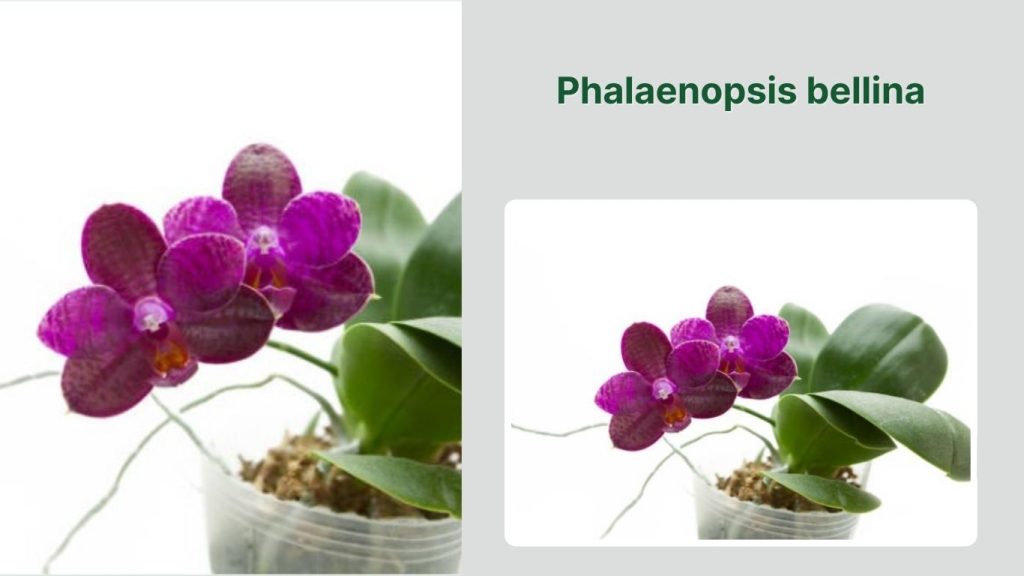
Phalaenopsis bellina is a fragrant moth orchid species admired for its star-shaped flowers and vivid central colors. It is highly valued for both its beauty and its sweet scent.
Identification (Flower Traits)
- Star-shaped, waxy flowers
- White to pale green petals
- Intense purple and blue-toned center
- Short, upright to arching spikes
- Thick, glossy green leaves
Flower Color & Structure
The outer petals are white to light green, while the center shows deep purple, blue, and magenta tones. The lip is often brightly colored, giving the flower a dramatic focal point.
Blooming Season & Flowering Habit
Phalaenopsis bellina can bloom several times a year. Individual flowers are long-lasting, and new blooms often appear sequentially on the same spike.
Habitat & Natural Range
This species is native to Borneo, where it grows in warm, humid forests with good air circulation.
8. Phalaenopsis violacea
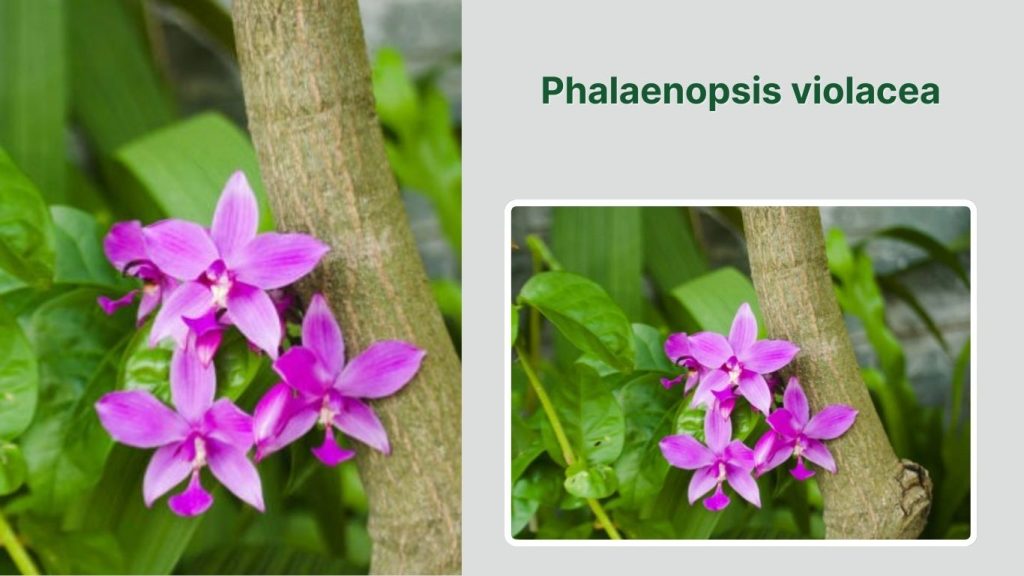
Phalaenopsis violacea is a fragrant and visually striking moth orchid species known for its rounded petals and rich, glossy colors. It is one of the classic species used in fragrance and color breeding.
Identification (Flower Traits)
- Rounded, thick-textured flowers
- Deep violet, purple, or reddish tones
- Strongly colored central lip
- Short, sequentially flowering spikes
- Broad, leathery green leaves
Flower Color & Structure
Flowers are usually deep purple, reddish-violet, or magenta, often with a glossy surface. The lip is richly colored with yellow, red, and purple accents, creating a bold and luxurious appearance.
Blooming Season & Flowering Habit
Phalaenopsis violacea blooms multiple times a year. Flowers appear one after another on the same spike, allowing a long flowering period rather than a single short season.
Habitat & Natural Range
This species is native to Malaysia and Sumatra, where it grows as an epiphyte in warm, humid lowland forests.
9. Phalaenopsis cornu-cervi
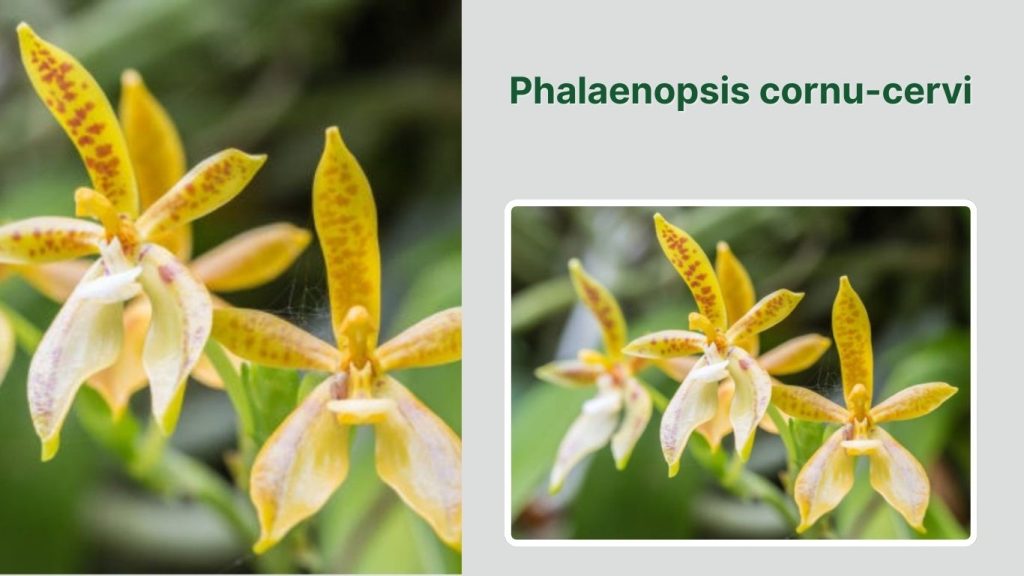
Phalaenopsis cornu-cervi is named for its antler-like flower spikes and its uniquely patterned petals. It is especially known for its sequential flowering habit and variable color forms.
Identification (Flower Traits)
- Narrow, star-like flowers
- Yellow base color with red or brown banding
- Flat, stiff flower spikes
- Sequential blooming pattern
- Thick, elongated green leaves
Flower Color & Structure
Flowers are typically yellow or greenish-yellow with bold horizontal red or brown bars. The lip is smaller but brightly marked, adding contrast to the striped petals.
Blooming Season & Flowering Habit
Phalaenopsis cornu-cervi blooms over long periods, producing one or two flowers at a time on the same spike. This can continue for months under favorable conditions.
Habitat & Natural Range
This species is widespread across Southeast Asia, growing on tree trunks in warm, humid forests.
10. Phalaenopsis mannii
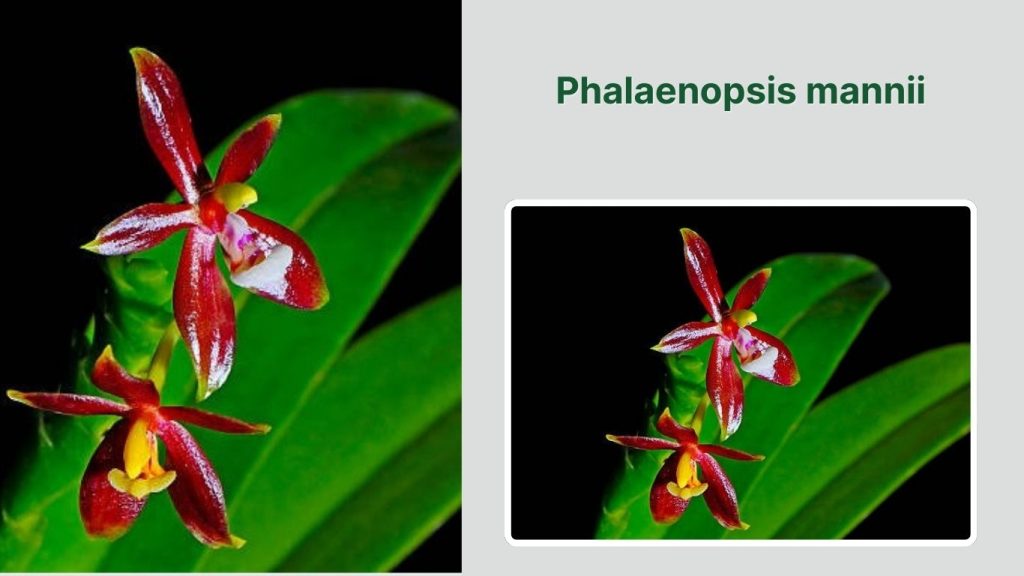
Phalaenopsis mannii is a charming moth orchid species appreciated for its warm-toned flowers and long, cascading flower spikes. It is often used in hybrid breeding for color and pattern.
Identification (Flower Traits)
- Medium-sized, rounded flowers
- Yellow to golden base color
- Brown, orange, or red spotting
- Long, arching to hanging spikes
- Thick, glossy green leaves
Flower Color & Structure
The flowers usually appear yellow or golden with scattered reddish-brown spots. The lip is often brighter, showing yellow, orange, and red tones that give the flower a warm, glowing appearance.
Blooming Season & Flowering Habit
Phalaenopsis mannii generally blooms from late winter through spring. Mature plants can produce long spikes carrying many flowers that open in sequence.
Habitat & Natural Range
This species is native to northeastern India, Myanmar, Thailand, and southern China, where it grows as an epiphyte in warm, humid forests.
11. Phalaenopsis parishii
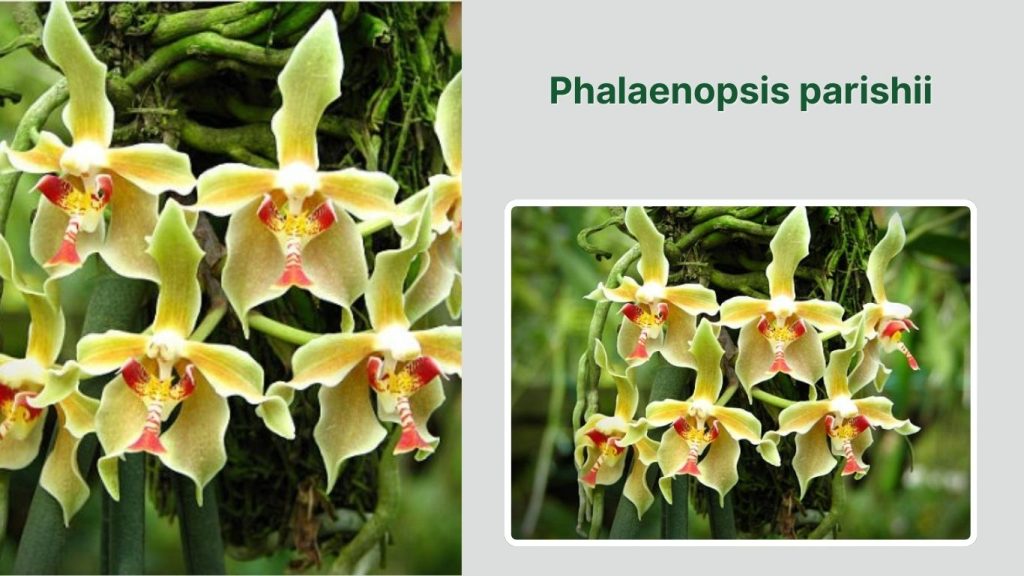
Phalaenopsis parishii is a small-growing moth orchid species known for its delicate flowers and compact habit. It is especially valued by collectors who enjoy miniature orchids.
Identification (Flower Traits)
- Small, rounded, star-like flowers
- White to pale lavender petals
- Brightly colored lip with yellow and purple markings
- Short, arching flower spikes
- Compact plant size with short leaves
Flower Color & Structure
The petals are typically white or very pale lavender, while the lip is decorated with yellow and purple, creating a strong focal point despite the small size of the bloom.
Blooming Season & Flowering Habit
Phalaenopsis parishii usually blooms in spring. It often produces several short spikes at once, creating a charming cluster of small flowers.
Habitat & Natural Range
This species is native to Myanmar, Thailand, and nearby regions, where it grows on trees in warm, humid forest habitats.
12. Phalaenopsis lobbii
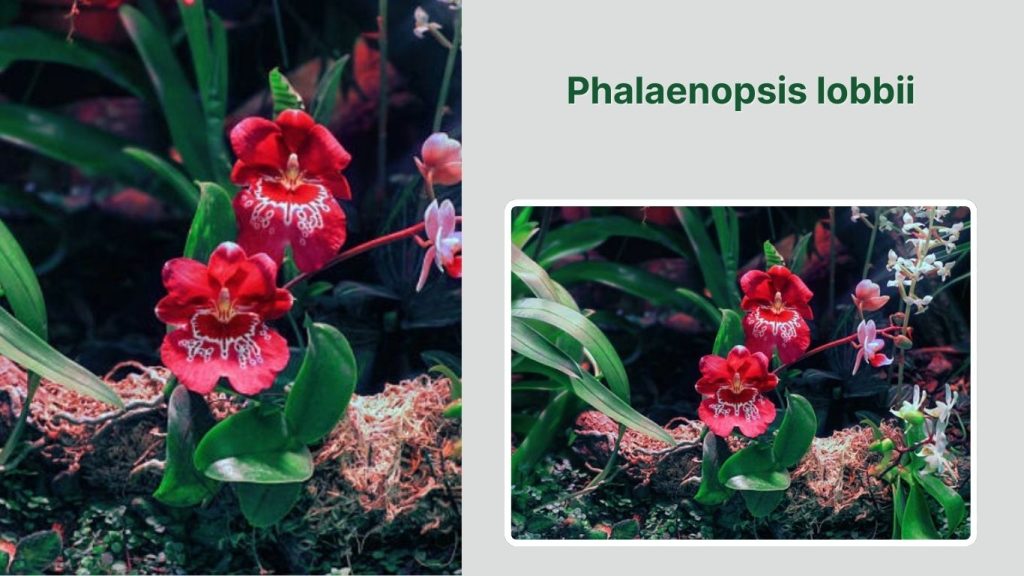
Phalaenopsis lobbii is a compact and charming moth orchid species known for its small, delicate flowers and distinctively colored lip. It is especially popular among miniature orchid collectors.
Identification (Flower Traits)
- Small, rounded flowers
- White to creamy outer petals
- Prominent yellow and orange lip
- Short, arching flower spikes
- Compact plant size with thick green leaves
Flower Color & Structure
The petals are usually white or creamy, while the lip is bright yellow with orange or reddish markings, creating a bold contrast against the pale background.
Blooming Season & Flowering Habit
Phalaenopsis lobbii typically blooms in late winter or spring. Flowers open one after another on short spikes, allowing the plant to stay in bloom for extended periods.
Habitat & Natural Range
This species is native to northeastern India, Myanmar, Thailand, and Laos, where it grows as an epiphyte in warm, humid forests.
13. Phalaenopsis pulchra
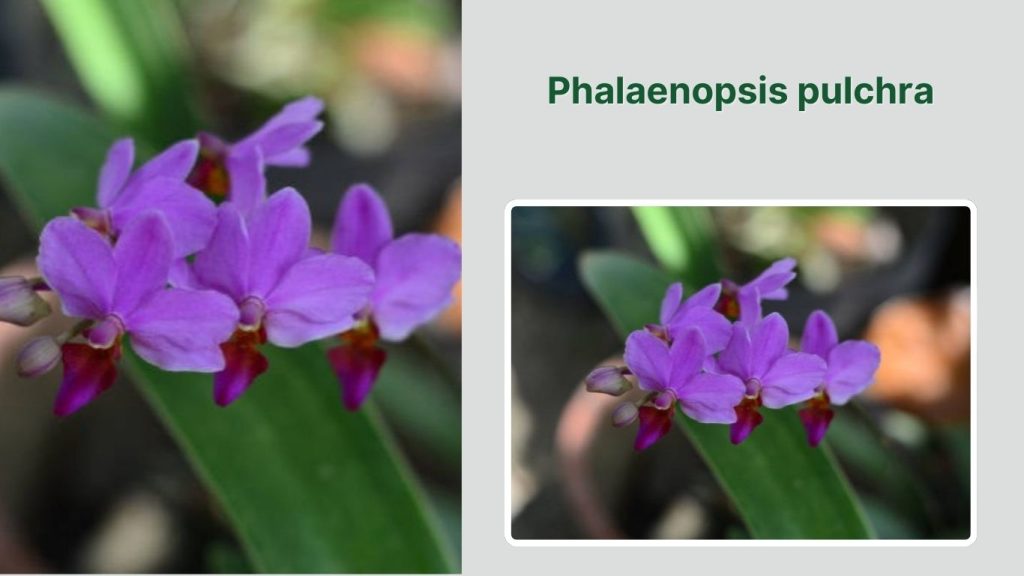
Phalaenopsis pulchra is admired for its rich purple flowers and glossy texture. It is considered one of the most vividly colored species in the genus.
Identification (Flower Traits)
- Medium-sized, rounded flowers
- Deep purple to violet petals
- Glossy, wax-like flower surface
- Slender arching spikes
- Thick, leathery green leaves
Flower Color & Structure
The flowers are typically intense purple or violet, sometimes with bluish tones. The lip is usually darker, with subtle yellow or white highlights near the center.
Blooming Season & Flowering Habit
Phalaenopsis pulchra commonly blooms in spring. Flowers open gradually along the spike, extending the flowering period.
Habitat & Natural Range
This species is native to the Philippines, where it grows as an epiphyte in warm, humid lowland forests.
14. Phalaenopsis modesta
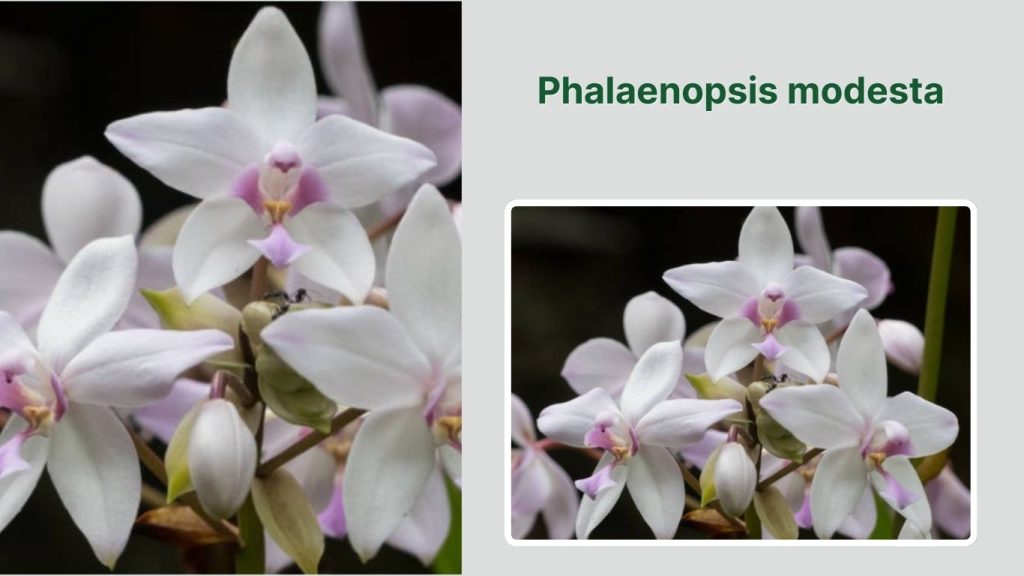
Phalaenopsis modesta is a delicate and understated moth orchid species valued for its refined flowers and compact habit. Although less showy than some species, it is important in breeding for form and subtle coloration.
Identification (Flower Traits)
- Small to medium-sized rounded flowers
- Creamy white to pale pink petals
- Fine markings on the lip
- Short to medium-length arching spikes
- Compact plant with thick green leaves
Flower Color & Structure
The flowers are usually creamy white or very pale pink, sometimes with soft yellow or light purple markings on the lip. The overall appearance is gentle and elegant.
Blooming Season & Flowering Habit
Phalaenopsis modesta typically blooms in spring. Flowers open gradually on the spike, giving several weeks of bloom.
Habitat & Natural Range
This species is native to Southeast Asia, where it grows as an epiphyte in warm, humid forests.
15. Phalaenopsis amboinensis
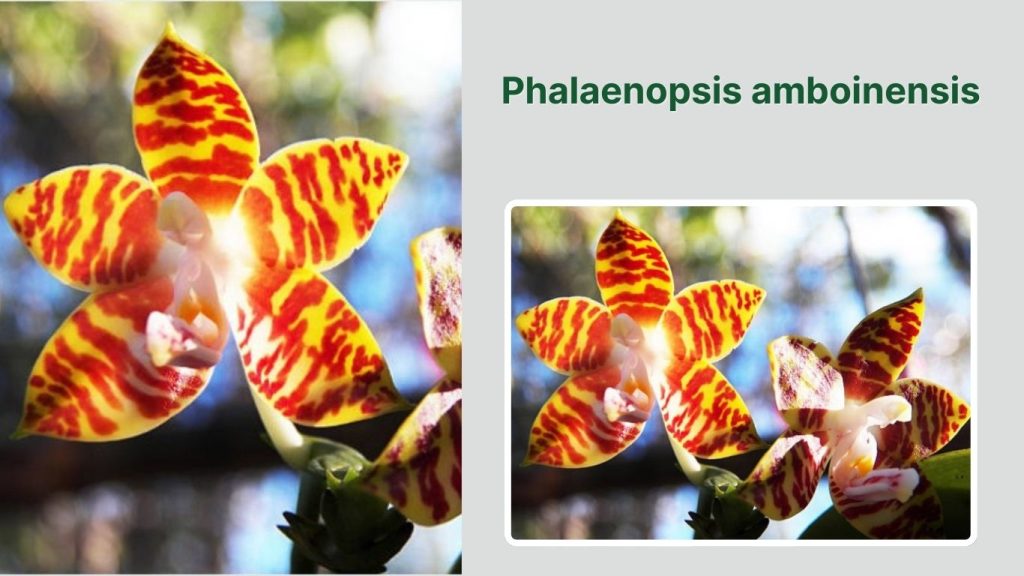
Phalaenopsis amboinensis is well known for its striking striped petals and spicy fragrance. It is a favorite among orchid enthusiasts and breeders.
Identification (Flower Traits)
- Medium-sized rounded flowers
- Cream to yellow background color
- Bold brown, red, or purple striping
- Fragrant blooms
- Arching flower spikes with multiple flowers
Flower Color & Structure
Flowers are typically pale yellow or cream with strong horizontal brown or purple stripes. The lip is often highlighted with yellow, red, and white tones, creating a dramatic contrast.
Blooming Season & Flowering Habit
Phalaenopsis amboinensis usually blooms in spring and early summer. Flowers open sequentially and may remain attractive for several weeks.
Habitat & Natural Range
This species is native to eastern Indonesia, especially the Maluku Islands, where it grows as an epiphyte in warm forest habitats.
16. Phalaenopsis sumatrana
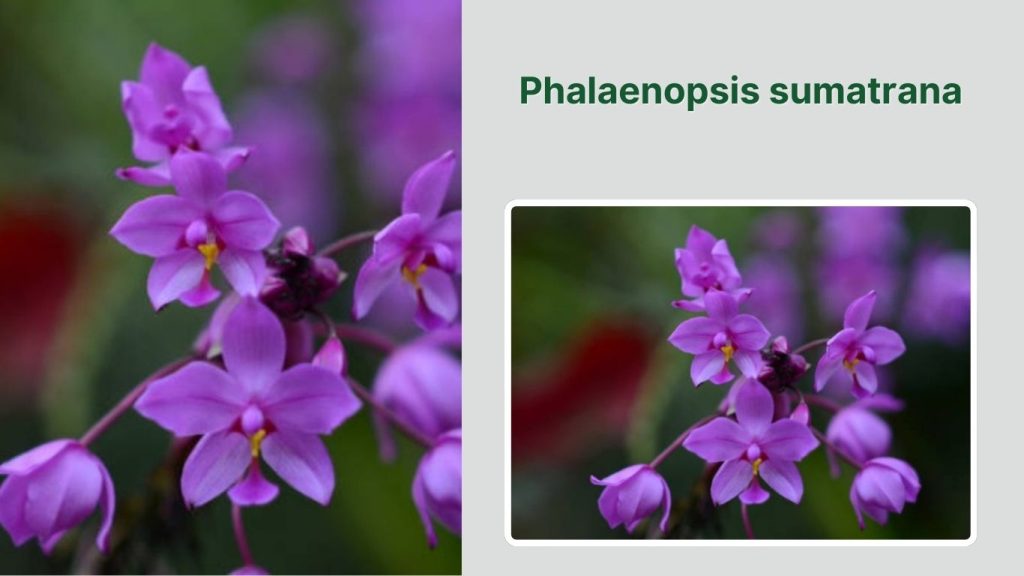
Phalaenopsis sumatrana is a striking moth orchid species admired for its long-lasting flowers and bold horizontal striping. It is closely related to Phalaenopsis amboinensis and is highly valued by collectors.
Identification (Flower Traits)
- Medium-sized, rounded flowers
- Creamy yellow base color
- Strong reddish-brown horizontal stripes
- Waxy flower texture
- Arching flower spikes with sequential blooms
Flower Color & Structure
The flowers are usually pale yellow to cream with bold reddish-brown or maroon bands across the petals. The lip shows yellow and purple markings, adding depth to the floral design.
Blooming Season & Flowering Habit
Phalaenopsis sumatrana blooms mainly in spring and early summer. Flowers open gradually on the same spike, extending the blooming period.
Habitat & Natural Range
This species is native to Sumatra and surrounding regions of Indonesia, where it grows as an epiphyte in warm, humid rainforests.
17. Phalaenopsis hieroglyphica
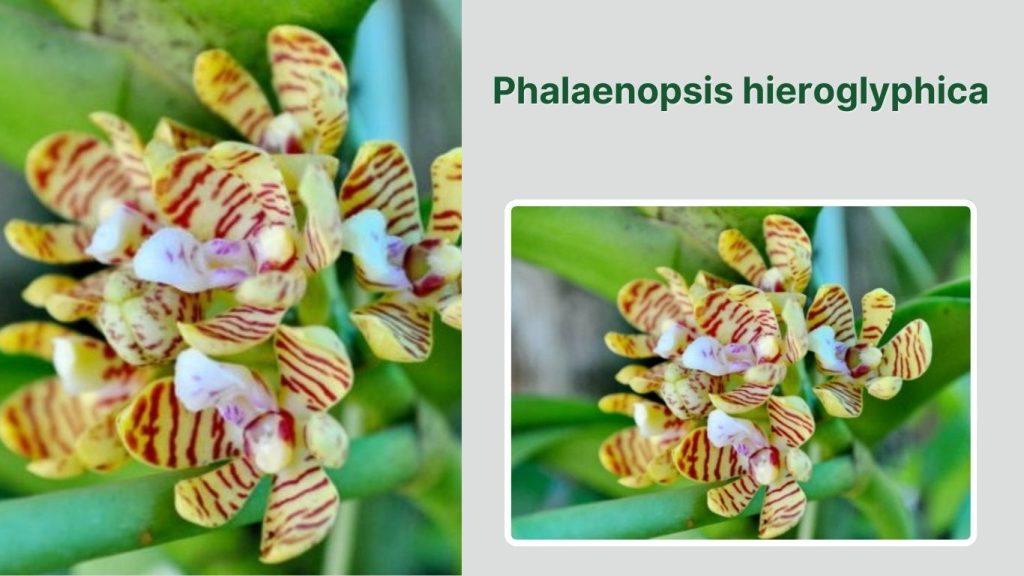
Phalaenopsis hieroglyphica is named for the intricate, calligraphy-like markings on its petals. It is one of the most visually detailed moth orchid species.
Identification (Flower Traits)
- Medium-sized, rounded flowers
- Cream to pale yellow petals
- Fine red or brown markings resembling writing
- Waxy flower surface
- Arching spikes with multiple blooms
Flower Color & Structure
Flowers are usually pale yellow or cream, covered with fine reddish-brown lines and dots that resemble hieroglyphs. The lip is often accented with yellow and red.
Blooming Season & Flowering Habit
Phalaenopsis hieroglyphica commonly blooms in spring. The flowers open sequentially along the spike, lasting several weeks.
Habitat & Natural Range
This species is native to Taiwan, where it grows in warm, humid forests attached to trees.
18. Phalaenopsis fasciata
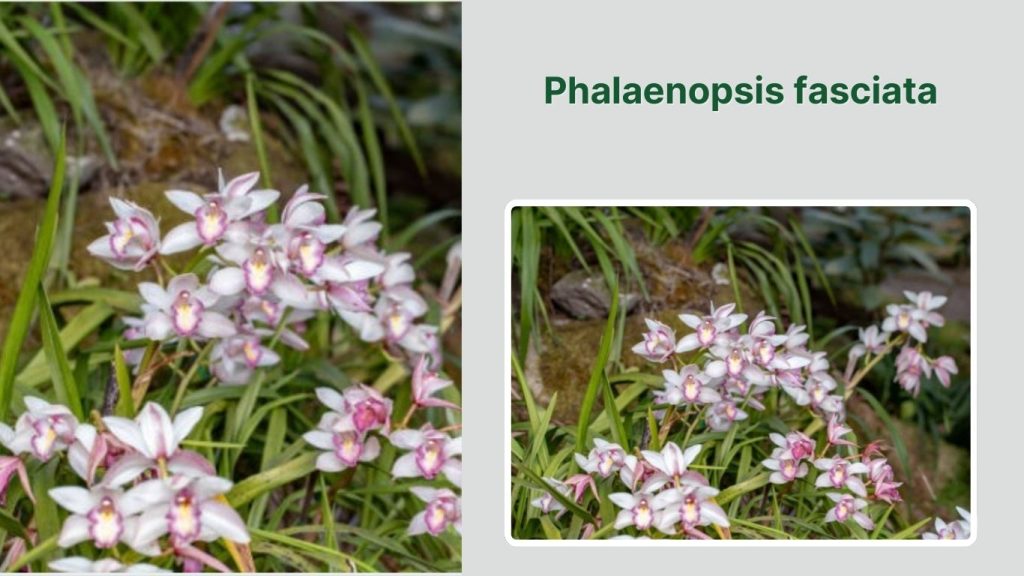
Phalaenopsis fasciata is a beautifully patterned moth orchid species recognized for its banded petals and refined floral form. It contributes bold markings to many hybrid lines.
Identification (Flower Traits)
- Medium-sized, rounded flowers
- Cream to yellow base color
- Strong horizontal reddish-brown bands
- Smooth, waxy flower texture
- Arching spikes with multiple blooms
Flower Color & Structure
The petals are usually pale yellow or cream, overlaid with bold reddish-brown stripes. The lip often displays yellow and red tones, enhancing the contrast of the banded pattern.
Blooming Season & Flowering Habit
Phalaenopsis fasciata blooms mainly in spring. Flowers open in succession along the spike, allowing the display to last for several weeks.
Habitat & Natural Range
This species is native to Indonesia, where it grows as an epiphyte in warm, humid forest environments.
19. Phalaenopsis tetraspis
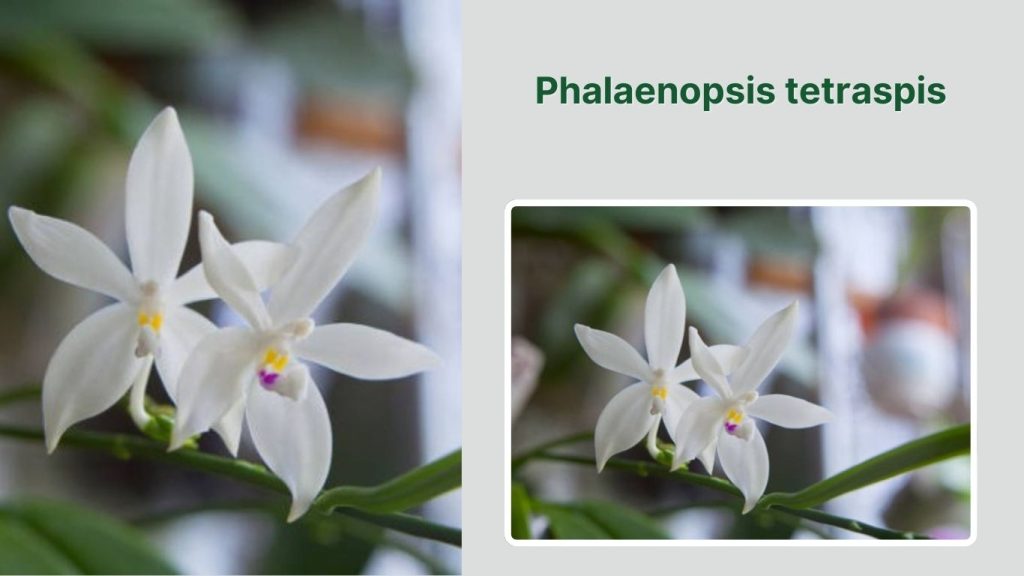
Phalaenopsis tetraspis is known for its variable flower patterns and unique color forms. Some blooms show soft splashes of color, while others develop striking marbled effects.
Identification (Flower Traits)
- Medium-sized rounded flowers
- White to pale cream petals
- Random red or purple blotches
- Waxy, thick flower texture
- Arching spikes with sequential blooms
Flower Color & Structure
Flowers are often white or pale cream with unpredictable red, pink, or purple markings. In some forms, the color spreads to create dramatic half-colored or marbled flowers.
Blooming Season & Flowering Habit
Phalaenopsis tetraspis usually blooms in spring. It often produces flowers sequentially on the same spike, extending the flowering season.
Habitat & Natural Range
This species is native to Thailand, Malaysia, and Borneo, where it grows in warm, humid forests.
20. Phalaenopsis lowii
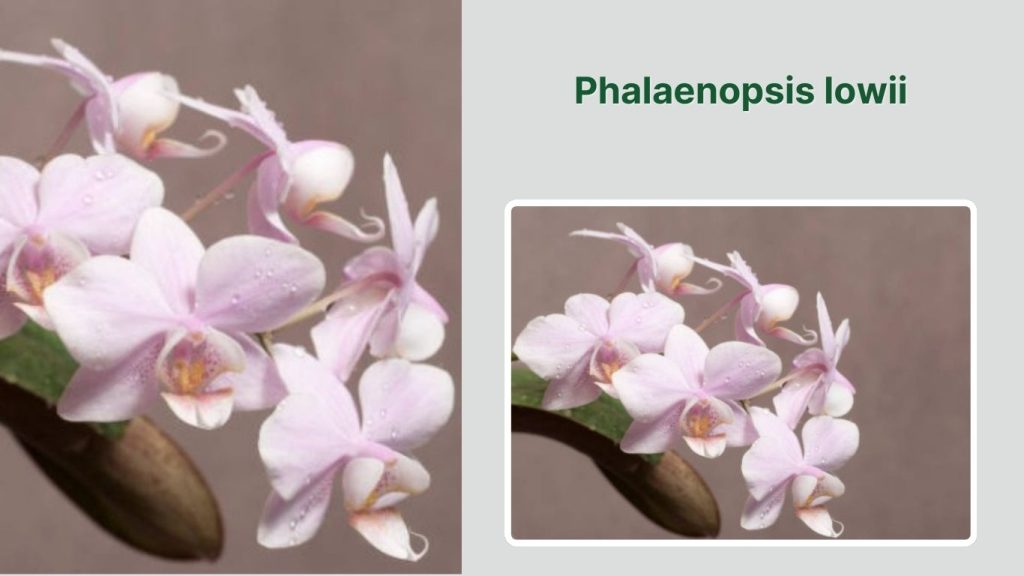
Phalaenopsis lowii is a refined moth orchid species admired for its elegant flowers and distinctive lip markings. It is less common in cultivation but valued by collectors for its form and subtle coloration.
Identification (Flower Traits)
- Medium-sized, rounded flowers
- White to creamy petals
- Yellow lip with red or orange markings
- Smooth, waxy flower texture
- Arching flower spikes with multiple blooms
Flower Color & Structure
The petals are usually white or cream, while the lip is bright yellow with red or orange highlights, creating a strong focal point. The overall flower has a clean, balanced appearance.
Blooming Season & Flowering Habit
Phalaenopsis lowii generally blooms in spring. Flowers open gradually along the spike, remaining attractive for several weeks.
Habitat & Natural Range
This species is native to Borneo and surrounding regions, where it grows as an epiphyte in warm, humid forest environments.
21. Phalaenopsis bastianii
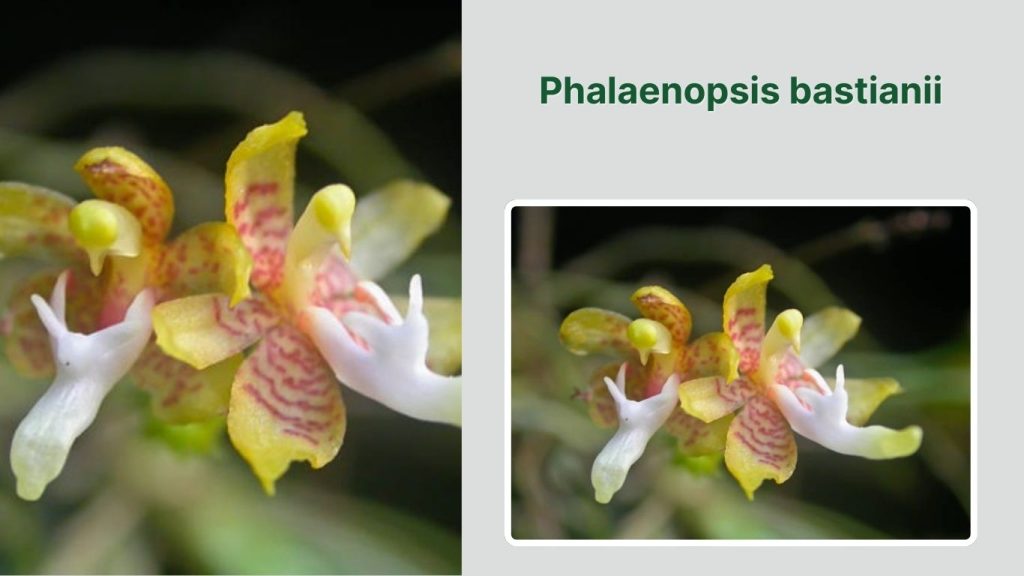
Phalaenopsis bastianii is a distinctive species known for its bold, net-like patterns and exotic appearance. It is closely related to other banded Phalaenopsis species.
Identification (Flower Traits)
- Medium-sized rounded flowers
- Cream to yellow base color
- Dense red-brown network of markings
- Waxy flower surface
- Arching spikes with several blooms
Flower Color & Structure
Flowers are typically pale yellow or cream, covered with intricate red-brown spotting and veining that forms a netted or marbled effect. The lip is often accented with yellow and red.
Blooming Season & Flowering Habit
Phalaenopsis bastianii usually blooms in spring. Flowers open in sequence, allowing a long-lasting display.
Habitat & Natural Range
This species is native to the Philippines, where it grows as an epiphyte in warm, humid forest habitats.
22. Phalaenopsis mariae
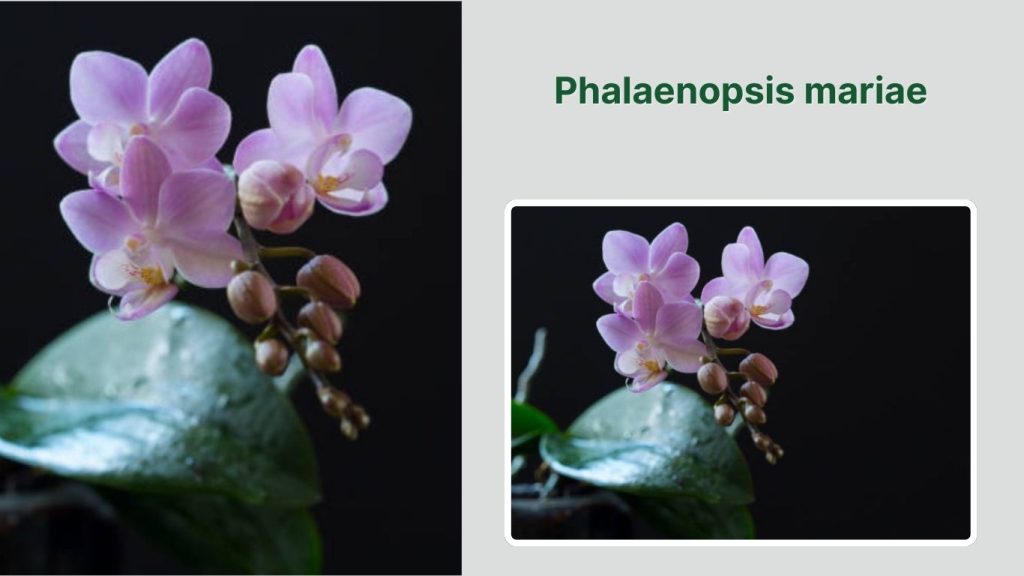
Phalaenopsis mariae is an attractive moth orchid species admired for its warm flower tones and elegant shape. It is appreciated by orchid growers for both its beauty and its contribution to hybrid breeding.
Identification (Flower Traits)
- Medium-sized, rounded flowers
- Cream to pale yellow base color
- Reddish-brown stripes or blotches
- Smooth, waxy flower surface
- Arching spikes with multiple blooms
Flower Color & Structure
The petals are usually creamy yellow with reddish-brown markings, sometimes appearing as bands or irregular patches. The lip often shows yellow, red, and white tones, adding contrast.
Blooming Season & Flowering Habit
Phalaenopsis mariae typically blooms in spring. Flowers open gradually along the spike, lasting several weeks.
Habitat & Natural Range
This species is native to the Philippines, where it grows as an epiphyte in warm, humid lowland forests.
23. Phalaenopsis inscriptiosinensis
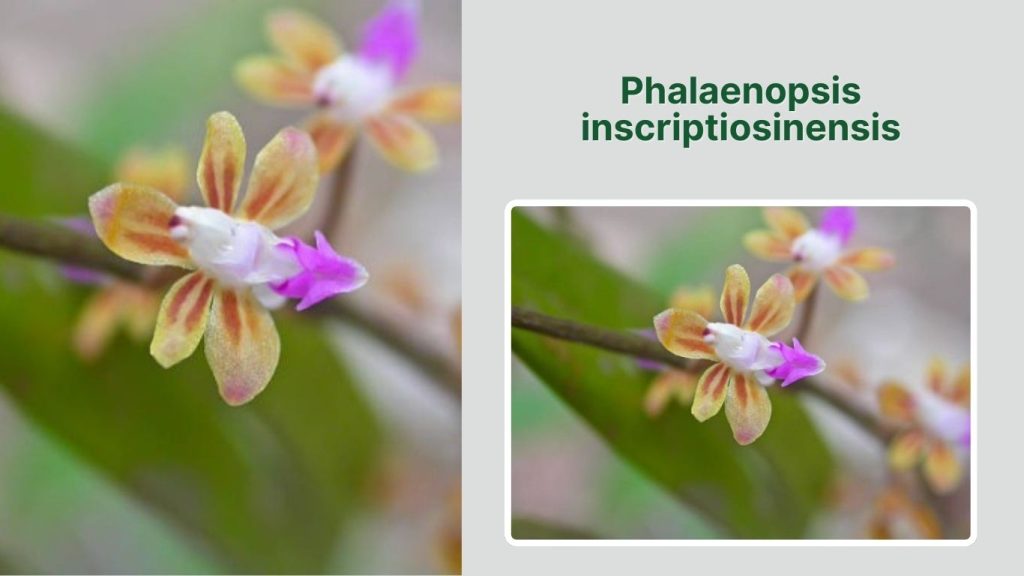
Phalaenopsis inscriptiosinensis is named for the fine, writing-like markings on its petals. It is valued for its intricate patterns and long-lasting blooms.
Identification (Flower Traits)
- Medium-sized, rounded flowers
- Pale yellow to cream petals
- Fine red-brown markings resembling script
- Waxy flower texture
- Arching spikes with sequential blooms
Flower Color & Structure
Flowers are pale yellow or cream, covered with delicate red or brown lines that resemble handwriting. The lip is often highlighted with yellow and reddish accents.
Blooming Season & Flowering Habit
Phalaenopsis inscriptiosinensis usually blooms in spring. Flowers open one after another, extending the blooming period.
Habitat & Natural Range
This species is native to Taiwan and nearby regions, growing in warm, humid forests as an epiphyte.
24. Phalaenopsis javanica
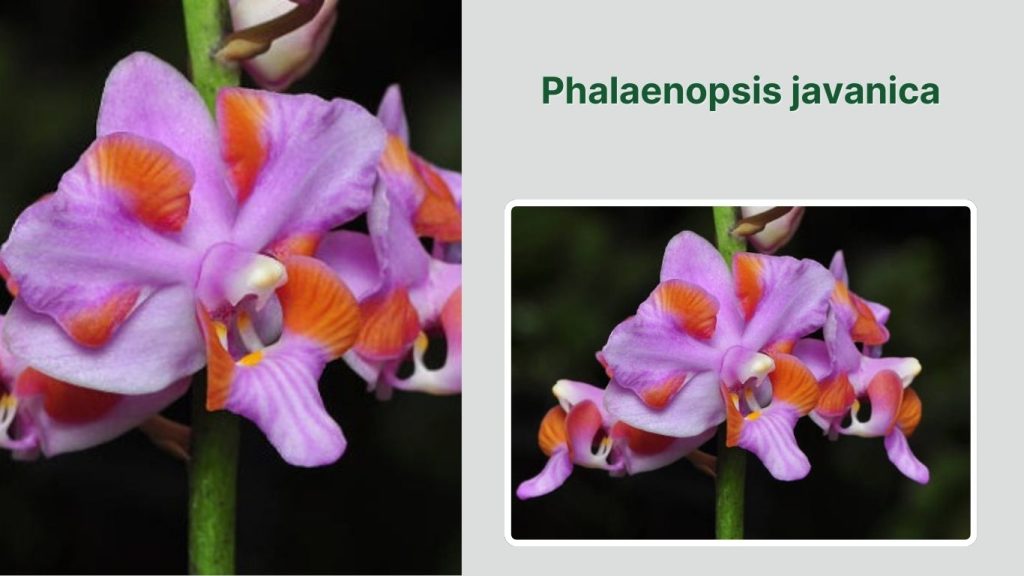
Phalaenopsis javanica is a distinctive moth orchid species recognized for its elegant flowers and attractive foliage. It is especially appreciated by collectors for its natural beauty and growth habit.
Identification (Flower Traits)
- Medium-sized rounded flowers
- Cream to pale yellow petals
- Subtle red or brown markings
- Waxy flower texture
- Arching flower spikes
Flower Color & Structure
The flowers are usually creamy white to pale yellow, often decorated with fine reddish or brownish lines near the center. The lip shows yellow and red tones, adding depth to the bloom.
Blooming Season & Flowering Habit
Phalaenopsis javanica typically blooms in spring. Flowers open gradually along the spike, allowing a long-lasting display.
Habitat & Natural Range
This species is native to Java and surrounding Indonesian islands, where it grows as an epiphyte in warm, humid forests.
25. Phalaenopsis zebrina
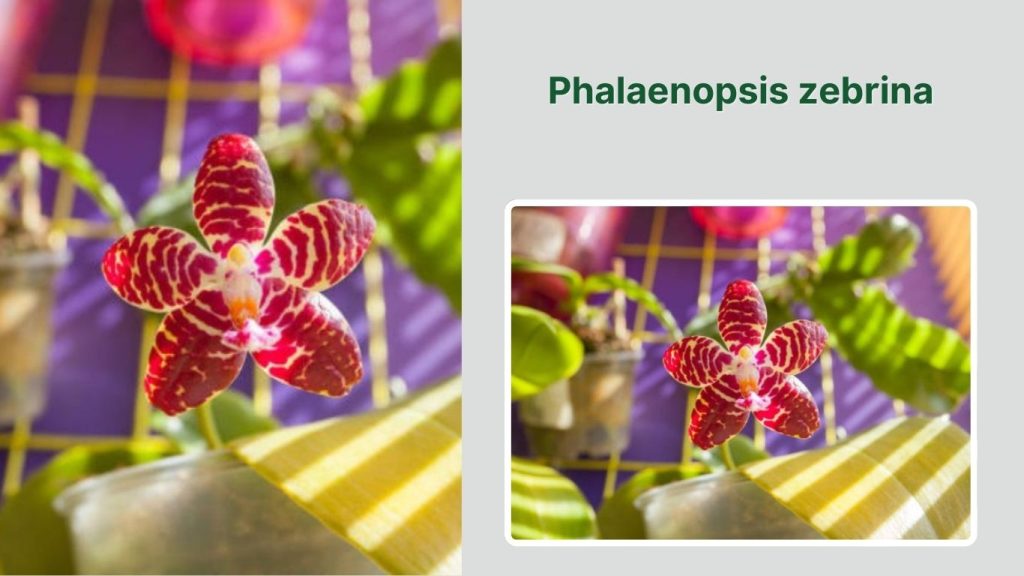
Phalaenopsis zebrina is famous for its dramatic zebra-like striping and exotic appearance. It is one of the most visually distinctive species in the genus.
Identification (Flower Traits)
- Medium-sized, rounded flowers
- Pale yellow or cream background
- Bold dark brown or purple striping
- Smooth, waxy flower surface
- Arching spikes with several blooms
Flower Color & Structure
Flowers are creamy yellow with strong dark stripes running across the petals. The lip often displays yellow, red, and white tones, enhancing the bold pattern.
Blooming Season & Flowering Habit
Phalaenopsis zebrina usually blooms in spring and early summer. Flowers open sequentially, extending the flowering period.
Habitat & Natural Range
This species is native to Malaysia and Indonesia, where it grows in warm, humid forest environments.
26. Phalaenopsis deliciosa
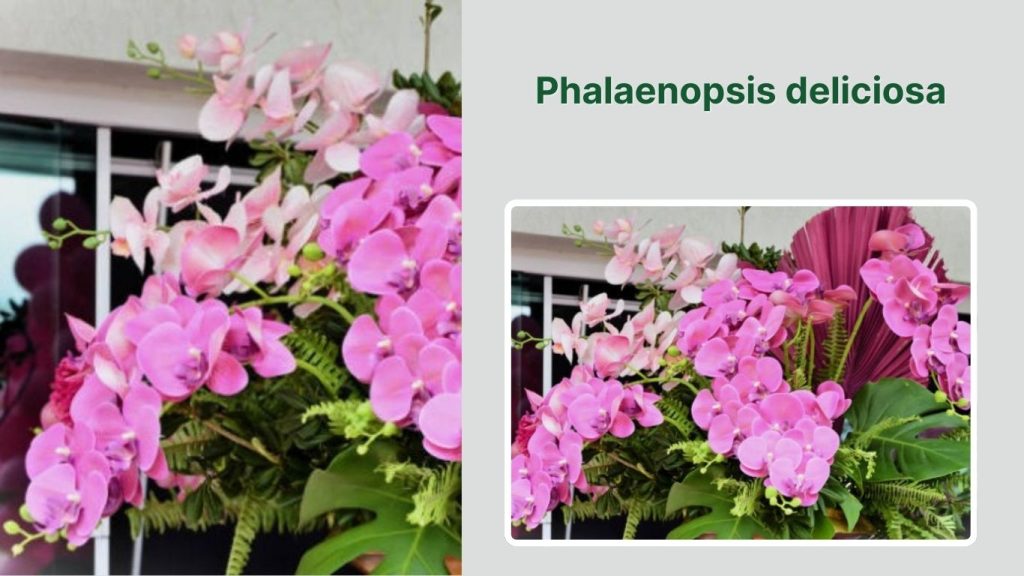
Phalaenopsis deliciosa is a small but charming moth orchid species admired for its delicate flowers and sweet fragrance. It is often chosen by growers who enjoy compact orchids with refined beauty.
Identification (Flower Traits)
- Small, rounded flowers
- White to pale pink petals
- Soft yellow and rose markings on the lip
- Slender, arching flower spikes
- Compact plant with narrow green leaves
Flower Color & Structure
The flowers are usually white to very pale pink, sometimes with a faint blush tone. The lip is highlighted with yellow, pink, and light purple markings, giving the small bloom a colorful focal point.
Blooming Season & Flowering Habit
Phalaenopsis deliciosa commonly blooms in spring. It produces several small flowers that open in sequence, allowing a longer flowering period than its size suggests.
Habitat & Natural Range
This species is native to Southeast Asia, including Thailand, Malaysia, and nearby regions, where it grows as an epiphyte in warm, humid forests.
27. Phalaenopsis malipoensis
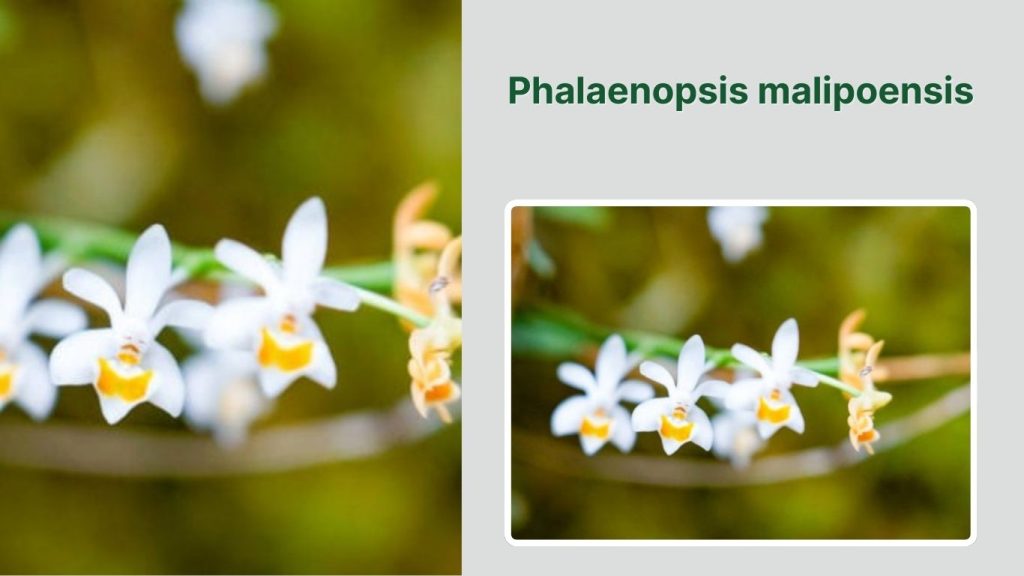
Phalaenopsis malipoensis is a distinctive and fragrant moth orchid species known for its soft greenish flowers and citrus-like scent. It is highly valued by collectors for its unusual coloration and perfume.
Identification (Flower Traits)
- Medium-sized, rounded flowers
- Pale green to creamy petals
- Yellow lip with subtle brown or orange markings
- Thick, waxy flower texture
- Arching flower spikes with several blooms
Flower Color & Structure
The flowers are typically soft green to creamy yellow, giving them a fresh, delicate appearance. The lip often shows yellow and light brown details that add contrast without overpowering the gentle color.
Blooming Season & Flowering Habit
Phalaenopsis malipoensis usually blooms in late winter or spring. The flowers open gradually along the spike and often release a noticeable fragrance during the day.
Habitat & Natural Range
This species is native to southern China and northern Vietnam, where it grows on trees in warm, humid forest environments.