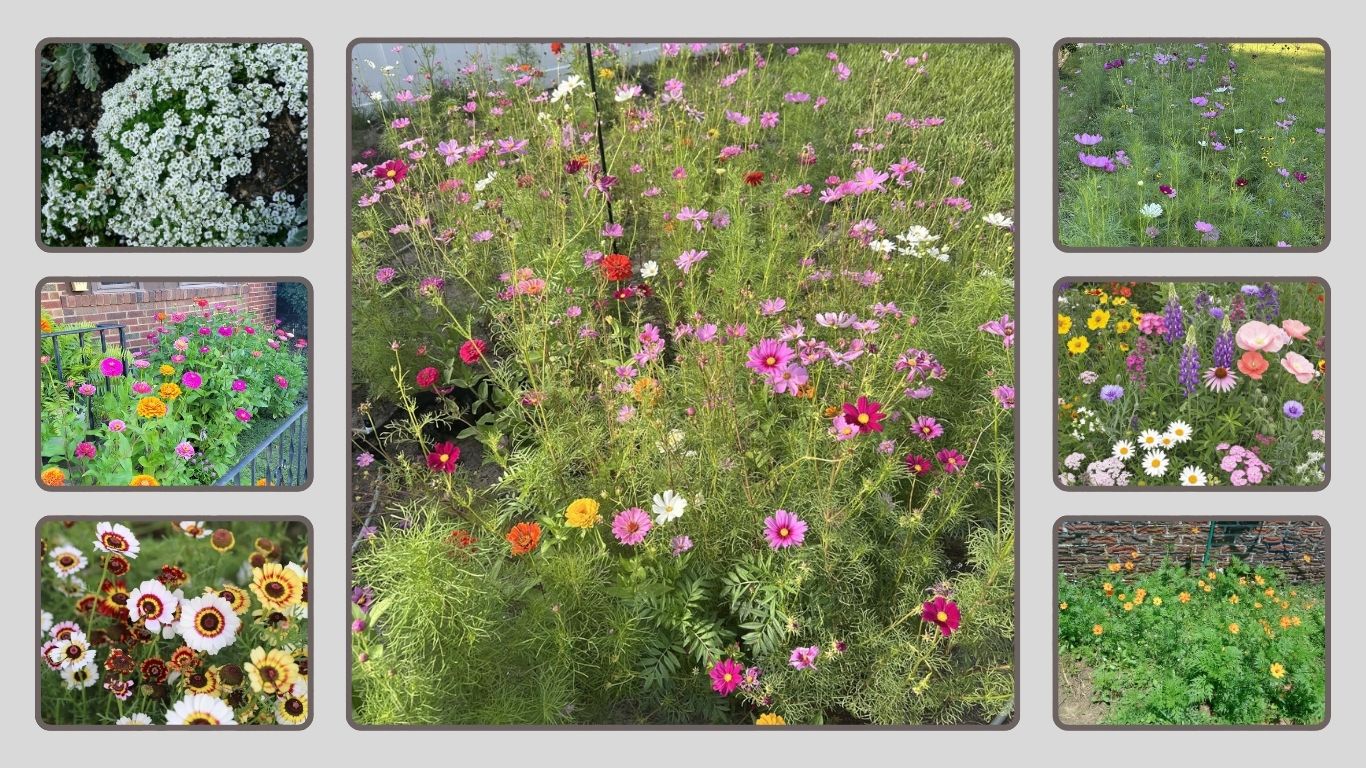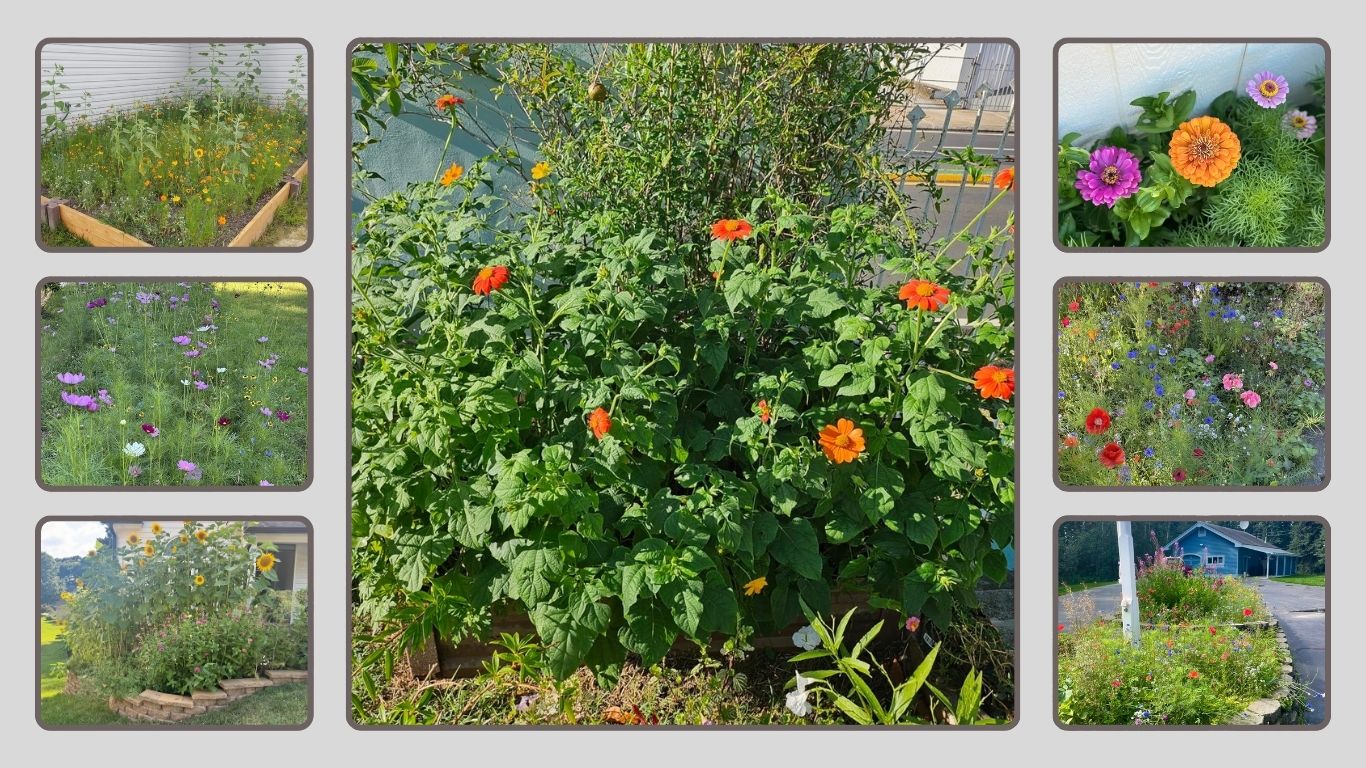




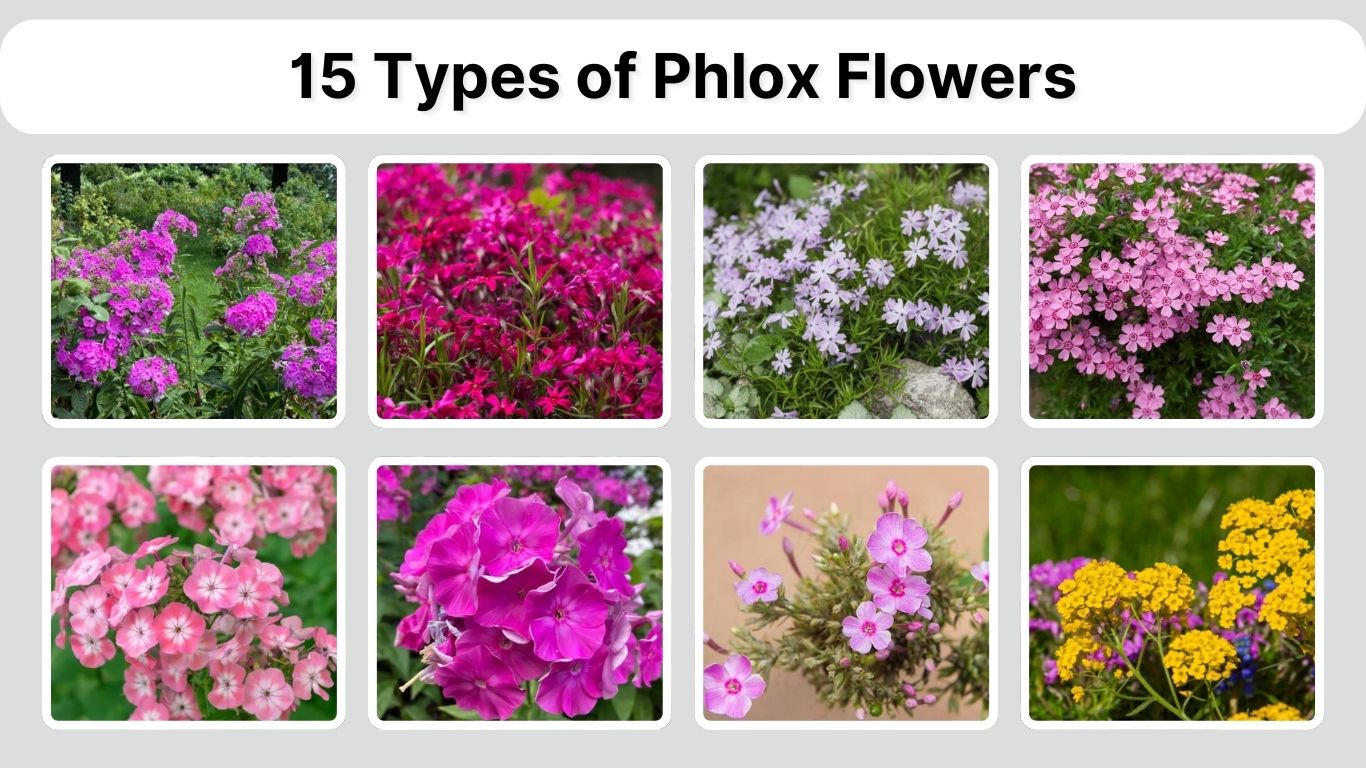
Phlox flowers are cherished garden plants known for their colorful, star-shaped blooms and pleasant fragrance. They include both low-growing ground covers and tall, upright varieties, making them suitable for rock gardens, borders, containers, and natural landscapes. Phlox bloom from early spring through late summer, depending on the species, and are easy to grow in many climates. Their nectar-rich flowers attract butterflies, bees, and other beneficial pollinators, adding beauty and ecological value to gardens.
1. Garden Phlox (Phlox paniculata)
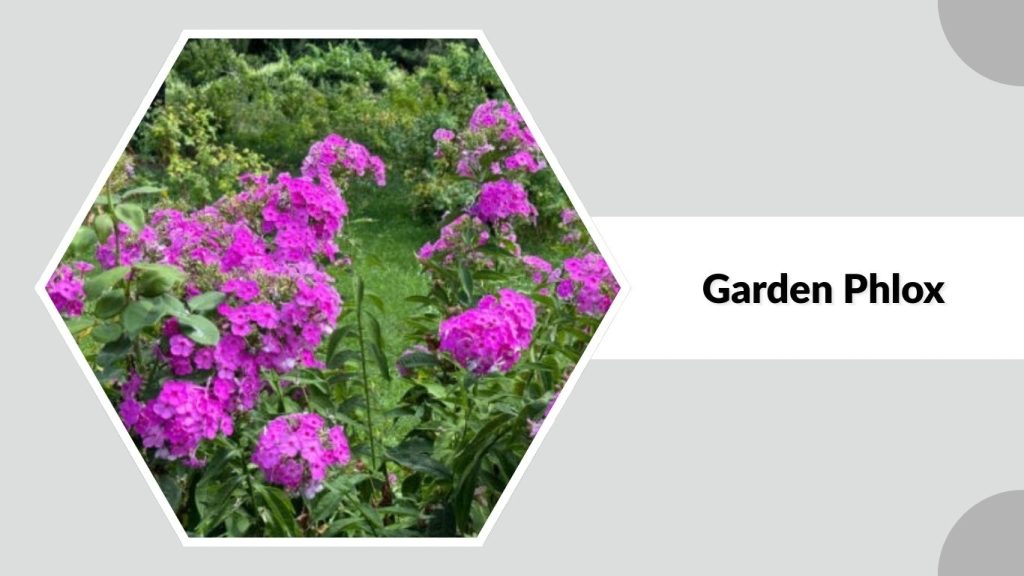
Garden Phlox is one of the most popular and widely cultivated phlox species, admired for its tall growth habit and large, fragrant flower clusters. It blooms mainly in summer, producing vibrant shades of pink, purple, white, red, and bi-colored forms. Because of its long flowering season and strong ornamental value, Garden Phlox is a favorite choice for borders, cottage gardens, and pollinator-friendly landscapes.
Identification
- Tall, upright perennial plant, usually 2–4 feet high
- Large, cone-shaped flower clusters (panicles)
- Five-petaled, star-shaped blooms with a sweet fragrance
- Colors include pink, lavender, white, red, and bi-color
- Opposite, lance-shaped green leaves along the stems
Habitat
Garden Phlox thrives in sunny to lightly shaded areas and prefers fertile, well-drained soil with consistent moisture. It is native to eastern and central North America, where it naturally grows along woodland edges, riverbanks, and open meadows. In gardens, it performs best with good air circulation.
Blooming Season
This phlox typically blooms from early summer through early fall. Deadheading spent flowers can encourage longer blooming and keep the plant looking neat. With proper care, Garden Phlox can provide continuous color for several months.
Growth and Care
Garden Phlox grows in clumps and slowly expands each year. It benefits from full sun, regular watering, and occasional division every few years to maintain plant health and vigor. Mulching helps keep roots cool and soil moisture stable.
Ecological Value
The nectar-rich flowers attract butterflies, bees, and hummingbirds. Garden Phlox is often included in pollinator gardens because it supports beneficial insects and adds vertical interest to mixed flower beds.
2. Creeping Phlox (Phlox subulata)
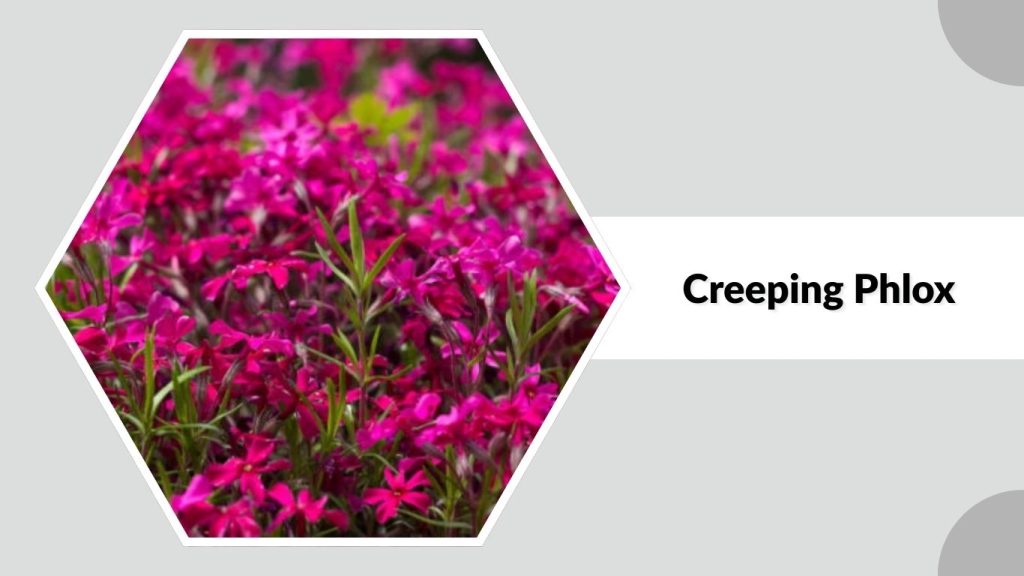
Creeping Phlox is a low-growing, mat-forming phlox species famous for creating colorful carpets of flowers in early spring. It spreads quickly across the ground, making it ideal for rock gardens, slopes, borders, and edging pathways. When in full bloom, the foliage is almost completely covered by vibrant flowers in shades of pink, purple, blue, and white.
Identification
- Low-growing, ground-cover plant, usually 4–6 inches tall
- Needle-like, evergreen leaves forming dense mats
- Masses of small, five-petaled flowers
- Colors include pink, rose, lavender, blue, and white
- Spreading habit that fills spaces quickly
Habitat
Creeping Phlox is native to eastern North America and naturally grows on rocky hillsides and open woodland edges. It prefers full sun and well-drained soil. Because it tolerates poor, sandy, or rocky soils, it is commonly planted on slopes and in rock gardens.
Blooming Season
This phlox blooms heavily in early to mid-spring. The flowering period is short but very intense, creating a striking carpet effect. After blooming, the evergreen foliage remains attractive throughout much of the year.
Growth and Care
Creeping Phlox is easy to maintain and drought-tolerant once established. It requires minimal pruning, though light trimming after flowering helps keep mats compact. Good drainage is essential to prevent root rot.
Ecological Value
The early spring flowers provide an important nectar source for bees and other pollinators when few other plants are blooming. Creeping Phlox is often used in pollinator-friendly gardens and erosion-control plantings.
3. Woodland Phlox (Phlox divaricata)
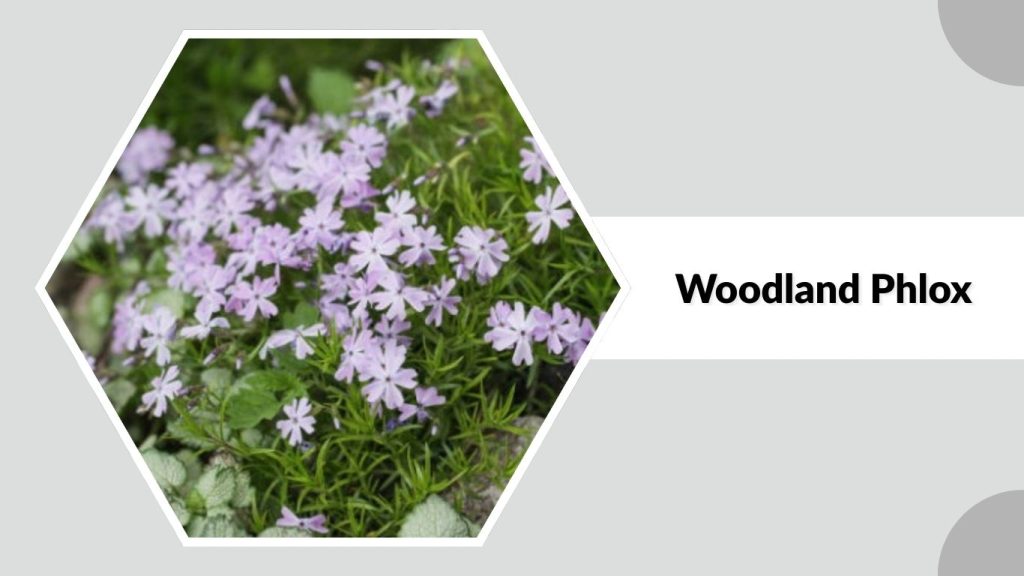
Woodland Phlox is a graceful, lightly spreading phlox species known for its soft, pastel-colored flowers and sweet fragrance. It is especially valued as a spring-blooming plant for shaded or partially shaded gardens. Its delicate appearance and natural woodland character make it a favorite for native plant gardens and under-tree plantings.
Identification
- Low to medium-growing perennial, about 10–15 inches tall
- Loose clusters of five-petaled, slightly notched flowers
- Common colors include pale blue, lavender, violet, and white
- Soft green, oval to lance-shaped leaves
- Gently spreading growth habit
Habitat
Woodland Phlox is native to eastern North America and naturally occurs in deciduous forests, along woodland edges, and in moist, shaded meadows. It prefers partial shade and rich, humus-filled soil that stays slightly moist but well drained.
Blooming Season
This species blooms in mid to late spring. The flowers often appear before many summer perennials emerge, adding early color to shady areas of the garden. Cooler temperatures help extend the blooming period.
Growth and Care
Woodland Phlox spreads slowly by stems that root where they touch the soil. It needs moderate watering, protection from hot afternoon sun, and occasional division to refresh older clumps. Leaf litter or organic mulch mimics its natural forest floor habitat.
Ecological Value
The fragrant blooms attract butterflies, bees, and other early-season pollinators. Woodland Phlox is also an important native ground-layer plant that supports woodland garden ecosystems.
4. Moss Phlox (Phlox subulata ‘Moss’ types)
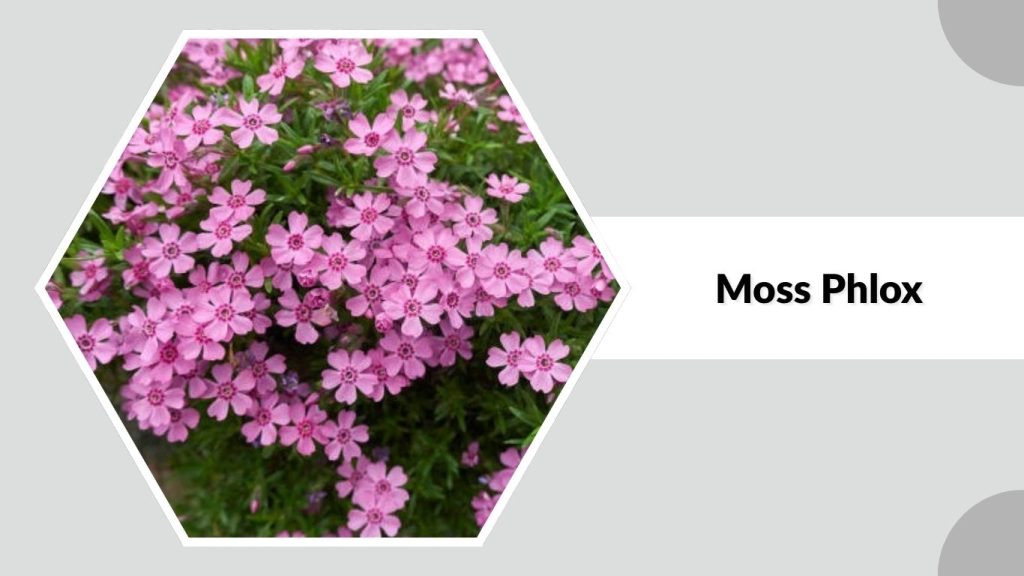
Moss Phlox is a common garden name used for dense, cushion-forming forms of Creeping Phlox that resemble soft, flowering moss when in bloom. It is especially prized for its ability to blanket the ground with bright color in early spring, making it a favorite for rock gardens, stone walls, slopes, and edging.
Identification
- Very low-growing, mat-forming perennial
- Fine, needle-like evergreen leaves
- Dense, moss-like growth habit
- Abundant small, five-petaled flowers
- Colors include pink, magenta, purple, blue, and white
Habitat
Moss Phlox originates from eastern North America and is well adapted to sunny, open sites with well-drained soil. It naturally grows in rocky or sandy areas and performs best where water does not collect around the roots.
Blooming Season
Flowering occurs mainly in early to mid-spring. During peak bloom, the foliage is often completely hidden beneath masses of colorful flowers, creating a vivid ground cover display.
Growth and Care
Moss Phlox is drought-tolerant once established and requires little maintenance. Light shearing after flowering helps keep plants compact and encourages fresh foliage growth. It prefers full sun for the best flowering.
Ecological Value
Its early-season blooms are an important nectar source for bees and small butterflies. Moss Phlox also helps stabilize soil and reduce erosion on slopes and rocky areas.
5. Drummond’s Phlox (Phlox drummondii)
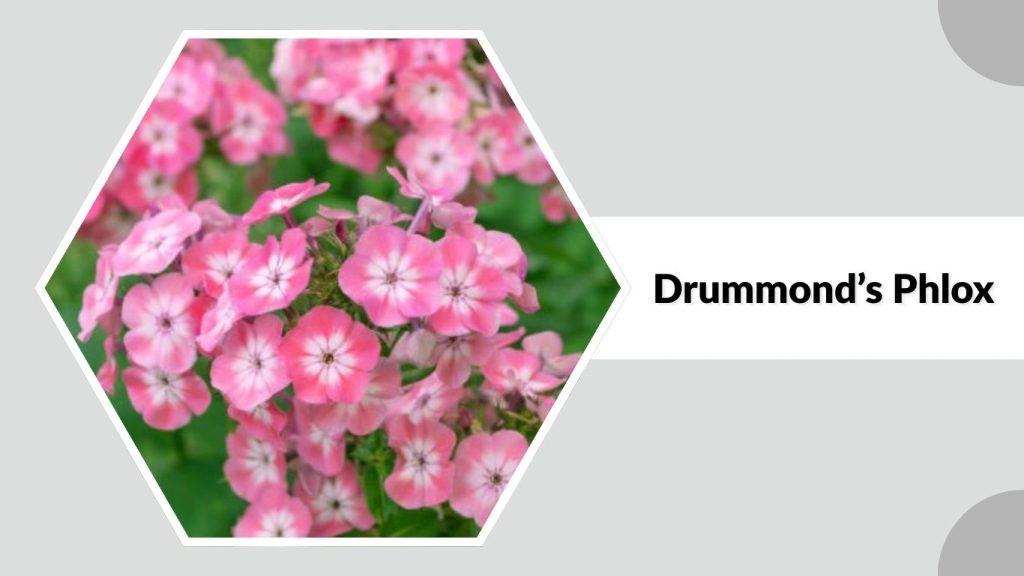
Drummond’s Phlox is a colorful annual phlox species best known for its long-lasting, vibrant blooms and compact growth habit. It is widely used in garden beds, borders, and containers because it flowers continuously and comes in a wide range of bright, eye-catching colors. Unlike many perennial phlox types, this species completes its life cycle in one season.
Identification
- Annual plant, usually 6–18 inches tall
- Bushy, compact growth form
- Star-shaped, five-petaled flowers
- Colors include red, pink, purple, cream, and bi-color forms
- Soft, slightly sticky green leaves
Habitat
Drummond’s Phlox is native to Texas and parts of the southern United States, where it naturally grows in open fields and prairies. It prefers full sun to light shade and well-drained, moderately fertile soil.
Blooming Season
This phlox blooms from spring through early fall, especially if spent flowers are removed. In mild climates, it can flower almost continuously, providing months of strong garden color.
Growth and Care
Drummond’s Phlox grows quickly from seed and is easy to cultivate. Regular watering, good drainage, and occasional deadheading help keep plants compact and blooming heavily.
Ecological Value
The nectar-rich flowers attract butterflies, bees, and other pollinators. Because of its long blooming season, Drummond’s Phlox is especially useful in supporting pollinators over extended periods.
6. Annual Phlox (Phlox drummondii)
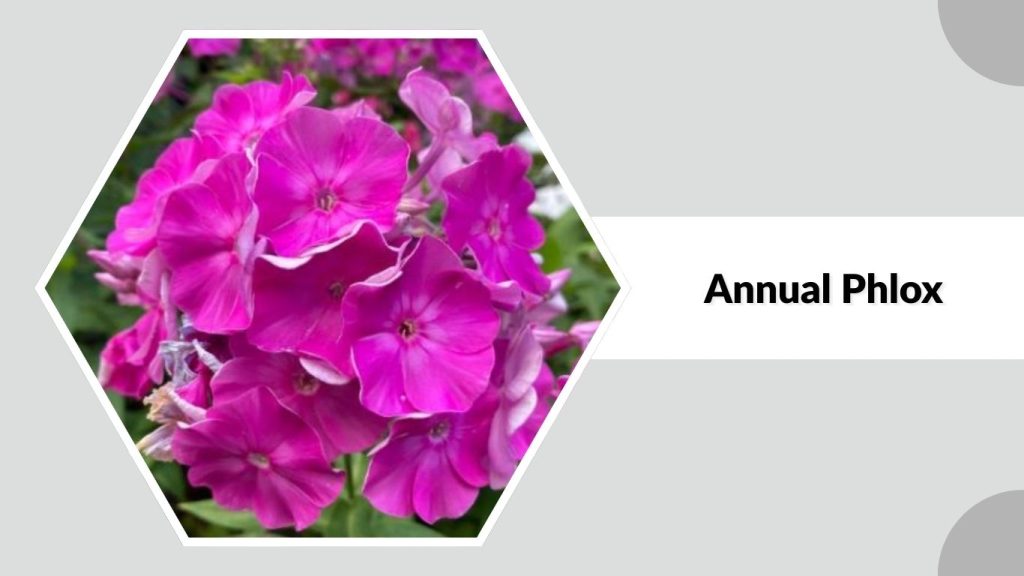
Annual Phlox is a popular garden plant grown mainly for its bright colors, fast growth, and long flowering season. It is often used in flower beds, hanging baskets, window boxes, and borders, where it produces continuous waves of cheerful blooms. Many modern cultivars have been developed with improved heat tolerance and compact forms.
Identification
- Soft-stemmed annual plant
- Height usually ranges from 6–15 inches
- Rounded clusters of five-petaled flowers
- Wide range of colors including red, pink, white, purple, and striped forms
- Light green, oval leaves
Habitat
Annual Phlox is derived from species native to the southern United States, especially Texas. It thrives in sunny locations with well-drained soil and moderate moisture. It does not tolerate waterlogged conditions.
Blooming Season
Flowering typically begins in early spring and continues into fall. With regular deadheading and light feeding, Annual Phlox can bloom almost nonstop during warm months.
Growth and Care
Annual Phlox grows easily from seed and establishes quickly. It prefers full sun, even moisture, and good airflow to prevent fungal problems. Pinching young plants encourages bushier growth.
Ecological Value
The bright, nectar-producing flowers attract bees, butterflies, and hoverflies. Annual Phlox is often included in pollinator gardens and colorful seasonal plantings.
7. Spotted Phlox (Phlox maculata)
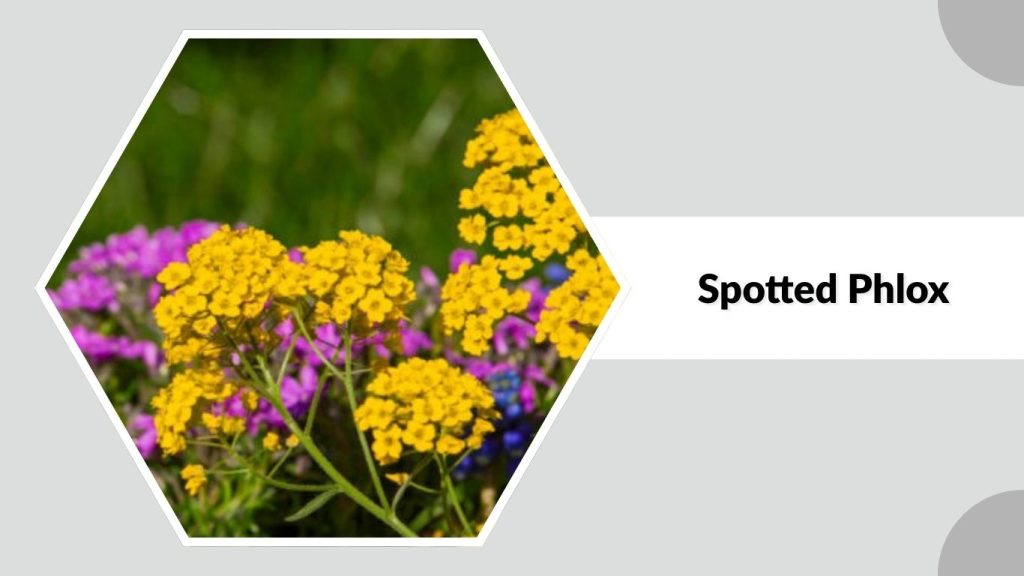
Spotted Phlox is a tall, elegant phlox species recognized by its slender flower spikes and characteristic dark spots or streaks on the stems. It brings vertical structure and soft color to summer gardens and is especially valued in native plant landscapes and naturalized meadows.
Identification
- Upright perennial, typically 2–3 feet tall
- Narrow, elongated flower clusters
- Five-petaled blooms, usually pale pink to lavender
- Distinct dark purple or reddish spots on the stems
- Lance-shaped, opposite leaves
Habitat
Spotted Phlox is native to eastern North America and commonly found in moist meadows, along stream banks, and in open woodland edges. It prefers full sun to partial shade and evenly moist, fertile soil.
Blooming Season
This species blooms from early to mid-summer. Its flowers open gradually along the spike, extending the display period and providing long-lasting garden interest.
Growth and Care
Spotted Phlox forms upright clumps and spreads slowly. It benefits from consistent moisture, rich soil, and good air circulation. Dividing clumps every few years helps maintain plant health.
Ecological Value
The fragrant flowers attract butterflies, bees, and hummingbirds. Spotted Phlox is an excellent nectar plant and a valuable addition to wildlife-friendly gardens.
8. Sand Phlox (Phlox bifida)
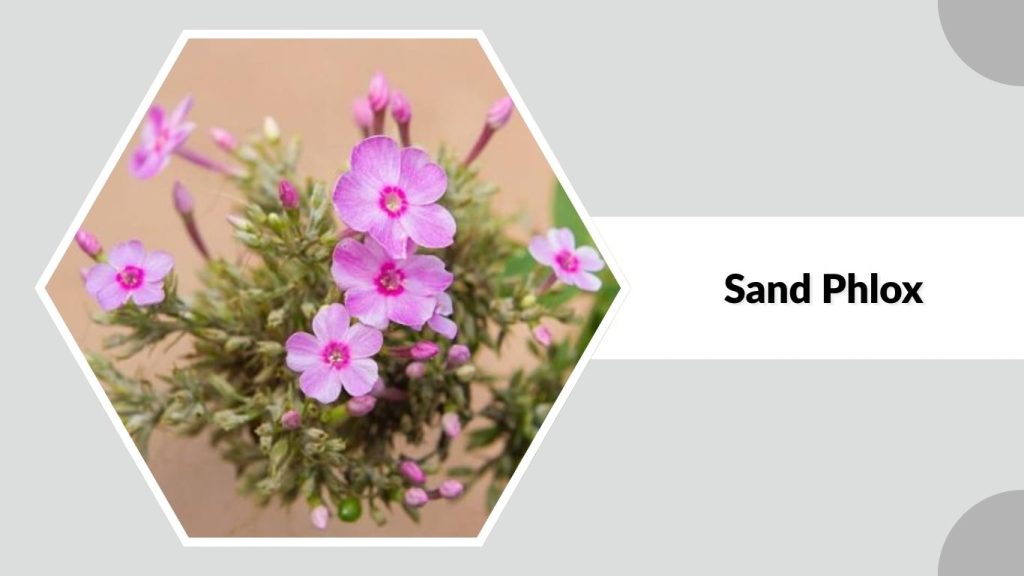
Sand Phlox is a low-growing, spring-blooming phlox species adapted to dry, sandy, and rocky soils. It is admired for its finely cut petals, soft fragrance, and ability to thrive where many other flowering plants struggle. This makes it a valuable choice for rock gardens and naturalized landscapes.
Identification
- Low, spreading perennial plant
- Finely divided, notched petals giving a fringed look
- Flowers usually pale pink, lavender, or white
- Narrow, grass-like green leaves
- Forms loose mats close to the ground
Habitat
Sand Phlox is native to the central and eastern United States, where it grows in prairies, sandy plains, and rocky open areas. It prefers full sun and very well-drained, sandy or gravelly soil.
Blooming Season
Blooming occurs mainly in early to mid-spring. Though the flowers are delicate, they often appear in large numbers, creating a soft, pastel-colored ground cover effect.
Growth and Care
Sand Phlox is drought-tolerant once established and requires minimal maintenance. It should be planted in open, sunny sites with excellent drainage to prevent crown rot.
Ecological Value
The early blooms provide nectar for native bees and small butterflies. Sand Phlox also supports local ecosystems by stabilizing sandy soils and contributing to native plant diversity.
9. Prairie Phlox (Phlox pilosa)
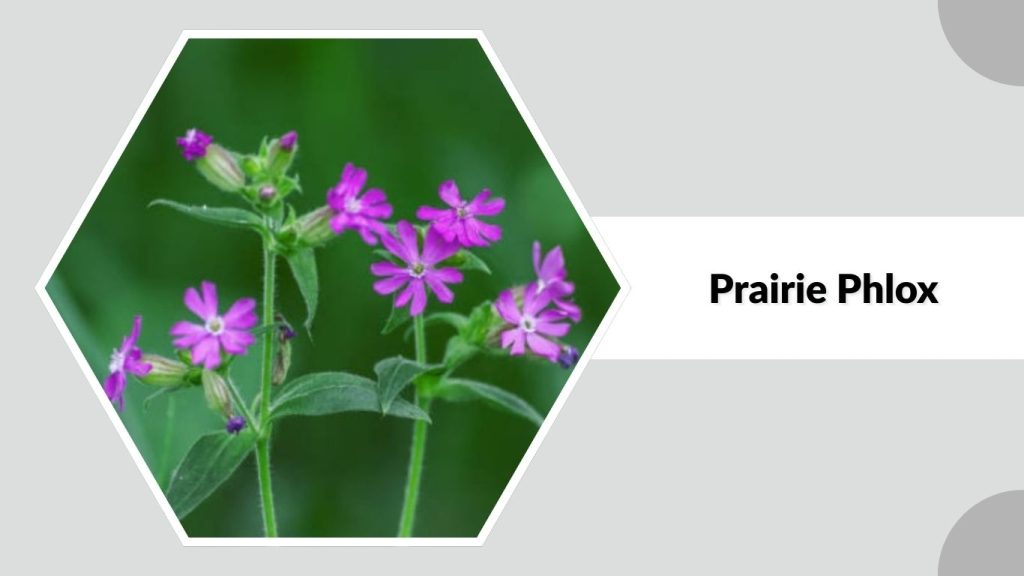
Prairie Phlox is a hardy, early-blooming phlox species valued for its soft, hairy stems and pastel-colored flowers. It is a true prairie native that adds gentle spring color to open landscapes, wildflower gardens, and restoration plantings.
Identification
- Upright to spreading perennial, about 8–20 inches tall
- Soft, hairy stems and leaves
- Rounded clusters of five-petaled flowers
- Colors range from pale pink to lavender and light purple
- Narrow, slightly fuzzy green leaves
Habitat
Prairie Phlox is native to central and eastern North America, where it grows in prairies, open woods, and dry meadows. It prefers full sun to partial shade and well-drained to moderately dry soil.
Blooming Season
This species blooms mainly in mid to late spring. Its flowers appear before many summer wildflowers, making it important for early-season garden color and pollinators.
Growth and Care
Prairie Phlox grows in clumps and spreads slowly by seed. It tolerates drought better than many phlox types and thrives in naturalized areas with minimal maintenance.
Ecological Value
The nectar-rich flowers attract bees, butterflies, and other beneficial insects. Prairie Phlox is often used in native prairie restorations and pollinator-friendly gardens.
10. Alpine Phlox (Phlox alpina)
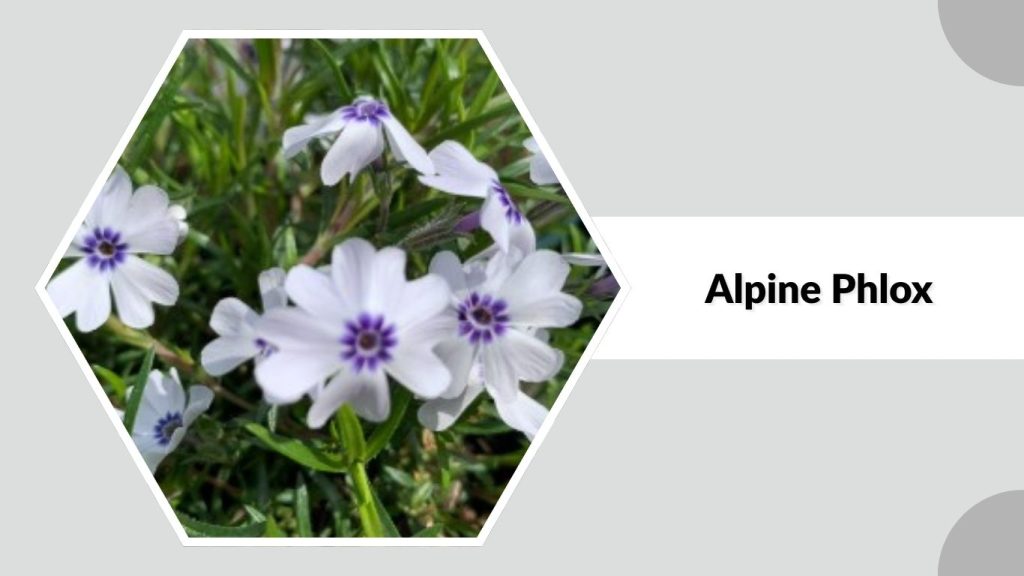
Alpine Phlox is a compact, low-growing phlox species known for its neat cushions of foliage and bright, showy spring flowers. It is especially suited to rock gardens, troughs, and alpine plantings where space is limited and excellent drainage is available.
Identification
- Very low-growing perennial, usually under 6 inches tall
- Dense, cushion-like growth habit
- Small, five-petaled flowers held just above the foliage
- Colors commonly include pink, rose, lavender, and white
- Short, narrow green leaves
Habitat
Alpine Phlox is native to mountainous regions of North America, where it grows in rocky slopes and open, gravelly soils. It prefers full sun and sharply drained soil, mimicking alpine conditions.
Blooming Season
Blooming takes place in early to mid-spring. Though small, the flowers are often produced in abundance, creating bright patches of color among stones and gravel.
Growth and Care
Alpine Phlox requires excellent drainage and benefits from gritty soil mixes. It grows slowly but steadily, forming tidy clumps. Overwatering and heavy soils should be avoided.
Ecological Value
The early blooms support small native bees and other early-emerging pollinators. Alpine Phlox also adds ecological diversity to rock and alpine garden habitats.
11. Carolina Phlox (Phlox carolina)
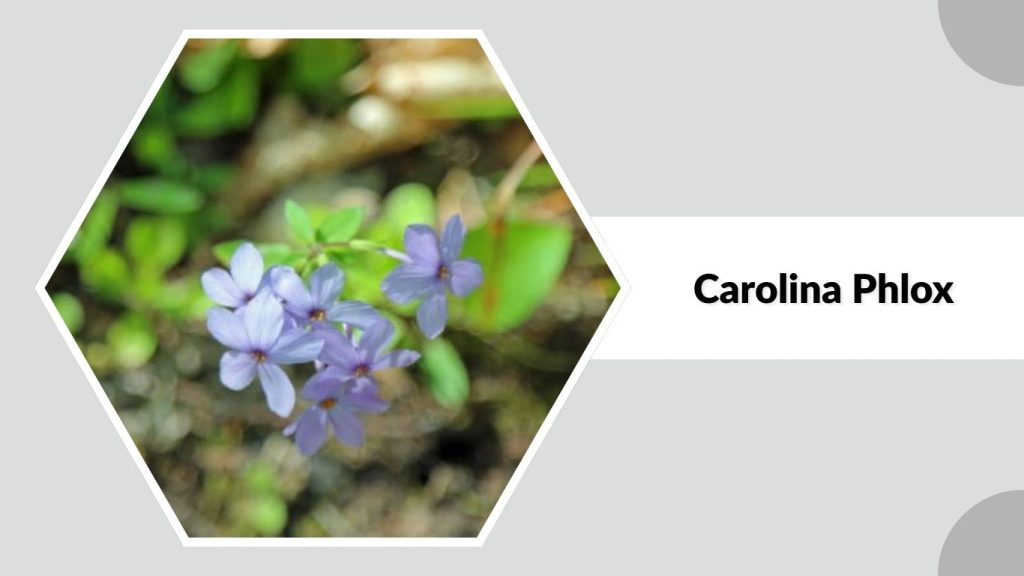
Carolina Phlox is a tall, summer-blooming phlox species valued for its sturdy stems, mildew resistance, and long-lasting floral display. It is often grown in perennial borders and native gardens where it provides height, fragrance, and dependable color.
Identification
- Upright perennial, typically 2–3 feet tall
- Narrow, cylindrical flower clusters
- Five-petaled flowers in shades of pink, lavender, and rose
- Smooth, lance-shaped leaves
- Strong, unspotted stems
Habitat
Carolina Phlox is native to the southeastern United States, where it grows in open woodlands and along forest edges. It prefers full sun to partial shade and fertile, well-drained soil with moderate moisture.
Blooming Season
This species blooms mainly from early to mid-summer. Its flowering period often overlaps with Garden Phlox but usually starts slightly earlier.
Growth and Care
Carolina Phlox forms upright clumps and spreads slowly. It benefits from regular watering, organic-rich soil, and good air circulation. Dividing plants every few years helps maintain vigor.
Ecological Value
The fragrant blooms attract butterflies, bees, and hummingbirds. Carolina Phlox is a strong pollinator plant and a reliable feature in wildlife-friendly gardens.
12. Wild Blue Phlox (Phlox divaricata ‘Wild Blue’)
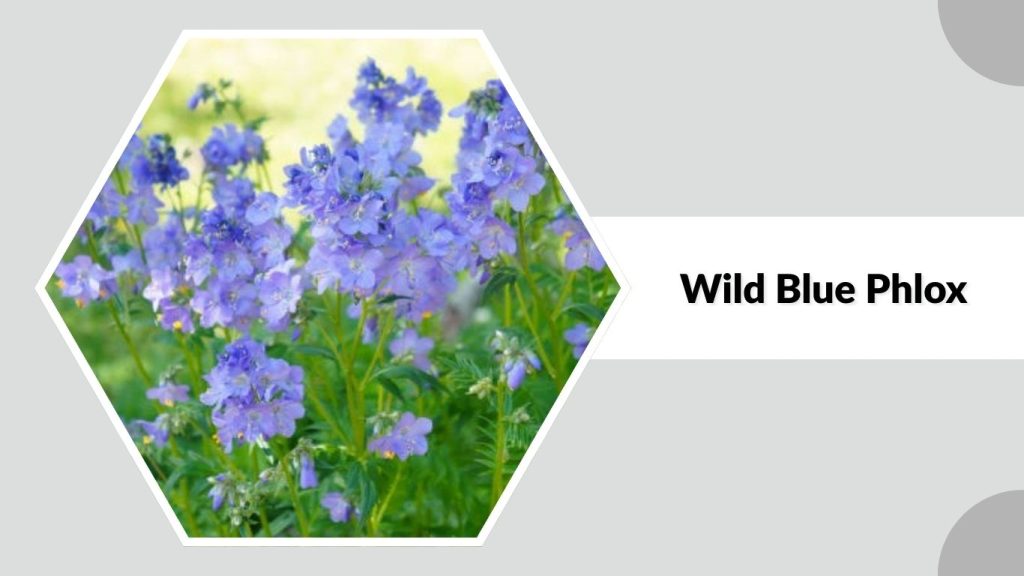
Wild Blue Phlox is a naturally occurring and cultivated form of Woodland Phlox, admired for its soft blue to lavender flowers and sweet spring fragrance. It is especially valued for brightening shaded gardens and woodland-style landscapes.
Identification
- Low-growing perennial, about 10–14 inches tall
- Loose clusters of soft blue to lavender flowers
- Five-petaled blooms with a slight notch
- Light green, oval to lance-shaped leaves
- Gently spreading growth habit
Habitat
Wild Blue Phlox is native to eastern North America and thrives in deciduous forests, woodland edges, and shaded meadows. It prefers partial shade, cool conditions, and humus-rich, well-drained soil.
Blooming Season
Blooming occurs in mid to late spring. Its flowers often coincide with spring bulbs and early woodland plants, creating layered seasonal interest.
Growth and Care
Wild Blue Phlox spreads slowly by creeping stems and self-seeding. It grows best with regular moisture, protection from strong afternoon sun, and organic mulch to conserve soil humidity.
Ecological Value
The nectar-rich flowers attract butterflies, bees, and early-season pollinators. It is an excellent native plant for supporting woodland garden ecosystems.
13. Flame Phlox (Phlox paniculata ‘Flame’ series)
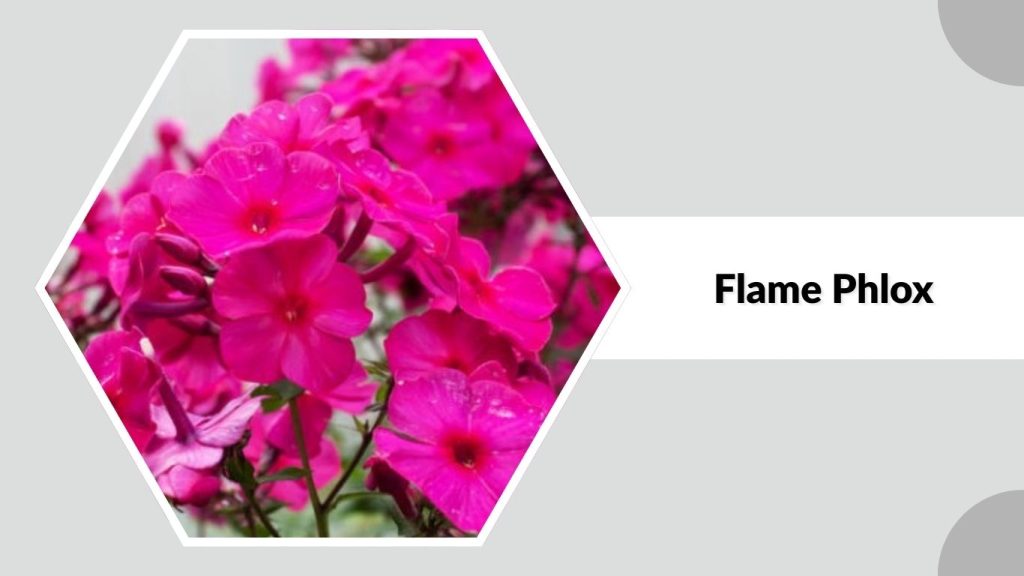
Flame Phlox refers to a group of compact cultivars of Garden Phlox bred for strong color, sturdy stems, and improved resistance to disease. These plants are popular in modern gardens where space is limited but bold summer color is desired.
Identification
- Compact, upright perennial, usually 12–24 inches tall
- Dense, rounded flower clusters
- Bright, five-petaled blooms in vivid pinks, reds, purples, and whites
- Medium-green, lance-shaped leaves
- Strong, well-branched stems
Habitat
Flame Phlox is garden-developed but derived from North American Garden Phlox. It grows best in sunny locations with fertile, well-drained soil and consistent moisture.
Blooming Season
Flowering typically occurs from mid-summer into early fall. Regular deadheading can extend the blooming period and keep plants attractive longer.
Growth and Care
Flame Phlox is easy to grow and well-suited to borders and containers. It prefers full sun, evenly moist soil, and good air circulation. Occasional division keeps plants vigorous.
Ecological Value
The colorful, fragrant blooms attract butterflies, bees, and hummingbirds. Flame Phlox is widely used in pollinator-friendly ornamental gardens.
14. Smooth Phlox (Phlox glaberrima)
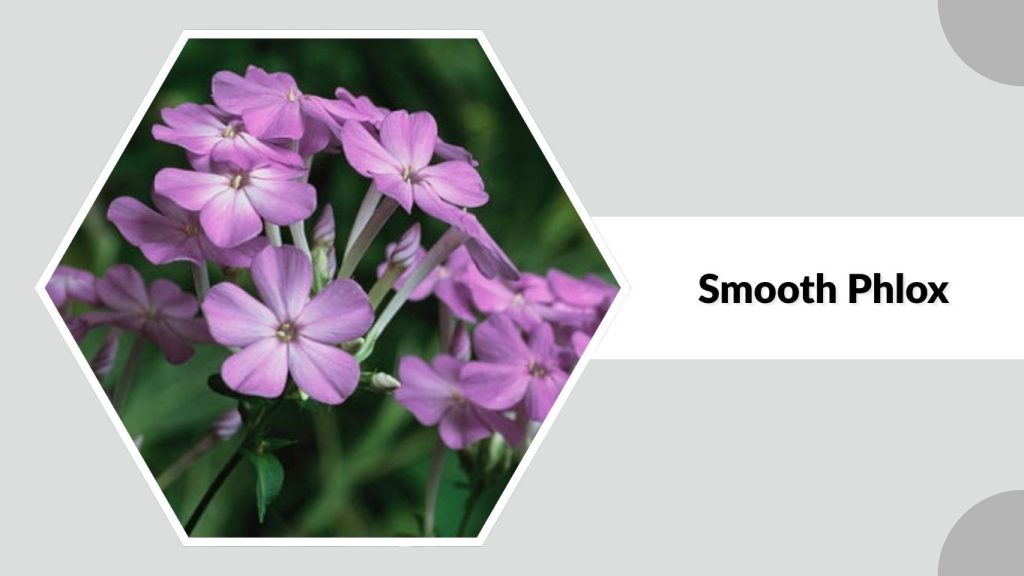
Smooth Phlox is a refined, tall phlox species known for its sleek, hairless stems and softly colored summer flowers. It is often grown in native plant gardens, moist meadows, and perennial borders where it adds natural elegance and vertical structure.
Identification
- Upright perennial, usually 2–3 feet tall
- Smooth, hairless stems and leaves
- Rounded to elongated clusters of five-petaled flowers
- Colors range from pale pink to lavender and soft purple
- Long, lance-shaped green leaves
Habitat
Smooth Phlox is native to eastern North America and commonly found in moist prairies, open woods, and along streambanks. It prefers full sun to partial shade and evenly moist, fertile soil.
Blooming Season
This species blooms from late spring into early summer, often slightly earlier than Garden Phlox. Its flowers provide gentle, pastel tones during the transition into summer.
Growth and Care
Smooth Phlox forms upright clumps and spreads slowly. It thrives with regular moisture, rich soil, and good airflow. Dividing plants every few years helps maintain healthy growth.
Ecological Value
The nectar-rich flowers attract bees, butterflies, and other beneficial insects. Smooth Phlox is an important native plant for pollinators and meadow-style gardens.
15. Thickleaf Phlox (Phlox amplifolia)
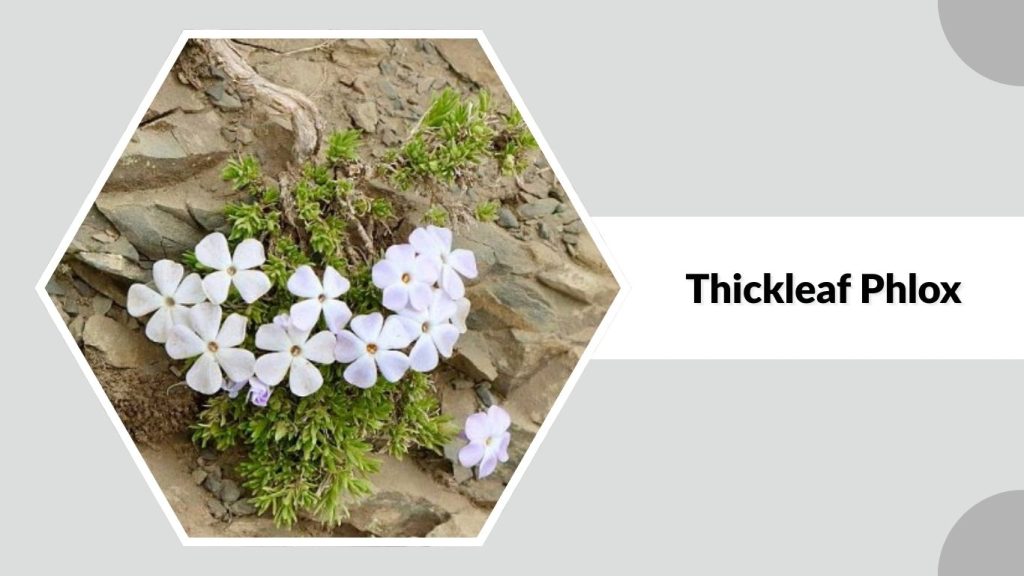
Thickleaf Phlox is a tall, robust phlox species closely related to Garden Phlox but noted for its broader leaves and stronger resistance to powdery mildew. It is valued in perennial borders and native-style plantings for its healthy foliage and long-lasting summer blooms.
Identification
- Tall, upright perennial, often 3–5 feet high
- Broad, thick, oval to lance-shaped leaves
- Large, rounded clusters of five-petaled flowers
- Colors commonly include pink, lavender, rose, and white
- Sturdy, leafy stems
Habitat
Thickleaf Phlox is native to the eastern United States, where it grows in open woods, riverbanks, and moist meadows. It prefers full sun to partial shade and fertile, consistently moist soil.
Blooming Season
Flowering occurs mainly from mid to late summer. Its bloom time often overlaps with Garden Phlox, extending color in summer gardens.
Growth and Care
Thickleaf Phlox is easy to grow and tolerates heat and humidity better than many other phlox species. It benefits from regular watering, rich soil, and occasional division.
Ecological Value
The fragrant flowers attract butterflies, bees, and hummingbirds. Thickleaf Phlox is an excellent choice for pollinator gardens and naturalized landscapes.
FAQs
What is the best location to plant phlox flowers?
Phlox flowers generally grow best in locations that receive full sun to partial shade, depending on the species. Tall garden phlox prefer bright sun for strong blooming, while woodland types thrive in filtered light. Most phlox need well-drained, fertile soil and good air circulation for healthy growth.
Are phlox flowers annuals or perennials?
Phlox includes both annual and perennial species. Annual phlox, such as Phlox drummondii, complete their life cycle in one season and bloom continuously. Most other types, including garden, creeping, and woodland phlox, are perennials that return each year and often spread gradually over time.
When do phlox flowers usually bloom?
Phlox bloom times vary by type. Creeping and woodland phlox flower mainly in spring, while prairie and sand phlox bloom from spring to early summer. Garden, Carolina, and thickleaf phlox are summer bloomers, often continuing into early fall with proper care and deadheading.
Do phlox flowers attract pollinators?
Yes, phlox flowers are excellent pollinator plants. Their nectar-rich, fragrant blooms attract bees, butterflies, hummingbirds, and other beneficial insects. Because different species bloom from spring through late summer, planting several types of phlox helps provide a continuous food source for pollinators.
How do you care for phlox plants to keep them healthy?
Phlox care includes planting in suitable light, watering regularly without waterlogging the soil, and providing good air circulation. Removing spent flowers encourages longer blooming. Dividing perennial phlox every few years helps prevent overcrowding, improves flowering, and keeps plants vigorous and disease-resistant.