


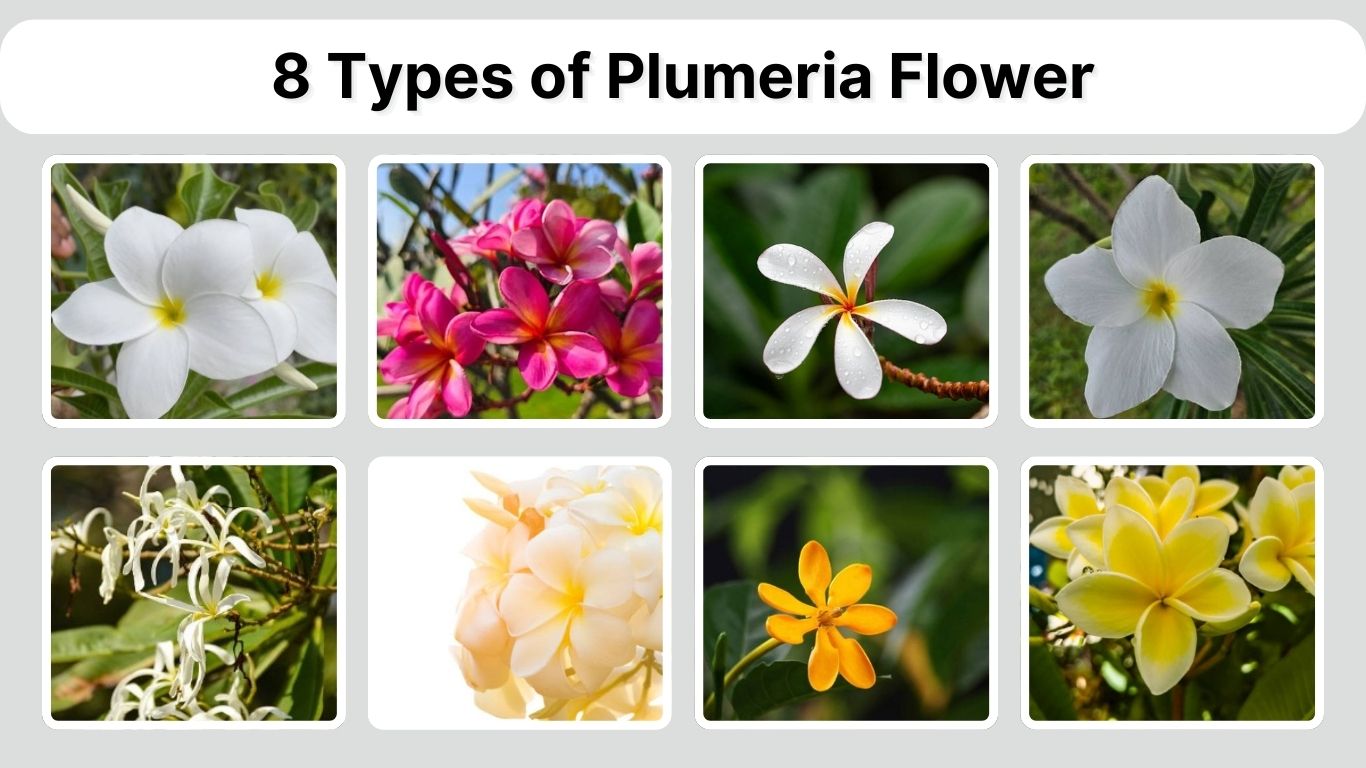
Plumeria, commonly called frangipani, is a beloved tropical flowering plant known for its waxy petals, rich fragrance, and vibrant colors. Native to the Americas, plumeria trees and shrubs are now grown throughout warm regions of the world. Their flowers appear in beautiful shades of white, yellow, pink, red, and multicolor blends. With their strong scent, glossy leaves, and long blooming season, plumerias are widely used in gardens, temple landscapes, leis, and decorative plantings.
1. Plumeria rubra (Red Frangipani)
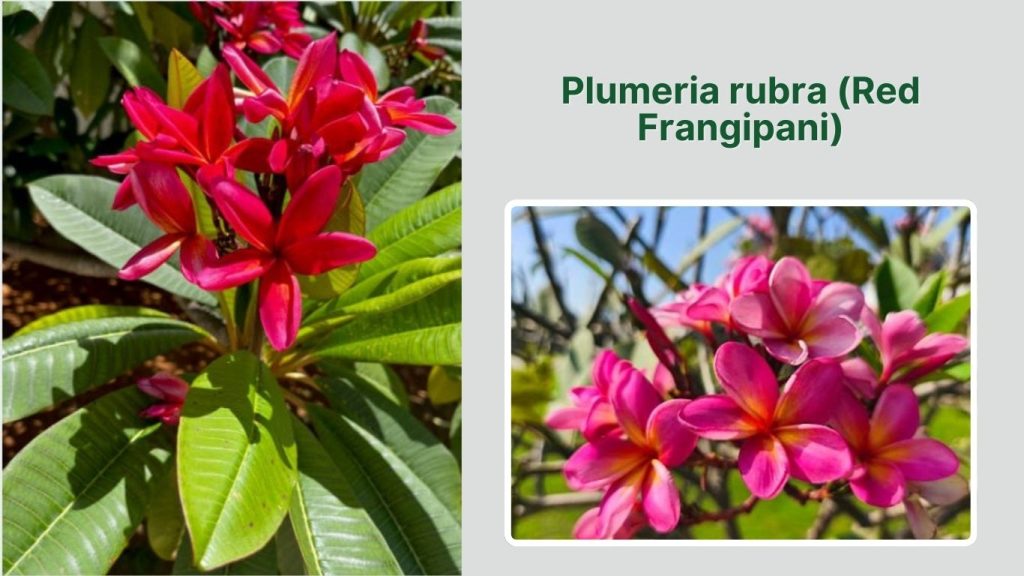
Plumeria rubra is the most widely known and cultivated plumeria species, famous for its intensely fragrant, five-petaled flowers and glossy tropical appearance. Native to Mexico, Central America, and northern South America, this small tree or shrub produces clusters of colorful blooms in shades of red, pink, yellow, orange, and multicolor blends. Because of its beauty and strong scent, Plumeria rubra is a classic choice for tropical gardens, leis, and ornamental landscapes.
Identification
- Five-petaled, waxy flowers with strong, sweet fragrance
- Common colors include red, pink, yellow, orange, and multicolor
- Thick, fleshy, gray-green branches
- Large, elongated, leathery green leaves
- Clusters of flowers at branch tips
- Grows as a small tree or large shrub
Habitat and Growing Conditions
Plumeria rubra thrives in warm, tropical to subtropical climates and prefers full sun for best flowering. It grows well in well-drained, sandy or loamy soil and does not tolerate waterlogged ground. This plant is drought-tolerant once established but flowers more abundantly with moderate watering.
Blooming Season and Growth Pattern
Blooming usually begins in late spring and continues through summer, and in warm regions can extend into early fall. The plant has a branching, open growth habit with leaves clustered near the ends of thick stems. Flowers are produced in large terminal clusters.
Uses and Significance
Plumeria rubra is widely used as an ornamental tree in tropical landscapes, temple gardens, and coastal plantings. Its flowers are commonly made into leis, garlands, and perfumes. In many cultures, plumeria symbolizes beauty, devotion, and new beginnings.
2. Plumeria alba (White Frangipani)
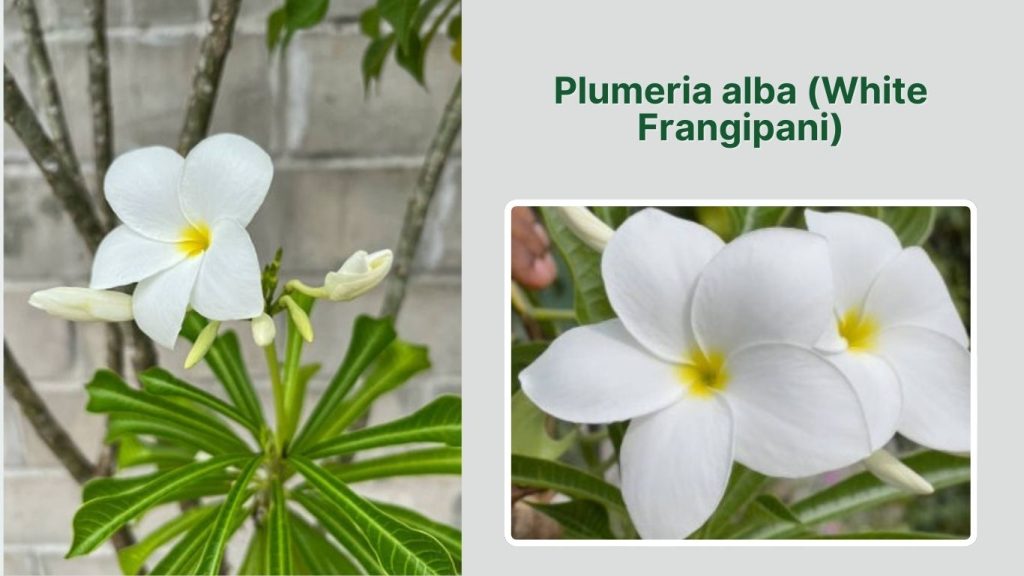
Plumeria alba is a classic plumeria species best known for its elegant white flowers with soft yellow centers and rich, sweet fragrance. Native to the Caribbean and parts of Central America, this small tree is widely planted in tropical and subtropical landscapes. Its pure-colored blooms, glossy leaves, and strong scent make it a favorite for gardens, temple grounds, and ornamental avenues.
Identification
- Pure white, five-petaled flowers with yellow centers
- Strong, sweet, traditional frangipani fragrance
- Thick, gray-green, succulent-like branches
- Long, narrow, glossy green leaves
- Flowers borne in clusters at branch tips
- Grows as a small tree or large shrub
Habitat and Growing Conditions
Plumeria alba thrives in full sun and warm climates. It prefers well-drained soil and tolerates sandy and coastal conditions well. Once established, it is drought-tolerant, though regular watering during the growing season encourages healthier growth and more abundant flowering.
Blooming Season and Growth Pattern
Blooming typically occurs from late spring through summer and may extend into early fall in warm regions. The plant develops a spreading, branching form with leaves concentrated toward the ends of branches. Flowers appear in terminal clusters and open successively.
Uses and Significance
Plumeria alba is widely grown as an ornamental shade and flowering tree. Its blossoms are commonly used in leis, garlands, and religious offerings. In many cultures, white frangipani symbolizes purity, peace, and spiritual devotion.
3. Plumeria obtusa (Singapore Frangipani)
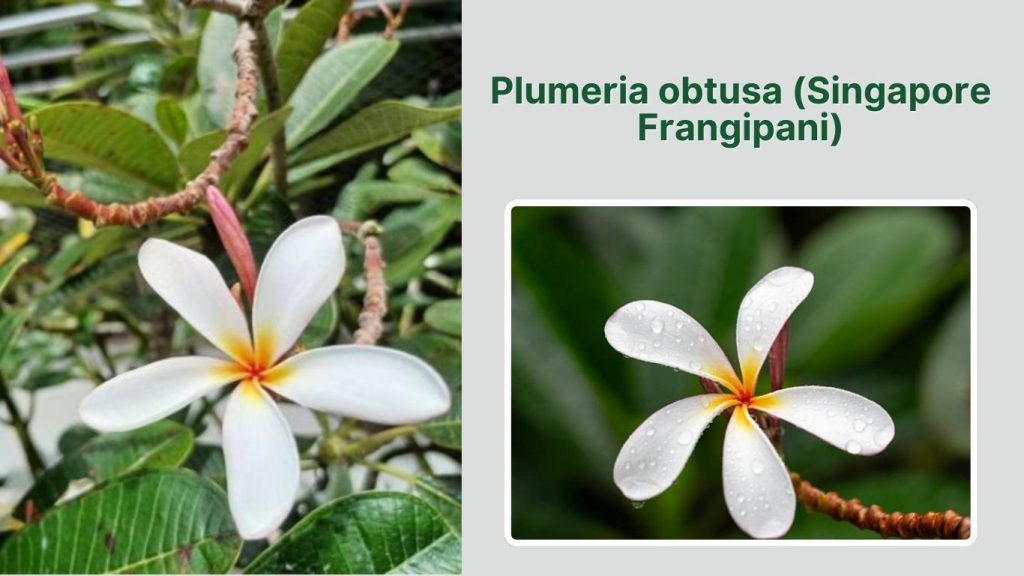
Plumeria obtusa is a popular evergreen plumeria species admired for its glossy leaves, compact growth habit, and highly fragrant white flowers with bright yellow centers. Native to the Caribbean, Central America, and northern South America, it is often called Singapore frangipani due to its widespread cultivation in Southeast Asia. Its neat form and year-round foliage make it especially attractive in tropical landscapes.
Identification
- White, rounded petals with a bright yellow center
- Strong, sweet, jasmine-like fragrance
- Thick, smooth, gray-green branches
- Shiny, dark green, oval leaves with blunt tips
- Flowers borne in dense terminal clusters
- More compact, evergreen habit than many plumerias
Habitat and Growing Conditions
Plumeria obtusa thrives in full sun and warm, humid climates. It prefers well-drained soil and performs well in sandy or coastal environments. This species tolerates heat and light drought but grows best with regular watering and good drainage.
Blooming Season and Growth Pattern
Blooming can occur throughout much of the year in tropical climates, with peak flowering in spring and summer. The plant forms a rounded, branching canopy and often keeps its leaves year-round, unlike many deciduous plumerias.
Uses and Significance
Plumeria obtusa is widely planted along streets, in resort landscapes, and in home gardens for its tidy shape and continuous ornamental value. Its flowers are used in leis and perfumes, and the plant is often associated with calmness, hospitality, and tropical beauty.
4. Plumeria pudica (Bridal Bouquet Frangipani)
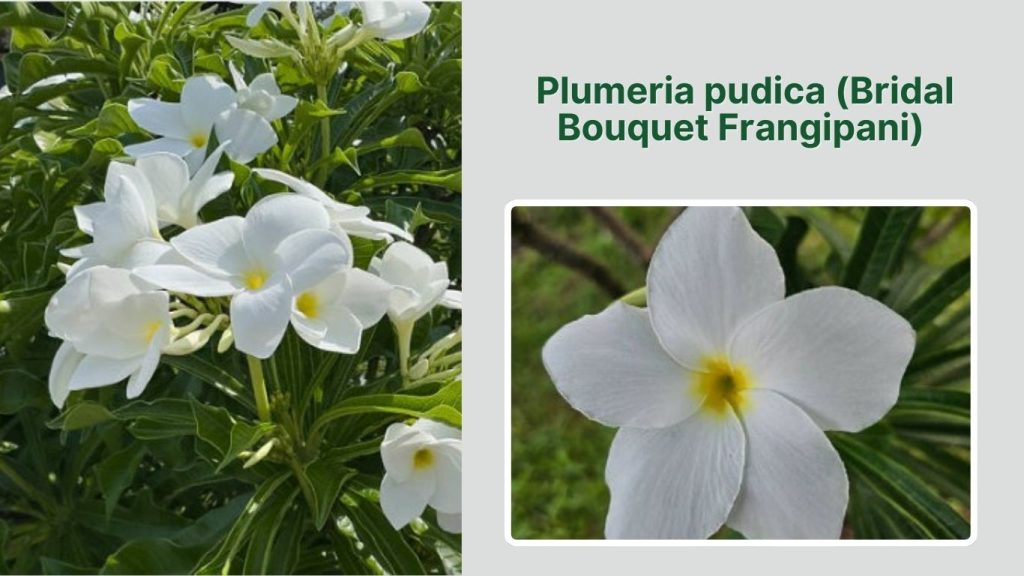
Plumeria pudica is a distinctive plumeria species known for its unusual spoon-shaped leaves and clusters of white, lightly fragrant flowers. Native to Panama, Colombia, and Venezuela, this plant stands out from other plumerias because of its evergreen nature and more compact, shrub-like form. Its neat structure and long blooming season make it especially popular in tropical gardens and urban landscapes.
Identification
- White, five-petaled flowers with small yellow centers
- Mild, pleasant fragrance
- Narrow, spoon-shaped, glossy green leaves
- Dense, upright, shrub-like growth habit
- Smooth, gray-green succulent branches
- Flowers produced in rounded terminal clusters
Habitat and Growing Conditions
Plumeria pudica thrives in full sun and warm, frost-free climates. It prefers well-drained soil and performs well in sandy or loamy ground. Compared to many plumerias, it tolerates regular watering better and is often grown as a hedge or ornamental shrub in tropical regions.
Blooming Season and Growth Pattern
This species can bloom almost year-round in tropical climates, with peak flowering in spring and summer. It grows into a compact, rounded shrub or small tree, maintaining foliage throughout the year and producing frequent flushes of flowers.
Uses and Significance
Plumeria pudica is widely used as an ornamental landscape plant, especially for hedges, borders, and decorative screens. Its tidy shape and repeated blooming make it popular in parks, resorts, and home gardens. The plant symbolizes elegance, freshness, and gentle beauty in tropical settings.
5. Plumeria stenopetala

Plumeria stenopetala is a lesser-known plumeria species recognized for its narrow petals and delicate, star-like flowers. Native to parts of Central America, this plant produces elegant white blooms with soft yellow centers and a gentle fragrance. Its refined flower shape and tropical character make it a valued plant among collectors and botanical gardens.
Identification
- White flowers with narrow, elongated petals
- Soft yellow center
- Mild, pleasant fragrance
- Thick, fleshy gray-green branches
- Long, glossy green leaves
- Flowers borne in terminal clusters
Habitat and Growing Conditions
This species thrives in full sun and warm, tropical climates. It prefers well-drained soil and performs best in sandy or loamy ground. Like most plumerias, it is drought-tolerant once established but benefits from moderate watering during active growth.
Blooming Season and Growth Pattern
Blooming typically occurs from late spring through summer, and in consistently warm climates may continue longer. The plant grows as a small tree or large shrub with an open, branching structure and foliage concentrated near branch tips.
Uses and Significance
Plumeria stenopetala is mainly grown for ornamental and botanical interest. Its uniquely shaped flowers make it attractive for collectors and tropical display gardens. Like other plumerias, it also attracts pollinators and adds fragrance and elegance to warm-climate landscapes.
6. Plumeria inodora
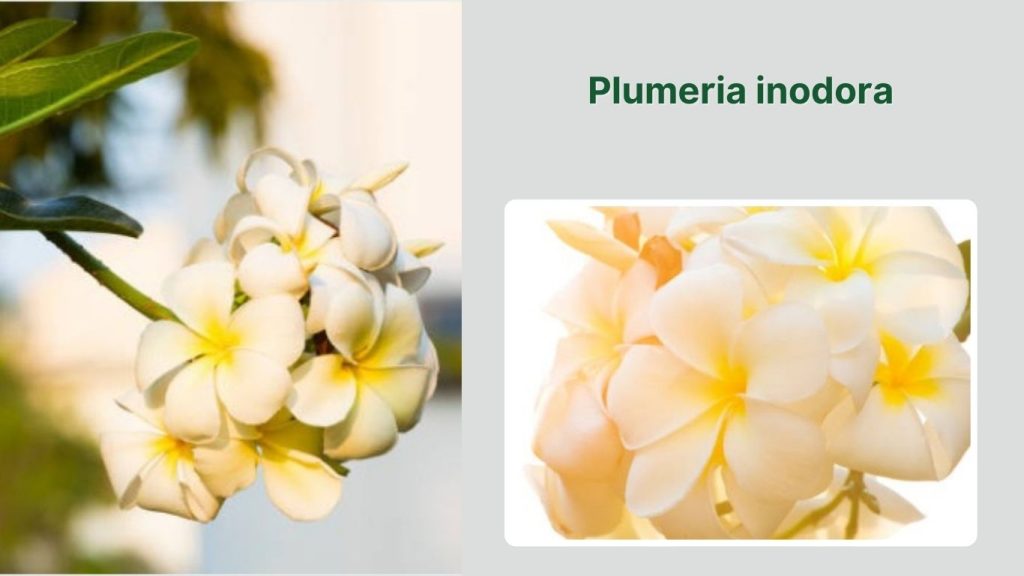
Plumeria inodora is a unique plumeria species known for producing beautiful flowers with little to no fragrance, which is reflected in its name “inodora,” meaning odorless. Native to parts of Central America, this plant features creamy white blooms with pale yellow centers and a classic frangipani appearance. It is valued for its visual beauty, especially in settings where a strong floral scent is not desired.
Identification
- Creamy white flowers with soft yellow centers
- Little to no fragrance compared to other plumerias
- Thick, succulent-like gray-green branches
- Long, smooth, green leaves
- Flowers produced in clusters at branch tips
- Grows as a small tree or large shrub
Habitat and Growing Conditions
This species thrives in full sun and warm, frost-free climates. It prefers well-drained soil and tolerates sandy and coastal environments. Like most plumerias, it is drought-tolerant once established but flowers best with moderate watering and good drainage.
Blooming Season and Growth Pattern
Blooming usually takes place from late spring through summer, with possible extended flowering in tropical regions. The plant develops an open, branching habit with leaves grouped near the ends of thick stems.
Uses and Significance
Plumeria inodora is mainly grown as an ornamental plant where fragrance sensitivity is a concern. It is suitable for gardens, parks, and streetscapes. Its clean-looking blooms and tropical form make it an attractive choice for decorative landscapes.
7. Plumeria celadine
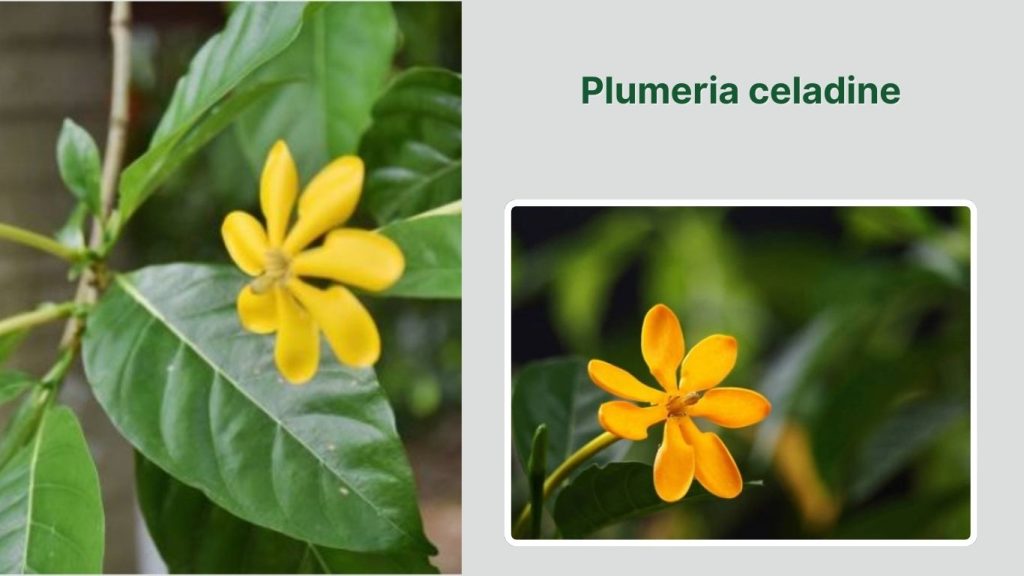
Plumeria celadine is a famous and much-loved plumeria variety known for its rich fragrance and elegant yellow-centered white flowers. Originally developed in Thailand, this cultivar has become one of the most widely grown plumerias in the world. Its reliable blooming, strong scent, and classic frangipani look make it a favorite for tropical gardens and plumeria collectors.
Identification
- White flowers with a bright yellow center
- Strong, sweet, classic plumeria fragrance
- Thick, gray-green, fleshy branches
- Long, leathery, dark green leaves
- Flowers produced in large terminal clusters
- Medium-sized tree or large shrub form
Habitat and Growing Conditions
Plumeria celadine thrives in full sun and warm, tropical to subtropical climates. It prefers well-drained soil and performs well in containers or garden beds. This variety is drought-tolerant once established and responds well to regular feeding and moderate watering.
Blooming Season and Growth Pattern
Blooming usually begins in spring and continues through summer, and in tropical climates may occur for longer periods. The plant grows into a branching, rounded form and produces flowers frequently once mature.
Uses and Significance
Plumeria celadine is widely used in ornamental landscapes, temple gardens, and home gardens. Its highly fragrant flowers are commonly used in leis and floral decorations. It is often associated with tropical elegance, relaxation, and hospitality.
8. Plumeria lutea (Yellow Frangipani)
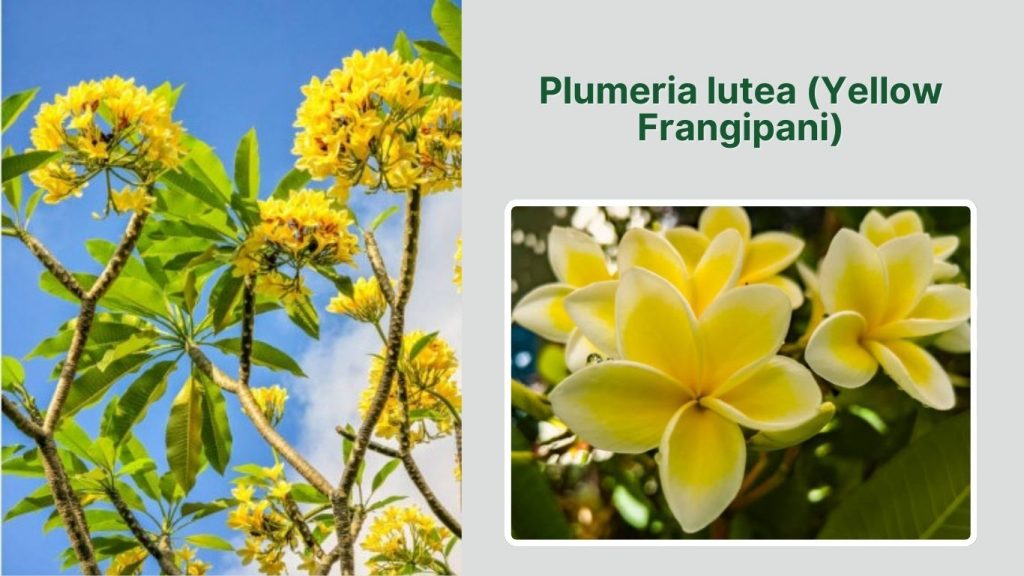
Plumeria lutea is a classic yellow-flowering plumeria admired for its bright, sunny blooms and sweet fragrance. Native to tropical regions of the Americas, this species produces clusters of golden-yellow to creamy flowers that stand out beautifully against its green foliage. Its cheerful color and strong scent make it a popular choice for tropical landscapes and ornamental plantings.
Identification
- Yellow to creamy-yellow, five-petaled flowers
- Sweet, pleasant plumeria fragrance
- Thick, fleshy gray-green branches
- Long, glossy green leaves
- Flowers borne in terminal clusters
- Grows as a small tree or large shrub
Habitat and Growing Conditions
This species thrives in full sun and warm, frost-free climates. It prefers well-drained soil and performs well in sandy or coastal conditions. Once established, Plumeria lutea is drought-tolerant but flowers best with moderate watering.
Blooming Season and Growth Pattern
Blooming typically occurs from late spring through summer, and in tropical regions may continue longer. The plant forms an open, spreading structure with leaves grouped near the ends of branches. Flowers open in clusters, providing extended seasonal color.
Uses and Significance
Plumeria lutea is widely planted as an ornamental tree in gardens, parks, and resort landscapes. Its flowers are used in leis, garlands, and perfumes. Yellow frangipani often symbolizes positivity, warmth, and new beginnings in tropical cultures.
FAQs
What is plumeria most commonly known as?
Plumeria is most commonly known as frangipani. It is famous for its sweet-smelling, waxy flowers and tropical appearance. Plumeria trees are widely grown in warm climates around the world and are often associated with beaches, temples, and island landscapes.
Does plumeria need full sun to bloom?
Yes, plumeria blooms best in full sun. It usually needs at least six hours of direct sunlight each day to produce abundant flowers. Plants grown in shade may have healthy leaves but often produce fewer blooms.
How often should plumeria be watered?
Plumeria prefers moderate watering. During the growing season, water when the top soil becomes dry. Avoid overwatering, as plumeria roots are sensitive to soggy soil. In cooler months, watering should be reduced significantly.
Can plumeria be grown in pots?
Yes, plumeria grows very well in containers. Potted plants need well-drained soil and a sunny location. Containers are especially useful in cooler regions because plants can be moved indoors or to sheltered areas during cold weather.
How long do plumeria flowers last?
Individual plumeria flowers usually last several days on the tree, while flower clusters can continue blooming for weeks. When cut and placed in water, blooms may last a few days, and their fragrance often remains noticeable during this time.