




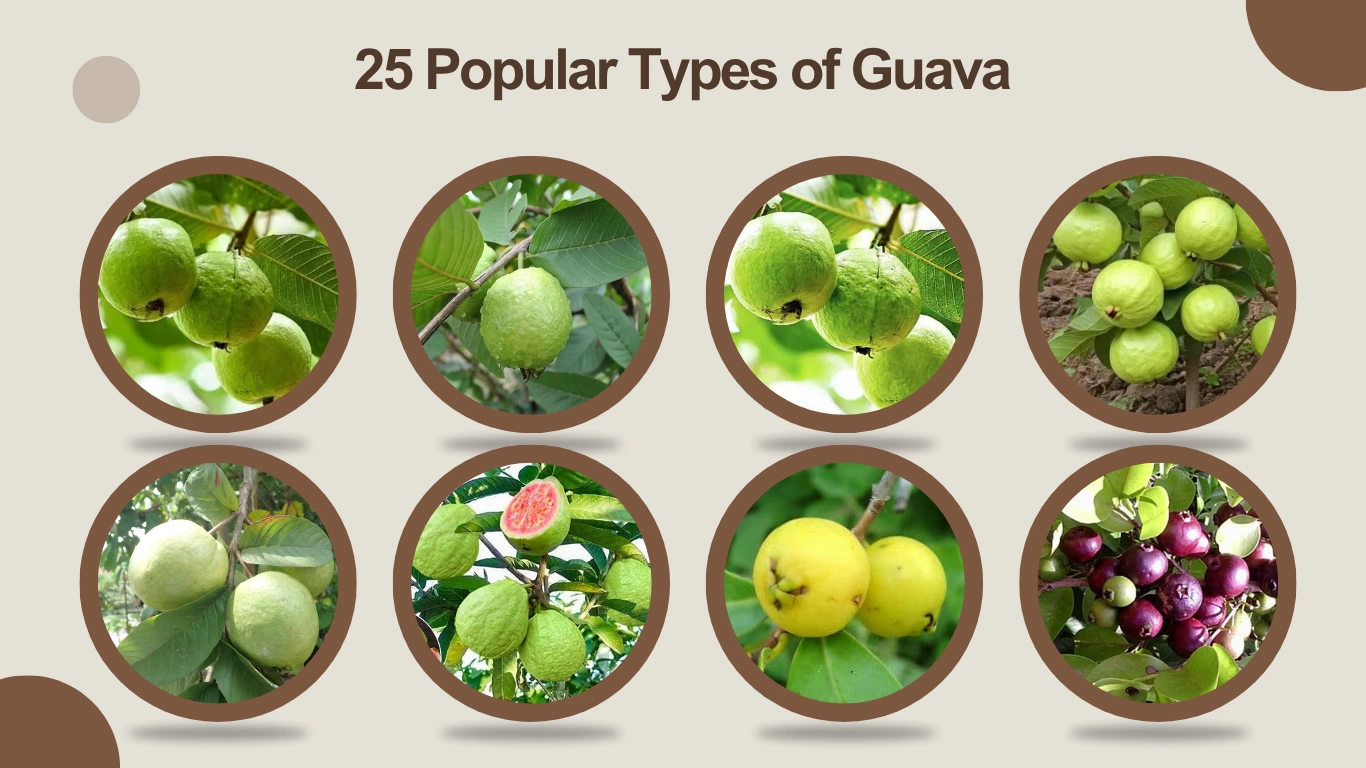
Guava is a tropical superfruit enjoyed around the world for its unique flavor, juicy flesh, and impressive nutritional value. From crisp white-fleshed varieties to vibrant pink and red ones, guavas come in many shapes, sizes, and tastes. Whether used for fresh snacking, juices, or jams, each type has something special to offer.
In this guide, you’ll discover 25 popular guava varieties, complete with identification traits, seasonal growth insights, and health benefits—perfect for fruit lovers, gardeners, and guava growers alike.
1. Allahabad Safeda Guava
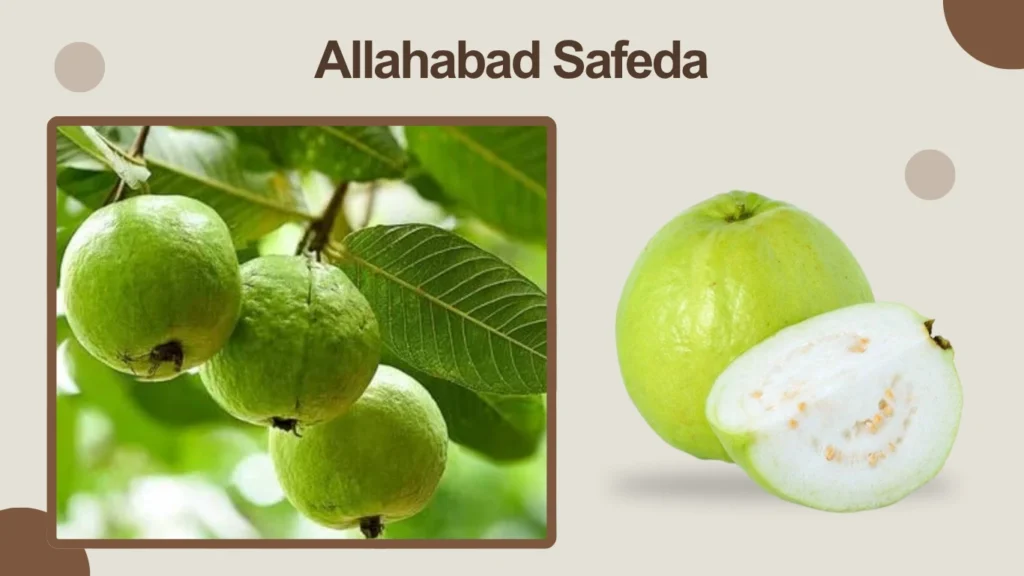
Allahabad Safeda is one of the most famous and widely grown guava varieties in India. Known for its smooth, pale skin and soft white flesh, this guava is valued for its high yield, sweet taste, and nutritional richness.
Identification
- Color: Pale green to yellow when ripe
- Shape: Round to oval
- Skin: Smooth and thin
- Flesh: White, soft, and grainy
- Seeds: Medium to high seed count
- Taste: Sweet and mildly tangy
Growth and Seasonality
Allahabad Safeda grows best in tropical to subtropical climates and is typically harvested in two main seasons: August–September and December–January.
Uses and Benefits
Commonly eaten fresh, it’s also used in juices, jams, and chutneys. Rich in vitamin C, fiber, and antioxidants, this guava supports immune health, digestion, and skin wellness.
2. Lucknow 49 (Sardar) Guava
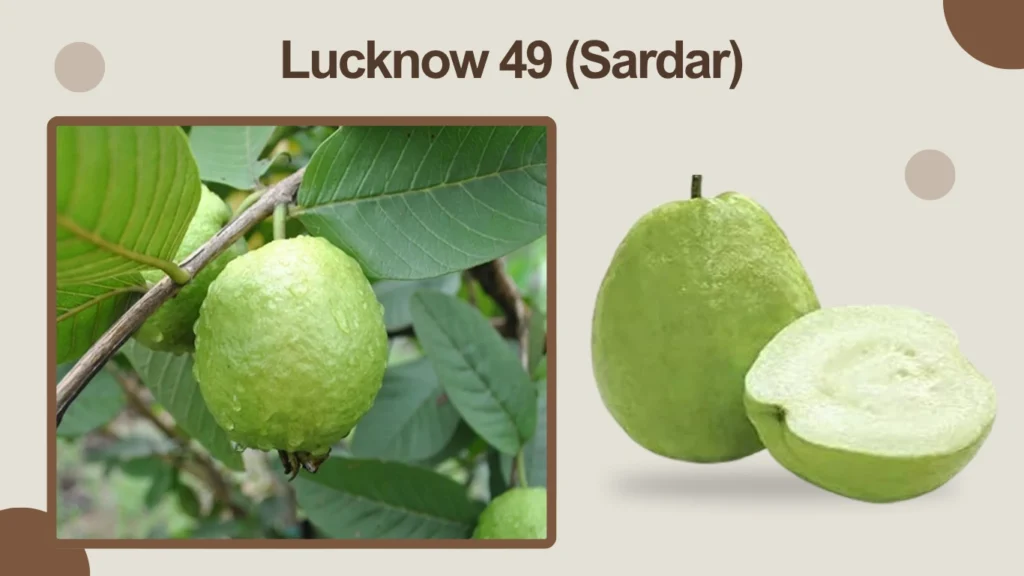
Lucknow 49, also known as Sardar Guava, is a high-yielding and popular Indian variety known for its large size and excellent taste. It is widely cultivated due to its commercial value and adaptability.
Identification
- Color: Light green to pale yellow when ripe
- Shape: Round to oval, slightly flattened
- Skin: Smooth and thin
- Flesh: White, firm, and moderately juicy
- Seeds: Fewer seeds compared to other varieties
- Taste: Sweet and mildly acidic
Growth and Seasonality
This variety thrives in tropical and subtropical climates and is typically harvested during two seasons: July–September and November–January.
Uses and Benefits
Ideal for fresh consumption and processing, Lucknow 49 is rich in vitamin C, fiber, and antioxidants, supporting digestion, immunity, and skin health.
3. Lalit Guava
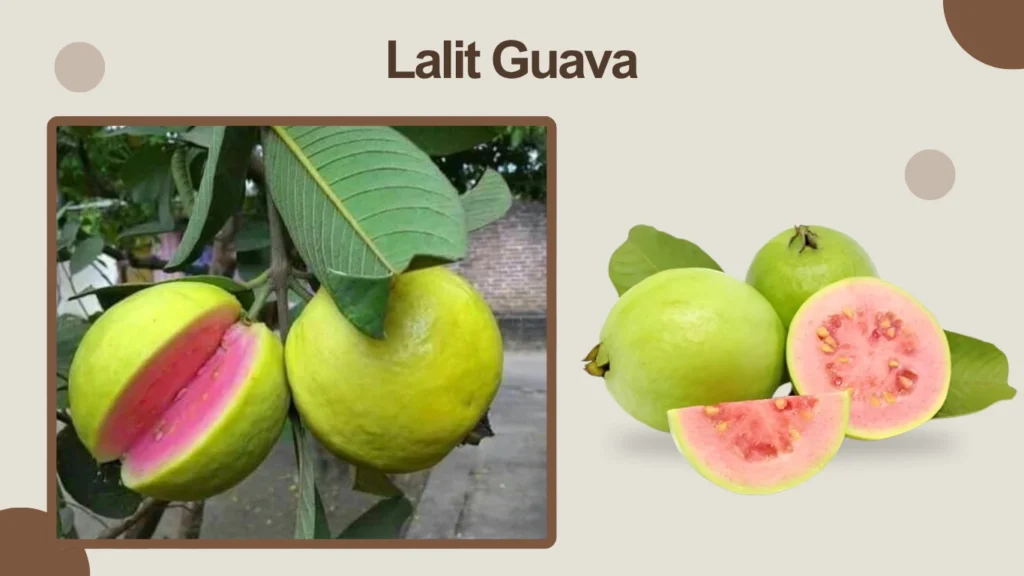
Lalit is a semi-dwarf, red-fleshed guava variety developed for high productivity and attractive appearance. It is well-known for its sweet flavor and disease resistance.
Identification
- Color: Yellowish-green skin
- Shape: Round to slightly oval
- Skin: Smooth and medium-thick
- Flesh: Deep pink to red, soft, and juicy
- Seeds: Medium number of soft seeds
- Taste: Sweet with a mild tang
Growth and Seasonality
Lalit guava is harvested mainly from September to November and performs well in diverse climatic conditions, including northern and central India.
Uses and Benefits
Perfect for eating fresh and making juice or jams. High in lycopene, vitamin A, and vitamin C, it supports eye health, immunity, and provides strong antioxidant protection.
4. Arka Mridula Guava

Arka Mridula is a high-yielding, soft-seeded guava variety developed by the Indian Institute of Horticultural Research. It is prized for its uniform fruit size, pleasant flavor, and suitability for processing.
Identification
- Color: Light green turning yellowish on ripening
- Shape: Round to slightly oval
- Skin: Smooth and thin
- Flesh: White, soft, and juicy
- Seeds: Fewer and soft
- Taste: Sweet with a mild aroma
Growth and Seasonality
It is suitable for tropical and subtropical climates and is typically harvested from August to October.
Uses and Benefits
Ideal for table use and pulp extraction in the food industry. Arka Mridula is high in vitamin C and dietary fiber, supporting immunity and digestion.
5. Shweta Guava

Shweta is an improved white-fleshed guava variety known for its attractive appearance, sweetness, and early bearing. It’s widely grown in India and preferred by commercial farmers.
Identification
- Color: Light green to yellow skin
- Shape: Round and symmetrical
- Skin: Thin and smooth
- Flesh: White, firm, and crisp
- Seeds: Few and soft
- Taste: Sweet and mildly tangy
Growth and Seasonality
Shweta guava bears fruit early and is harvested primarily between July and September. It performs well in northern and western Indian regions.
Uses and Benefits
Best for fresh eating and salads. Rich in vitamin C and potassium, it supports immunity, blood pressure regulation, and digestive health.
6. Arka Kiran Guava
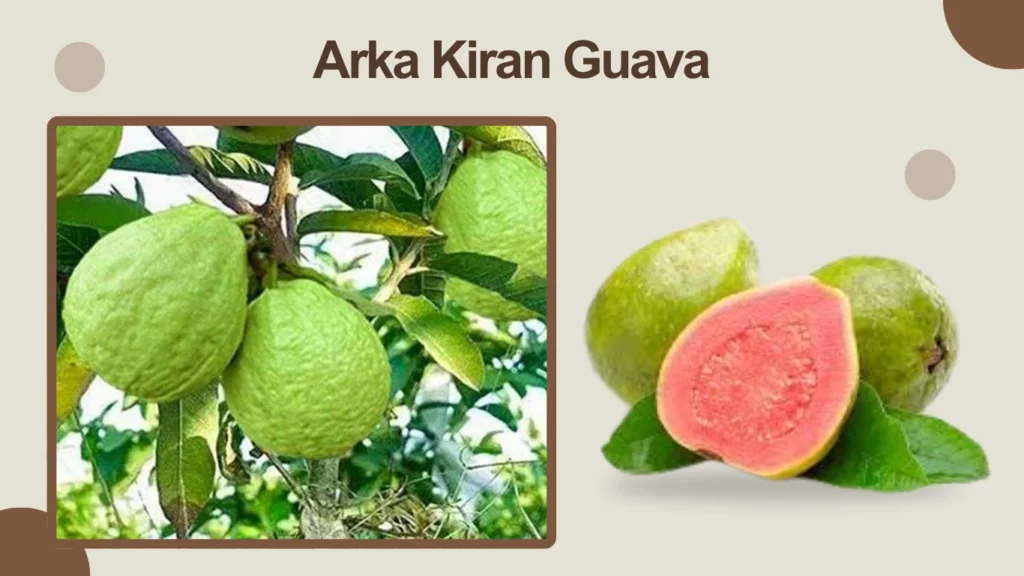
Arka Kiran is a striking red-fleshed guava variety developed for both its aesthetic appeal and nutritional value. It produces uniform fruits with excellent shelf life and is favored for commercial cultivation.
Identification
- Color: Green skin with pinkish blush when ripe
- Shape: Round and medium-sized
- Skin: Smooth and firm
- Flesh: Deep pink to red, juicy and soft
- Seeds: Medium, soft
- Taste: Sweet with mild acidity
Growth and Seasonality
Arka Kiran is mainly harvested from August to October and grows well in warm climates with good sunlight.
Uses and Benefits
Excellent for fresh eating and juice. It’s packed with lycopene, vitamin C, and antioxidants, helping boost heart health and immunity.
7. Thai Guava
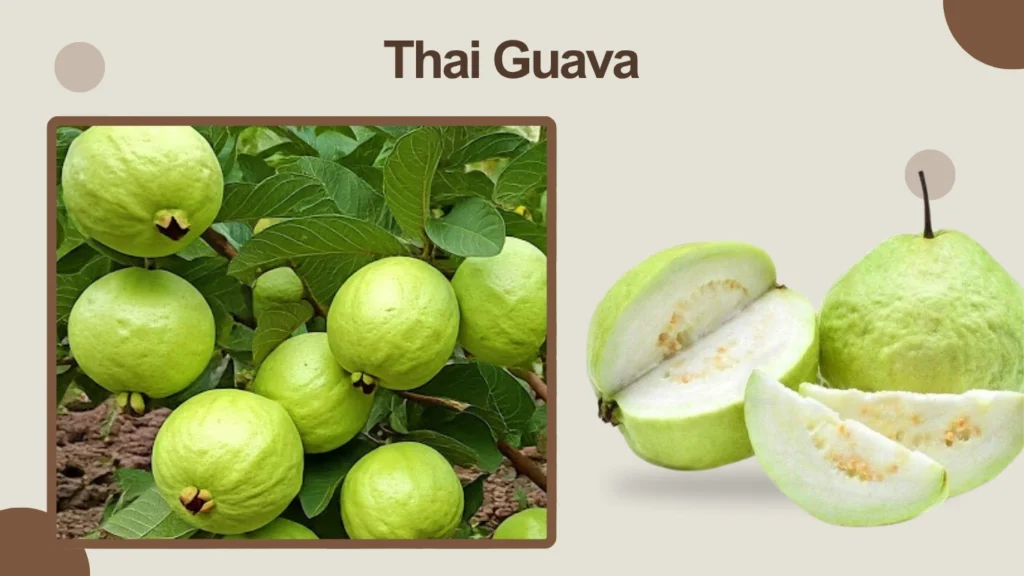
Thai guava is a popular variety in Southeast Asia, especially Thailand, known for its large size, crisp texture, and mild flavor. It is often eaten unripe with salt, sugar, or chili powder.
Identification
- Color: Light green to pale yellow when ripe
- Shape: Round to oval and large
- Skin: Smooth and thick
- Flesh: White, very crisp, and less juicy
- Seeds: Few and small
- Taste: Mildly sweet and crunchy
Growth and Seasonality
Thai guavas are cultivated year-round in tropical climates, with peak harvests depending on the region.
Uses and Benefits
Commonly eaten raw with condiments. They are high in fiber, vitamin A, and vitamin C, promoting digestion and supporting vision and immune function.
8. Apple Guava

Apple guava, also known as Psidium guajava, is a common tropical guava variety named for its crisp texture that resembles an apple. It’s widely grown in tropical regions and appreciated for its refreshing flavor.
Identification
- Color: Light green to yellow
- Shape: Round like an apple
- Skin: Smooth and thin
- Flesh: White or pale pink, crisp
- Seeds: Moderate, hard
- Taste: Sweet-tart with a crunchy bite
Growth and Seasonality
Apple guavas grow well in warm, tropical climates and can fruit year-round in suitable conditions, with peak harvests typically in spring and fall.
Uses and Benefits
Best eaten fresh or added to fruit salads. Rich in vitamin C, dietary fiber, and antioxidants—great for immunity and gut health.
9. White Guava
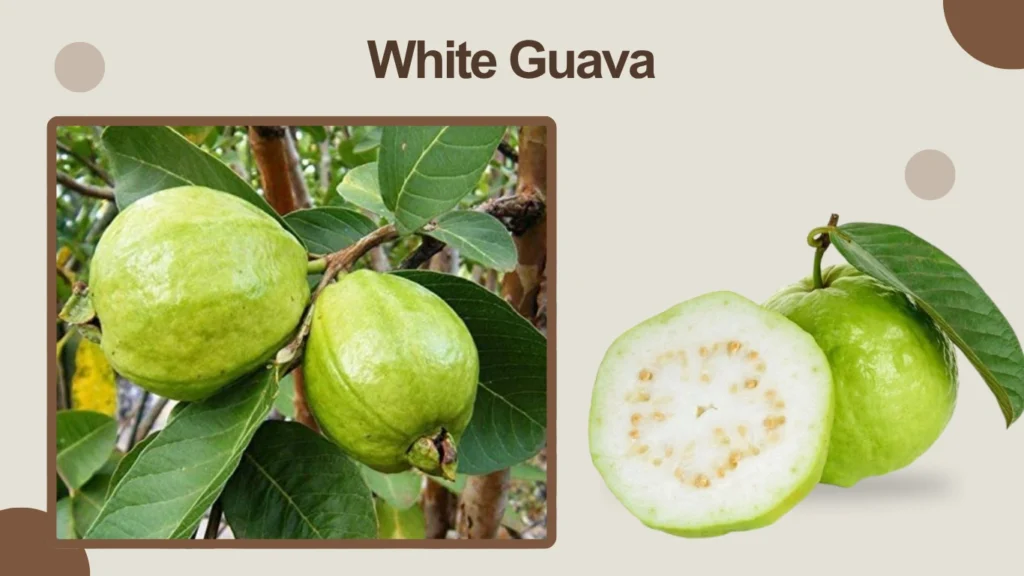
White guava is a general term for varieties that have white to pale-yellow flesh. These guavas are often softer and sweeter than pink-fleshed types and are preferred for both eating and juicing.
Identification
- Color: Light green to yellow exterior
- Shape: Round to oval
- Skin: Smooth and thin
- Flesh: White, soft, and juicy
- Seeds: Moderate to many
- Taste: Sweet, aromatic, and smooth
Growth and Seasonality
White guavas thrive in tropical and subtropical climates and are usually harvested in summer and winter seasons.
Uses and Benefits
Excellent for juices, smoothies, and jams. They are loaded with vitamin C, potassium, and pectin, promoting digestion and overall wellness.
10. Pink Guava

Pink guava is one of the most popular and recognizable guava types, known for its vibrant pink flesh and tropical aroma. It’s widely cultivated in tropical countries for fresh eating and processing.
Identification
- Color: Green to yellow skin
- Shape: Round to oval
- Skin: Smooth and soft
- Flesh: Bright pink, juicy, and tender
- Seeds: Moderate to many
- Taste: Sweet, floral, and slightly tangy
Growth and Seasonality
Pink guavas grow best in warm, humid climates and are generally harvested twice a year, typically in spring and fall.
Uses and Benefits
Perfect for juices, jams, and desserts. High in lycopene, vitamin A, and vitamin C—supporting heart health, vision, and immune function.
11. Red Malaysian Guava
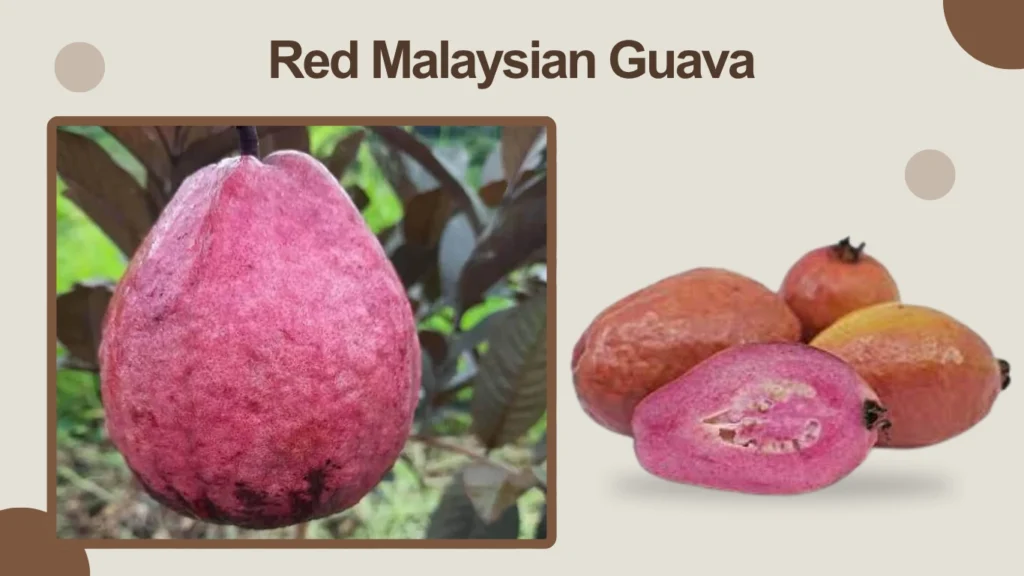
Red Malaysian guava is a striking ornamental and edible variety known for its red skin, red flesh, and attractive red-tinted leaves. It’s often grown as a decorative plant in addition to being a fruit source.
Identification
- Color: Reddish-purple skin
- Shape: Round to oval
- Skin: Thick and slightly coarse
- Flesh: Red or deep pink, moderately juicy
- Seeds: Few to moderate
- Taste: Mildly sweet and floral
Growth and Seasonality
Thrives in tropical climates and is typically harvested from late summer through early winter.
Uses and Benefits
Used fresh or in juices and salads. Contains antioxidants like anthocyanins, along with vitamin C and iron, which help reduce inflammation and support blood health.
12. Lemon Guava
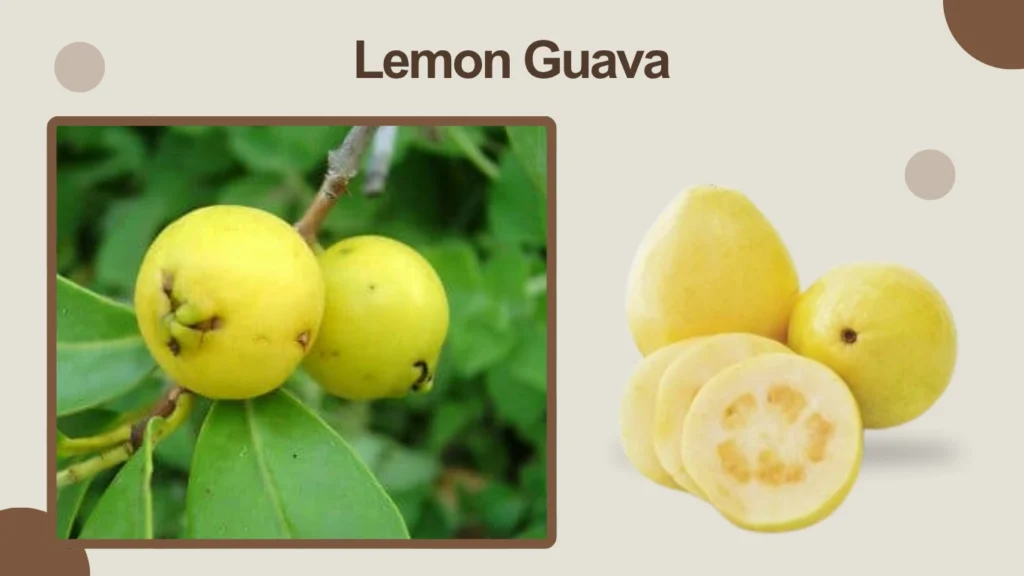
Lemon guava, also known as Psidium littorale or Yellow Strawberry Guava, is a small, yellow-skinned guava with a strong lemony fragrance and a slightly tart flavor. It is often found in the wild or in home gardens.
Identification
- Color: Bright yellow when ripe
- Shape: Small and round
- Skin: Thin and smooth
- Flesh: Creamy white to pale yellow
- Seeds: Small and numerous
- Taste: Mildly sweet with a lemony tang
Growth and Seasonality
Grows best in warm tropical or subtropical climates. Fruit typically ripens from late summer to fall, depending on the region.
Uses and Benefits
Eaten fresh, used in juices, or made into jams. Rich in vitamin C and low in calories, it helps strengthen immunity and aids digestion.
13. Strawberry Guava
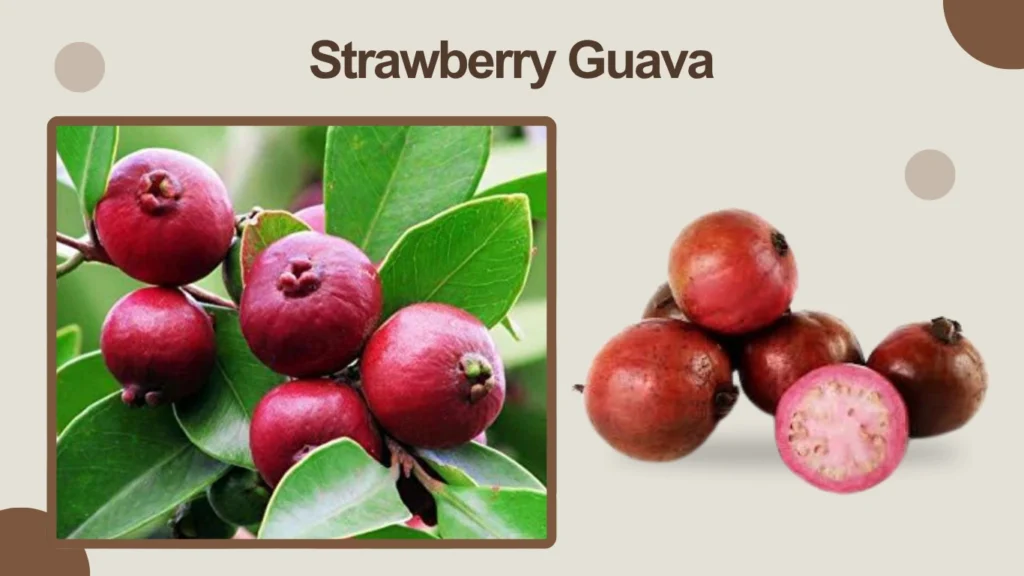
Strawberry guava, or Psidium cattleianum, is a small, red-skinned guava known for its sweet, strawberry-like flavor. It’s a hardy plant, often found growing wild or in home orchards.
Identification
- Color: Red to deep maroon
- Shape: Small and round
- Skin: Thin and smooth
- Flesh: Creamy white to pink
- Seeds: Small and crunchy
- Taste: Sweet with strawberry undertones
Growth and Seasonality
Fruits are typically harvested in late summer through fall. This plant thrives in humid and coastal areas.
Uses and Benefits
Eaten fresh or made into jelly, juice, and syrup. Packed with vitamin C, fiber, and antioxidants, it promotes gut and skin health.
14. Tropical White Guava
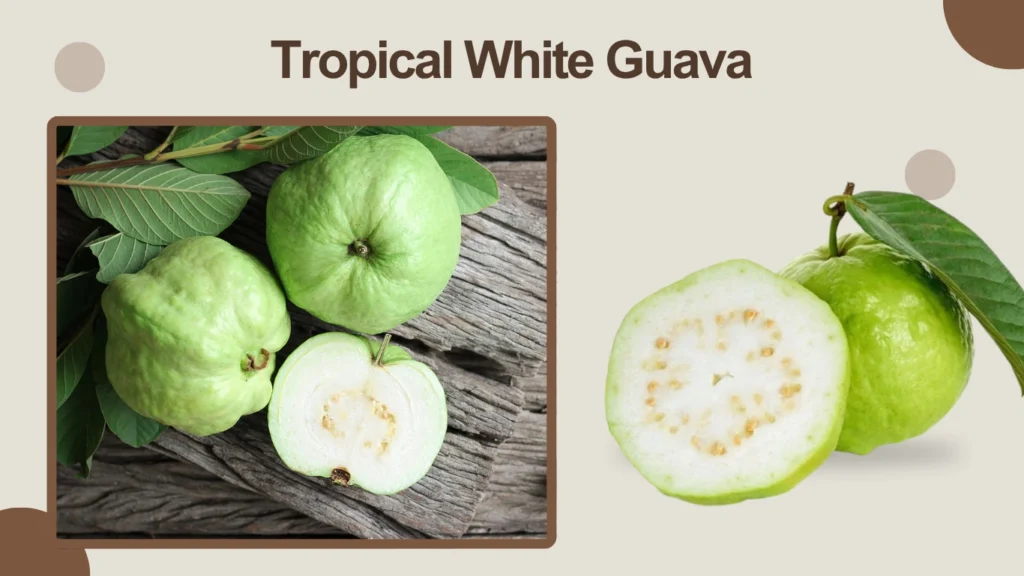
Tropical White guava is a popular variety known for its extra-sweet white flesh and large, juicy fruits. It’s widely cultivated in tropical regions and is often favored for home gardens and commercial farming.
Identification
- Color: Light green to pale yellow when ripe
- Shape: Round to slightly oval
- Skin: Smooth and thin
- Flesh: White, soft, and juicy
- Seeds: Few to moderate
- Taste: Very sweet with mild acidity
Growth and Seasonality
It grows well in warm tropical climates and is harvested mostly in summer and winter seasons, depending on the region.
Uses and Benefits
Ideal for eating fresh, blending into smoothies, or making desserts. Rich in vitamin C, fiber, and potassium—supporting immunity and heart health.
15. Ruby Supreme Guava
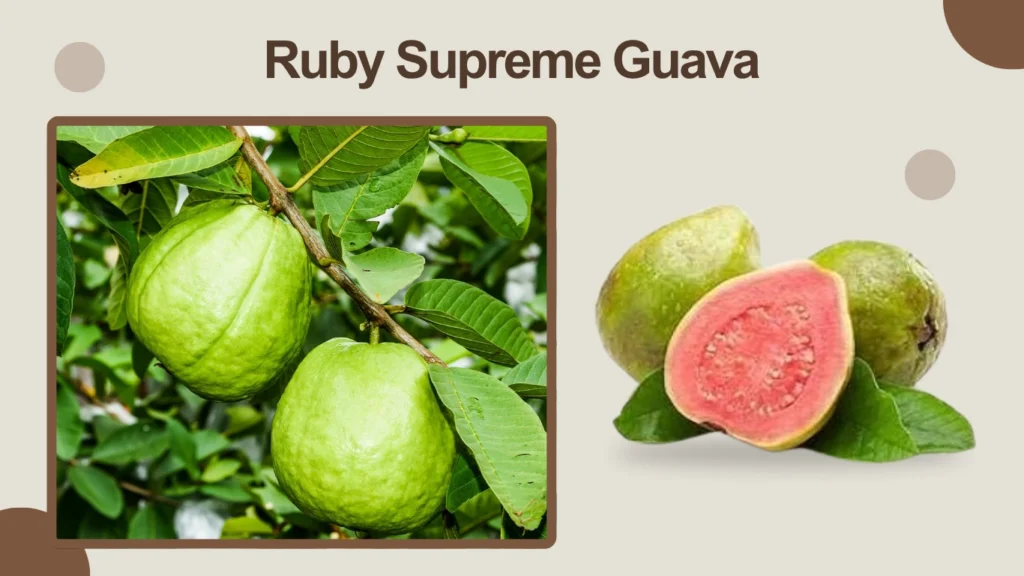
Ruby Supreme is a commercial pink-fleshed guava variety prized for its attractive color, pleasant aroma, and deliciously sweet flavor. It’s commonly grown in Florida and other warm regions.
Identification
- Color: Green to yellow skin when ripe
- Shape: Oval and medium-sized
- Skin: Smooth and tender
- Flesh: Bright pink, juicy, and aromatic
- Seeds: Moderate and soft
- Taste: Sweet, fruity, and fragrant
Growth and Seasonality
Ruby Supreme thrives in tropical and subtropical climates, with fruit typically harvested in spring and fall.
Uses and Benefits
Excellent for juices, jellies, and fresh eating. It contains high levels of lycopene, vitamin C, and fiber, supporting skin, heart, and immune health.
16. Mexican Cream Guava

Mexican Cream guava, also known as Tropical Cream, is a sweet, custard-like variety with creamy white flesh and a strong, pleasant aroma. It is popular in Latin American countries for both eating and cooking.
Identification
- Color: Pale yellow skin when ripe
- Shape: Small to medium, round
- Skin: Thin and smooth
- Flesh: Creamy white, soft, and very fragrant
- Seeds: Few and soft
- Taste: Very sweet with custard-like richness
Growth and Seasonality
Grows well in warm climates and is usually harvested in late summer to early fall.
Uses and Benefits
Ideal for desserts, smoothies, and jams. Rich in vitamins A and C, fiber, and antioxidants—supporting immunity, skin, and digestion.
17. Purple Guava
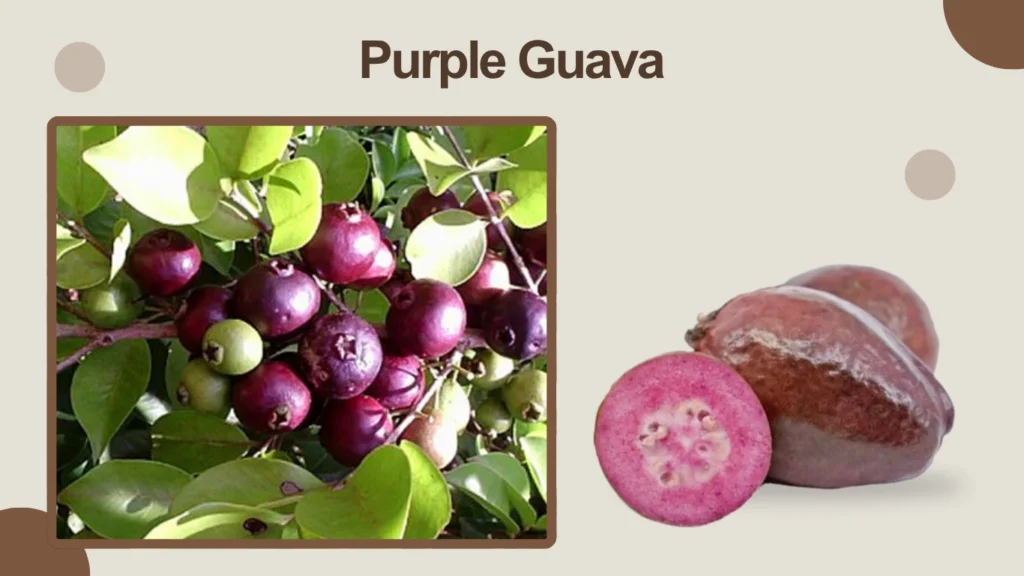
Purple guava is a rare and visually striking variety, often cultivated more for ornamental use, though it is also edible. It has deep purple skin and a mildly sweet flavor.
Identification
- Color: Dark purple skin
- Shape: Small to medium, round
- Skin: Firm and slightly glossy
- Flesh: Light pink to purple
- Seeds: Moderate
- Taste: Mildly sweet with a subtle berry note
Growth and Seasonality
Prefers warm tropical climates and is typically harvested in mid to late summer.
Uses and Benefits
Can be eaten fresh or used in decorative fruit dishes. It contains anthocyanins, along with vitamin C and fiber—supporting antioxidant protection and digestive health.
18. Pineapple Guava

Pineapple guava, also known as Feijoa, is not a true guava but closely related. It has a unique, tropical flavor that blends notes of pineapple, mint, and guava, making it a favorite for exotic fruit lovers.
Identification
- Color: Grayish-green skin
- Shape: Oval and egg-shaped
- Skin: Slightly rough and thick
- Flesh: Creamy white with a jelly-like center
- Seeds: Small and edible
- Taste: Sweet-tart with pineapple and minty notes
Growth and Seasonality
Grows well in subtropical and Mediterranean climates. It is typically harvested in late fall.
Uses and Benefits
Eaten fresh, scooped with a spoon, or used in jams and smoothies. Rich in vitamin C, fiber, and antioxidants—boosting immune health and digestion.
19. Giant Guava
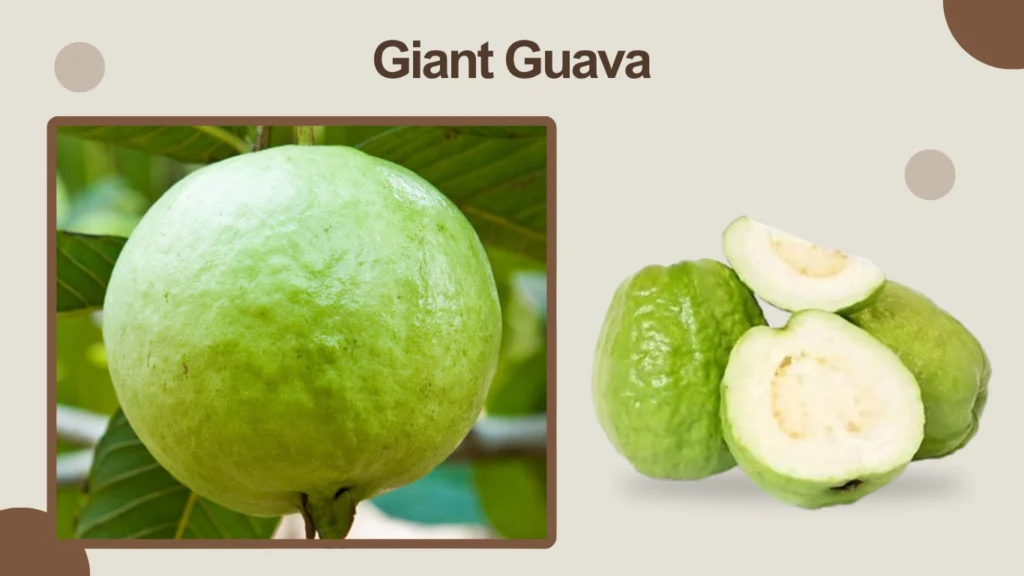
Giant guava is a large-fruited variety known for its impressive size, mild flavor, and thick flesh. It’s grown mainly for commercial use and processing due to its high pulp yield.
Identification
- Color: Green to yellow skin when ripe
- Shape: Very large and round to oval
- Skin: Thick and slightly bumpy
- Flesh: White or pale pink, thick and soft
- Seeds: Moderate to many
- Taste: Mildly sweet, less aromatic
Growth and Seasonality
Performs well in tropical climates and is harvested during typical guava seasons—spring and fall.
Uses and Benefits
Ideal for making guava pulp, puree, and juice. High in vitamin C and bulk fiber, supporting hydration and digestive regularity.
20. Pearl Guava
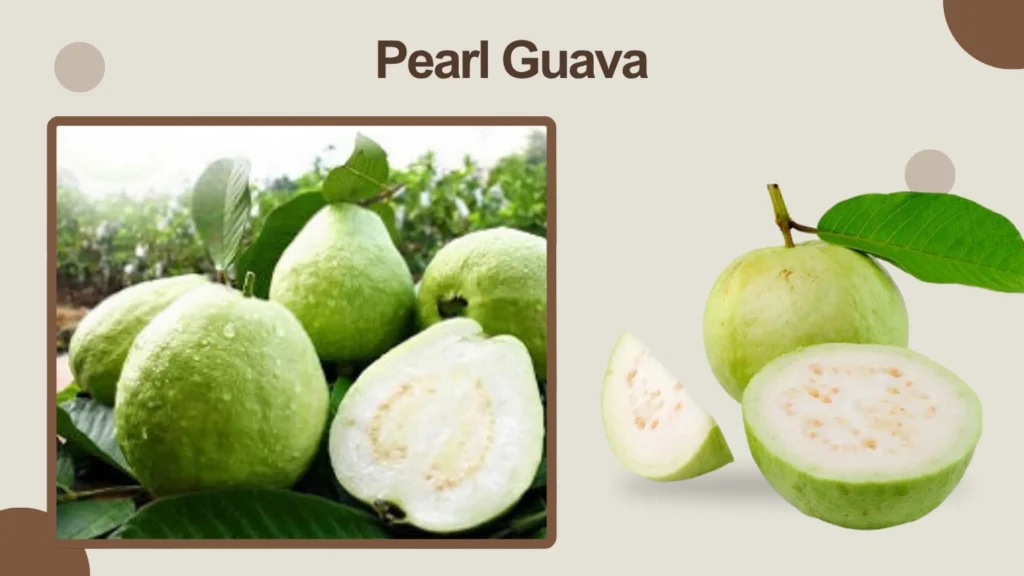
Pearl guava is a premium variety known for its smooth texture, balanced sweetness, and attractive appearance. It’s widely grown in tropical regions for its good yield and appealing fruit quality.
Identification
- Color: Light green turning pale yellow when ripe
- Shape: Round to oval
- Skin: Smooth and thin
- Flesh: Creamy white, tender, and juicy
- Seeds: Few and soft
- Taste: Sweet and mildly tangy
Growth and Seasonality
Pearl guava grows well in warm climates and is usually harvested in late summer through fall.
Uses and Benefits
Best for fresh eating, juicing, and desserts. Rich in vitamin C, calcium, and dietary fiber—supporting bone strength, immunity, and digestion.
21. Indonesian White Guava
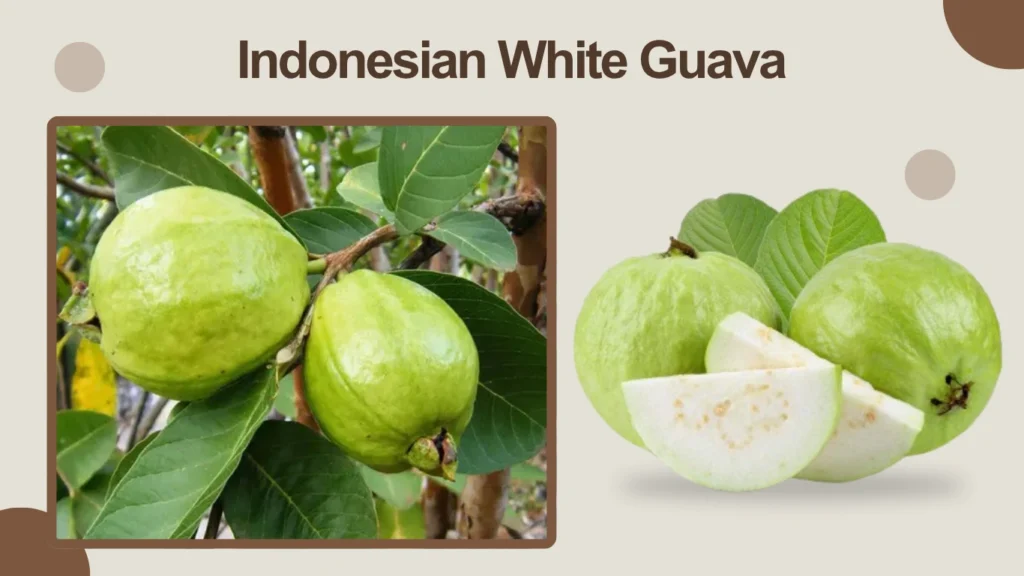
Indonesian White guava is a hardy, high-yielding variety known for its large size and sweet, white flesh. It is cultivated widely across Southeast Asia for its fresh market appeal.
Identification
- Color: Pale green skin
- Shape: Large and oval
- Skin: Thick and smooth
- Flesh: White, crisp, and grainy
- Seeds: Few and edible
- Taste: Sweet, clean, and refreshing
Growth and Seasonality
Thrives in tropical climates with fruits typically harvested twice a year—in summer and fall.
Uses and Benefits
Enjoyed fresh, in salads, or juiced. High in vitamin A, C, and potassium—beneficial for eye health, immunity, and hydration.
22. Banarasi Guava
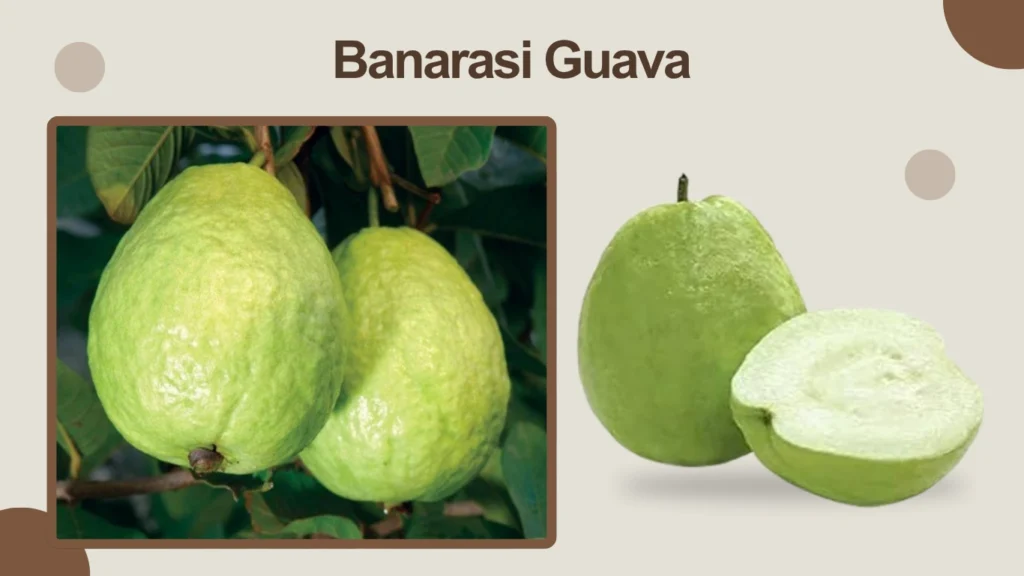
Banarasi guava is a traditional Indian variety grown mainly in the Varanasi region. It is well-known for its pleasant aroma, soft texture, and balanced sweetness.
Identification
- Color: Light green turning yellowish when ripe
- Shape: Medium-sized, round to slightly oval
- Skin: Smooth and thin
- Flesh: White, soft, and juicy
- Seeds: Medium to many
- Taste: Sweet and mildly tangy with a fragrant aroma
Growth and Seasonality
Best grown in the Indo-Gangetic plains and harvested during the winter season, especially from November to January.
Uses and Benefits
Eaten fresh or used in local sweets and chutneys. Rich in vitamin C and antioxidants—promoting skin health, digestion, and immunity.
23. Taiwan Pink Guava
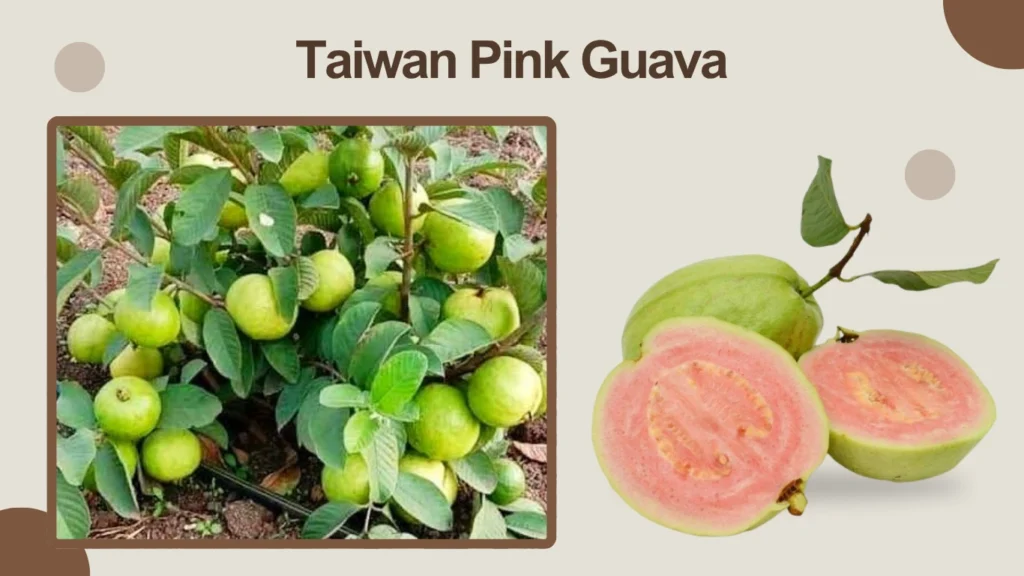
Taiwan Pink guava is a popular commercial variety known for its vibrant pink flesh, large fruit size, and extended shelf life. It’s widely grown across Asia and gaining popularity in global markets.
Identification
- Color: Green skin turning yellowish at ripeness
- Shape: Large and round to oval
- Skin: Smooth and thick
- Flesh: Bright pink, juicy, and firm
- Seeds: Few to moderate
- Taste: Sweet with a mild floral undertone
Growth and Seasonality
Thrives in tropical climates and is typically harvested twice a year—once in summer and again in winter.
Uses and Benefits
Perfect for juice, jams, or fresh snacking. Loaded with lycopene, vitamin A, and vitamin C—helping boost immunity and protect against oxidative stress.
24. Behat Coconut Guava
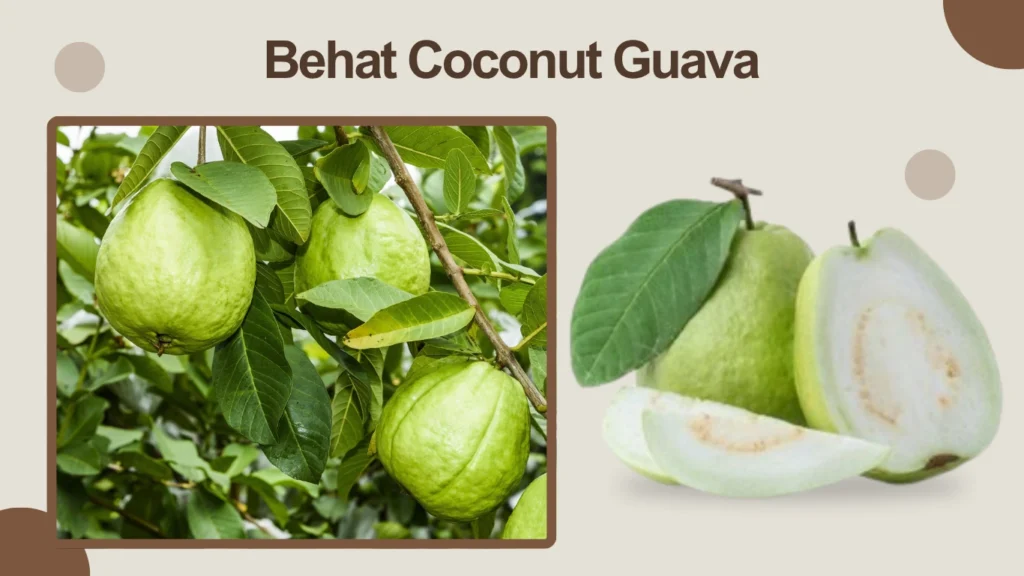
Behat Coconut guava is a unique and popular Indian variety known for its thick, crunchy white flesh and mild coconut-like flavor. It is favored for both fresh eating and juice production.
Identification
- Color: Green, remains green even when ripe
- Shape: Large and round
- Skin: Smooth and thick
- Flesh: White, crisp, and dense
- Seeds: Few and soft
- Taste: Mildly sweet with a subtle coconut aroma
Growth and Seasonality
Cultivated mainly in the Behat region of Uttar Pradesh, India, and harvested during both monsoon and winter seasons.
Uses and Benefits
Ideal for fresh consumption, slicing, or juicing. Rich in dietary fiber, calcium, and vitamin C—promoting bone health, digestion, and immunity.
25. Hybrid VNR Bihi Guava
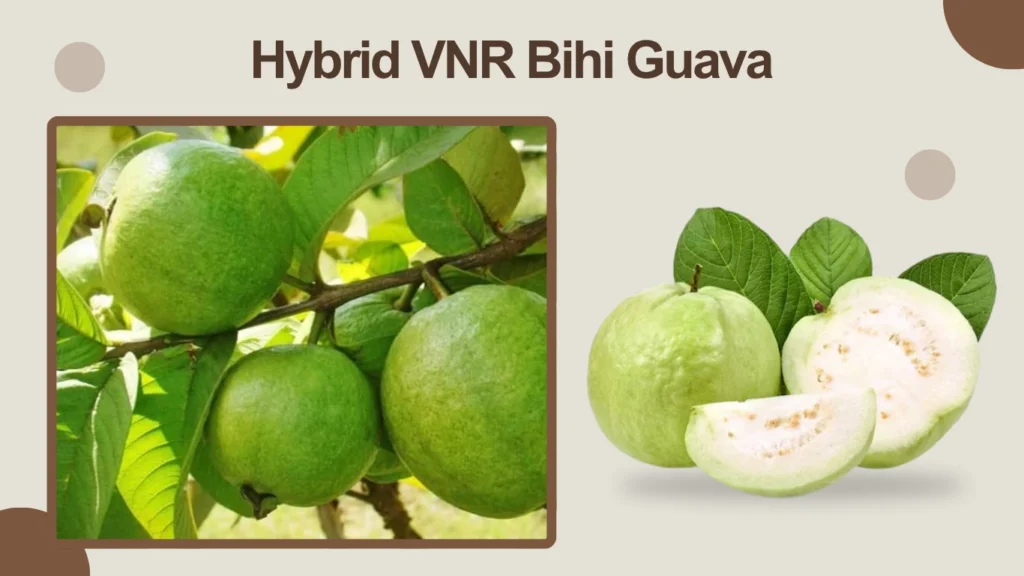
VNR Bihi is a hybrid, high-density guava variety developed in India for commercial farming. It produces large, soft-seeded fruits with a smooth texture and excellent shelf life.
Identification
- Color: Light green to pale yellow when ripe
- Shape: Very large, round to slightly oblong
- Skin: Smooth and firm
- Flesh: White, soft, and juicy
- Seeds: Very few and soft
- Taste: Sweet and delicate
Growth and Seasonality
Best grown in tropical and subtropical regions. It fruits twice a year, typically during August–October and December–February.
Uses and Benefits
Widely used for fresh consumption and market sale. It’s high in vitamin C, magnesium, and antioxidants—supporting immunity, metabolism, and cellular health.