





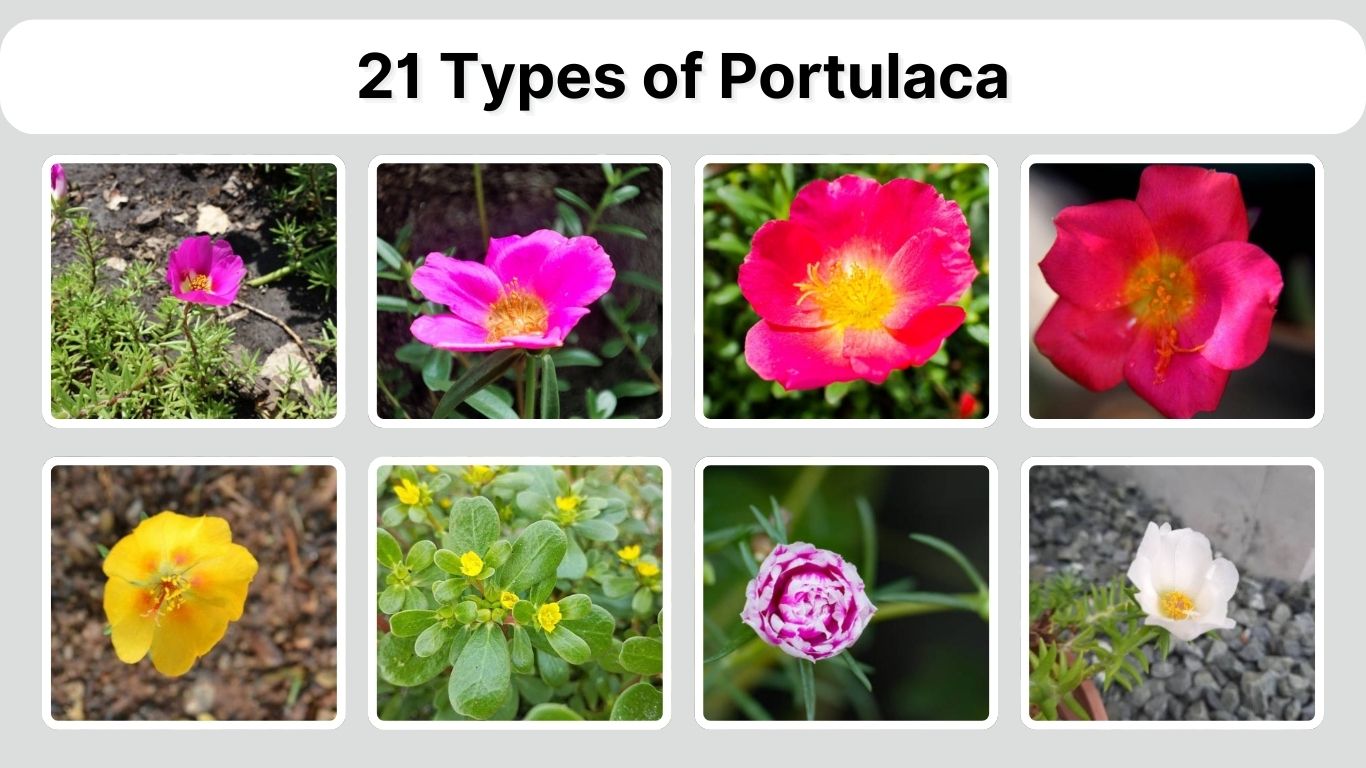
Portulaca is a diverse genus of succulent plants widely valued for their bright flowers, creeping growth habit, and strong drought tolerance. These plants naturally grow in warm, sunny regions and are commonly used as ground covers, edging plants, and container flowers. Some species, such as Portulaca grandiflora, are popular ornamentals, while others like Portulaca oleracea are edible and used in traditional medicine. Their ability to thrive in poor soils makes them ideal for low-maintenance gardens.
1. Portulaca grandiflora (Moss Rose)

Portulaca grandiflora, commonly known as moss rose, is a popular ornamental Portulaca species valued for its bright, rose-like flowers and succulent foliage. Native to South America, this low-growing plant is widely cultivated as a ground cover and edging flower because it thrives in hot, dry conditions and blooms profusely throughout summer.
Identification
- Low-growing, spreading succulent plant
- Cylindrical, fleshy green leaves
- Large, rose-shaped flowers with silky petals
- Common colors: pink, red, yellow, orange, white, purple
- Blooms open fully in bright sunlight
Habitat
Portulaca grandiflora is native to Brazil, Uruguay, and Argentina, where it grows in sandy, well-drained soils under full sun. In gardens, it adapts well to rock gardens, hanging baskets, containers, and sunny borders. It prefers warm climates and struggles in cold, water-logged environments.
Blooming Behavior
This species is known for its long flowering season, typically from late spring until early fall. The flowers open in strong sunlight and close during cloudy weather or at night. With regular sun exposure, moss rose produces a continuous display of vibrant blooms that attract bees and butterflies.
Garden Uses
Moss rose is widely used as a decorative ground cover, edging plant, and container flower. Its drought tolerance makes it ideal for xeriscaping and low-maintenance gardens. Because of its trailing habit, it is also popular in hanging baskets and window boxes where its colorful flowers can cascade over the edges.
2. Portulaca oleracea (Common Purslane)
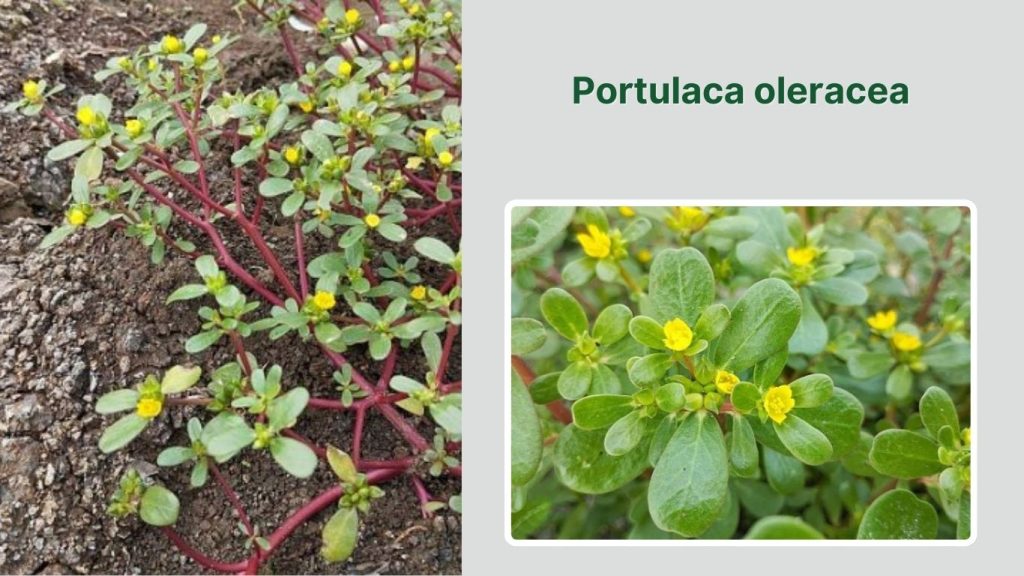
Portulaca oleracea, widely known as common purslane, is a fast-growing succulent plant found across tropical and temperate regions worldwide. Unlike many ornamental Portulaca types, this species is famous both as an edible leafy vegetable and as a traditional medicinal plant. It thrives in poor soils, hot climates, and even sidewalk cracks.
Identification
- Low, creeping, mat-forming growth habit
- Smooth, reddish, fleshy stems
- Small, thick, paddle-shaped green leaves
- Tiny yellow flowers with five petals
- Produces many tiny black seeds
Habitat
Common purslane grows naturally in disturbed soils, gardens, roadsides, farmlands, and open sunny areas. It is highly adaptable and tolerates drought, compacted ground, and high temperatures. This ability to survive in harsh conditions is one reason it spreads easily across continents.
Growth Behavior
Portulaca oleracea grows rapidly during warm months, forming dense mats that hug the ground. It reproduces by both seeds and stem fragments, allowing it to re-establish quickly even after being pulled. The flowers usually open in full sunlight and close by afternoon.
Uses and Importance
This species is valued worldwide as a nutritious edible plant rich in omega-3 fatty acids, vitamins, and antioxidants. It is used in salads, soups, and stir-fries in many cultures. In traditional medicine, purslane has been associated with cooling, anti-inflammatory, and digestive benefits.
Garden Presence
Although often considered a weed, common purslane can be grown intentionally as a hardy ground cover or edible crop. Its drought resistance, attractive glossy leaves, and small yellow flowers make it suitable for natural gardens, herb beds, and sustainable landscapes.
3. Portulaca umbraticola (Wingpod Purslane)
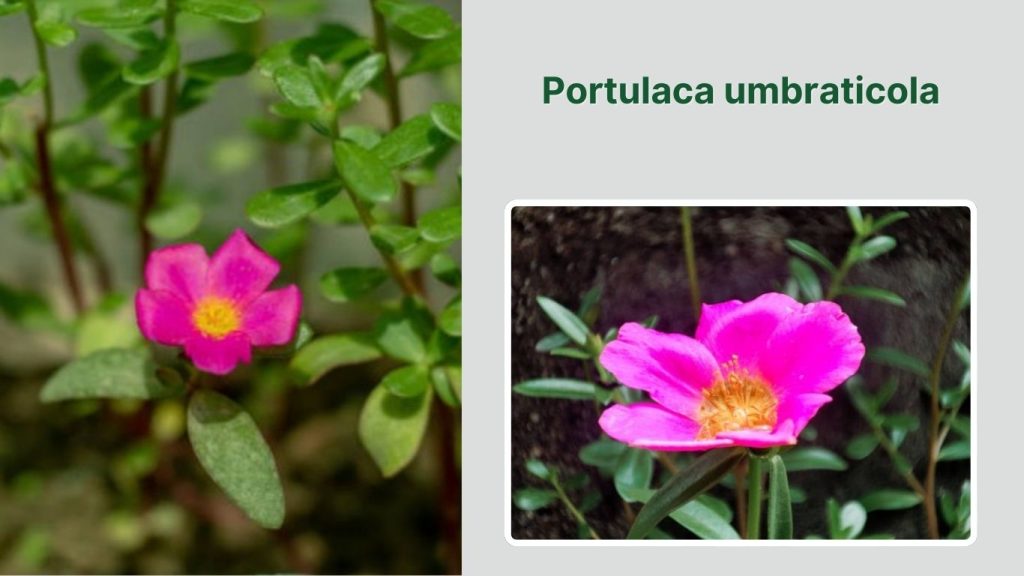
Portulaca umbraticola, commonly called wingpod purslane, is a trailing Portulaca species admired for its soft foliage and bright, open-faced flowers. It is especially popular in hanging baskets, containers, and ground covers because of its spreading habit and continuous summer blooms. Compared to moss rose, its flowers are usually flatter and more delicate.
Identification
- Low-growing, spreading or trailing succulent
- Smooth, soft, paddle-shaped leaves
- Thin, flexible stems that root at nodes
- Flat, five-petaled flowers
- Flower colors include pink, orange, yellow, red, white, and bicolor forms
Habitat
Wingpod purslane originates from tropical regions of the Americas, where it grows in warm, sunny, well-drained environments. It thrives in sandy soils, coastal areas, and open landscapes. In cultivation, it prefers full sun and performs best in containers, rock gardens, and borders.
Growth Habit
Portulaca umbraticola forms wide mats and trailing cascades, often spreading more than its height. The stems are less rigid than those of Portulaca grandiflora, giving the plant a softer appearance. It grows quickly in summer heat and maintains flowering with minimal care.
Flowering Pattern
The flowers open during bright daylight and close in the evening or under heavy cloud cover. Blooming is usually continuous from late spring through early autumn. Regular sunlight encourages denser growth and more vibrant flower colors.
Ornamental Use
This species is widely used in modern landscaping as a heat-tolerant, low-maintenance flowering plant. It is ideal for hanging baskets, window boxes, and container gardens, where its trailing stems create colorful draping effects. It also works well as a sunny ground cover in warm climates.
4. Portulaca pilosa (Hairy Purslane)
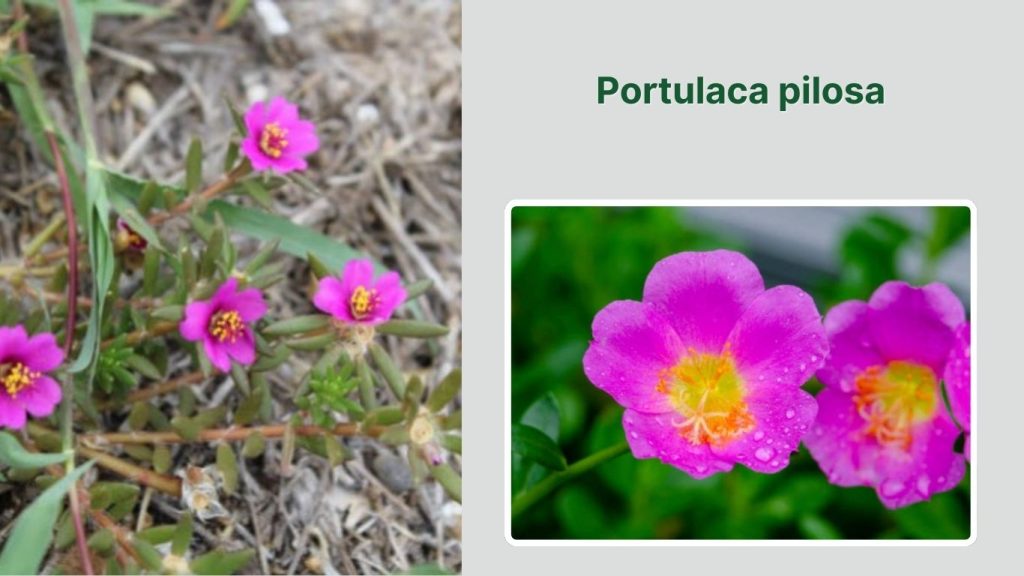
Portulaca pilosa, commonly known as hairy purslane, is a distinctive Portulaca species recognized for its fine, hair-like leaves and small but vivid flowers. Native to the Americas, this low-growing plant thrives in hot, sandy, and well-drained environments. Its soft, feathery appearance sets it apart from broader-leaved Portulaca types.
Identification
- Low, spreading succulent plant
- Very thin, hair-like cylindrical leaves
- Reddish to green trailing stems
- Small, bright pink to purple flowers
- Soft, fuzzy overall texture
Habitat
Hairy purslane is native to Central and South America and is commonly found in dry grasslands, sandy soils, coastal areas, and open sunny sites. It tolerates poor, nutrient-deficient soils and grows well where many ornamental plants struggle.
Growth Characteristics
Portulaca pilosa grows close to the ground, forming loose mats that spread outward. Its stems root easily where they touch the soil, allowing it to colonize open spaces quickly. The plant remains compact, making it suitable for small garden beds and rock gardens.
Flowering Behavior
The flowers of hairy purslane typically open in bright sunlight and close during the evening. Blooming occurs mainly in warm months, often intensifying during periods of strong sun and heat. Though smaller than moss rose flowers, their vivid color stands out against the fine foliage.
Landscaping Value
Because of its drought tolerance and unique texture, Portulaca pilosa is often used in xeriscaping, rock gardens, and naturalistic plantings. It provides a soft, carpet-like look and works well as a filler plant in sunny containers and dry garden spaces.
5. Portulaca molokiniensis (Molokini Portulaca)
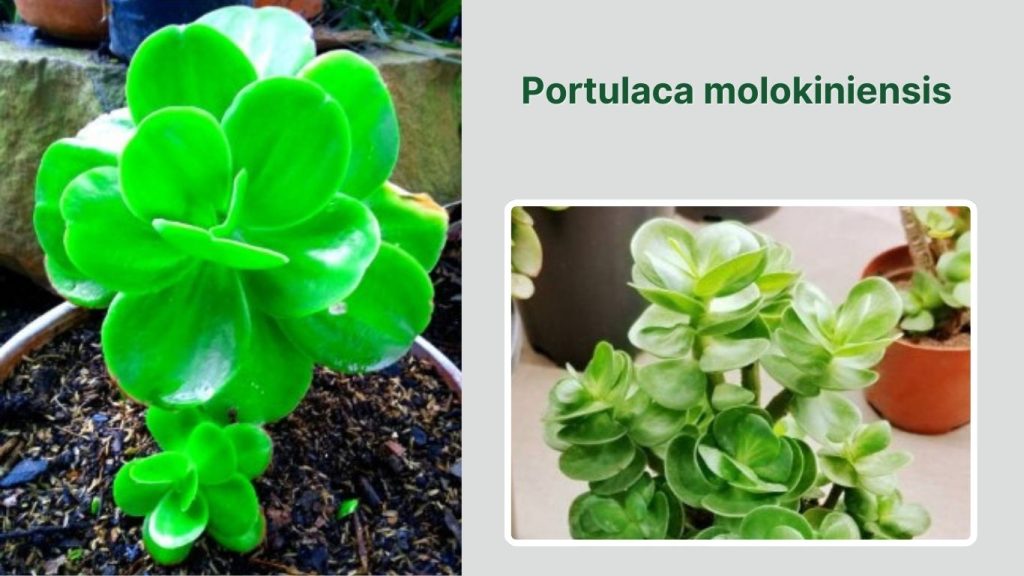
Portulaca molokiniensis is a rare and striking Portulaca species native to the Hawaiian Islands. It is best known for its thick, woody base and unusual branching form, which gives it more of a shrub-like appearance than most purslanes. This species is highly adapted to dry, rocky coastal environments.
Identification
- Thick, fleshy, cylindrical leaves
- Gray-green to bluish succulent foliage
- Woody, branching stems
- Upright to spreading growth habit
- Small, bright yellow flowers
Habitat
This species is endemic to Molokini and parts of Maui, Hawaii, where it grows on dry volcanic slopes, rocky cliffs, and coastal scrublands. It thrives in intense sunlight, strong winds, and very well-drained, mineral-rich soils.
Growth Form
Unlike many creeping Portulaca species, Portulaca molokiniensis develops a more upright, shrubby structure. Its woody stems help it survive in exposed coastal habitats, while its thick leaves store water to withstand long dry periods.
Flowering Behavior
The plant produces small, bright yellow flowers that typically open in full sun. Blooming occurs mainly during warm, dry seasons. Though the flowers are modest in size, they contrast beautifully with the silvery-green foliage.
Conservation and Cultivation
Portulaca molokiniensis is considered rare in the wild and is sometimes cultivated by collectors and botanical gardens. It requires excellent drainage, full sun, and minimal watering. Because of its unique form, it is valued as a specimen plant in succulent collections and dry landscape designs.
6. Portulaca quadrifida (Chickenweed)
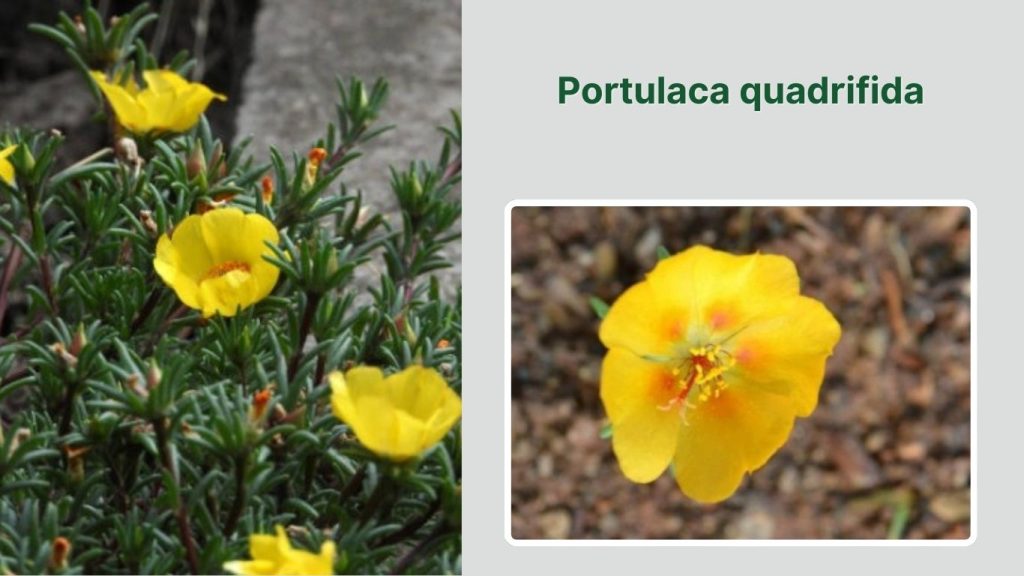
Portulaca quadrifida, commonly called chickenweed, is a small, creeping Portulaca species widely distributed in tropical and subtropical regions. It is known for its tiny yellow flowers and its ability to spread rapidly across open ground. This plant is often found in gardens, fields, and pathways where it forms low, green mats.
Identification
- Prostrate, mat-forming growth habit
- Smooth, fleshy, bright green leaves
- Short, branching, reddish stems
- Small yellow flowers with rounded petals
- Tiny black seeds in capsule fruits
Habitat
Chickenweed is native to parts of Africa and Asia but has spread widely throughout warm regions of the world. It commonly grows in lawns, agricultural fields, roadsides, and disturbed soils where moisture is moderate and sunlight is abundant.
Growth Habit
Portulaca quadrifida grows very close to the ground, forming dense, spreading mats. Its stems root easily at nodes, allowing the plant to expand quickly. It is highly tolerant of heat and can survive short dry periods, although it prefers slightly moist soils.
Flowering Pattern
The small yellow flowers usually open in the morning sun and close by afternoon. Flowering occurs repeatedly throughout the warm season. Despite their size, the flowers are numerous and add a subtle color layer to the green carpet of leaves.
Ecological and Human Use
In some regions, Portulaca quadrifida is used as a leafy vegetable or in folk medicine, similar to common purslane. Ecologically, it acts as a ground stabilizer, reducing soil erosion, but it is also considered a minor weed in cultivated areas.
7. Portulaca lutea (Yellow Purslane)
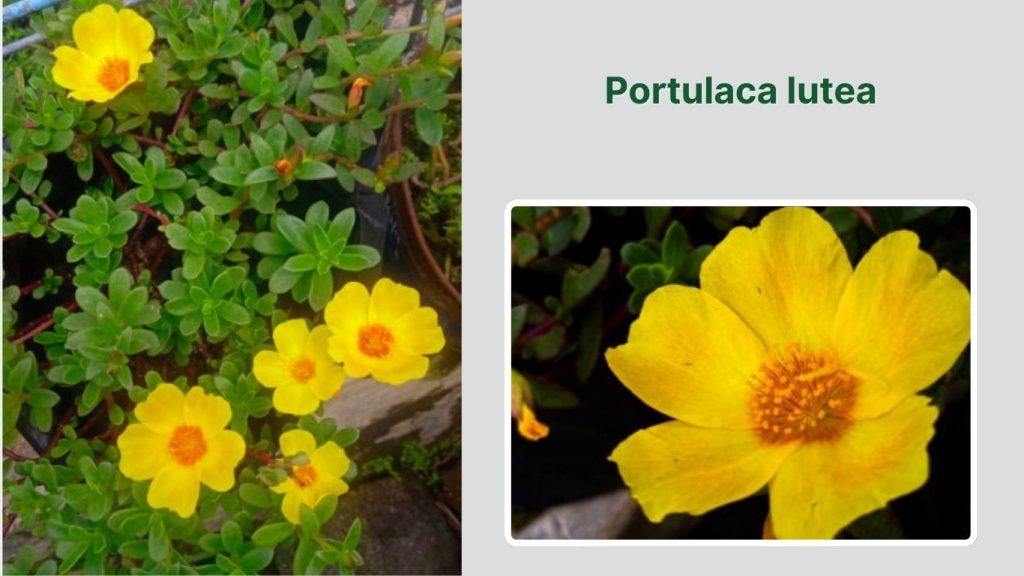
Portulaca lutea, commonly known as yellow purslane, is a hardy, low-growing Portulaca species native to many Pacific islands. It is especially valued for its bright yellow flowers and strong tolerance to heat, salt, and drought. This species is often seen in coastal landscapes and dry, sandy environments.
Identification
- Spreading, mat-forming succulent plant
- Thick, smooth, green to reddish stems
- Fleshy, oblong to spoon-shaped leaves
- Bright yellow, five-petaled flowers
- Low, ground-hugging growth habit
Habitat
Yellow purslane naturally grows in coastal areas, sandy plains, volcanic soils, and open sunny habitats across the Pacific, including Hawaii and other oceanic islands. It thrives in full sun, salty air, and poor, fast-draining soils where many plants cannot survive.
Growth Characteristics
Portulaca lutea forms wide, dense mats that help stabilize soil in exposed areas. Its succulent leaves store water efficiently, allowing the plant to withstand long dry spells and intense sunlight. It spreads easily and recovers quickly from physical damage.
Flowering Behavior
The bright yellow flowers open in strong daylight and close in the late afternoon. Blooming can occur throughout the year in warm climates, especially after rainfall. The flowers attract small pollinators and add vivid contrast to the thick green foliage.
Landscape and Ecological Value
Because of its extreme toughness, Portulaca lutea is widely used as a coastal ground cover and erosion-control plant. It is suitable for seaside gardens, rock gardens, and dry landscapes. In some cultures, it is also used traditionally as a medicinal or food plant.
8. Portulaca rubricaulis (Red-Stem Purslane)
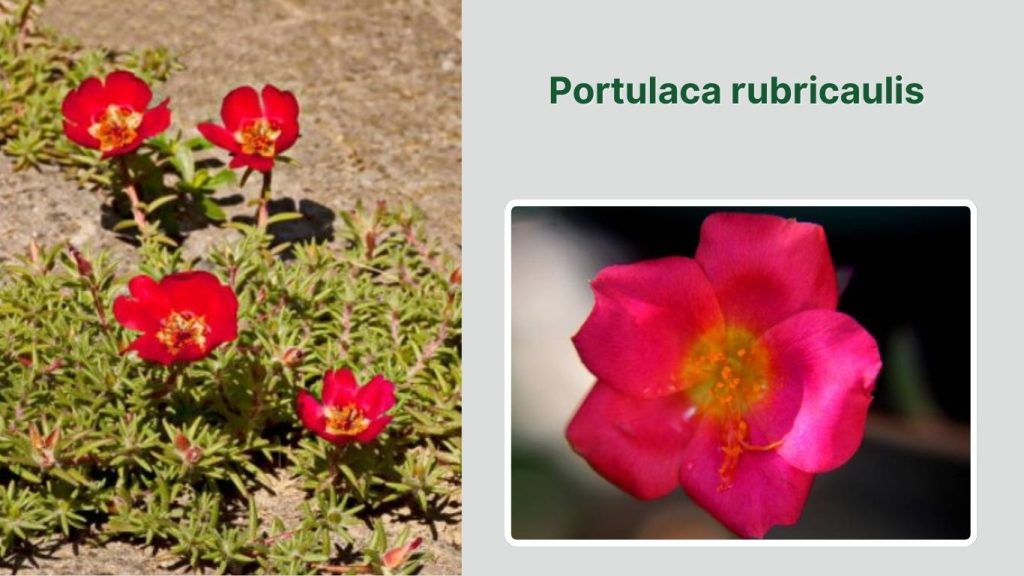
Portulaca rubricaulis is a distinctive Portulaca species named for its reddish stems and branching, ground-hugging growth. It is native to arid and semi-arid regions of the Americas and is well adapted to hot climates and dry soils. Its subtle flowers and colorful stems make it recognizable among wild purslanes.
Identification
- Prostrate, spreading growth habit
- Reddish to purplish succulent stems
- Thick, smooth, cylindrical to oval leaves
- Small yellow to pale orange flowers
- Low, mat-forming appearance
Habitat
Red-stem purslane typically grows in sandy flats, rocky soils, deserts, and dry grasslands. It prefers open, sunny locations with excellent drainage and is commonly found in disturbed areas such as roadsides and open fields in warm regions.
Growth Habit
Portulaca rubricaulis spreads outward from a central point, forming loose mats across bare ground. The stems often root where they touch the soil, helping the plant survive drought and stabilize loose substrates. Its reddish coloration intensifies under strong sunlight.
Flowering Pattern
The small flowers open briefly in full sun, usually during the hottest part of the day. Blooming occurs sporadically throughout the warm season. While the flowers are modest, they add subtle color contrast to the red stems and green leaves.
Ecological Role
This species plays a role in soil stabilization and ground coverage in dry habitats. It reduces surface erosion and provides microhabitats for insects. In some regions, it is also used in traditional remedies or as a minor edible plant.
9. Portulaca amilis (Pink Purslane)
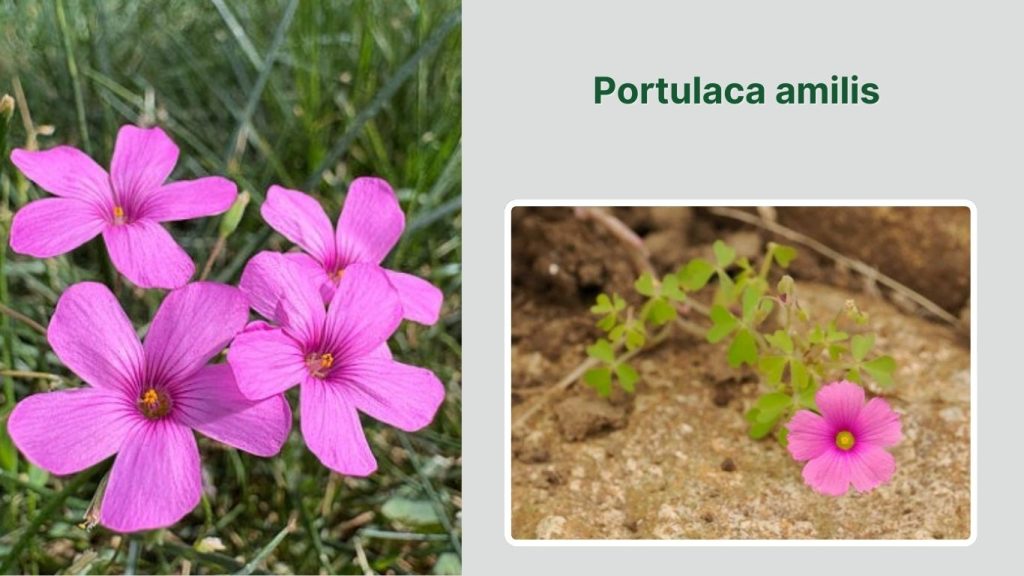
Portulaca amilis is a small, mat-forming Portulaca species admired for its delicate pink flowers and fine, succulent foliage. It is widely distributed in tropical and subtropical regions, where it grows naturally in open, sunny, and sandy environments. Its soft appearance and bright blooms make it attractive in both wild and cultivated settings.
Identification
- Low-growing, spreading succulent
- Smooth, reddish-green creeping stems
- Small, fleshy, oval to oblong leaves
- Bright pink to rose-colored flowers
- Fine-textured, carpet-like growth form
Habitat
Pink purslane is commonly found in grasslands, sandy soils, roadsides, and open fields throughout warm regions. It prefers full sun and well-drained substrates and can tolerate both drought and brief periods of moisture.
Growth Behavior
Portulaca amilis forms thin mats that spread quickly over bare ground. The stems root easily at nodes, allowing it to fill empty spaces and recover rapidly after disturbance. Its compact habit makes it suitable for small gardens and containers.
Flowering Habit
The flowers usually open in strong sunlight and close later in the day. Blooming can occur repeatedly during warm months, especially after rainfall. Though the flowers are small, their bright pink color creates a noticeable contrast against the green foliage.
Ornamental and Ecological Use
This species is sometimes cultivated as a minor ornamental ground cover and is also valued in natural landscapes for erosion control. It provides nectar for small pollinators and contributes to biodiversity in open, sunlit habitats.
10. Portulaca teretifolia (Cylindrical-leaf Purslane)
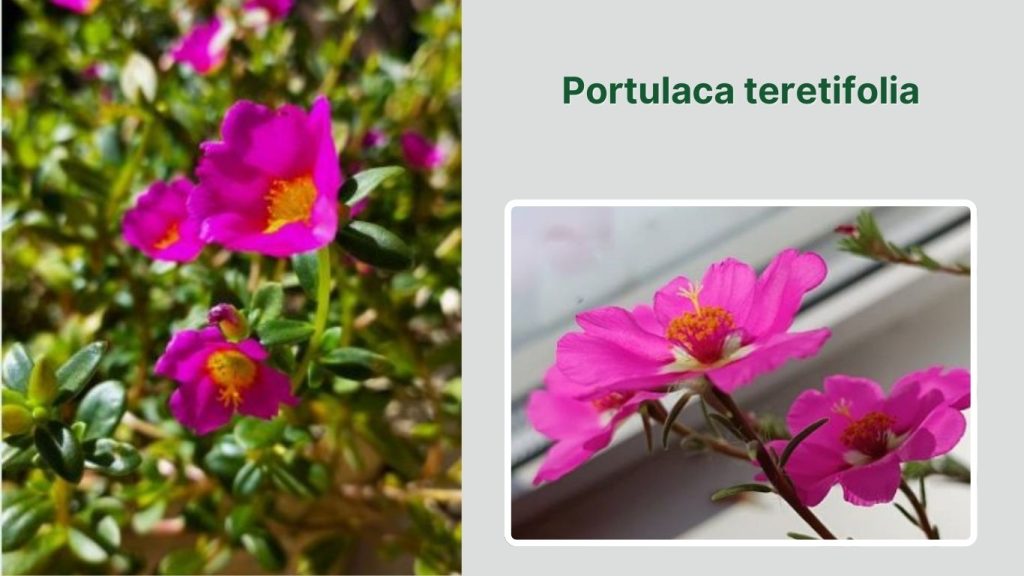
Portulaca teretifolia is a distinctive Portulaca species named for its narrow, cylindrical leaves. Native mainly to South America, this plant is adapted to hot, dry regions where water availability is limited. Its wiry stems and fine-textured foliage give it a very different look from broad-leaved ornamental portulacas.
Identification
- Prostrate to slightly spreading growth habit
- Very narrow, cylindrical, fleshy leaves
- Thin, branching stems
- Small yellow to pale pink flowers
- Fine, needle-like overall appearance
Habitat
This species naturally grows in dry grasslands, sandy plains, rocky slopes, and open scrublands. It prefers full sun and excellent drainage and is commonly found in areas with seasonal droughts and strong sunlight.
Growth Characteristics
Portulaca teretifolia spreads close to the ground, forming loose, low mats. Its cylindrical leaves reduce surface area, helping the plant conserve water. It tolerates high temperatures and poor soils, making it well suited to harsh environments.
Flowering Behavior
The flowers open during sunny hours and close in the late afternoon. Blooming usually occurs in warm seasons, especially after rain. While the flowers are small, they add subtle color to the fine green carpet of foliage.
Ecological Importance
This species contributes to soil stabilization in dry habitats and provides ground cover in open ecosystems. It also supports small pollinating insects and plays a role in maintaining plant diversity in arid and semi-arid regions.
11. Portulaca sclerocarpa (Hard-fruit Purslane)
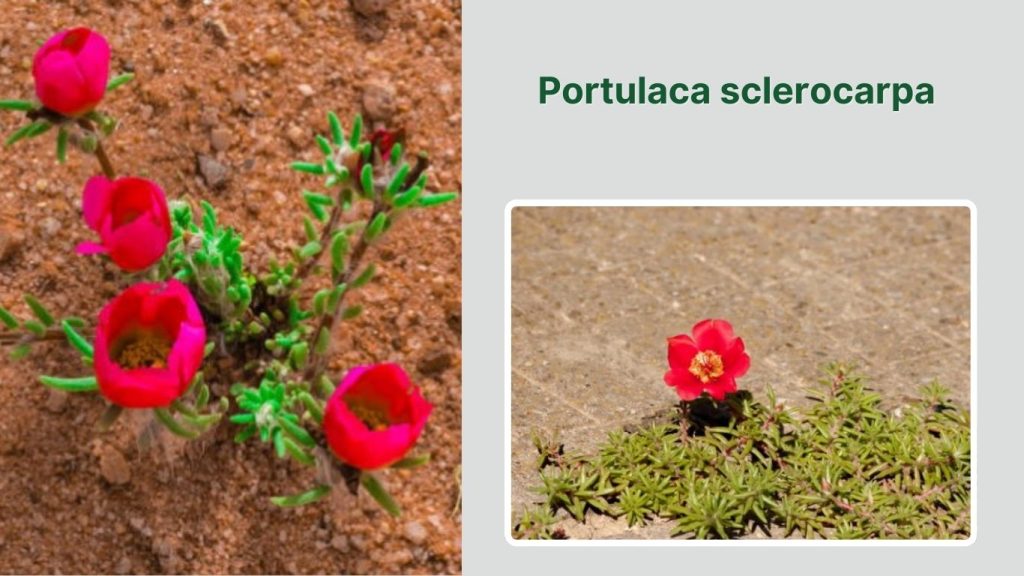
Portulaca sclerocarpa is a lesser-known Portulaca species recognized for its tough, hardened seed capsules and strong adaptation to dry, open habitats. Native mainly to parts of South America, this plant survives in challenging environments where intense sunlight, heat, and limited moisture are common.
Identification
- Low-growing, spreading succulent
- Smooth, fleshy, narrow to oval leaves
- Thin, branching, prostrate stems
- Small yellow flowers
- Hard, woody seed capsules
Habitat
Hard-fruit purslane typically grows in sandy soils, dry plains, rocky areas, and open scrublands. It favors full sun and excellent drainage and is commonly found in regions with seasonal droughts and high temperatures.
Growth Habit
Portulaca sclerocarpa forms low mats that spread outward across bare ground. Its hardy structure and tough fruiting bodies protect the seeds and allow the species to persist in harsh climates.
Flowering Pattern
The small yellow flowers open briefly in bright sunlight, often around midday. Flowering occurs intermittently throughout the warm season, especially after rainfall.
Ecological Role
This species helps stabilize loose soil and provides ground cover in arid landscapes. Its seeds serve as a food source for small insects, and the plant contributes to the overall resilience and biodiversity of dry ecosystems.
12. Portulaca hirsutissima (Hairy-Stem Purslane)
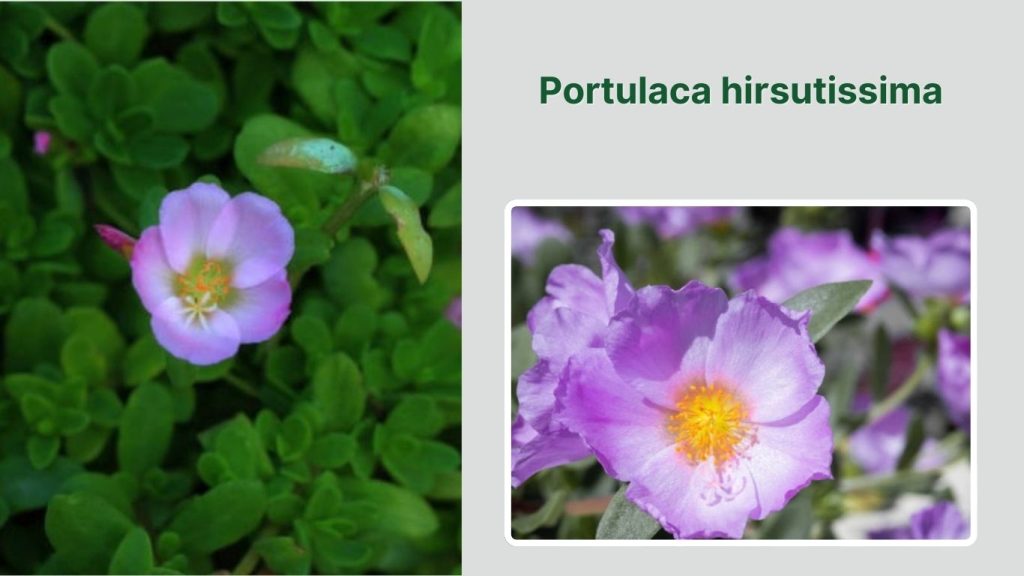
Portulaca hirsutissima is a distinctive Portulaca species characterized by its visibly hairy stems and fine-textured appearance. Native primarily to South America, this plant is adapted to hot, dry environments where it spreads across sandy and rocky soils. Its subtle flowers and fuzzy stems make it easy to recognize among wild purslanes.
Identification
- Low-growing, spreading succulent
- Noticeably hairy, reddish-green stems
- Small, fleshy, oval leaves
- Small yellow to pinkish flowers
- Soft, fuzzy surface texture
Habitat
Hairy-stem purslane grows naturally in dry grasslands, sandy plains, rocky slopes, and open scrub areas. It prefers full sun and excellent drainage and is well suited to regions with high temperatures and low rainfall.
Growth Characteristics
Portulaca hirsutissima forms loose mats that creep along the ground. The fine hairs on its stems may help reduce water loss and protect the plant from intense sunlight. It spreads gradually and survives well in nutrient-poor soils.
Flowering Behavior
The flowers typically open in strong daylight and close later in the afternoon. Blooming occurs during warm months, often increasing after rain. Though small, the blooms provide gentle color contrast against the green foliage.
Ecological Significance
This species contributes to soil stabilization and ground coverage in arid habitats. It also supports small pollinators and adds to plant diversity in open, sun-exposed ecosystems.
13. Portulaca suffrutescens (Subshrub Purslane)
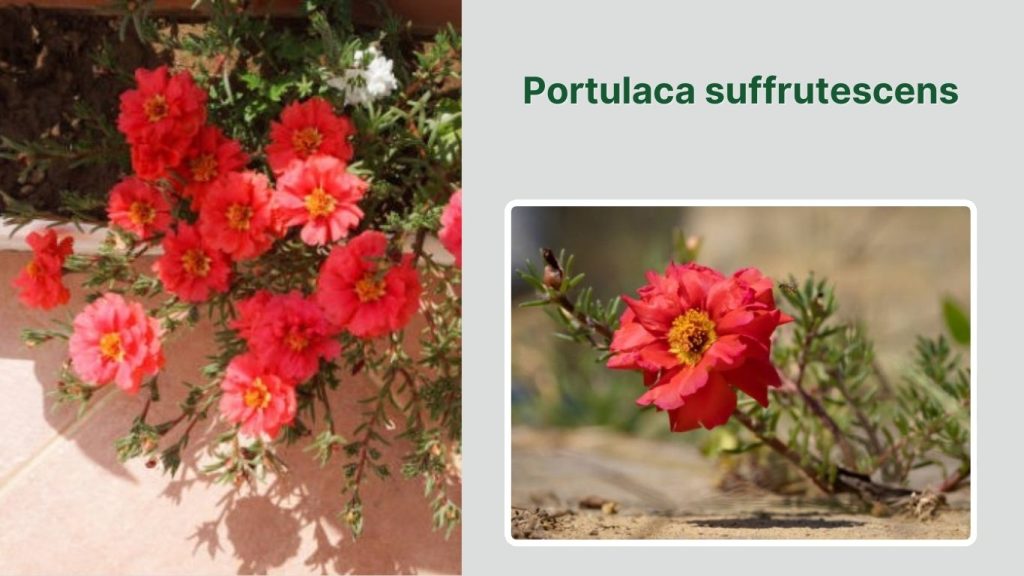
Portulaca suffrutescens is a semi-woody Portulaca species that differs from creeping purslane by developing a more upright, subshrub-like form. Native to dry regions of South America, this plant is adapted to intense sun, heat, and low rainfall. Its branching habit and succulent foliage give it a rugged, desert-adapted appearance.
Identification
- Semi-woody, branching growth form
- Thick, succulent, narrow leaves
- Upright to spreading woody stems
- Small yellow flowers
- Subshrub-like overall structure
Habitat
Subshrub purslane naturally grows in rocky slopes, dry plains, and open scrublands. It prefers mineral-rich, well-drained soils and full sun exposure. This species is commonly found in areas with strong sunlight and seasonal droughts.
Growth Habit
Unlike mat-forming portulacas, Portulaca suffrutescens form a low, woody base with spreading branches. This structure helps it withstand wind, heat, and moisture loss. It grows slowly compared to creeping species but is long-lived.
Flowering Pattern
The small yellow flowers open during sunny hours, usually around midday. Blooming occurs during warm seasons and often follows rainfall. Though not large, the flowers stand out clearly against the thicker stems.
Ecological and Ornamental Value
This species contributes to soil stability in dry ecosystems and provides shelter for small insects. In cultivation, it is sometimes used in succulent collections and dry landscape designs due to its unusual form and drought tolerance.
14. Portulaca werdermannii (Werdermann’s Purslane)
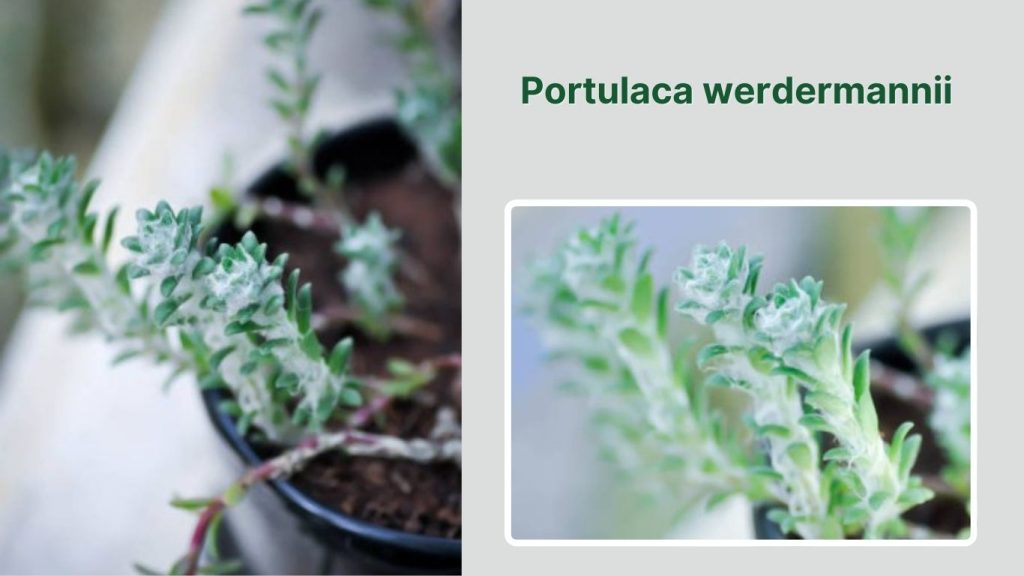
Portulaca werdermannii is a rare and visually striking Portulaca species best known for its swollen, caudex-like base and compact growth form. Native to parts of South America, it is highly adapted to arid environments and is often grown by collectors as a specialty succulent.
Identification
- Thick, swollen, woody base (caudex)
- Short, branching succulent stems
- Small, fleshy, narrow leaves
- Bright yellow flowers
- Compact, sculptural growth form
Habitat
This species occurs naturally in dry, rocky regions and desert-like environments where rainfall is scarce and soils are fast-draining. It thrives in open sun and mineral-rich substrates.
Growth Characteristics
Portulaca werdermannii grows slowly and forms a low, sculptural plant with a thickened base used for water storage. This caudex allows it to survive extended droughts and intense heat.
Flowering Behavior
The bright yellow flowers usually appear in warm seasons and open in full sunlight. They are often larger and more noticeable compared to many wild purslane species, creating a vivid contrast against the thick, gray-green stems.
Cultivation Interest
Because of its unusual caudex and rarity, this species is highly valued by succulent collectors. It requires excellent drainage, minimal watering, and strong light, making it ideal for containers, rock gardens, and specialized arid plant collections.
15. Portulaca mucronata (Sharp-tip Purslane)
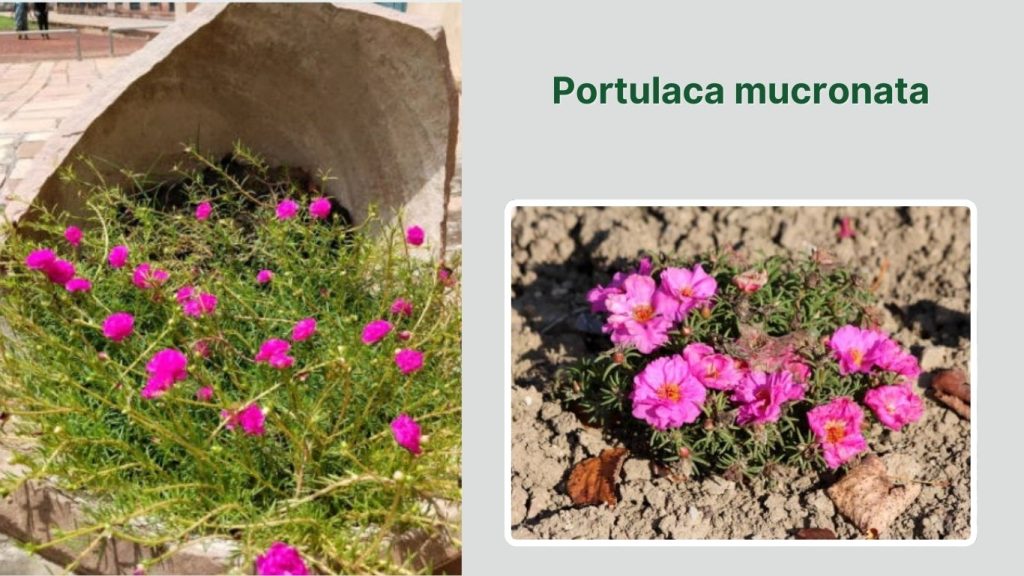
Portulaca mucronata is a drought-tolerant Portulaca species named for the tiny sharp points at the tips of its leaves. Native mainly to dry regions of South America, this plant is adapted to open, sun-baked landscapes. Its fine foliage and small flowers give it a subtle but distinctive appearance among wild purslanes.
Identification
- Low-growing, spreading succulent
- Narrow, fleshy leaves with sharp tips
- Thin, branching, creeping stems
- Small yellow flowers
- Fine-textured, mat-forming habit
Habitat
Sharp-tip purslane naturally grows in sandy soils, dry plains, rocky slopes, and open scrublands. It prefers full sun, high temperatures, and fast-draining soils where moisture is limited.
Growth Habit
Portulaca mucronata forms loose mats that spread across open ground. Its narrow leaves help reduce water loss, allowing it to survive long dry periods. The plant spreads gradually and tolerates poor, nutrient-deficient soils.
Flowering Pattern
The small yellow flowers open in bright sunlight, usually around midday, and close later in the afternoon. Blooming mainly occurs during warm seasons, often increasing after rainfall.
Ecological Role
This species contributes to ground cover and soil stabilization in dry ecosystems. It also provides nectar for small insects and plays a minor but important role in maintaining plant diversity in arid and semi-arid habitats.
16. Portulaca smallii (Small’s Purslane)
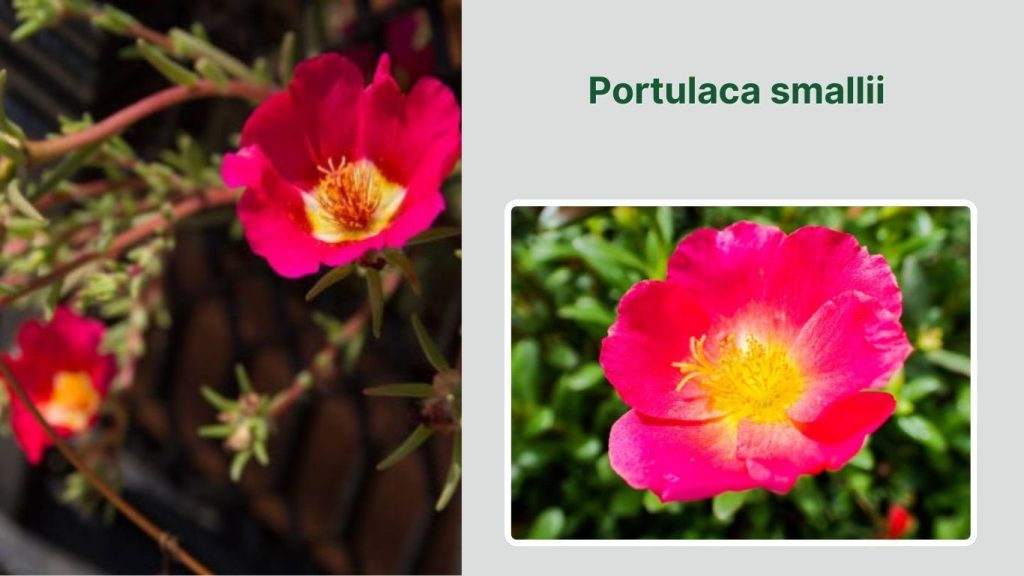
Portulaca smallii is a compact Portulaca species native to parts of the southeastern United States. It is adapted to sandy, well-drained soils and warm climates, where it grows as a low, spreading ground plant. This species is named in honor of American botanist John Kunkel Small.
Identification
- Low-growing, mat-forming succulent
- Smooth, prostrate, branching stems
- Small, fleshy, oval to oblong leaves
- Tiny yellow flowers
- Fine, ground-hugging growth habit
Habitat
Small’s purslane is typically found in sandy pinelands, open woodlands, dry fields, and coastal plain regions. It prefers full sun to light shade and soils that drain quickly after rain.
Growth Characteristics
Portulaca smallii spreads close to the soil surface, forming thin mats across open ground. It tolerates heat and short dry periods and often appears after seasonal rains.
Flowering Behavior
The tiny yellow flowers open during sunny hours, usually in late morning. Blooming occurs mainly in warm months and may continue intermittently throughout the growing season.
Ecological Importance
This species contributes to ground cover in sandy ecosystems and supports small pollinators. It also helps stabilize loose soils and adds to native plant diversity in its natural range.
17. Portulaca halimoides (Sea Purslane)
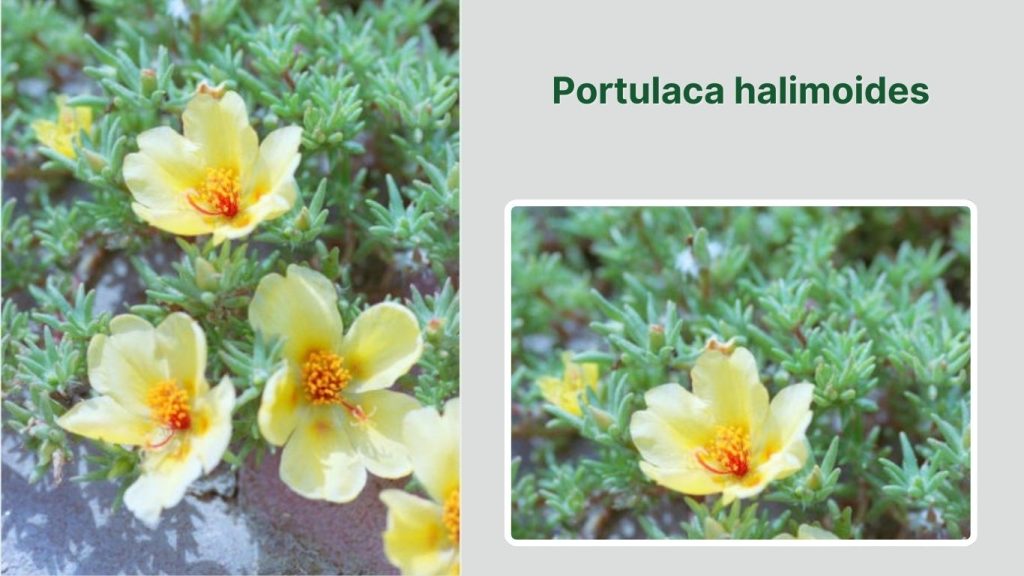
Portulaca halimoides, commonly called sea purslane, is a coastal Portulaca species adapted to salty air, sandy soils, and intense sunlight. Native to tropical and subtropical shorelines, this low-growing plant forms spreading mats and produces small, bright flowers that open in strong daylight.
Identification
- Low-growing, spreading succulent
- Smooth, fleshy, narrow to oval leaves
- Prostrate, branching stems
- Small yellow flowers
- Mat-forming, ground-hugging habit
Habitat
Sea purslane naturally grows along beaches, coastal dunes, sandy flats, and open seaside plains. It thrives in full sun, tolerates salt spray, and prefers fast-draining sandy or rocky soils.
Growth Habit
Portulaca halimoides spreads outward close to the ground, forming loose mats that help stabilize sandy substrates. Its succulent leaves store water, allowing the plant to survive drought, heat, and coastal winds.
Flowering Pattern
The small yellow flowers open during bright sunlight, usually around late morning, and close by afternoon. Blooming occurs repeatedly through warm seasons, especially after rainfall.
Ecological and Landscape Value
This species plays an important role in coastal ecosystems by reducing erosion and providing nectar for insects. In landscaping, it can be used as a salt-tolerant ground cover in seaside gardens and dry, sandy landscapes.
18. Portulaca canariensis (Canary Island Purslane)
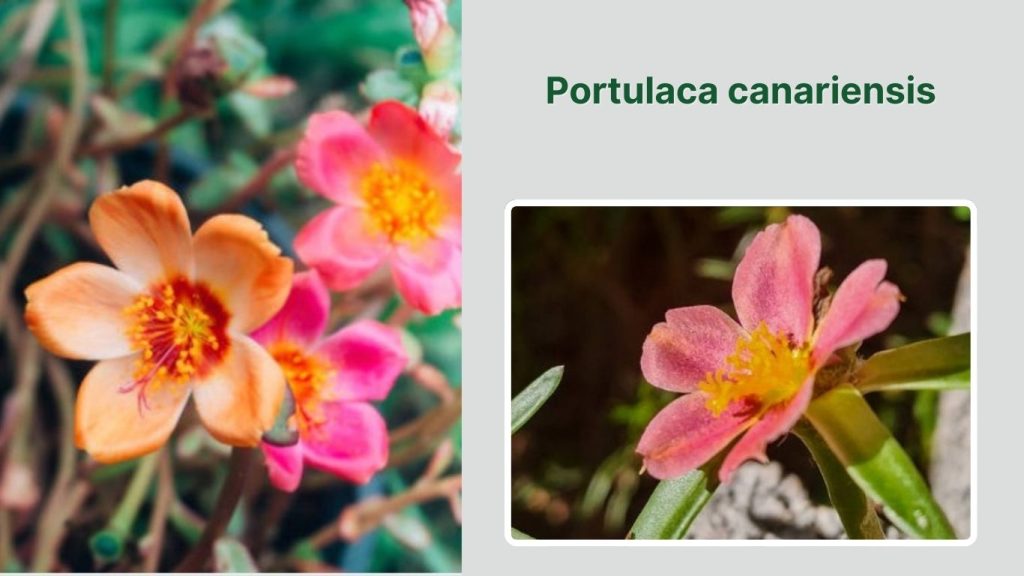
Portulaca canariensis is a distinctive Portulaca species native to the Canary Islands. It is well adapted to dry, rocky landscapes shaped by strong sun and limited rainfall. Compared to common garden portulacas, this species often shows a more rugged form and is valued mainly in botanical and succulent collections.
Identification
- Low, spreading to slightly shrubby growth habit
- Thick, fleshy, green to gray-green leaves
- Short, branching succulent stems
- Small yellow flowers
- Compact, drought-adapted appearance
Habitat
Canary Island purslane naturally grows on volcanic slopes, rocky outcrops, and dry coastal regions of the Canary Islands. It prefers full sun, mineral-rich soils, and excellent drainage, where moisture is scarce and temperatures are warm year-round.
Growth Characteristics
Portulaca canariensis forms low clumps or loose mats, depending on growing conditions. Its succulent tissues store water efficiently, allowing it to survive long dry periods and strong sun exposure.
Flowering Behavior
The small yellow flowers open in bright daylight and usually close later in the afternoon. Blooming tends to occur during warmer months and may increase after brief rainfall.
Ecological and Cultivation Value
In its native range, this species contributes to soil stabilization in rocky habitats. In cultivation, it is mostly grown by succulent enthusiasts and botanical gardens, where it is appreciated for its regional uniqueness and drought tolerance.
19. Portulaca elatior (Tall Purslane)
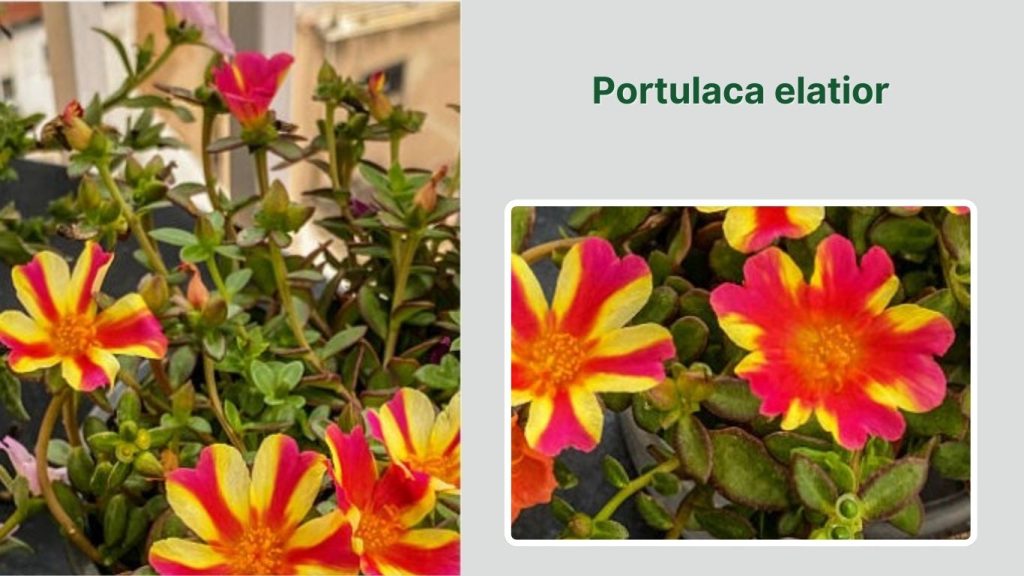
Portulaca elatior is a more upright-growing Portulaca species compared to most creeping purslanes. Native mainly to parts of South America, this plant is adapted to warm, open environments and well-drained soils. Its slightly taller growth habit and bright flowers make it stand out among wild Portulaca species.
Identification
- Erect to spreading growth habit
- Smooth, succulent, elongated stems
- Fleshy, narrow to oval leaves
- Yellow to orange flowers
- Taller form than most ground-hugging purslanes
Habitat
Tall purslane naturally grows in open grasslands, dry plains, rocky areas, and disturbed soils. It prefers full sun and fast-draining substrates and is commonly found in regions with seasonal heat and moderate drought.
Growth Characteristics
Portulaca elatior grows more upright than many Portulaca species, sometimes forming small clumps instead of flat mats. Its succulent tissues store water, helping it survive in hot, dry conditions.
Flowering Behavior
The flowers open in strong sunlight, usually from late morning to early afternoon. Blooming occurs during warm seasons and may continue repeatedly after rainfall.
Ecological Role
This species contributes to native ground vegetation by providing nectar for insects and helping stabilize soil in open habitats. It also adds structural diversity to dry and semi-dry plant communities.
20. Portulaca howellii (Howell’s Purslane)
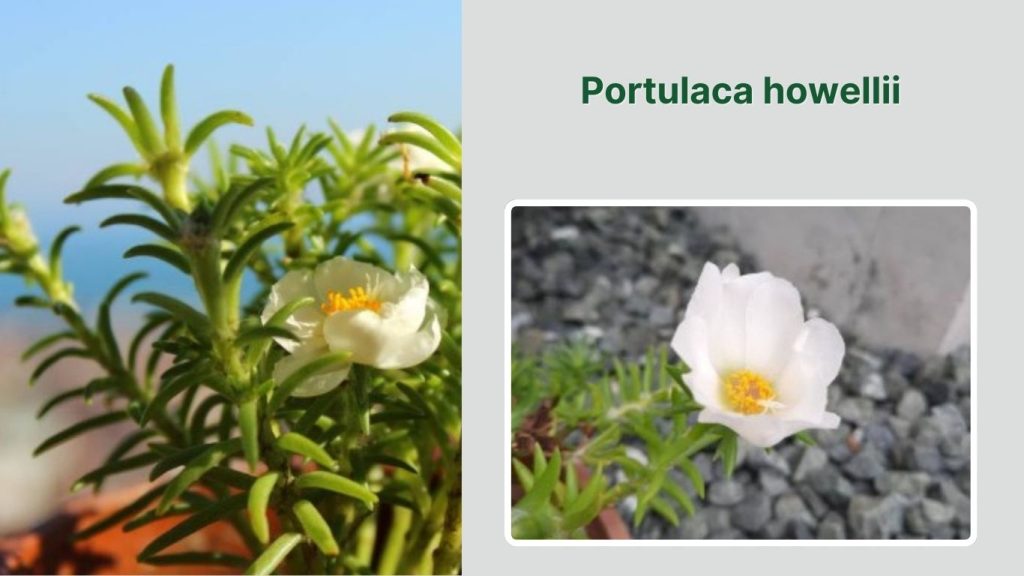
Portulaca howellii is a small, heat-tolerant Portulaca species native mainly to the southwestern United States and parts of northern Mexico. It is adapted to desert margins and dry open habitats, where it grows as a low, spreading plant. This species is named after botanist John Thomas Howell.
Identification
- Low-growing, spreading succulent
- Smooth, prostrate, branching stems
- Small, thick, oval to spoon-shaped leaves
- Tiny yellow flowers
- Fine, ground-hugging growth habit
Habitat
Howell’s purslane naturally occurs in sandy deserts, dry washes, open plains, and rocky soils. It prefers full sun and very well-drained substrates, often appearing after seasonal rains.
Growth Characteristics
Portulaca howellii forms thin mats that spread close to the soil surface. Its succulent leaves store water, allowing it to survive intense heat and dry periods. It usually completes much of its life cycle quickly after rainfall.
Flowering Behavior
The small yellow flowers open in bright sunlight, typically during late morning hours. Blooming is most common in warm seasons and often follows brief desert rains.
Ecological Importance
This species helps stabilize loose desert soils and provides nectar for small pollinating insects. It is part of the native ground flora that supports biodiversity in arid and semi-arid ecosystems.
21. Portulaca yakusimensis (Yakushima Purslane)
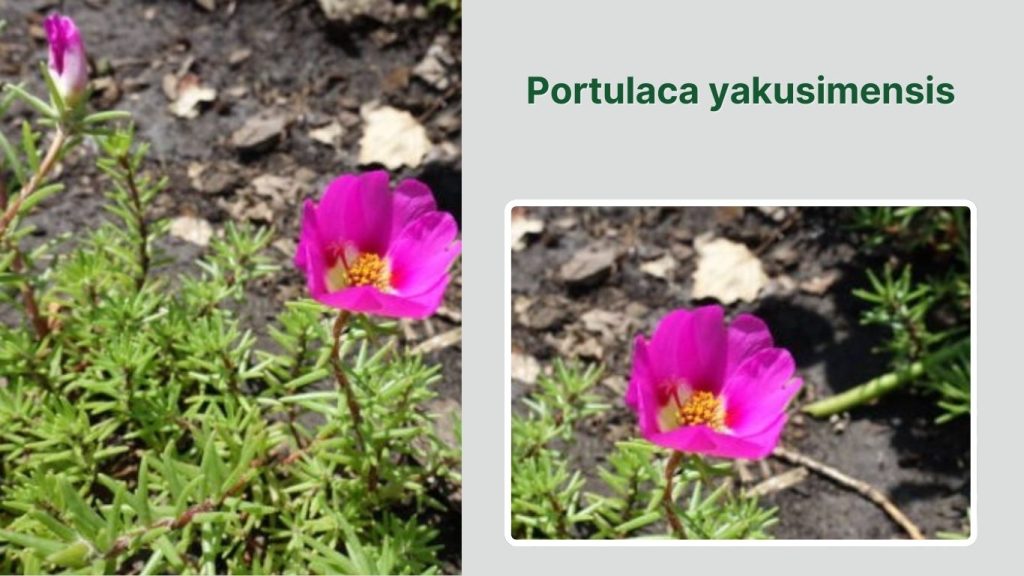
Portulaca yakusimensis is a rare Portulaca species native to Yakushima Island in Japan. It is adapted to warm, well-drained habitats where it grows as a low, spreading succulent. Because of its limited natural range, this species is mainly known through botanical records and specialist plant collections.
Identification
- Low-growing, spreading succulent
- Smooth, fleshy, oval to narrow leaves
- Thin, creeping, branching stems
- Small yellow flowers
- Compact, ground-hugging growth form
Habitat
Yakushima purslane naturally grows on rocky slopes, open forest edges, and well-drained coastal or lowland areas of Yakushima Island. It prefers warm temperatures, high light, and soils that drain quickly after rainfall.
Growth Characteristics
Portulaca yakusimensis forms thin mats across open ground, spreading slowly by creeping stems. Its succulent tissues help it store moisture and survive short dry periods.
Flowering Behavior
The small yellow flowers open in strong daylight, usually from late morning to afternoon. Blooming typically occurs in warmer months and may increase after periods of rain.
Conservation and Botanical Value
Because of its restricted range, this species is of interest to botanists and conservationists. Protecting its natural habitats is important to preserve regional biodiversity. In cultivation, it is grown mainly by collectors interested in rare and geographically unique Portulaca species.
FAQs
What is Portulaca commonly known as?
Portulaca is commonly known as purslane or moss rose, depending on the species. Ornamental types like Portulaca grandiflora are often called moss rose, while edible and wild forms such as Portulaca oleracea are known as common purslane. The genus includes both flowering ornamentals and naturally occurring ground covers.
Are all Portulaca plants succulents?
Yes, all Portulaca species are considered succulents because they have thick, fleshy leaves and stems that store water. This adaptation allows them to survive in hot, dry, and sunny environments. Their succulent nature is the main reason they are widely used in drought-tolerant and low-maintenance gardens.
Do Portulaca flowers open and close daily?
Most Portulaca flowers open in bright sunlight and close in the evening or during cloudy weather. This daily opening and closing cycle helps protect the delicate petals and reproductive parts. Strong sunlight is essential for full blooming, which is why portulacas perform best in open, sunny locations.
Is Portulaca only an ornamental plant?
No, Portulaca is not only ornamental. Some species, especially Portulaca oleracea, are widely used as edible greens and traditional medicinal plants. They are rich in nutrients and are eaten raw or cooked in many cultures, while other species are grown mainly for decorative landscaping.
Where do Portulaca plants grow best?
Portulaca plants grow best in full sun with well-drained soil. They thrive in hot climates, sandy or rocky ground, and areas with low rainfall. Poor drainage and shade usually reduce flowering and can cause stem rot, so open, sunny sites are ideal.