





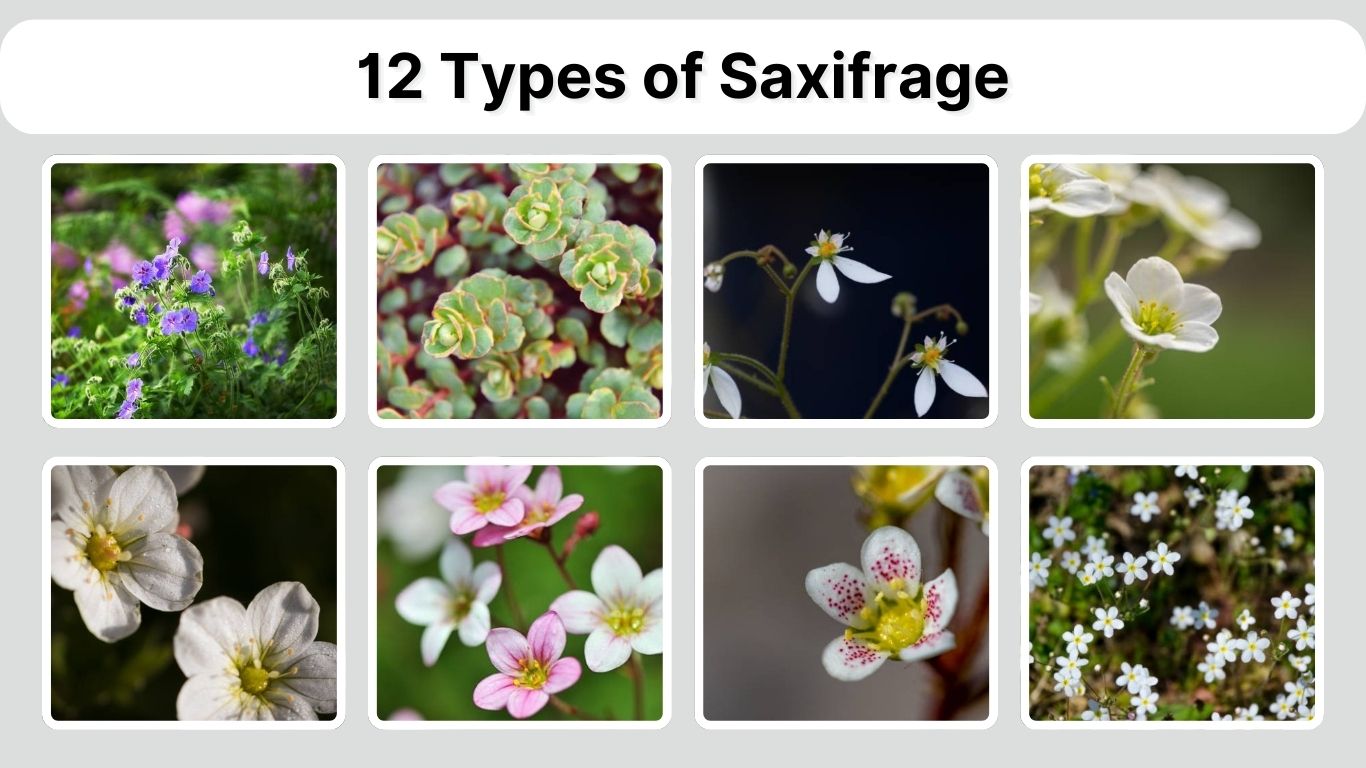
Saxifrage is a diverse group of flowering plants known for their remarkable ability to thrive in rocky, cold, and often extreme environments. Found across mountains, Arctic regions, woodlands, and streamside habitats, saxifrages range from tiny mat-forming alpines to leafy shade-loving species. They are valued for their delicate, star-shaped flowers, attractive rosettes, and exceptional hardiness. Because of this versatility, saxifrage plants are widely grown in rock gardens, alpine troughs, and shaded landscapes around the world.
1. Purple Saxifrage (Saxifraga oppositifolia)
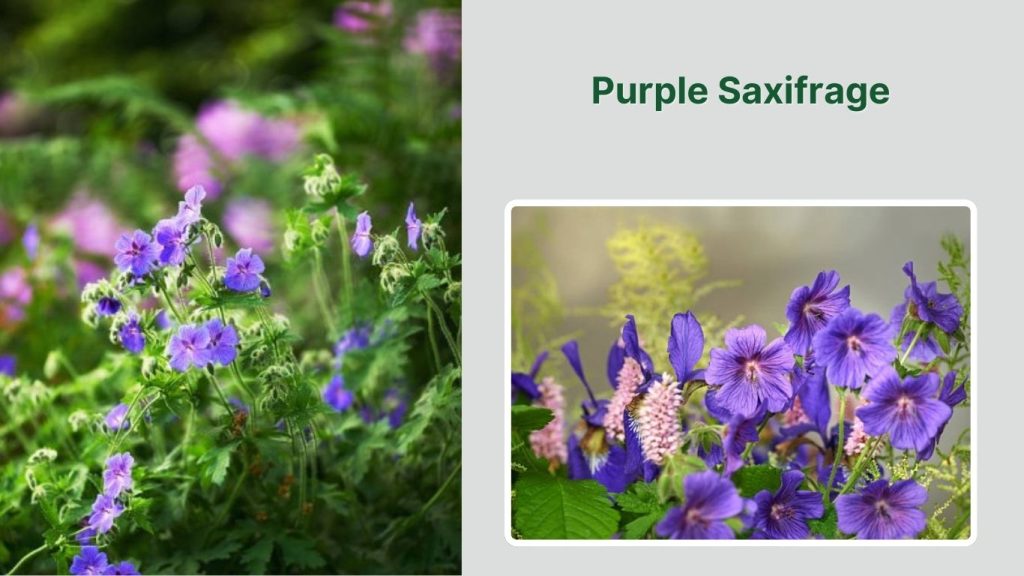
Purple saxifrage is one of the hardiest flowering plants in the world, famous for blooming in some of the coldest regions on Earth. It forms low, creeping mats that cling tightly to rocks and soil, producing bright purple-pink flowers in early spring. Because of its extreme cold tolerance and compact growth, it is a classic alpine and rock-garden plant admired for both beauty and resilience.
Identification
- Low-growing, mat-forming perennial that hugs the ground
- Small, opposite, oval leaves with slightly leathery texture
- Bright purple to pink flowers with five rounded petals
- Blooms very early in spring, often while snow is still present
- Stems creep along rocks, forming dense cushions
Habitat
Purple saxifrage naturally grows in Arctic and alpine regions, including high mountains of Europe, Asia, and North America. It thrives in rocky crevices, cliffs, and gravelly slopes where soil is thin and drainage is excellent. These harsh habitats protect it from competition by larger plants.
Growth Habit
This plant spreads slowly by creeping stems, forming tight mats that help conserve heat and moisture. Its compact structure reduces wind damage and water loss, making it perfectly adapted to exposed, high-altitude environments. In gardens, it is often used as a ground cover in rockeries.
Flowering and Uses
Purple saxifrage flowers appear very early, sometimes as soon as snow melts. The vivid blooms attract early pollinators when few other plants are flowering. Gardeners value it for alpine gardens, stone troughs, and cold-climate landscapes where few ornamentals can survive.
2. Mossy Saxifrage (Saxifraga arendsii)

Mossy saxifrage is a popular garden saxifrage known for its soft, cushion-like mats and masses of small, starry flowers. It is a hybrid group rather than a single wild species, bred mainly for ornamental use. In spring, it becomes covered with white, pink, or red blooms that rise just above the dense green foliage, making it a favorite for rock gardens and edging.
Identification
- Forms dense, moss-like cushions close to the ground
- Fine, deeply divided, bright green leaves in tight rosettes
- Slender flower stalks rising above the foliage
- Small star-shaped flowers in white, pink, or red
- Compact growth, usually under 15 cm tall
Habitat
Mossy saxifrage does not occur widely in the wild like many other species, as it is mostly garden-bred. It prefers cool climates and performs best in well-drained, moist but not waterlogged soil. In cultivation, it thrives in rock gardens, alpine beds, and between stones.
Growth Habit
This saxifrage spreads slowly to form rounded cushions that resemble soft green moss. The tight growth helps suppress weeds and retain moisture around the roots. Over time, individual clumps can merge to create colorful carpets in spring.
Flowering and Uses
Flowering usually occurs from mid to late spring. The abundance of blooms almost hides the foliage, creating a vivid display. Mossy saxifrage is widely used as a decorative ground cover, edging plant, and container specimen for cool, temperate gardens.
3. London Pride Saxifrage (Saxifraga × urbium)
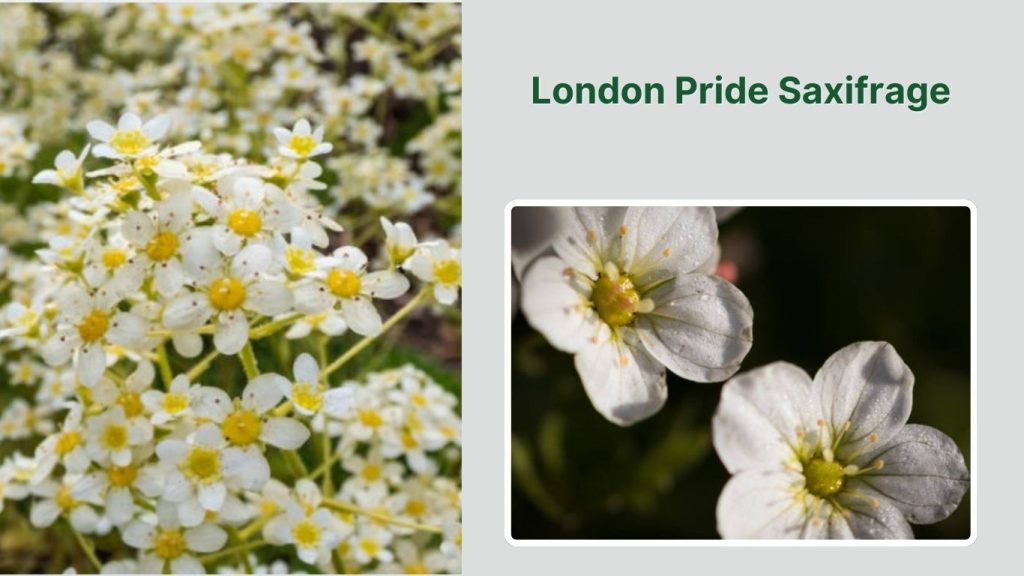
London Pride saxifrage is a tough, evergreen perennial best known for its ability to thrive in city gardens, walls, and shaded corners. It forms neat rosettes of rounded leaves and sends up airy sprays of tiny, star-like flowers in late spring and early summer. Because of its durability and low-maintenance nature, it has become one of the most widely grown saxifrages.
Identification
- Evergreen rosettes of spoon-shaped, slightly leathery leaves
- Leaves often have faint silvery margins or spotting
- Upright, slender flower stems rising above the foliage
- Numerous small, star-shaped white to pale pink flowers
- Spreads slowly by short runners to form clumps
Habitat
In nature, its parent species originate from mountainous regions of southern Europe, growing on rocky slopes and shaded cliffs. In cultivation, London Pride adapts easily to walls, rock gardens, woodland edges, and even urban cracks where soil is limited but moisture is available.
Growth Habit
This plant grows in compact clumps that gradually expand, creating a low evergreen ground cover. Its rosettes stay attractive year-round, making it valuable even outside the flowering season. It tolerates partial shade, light sun, and cooler temperatures well.
Flowering and Uses
London Pride typically flowers from late spring into early summer. The delicate flower sprays add height and lightness above the foliage. Gardeners often use it for borders, shaded rock gardens, wall crevices, and low-maintenance ground cover plantings.
4. Starry Saxifrage (Saxifraga stellaris)
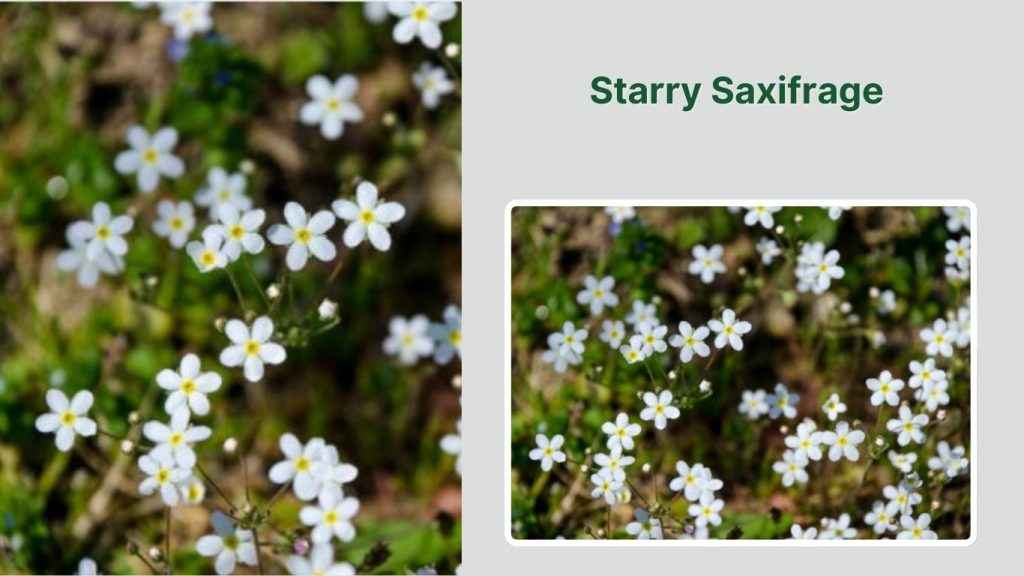
Starry saxifrage is a delicate-looking but resilient species recognized for its airy sprays of white, star-shaped flowers dotted with tiny yellow or red spots. It prefers cool, moist conditions and is often found near mountain streams and wet rock faces. Despite its fragile appearance, it is well adapted to life in alpine and subalpine environments.
Identification
- Basal rosettes of soft, spoon-shaped green leaves
- Leaves often slightly toothed along the edges
- Thin, upright flowering stems
- Small white, star-like flowers with colored spots
- Fine, open flower clusters held above the foliage
Habitat
Starry saxifrage naturally grows in cool mountainous regions across Europe, Asia, and North America. It is commonly found along stream banks, wet cliffs, and seeps where water is constantly available but drainage remains good. These habitats provide the cool roots and clean moisture the plant prefers.
Growth Habit
This saxifrage forms loose rosettes rather than dense cushions. It spreads modestly by seed and short offsets, creating scattered colonies rather than tight mats. The plant remains low to the ground, with flowering stems providing most of its height.
Flowering and Uses
Flowering usually takes place in early to mid-summer. The graceful sprays of blooms give a light, floating effect in the garden. Starry saxifrage is valued for moist rock gardens, alpine houses, and the edges of cool garden streams or water features.
5. Meadow Saxifrage (Saxifraga granulata)
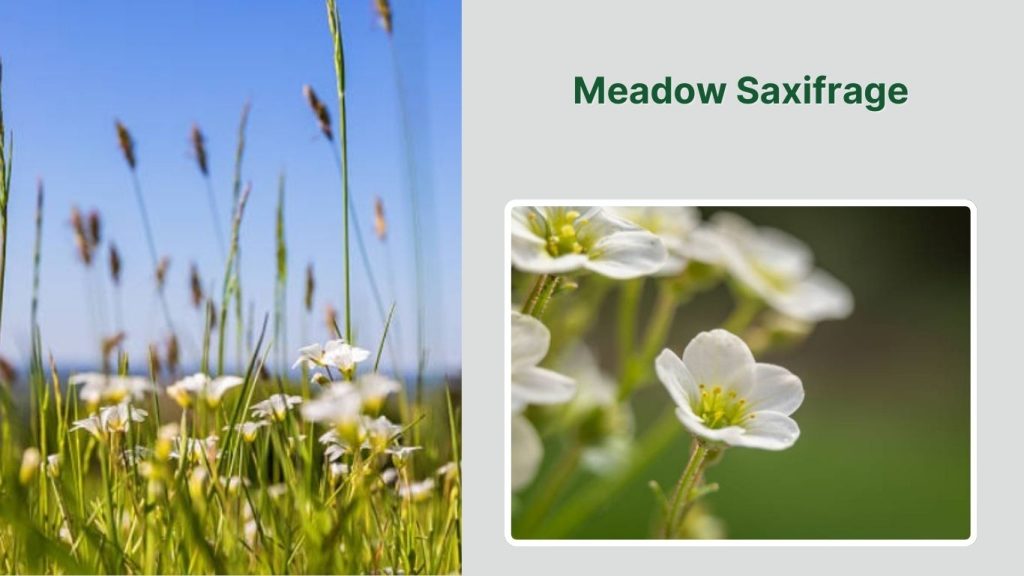
Meadow saxifrage is a charming perennial known for its airy white flowers and preference for open grasslands rather than bare rock. Unlike many alpine saxifrages, it grows well in meadows, pastures, and lightly shaded fields. Its delicate appearance hides a hardy nature, allowing it to return reliably each year from underground storage structures.
Identification
- Upright, slender flowering stems
- Rounded to slightly lobed basal leaves
- Fine white flowers with five petals
- Small bulb-like structures (bulbils) near the base
- Loosely branched flower clusters
Habitat
This species is native to Europe and parts of western Asia, where it grows in meadows, grassy slopes, and open woodland edges. It prefers moderately moist, well-drained soil and can tolerate light shade, making it different from strictly rock-dwelling saxifrages.
Growth Habit
Meadow saxifrage grows from underground bulbils that store energy and help it survive winter. In spring, it sends up leafy shoots followed by thin flowering stems. Plants usually form scattered clumps rather than continuous mats.
Flowering and Uses
Flowering occurs in late spring to early summer. The bright white flowers stand above the grass and attract pollinating insects. In gardens, meadow saxifrage is suitable for wildflower meadows, naturalistic plantings, and cottage-style borders.
6. Alpine Saxifrage (Saxifraga nivalis)
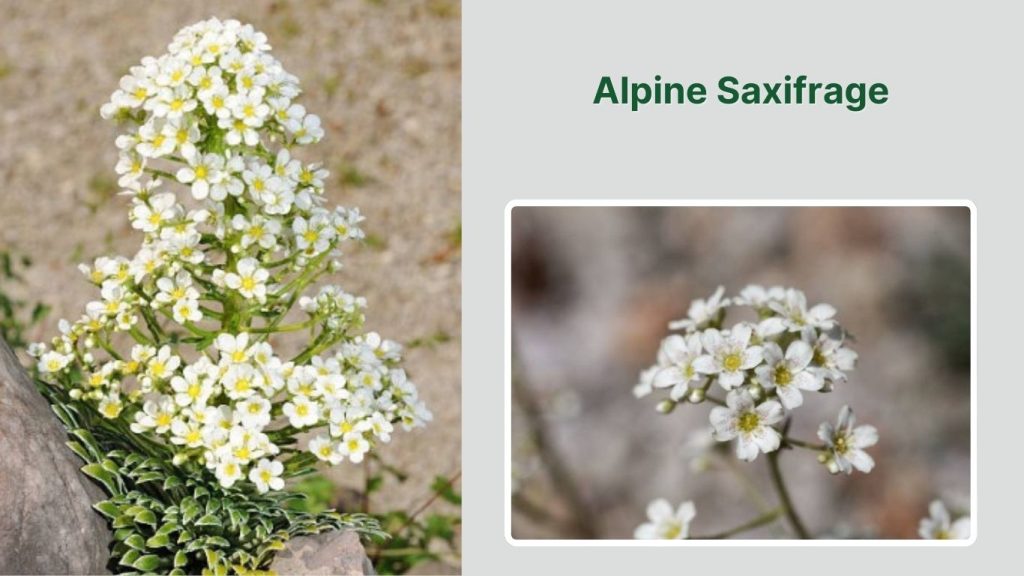
Alpine saxifrage is a compact mountain species valued for its neat rosettes and clusters of small, pale flowers. It is commonly associated with cold, high-altitude environments where snow persists for long periods. This species is well adapted to short growing seasons, completing its flowering quickly once conditions become favorable.
Identification
- Low rosettes of rounded to oval green leaves
- Leaves often slightly fleshy with smooth edges
- Short, upright flower stalks
- Small white to pale pink flowers in tight clusters
- Overall compact, tidy appearance
Habitat
Alpine saxifrage naturally occurs in high mountains and Arctic regions across Europe, Asia, and North America. It grows on moist rocky ledges, tundra soils, and alpine slopes where snowmelt provides early-season moisture.
Growth Habit
This saxifrage grows as individual rosettes that may slowly form small clumps. It does not spread aggressively, instead investing energy in sturdy leaves and rapid flowering. Its form allows it to resist cold winds and fluctuating temperatures.
Flowering and Uses
Flowering usually takes place soon after snowmelt, in late spring or early summer. The subtle blooms attract early alpine pollinators. In cultivation, alpine saxifrage is used in cool rock gardens, alpine troughs, and high-elevation landscape designs.
7. Yellow Mountain Saxifrage (Saxifraga aizoides)
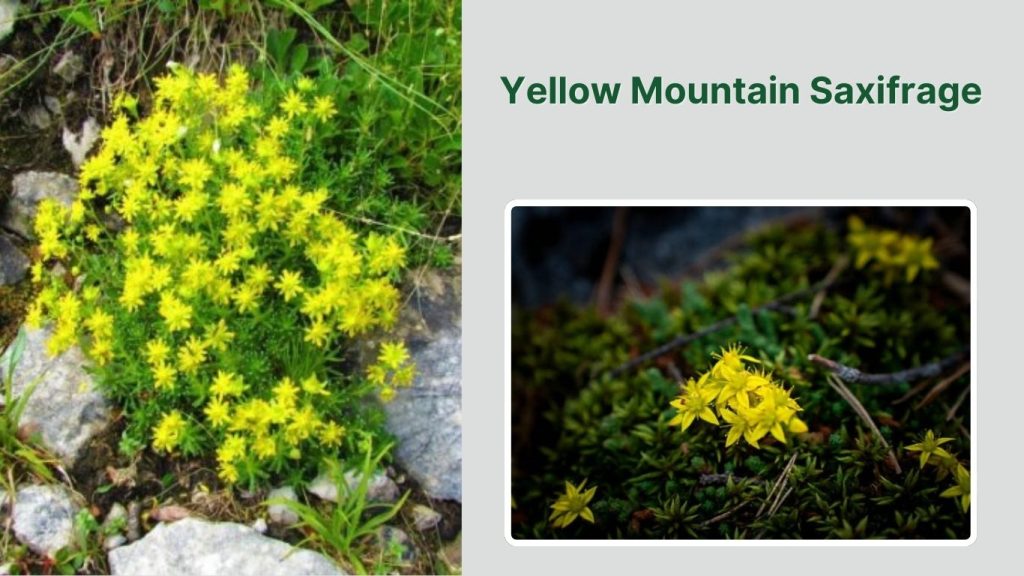
Yellow mountain saxifrage is a distinctive species recognized by its bright yellow flowers and glossy, succulent-like leaves. It naturally inhabits wet, rocky places where cold water trickles through crevices. This combination of moisture-loving habit and alpine toughness makes it unique among saxifrages and especially attractive in cool rock gardens.
Identification
- Low, spreading mats of narrow, fleshy green leaves
- Leaves often have a shiny surface and reddish margins
- Upright, slender flowering stems
- Bright yellow, star-shaped flowers with orange spots
- Forms creeping clusters along wet rocks
Habitat
This species is native to the alpine and Arctic regions of Europe, Asia, and North America. It commonly grows beside mountain streams, wet cliffs, and seepage areas where roots stay constantly moist but well oxygenated.
Growth Habit
Yellow mountain saxifrage spreads by creeping stems that root as they move, forming loose mats over time. Its fleshy leaves store water, helping it survive between periods of constant moisture and brief drying.
Flowering and Uses
Flowering occurs from late spring through summer, depending on elevation. The cheerful yellow blooms stand out against dark rocks. Gardeners plant it in moist rock gardens, near water features, and in cool alpine beds where soil never fully dries.
8. Opposite-leaved Saxifrage (Saxifraga oppositifolia)
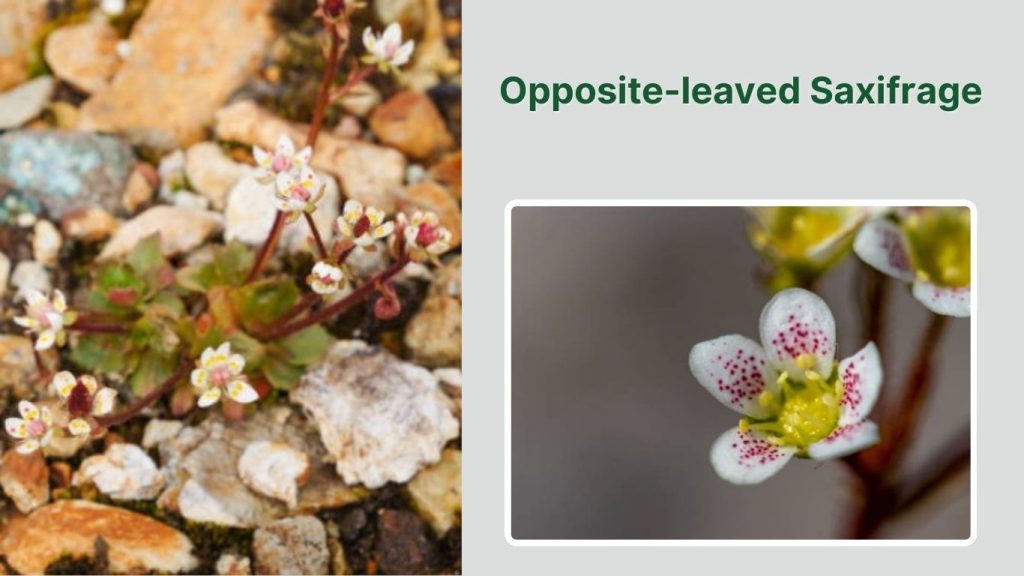
Opposite-leaved saxifrage is one of the most cold-tolerant flowering plants on Earth and is famous for blooming even in high Arctic regions. It forms dense, trailing mats of tiny leaves and produces large, vivid purple flowers relative to its small size. Because of its resilience and early flowering, it is often considered a symbol of life in extreme alpine environments.
Identification
- Very low, creeping, mat-forming growth
- Tiny, opposite, oval leaves along thin stems
- Woody, trailing branches that hug rocks
- Large purple to magenta flowers for the plant’s size
- Early spring flowering, sometimes before snow fully melts
Habitat
This species grows naturally in Arctic tundra and high-mountain regions across Europe, Asia, Greenland, and North America. It thrives on exposed rocky slopes, gravel beds, and cliff ledges where few other flowering plants can survive.
Growth Habit
Opposite-leaved saxifrage spreads outward in dense mats that trap heat and protect roots from freezing winds. Its woody stems anchor firmly into crevices, allowing the plant to persist for many years in the same location.
Flowering and Uses
It flowers very early in the season, often becoming one of the first sources of nectar for cold-climate insects. In gardens, it is highly valued for alpine troughs, crevice gardens, and extreme-climate rockeries.
9. Strawberry Saxifrage (Saxifraga stolonifera)
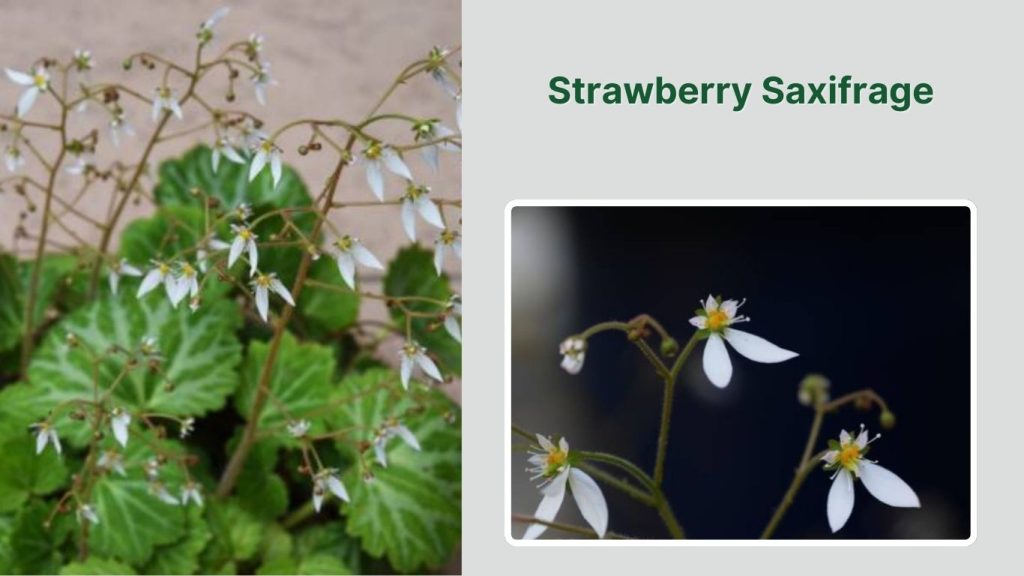
Strawberry saxifrage is a popular ornamental species admired for its attractive foliage and delicate white flowers. Unlike many alpine saxifrages, it is often grown as a houseplant or shade garden plant. It gets its common name from the long, thin runners it produces, which resemble strawberry plant stolons and create new plantlets at their tips.
Identification
- Rounded, soft, green leaves with silver veins
- Leaves form low, spreading rosettes
- Long, thin runners that produce baby plants
- White flowers with two long lower petals
- Fine red hairs on stems and leaf stalks
Habitat
Strawberry saxifrage is native to East Asia, especially China and Japan. It grows in shaded, moist forest areas, rocky slopes, and along stream banks where humidity is high and sunlight is filtered.
Growth Habit
This plant spreads quickly by runners, allowing it to colonize wide areas in suitable conditions. New plantlets root wherever the runners touch soil, forming connected colonies. Its creeping habit makes it useful as a ground cover or trailing plant.
Flowering and Uses
Flowering usually occurs in spring to early summer. The delicate blooms rise above the foliage on thin stems, creating an airy appearance. Strawberry saxifrage is widely used in hanging baskets, indoor pots, shaded borders, and woodland-style gardens.
10. Silver Saxifrage (Saxifraga paniculata)
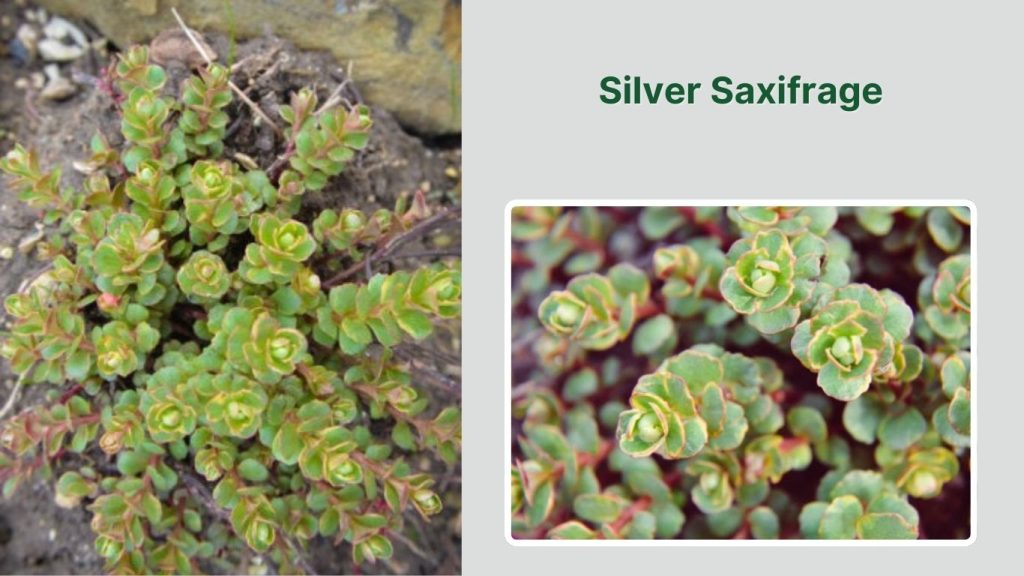
Silver saxifrage is a striking alpine plant known for its tight rosettes of blue-green to silvery leaves edged with white, chalky markings. These decorative rosettes look attractive year-round and are topped in early summer by airy sprays of small white flowers. It is especially valued in rock gardens for its sculptural form and drought tolerance.
Identification
- Dense, circular rosettes of narrow, pointed leaves
- Leaves coated with a silvery or bluish waxy layer
- White, chalky margins along leaf edges
- Upright flower stems bearing tiny white blooms
- Compact, clump-forming alpine habit
Habitat
This species is native to the mountains of central and southern Europe. It naturally grows on limestone cliffs, rocky slopes, and crevices where soil is minimal but drainage is excellent and sun exposure is high.
Growth Habit
Silver saxifrage forms firm, symmetrical rosettes that slowly multiply to create small colonies. Its thick, waxy leaves reduce water loss, allowing it to survive dry, windy alpine conditions.
Flowering and Uses
Flowering usually occurs in early to mid-summer. The fine white flowers contrast softly with the bold foliage. In gardens, silver saxifrage is widely used in sunny rock gardens, crevice plantings, alpine troughs, and gravel beds.
11. Spotted Saxifrage (Saxifraga punctata)
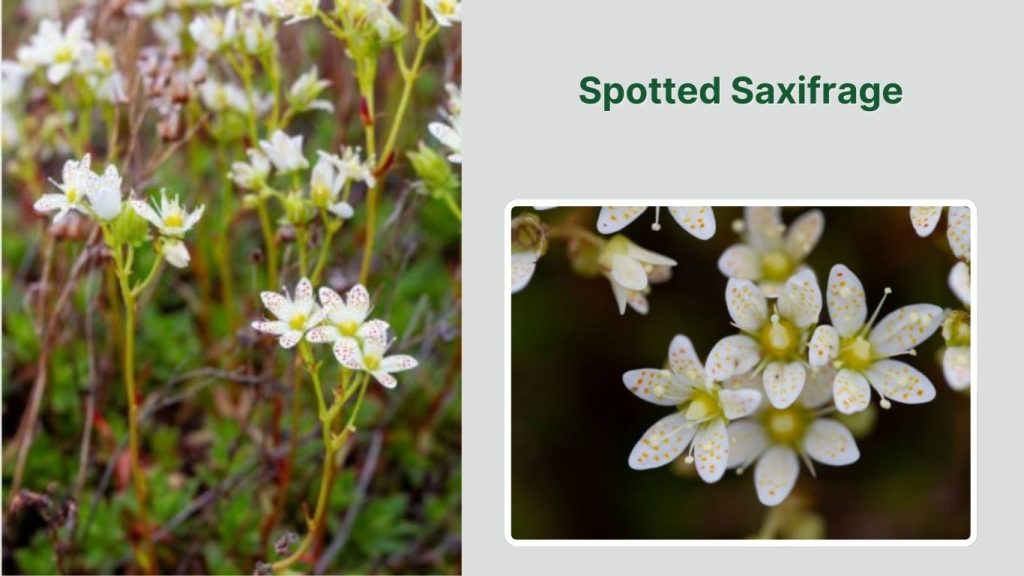
Spotted saxifrage is named for the distinctive red or purple dots that decorate its pale petals. It is a moisture-loving species that prefers cool, shaded environments, often near mountain streams and forested slopes. Its attractive foliage and uniquely patterned flowers make it a favorite among collectors of woodland and alpine plants.
Identification
- Basal rosettes of soft, oval green leaves
- Leaves often lightly toothed with visible veins
- Slender, upright flowering stems
- White to pale pink flowers with dark spots
- Loose clusters of blooms held above foliage
Habitat
This species is native to East Asia, especially Japan, Korea, and parts of China. It commonly grows in damp woodlands, shaded ravines, and along cool mountain streams where humidity is high.
Growth Habit
Spotted saxifrage grows as small clumps arising from a central rosette. It spreads slowly by short offsets and seed, forming modest colonies rather than dense mats.
Flowering and Uses
Flowering typically occurs in late spring to early summer. The spotted petals attract pollinators and add delicate detail to shaded plantings. In gardens, it is well suited to woodland borders, moist rock gardens, and shaded alpine collections.
12. Evergreen Saxifrage (Saxifraga sempervivum)
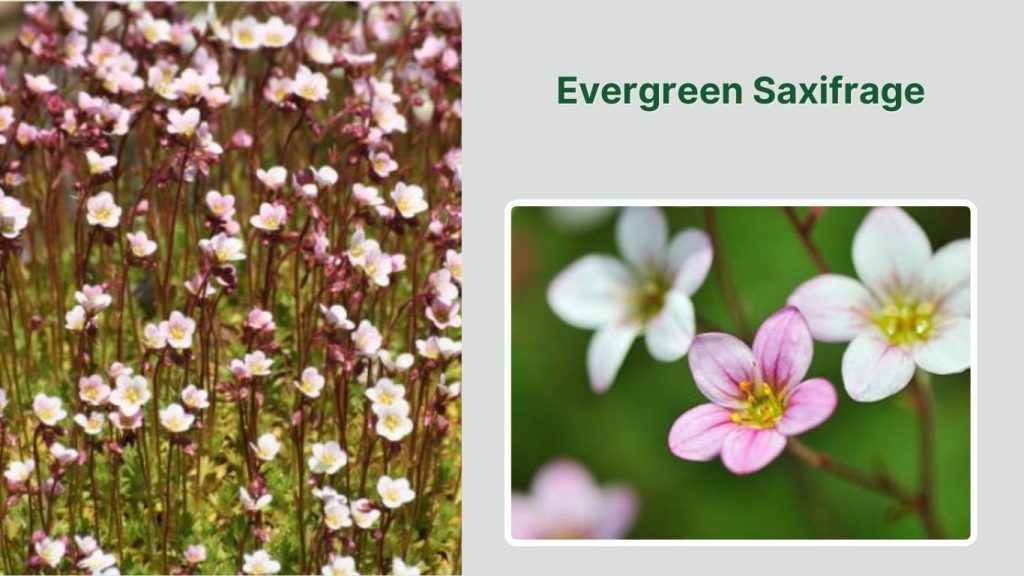
Evergreen saxifrage is a hardy mountain plant valued for its year-round foliage and tidy rosette form. Its thick, pointed leaves remain green through winter, giving it lasting ornamental appeal even outside the flowering season. In early summer, it sends up slender stems topped with small, pale flowers that contrast gently with the dense foliage.
Identification
- Tight rosettes of narrow, pointed evergreen leaves
- Leaves often leathery with slightly toothed edges
- Upright, thin flowering stalks
- Small white to pale pink flowers in loose clusters
- Compact, clump-forming growth
Habitat
This species is native to mountainous regions of Europe, where it grows on rocky slopes, cliffs, and alpine grasslands. It prefers well-drained, gritty soil and cool conditions, often thriving where snow cover protects it in winter.
Growth Habit
Evergreen saxifrage forms firm rosettes that slowly multiply into small clumps. Its evergreen leaves allow it to photosynthesize whenever conditions are mild, giving it a competitive advantage in short growing seasons.
Flowering and Uses
Blooming usually occurs in early to mid-summer. The subtle flowers rise above the foliage on airy stems. Gardeners grow evergreen saxifrage in rock gardens, alpine troughs, and sunny, well-drained borders for year-round texture.
FAQs
What is saxifrage best known for?
Saxifrage is best known for its ability to grow in rocky, harsh environments where many other plants cannot survive. Many species thrive in alpine and Arctic regions, forming low mats or rosettes that cling to stones, cliffs, and gravelly soil while producing delicate but resilient flowers.
Is saxifrage a perennial plant?
Most saxifrage species are perennial plants, meaning they live for more than two years and return each growing season. Depending on the species, they may stay evergreen or die back slightly in winter, then regrow leaves and flowers in spring.
Where does saxifrage naturally grow?
Saxifrage naturally grows across Europe, Asia, and North America, especially in mountains, Arctic tundra, rocky slopes, moist cliffs, and woodland ravines. Different species are adapted to different conditions, ranging from dry limestone rocks to cool, wet stream edges.
Is saxifrage easy to grow in gardens?
Many saxifrages are easy to grow if their natural conditions are copied. Most prefer well-drained soil, cool temperatures, and protection from extreme heat. Some woodland types like strawberry saxifrage enjoy shade and moisture, while alpine species need sun and excellent drainage.
When does saxifrage usually flower?
Flowering time varies by species, but most saxifrages bloom from early spring to early summer. Some Arctic and alpine types flower immediately after snowmelt, while woodland species tend to bloom later in spring when temperatures become milder.