





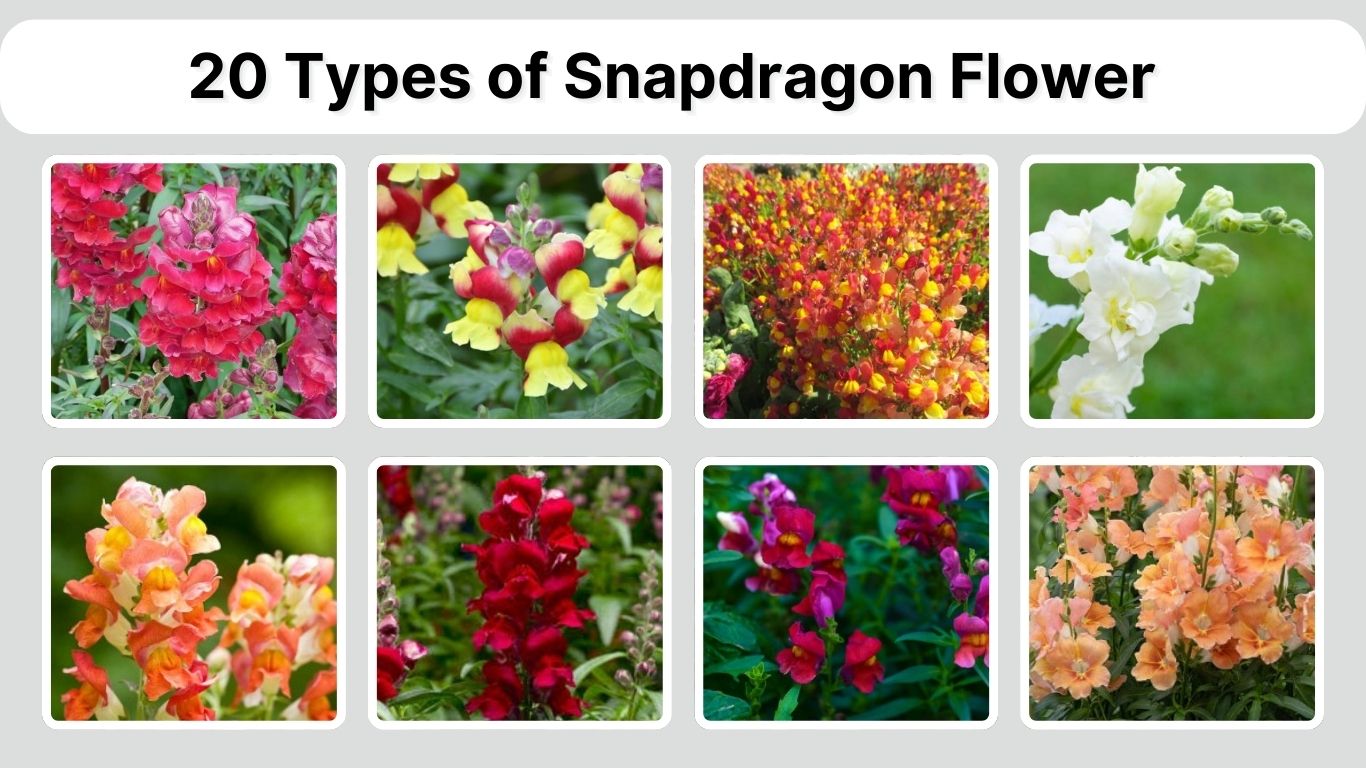
Snapdragon flowers are popular ornamental plants admired for their bright colors, upright spikes, and unique blooms that resemble a dragon’s face. They are widely grown in home gardens, borders, containers, and cutting beds because they bloom for long periods and perform well in cool seasons. From compact dwarf varieties to tall cut-flower types, snapdragons offer many choices for different garden styles. Their cheerful appearance and pollinator-friendly nature make them a favorite among gardeners worldwide.
1. Common Snapdragon (Antirrhinum majus)
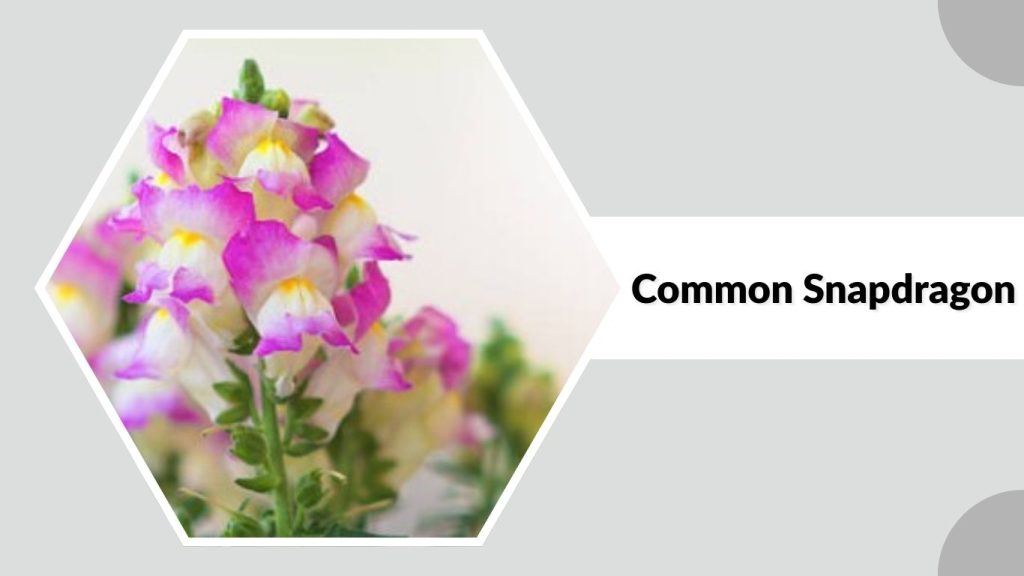
The Common Snapdragon is the most widely grown snapdragon variety, famous for its colorful, upright flower spikes and unique “dragon-mouth” blooms that gently open when squeezed. It is a classic garden and cut-flower plant, valued for long blooming seasons, bright mixed colors, and its ability to attract bees and butterflies.
Identification
- Scientific name: Antirrhinum majus
- Plant type: Annual or short-lived perennial
- Flower shape: Tubular, dragon-mouth form
- Common colors: Red, pink, yellow, white, purple, bi-color
- Average height: 6 inches to 3 feet (varies by cultivar)
Flower Characteristics
Common Snapdragons produce dense spikes filled with many small, soft-textured blooms. The flowers grow closely along the stem, creating a bold vertical display. Many varieties have lightly ruffled petals, contrasting throats, or gentle fragrance, making them popular for ornamental beds and floral arrangements.
Growth Habit
This snapdragon grows upright with narrow green leaves and strong central stems. Dwarf forms stay compact for borders and containers, while tall forms are ideal for the back of flower beds. Plants branch easily, giving them a full, bushy look when grown in good light.
Habitat
Common Snapdragons prefer full sun to partial shade and thrive in well-drained, moderately fertile soil. They grow best in cool to mild temperatures and often bloom more heavily in spring and autumn, especially in warm climates.
Uses in Gardens
Gardeners use Common Snapdragons in borders, cottage gardens, containers, and cutting gardens. Their long stems make them excellent cut flowers, and their bright colors help create strong visual contrast in mixed flower beds.
2. Rocket Snapdragon
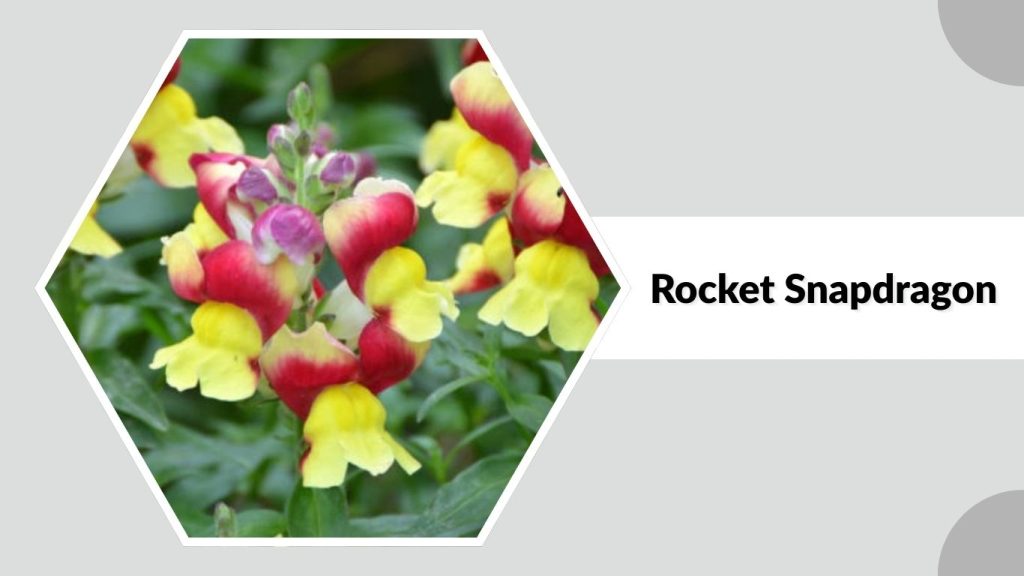
Rocket Snapdragons are tall, vigorous snapdragon varieties known for their strong central spikes and large, well-formed blooms. They are especially popular as cut flowers because of their straight stems, long vase life, and impressive vertical presence in gardens and floral displays.
Identification
- Scientific name: Antirrhinum majus ‘Rocket’ group
- Plant type: Annual
- Flower form: Large, tubular snapdragon blooms
- Common colors: White, yellow, pink, rose, red, burgundy
- Average height: 24 to 36 inches
Flower Characteristics
Rocket Snapdragons produce thick, upright flower spikes densely packed with blossoms. The flowers are larger than many standard garden snapdragons and open gradually from bottom to top, extending the blooming period. Many cultivars show rich, solid colors with soft or lightly contrasting throats.
Growth Habit
These snapdragons grow tall and straight with minimal branching, forming strong central stems ideal for cutting. Their narrow green leaves line the stem neatly, giving the plant a clean, structured look in garden beds and rows.
Habitat
Rocket Snapdragons grow best in full sun with well-drained soil and consistent moisture. They prefer cooler growing conditions and perform exceptionally well in spring and fall, though they can also be grown as early summer flowers in mild climates.
Uses in Gardens
Because of their height and uniform growth, Rocket Snapdragons are widely used in cutting gardens and commercial flower production. In home gardens, they work well at the back of borders, along fences, or as vertical accents among lower-growing flowers.
3. Sonnet Snapdragon
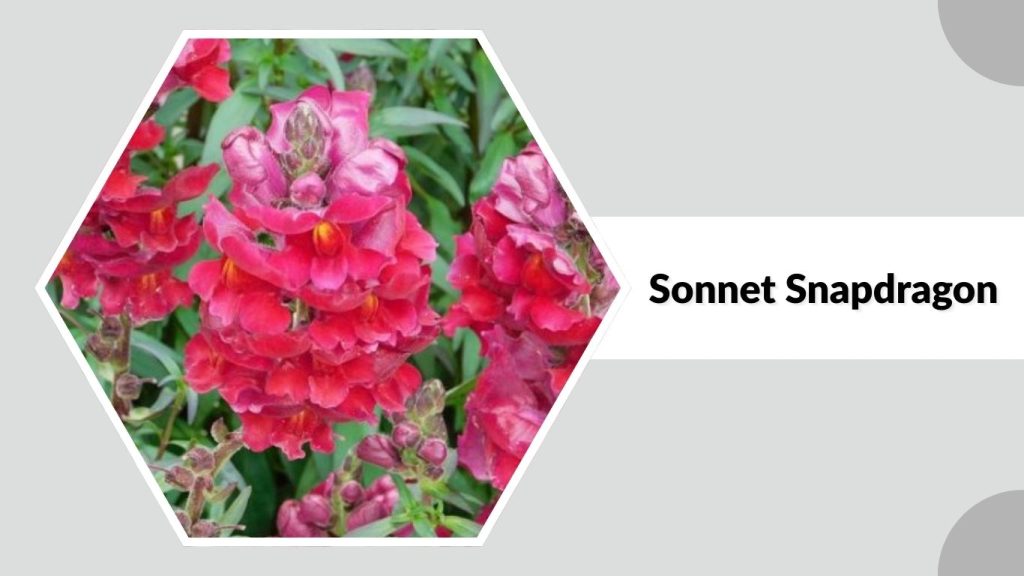
Sonnet Snapdragons are medium-tall varieties valued for their early flowering, strong stems, and excellent garden performance. They are widely used in landscapes and floral production because they bloom reliably, hold up well in mild heat, and produce long, colorful flower spikes.
Identification
- Scientific name: Antirrhinum majus ‘Sonnet’ series
- Plant type: Annual
- Flower type: Tubular snapdragon blooms on upright spikes
- Common colors: White, yellow, rose, coral, lavender, purple, bicolor
- Average height: 18 to 24 inches
Flower Characteristics
Sonnet Snapdragons form full, well-packed spikes of medium to large flowers. The blooms open evenly along the stem and maintain bright color for long periods. Many varieties have smooth petals with soft shading or contrasting throats, giving the spikes a refined, decorative look.
Growth Habit
These plants grow upright with sturdy, well-branched stems that resist flopping. Their balanced height makes them suitable for both garden beds and container arrangements. When spaced properly, Sonnet snapdragons create neat, uniform rows of flowering spikes.
Habitat
Sonnet Snapdragons prefer full sun and loose, well-drained soil. They thrive in cool to moderate temperatures and are often grown for early spring or fall flowering. Regular watering and light feeding support continuous bloom.
Uses in Gardens
In gardens, Sonnet Snapdragons work well in mixed borders, cottage gardens, and cutting plots. Their medium height allows them to blend easily with other ornamentals while still providing strong vertical color and structure.
4. Liberty Snapdragon
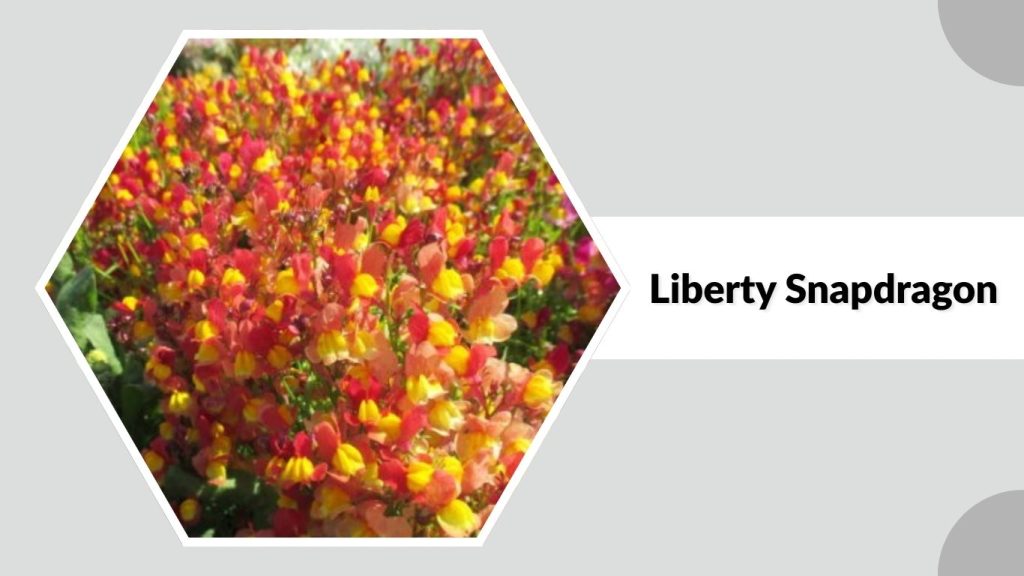
Liberty Snapdragons are tall, vigorous snapdragon varieties developed for strong garden performance and uniform flowering. They are especially known for producing long, elegant flower spikes with clear, bright colors and sturdy stems suitable for both landscape use and cutting.
Identification
- Scientific name: Antirrhinum majus ‘Liberty’ series
- Plant type: Annual
- Flower form: Large snapdragon blooms on tall spikes
- Common colors: White, yellow, pink, rose, red, lavender, bicolor
- Average height: 20 to 30 inches
Flower Characteristics
Liberty Snapdragons produce well-filled spikes covered with medium to large blooms. The flowers open steadily from the base upward, creating a long-lasting display. Their petals are smooth and slightly rounded, often showing soft color gradients or contrasting centers.
Growth Habit
These snapdragons grow upright with strong central stems and light branching near the base. The plants form neat, vertical clumps that hold their shape well in garden beds and are less prone to bending in wind compared to softer varieties.
Habitat
Liberty Snapdragons perform best in full sun and fertile, well-drained soil. They prefer cooler growing conditions and are commonly planted for spring and autumn bloom. Consistent moisture and good air circulation help maintain healthy growth.
Uses in Gardens
Gardeners use Liberty Snapdragons at the back of borders, in cutting gardens, and in mass plantings for vertical color impact. Their long stems and uniform growth also make them a popular choice for floral arrangements.
5. Madame Butterfly Snapdragon
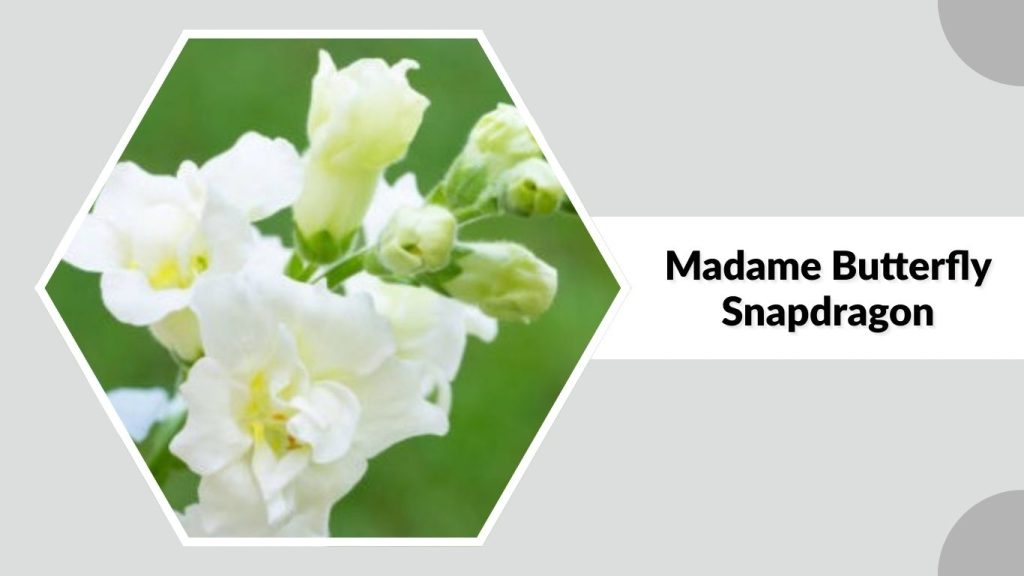
Madame Butterfly Snapdragons are distinctive snapdragon varieties known for their open, azalea-like flowers rather than the typical closed “dragon mouth” shape. They are prized for their ruffled appearance, soft elegance, and suitability for both ornamental beds and cut-flower arrangements.
Identification
- Scientific name: Antirrhinum majus ‘Madame Butterfly’ series
- Plant type: Annual
- Flower form: Open-faced, butterfly-like blooms
- Common colors: Pink, rose, yellow, white, apricot, bicolor
- Average height: 24 to 30 inches
Flower Characteristics
Unlike classic snapdragons, Madame Butterfly types produce wide, flared petals that resemble small orchids or azaleas. The blooms are lightly ruffled, giving the flower spikes a soft, airy look. Multiple blossoms open along each stem, creating graceful, pastel-toned displays.
Growth Habit
These snapdragons grow upright with strong, slender stems and moderate branching. The plants form loose but elegant clumps, allowing the open flowers to stand out clearly without crowding. They perform well in both garden beds and large containers.
Habitat
Madame Butterfly Snapdragons grow best in full sun to light partial shade with rich, well-drained soil. They prefer cooler temperatures and bloom most heavily in spring and fall, though they can continue flowering into early summer in mild regions.
Uses in Gardens
Because of their unusual flower shape, Madame Butterfly Snapdragons are often used as focal plants in borders and cottage gardens. Their long stems and open blooms also make them excellent for bouquets and decorative floral work.
6. Twinny Snapdragon
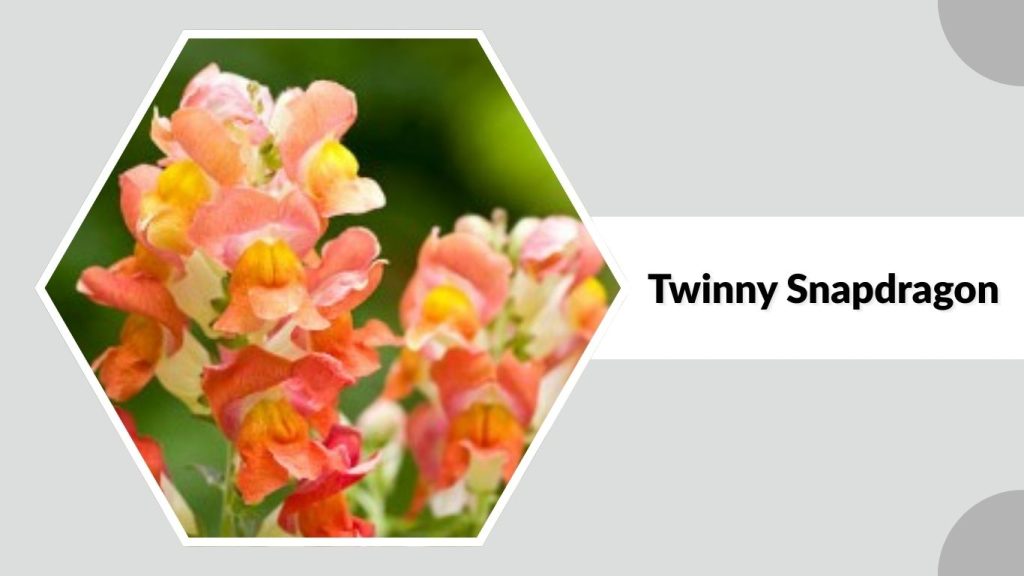
Twinny Snapdragons are compact, double-flowered snapdragon varieties admired for their dense, rose-like blooms and long flowering season. They are especially popular for containers and small garden spaces because of their tidy growth and heavy flower production.
Identification
- Scientific name: Antirrhinum majus ‘Twinny’ series
- Plant type: Annual
- Flower form: Double, layered snapdragon blooms
- Common colors: Rose, pink, yellow, peach, purple, bicolor
- Average height: 8 to 12 inches
Flower Characteristics
Twinny Snapdragons produce thick, double blossoms that look fuller than traditional snapdragon flowers. The petals overlap tightly, giving each bloom a soft, ruffled appearance. Flowers are borne in clusters, creating a continuous display of bright color over a long period.
Growth Habit
These snapdragons grow low and bushy, with multiple short stems rising from the base. Their compact size makes them ideal for edging, window boxes, and patio containers. Plants branch freely, resulting in a rounded, flower-covered form.
Habitat
Twinny Snapdragons thrive in full sun to light partial shade and well-drained, fertile soil. They prefer mild temperatures and bloom best in spring and autumn. Regular watering and removal of faded flowers help extend their blooming season.
Uses in Gardens
Gardeners use Twinny Snapdragons in pots, hanging baskets, and front-of-border plantings. Their double flowers add texture and softness to mixed displays and pair well with other compact annuals.
7. Montego Snapdragon
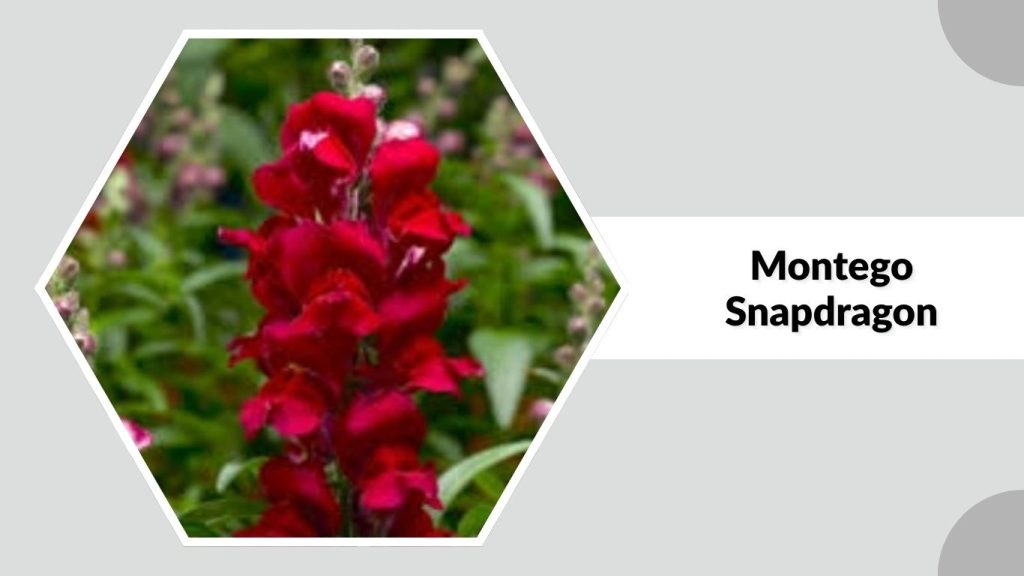
Montego Snapdragons are dwarf snapdragon varieties developed for early flowering, compact size, and excellent performance in bedding displays. They are widely used in landscape plantings because they bloom quickly, stay low, and provide intense, uniform color.
Identification
- Scientific name: Antirrhinum majus ‘Montego’ series
- Plant type: Annual
- Flower form: Classic snapdragon blooms on short spikes
- Common colors: White, yellow, orange, pink, red, purple, bicolor
- Average height: 6 to 8 inches
Flower Characteristics
Montego Snapdragons produce bright, medium-sized flowers closely packed along short, upright spikes. The blooms open evenly, creating dense mounds of color. Many varieties display clear, vibrant shades that stand out strongly in mass plantings.
Growth Habit
These snapdragons grow very compact and bushy, forming neat, rounded plants. Their low height and uniform spread make them excellent for edging paths, filling flower beds, and creating colorful patterns in landscape designs.
Habitat
Montego Snapdragons grow best in full sun with well-drained soil. They prefer cooler conditions and often bloom heavily in early spring and fall. They are tolerant of light frost, making them suitable for early-season garden color.
Uses in Gardens
Gardeners commonly plant Montego Snapdragons in borders, flower carpets, containers, and public landscapes. Their compact habit and fast bloom make them ideal for bright, low-growing displays.
8. Snapshot Snapdragon
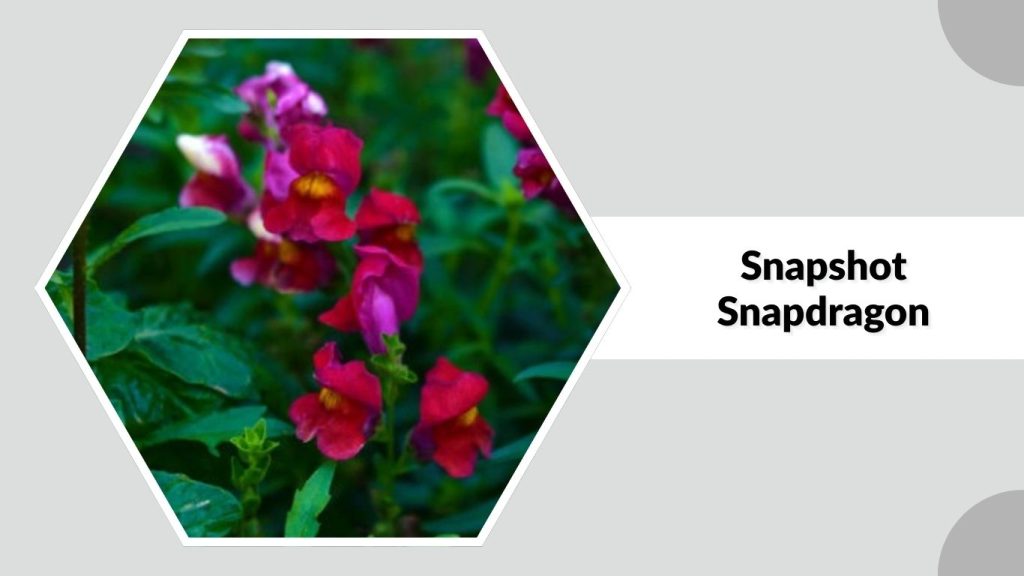
Snapshot Snapdragons are compact, free-flowering varieties valued for their neat growth, early blooming habit, and continuous color. They are especially popular for pots, window boxes, and small garden beds where uniform, low plants are needed.
Identification
- Scientific name: Antirrhinum majus ‘Snapshot’ series
- Plant type: Annual
- Flower form: Classic snapdragon blooms on short spikes
- Common colors: Yellow, rose, red, pink, white, orange, bicolor
- Average height: 6 to 10 inches
Flower Characteristics
Snapshot Snapdragons produce bright, medium-sized flowers that form tidy spikes above compact foliage. The blooms open in succession, keeping plants colorful for long periods. Their petals are smooth and softly rounded, often showing clear, cheerful shades.
Growth Habit
These snapdragons grow low and bushy with strong branching from the base. Plants maintain a rounded shape without becoming leggy, making them ideal for dense plantings and decorative containers.
Habitat
Snapshot Snapdragons perform best in full sun to light partial shade and well-drained soil. They prefer cool to moderate temperatures and often flower earlier than many taller snapdragon types. Regular moisture supports continuous bloom.
Uses in Gardens
Gardeners use Snapshot Snapdragons in pots, hanging baskets, borders, and mass bedding. Their compact size and long flowering period make them excellent for adding steady color to small spaces.
9. Floral Showers Snapdragon
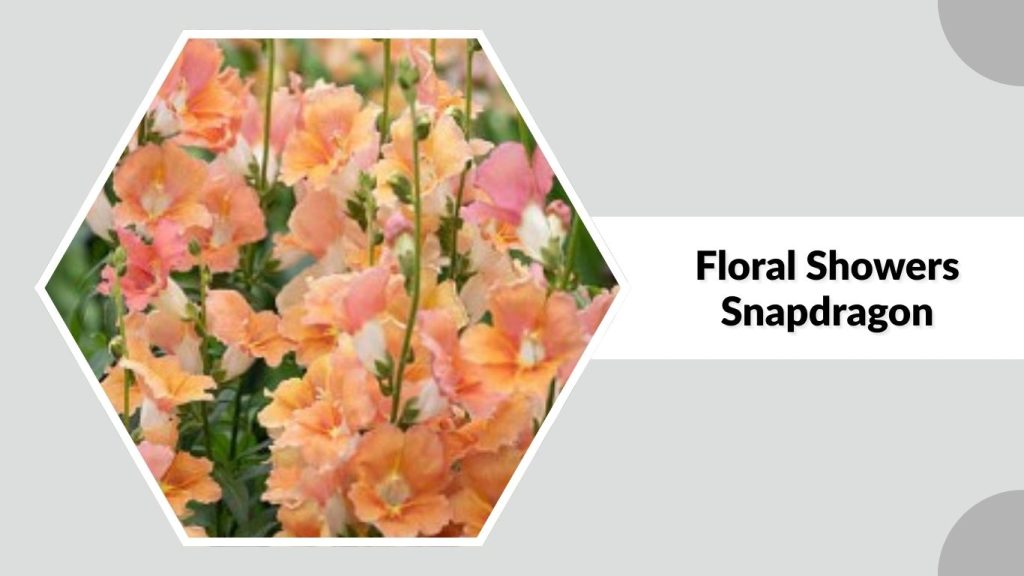
Floral Showers Snapdragons are dwarf, spreading varieties bred for heavy branching, early flowering, and excellent container performance. They are known for producing abundant blooms over a long season, often cascading gently over the edges of pots and baskets.
Identification
- Scientific name: Antirrhinum majus ‘Floral Showers’ series
- Plant type: Annual
- Flower form: Small to medium snapdragon blooms
- Common colors: Yellow, rose, pink, white, red, orange, bicolor
- Average height: 6 to 10 inches
Flower Characteristics
Floral Showers Snapdragons produce numerous small blooms that appear in clusters rather than tall spikes. The flowers are bright and cheerful, covering much of the plant’s surface and creating a soft, overflowing look.
Growth Habit
These snapdragons grow low, wide, and well-branched, forming mounded to slightly trailing plants. Their natural spreading habit makes them especially attractive in containers, where the flowers can spill gently over the sides.
Habitat
Floral Showers Snapdragons thrive in full sun to partial shade and well-drained, fertile soil. They perform best in cool to mild weather and continue flowering steadily with regular watering and light feeding.
Uses in Gardens
Gardeners commonly plant Floral Showers Snapdragons in hanging baskets, window boxes, mixed containers, and the front of flower beds. Their spreading form makes them ideal for softening edges and filling gaps with color.
10. Chantilly Snapdragon
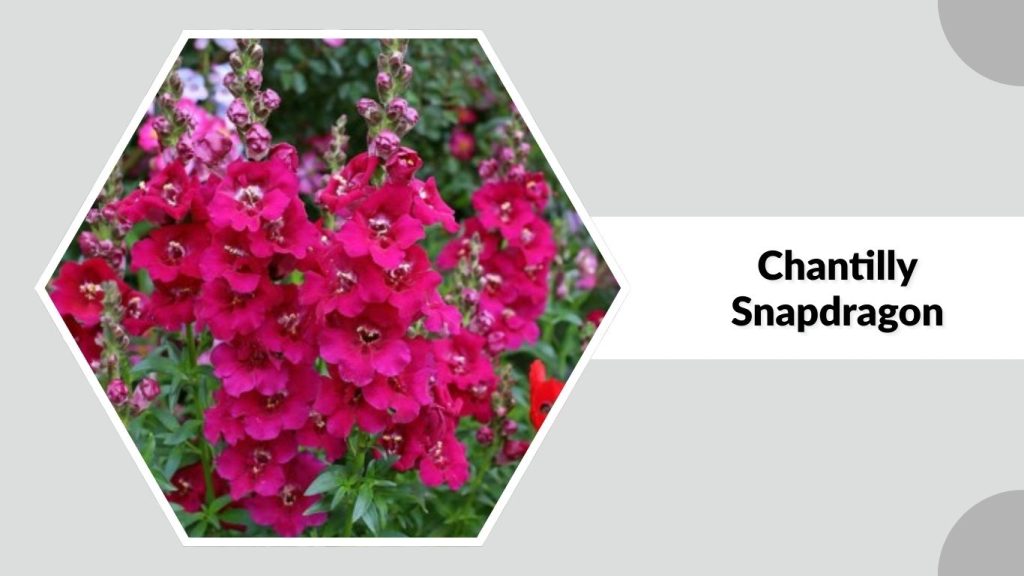
Chantilly Snapdragons are elegant snapdragon varieties known for their open-faced, azalea-like blooms and light, airy flower spikes. Unlike traditional snapdragons, their flowers stay open, giving them a delicate, orchid-style appearance that works beautifully in gardens and floral designs.
Identification
- Scientific name: Antirrhinum majus ‘Chantilly’ series
- Plant type: Annual
- Flower form: Open, butterfly-like snapdragon blooms
- Common colors: White, ivory, peach, pink, rose, lavender, bicolor
- Average height: 30 to 40 inches
Flower Characteristics
Chantilly Snapdragons produce long, slender spikes lined with open, flared blooms. The flowers are lightly fragrant in some varieties and appear softer and more graceful than classic snapdragon types. Their pastel shades and open throats create an elegant, floating effect.
Growth Habit
These snapdragons grow tall and upright with thin but strong stems. Plants branch lightly, producing multiple flowering spikes that sway gently in the breeze, adding movement and height to garden displays.
Habitat
Chantilly Snapdragons grow best in full sun with well-drained soil and consistent moisture. They prefer cooler growing conditions and often bloom most heavily in spring and fall, continuing into early summer in mild climates.
Uses in Gardens
Because of their height and unique flower shape, Chantilly Snapdragons are popular in cutting gardens and cottage-style borders. Their long stems and open blooms make them excellent for elegant bouquets and floral arrangements.
11. Black Prince Snapdragon
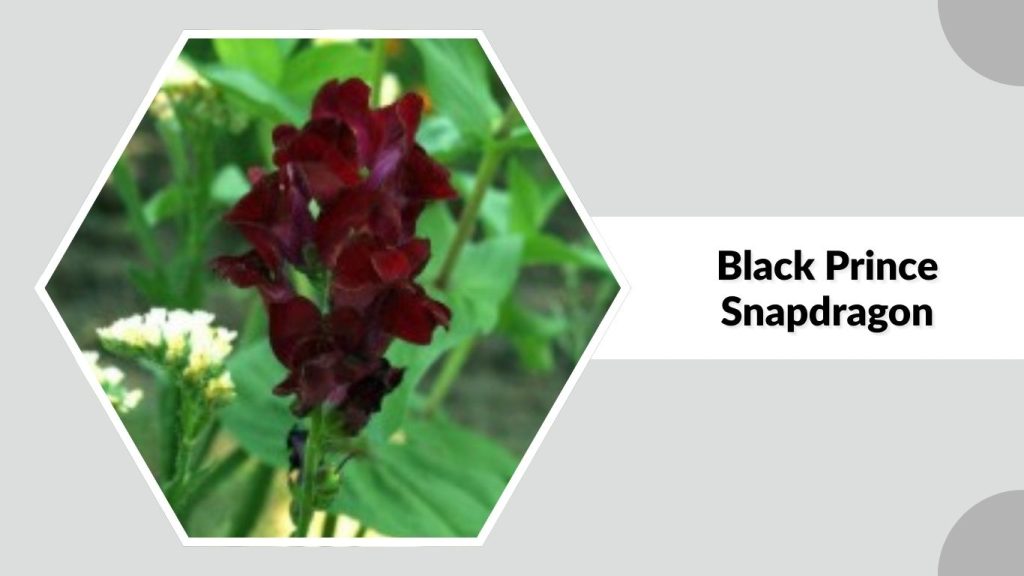
Black Prince Snapdragon is a striking snapdragon variety grown for its deep burgundy foliage and rich, dark-colored blooms. It is valued not only for its flowers but also for its dramatic leaves, which provide strong contrast in gardens and containers.
Identification
- Scientific name: Antirrhinum majus ‘Black Prince’
- Plant type: Annual
- Flower form: Classic snapdragon blooms
- Common colors: Deep crimson, dark red, burgundy
- Average height: 10 to 18 inches
Flower Characteristics
Black Prince Snapdragons produce velvety, dark red flowers that stand out vividly against their almost black stems and leaves. The blooms are medium-sized and appear along upright spikes, creating a bold, jewel-toned effect throughout the plant.
Growth Habit
This variety grows compact and bushy with strong, dark purple to nearly black foliage. Multiple flowering stems rise from the base, giving the plant a full, dramatic look even when not in peak bloom.
Habitat
Black Prince Snapdragons grow best in full sun to light partial shade and well-drained soil. They prefer cool to moderate temperatures and perform especially well in spring and fall gardens.
Uses in Gardens
Gardeners often use Black Prince Snapdragons in borders, containers, and mixed beds for foliage contrast. They pair well with lighter-colored flowers, silver-leaved plants, and pastel snapdragons for dramatic visual combinations.
12. Tahiti Snapdragon
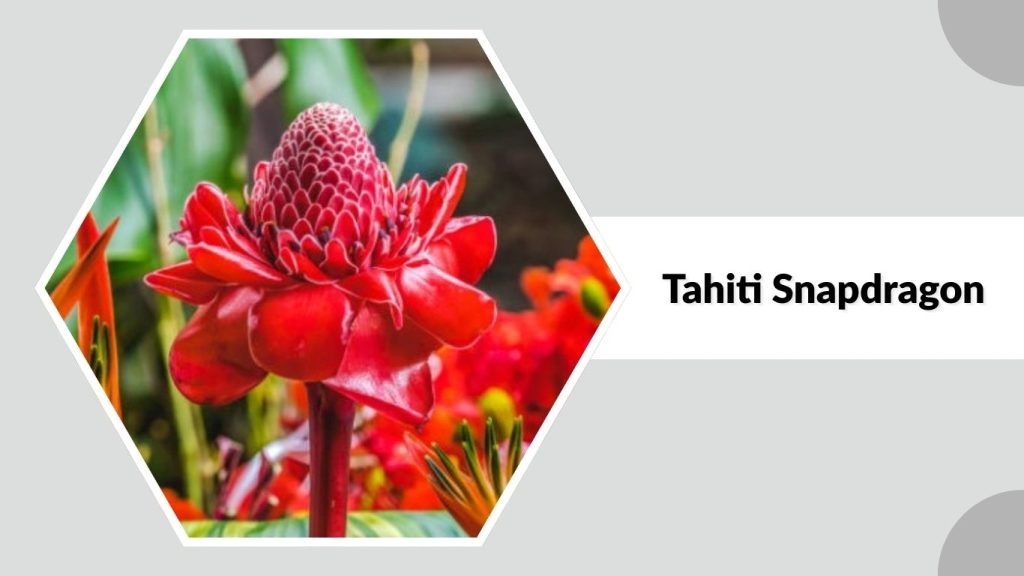
Tahiti Snapdragons are double-flowered snapdragon varieties known for their lush, ruffled blooms and tropical-style color blends. They are prized for their soft, full appearance and are often chosen for decorative beds and container gardens.
Identification
- Scientific name: Antirrhinum majus ‘Tahiti’ series
- Plant type: Annual
- Flower form: Double, layered snapdragon blooms
- Common colors: Yellow, rose, pink, peach, lavender, bicolor
- Average height: 10 to 14 inches
Flower Characteristics
Tahiti Snapdragons produce thick, petal-packed flowers that resemble small roses or camellias. The blooms appear in clusters, creating dense heads of color. Many varieties show warm, blended tones that give the flowers a soft, tropical feel.
Growth Habit
These snapdragons grow compact and well-branched, forming neat, rounded plants. Their sturdy short stems support the heavy double blooms, making them suitable for both garden beds and decorative containers.
Habitat
Tahiti Snapdragons perform best in full sun to partial shade and rich, well-drained soil. They prefer mild temperatures and bloom heavily in spring and autumn, with continued flowering under cool, favorable conditions.
Uses in Gardens
Gardeners commonly plant Tahiti Snapdragons in pots, borders, and patio displays. Their double blooms add texture and fullness, making them excellent accent plants in mixed floral arrangements.
13. Night and Day Snapdragon
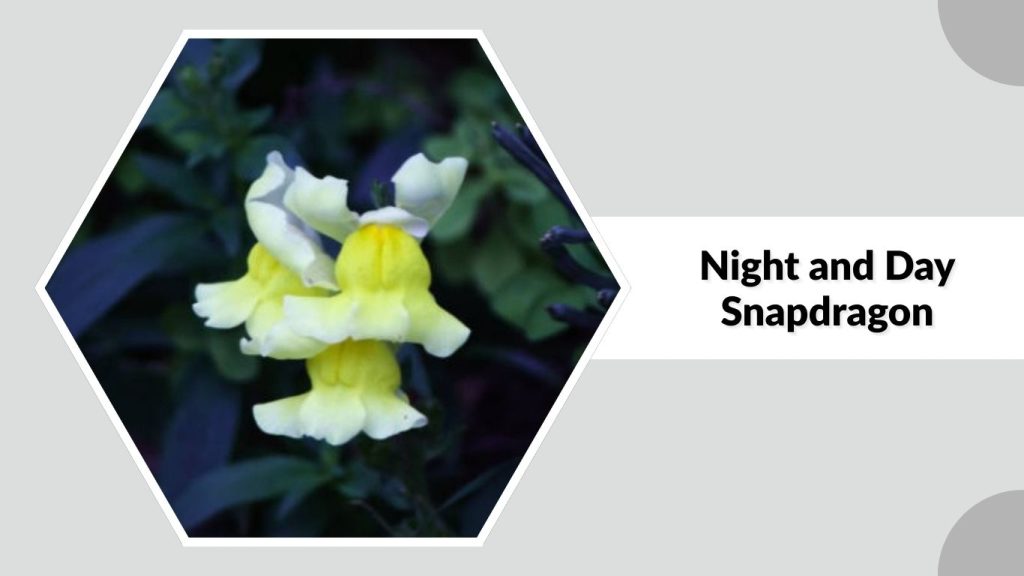
Night and Day Snapdragon is a bold snapdragon variety known for its dramatic color contrast, typically combining bright white blooms with deep burgundy or dark red throats and foliage. It is grown mainly for ornamental impact in gardens and containers.
Identification
- Scientific name: Antirrhinum majus ‘Night and Day’
- Plant type: Annual
- Flower form: Classic snapdragon blooms
- Common colors: White petals with dark red or maroon centers
- Average height: 12 to 18 inches
Flower Characteristics
Night and Day Snapdragons produce medium-sized flowers with striking two-tone coloration. The bright outer petals highlight the dark throat, creating a strong visual contrast. The blooms are arranged along upright spikes, standing out clearly even from a distance.
Growth Habit
This variety grows compact to medium in height, with multiple upright stems and slightly dark-tinged foliage. Plants branch well, forming full clumps that stay attractive throughout the blooming season.
Habitat
Night and Day Snapdragons grow best in full sun to light partial shade and well-drained soil. They thrive in cooler weather and often flower most heavily in spring and fall, with continued blooming in mild summer climates.
Uses in Gardens
Gardeners use Night and Day Snapdragons in borders, containers, and mixed beds to create contrast. They pair especially well with pale or pastel flowers and silver foliage plants for eye-catching displays.
14. Costa Snapdragon
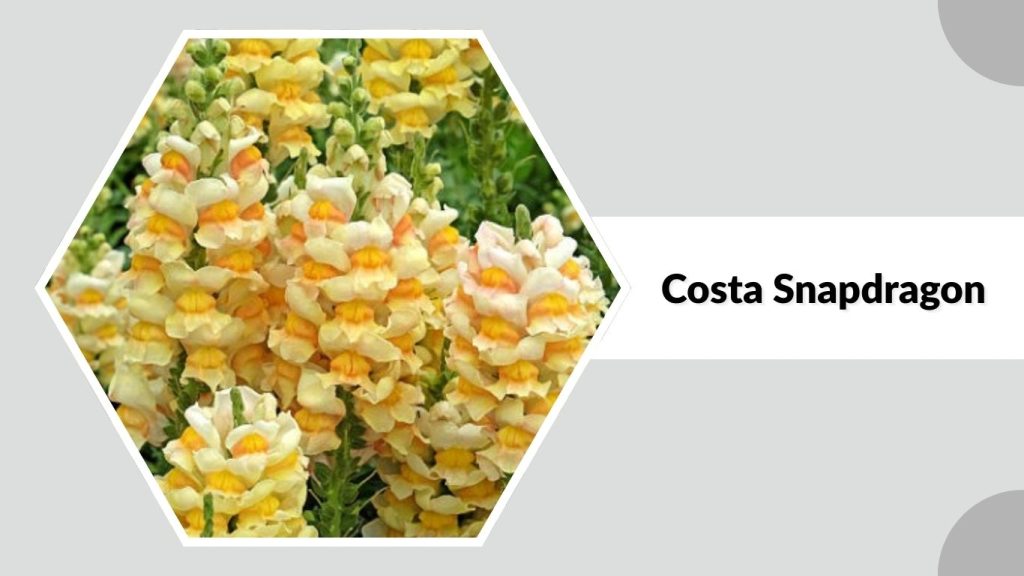
Costa Snapdragons are tall, early-flowering snapdragon varieties bred for strong stems, uniform growth, and excellent cut-flower quality. They are widely used in commercial flower production and cutting gardens because of their straight spikes and long-lasting blooms.
Identification
- Scientific name: Antirrhinum majus ‘Costa’ series
- Plant type: Annual
- Flower form: Large snapdragon blooms on tall spikes
- Common colors: White, yellow, pink, rose, red, lavender, bicolor
- Average height: 24 to 36 inches
Flower Characteristics
Costa Snapdragons produce long, dense spikes packed with large, well-formed blooms. The flowers open gradually from the base upward, providing an extended display. Colors are typically rich and clear, making the spikes very attractive in floral arrangements.
Growth Habit
These snapdragons grow tall and upright with strong central stems and minimal branching. Their uniform habit and sturdy structure make them less likely to bend, even when carrying heavy flower spikes.
Habitat
Costa Snapdragons thrive in full sun and fertile, well-drained soil. They prefer cool growing conditions and are often planted for early spring or fall flowering. Consistent moisture supports healthy stem and bloom development.
Uses in Gardens
Gardeners grow Costa Snapdragons mainly in cutting gardens and at the back of borders. Their long stems, straight growth, and elegant blooms make them ideal for bouquets and decorative garden displays.
15. Bright Butterflies Snapdragon
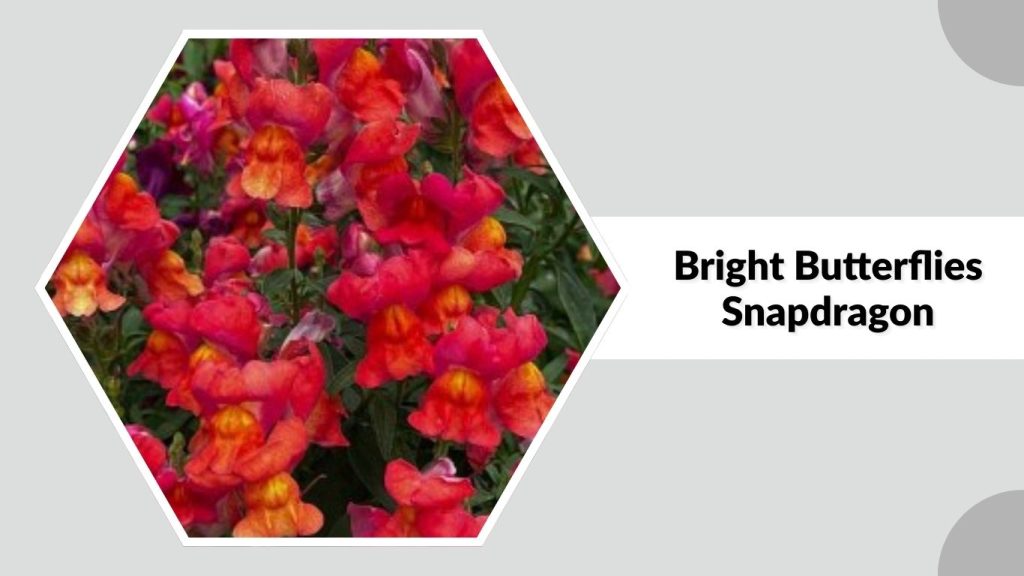
Bright Butterflies Snapdragons are unique snapdragon varieties featuring open, butterfly-like flowers instead of the traditional closed “dragon mouth” shape. They are admired for their airy appearance, vivid colors, and graceful flower spikes.
Identification
- Scientific name: Antirrhinum majus ‘Bright Butterflies’
- Plant type: Annual
- Flower form: Open, flared, butterfly-like blooms
- Common colors: Yellow, orange, rose, pink, white, bicolor
- Average height: 18 to 24 inches
Flower Characteristics
Bright Butterflies Snapdragons produce open-faced blooms with widely spread petals, giving each flower a light, fluttering look. The blossoms line upright spikes and appear more delicate than classic snapdragons, while still offering strong color impact.
Growth Habit
These snapdragons grow upright with moderately strong stems and light branching. Plants form loose, elegant clumps that allow the open flowers to stand out clearly and catch movement from light breezes.
Habitat
Bright Butterflies Snapdragons grow best in full sun with well-drained soil. They prefer cool to mild temperatures and flower heavily in spring and fall, with continued blooming possible in gentle summer climates.
Uses in Gardens
Gardeners use Bright Butterflies Snapdragons in borders, cottage gardens, and mixed beds for soft texture. Their open flowers and long stems also make them suitable for informal floral arrangements.
16. Solstice Snapdragon
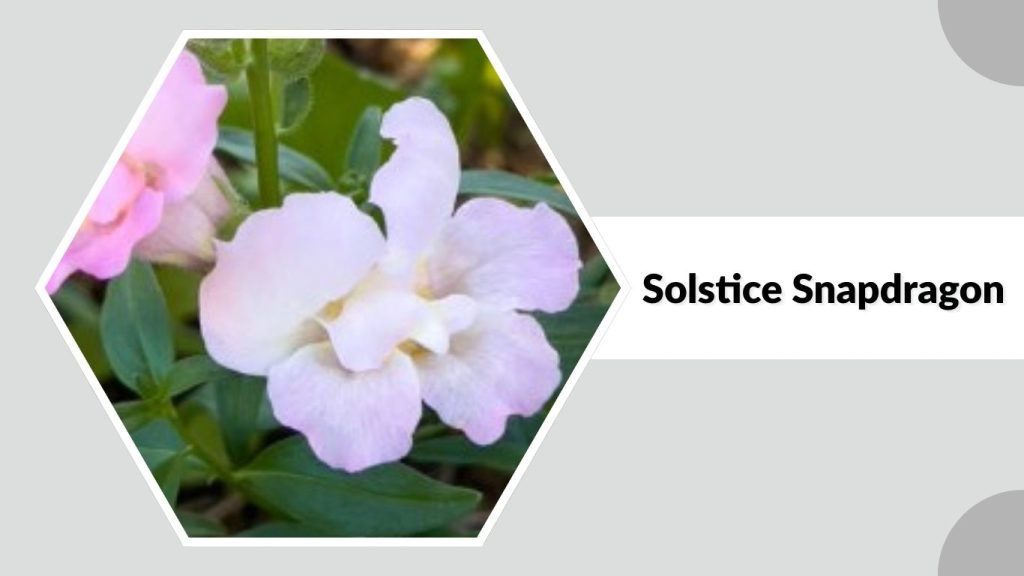
Solstice Snapdragons are tall, vigorous snapdragon varieties developed for strong performance in both gardens and cut-flower production. They are known for their long, elegant spikes, clear colors, and reliable blooming in cool-season conditions.
Identification
- Scientific name: Antirrhinum majus ‘Solstice’ series
- Plant type: Annual
- Flower form: Large snapdragon blooms on tall spikes
- Common colors: White, yellow, pink, rose, red, lavender, bicolor
- Average height: 24 to 36 inches
Flower Characteristics
Solstice Snapdragons produce long, dense flower spikes filled with medium to large blooms. The flowers open in sequence from the base upward, ensuring an extended flowering period. Their petals are smooth and well-shaped, giving the spikes a refined, professional look.
Growth Habit
These snapdragons grow tall and upright with strong central stems and light branching. The plants maintain a neat, vertical form, making them suitable for structured garden designs and cutting rows.
Habitat
Solstice Snapdragons thrive in full sun and fertile, well-drained soil. They prefer cool to moderate temperatures and are commonly grown for spring and fall flowering. Steady watering supports strong stem growth.
Uses in Gardens
Gardeners plant Solstice Snapdragons at the back of borders and in cutting gardens. Their long stems, uniform height, and long-lasting blooms make them excellent for bouquets and floral displays.
17. Aroma Snapdragon
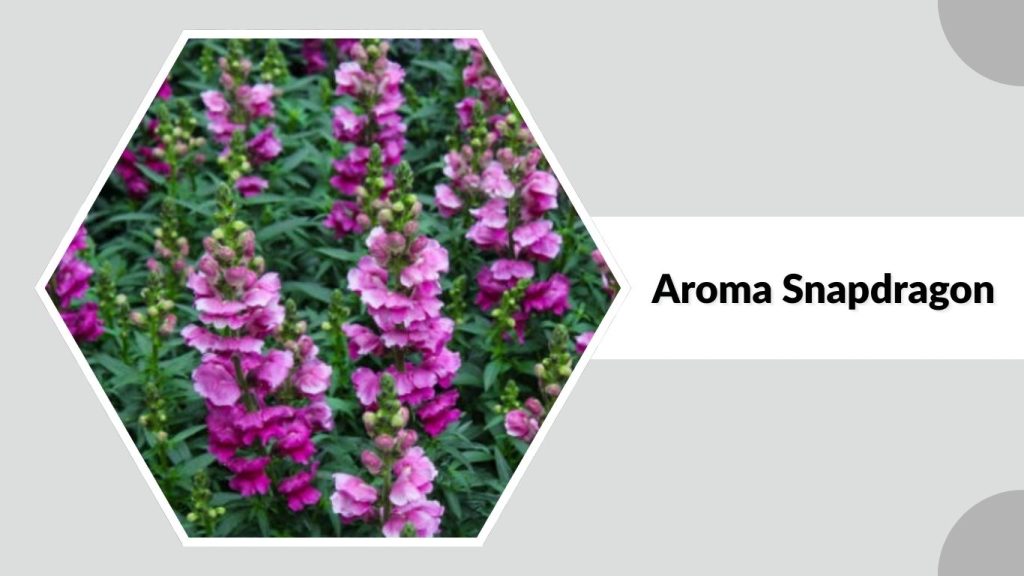
Aroma Snapdragons are specially bred snapdragon varieties known for their noticeable sweet fragrance combined with colorful, classic snapdragon blooms. They are grown for sensory appeal as well as visual beauty, making them popular in home gardens and patio plantings.
Identification
- Scientific name: Antirrhinum majus ‘Aroma’ series
- Plant type: Annual
- Flower form: Classic snapdragon blooms
- Common colors: Yellow, pink, rose, white, lavender, bicolor
- Average height: 12 to 18 inches
Flower Characteristics
Aroma Snapdragons produce medium-sized flowers arranged along upright spikes. Their most distinctive feature is their pleasant scent, which becomes stronger in warm daylight. The blooms display soft, clear colors and maintain their form well throughout the flowering period.
Growth Habit
These snapdragons grow compact to medium in height, with well-branched stems that create full, tidy plants. Their balanced size makes them suitable for both ground planting and container arrangements.
Habitat
Aroma Snapdragons grow best in full sun to light partial shade with well-drained, fertile soil. They prefer cooler growing conditions but tolerate mild warmth when adequately watered.
Uses in Gardens
Gardeners plant Aroma Snapdragons near walkways, windows, and seating areas where their fragrance can be enjoyed. They also work well in mixed borders, containers, and small cutting gardens.
18. Pretty in Pink Snapdragon
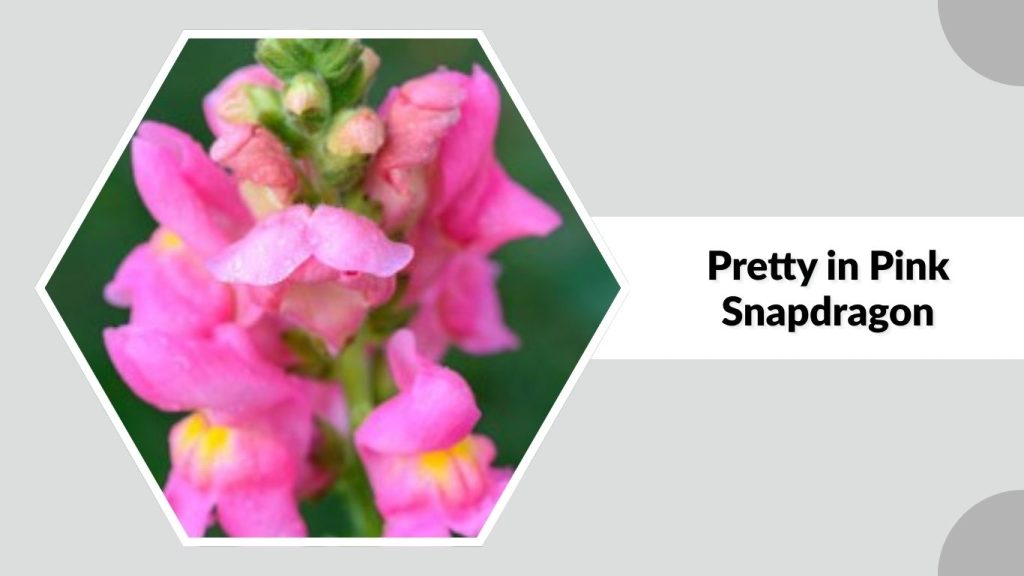
Pretty in Pink Snapdragon is a charming snapdragon variety grown for its soft pink blooms and gentle, romantic appearance. It is often used in ornamental beds and containers where pastel tones and delicate color themes are desired.
Identification
- Scientific name: Antirrhinum majus ‘Pretty in Pink’
- Plant type: Annual
- Flower form: Classic snapdragon blooms
- Common colors: Light pink, blush pink, soft rose
- Average height: 12 to 20 inches
Flower Characteristics
Pretty in Pink Snapdragons produce medium-sized flowers with smooth, softly curved petals. The blooms line upright spikes and display consistent pastel shades, sometimes with slightly lighter throats. Their gentle coloring creates a calm, decorative effect in gardens.
Growth Habit
This variety grows upright with moderate branching, forming neat, well-shaped plants. Multiple flower spikes emerge from the base, giving the plant a full appearance throughout the blooming season.
Habitat
Pretty in Pink Snapdragons perform best in full sun to partial shade and well-drained soil. They prefer cool to mild temperatures and often bloom most heavily in spring and fall.
Uses in Gardens
Gardeners use Pretty in Pink Snapdragons in borders, cottage gardens, containers, and pastel-themed flower beds. They pair beautifully with white, lavender, and light yellow flowers.
19. Ruby Snapdragon
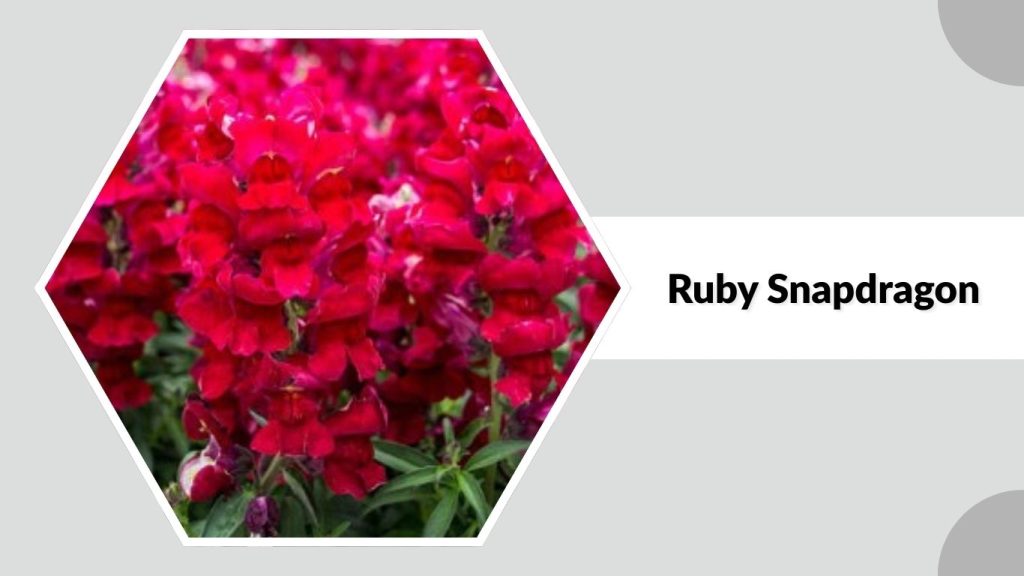
Ruby Snapdragon is a vibrant snapdragon variety admired for its rich red to ruby-colored blooms and strong garden presence. It is commonly planted to create bold color accents in flower beds, borders, and container displays.
Identification
- Scientific name: Antirrhinum majus ‘Ruby’
- Plant type: Annual
- Flower form: Classic snapdragon blooms
- Common colors: Deep red, ruby, crimson
- Average height: 12 to 24 inches
Flower Characteristics
Ruby Snapdragons produce medium to large flowers arranged along upright spikes. The blooms show intense red tones that remain bright even in full sun. Their smooth, well-formed petals give the flower spikes a clean, striking look.
Growth Habit
This variety grows upright with sturdy stems and moderate branching. Plants form full clumps that hold their shape well and continue producing new flower spikes over the blooming season.
Habitat
Ruby Snapdragons thrive in full sun and well-drained, moderately fertile soil. They prefer cooler growing conditions but can tolerate mild warmth when watered regularly.
Uses in Gardens
Gardeners plant Ruby Snapdragons in borders, mixed beds, containers, and cutting gardens. Their strong red color makes them excellent focal plants and effective companions to white or yellow flowers.
20. Potomac Snapdragon
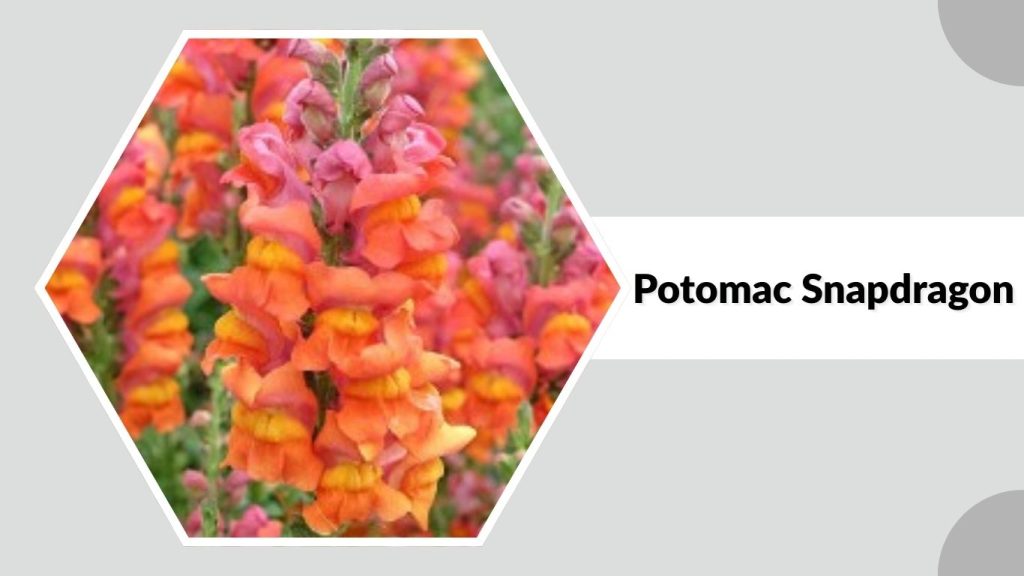
Potomac Snapdragons are tall, high-performance snapdragon varieties developed for professional cut-flower production. They are known for their long, straight stems, large blooms, and ability to flower well under cool to mild conditions.
Identification
- Scientific name: Antirrhinum majus ‘Potomac’ series
- Plant type: Annual
- Flower form: Large snapdragon blooms on tall spikes
- Common colors: White, yellow, pink, rose, red, lavender, bicolor
- Average height: 30 to 48 inches
Flower Characteristics
Potomac Snapdragons produce long, dense flower spikes packed with large, well-shaped blooms. The flowers open gradually from the base upward, extending the display and making each stem ideal for cutting. Colors are typically rich and uniform.
Growth Habit
These snapdragons grow very tall and upright with strong, thick stems and minimal branching. Their height and uniform structure make them stand out at the back of borders and in cutting rows.
Habitat
Potomac Snapdragons grow best in full sun and fertile, well-drained soil. They prefer cool growing conditions and are commonly planted for early spring, fall, and greenhouse production.
Uses in Gardens
Gardeners primarily grow Potomac Snapdragons in cutting gardens and large borders. Their long stems, impressive height, and long vase life make them excellent for floral arrangements and market bouquets.
FAQs
What are snapdragon flowers best known for?
Snapdragon flowers are best known for their unique “dragon-mouth” blooms that open when gently squeezed. They are popular for their bright colors, long flowering season, and ability to grow well in gardens, containers, and cutting beds. They also attract bees and other beneficial pollinators.
Are snapdragon flowers annuals or perennials?
Snapdragons are usually grown as annuals, but in mild climates they can behave like short-lived perennials. They often bloom more heavily in cool seasons such as spring and fall, and in some regions they may reseed and return the following year.
Do snapdragons grow better in sun or shade?
Snapdragons grow best in full sun, which encourages strong stems and abundant blooms. They can tolerate light partial shade, especially in warm climates, but too much shade may reduce flowering and cause plants to become leggy.
How long do snapdragon flowers usually bloom?
Snapdragons can bloom for several months under good conditions. They typically start flowering in early spring and continue into early summer, often reblooming in fall. Removing faded flowers and providing regular water helps extend the blooming period.
Are snapdragons good for containers and cut flowers?
Yes, snapdragons are excellent for both containers and cut-flower use. Dwarf varieties are ideal for pots and borders, while tall varieties like Rocket and Potomac are popular for bouquets because of their long stems and good vase life.