






Snapdragons (Antirrhinum majus) are beloved for their vivid colors, charming dragon-shaped blooms, and ability to thrive in cooler seasons. With varieties ranging from tall, dramatic spikes to compact mounding forms, snapdragons offer incredible diversity for gardens, containers, and floral arrangements. Whether you’re designing a romantic cottage garden, adding structure to a border, or planting a vibrant patio display, there’s a snapdragon to suit your space.
In this guide, explore 17 popular types of snapdragon flowers—each with its own unique form, color range, and ideal planting use. From the towering elegance of Rocket Mix to the soft, double blooms of Twinny Peach, these varieties will add lasting beauty and texture to your spring and fall gardens.
1. Rocket Mix Snapdragon

Rocket Mix is a tall and vibrant snapdragon variety known for its strong, upright spikes and a bold mix of colors including red, yellow, pink, orange, and white. This classic cultivar is ideal for cutting gardens, borders, and adding height to flower beds.
Identification
- Color Range: Red, pink, yellow, orange, white
- Plant Height: 30–36 inches
- Bloom Type: Dense flower spikes
- Bloom Time: Mid to late spring, and again in fall
- Growth Habit: Upright, tall-stemmed
Origin and Popularity
Rocket Mix is one of the most widely grown tall snapdragon types, popular among both commercial growers and home gardeners for its long stems and rich color diversity. It’s often found in mixed borders and cut flower arrangements.
Growing and Blooming Season
Sow seeds indoors 8–10 weeks before the last frost or plant seedlings in early spring. Rocket Mix blooms in cooler seasons—spring and fall—preferring temperatures between 55°F and 75°F. Ideal for USDA zones 7–10 but can be grown as an annual in cooler climates.
Companion Plants
Combines well with cosmos, zinnias, delphiniums, and foxgloves. Their upright form contrasts nicely with mounding or trailing plants like alyssum or lobelia. Ideal for cottage gardens and vertical design schemes.
2. Madame Butterfly Snapdragon

Madame Butterfly is a unique snapdragon variety with double, azalea-like blooms that resemble ruffled petals rather than the traditional dragon shape. Known for its elegance and pastel shades, this cultivar brings a soft, romantic feel to floral beds and arrangements.
Identification
- Color Range: Rose, pink, ivory, yellow, peach, and lavender
- Plant Height: 24–30 inches
- Bloom Type: Double, frilled blooms
- Bloom Time: Spring and fall
- Growth Habit: Upright and full
Origin and Popularity
This variety was developed for the cut flower industry and garden enthusiasts who prefer a lush, rose-like appearance. Madame Butterfly snapdragons are popular for wedding bouquets and fine floral designs due to their full, romantic form.
Growing and Blooming Season
Start indoors 8–10 weeks before the last frost or transplant after danger of frost has passed. They thrive in cool weather, blooming best in spring and fall in USDA zones 7–10. In colder regions, grow them as cool-season annuals.
Companion Plants
Perfect with dusty miller, lisianthus, ornamental kale, or sweet peas. The soft colors pair beautifully with both vibrant and muted garden schemes, especially in romantic and cottage-style settings.
3. Chantilly Mix Snapdragon

Chantilly Mix snapdragons are admired for their open-faced blooms and warm, tropical shades. Unlike traditional snapdragons, they have an airy, butterfly-like form and are ideal for softening the structure of garden borders or adding movement to floral arrangements.
Identification
- Color Range: Coral, lemon, apricot, salmon, rose, and cream
- Plant Height: 30–36 inches
- Bloom Type: Open, butterfly-type blooms
- Bloom Time: Spring through early summer; again in fall
- Growth Habit: Tall, graceful stems
Origin and Popularity
Originally bred in Europe, Chantilly snapdragons are known for heat tolerance and a longer blooming window. Florists and garden designers love them for their soft texture and tropical hues.
Growing and Blooming Season
Start seeds early indoors or transplant after frost. Best grown in USDA zones 7–10. Blooms from mid-spring through early summer and may rebloom in fall if pruned back. Tolerates warmer conditions better than other types.
Companion Plants
Pairs beautifully with foxglove, phlox, scabiosa, and salvia. Their soft texture contrasts well with structured plants and looks graceful in naturalistic and English garden designs.
4. Sonnet Series Snapdragon
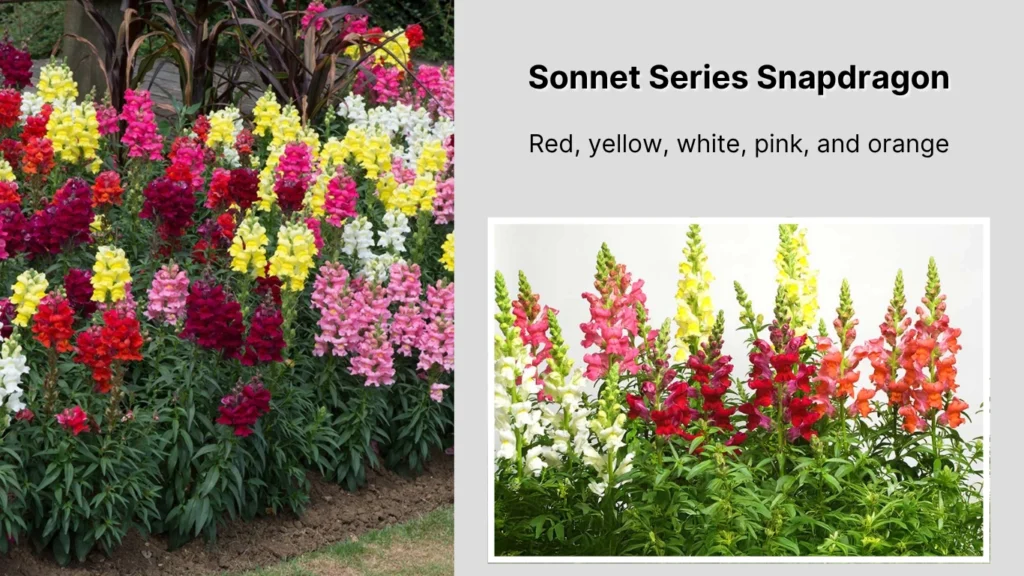
The Sonnet Series is a compact, early-blooming snapdragon variety with strong stems and uniform growth, making it ideal for garden beds, edging, and containers. It features traditional snapdragon-shaped blooms in a wide range of bold colors.
Identification
- Color Range: Red, yellow, white, pink, and orange
- Plant Height: 18–24 inches
- Bloom Type: Classic tubular snapdragon flowers
- Bloom Time: Early spring through early summer; fall rebloom possible
- Growth Habit: Compact, upright
Origin and Popularity
The Sonnet Series is a favorite among gardeners for its reliability, weather tolerance, and vibrant display. It is commonly used in both residential and commercial landscaping due to its neat form and early blooming nature.
Growing and Blooming Season
Start seeds indoors 8–10 weeks before last frost, or transplant after frost risk has passed. Suitable for USDA zones 7–10. Blooms heavily in spring and early summer and can rebloom in fall with proper care.
Companion Plants
Excellent with marigolds, dwarf cosmos, and lobelia. Its uniform shape and mid-height structure make it perfect for layering in flower beds or planting in mass for color blocks.
5. Twinny Appleblossom Snapdragon

Twinny Appleblossom is a charming dwarf snapdragon variety with double flowers in delicate pastel tones of blush pink and cream. It belongs to the award-winning Twinny series and is perfect for containers, borders, and small garden spaces.
Identification
- Color Range: Soft pink, blush, and cream tones
- Plant Height: 10–12 inches
- Bloom Type: Double, open-faced blooms
- Bloom Time: Spring through fall (long blooming)
- Growth Habit: Bushy and compact
Origin and Popularity
Twinny Appleblossom is an All-America Selections (AAS) winner and is popular for its weather resistance and long-lasting blooms. Its soft, romantic colors make it a go-to choice for patio pots and fairy gardens.
Growing and Blooming Season
Plant seeds indoors or direct-sow after the last frost. It performs best in USDA zones 6–10. With continuous deadheading, it blooms from spring through fall and tolerates both heat and light frost better than taller varieties.
Companion Plants
Great for mixing with violas, pansies, dwarf marigolds, and sweet alyssum. Its soft tones also complement silvery foliage like dusty miller and lamb’s ear in container displays and low flower borders.
6. Montego Series Snapdragon

The Montego Series is a dwarf snapdragon group prized for its compact size and early, uniform blooming. It features classic snapdragon blooms in a wide palette of bright and pastel colors, perfect for edging, rock gardens, and container displays.
Identification
- Color Range: Red, yellow, white, rose, orange, pink, and bicolor
- Plant Height: 8–10 inches
- Bloom Type: Traditional tubular flowers
- Bloom Time: Early spring through summer
- Growth Habit: Compact and bushy
Origin and Popularity
Montego snapdragons are known for their neat appearance and strong performance in small spaces. Popular in urban gardens and public landscaping projects, they provide a splash of color in limited space.
Growing and Blooming Season
Start indoors 6–8 weeks before the last frost, or plant outside once the risk of frost has passed. Ideal for USDA zones 6–10. Blooms appear early and continue with deadheading into summer.
Companion Plants
Perfect with low-growing flowers like alyssum, dwarf petunias, or nemesia. Works well in small pots, window boxes, or as edging in flower beds where space is limited.
7. Liberty Classic Snapdragon
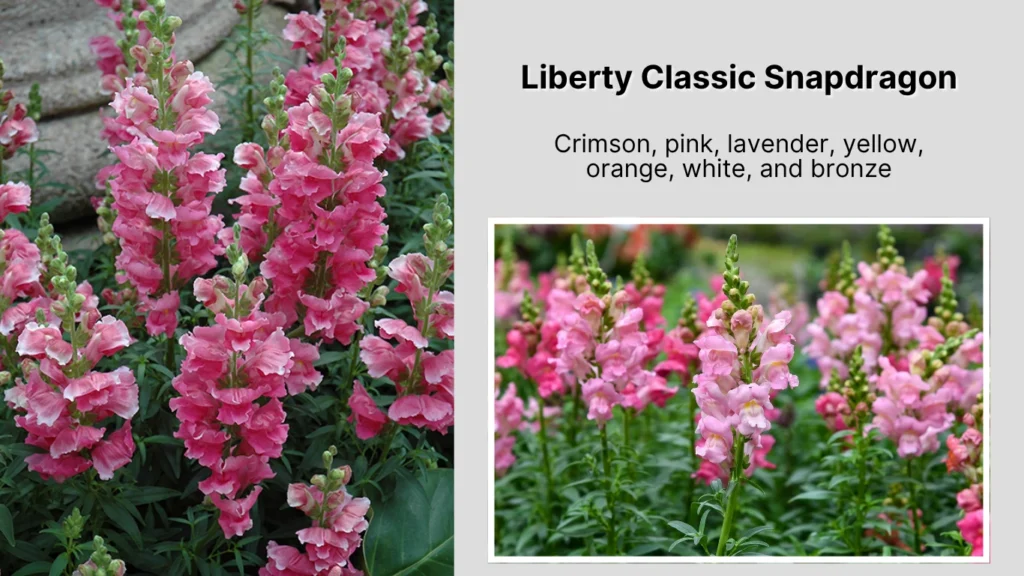
Liberty Classic is a tall, vigorous snapdragon known for producing long, sturdy stems topped with densely packed blooms. It’s widely used as a cut flower and in garden backgrounds due to its height and rich color options.
Identification
- Color Range: Crimson, pink, lavender, yellow, orange, white, and bronze
- Plant Height: 24–30 inches
- Bloom Type: Dense, classic snapdragon form
- Bloom Time: Mid-spring to early summer; fall rebloom in cool climates
- Growth Habit: Tall, upright
Origin and Popularity
Bred for commercial use, Liberty Classic is a florist favorite thanks to its long stems and vibrant color selection. It’s also highly appreciated in home gardens for vertical structure and strong bloom production.
Growing and Blooming Season
Plant indoors early or transplant in early spring. Suitable for USDA zones 7–10. It performs best in cooler seasons—spring and fall—and may slow down in peak summer heat.
Companion Plants
Pairs well with other tall flowers like larkspur, salvia, or cosmos. Also creates striking contrasts with lower-growing annuals like marigolds or pansies in layered flower beds.
8. Floral Showers Snapdragon
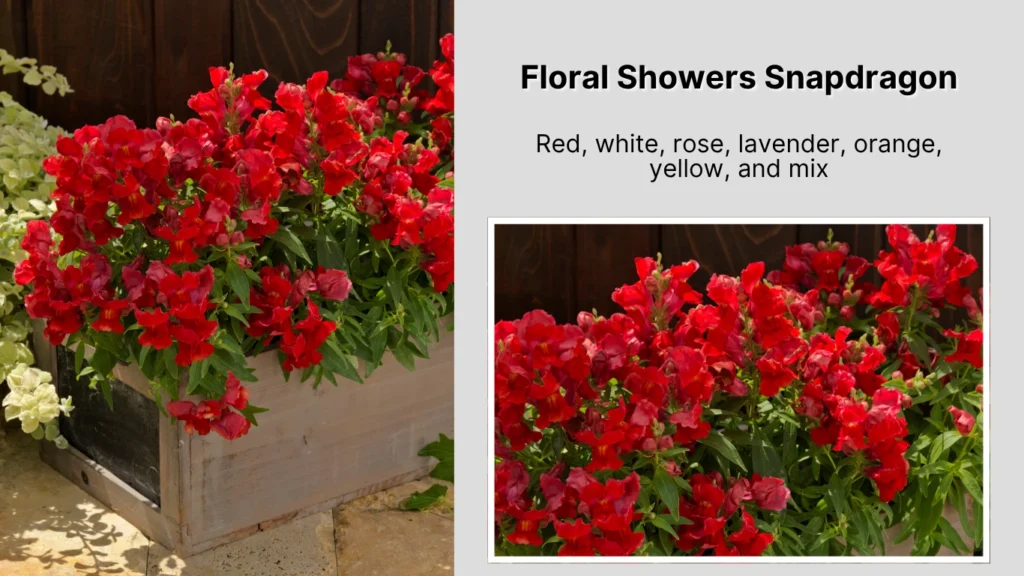
Floral Showers is a compact, early-flowering snapdragon variety specifically bred for containers, window boxes, and small-space gardening. It blooms abundantly in a wide array of colors and maintains a neat, rounded habit throughout the season.
Identification
- Color Range: Red, white, rose, lavender, orange, yellow, and mix
- Plant Height: 6–10 inches
- Bloom Type: Dense, classic tubular blooms
- Bloom Time: Early spring through summer
- Growth Habit: Compact, mounding
Origin and Popularity
The Floral Showers series is favored by gardeners and landscapers for its tidy growth and quick bloom time. It’s often used in high-traffic public planters and patios for early, colorful displays.
Growing and Blooming Season
Start seeds indoors or sow directly in early spring after frost. Blooms appear quickly and last through late spring into early summer. Ideal for USDA zones 6–10. Performs well even in partial shade.
Companion Plants
Great for planting with lobelia, pansies, and bacopa in small pots or hanging baskets. Their uniform size and rich color range make them excellent for symmetrical arrangements and edging.
9. Black Prince Snapdragon
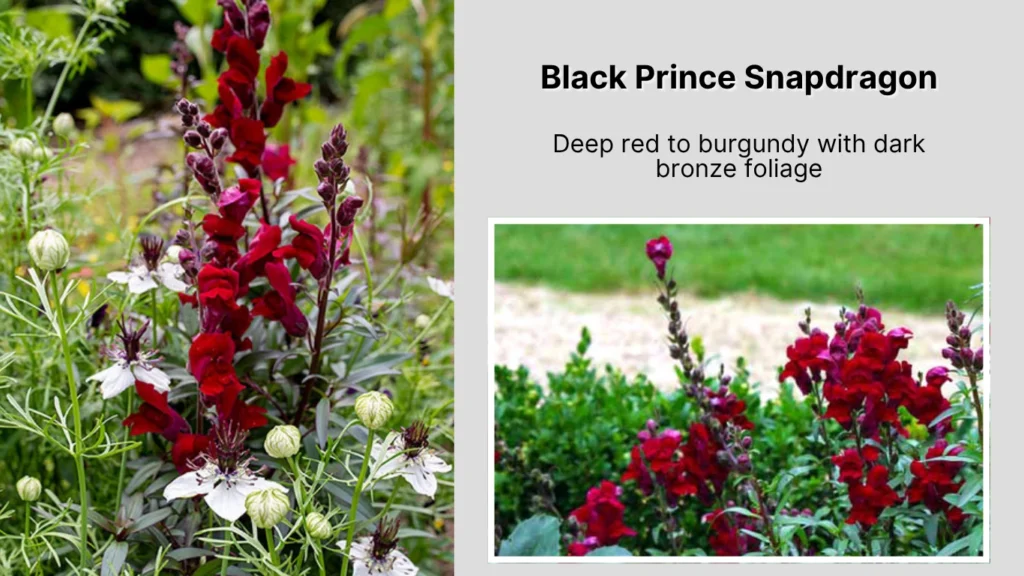
Black Prince is a dramatic snapdragon variety featuring dark, almost black foliage and deep crimson-red blooms. It adds rich contrast and gothic beauty to flower beds, borders, and moody garden themes.
Identification
- Color Range: Deep red to burgundy with dark bronze foliage
- Plant Height: 18–24 inches
- Bloom Type: Tubular classic form
- Bloom Time: Mid to late spring and fall
- Growth Habit: Upright and bushy
Origin and Popularity
Introduced in the early 1900s, Black Prince has remained a unique heirloom favorite. Its rare foliage color and deep blooms set it apart from typical snapdragons, making it a collector’s choice for dramatic garden designs.
Growing and Blooming Season
Plant indoors in early spring or outdoors after the last frost. Thrives in USDA zones 6–10. Best grown in full sun to enhance leaf and flower color. Blooms in cooler seasons and may rebloom in fall.
Companion Plants
Pairs beautifully with silver foliage like dusty miller or lamb’s ear. For high contrast, plant alongside white snapdragons or pastel pansies. Works wonderfully in dark-themed or Victorian-inspired gardens.
10. Bright Butterflies Snapdragon
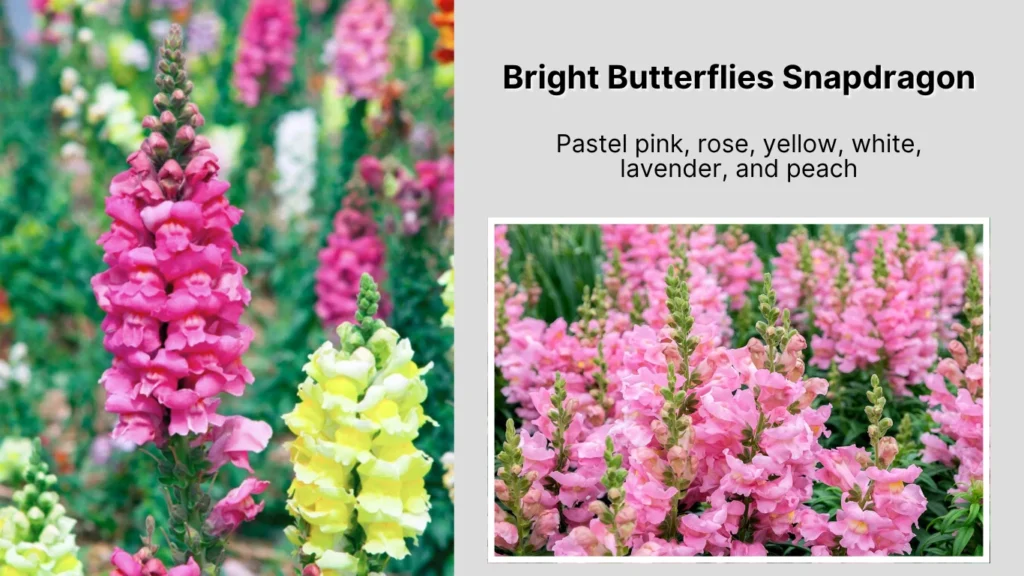
Bright Butterflies is a charming snapdragon variety known for its open-faced, butterfly-like blooms that differ from the typical tubular snapdragon flower. These open petals give the plant a softer, more delicate appearance, ideal for adding texture and movement to garden beds.
Identification
- Color Range: Pastel pink, rose, yellow, white, lavender, and peach
- Plant Height: 18–24 inches
- Bloom Type: Open-faced, butterfly-like flowers
- Bloom Time: Spring to early summer; rebloom in fall
- Growth Habit: Upright and airy
Origin and Popularity
Originally bred in the mid-20th century, Bright Butterflies gained popularity for their unique bloom form and graceful presence. They are widely used in floral arrangements and cottage garden borders.
Growing and Blooming Season
Sow indoors early or transplant after the last frost. Performs best in USDA zones 7–10. Enjoys full sun and cool weather, blooming heavily in spring and again in fall with pruning.
Companion Plants
Pairs well with other softly shaped flowers like cosmos, phlox, or larkspur. Also complements trailing plants such as alyssum or lobelia in naturalistic or informal garden designs.
11. Twinny Peach Snapdragon

Twinny Peach is a standout dwarf snapdragon variety featuring double, ruffled blooms in a warm blend of peach, apricot, and yellow tones. Its compact size and weather-resistant nature make it perfect for containers, edging, and small flower beds.
Identification
- Color Range: Peach, apricot, soft yellow blends
- Plant Height: 10–12 inches
- Bloom Type: Double, rose-like blooms
- Bloom Time: Spring through fall
- Growth Habit: Compact and mounding
Origin and Popularity
Part of the award-winning Twinny series, Twinny Peach is favored for its stunning color blend and excellent heat and rain tolerance. It’s a go-to choice for gardeners wanting long-lasting blooms in limited space.
Growing and Blooming Season
Start seeds indoors 6–8 weeks before the last frost or plant directly outside in spring. Suitable for USDA zones 6–10. With regular deadheading, it blooms continuously from spring to frost.
Companion Plants
Looks lovely with violas, dwarf marigolds, or pastel petunias. Great for cottage gardens, patio containers, or fairy garden themes. Its colors blend beautifully with soft blue or cream-colored companions.
12. Night and Day Snapdragon

Night and Day is a striking snapdragon variety known for its dramatic contrast between deep, velvety crimson blooms and pure white flowers on the same plant or within the same mix. It also features dark-toned foliage, enhancing its visual depth and uniqueness.
Identification
- Color Range: Deep crimson and bright white
- Plant Height: 18–24 inches
- Bloom Type: Classic tubular blooms
- Bloom Time: Spring and fall
- Growth Habit: Upright and bushy
Origin and Popularity
An heirloom variety loved for its contrast-rich palette, Night and Day is a favorite in black-and-white themed gardens and gothic floral designs. Its dark green to purple-tinged leaves add another layer of interest.
Growing and Blooming Season
Start indoors in late winter or sow outdoors after the last frost. Ideal for USDA zones 6–10. Thrives in cooler weather, blooming in spring and again in fall when temperatures drop.
Companion Plants
Pairs beautifully with silver-leaved plants like dusty miller, or white flowers such as petunias and alyssum. Also complements dark pansies or burgundy foliage for moody and artistic plantings.
13. Frosted Flames Snapdragon
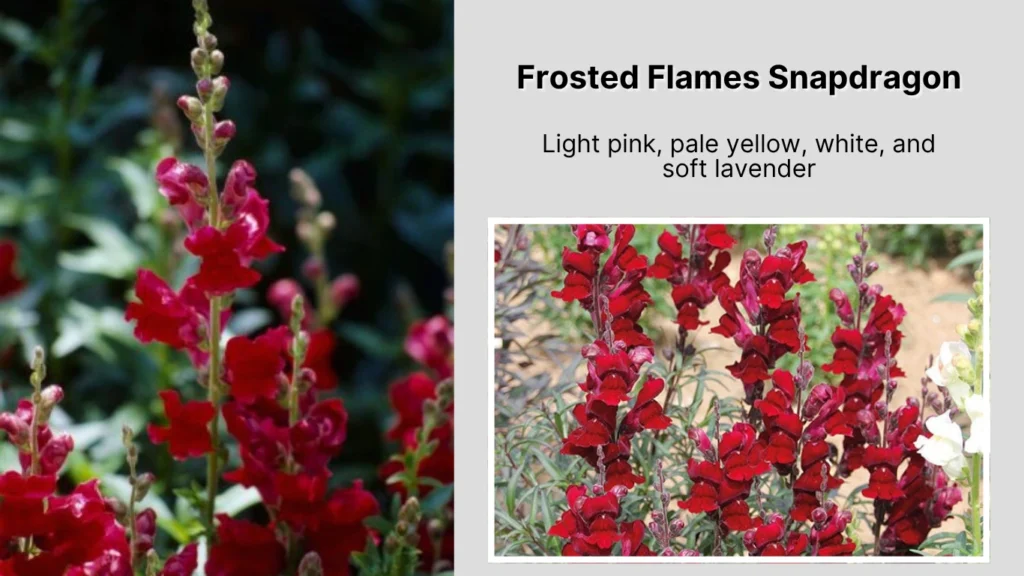
Frosted Flames is a unique snapdragon variety not only for its soft pastel blooms but also for its striking variegated foliage—green leaves streaked with white or creamy yellow. It offers both floral beauty and decorative foliage in one plant.
Identification
- Color Range: Light pink, pale yellow, white, and soft lavender
- Plant Height: 18–24 inches
- Bloom Type: Traditional tubular flowers
- Bloom Time: Spring to early summer
- Growth Habit: Upright and leafy
Origin and Popularity
Frosted Flames is admired for its ornamental leaves as much as for its flowers. It’s especially attractive even before blooming, making it ideal for gardens where foliage plays a key role in design.
Growing and Blooming Season
Sow seeds indoors or outdoors after frost. Performs well in USDA zones 6–10. Best planted in spring and early summer, with blooms lasting through the cooler months. Avoid intense summer heat for optimal flowering.
Companion Plants
Great when planted with soft-hued flowers like lavender, phlox, or white petunias. The variegated leaves also contrast well with solid-green plants and are stunning in mixed containers and foliage-focused beds.
14. Lucky Lips Snapdragon

Lucky Lips is a vibrant and eye-catching snapdragon variety known for its two-toned flowers—typically soft pink petals with bold red or magenta markings on the lower lip. Its playful coloring and upright spikes make it a standout in mixed borders and cottage gardens.
Identification
- Color Range: Light pink with deep red or magenta lip markings
- Plant Height: 18–24 inches
- Bloom Type: Classic tubular, bicolored
- Bloom Time: Spring and fall
- Growth Habit: Upright and slender
Origin and Popularity
Popular among home gardeners and floral designers, Lucky Lips stands out due to its vivid contrast and cheerful appearance. It’s often used in pollinator-friendly beds and colorful spring displays.
Growing and Blooming Season
Start indoors 8 weeks before the last frost or transplant after danger of frost. Performs best in USDA zones 7–10. Blooms during the cooler parts of spring and fall, thriving in full sun and well-drained soil.
Companion Plants
Pairs well with bicolor violas, salvia, or bright zinnias. Also complements white snapdragons or pastel calendulas, creating a bright and playful garden palette.
15. Azalea Apricot Snapdragon

Azalea Apricot is a double-bloom snapdragon variety resembling azalea flowers, with ruffled petals in a warm blend of apricot, salmon, and peach. Its luxurious texture and soft tones make it perfect for romantic garden themes and bridal bouquets.
Identification
- Color Range: Apricot, peach, and soft coral
- Plant Height: 18–24 inches
- Bloom Type: Double, azalea-like blooms
- Bloom Time: Spring through early summer; fall rebloom possible
- Growth Habit: Upright and bushy
Origin and Popularity
Part of the Madame Butterfly line, Azalea Apricot is cherished for its lush, soft-textured flowers. It’s commonly used in high-end floral arrangements and pastel-themed beds for a gentle, elegant look.
Growing and Blooming Season
Start seeds indoors or plant out after last frost. Grows well in USDA zones 6–10. Prefers cooler temperatures, blooming best in spring and again in fall if cut back after summer heat.
Companion Plants
Looks beautiful with other soft blooms like snapdragon ‘Twinny Peach’, pastel cosmos, or ivory stock. Also mixes well with airy fillers like baby’s breath or trailing bacopa in romantic containers or bouquet-style beds.
16. Magic Carpet Mix Snapdragon

Magic Carpet Mix is a charming dwarf snapdragon variety featuring a low-growing, mounding habit and a bright blend of vivid colors. Perfect for borders, edging, rock gardens, and containers, this mix adds cheerful color at ground level.
Identification
- Color Range: Red, pink, orange, yellow, white, and bicolors
- Plant Height: 6–8 inches
- Bloom Type: Classic snapdragon form
- Bloom Time: Early spring through summer
- Growth Habit: Compact and spreading
Origin and Popularity
Magic Carpet is a popular series for gardeners with small spaces or those wanting colorful front borders. Its tidy size and uniform flowering make it ideal for mass planting and window boxes.
Growing and Blooming Season
Start indoors 6–8 weeks before the last frost or direct sow after danger of frost has passed. Suitable for USDA zones 6–10. Blooms from early spring through late summer with regular deadheading.
Companion Plants
Pairs nicely with low-growing flowers like alyssum, lobelia, or dwarf marigolds. In containers, combine with trailing varieties like calibrachoa or sweet potato vine for layered color.
17. La Bella Mix Snapdragon
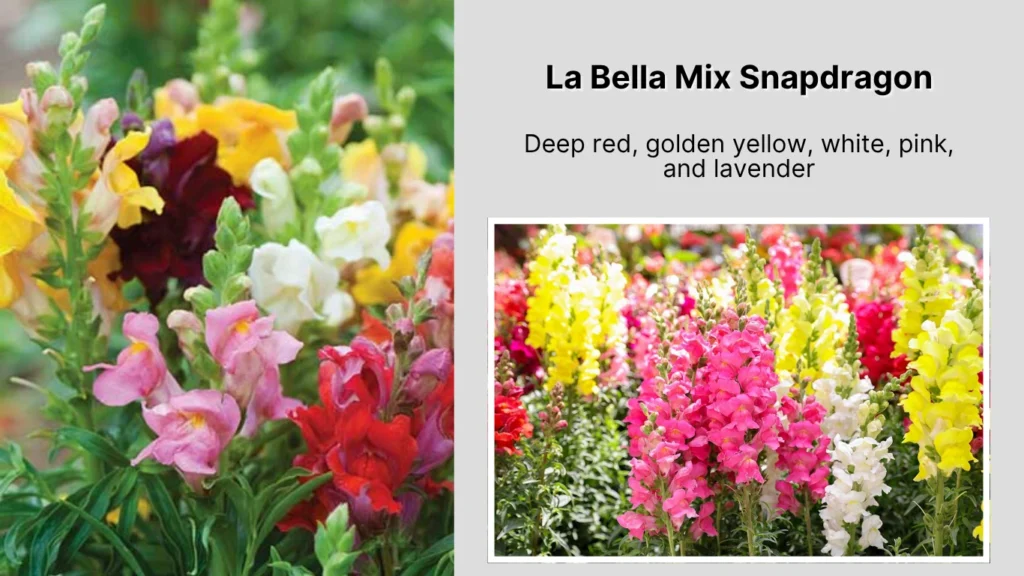
La Bella Mix features medium-height snapdragons with classic blooms in a wide palette of bold and pastel tones. It’s valued for its strong stems, rich color saturation, and extended bloom season—ideal for bedding and cutting gardens.
Identification
- Color Range: Deep red, golden yellow, white, pink, and lavender
- Plant Height: 16–20 inches
- Bloom Type: Tubular, upright flower spikes
- Bloom Time: Spring to early summer; fall rebloom
- Growth Habit: Upright and uniform
Origin and Popularity
The La Bella series is known for its vibrant display and dependable performance. It’s often used in public landscapes, home gardens, and flower arrangements where strong colors are needed.
Growing and Blooming Season
Start seeds indoors in late winter or transplant after frost. Hardy in USDA zones 6–10. Enjoys full sun and cooler weather, blooming in spring and fall with proper trimming.
Companion Plants
Pairs well with mid-height bedding plants like dianthus, calendula, or stock. Adds brightness to perennial borders and blends well with ornamental grasses or spring-blooming bulbs.