





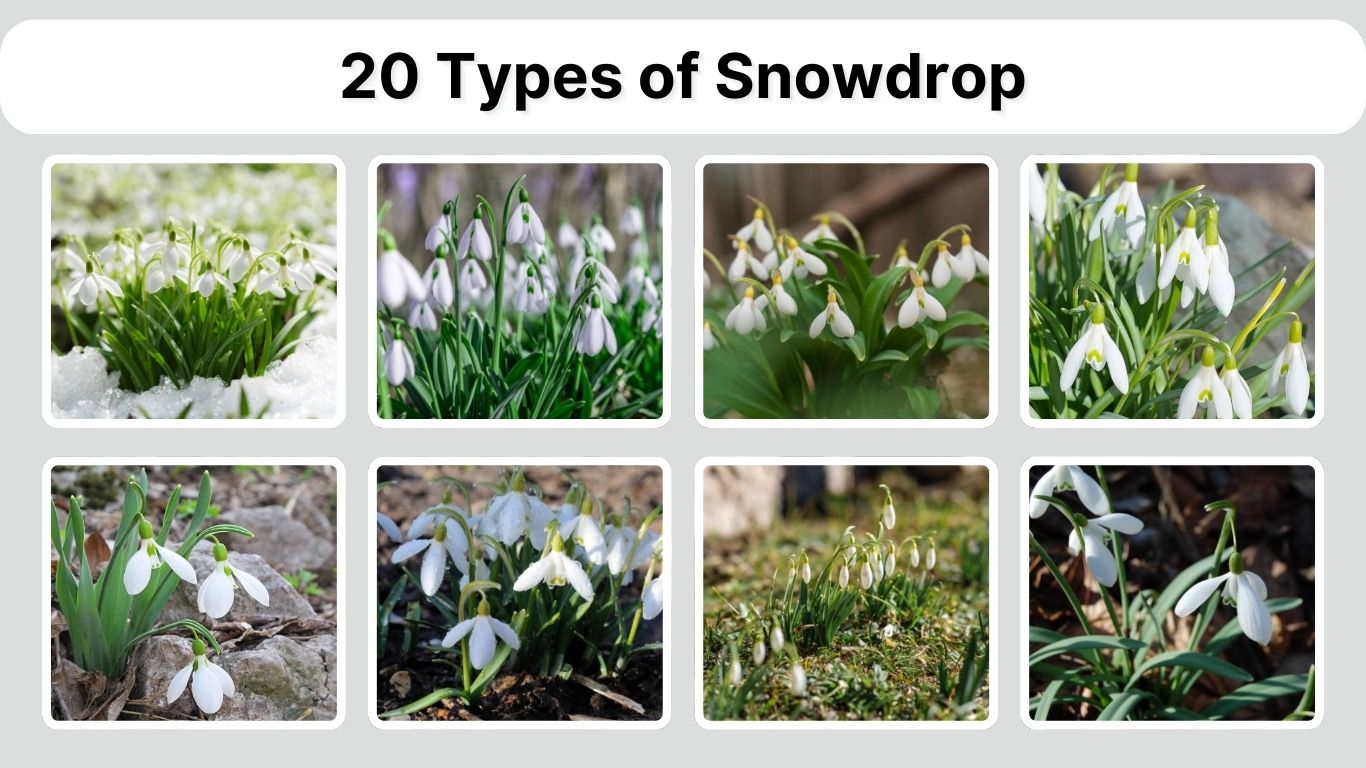
Snowdrops (Galanthus) are among the earliest flowering plants of the year, often pushing through frozen ground and even snow to announce the approach of spring. These delicate bulb flowers are native mainly to Europe and western Asia and are prized for their nodding white blooms, subtle green markings, and remarkable cold tolerance. With more than 20 recognized species, snowdrops vary in leaf shape, size, and blooming season, making them popular in woodland gardens and botanical collections.
1. Galanthus nivalis (Common Snowdrop)
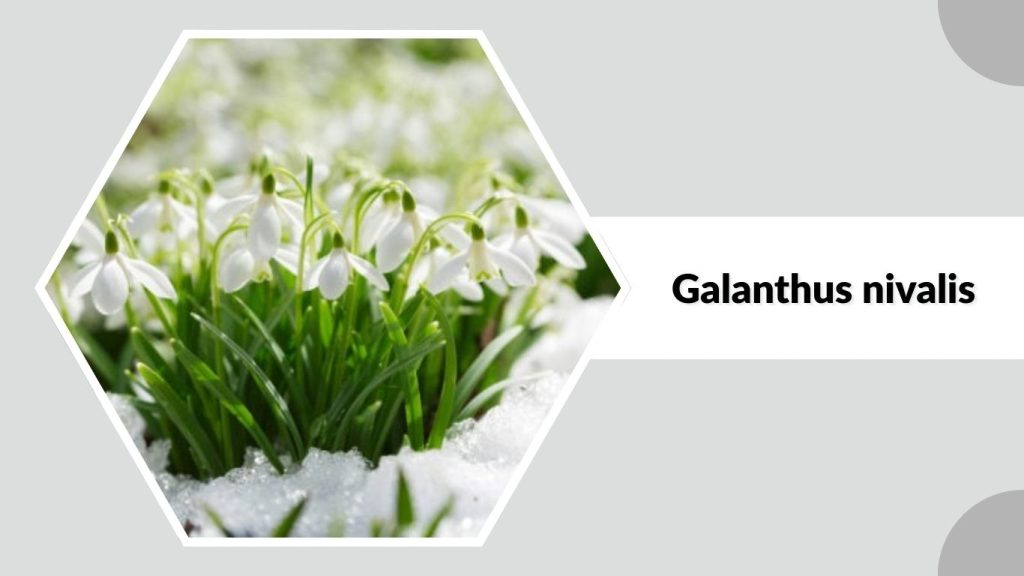
Galanthus nivalis, commonly known as the common snowdrop, is the most widespread and well-known species of snowdrop. It is one of the earliest flowering plants of late winter and early spring, often blooming while snow is still on the ground. Native to Europe, this delicate bulb plant is admired for its nodding white flowers, gentle fragrance, and strong cold tolerance.
Identification
- Small, drooping, bell-shaped white flowers with three outer and three inner petals
- Inner petals usually marked with green heart- or V-shaped patterns
- Narrow, gray-green leaves emerging in pairs from the base
- Short flowering stems, typically 7–15 cm tall
- Blooms from late winter to early spring
Habitat
Galanthus nivalis naturally grows in deciduous woodlands, forest edges, meadows, and along riverbanks. It prefers moist but well-drained soil and often forms large natural colonies. In gardens, it thrives under trees and shrubs where it receives winter sun and light spring shade.
Growth and Behavior
This snowdrop species grows from small bulbs and enters dormancy by late spring. It spreads slowly through bulb division and seed dispersal, gradually forming clumps over time. The plant is extremely cold-hardy and can flower even when temperatures are near freezing.
Blooming and Seasonal Role
Galanthus nivalis is among the first flowers to bloom each year, making it an important early nectar source for bees. Its early appearance has made it a symbol of hope, purity, and the end of winter across many European cultures.
2. Galanthus elwesii (Giant Snowdrop)
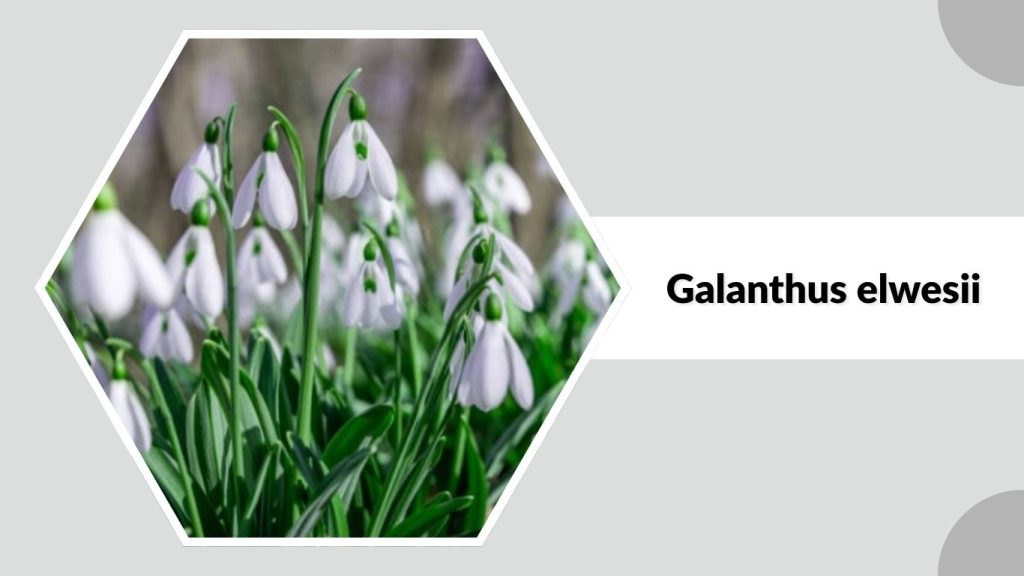
Galanthus elwesii, commonly called the giant snowdrop, is a larger and more robust snowdrop species known for its broad leaves and early flowering habit. Native to parts of southeastern Europe and Asia Minor, it often blooms earlier than the common snowdrop and is highly valued in gardens for its strong growth and striking, slightly bigger flowers.
Identification
- Larger, nodding white flowers compared see to common snowdrop
- Broad, blue-gray to silvery-green leaves with a waxy surface
- Inner petals marked with bold green patches
- Stems typically 15–25 cm tall, taller than most snowdrops
- Flowers appear very early, often in mid- to late winter
Habitat
In the wild, Galanthus elwesii grows on mountain slopes, woodland margins, and rocky hillsides. It prefers cool climates, moist but well-drained soil, and partial shade. In cultivation, it adapts well to gardens, especially under deciduous trees or in naturalized lawns.
Growth and Behavior
This species grows from hardy bulbs and forms clumps over time through natural division. Its broader leaves usually emerge before the flowers fully open, giving the plant a fuller look. It is more vigorous than many other snowdrops and tolerates cold and light frost extremely well.
Blooming and Seasonal Role
Galanthus elwesii is often among the very first snowdrops to flower, sometimes blooming weeks earlier than Galanthus nivalis. Because of its early bloom time, it plays an important role in providing one of the first nectar sources for early-emerging pollinators.
3. Galanthus plicatus (Crimean Snowdrop)
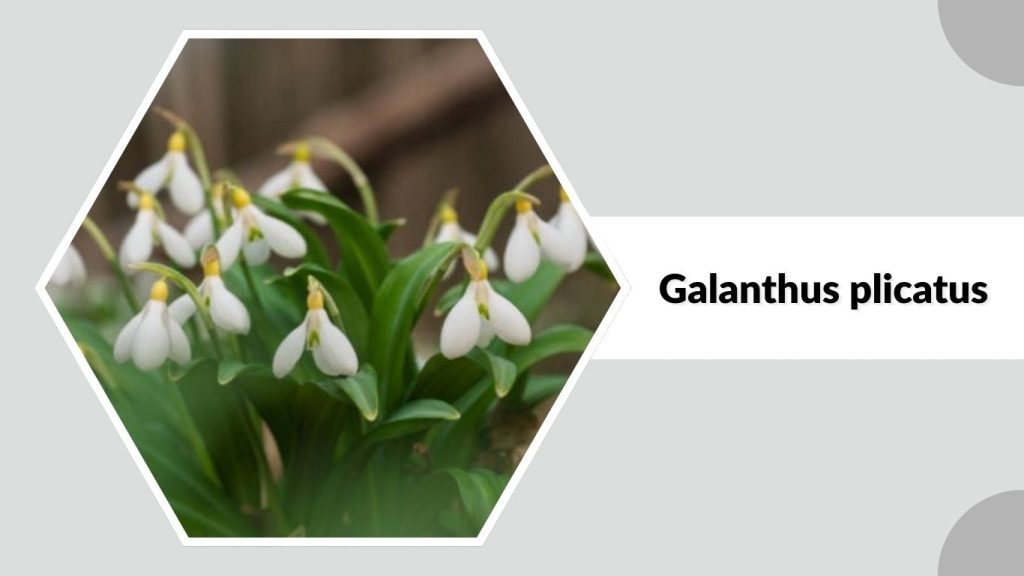
Galanthus plicatus, often called the Crimean snowdrop, is a distinctive snowdrop species recognized for its broader, pleated leaves and elegant, slightly larger flowers. Native to the Crimea, parts of the Balkans, and the Black Sea region, this species is especially valued for its ornamental foliage and its ability to naturalize well in cool, woodland-style gardens.
Identification
- Medium to large, nodding white flowers with rounded outer segments
- Inner petals marked with clear green patches near the tips
- Broad, folded (pleated) gray-green leaves with noticeable margins
- Flowering stems usually 12–20 cm tall
- Blooms from late winter to early spring
Habitat
In nature, Galanthus plicatus grows in deciduous forests, shaded slopes, and along stream banks. It prefers humus-rich, moist but well-drained soils and benefits from winter moisture followed by drier summer conditions. Gardeners often plant it under trees or in woodland borders.
Growth and Behavior
This species forms neat clumps through bulb multiplication and can spread steadily when left undisturbed. Its leaves often persist longer into spring than those of many snowdrops, helping the bulb store energy for the next season. It is cold-hardy and well suited to temperate regions.
Blooming and Seasonal Role
Galanthus plicatus flowers slightly later than some early snowdrops but still well before most spring bulbs. Its blooms provide an early food source for insects and add visual interest to winter and early-spring landscapes.
4. Galanthus woronowii (Green Snowdrop)
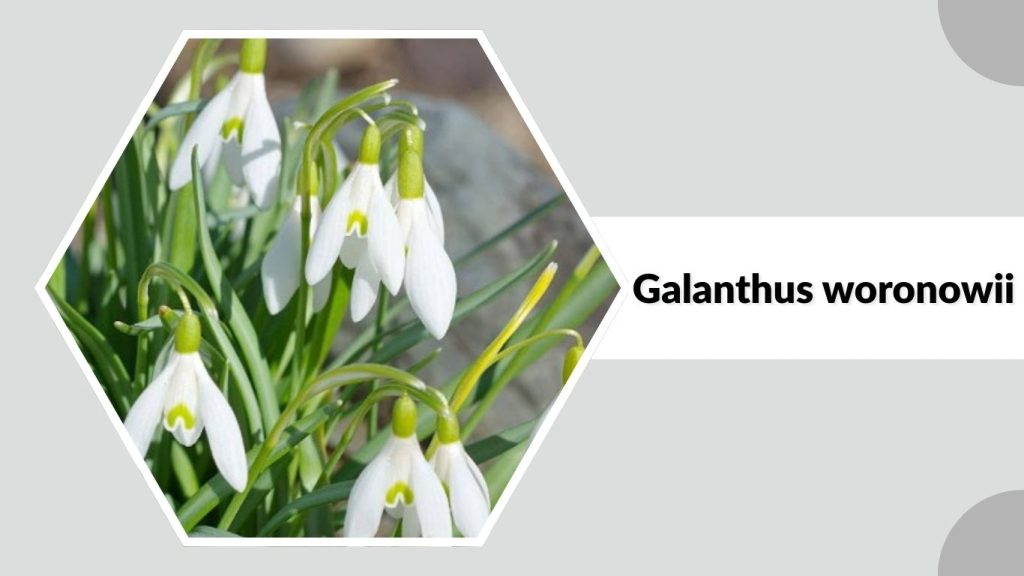
Galanthus woronowii, commonly known as the green snowdrop, is admired for its glossy, bright green leaves and fresh-looking flowers. Native to northeastern Turkey and the western Caucasus region, this species stands out among snowdrops for its vibrant foliage, which often appears almost emerald in color.
Identification
- Nodding white flowers with rounded outer petals
- Inner segments marked with soft green patterns near the tips
- Shiny, bright green, strap-shaped leaves
- Slender stems usually 10–18 cm tall
- Blooms in late winter to early spring
Habitat
In the wild, Galanthus woronowii grows in damp woodlands, forest margins, and shaded mountain valleys. It prefers moist, humus-rich soil and partial shade, often thriving near streams or in sheltered woodland gardens.
Growth and Behavior
This species multiplies by bulb division and can form dense, attractive clumps over time. Its leaves emerge early and are more glossy than most snowdrops, making the plant attractive even after flowering. It is well adapted to cool, moist climates.
Blooming and Seasonal Role
Galanthus woronowii blooms slightly later than some early snowdrops but remains an important late-winter flower. It supports early pollinators and is often planted for its ornamental foliage as much as for its flowers.
5. Galanthus ikariae (Ikaria Snowdrop)
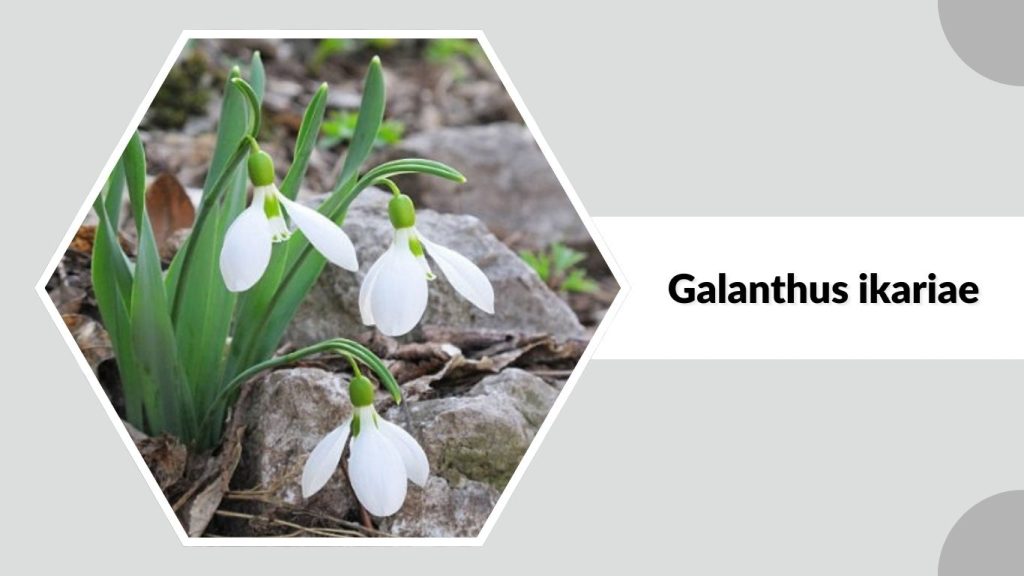
Galanthus ikariae, known as the Ikaria snowdrop, is a graceful species native mainly to the Greek island of Ikaria and nearby parts of the Aegean region. It is appreciated for its neat growth habit, soft-colored foliage, and classic snowdrop form, making it a favorite among collectors and woodland gardeners.
Identification
- Elegant, nodding white flowers with rounded outer petals
- Inner segments marked with distinct green patches
- Soft gray-green to bluish-green leaves, usually narrower than giant snowdrop
- Flowering stems about 10–15 cm tall
- Blooms from late winter into early spring
Habitat
In nature, Galanthus ikariae grows on rocky slopes, open woodlands, and scrubby hillsides. It prefers well-drained but moist soil during winter and spring, with drier conditions in summer. Partial shade and good air circulation support healthy growth.
Growth and Behavior
This species forms small to medium clumps through bulb division. It is slower to spread than some common snowdrops but is long-lived when left undisturbed. Its foliage often appears shortly before or with the flowers.
Blooming and Seasonal Role
Galanthus ikariae flowers in the late-winter snowdrop season, adding variety to early bulb displays. Its nectar and pollen support early insects, while its tidy habit makes it suitable for rock gardens and woodland borders.
6. Galanthus reginae-olgae (Queen Olga’s Snowdrop)
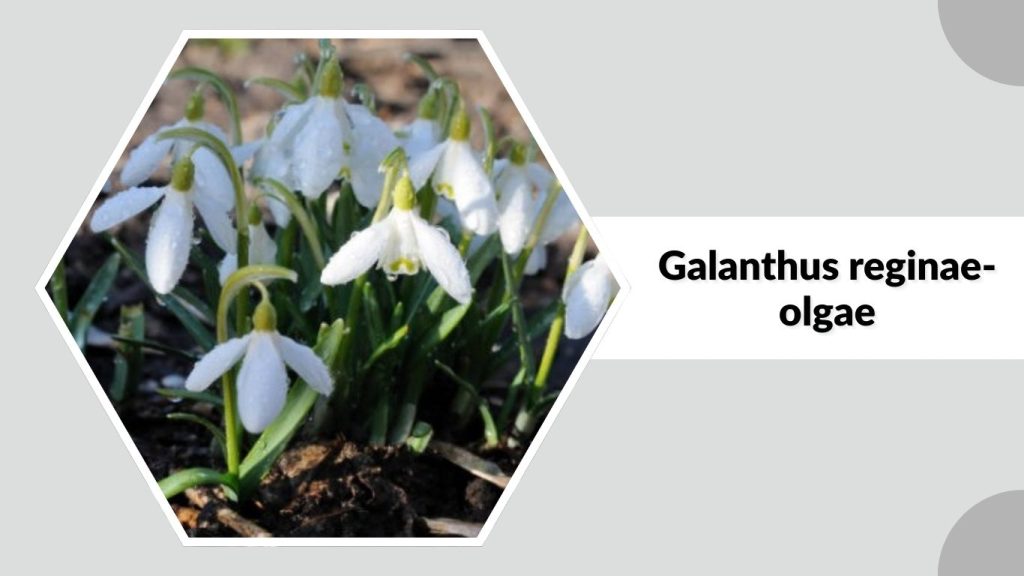
Galanthus reginae-olgae, known as Queen Olga’s snowdrop, is a unique species because many forms bloom in autumn rather than late winter. Native to Greece, southern Italy, and parts of the Balkans, it is prized for its elegant flowers, slender build, and unusual flowering season.
Identification
- Nodding white flowers with elongated outer petals
- Inner segments marked with green patterns, often heart- or V-shaped
- Narrow, mid-green leaves that sometimes appear after flowering
- Slender stems usually 10–18 cm tall
- Blooms from autumn to early winter (some forms late winter)
Habitat
In the wild, Galanthus reginae-olgae grows in open woodlands, rocky hillsides, and light scrub, often in Mediterranean climates. It prefers well-drained soil, winter moisture, and drier summer conditions. It grows well under deciduous trees or in sheltered garden sites.
Growth and Behavior
This species develops from small bulbs and forms loose clumps over time. In many varieties, flowers appear before the leaves, a trait known as hysteranthy. It is moderately hardy and benefits from protection from severe frost.
Blooming and Seasonal Role
Because it can flower in autumn, Galanthus reginae-olgae extends the snowdrop season significantly. It provides rare early nectar for insects at a time when few other plants are in bloom, making it especially valuable ecologically and ornamentally.
7. Galanthus gracilis (Slender Snowdrop)
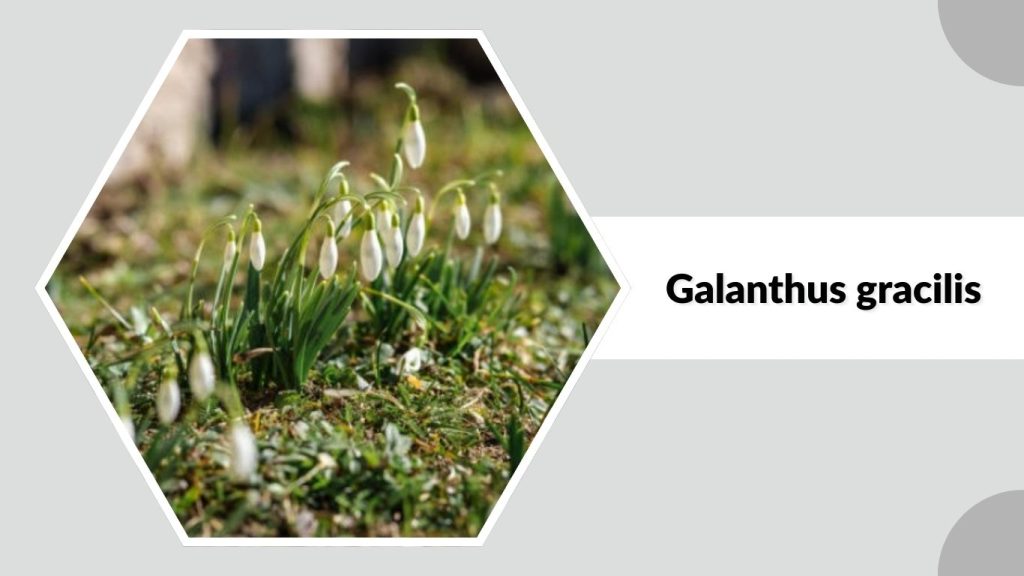
Galanthus gracilis, commonly called the slender snowdrop, is a delicate and refined species native to Turkey and parts of the eastern Mediterranean region. It is known for its narrow leaves, fine stems, and lightly scented flowers, giving it a more graceful appearance than many other snowdrops.
Identification
- Small to medium, nodding white flowers with slim outer segments
- Inner petals marked with soft green patterns near the tips
- Narrow, gray-green leaves, often slightly twisted
- Thin flowering stems about 8–15 cm tall
- Blooms in late winter to early spring
Habitat
In its natural range, Galanthus gracilis grows in open woodlands, rocky slopes, and scrubland. It prefers well-drained soils, winter moisture, and bright but filtered light. It adapts well to rock gardens and lightly shaded borders.
Growth and Behavior
This species spreads slowly by bulb division and tends to form small, tidy clumps. It is less vigorous than common snowdrops but long-lived in suitable conditions. Its narrow foliage gives it a lighter visual presence in garden plantings.
Blooming and Seasonal Role
Galanthus gracilis blooms during the main snowdrop season and contributes to early nectar availability for insects. Its elegant structure makes it especially attractive in naturalistic plantings and alpine-style gardens.
8. Galanthus caucasicus (Caucasian Snowdrop)
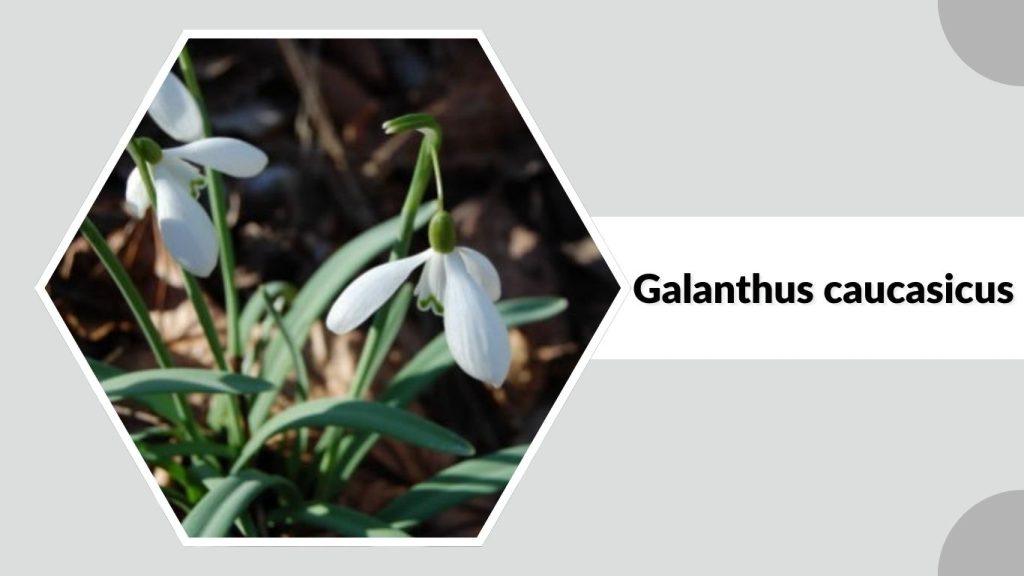
Galanthus caucasicus, known as the Caucasian snowdrop, is native to the Caucasus Mountains and nearby regions. It is valued for its neat habit, soft gray-green foliage, and classic snowdrop appearance. This species blends well into woodland gardens and naturalized landscapes.
Identification
- Nodding white, bell-shaped flowers with rounded outer segments
- Inner petals marked with green spots or crescents
- Narrow to moderately broad gray-green leaves
- Flowering stems usually 10–16 cm tall
- Blooms from late winter to early spring
Habitat
In the wild, Galanthus caucasicus grows in mountain forests, shaded valleys, and moist woodland clearings. It prefers cool conditions, humus-rich soil, and reliable winter moisture. Partial shade suits it best, especially under deciduous trees.
Growth and Behavior
This species forms clumps gradually through bulb division. It is fairly hardy and adapts well to temperate climates. When undisturbed, it can persist for many years and slowly spread across suitable areas.
Blooming and Seasonal Role
Galanthus caucasicus flowers during the main snowdrop season and supports early pollinators. Its subtle beauty and reliable growth make it a good choice for naturalizing in woodland-style gardens.
9. Galanthus krasnovii (Krasnov’s Snowdrop)
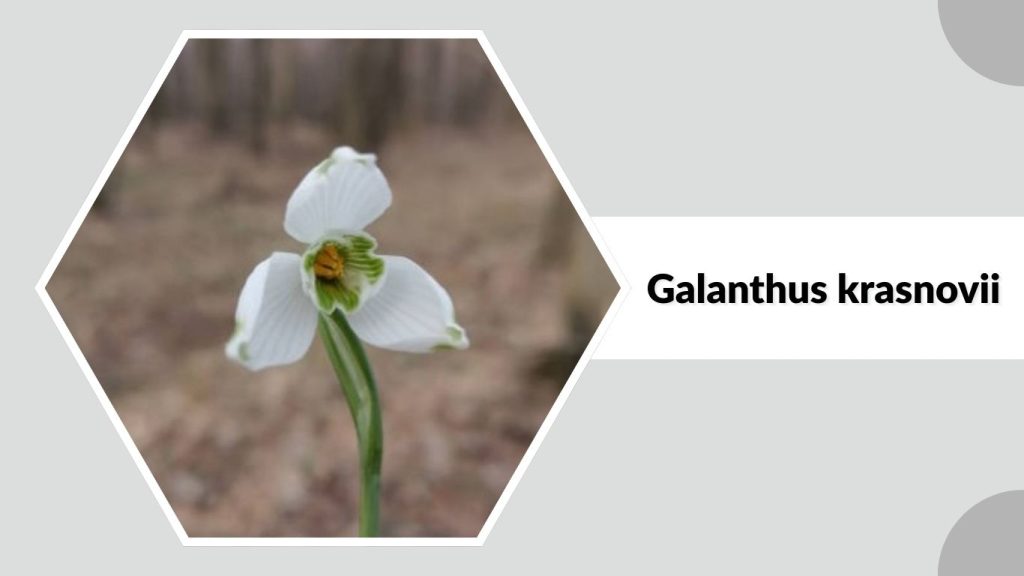
Galanthus krasnovii is a lesser-known but attractive snowdrop species native to parts of northeastern Turkey and the western Caucasus. It is appreciated for its fresh green foliage, neat form, and elegant, slightly elongated flowers, making it popular among snowdrop collectors.
Identification
- Nodding white flowers with somewhat elongated outer segments
- Inner petals marked with distinct green patches
- Smooth, bright green to mid-green leaves
- Flowering stems around 10–18 cm tall
- Blooms in late winter to early spring
Habitat
In nature, Galanthus krasnovii grows in moist woodlands, forest edges, and sheltered mountain valleys. It prefers humus-rich, well-drained soils and cool, shaded conditions. In gardens, it performs well in woodland borders and under shrubs.
Growth and Behavior
This species forms compact clumps through bulb division. It is moderately vigorous and tends to establish well once settled. Its foliage often remains attractive for some time after flowering.
Blooming and Seasonal Role
Galanthus krasnovii blooms in the heart of the snowdrop season, adding diversity to winter bulb displays. Like other snowdrops, it offers an important early nectar source for insects emerging in cool weather.
10. Galanthus alpinus (Alpine Snowdrop)
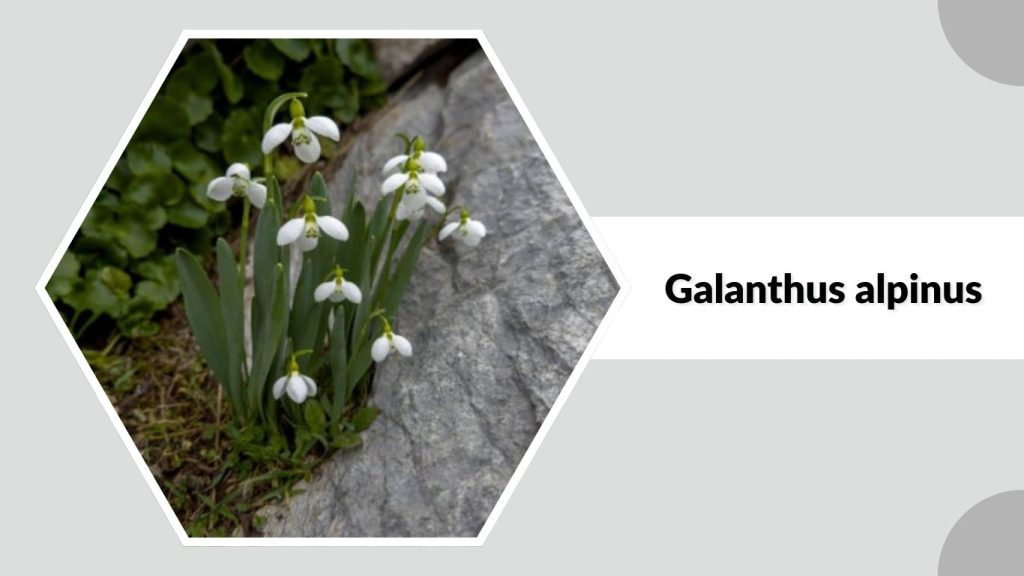
Galanthus alpinus, commonly called the alpine snowdrop, is native to mountainous regions of the Caucasus and nearby areas. It is adapted to cooler climates and higher elevations, making it a hardy and reliable species for temperate and cold-region gardens.
Identification
- Nodding white flowers with rounded to slightly elongated outer petals
- Inner segments marked with green blotches or crescent shapes
- Narrow to moderately broad gray-green leaves
- Stems typically 10–15 cm tall
- Blooms from late winter into early spring
Habitat
In the wild, Galanthus alpinus grows in alpine meadows, open mountain woods, and along streams. It prefers cool temperatures, moist soil during growth, and good drainage. Partial shade to light sun supports healthy flowering.
Growth and Behavior
This species forms small clumps through bulb multiplication. It is cold-tolerant and well suited to regions with harsh winters. When planted in suitable conditions, it naturalizes slowly and returns reliably each year.
Blooming and Seasonal Role
Galanthus alpinus blooms early in the season and plays a role in supporting early pollinators. Its ability to thrive in cooler environments makes it valuable for gardens in northern and mountainous areas.
11. Galanthus cilicicus (Cilician Snowdrop)
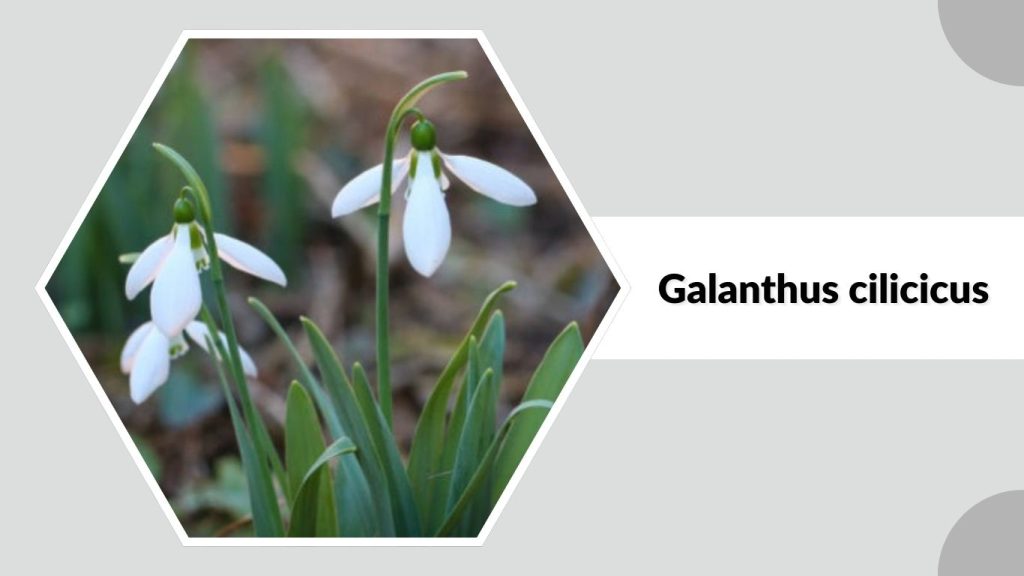
Galanthus cilicicus, known as the Cilician snowdrop, is native to southern Turkey, particularly the historical region of Cilicia. It is admired for its slender form, soft-toned foliage, and delicate flowers, making it a charming addition to woodland and rock gardens.
Identification
- Small to medium, nodding white flowers with narrow outer segments
- Inner petals marked with neat green patches
- Narrow, gray-green to bluish-green leaves
- Thin flowering stems about 8–14 cm tall
- Blooms in late winter to early spring
Habitat
In nature, Galanthus cilicicus grows on rocky hillsides, open woodland, and scrubby slopes. It prefers well-drained soils with winter moisture and partial shade. It is often found in areas with mild winters and dry summers.
Growth and Behavior
This species forms modest clumps through bulb division and is generally slower spreading than common snowdrops. It benefits from being left undisturbed and does best in well-drained sites.
Blooming and Seasonal Role
Galanthus cilicicus blooms during the main snowdrop season and contributes to early-season garden color. Its flowers provide early nectar for insects, while its compact size makes it suitable for smaller planting spaces.
12. Galanthus byzantinus (Byzantine Snowdrop)
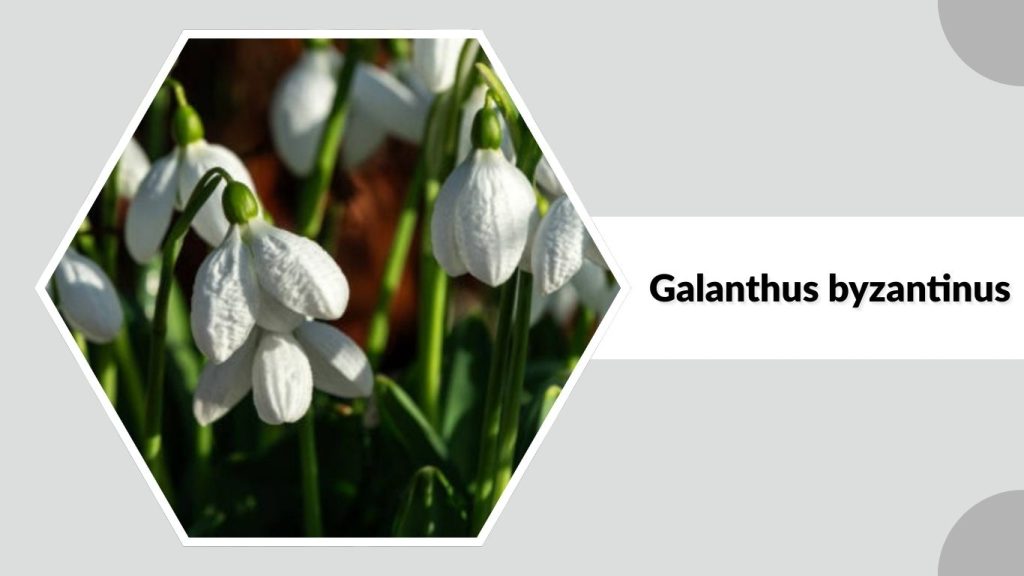
Galanthus byzantinus, commonly called the Byzantine snowdrop, is native to parts of northwestern Turkey near the historical region of Byzantium. It is closely related to Galanthus reginae-olgae and is notable for its elegant flowers and tendency to bloom earlier than many winter bulbs.
Identification
- Nodding white flowers with long, smooth outer petals
- Inner segments marked with green patterns, often near the tips
- Narrow, soft green leaves that may appear with or after flowers
- Slender stems around 10–18 cm tall
- Blooms from autumn to early winter or very early spring
Habitat
In the wild, Galanthus byzantinus grows in light woodland, rocky slopes, and open scrub. It prefers well-drained soil, winter moisture, and shelter from harsh winds. Partial shade and mild winter conditions suit it best.
Growth and Behavior
This species grows from small bulbs and forms loose clumps over time. Some forms flower before the leaves fully develop. It is moderately hardy and benefits from protection in colder climates.
Blooming and Seasonal Role
Because it can bloom in autumn or very early winter, Galanthus byzantinus helps extend the snowdrop season. It provides a rare early nectar source when few other plants are in flower.
13. Galanthus bursanus (Bursa Snowdrop)
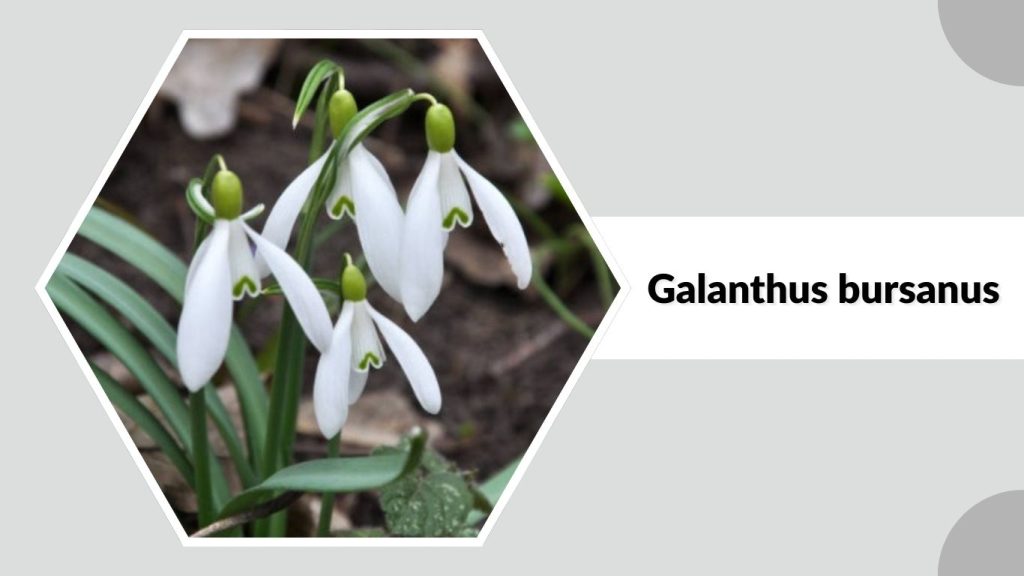
Galanthus bursanus is a rare and localized snowdrop species native to northwestern Turkey, particularly around the Bursa region. It is valued by collectors for its subtle differences in form, neat growth habit, and refined floral details that distinguish it from more common snowdrops.
Identification
- Nodding white flowers with smooth, rounded outer segments
- Inner petals marked with soft green blotches or paired spots
- Narrow to moderately broad green leaves
- Flowering stems usually 10–16 cm tall
- Blooms from late winter to early spring
Habitat
In the wild, Galanthus bursanus grows in damp woodland, shaded slopes, and forest clearings. It prefers humus-rich, well-drained soil and cool, moist conditions during winter and early spring.
Growth and Behavior
This species forms small, compact clumps through bulb division. It is not as fast-spreading as common snowdrops but can persist for many years when left undisturbed in suitable conditions.
Blooming and Seasonal Role
Galanthus bursanus flowers during the core snowdrop season and adds diversity to winter and early spring bulb displays. Like other snowdrops, it supports early pollinators emerging after winter.
14. Galanthus fosteri (Foster’s Snowdrop)
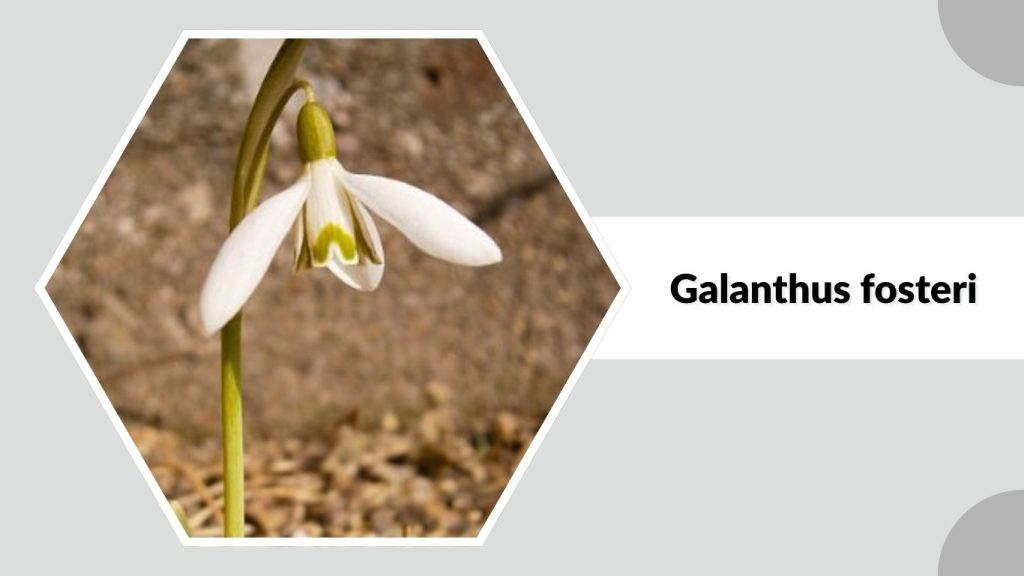
Galanthus fosteri, known as Foster’s snowdrop, is a robust and attractive species native to parts of Turkey and the Middle East. It is admired for its relatively large flowers, strong stems, and bold green markings, making it stand out among many other snowdrops.
Identification
- Large, nodding white flowers with broad outer petals
- Inner segments marked with bold green patches
- Broad, gray-green to blue-green leaves
- Stems typically 15–22 cm tall
- Blooms from late winter to early spring
Habitat
In nature, Galanthus fosteri grows in open woodland, mountain slopes, and rocky valleys. It prefers cool winters, moist but well-drained soil, and partial shade. It often occurs at higher elevations in its native range.
Growth and Behavior
This species is fairly vigorous and forms clumps through bulb multiplication. Its broader leaves often emerge early, giving the plant a fuller look. It adapts well to cultivation and is valued for reliable flowering.
Blooming and Seasonal Role
Galanthus fosteri blooms in late winter, contributing to early garden interest and providing nectar for early insects. Its strong growth and showy flowers make it popular in ornamental plantings.
15. Galanthus lagodechianus (Lagodekhi Snowdrop)
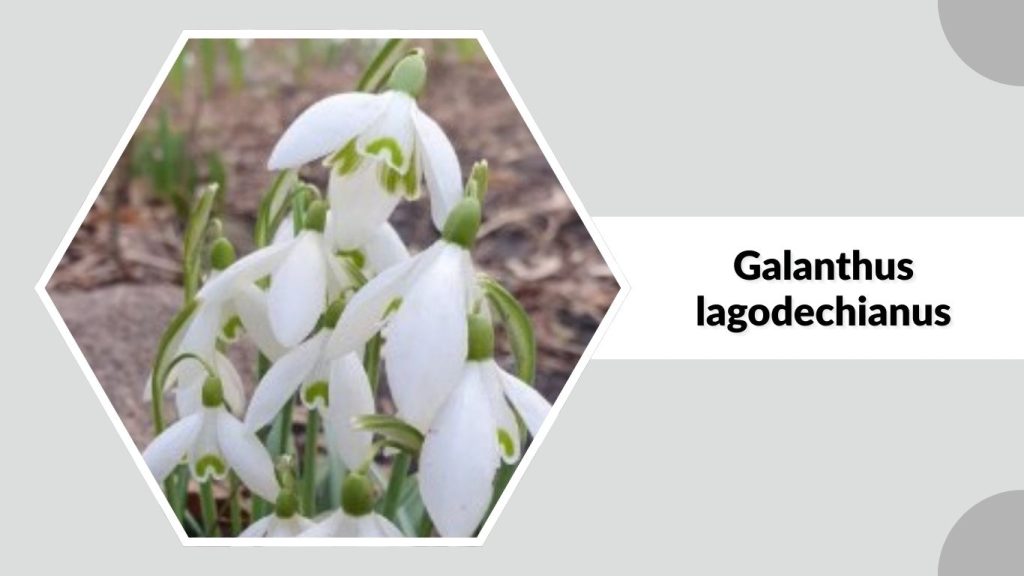
Galanthus lagodechianus is a distinctive snowdrop species native to eastern Georgia, especially the Lagodekhi region near the Caucasus Mountains. It is appreciated for its refined form, soft green foliage, and graceful flowers, and is mainly grown by collectors and in specialized gardens.
Identification
- Nodding white flowers with smooth, rounded outer segments
- Inner petals marked with gentle green patches or paired spots
- Narrow to moderately broad green leaves
- Flowering stems around 10–16 cm tall
- Blooms in late winter to early spring
Habitat
In the wild, Galanthus lagodechianus grows in moist deciduous forests, shaded valleys, and along forest edges. It prefers humus-rich soil, reliable winter moisture, and cool conditions.
Growth and Behavior
This species forms small, tidy clumps through bulb division. It is moderately vigorous but slower spreading than common snowdrops. Once established, it can live for many years without disturbance.
Blooming and Seasonal Role
Galanthus lagodechianus flowers during the main snowdrop season and supports early pollinators. Its elegant habit makes it suitable for woodland gardens and naturalistic plantings.
16. Galanthus koenenianus (Koenen’s Snowdrop)
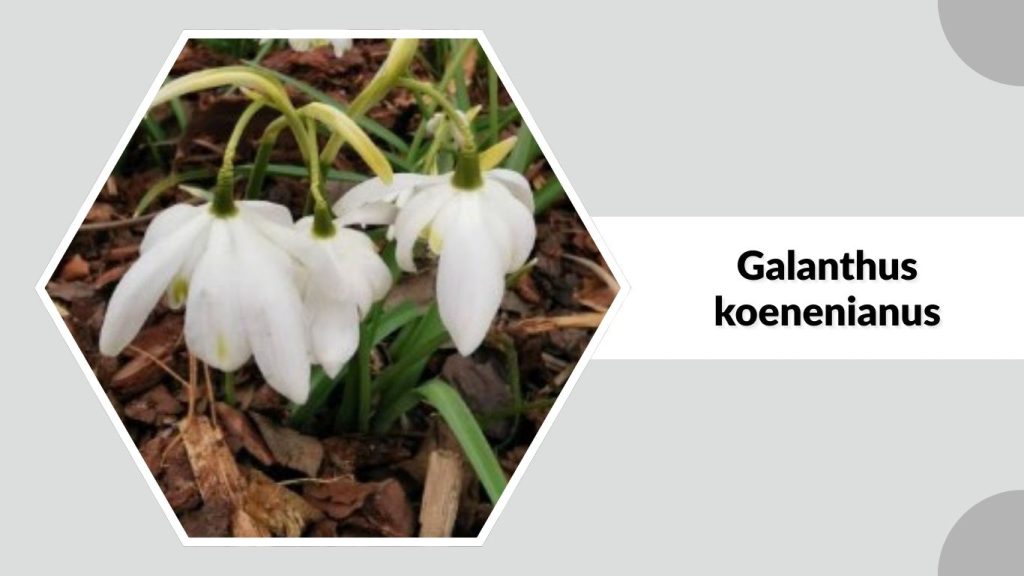
Galanthus koenenianus is a rare and refined snowdrop species native to northeastern Turkey. It is especially valued by enthusiasts for its elegant structure, fresh green foliage, and subtle floral markings that distinguish it from more common snowdrops.
Identification
- Nodding white flowers with smooth, slightly elongated outer petals
- Inner segments marked with neat green patterns near the tips
- Narrow, bright to mid-green leaves
- Slender flowering stems about 10–17 cm tall
- Blooms from late winter to early spring
Habitat
In its natural environment, Galanthus koenenianus grows in moist woodland, shaded mountain slopes, and forest clearings. It prefers humus-rich, well-drained soil and cool, sheltered conditions.
Growth and Behavior
This species forms compact clumps through bulb division and is generally slow to spread. It benefits from being left undisturbed and does well in woodland-style gardens.
Blooming and Seasonal Role
Galanthus koenenianus blooms in the heart of the snowdrop season and contributes to early garden interest. Its flowers support early insects and add botanical diversity to winter bulb collections.
17. Galanthus platyphyllus (Broad-Leaved Snowdrop)
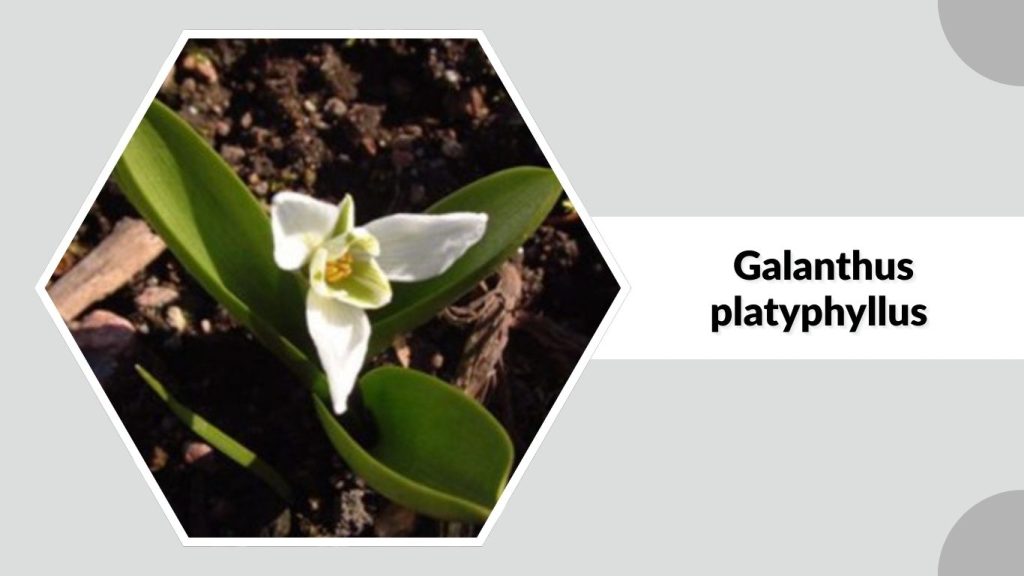
Galanthus platyphyllus, commonly known as the broad-leaved snowdrop, is native to the Caucasus region. It is recognized for its wider leaves and sturdy appearance, which give it a slightly bolder look than many other delicate snowdrop species.
Identification
- Nodding white flowers with rounded, smooth outer petals
- Inner segments marked with green blotches
- Broad, flat, bright to mid-green leaves
- Flowering stems usually 12–18 cm tall
- Blooms from late winter to early spring
Habitat
In the wild, Galanthus platyphyllus grows in moist forests, mountain valleys, and shaded slopes. It prefers cool climates, humus-rich soil, and consistent winter moisture, with partial shade being ideal.
Growth and Behavior
This species forms medium-sized clumps through bulb division. Its broader leaves persist well into spring, helping the bulb build energy. It is fairly hardy and adapts well to woodland garden conditions.
Blooming and Seasonal Role
Galanthus platyphyllus flowers during the main snowdrop season, adding early color to shaded gardens. Like other snowdrops, it provides an important nectar source for early-emerging insects.
18. Galanthus trojanus (Trojan Snowdrop)
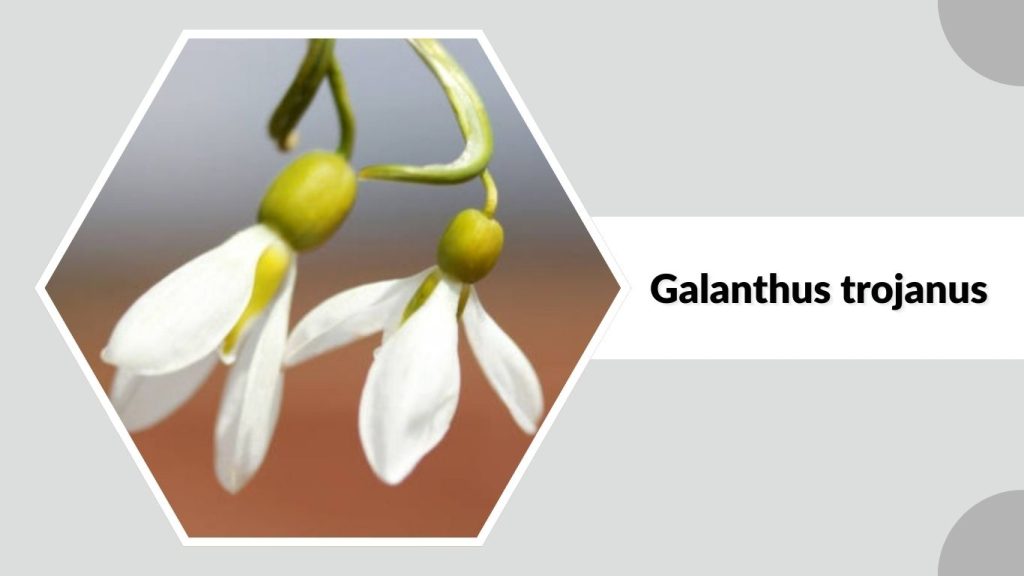
Galanthus trojanus, known as the Trojan snowdrop, is a rare species native to northwestern Turkey, especially around the ancient region of Troy. It is prized for its delicate beauty, neat habit, and botanical interest among collectors.
Identification
- Nodding white flowers with smooth, rounded outer segments
- Inner petals marked with small green patches
- Narrow to moderately broad green leaves
- Flowering stems around 10–16 cm tall
- Blooms from late winter to early spring
Habitat
In nature, Galanthus trojanus grows in moist woodland, forest margins, and shaded slopes. It prefers humus-rich, well-drained soils and cool, sheltered environments.
Growth and Behavior
This species forms small, compact clumps through bulb multiplication. It is not fast-spreading but can persist for many years in suitable conditions. It prefers minimal disturbance once established.
Blooming and Seasonal Role
Galanthus trojanus blooms during the core snowdrop season, contributing to early garden displays. Its flowers support early pollinators and add conservation and botanical value to plant collections.
19. Galanthus transcaucasicus (Transcaucasian Snowdrop)
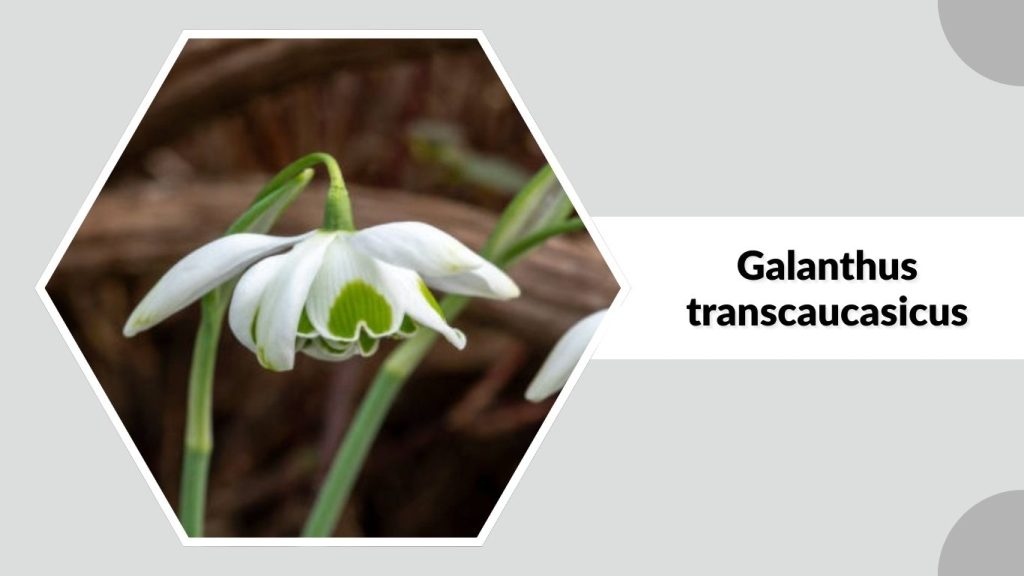
Galanthus transcaucasicus is a snowdrop species native to the Transcaucasian region between the Black and Caspian Seas. It is appreciated for its tidy growth habit, fresh green foliage, and classic snowdrop form, making it suitable for woodland gardens and naturalized plantings.
Identification
- Nodding white flowers with rounded outer petals
- Inner segments marked with soft green patches
- Narrow to moderately broad green leaves
- Flowering stems usually 10–17 cm tall
- Blooms from late winter to early spring
Habitat
In the wild, Galanthus transcaucasicus grows in deciduous forests, shaded slopes, and moist clearings. It prefers humus-rich soil, cool temperatures, and consistent winter moisture.
Growth and Behavior
This species forms neat clumps through bulb division and is moderately vigorous. It adapts well to temperate climates and can naturalize slowly when conditions are favorable.
Blooming and Seasonal Role
Galanthus transcaucasicus flowers during the main snowdrop season and supports early pollinators. Its subtle beauty and reliability make it a good choice for naturalistic garden settings.
20. Galanthus samothracicus (Samothrace Snowdrop)
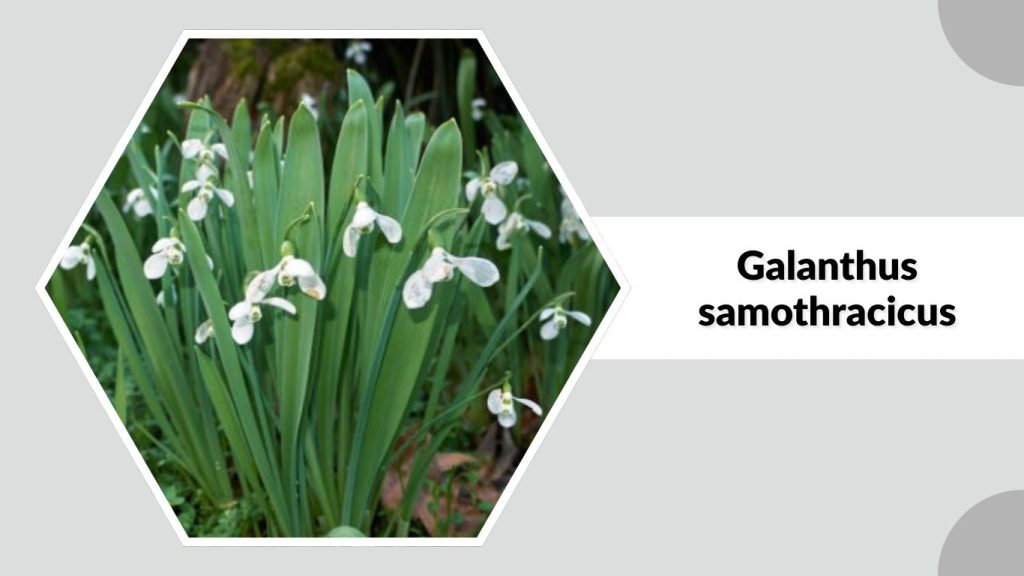
Galanthus samothracicus is a rare snowdrop species native to the Greek island of Samothrace. It is valued for its graceful form, soft green foliage, and botanical significance, and is mainly grown by collectors and in specialty gardens.
Identification
- Nodding white flowers with smooth, rounded outer segments
- Inner petals marked with clear green patches
- Narrow to moderately broad green leaves
- Flowering stems around 10–16 cm tall
- Blooms from late winter to early spring
Habitat
In nature, Galanthus samothracicus grows in moist woodland, shaded ravines, and forest margins. It prefers humus-rich, well-drained soil and cool, sheltered conditions.
Growth and Behavior
This species forms small clumps through bulb division and is generally slow to spread. It benefits from minimal disturbance and consistent moisture during the growing season.
Blooming and Seasonal Role
Galanthus samothracicus blooms in late winter, contributing to early seasonal interest and supporting early pollinators. Its rarity also makes it important from a conservation and botanical perspective.
FAQs
What is a snowdrop (Galanthus)?
Snowdrops are small, early-flowering bulb plants in the genus Galanthus, known for their nodding white flowers and ability to bloom in late winter. They are native mainly to Europe and western Asia and are among the first plants to signal the end of winter.
When do snowdrops usually bloom?
Most snowdrop species bloom from late winter to early spring, often between January and March, depending on climate. Some special species, such as Galanthus reginae-olgae, can bloom in autumn. Their early flowering makes them important for gardens and early pollinators.
Where do snowdrops grow naturally?
Snowdrops naturally grow in deciduous woodlands, forest edges, mountain valleys, and moist meadows. They prefer cool conditions, humus-rich soil, and winter moisture. Many species are native to the Balkans, the Caucasus, Turkey, and parts of southern and central Europe.
Are snowdrops easy to grow in gardens?
Yes, most snowdrops are easy to grow in temperate gardens. They thrive in well-drained but moist soil, partial shade, and natural woodland conditions. Once established, they often multiply on their own and return reliably each year with minimal care.
Are snowdrops important for wildlife?
Snowdrops are very important for early-season insects, especially bees, because they bloom when few other flowers are available. Their early nectar and pollen help support pollinators emerging from winter dormancy, making them ecologically valuable as well as ornamental.