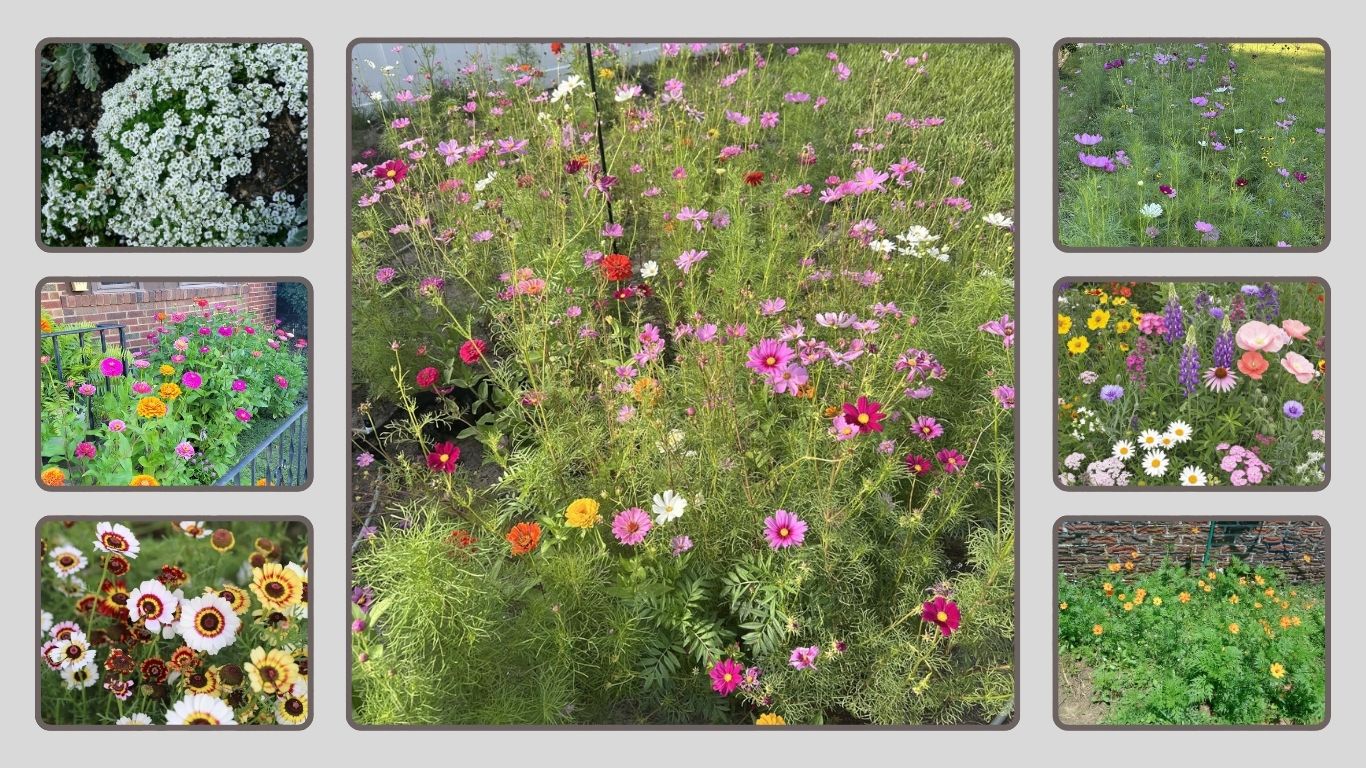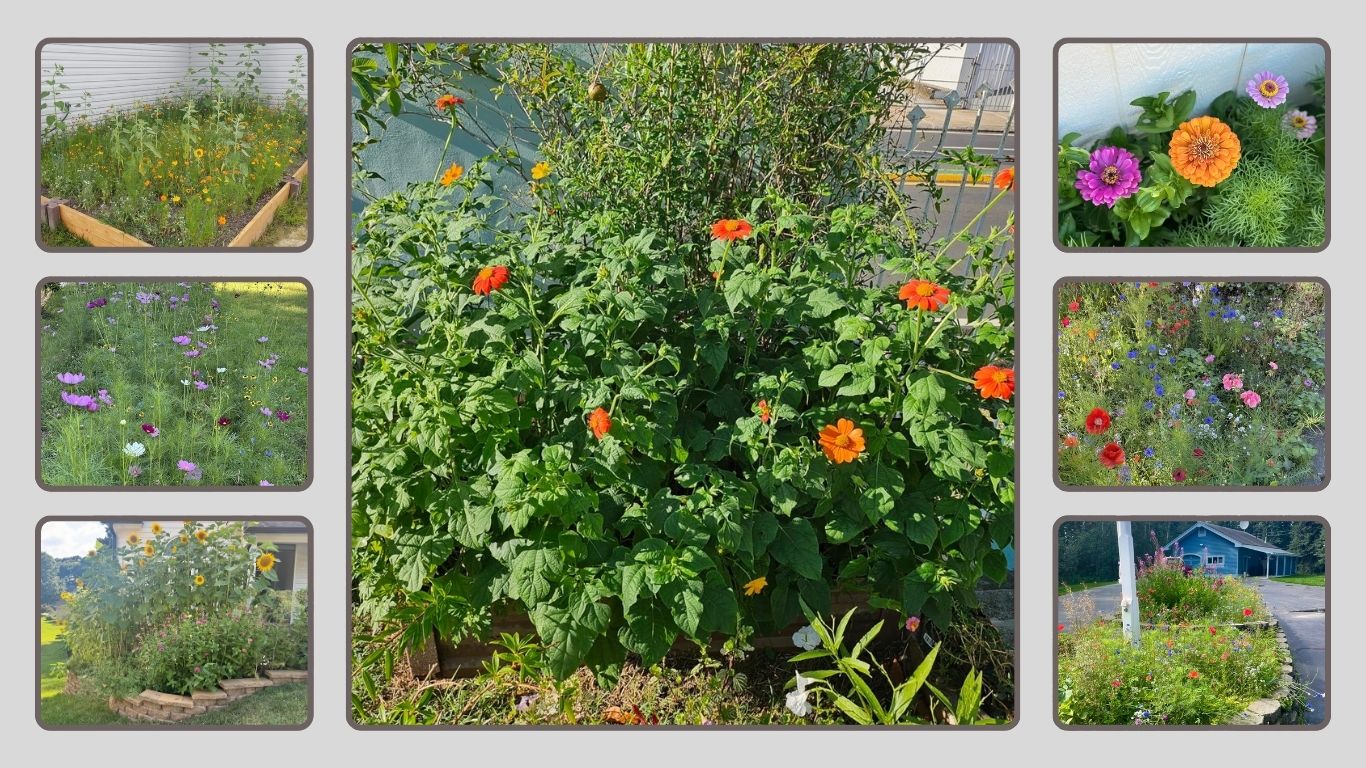




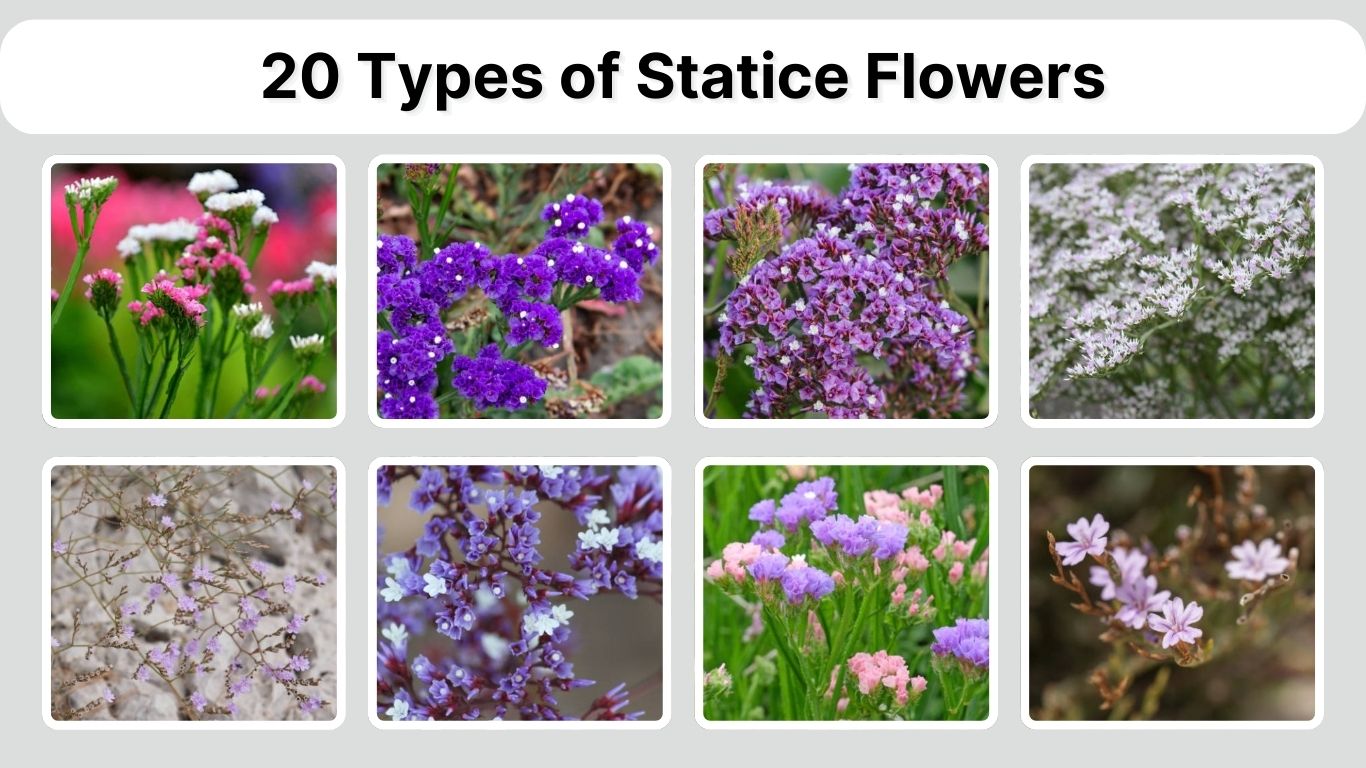
Statice flowers, known for their vibrant, papery blooms, are a favorite among gardeners and florists alike. With over 20 popular types, including Limonium sinuatum and Limonium latifolium, these hardy perennials and annuals thrive in sunny, well-drained soils and are perfect for fresh or dried arrangements. Their long-lasting flowers come in shades of purple, blue, pink, white, and yellow, attracting pollinators while adding color to gardens, borders, and bouquets. Statice flowers are low-maintenance and highly versatile.
1. Limonium sinuatum
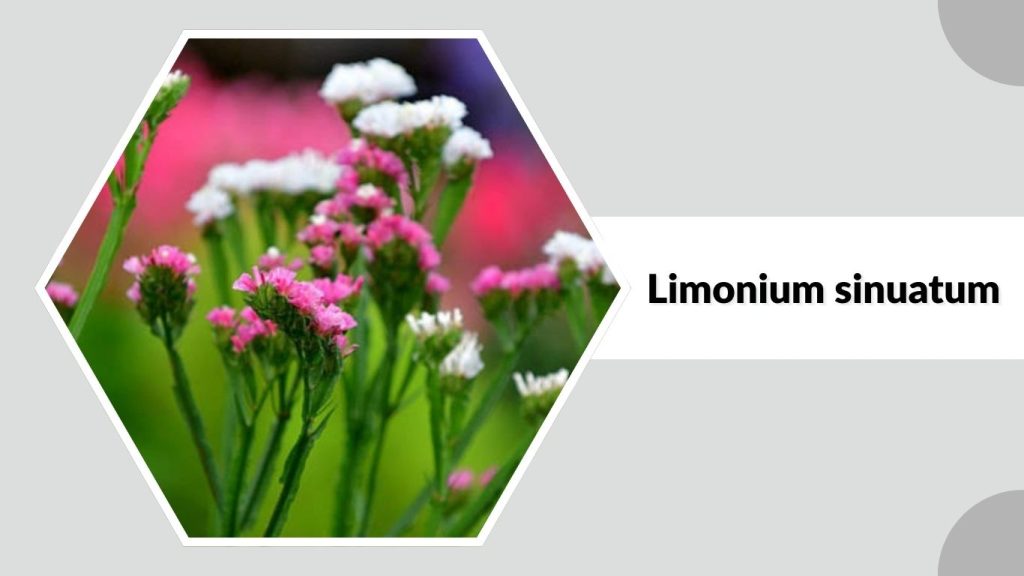
Limonium sinuatum, commonly known as annual statice or wavy-leaved sea lavender, is a popular ornamental flower prized for its vibrant, papery blooms. It is widely cultivated for cut flowers, bouquets, and dried arrangements due to its long-lasting nature. This species thrives in sunny, well-drained gardens and is known for attracting pollinators like bees and butterflies.
Identification
- Wavy, gray-green leaves
- Sturdy stems reaching 12–36 inches in height
- Papery, funnel-shaped flowers forming dense clusters
- Colors range from purple, blue, pink, white, to yellow
Habitat
Native to the Mediterranean region, Limonium sinuatum prefers sunny, dry areas with sandy or well-drained soil. It is commonly grown in gardens worldwide and can adapt to coastal environments.
Color Pattern
Flowers are vibrant and long-lasting, available in shades of purple, lavender, pink, white, and yellow. The papery texture makes them ideal for dried flower arrangements.
Uses and Benefits
This statice is primarily used in floral arrangements, both fresh and dried. Its resilience and bright colors make it a favorite for bouquets, wedding décor, and ornamental gardening. It also supports pollinators in garden ecosystems.
2. Limonium latifolium
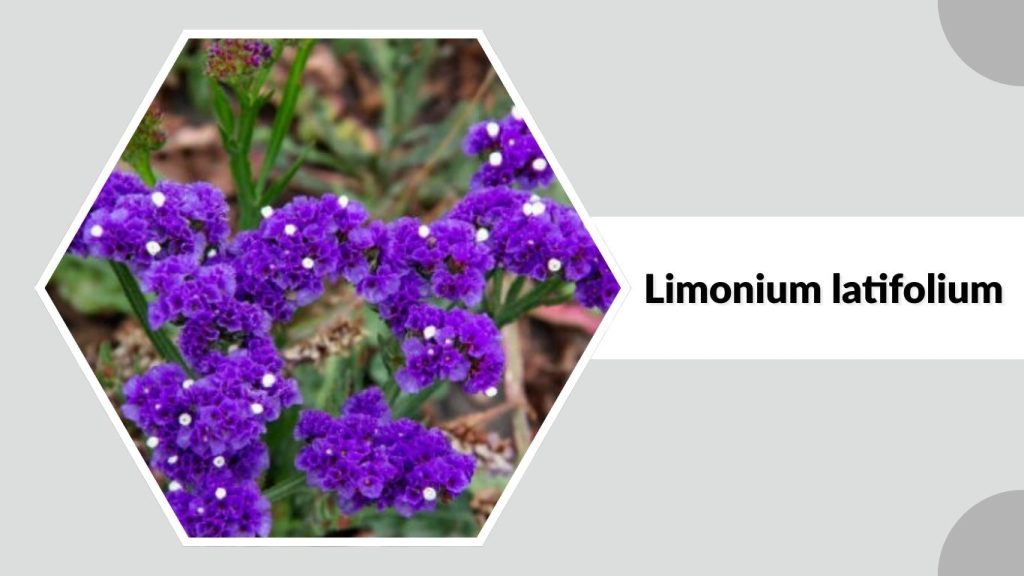
Limonium latifolium, also known as perennial statice or broad-leaved sea lavender, is a hardy flowering plant valued for its striking lavender-blue blooms and long flowering season. It is often used in gardens, coastal landscapes, and floral arrangements because of its tolerance to dry and salty conditions.
Identification
- Broad, lance-shaped gray-green leaves
- Stems can grow up to 2–3 feet tall
- Dense clusters of small, papery flowers
- Flowers are typically lavender-blue with a subtle violet hue
Habitat
Native to southern Europe and the Mediterranean, this species thrives in sunny locations with well-drained soil. It is particularly well-suited to coastal gardens and sandy soils.
Color Pattern
Limonium latifolium produces lavender-blue flowers with a delicate papery texture, ideal for fresh and dried arrangements.
Uses and Benefits
Commonly used in ornamental gardens and cut flower arrangements, it also attracts pollinators such as bees and butterflies. Its drought and salt tolerance make it a low-maintenance plant for diverse landscaping projects.
3. Limonium perezii
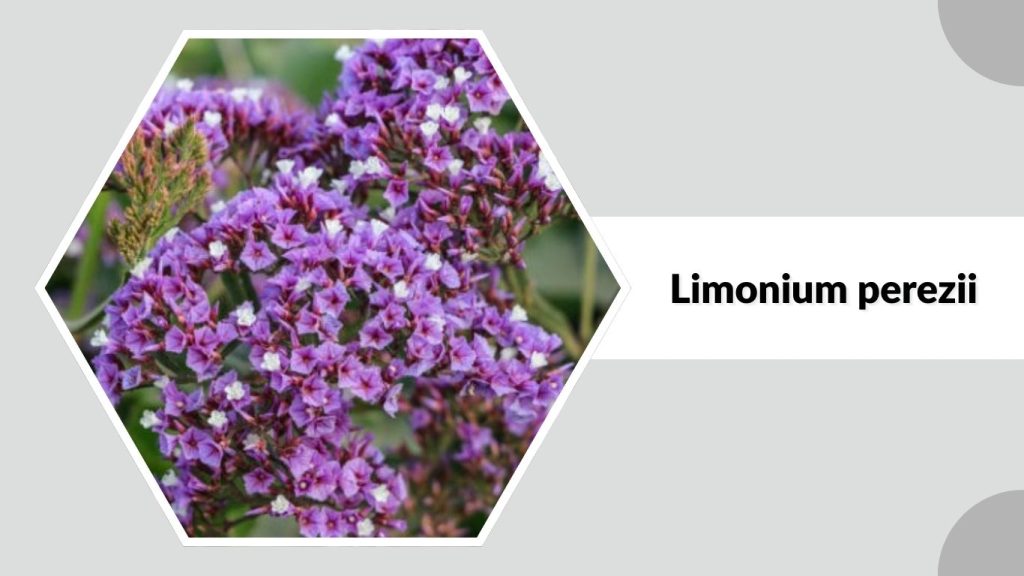
Limonium perezii, commonly called Perez’s sea lavender or giant statice, is a robust perennial known for its large, showy flower clusters and silvery-green foliage. It is popular in coastal gardens and landscapes, valued for its drought tolerance and long-lasting blooms that make it ideal for both fresh and dried floral arrangements.
Identification
- Large, leathery, gray-green leaves forming a basal rosette
- Tall stems reaching up to 3 feet
- Dense, rounded flower clusters
- Flowers are typically purple to violet, with a papery texture
Habitat
Native to the Canary Islands, Limonium perezii thrives in sunny, well-drained locations. It is highly tolerant of salty air, making it perfect for coastal landscapes and sandy soils.
Color Pattern
The flowers are vivid purple to violet, with a papery feel that preserves well when dried. The silvery-green foliage provides a beautiful contrast to the blooms.
Uses and Benefits
This statice is mainly used in ornamental gardening and floral arrangements. Its resilience, long blooming period, and attractiveness to pollinators make it a versatile plant for both decorative and ecological purposes.
4. Limonium tataricum
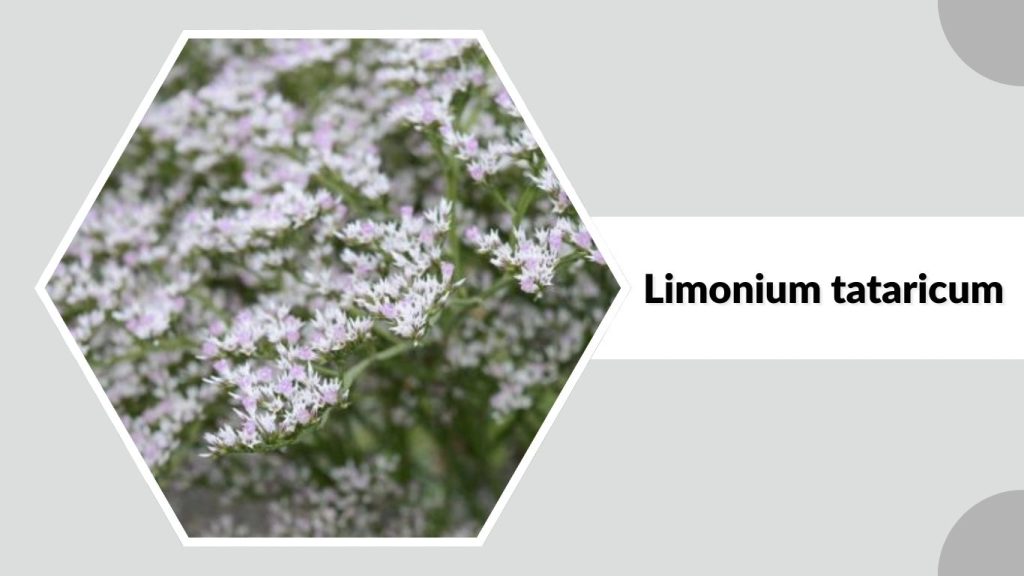
Limonium tataricum, commonly known as Tatarian statice, is a perennial plant appreciated for its delicate, long-lasting flowers and tolerance to harsh conditions. It is often cultivated in gardens and used in dried floral arrangements due to its papery-textured blooms that retain color well over time.
Identification
- Narrow, gray-green leaves forming a basal rosette
- Upright stems reaching 1–2 feet in height
- Small, clustered flowers in branching panicles
- Flowers are usually pale purple or lavender, papery in texture
Habitat
Native to Eastern Europe and parts of Central Asia, this species thrives in sunny, dry, and well-drained soils. It is commonly found in rocky slopes, steppes, and coastal areas.
Color Pattern
The flowers are soft purple to lavender, with a papery texture that makes them ideal for drying. The muted tones complement garden landscapes and floral arrangements.
Uses and Benefits
Limonium tataricum is primarily used in ornamental gardens and as a dried flower for arrangements. Its resilience to drought and poor soils makes it a low-maintenance addition, while also attracting pollinators like bees and butterflies.
5. Limonium virgatum
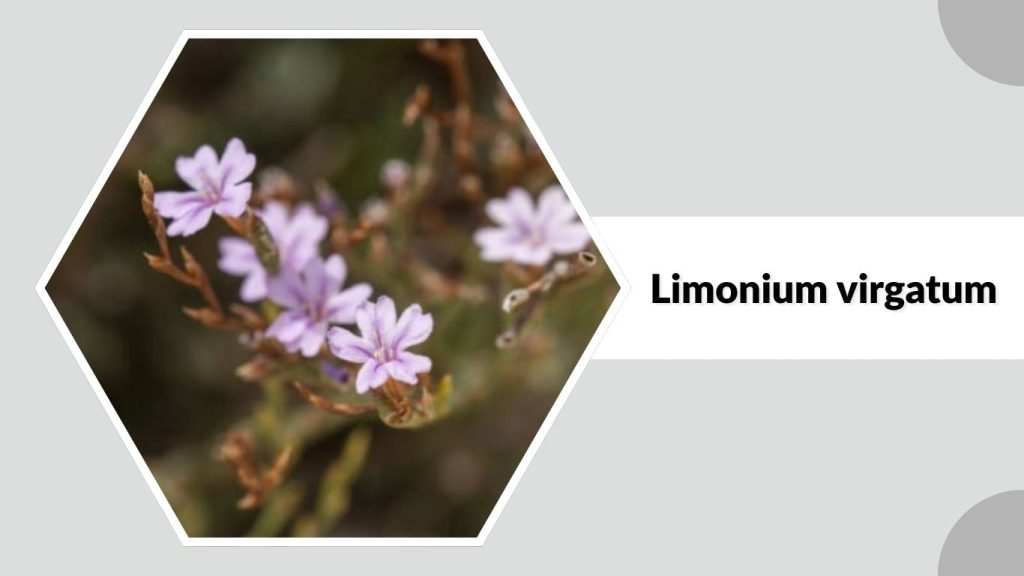
Limonium virgatum, also called winged statice or narrow-leaved sea lavender, is a perennial flowering plant admired for its graceful stems and clusters of delicate flowers. Its drought tolerance and long-lasting blooms make it popular for gardens, coastal landscapes, and dried flower arrangements.
Identification
- Narrow, gray-green leaves
- Upright stems growing up to 2 feet tall
- Small, clustered flowers arranged in branching panicles
- Flowers are usually lilac to pale purple with a papery texture
Habitat
Native to the Mediterranean region, Limonium virgatum thrives in sunny, well-drained soils. It is commonly found in coastal areas, rocky terrains, and dry meadows.
Color Pattern
The flowers display soft lilac or pale purple shades. Their papery texture ensures longevity, making them perfect for fresh and dried floral arrangements.
Uses and Benefits
Limonium virgatum is widely used in ornamental gardening and floral décor. Its drought resistance, aesthetic appeal, and ability to attract pollinators make it a versatile plant for both landscaping and ecological purposes.
6. Limonium platyphyllum
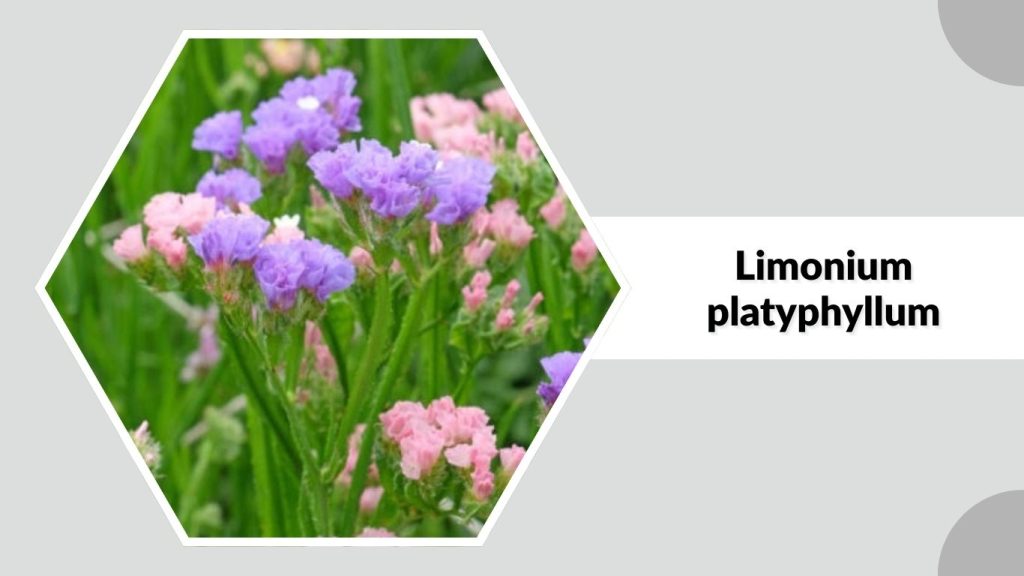
Limonium platyphyllum, commonly known as broad-leaved statice, is a striking perennial prized for its large, showy flower clusters and broad, silvery foliage. It is widely used in gardens, borders, and cut-flower arrangements, valued for its resilience and long-lasting blooms.
Identification
- Broad, silvery-gray leaves forming a basal rosette
- Stems reaching up to 3 feet in height
- Dense, rounded clusters of small flowers
- Flowers are typically violet to purple with a papery texture
Habitat
Native to the Mediterranean region, this species thrives in sunny, well-drained soils. It tolerates rocky or sandy terrain and is commonly cultivated in ornamental gardens worldwide.
Color Pattern
Flowers range from violet to deep purple, with a papery texture ideal for dried arrangements. The silvery foliage enhances the overall visual appeal in landscapes.
Uses and Benefits
Limonium platyphyllum is used in ornamental gardening, borders, and floral arrangements. Its durability, long bloom period, and ability to attract pollinators make it a valuable addition to gardens and ecological landscaping projects.
7. Limonium duriusculum
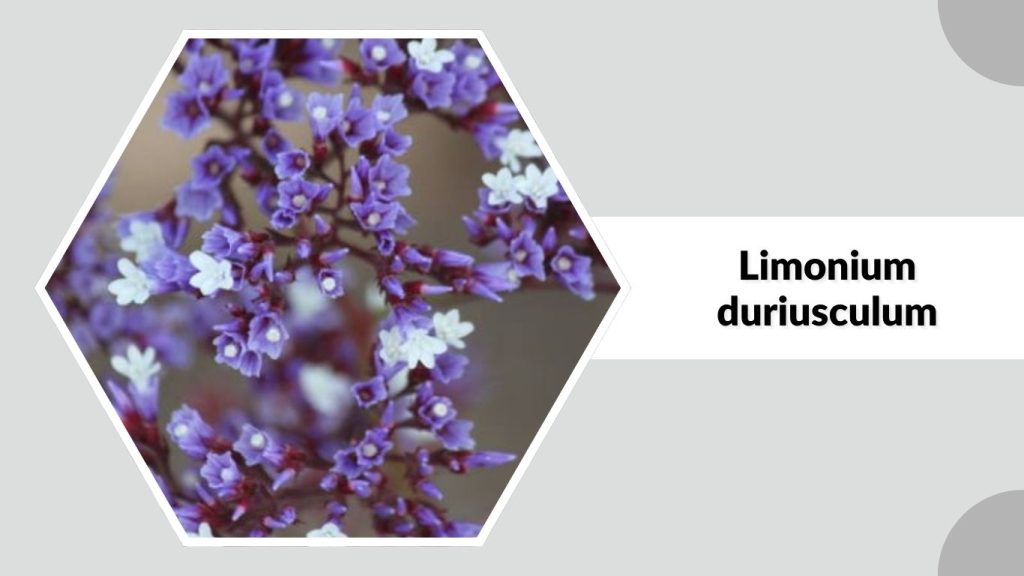
Limonium duriusculum, commonly called Mediterranean statice or stiff-leaved sea lavender, is a perennial plant known for its delicate, long-lasting flowers and tolerance to dry, sandy soils. It is often used in coastal gardens and dried floral arrangements because of its papery blooms and low maintenance requirements.
Identification
- Narrow, stiff, gray-green leaves
- Erect stems growing up to 1–2 feet tall
- Small clustered flowers arranged in branched panicles
- Flowers are typically pale purple or lavender with a papery texture
Habitat
Native to the Mediterranean region, this species thrives in sunny, well-drained, and rocky soils. It is commonly found in coastal areas, dry meadows, and open slopes.
Color Pattern
The flowers are soft lavender to pale purple, retaining their color and shape well when dried, making them ideal for floral décor.
Uses and Benefits
Limonium duriusculum is mainly used in ornamental gardens and as dried flowers for bouquets and arrangements. Its drought tolerance and long-lasting blooms make it a low-maintenance, attractive plant for both landscaping and ecological purposes.
8. Limonium narbonense
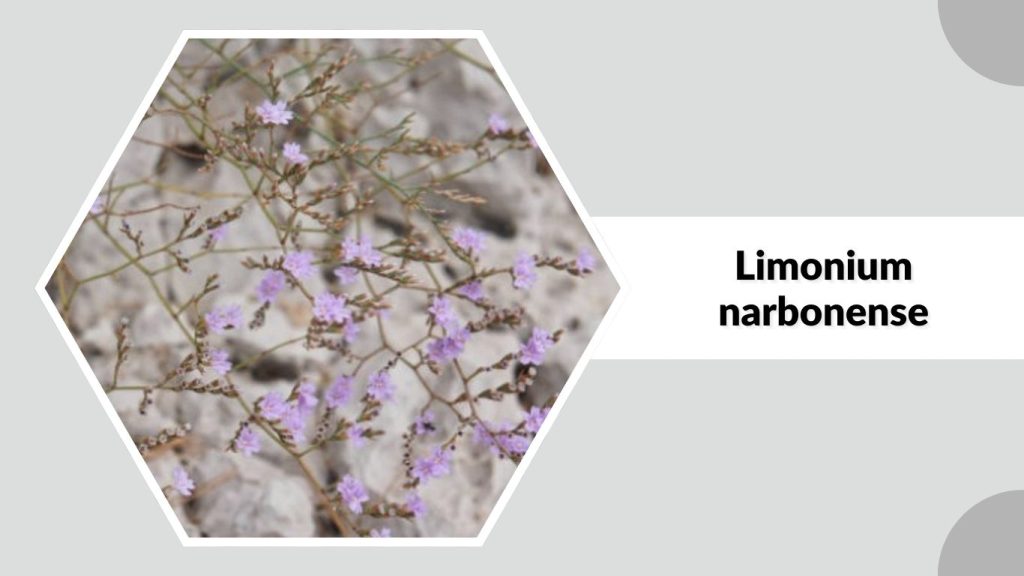
Limonium narbonense, commonly known as Narbonne statice or sea lavender, is a perennial plant admired for its delicate flower clusters and silvery-green foliage. It is valued for ornamental gardening, coastal landscaping, and dried floral arrangements due to its long-lasting, papery blooms.
Identification
- Narrow, gray-green leaves forming a basal rosette
- Stems reaching up to 2–3 feet in height
- Dense clusters of small flowers arranged in branched panicles
- Flowers are usually lilac to light purple with a papery texture
Habitat
Native to the Mediterranean region, this species thrives in sunny, well-drained soils, often found in coastal areas, rocky slopes, and dry meadows.
Color Pattern
The flowers display pale purple to lilac shades. Their papery texture allows them to maintain color and shape for long periods, making them ideal for dried arrangements.
Uses and Benefits
Limonium narbonense is widely used in ornamental gardens, cut flower arrangements, and dried floral décor. Its resilience, long bloom period, and attractiveness to pollinators make it a versatile and low-maintenance addition to gardens.
9. Limonium bellidifolium
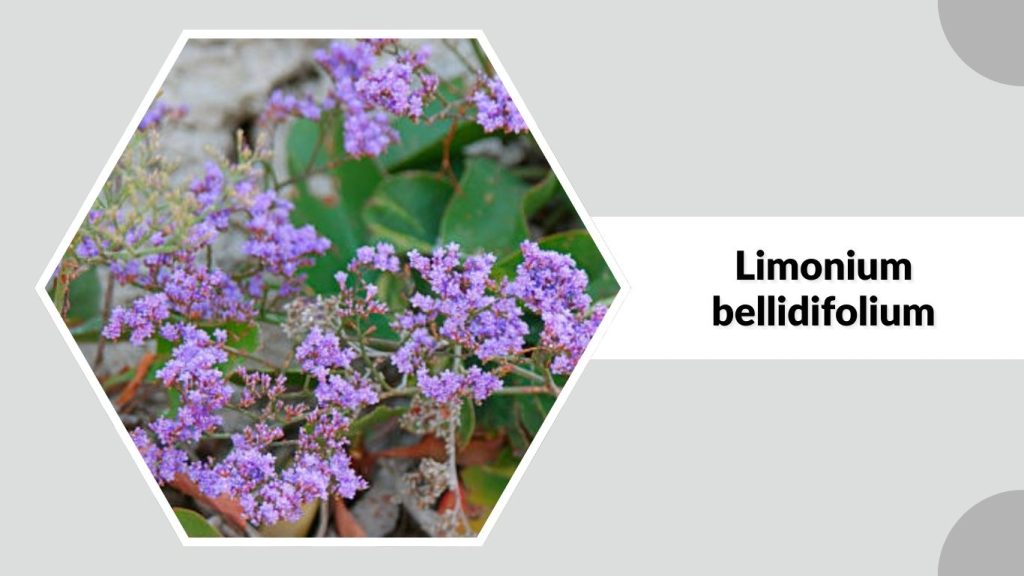
Limonium bellidifolium, commonly known as seaside statice or ox-eye sea lavender, is a perennial plant appreciated for its small, delicate flowers and low-maintenance growth. It is often cultivated in coastal gardens and used in dried floral arrangements due to its papery blooms that retain color and shape.
Identification
- Small, rounded, gray-green leaves
- Erect stems reaching 1–2 feet in height
- Compact clusters of tiny flowers
- Flowers are typically pale purple to lavender with a papery texture
Habitat
Native to European coasts, this species thrives in sunny, sandy, and well-drained soils. It is commonly found in salt marshes, coastal meadows, and dry, rocky terrains.
Color Pattern
Flowers are soft lavender to pale purple, with a durable papery texture that preserves well when dried, making them suitable for floral arrangements.
Uses and Benefits
Limonium bellidifolium is primarily used in ornamental gardening and dried flower décor. Its tolerance to salty soils and low-maintenance nature make it ideal for coastal landscapes and eco-friendly gardens.
10. Limonium carolinianum
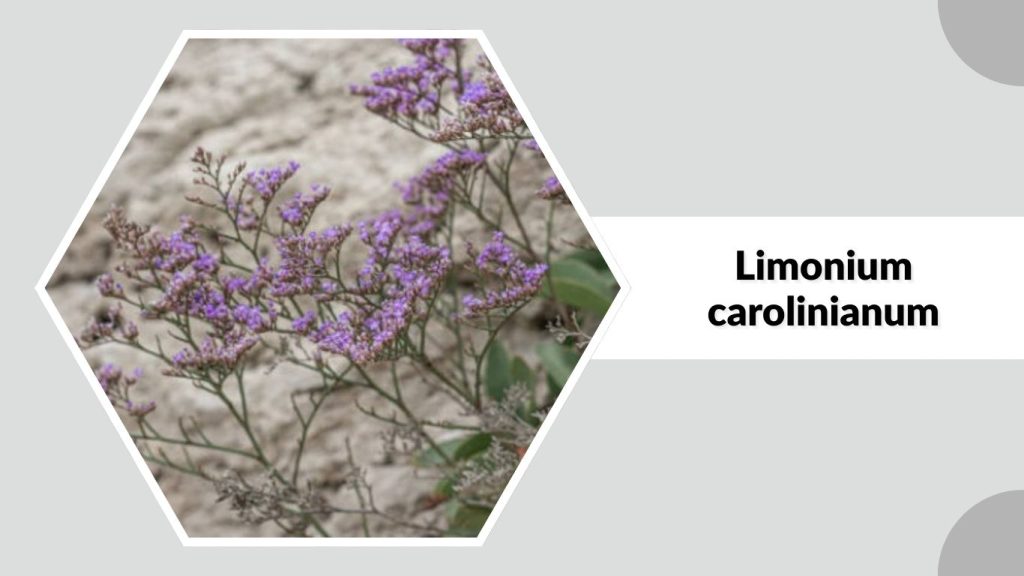
Limonium carolinianum, commonly called Carolina sea lavender, is a perennial plant prized for its delicate, long-lasting flowers and silvery foliage. It is popular in coastal gardens and for use in dried floral arrangements due to its papery blooms and salt-tolerant nature.
Identification
- Narrow, gray-green leaves forming a basal rosette
- Upright stems reaching 1–2 feet in height
- Small, clustered flowers arranged in branching panicles
- Flowers are usually lavender to light purple with a papery texture
Habitat
Native to the eastern coasts of North America, this species thrives in sandy, sunny, well-drained soils. It is commonly found in salt marshes, dunes, and coastal meadows.
Color Pattern
The flowers display soft lavender to light purple shades. Their papery texture allows them to retain color and shape when dried, making them ideal for bouquets and floral décor.
Uses and Benefits
Limonium carolinianum is widely used in ornamental gardening, coastal landscaping, and dried flower arrangements. Its tolerance to salt and low-maintenance growth make it suitable for both decorative and ecological purposes.
11. Limonium gmelinii
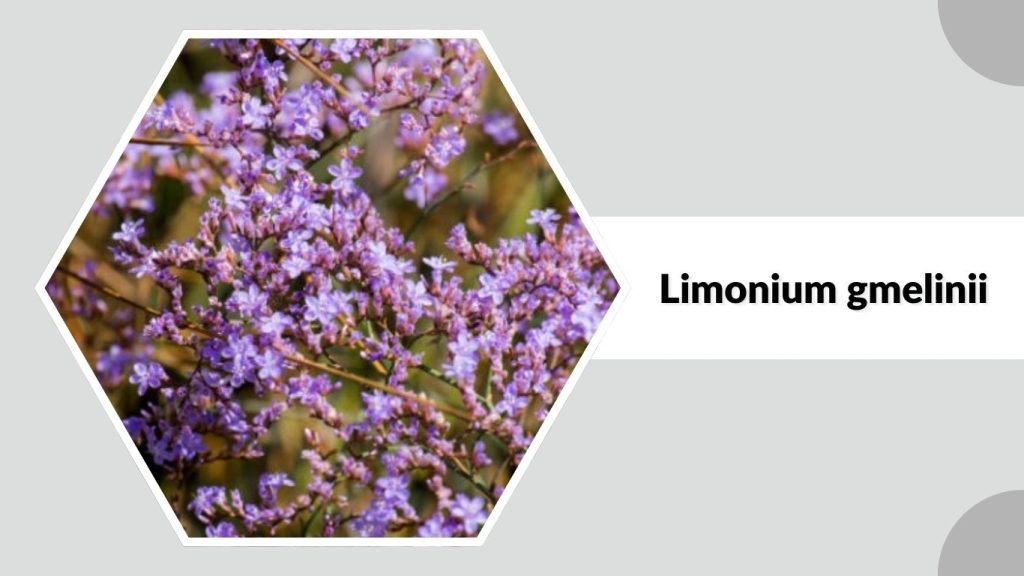
Limonium gmelinii, commonly known as Gmelin’s statice or purple sea lavender, is a perennial plant valued for its vibrant flower clusters and tolerance to harsh, dry conditions. It is widely used in gardens, borders, and dried floral arrangements due to its long-lasting papery blooms.
Identification
- Narrow, gray-green leaves forming a basal rosette
- Stems growing up to 1–2 feet tall
- Dense clusters of small flowers arranged in branched panicles
- Flowers are typically deep purple to violet with a papery texture
Habitat
Native to Eastern Europe and Central Asia, Limonium gmelinii thrives in sunny, well-drained soils. It is commonly found in steppes, rocky slopes, and coastal areas.
Color Pattern
Flowers range from deep purple to violet, with a papery texture that preserves well when dried, making them perfect for floral arrangements and ornamental displays.
Uses and Benefits
This statice is used in ornamental gardens, cut flower arrangements, and dried floral décor. Its resilience, drought tolerance, and long-lasting blooms make it a versatile plant for landscaping and ecological purposes.
12. Limonium ramosissimum
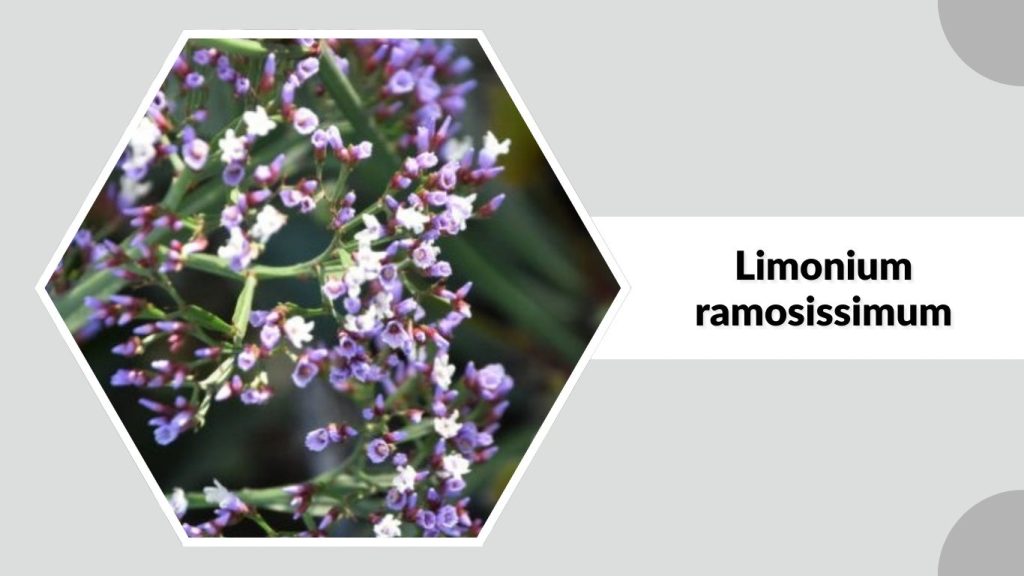
Limonium ramosissimum, commonly known as branched statice or high sea lavender, is a perennial plant appreciated for its intricate, branching flower clusters and long-lasting blooms. It is often cultivated in coastal gardens and used in dried floral arrangements due to its papery flowers and drought tolerance.
Identification
- Narrow, gray-green leaves forming a basal rosette
- Erect, highly branched stems reaching up to 2–3 feet tall
- Small flowers arranged in dense, branching panicles
- Flowers are usually pale lavender to purple with a papery texture
Habitat
Native to Mediterranean coastal regions, this species thrives in sandy, well-drained soils and sunny locations. It is commonly found in salt marshes, dunes, and rocky coastal areas.
Color Pattern
The flowers are soft lavender to pale purple, with a durable papery texture that retains color and shape when dried, making them ideal for arrangements and bouquets.
Uses and Benefits
Limonium ramosissimum is primarily used in ornamental gardening, coastal landscaping, and dried floral décor. Its drought and salt tolerance, along with long-lasting blooms, make it a low-maintenance, attractive addition to gardens.
13. Limonium scoparium
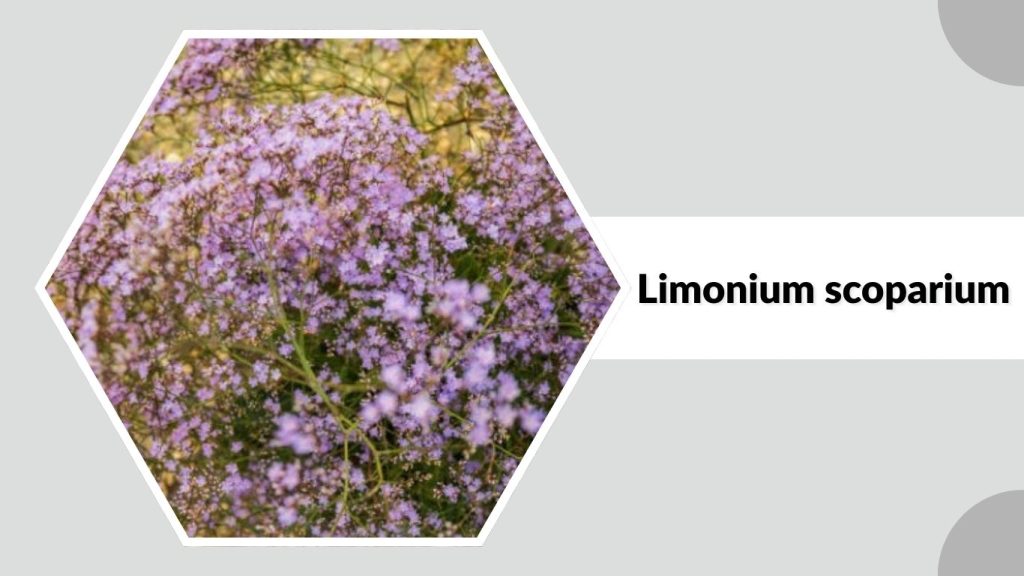
Limonium scoparium, commonly called broom statice or shrubby sea lavender, is a perennial plant known for its bushy growth habit and clusters of delicate, long-lasting flowers. It is often cultivated in gardens and used in dried floral arrangements due to its vibrant papery blooms.
Identification
- Narrow, gray-green leaves forming dense basal rosettes
- Upright, branched stems growing up to 2 feet tall
- Small flowers arranged in tight, branched clusters
- Flowers are typically lavender to pale purple with a papery texture
Habitat
Native to Mediterranean and southern European regions, Limonium scoparium thrives in sunny, well-drained soils. It is commonly found in rocky slopes, coastal areas, and dry meadows.
Color Pattern
The flowers range from pale lavender to soft purple, with a papery texture that retains shape and color for extended periods, making them suitable for dried floral arrangements.
Uses and Benefits
This statice is used in ornamental gardening, floral décor, and dried arrangements. Its drought tolerance, long-lasting blooms, and bushy growth habit make it an attractive, low-maintenance plant for various landscaping projects.
14. Limonium vulgare
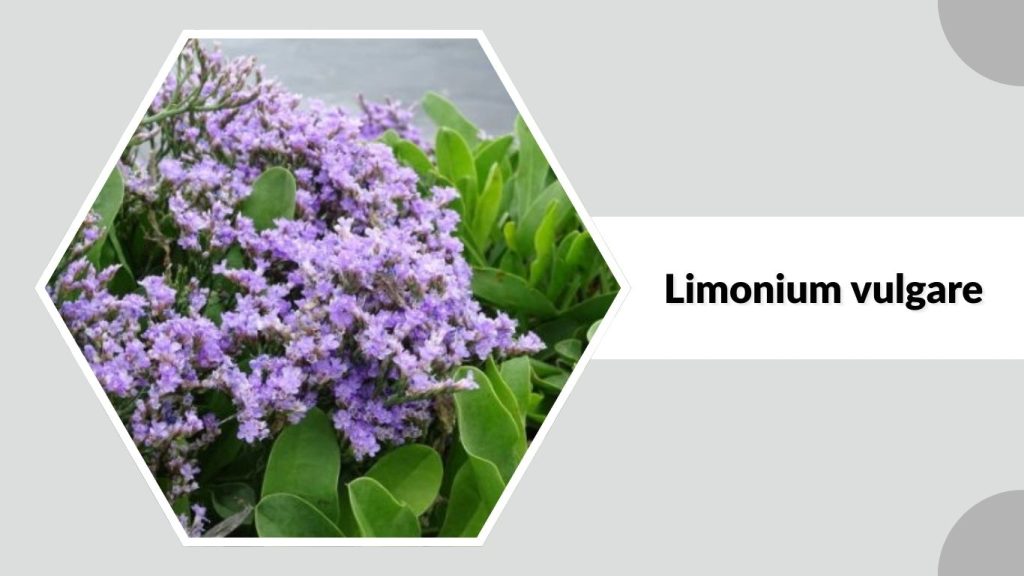
Limonium vulgare, commonly known as common sea lavender or marsh statice, is a perennial plant prized for its delicate, long-lasting flowers and tolerance to coastal conditions. It is widely used in gardens, salt marsh landscaping, and dried floral arrangements.
Identification
- Narrow, gray-green leaves forming a basal rosette
- Erect stems reaching 1–2 feet tall
- Small flowers arranged in branched clusters
- Flowers are typically pale purple to lavender with a papery texture
Habitat
Native to Europe’s coastal regions, Limonium vulgare thrives in sunny, well-drained soils, salt marshes, and sandy coastal areas. It is highly tolerant of saline conditions.
Color Pattern
The flowers display soft lavender to pale purple shades. Their papery texture allows them to maintain color and shape when dried, making them ideal for bouquets and floral décor.
Uses and Benefits
Limonium vulgare is used in ornamental gardening, coastal landscaping, and dried flower arrangements. Its salt tolerance, long bloom period, and low-maintenance nature make it a versatile and attractive plant for various garden and ecological settings.
15. Limonium cotoneum
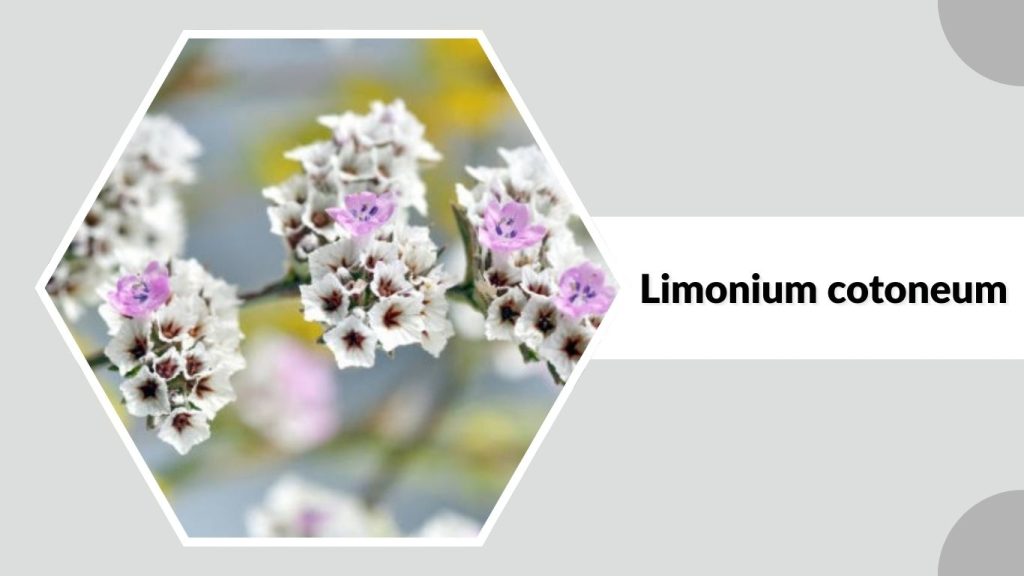
Limonium cotoneum, commonly known as cotoneum statice or silky sea lavender, is a perennial plant admired for its silvery foliage and delicate, long-lasting flowers. It is popular in gardens and floral arrangements due to its papery blooms that retain color when dried.
Identification
- Silvery-gray, narrow leaves forming a basal rosette
- Erect stems growing up to 1–2 feet tall
- Small, clustered flowers arranged in branched panicles
- Flowers are usually pale lavender to light purple with a papery texture
Habitat
Native to the Mediterranean region, Limonium cotoneum thrives in sunny, well-drained soils. It is commonly found in coastal areas, rocky slopes, and dry meadows.
Color Pattern
The flowers are soft lavender to pale purple, with a papery texture that preserves shape and color when dried, making them ideal for floral décor and bouquets.
Uses and Benefits
Limonium cotoneum is primarily used in ornamental gardening, dried flower arrangements, and coastal landscaping. Its drought tolerance, aesthetic appeal, and long-lasting blooms make it a versatile, low-maintenance plant.
16. Limonium latifolium var. album
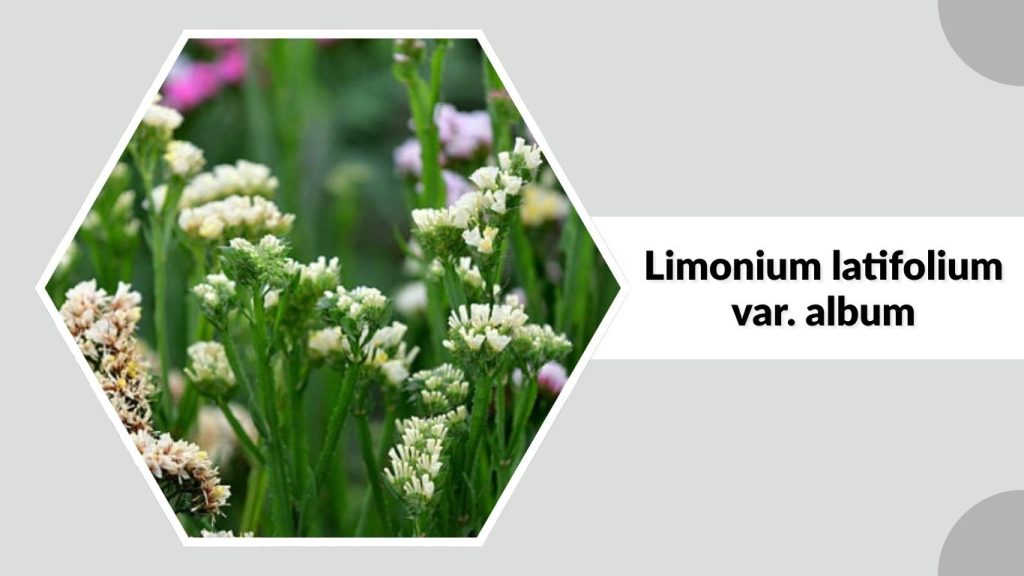
Limonium latifolium var. album, commonly known as white broad-leaved statice, is a perennial plant valued for its striking white blooms and silvery foliage. It is widely used in gardens, borders, and dried floral arrangements due to its long-lasting, papery flowers.
Identification
- Broad, silvery-gray leaves forming a basal rosette
- Stems reaching up to 2–3 feet tall
- Dense clusters of small, white flowers arranged in branched panicles
- Flowers are papery and durable, ideal for drying
Habitat
Native to the Mediterranean region, this species thrives in sunny, well-drained soils. It is often found in rocky slopes, coastal areas, and dry meadows.
Color Pattern
The flowers are pure white with a papery texture, contrasting beautifully with the silvery foliage. Their long-lasting nature makes them perfect for fresh and dried arrangements.
Uses and Benefits
Limonium latifolium var. album is commonly used in ornamental gardens, floral décor, and dried arrangements. Its drought tolerance, long bloom period, and striking white flowers make it an excellent choice for low-maintenance landscapes.
17. Limonium californicum
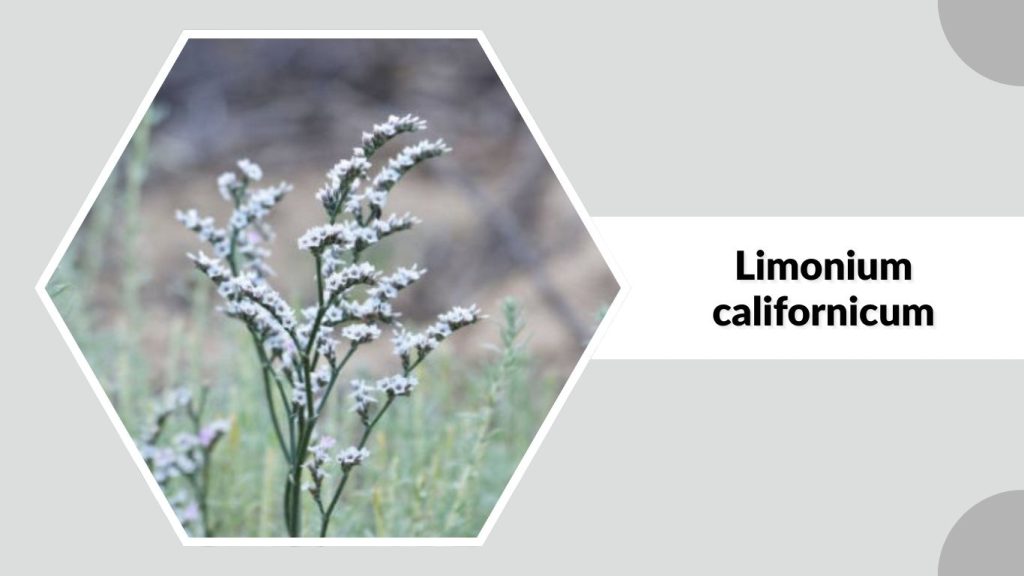
Limonium californicum, commonly known as California sea lavender, is a perennial plant admired for its delicate, long-lasting flowers and silvery-green foliage. It is widely used in coastal gardens, ornamental landscaping, and dried floral arrangements due to its papery blooms and drought tolerance.
Identification
- Narrow, gray-green leaves forming a basal rosette
- Upright stems growing up to 2–3 feet tall
- Small flowers clustered in branched panicles
- Flowers are usually pale lavender to light purple with a papery texture
Habitat
Native to the western coasts of North America, this species thrives in sunny, well-drained soils. It is commonly found in coastal dunes, sandy soils, and rocky areas.
Color Pattern
The flowers display soft lavender to pale purple shades. Their papery texture preserves shape and color well, making them suitable for fresh and dried floral arrangements.
Uses and Benefits
Limonium californicum is used in ornamental gardens, coastal landscaping, and dried floral décor. Its salt and drought tolerance, long-lasting blooms, and low-maintenance nature make it a versatile and attractive plant.
18. Limonium tataricum ssp. anatolicum
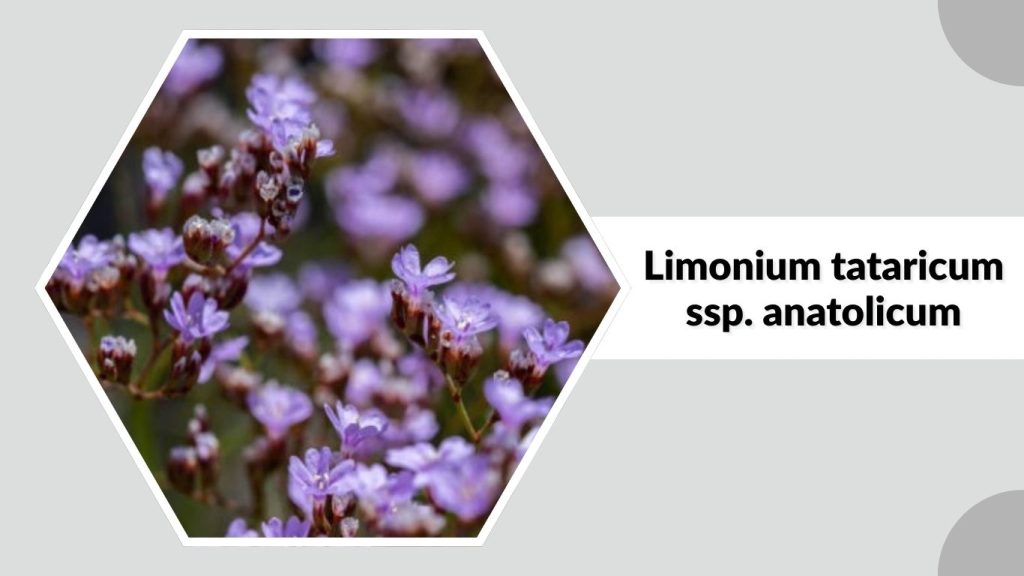
Limonium tataricum ssp. anatolicum, commonly known as Anatolian statice, is a perennial plant valued for its delicate flower clusters and resilience in dry, rocky environments. It is often used in gardens and dried floral arrangements due to its long-lasting, papery blooms.
Identification
- Narrow, gray-green leaves forming a basal rosette
- Erect stems reaching 1–2 feet tall
- Small, clustered flowers arranged in branching panicles
- Flowers are typically pale purple to lavender with a papery texture
Habitat
Native to Anatolia and surrounding regions, this species thrives in sunny, well-drained soils, rocky slopes, and dry meadows. It is tolerant of drought and poor soil conditions.
Color Pattern
The flowers are soft lavender to pale purple. Their papery texture ensures they retain color and shape, making them ideal for dried flower arrangements and ornamental use.
Uses and Benefits
Limonium tataricum ssp. anatolicum is used in ornamental gardening, rock gardens, and dried floral décor. Its drought tolerance, low-maintenance growth, and long-lasting blooms make it a versatile and attractive plant for various landscapes.
19. Limonium sinuatum ‘Blue Bouquet’
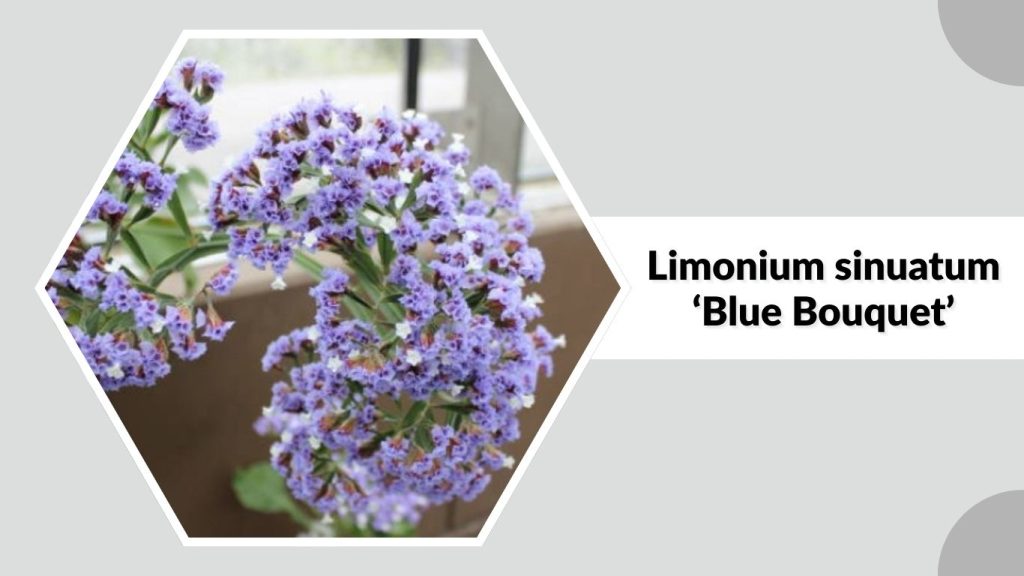
Limonium sinuatum ‘Blue Bouquet’, commonly known as Blue Bouquet statice, is a cultivated variety of annual statice prized for its vibrant blue-purple blooms. It is widely grown for ornamental gardening, cut flowers, and dried floral arrangements due to its long-lasting papery flowers.
Identification
- Wavy, gray-green leaves forming a basal rosette
- Sturdy stems growing 12–36 inches tall
- Dense clusters of funnel-shaped flowers
- Flowers are bright blue-purple with a papery texture
Habitat
This variety thrives in sunny, well-drained garden soils and is commonly cultivated worldwide. It prefers temperate climates and is often grown in flower beds or containers.
Color Pattern
Flowers are vivid blue-purple, with a papery texture that retains color and form when dried, making them ideal for bouquets and floral décor.
Uses and Benefits
Limonium sinuatum ‘Blue Bouquet’ is used in ornamental gardening, cut flower arrangements, and dried floral décor. Its vibrant color, long-lasting blooms, and ease of cultivation make it a popular choice for gardeners and florists alike.
20. Limonium sinuatum ‘Purple Emperor’
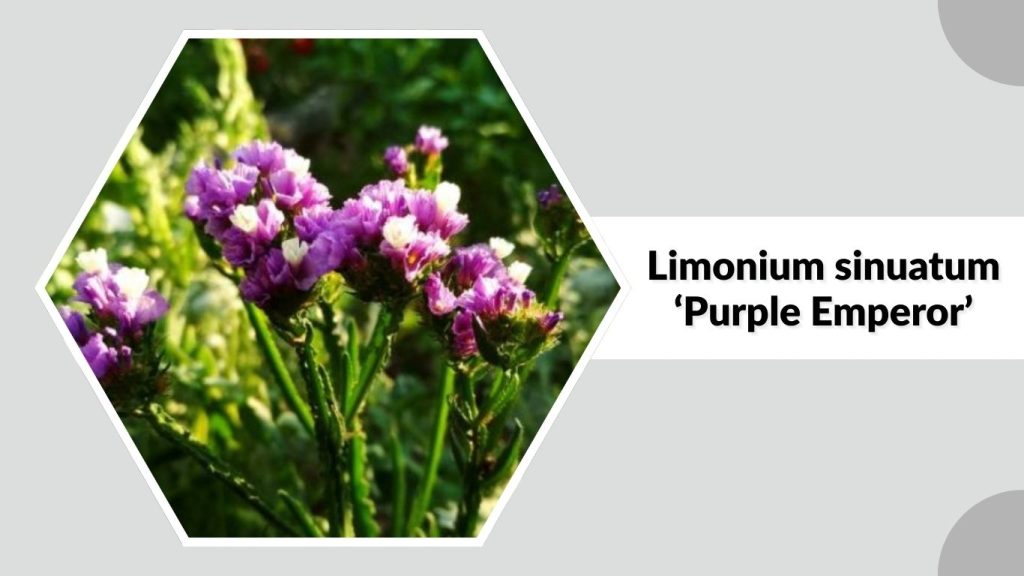
Limonium sinuatum ‘Purple Emperor’, commonly known as Purple Emperor statice, is a cultivated variety of annual statice celebrated for its rich purple blooms and long-lasting papery flowers. It is widely used in gardens, cut flower arrangements, and dried floral décor.
Identification
- Wavy, gray-green leaves forming a basal rosette
- Sturdy stems reaching 12–36 inches in height
- Dense clusters of funnel-shaped flowers
- Flowers are deep purple with a papery texture
Habitat
This variety thrives in sunny, well-drained soils and is commonly grown in flower beds, borders, and containers. It prefers temperate climates and requires minimal maintenance.
Color Pattern
The flowers display deep purple shades. Their papery texture preserves color and shape, making them ideal for fresh bouquets and dried floral arrangements.
Uses and Benefits
Limonium sinuatum ‘Purple Emperor’ is popular in ornamental gardening, floral décor, and dried flower arrangements. Its vibrant color, long-lasting blooms, and easy cultivation make it a favorite among gardeners and florists.
FAQs
What is the best way to grow Statice flowers?
Statice flowers grow best in full sun with well-drained soil. They prefer dry conditions and should be watered moderately. Regular deadheading encourages prolonged blooming, and they can be grown in gardens, borders, or containers.
Can Statice flowers be dried for arrangements?
Yes, Statice flowers are ideal for dried arrangements. Their papery petals retain color and shape for months when air-dried in a cool, dark, and ventilated area, making them popular for bouquets and floral décor.
How often should I water Statice plants?
Statice plants are drought-tolerant and require moderate watering. Allow the soil to dry between waterings. Overwatering can cause root rot, especially in heavy or poorly drained soils.
Are Statice flowers attractive to pollinators?
Yes, Statice flowers attract bees, butterflies, and other pollinators. Their bright blooms and long flowering season provide a valuable nectar source, supporting garden biodiversity.
What are common pests or diseases affecting Statice?
Statice flowers are generally hardy, but they can be affected by aphids, spider mites, or fungal issues like root rot in overly wet soil. Maintaining good air circulation and well-drained soil helps prevent problems.