





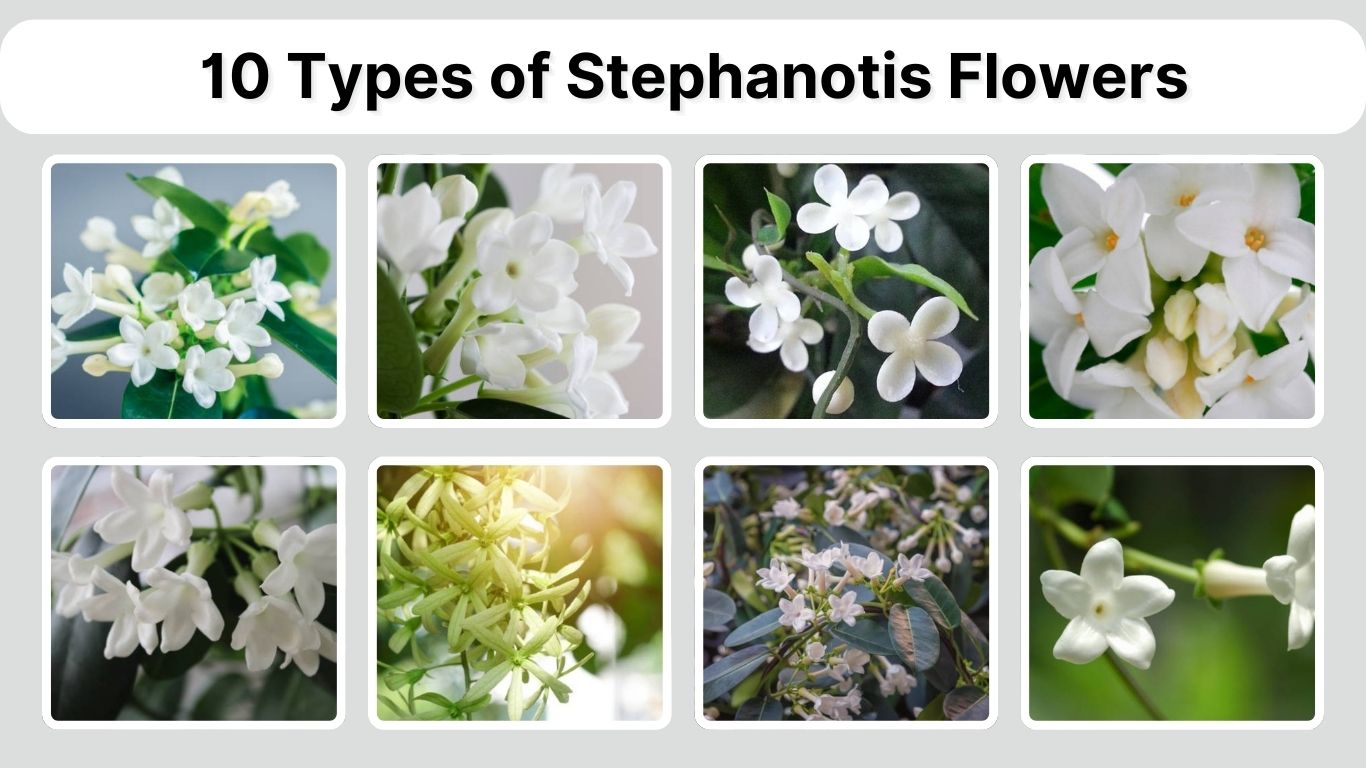
Stephanotis flowers are best known for their waxy, star-shaped blooms and sweet, jasmine-like fragrance. These elegant climbing plants are widely admired in gardens, greenhouses, and floral arrangements, especially the famous Madagascar jasmine. Beyond the common species, the Stephanotis genus includes several rare and lesser-known types that differ slightly in leaf shape, flower size, and natural habitat. In this guide, you’ll explore ten types of Stephanotis flowers, focusing on their names and the unique identity of each species.
1. Stephanotis floribunda (Madagascar Jasmine)
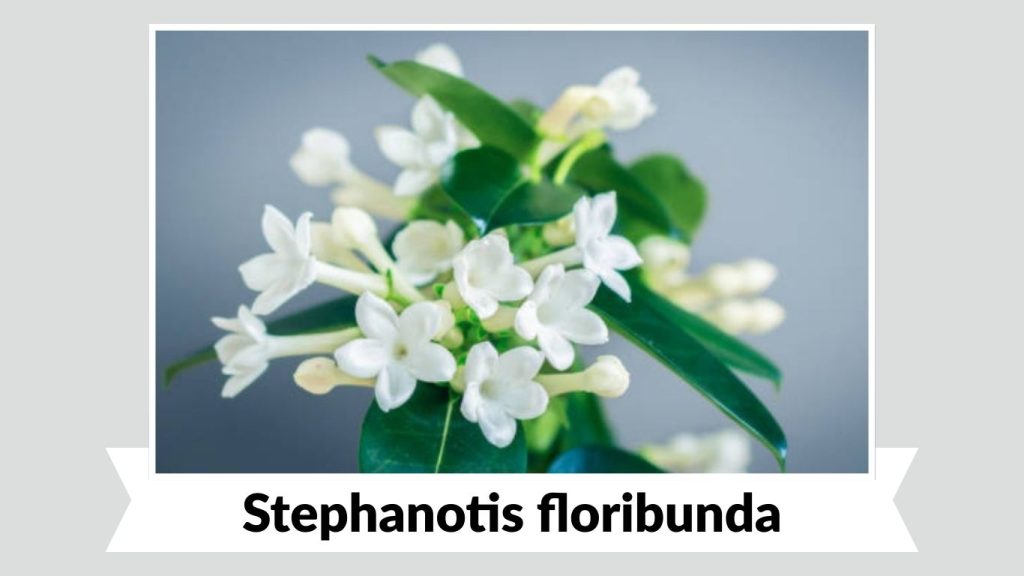
Stephanotis floribunda is the most well-known and widely cultivated species of Stephanotis. It is famous for its pure white, waxy, star-shaped flowers and strong, sweet fragrance. This climbing vine is commonly grown on trellises, arches, and indoor supports, making it a favorite ornamental plant in gardens and homes.
Identification
- Evergreen twining vine with glossy, oval dark-green leaves
- Star-shaped, waxy white flowers in clustered groups
- Strong, sweet jasmine-like fragrance
- Thick, leathery foliage with a smooth surface
Flower Characteristics
The flowers are tubular at the base and open into five pointed lobes, creating a classic star form. Blooms usually appear in clusters and last a long time on the plant. Their waxy texture helps them stay fresh longer, which is why they are popular in floral arrangements and wedding bouquets.
Native Habitat
Stephanotis floribunda is native to Madagascar, where it grows in warm, humid forest regions. In cultivation, it prefers bright indirect light, warm temperatures, and moderate humidity. Outdoors, it thrives in tropical and subtropical climates.
Growth and Blooming Habit
This plant is a vigorous climber that can reach several meters with support. It blooms mainly in late spring and summer. With proper care, including pruning and regular feeding, it can flower repeatedly and remain attractive year-round.
2. Stephanotis grandiflora
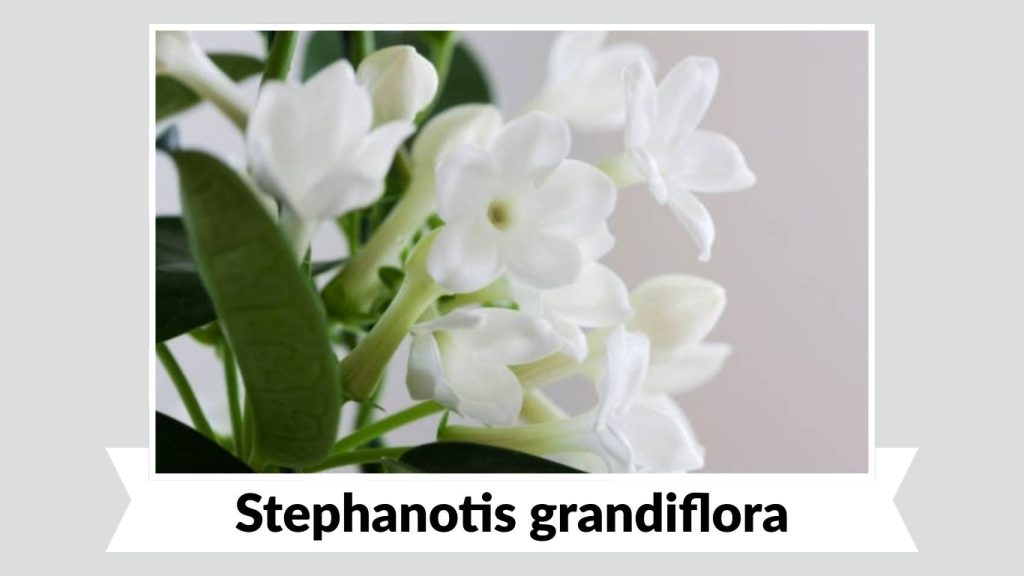
Stephanotis grandiflora is known for producing larger flowers compared to the more common Stephanotis floribunda. It is a climbing vine with attractive, glossy green leaves and showy, star-shaped white blooms. Because of its elegant appearance and pleasant fragrance, it is sometimes cultivated as an ornamental plant in warm climates and botanical collections.
Identification
- Twining evergreen vine with thick, dark-green leaves
- Larger, star-shaped white flowers
- Smooth, leathery foliage
- Mild to strong, sweet fragrance
Flower Characteristics
The flowers are tubular at the base with five spreading lobes, forming a broad star shape. They are usually slightly bigger than those of Stephanotis floribunda and appear in small clusters. Their waxy surface gives them a long-lasting quality both on the plant and when cut.
Native Habitat
This species is native to tropical regions of the western Indian Ocean area. It naturally grows in warm, humid environments and prefers bright filtered light, well-drained soil, and good air circulation when cultivated.
Growth and Blooming Habit
Stephanotis grandiflora is a climbing plant that needs support such as a trellis or fence. It blooms mainly during the warmer months. With consistent warmth, moisture, and feeding, it can grow vigorously and produce repeated flushes of flowers.
3. Stephanotis japonica
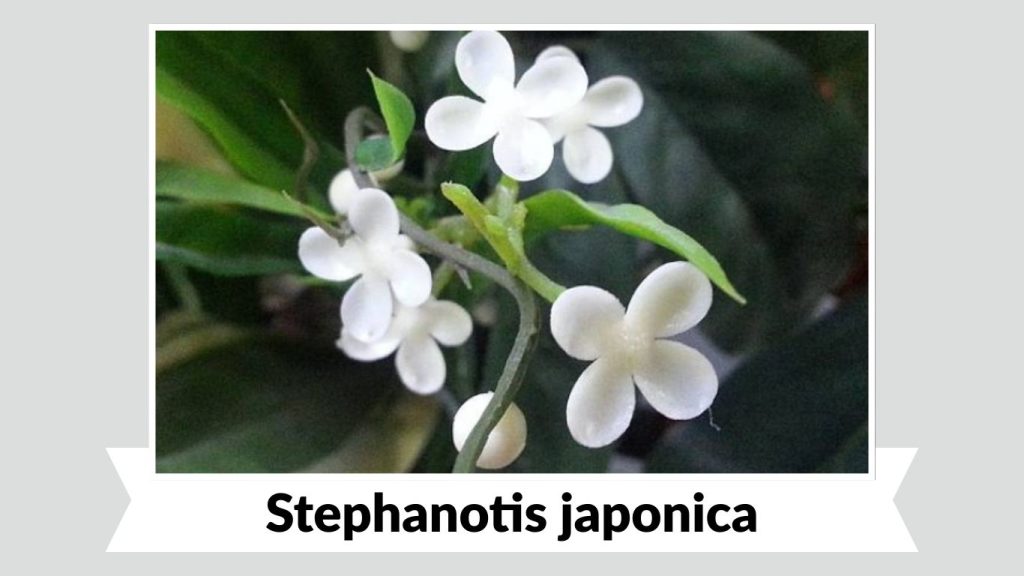
Stephanotis japonica is a lesser-known species valued for its elegant foliage and delicate, fragrant blooms. It grows as a twining vine and is mainly found in specialized collections rather than common gardens. The plant is appreciated for its refined appearance and its ability to adapt to warm, sheltered growing environments.
Identification
- Slender climbing vine with smooth, oval green leaves
- White to creamy star-shaped flowers
- Light, sweet fragrance
- Clustering bloom pattern
Flower Characteristics
The flowers are tubular with five narrow lobes that open into a neat star form. Compared to other Stephanotis species, the blooms are usually slightly smaller and more delicate. They grow in compact clusters and maintain a waxy surface that helps them stay fresh for long periods.
Native Habitat
Stephanotis japonica is native to East Asian regions, where it grows in warm forest margins and subtropical zones. It prefers mild humidity, bright indirect sunlight, and protection from strong winds and cold temperatures.
Growth and Blooming Habit
This species climbs by twining its stems around nearby supports. Flowering generally occurs in late spring through summer. With steady warmth and careful pruning, it can be maintained as an attractive ornamental vine for containers or greenhouse cultivation.
4. Stephanotis lutchuensis
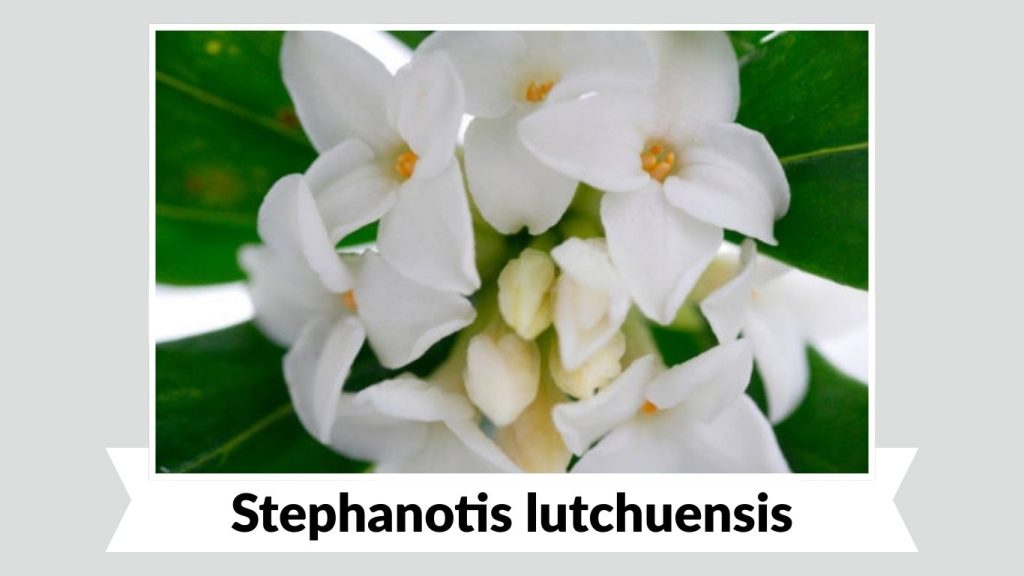
Stephanotis lutchuensis is a rare and attractive climbing species recognized for its neat foliage and pleasantly fragrant flowers. It is not commonly found in commercial horticulture but is valued among collectors and botanical gardens for its refined growth habit and ornamental potential.
Identification
- Twining vine with smooth, glossy green leaves
- White to pale cream, star-shaped flowers
- Soft, sweet fragrance
- Compact flower clusters
Flower Characteristics
The flowers are tubular with five pointed lobes that open into a symmetrical star shape. They are moderately sized, waxy in texture, and usually appear in small clusters. The subtle fragrance and clean white color make this species appealing for decorative plantings.
Native Habitat
This species is native to the Ryukyu (Loochoo) Islands of Japan. In the wild, it grows in warm, humid forests and along woodland edges. It prefers bright, filtered light, moist but well-drained soil, and protection from cold.
Growth and Blooming Habit
Stephanotis lutchuensis is a climbing plant that requires support to grow upright. It flowers mainly during the warm season. With stable temperatures and regular care, it develops into a graceful ornamental vine suitable for trellises and conservatories.
5. Stephanotis mucronata
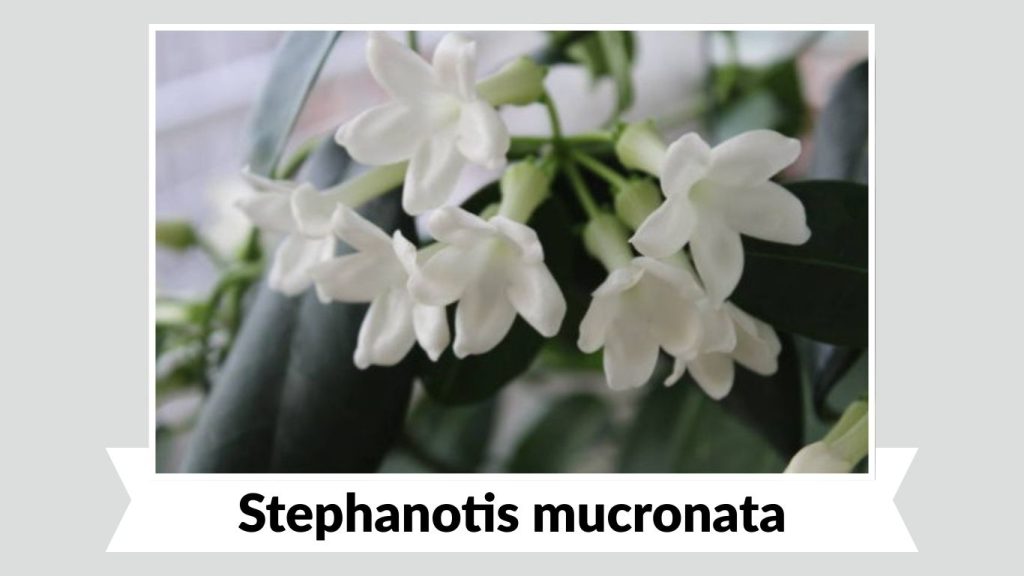
Stephanotis mucronata is a distinctive species known for its firm leaves and elegant, star-shaped flowers. Although not as widely cultivated as Stephanotis floribunda, it attracts interest from plant enthusiasts and botanical collections because of its ornamental foliage and fragrant blooms.
Identification
- Climbing vine with thick, pointed (mucronate) green leaves
- White, star-shaped, waxy flowers
- Light to moderate sweet fragrance
- Flowers borne in small clusters
Flower Characteristics
The blooms have a tubular base and five spreading lobes, forming a classic star pattern. The petals are firm and slightly glossy, giving the flowers a waxy appearance. They are typically produced in small groups and can remain attractive on the vine for extended periods.
Native Habitat
This species is native to tropical regions of Madagascar. It naturally grows in warm, humid environments such as forest margins and thickets. In cultivation, it prefers bright indirect light, warm temperatures, and evenly moist, well-drained soil.
Growth and Blooming Habit
Stephanotis mucronata grows as a twining climber that needs support structures like trellises or wires. Flowering usually takes place in the warmer months. With proper pruning and feeding, it can develop into a vigorous vine and produce regular seasonal blooms.
6. Stephanotis volubilis
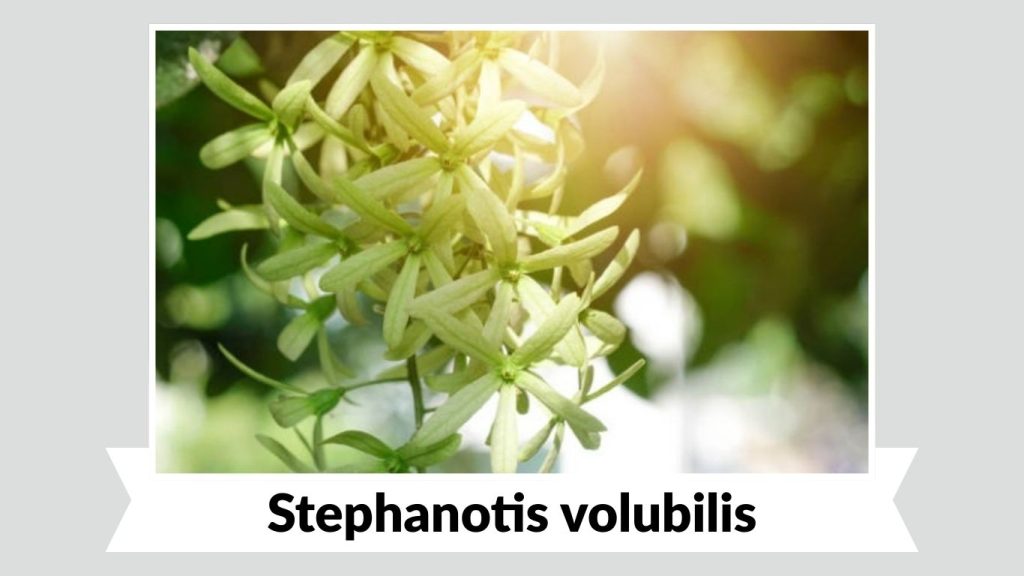
Stephanotis volubilis is a climbing species recognized for its flexible, twining stems and attractive white flowers. It is less commonly cultivated but holds ornamental value due to its neat growth habit and gently fragrant blooms.
Identification
- Twining vine with slender, flexible stems
- Smooth, oval to elliptical green leaves
- White, star-shaped flowers with a waxy surface
- Mild, pleasant fragrance
Flower Characteristics
The flowers are tubular at the base and open into five pointed lobes. They are medium-sized and usually appear in small clusters. Their waxy texture helps them remain fresh for a longer time, making them suitable for decorative and greenhouse cultivation.
Native Habitat
This species is native to parts of Southeast Asia, where it grows in warm, moist forests and along woodland edges. It thrives in bright filtered light, warm temperatures, and humid conditions.
Growth and Blooming Habit
Stephanotis volubilis is a true climber that wraps its stems around nearby supports. It blooms mainly in late spring and summer. With consistent care and a stable environment, it can grow steadily and flower reliably each year.
7. Stephanotis rubicunda
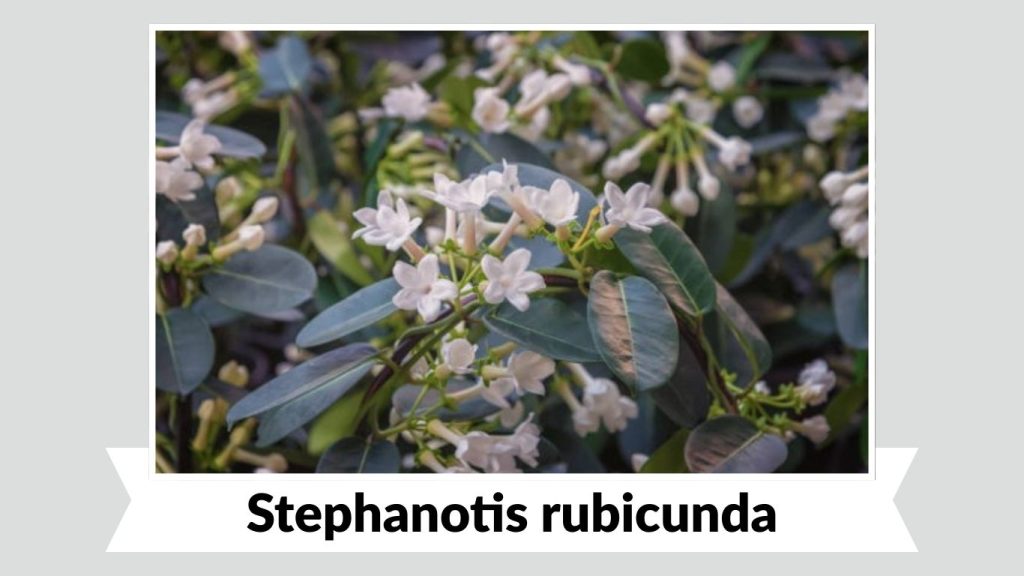
Stephanotis rubicunda is a lesser-known species appreciated for its attractive foliage and subtly colored floral parts. Unlike the more common white-flowered Stephanotis, this species may show faint reddish tones on the buds or flower tubes, which is reflected in its name. It is mainly found in botanical collections rather than home gardens.
Identification
- Climbing vine with glossy, deep-green leaves
- White to creamy flowers, often with reddish or pinkish tinges on buds
- Light, sweet fragrance
- Small clustered blooms
Flower Characteristics
The flowers are tubular with five narrow lobes forming a star shape. While the open petals are usually pale, the outer parts may display soft reddish hues. The blooms are waxy, moderately sized, and long-lasting, adding subtle color contrast to the vine.
Native Habitat
This species is native to tropical parts of the western Indian Ocean region. It grows naturally in warm, humid forests. In cultivation, it prefers bright indirect light, warm conditions, and well-drained but consistently moist soil.
Growth and Blooming Habit
Stephanotis rubicunda grows as a twining climber and requires support. Flowering generally occurs during the warmer months. With proper care, it can form a dense vine and produce seasonal clusters of fragrant flowers.
8. Stephanotis hainanensis
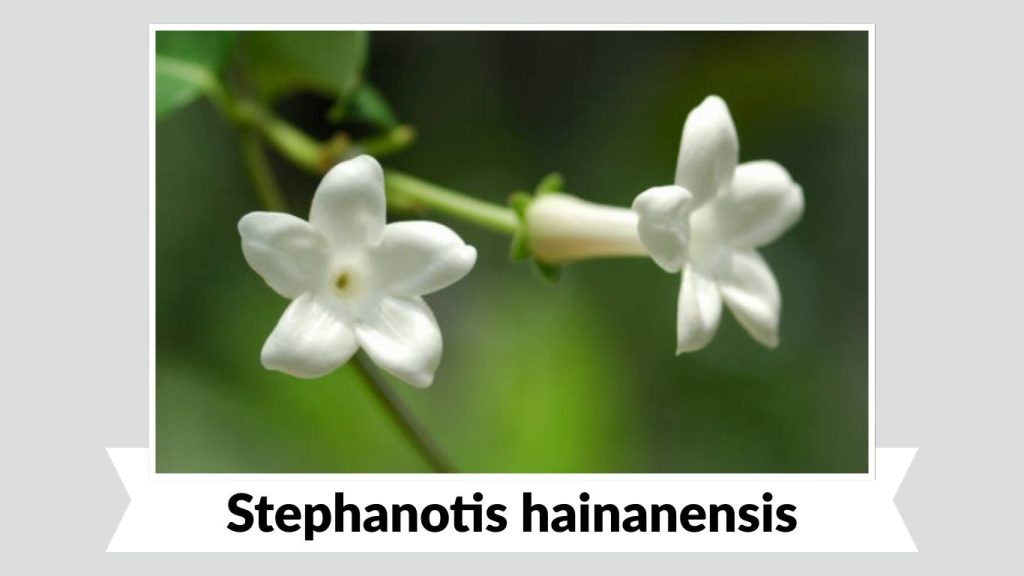
Stephanotis hainanensis is a rare climbing species named after Hainan Island, where it was first identified. It is valued for its neat foliage and delicate, fragrant flowers. This plant is mainly grown in botanical gardens and specialized collections rather than in general horticulture.
Identification
- Twining vine with smooth, oval to elongated green leaves
- White, star-shaped flowers with a waxy texture
- Mild, sweet fragrance
- Compact flower clusters
Flower Characteristics
The flowers have a tubular base that opens into five pointed lobes. They are usually medium-sized, clean white, and slightly glossy. Blooms appear in small clusters and hold well on the vine, giving the plant an elegant appearance during the flowering season.
Native Habitat
This species is native to Hainan Island and parts of southern China. It grows in warm, humid forest environments, often along forest edges. It prefers bright filtered light, warm temperatures, and evenly moist, well-drained soil.
Growth and Blooming Habit
Stephanotis hainanensis climbs by twining its stems around nearby vegetation. Flowering generally takes place from late spring into summer. With stable warmth and regular care, it can develop into a graceful ornamental vine suitable for trellises and conservatories.
9. Stephanotis pauciflora
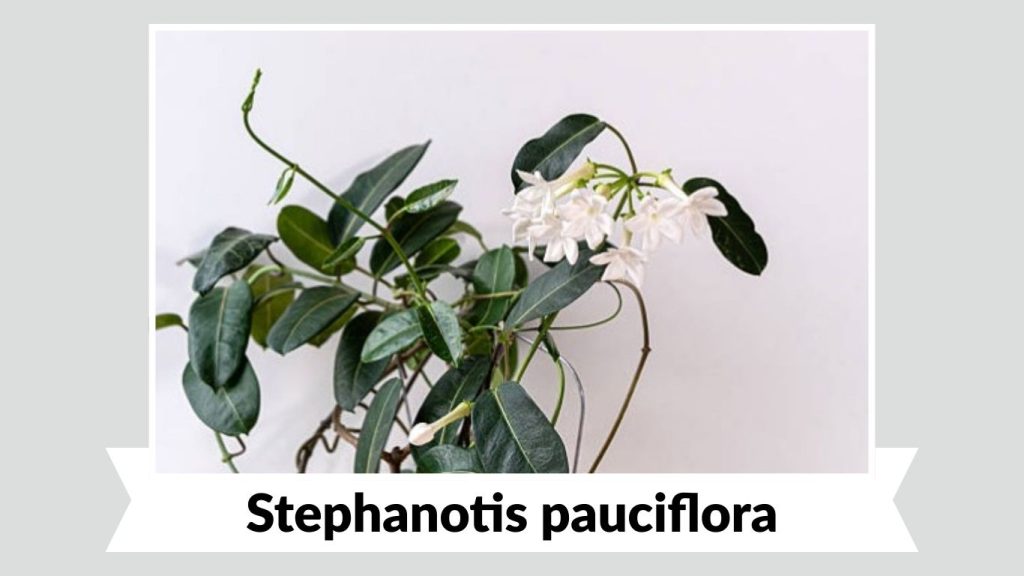
Stephanotis pauciflora is a rare species distinguished by producing fewer but often well-formed, fragrant flowers, which is reflected in its name. It is not widely cultivated but is of interest to plant collectors and botanical institutions because of its elegant growth form and ornamental blooms.
Identification
- Slender twining vine with smooth, green leaves
- White to creamy, star-shaped flowers
- Light, pleasant fragrance
- Flowers usually produced in small numbers per cluster
Flower Characteristics
The blooms have a tubular base and five pointed lobes that open into a neat star shape. Although the clusters contain fewer flowers, each bloom is well-developed, waxy, and long-lasting. This gives the plant a refined appearance when in flower.
Native Habitat
This species is native to tropical regions of Madagascar and nearby islands. It naturally grows in warm, humid forests and along woodland margins. In cultivation, it prefers warm temperatures, bright indirect light, and well-drained, consistently moist soil.
Growth and Blooming Habit
Stephanotis pauciflora climbs by twining around supports such as branches or trellises. Flowering mainly occurs in the warmer months. With careful pruning and stable conditions, it can form a graceful vine and bloom seasonally.
10. Stephanotis elliptica
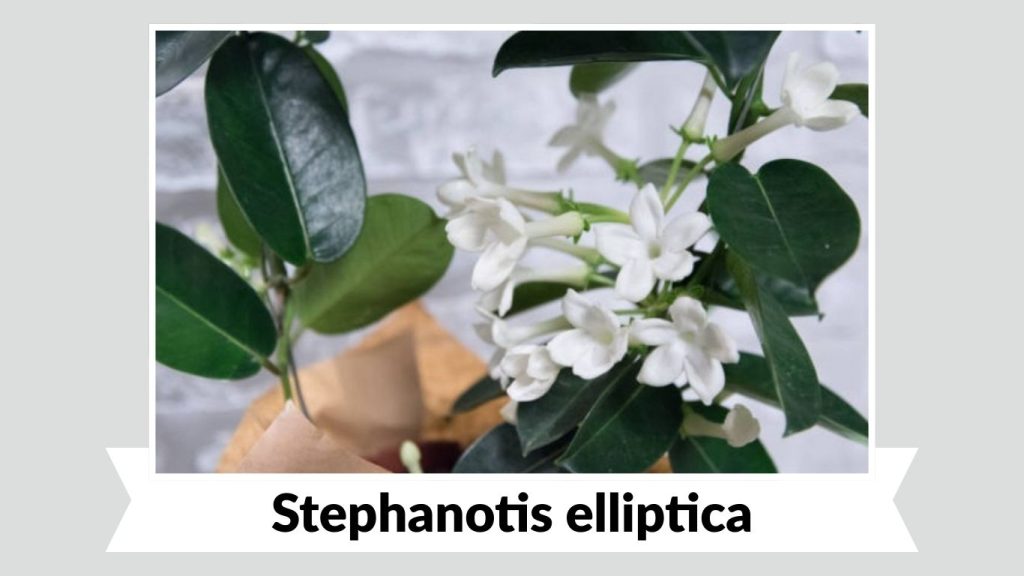
Stephanotis elliptica is the final species on your list and is recognized for its elongated, elliptical leaves and elegant, fragrant flowers. It is a climbing vine valued mainly in botanical and specialty plant collections rather than commercial gardens.
Identification
- Twining vine with distinctive elliptical, glossy green leaves
- White, star-shaped, waxy flowers
- Mild, sweet fragrance
- Small, neat flower clusters
Flower Characteristics
The flowers are tubular with five narrow lobes that spread into a star form. They are medium-sized, clean white, and slightly glossy. The waxy surface allows the blooms to last longer both on the vine and after cutting.
Native Habitat
This species is native to tropical regions of the western Indian Ocean and parts of Southeast Asia. It naturally grows in warm, humid forest habitats. For cultivation, it prefers bright filtered light, warm temperatures, and moist but well-drained soil.
Growth and Blooming Habit
Stephanotis elliptica is a true climber that wraps its stems around nearby supports. It typically flowers from late spring through summer. With consistent care, it can grow vigorously and develop into an attractive ornamental vine.