





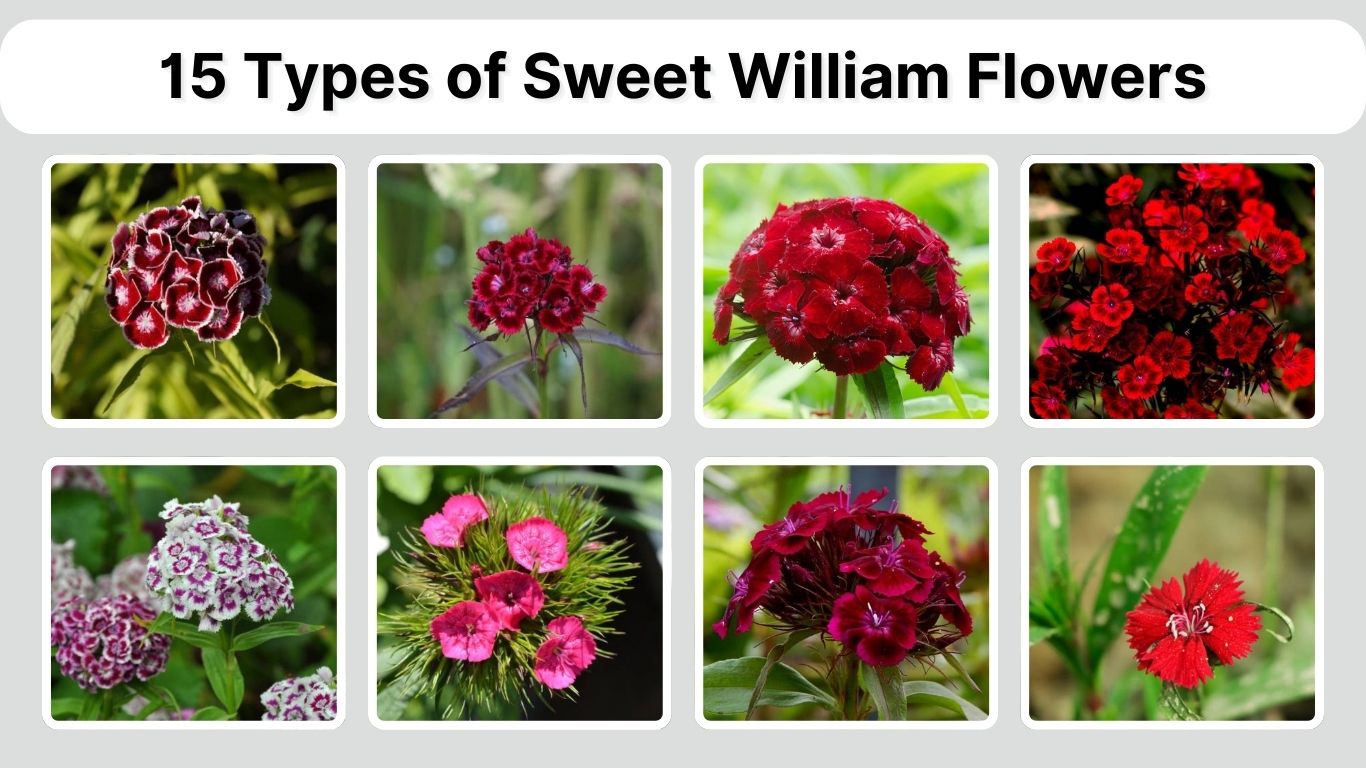
Sweet William flowers are classic garden favorites known for their dense clusters of colorful, sweet-scented blooms and long flowering period. Belonging to the species Dianthus barbatus, these plants are widely grown in cottage gardens, borders, and containers for their rich shades of red, pink, white, and purple. With many attractive cultivars available, Sweet William varieties offer gardeners a wide choice of colors, patterns, and growth habits, making them ideal for both ornamental beds and cut-flower arrangements.
1. Dianthus barbatus ‘Auricula-eyed’
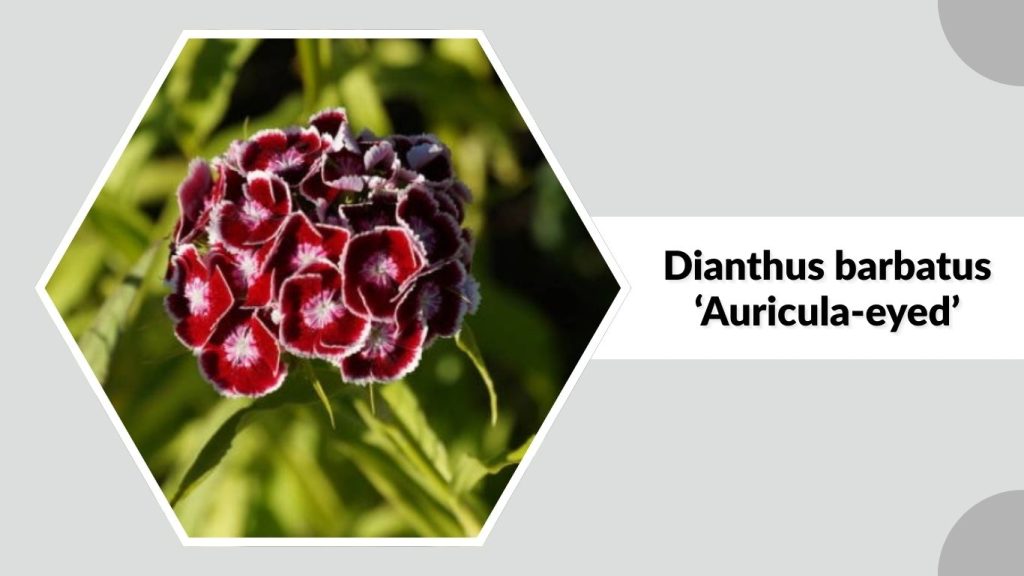
Sweet William ‘Auricula-eyed’ is a classic cultivar known for its striking, eye-like flower centers and dense, rounded clusters of blooms. It is a popular garden plant for borders and cottage gardens because of its bright colors, pleasant fragrance, and long flowering period. This variety is easy to grow and attracts butterflies and other pollinators.
Identification
- Biennial or short-lived perennial flowering plant
- Dense, rounded flower clusters
- Distinct dark “eye” in the center of each flower
- Narrow, lance-shaped green leaves
- Grows about 12–24 inches tall
Appearance
The flowers usually show contrasting rings of color, with a darker central eye surrounded by lighter petals. Common shades include pink, red, white, and purple. The blooms form tight clusters that create a bold visual impact in garden beds.
Habitat
‘Auricula-eyed’ Sweet William grows best in well-drained soil and prefers full sun to light partial shade. It is commonly planted in garden borders, flower beds, and containers, and adapts well to temperate climates.
Blooming Season
This variety typically blooms from late spring to early summer. With proper care and deadheading, the flowering period can be extended, keeping the plant attractive for several weeks.
2. Dianthus barbatus ‘Black Magic’

Sweet William ‘Black Magic’ is a dramatic cultivar admired for its deep, velvety flower colors that range from dark crimson to almost black. It adds strong contrast to flower beds and mixed borders and is often used to create bold visual highlights. Like other Sweet Williams, it is fragrant and attractive to pollinators.
Identification
- Biennial or short-lived perennial
- Very dark red to near-black flower clusters
- Dense, rounded bloom heads
- Upright, sturdy stems
- Narrow, pointed green leaves
Appearance
The flowers form tight clusters made up of many small, richly colored blooms. The deep tones give this variety a unique, almost gothic look, especially when planted alongside lighter-colored flowers.
Habitat
‘Black Magic’ grows well in fertile, well-drained soil and prefers full sun, though it can tolerate light shade. It is commonly planted in garden borders, cottage gardens, and decorative containers.
Blooming Season
Flowering usually begins in late spring and continues into early summer. Regular deadheading can encourage longer-lasting displays and healthier plants.
3. Dianthus barbatus ‘Dash Crimson’
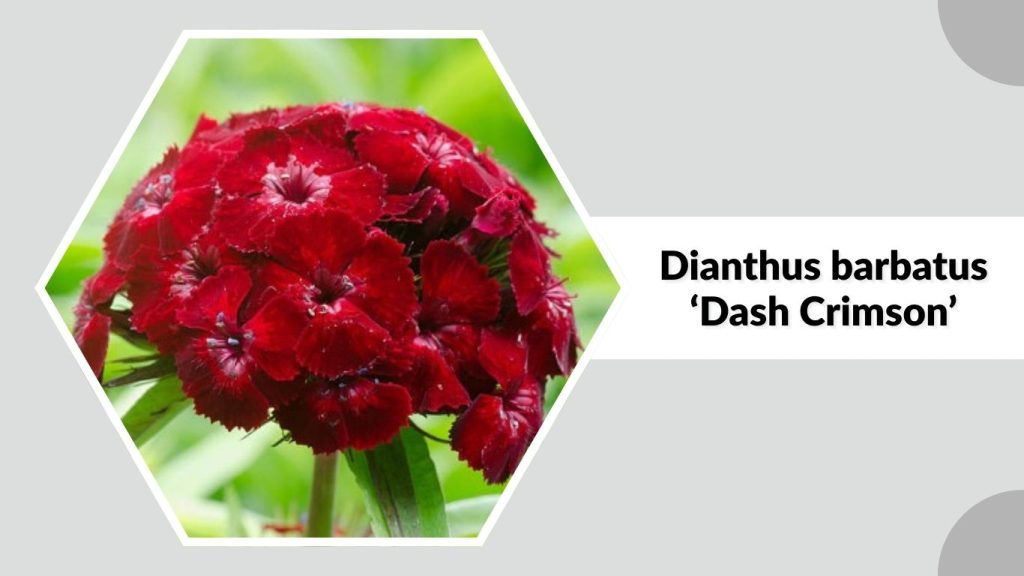
Sweet William ‘Dash Crimson’ is a vibrant variety valued for its bright crimson-red flowers and strong garden presence. Its compact, upright growth and richly colored blooms make it a favorite for borders, edging, and mass plantings. This cultivar is also lightly fragrant and attractive to bees and butterflies.
Identification
- Biennial or short-lived perennial plant
- Bright crimson-red flower clusters
- Compact, upright growth habit
- Smooth, narrow green leaves
- Average height of 12–20 inches
Appearance
The flowers form dense, rounded heads made up of many small, intensely colored blooms. The vivid crimson tones stand out clearly against the green foliage, creating a bold splash of color in garden beds.
Habitat
‘Dash Crimson’ grows best in full sun but can tolerate partial shade. It prefers well-drained, moderately fertile soil and performs well in borders, rock gardens, and containers.
Blooming Season
This variety typically blooms from late spring through early summer. With proper care and regular deadheading, flowering can last several weeks.
4. Dianthus barbatus ‘Heart Attack’
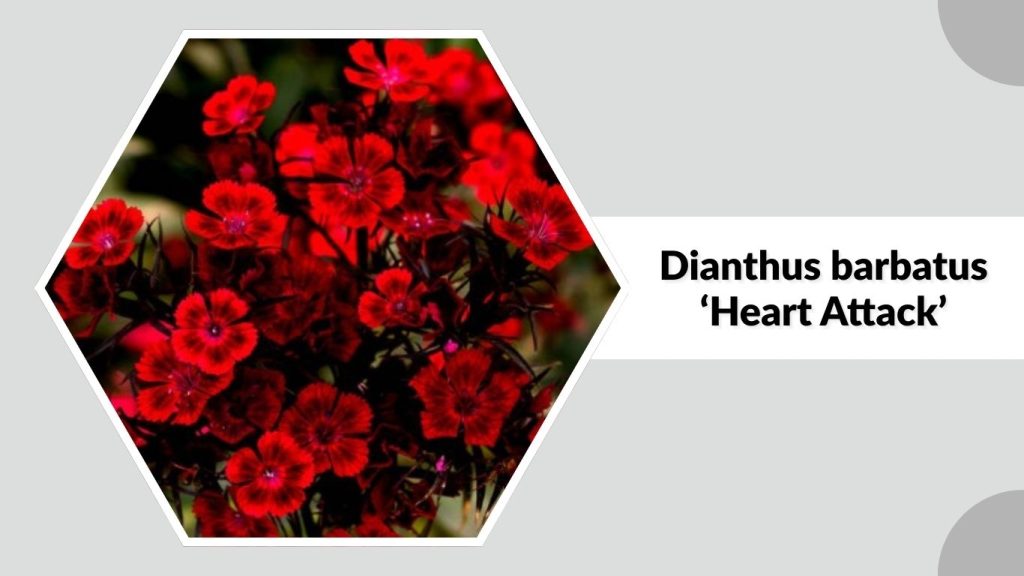
Sweet William ‘Heart Attack’ is a striking cultivar known for its intense red blooms and strong, upright growth. It is widely grown for its bold color impact in borders and cottage gardens. Like most Sweet Williams, it is lightly fragrant and attractive to pollinators, making it both ornamental and wildlife-friendly.
Identification
- Biennial or short-lived perennial
- Deep red, densely packed flower clusters
- Upright stems with compact growth
- Narrow, lance-shaped green leaves
- Typically grows 12–24 inches tall
Appearance
The flowers are grouped into tight, rounded clusters made up of many small blooms in rich, passionate red shades. The color remains strong throughout the blooming period, giving the plant a vivid, eye-catching look.
Habitat
‘Heart Attack’ grows well in full sun to partial shade and prefers well-drained soil. It is commonly used in garden borders, mixed beds, and as a colorful accent plant.
Blooming Season
Blooming usually occurs from late spring to early summer. Removing spent flowers can help extend the flowering period and keep the plant looking neat.
5. Dianthus barbatus ‘Indian Carpet’
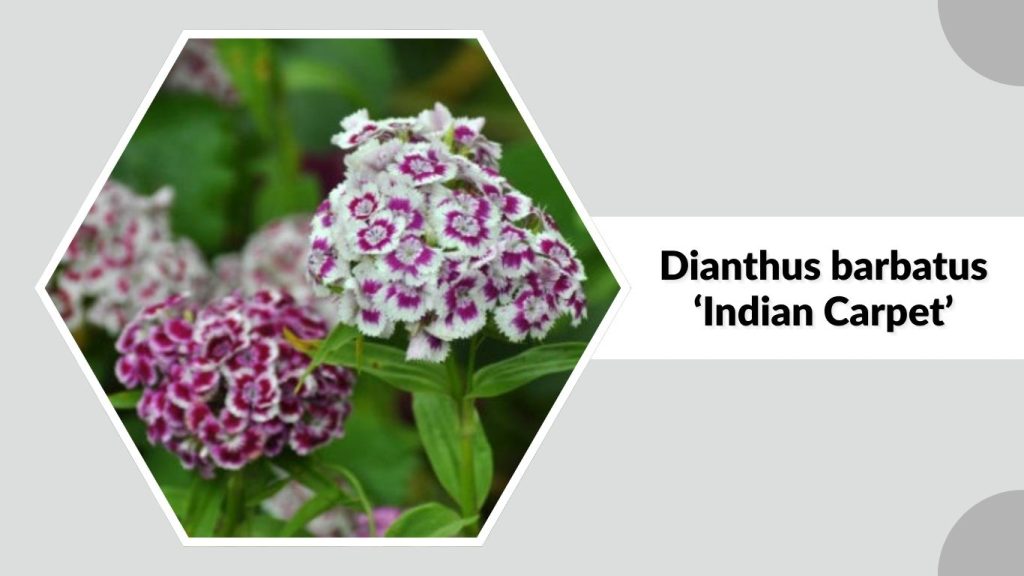
Sweet William ‘Indian Carpet’ is a popular mixed variety known for producing a wide range of bright, richly colored flowers in dense, low-growing clusters. It is especially valued for mass planting, edging, and container displays because it creates a colorful, carpet-like effect when in full bloom.
Identification
- Biennial or short-lived perennial
- Mixed-color flower clusters (red, pink, white, purple, and bicolors)
- Dense, rounded bloom heads
- Compact growth habit
- Narrow, pointed green leaves
Appearance
This variety produces clusters of small, vividly colored flowers, often with contrasting eyes or edges. The blend of colors gives each planting a varied and decorative look, making it ideal for cheerful garden displays.
Habitat
‘Indian Carpet’ prefers full sun but tolerates partial shade. It grows best in well-drained, moderately fertile soil and is well suited to borders, rock gardens, and containers.
Blooming Season
Flowering typically begins in late spring and continues into early summer. With good care and deadheading, it can provide weeks of bright, continuous color.
6. Dianthus barbatus ‘Newport Pink’
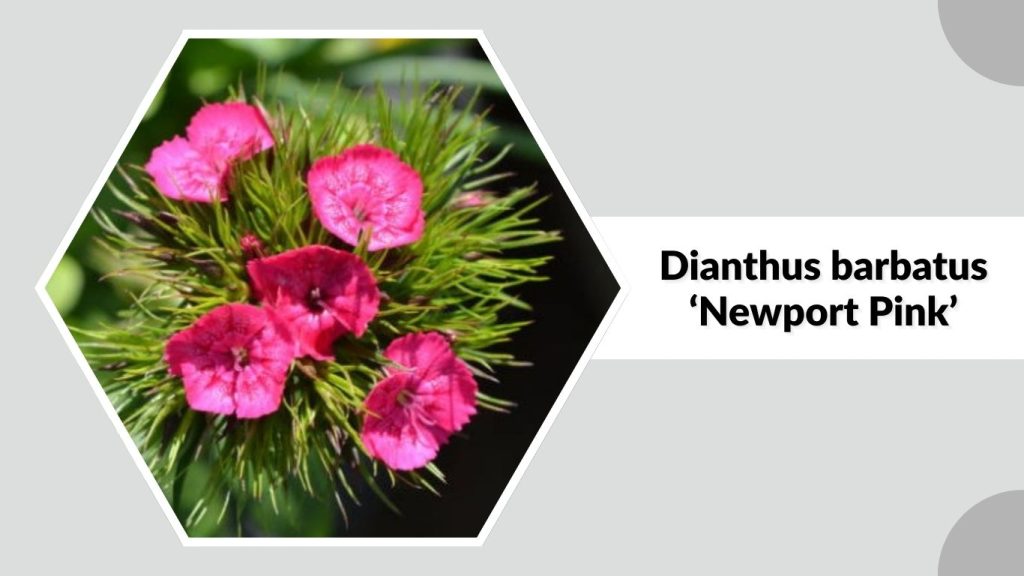
Sweet William ‘Newport Pink’ is a charming cultivar appreciated for its soft pink flower clusters and classic cottage-garden appeal. It brings a gentle, romantic look to borders and mixed beds while still offering the dense blooms and light fragrance typical of Sweet William flowers.
Identification
- Biennial or short-lived perennial
- Soft to bright pink flower clusters
- Dense, rounded bloom heads
- Upright stems with compact form
- Narrow, green, lance-shaped leaves
Appearance
The flowers appear in tight, rounded clusters made up of many small pink blooms. Their clear, fresh color contrasts beautifully with green foliage and pairs well with both pastel and bold companion plants.
Habitat
‘Newport Pink’ grows best in full sun to light partial shade and prefers well-drained soil. It is commonly planted in borders, cottage gardens, and decorative containers.
Blooming Season
This variety usually blooms from late spring to early summer. Regular deadheading can help prolong flowering and maintain a neat appearance.
7. Dianthus barbatus ‘Noverna Claret’
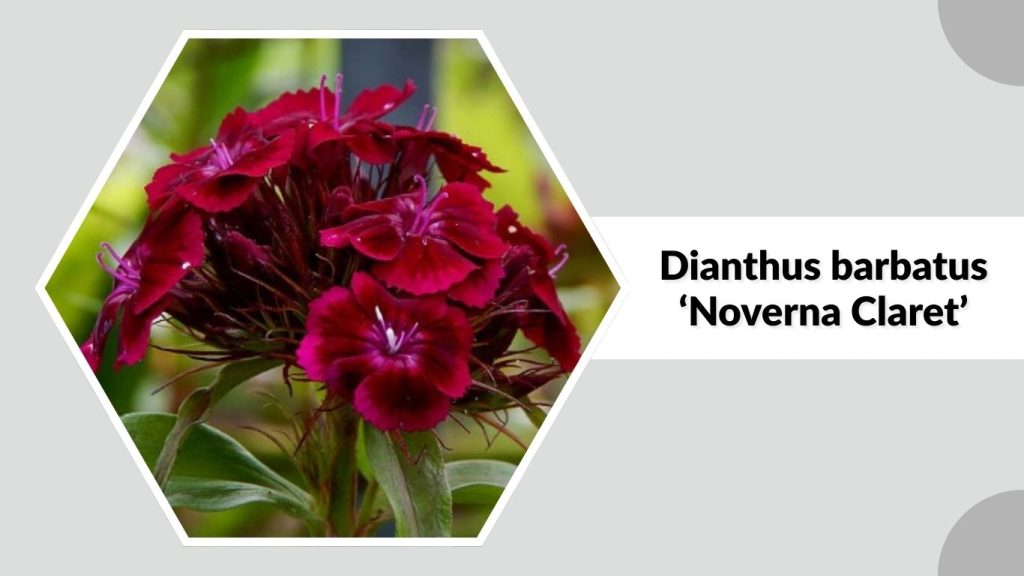
Sweet William ‘Noverna Claret’ is an elegant cultivar known for its deep claret-red flowers and refined garden presence. Its rich, wine-colored blooms form dense clusters that stand out beautifully in borders and mixed flower beds. This variety is also lightly fragrant and attractive to pollinators.
Identification
- Biennial or short-lived perennial
- Deep claret to burgundy flower clusters
- Rounded, tightly packed bloom heads
- Upright, sturdy stems
- Narrow, dark green leaves
Appearance
The flowers are small but numerous, forming rounded clusters in dark, velvety shades of red. The intense coloring gives the plant a sophisticated look, making it ideal for contrast planting.
Habitat
‘Noverna Claret’ prefers full sun to partial shade and grows best in fertile, well-drained soil. It performs well in garden borders, cottage gardens, and large containers.
Blooming Season
Blooming usually occurs from late spring into early summer. Removing faded blooms can help encourage a longer and more attractive flowering display.
8. Dianthus barbatus ‘Sooty’
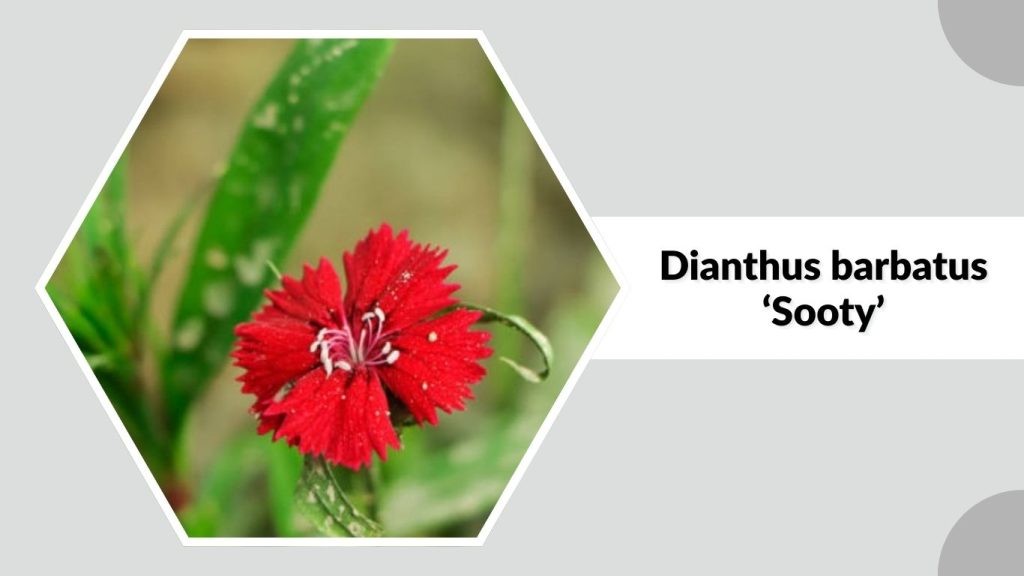
Sweet William ‘Sooty’ is a distinctive variety prized for its very dark, almost smoky-toned flowers. The blooms range from deep maroon to near black, giving this cultivar a mysterious and dramatic look in the garden. It is often used to create strong contrast in mixed borders.
Identification
- Biennial or short-lived perennial
- Very dark maroon to near-black flower clusters
- Dense, rounded bloom heads
- Upright growth habit
- Narrow, pointed green leaves
Appearance
The flowers form compact clusters made up of many tiny, richly pigmented blooms. The dark coloration gives the plant a unique, bold presence, especially when paired with lighter-colored flowers.
Habitat
‘Sooty’ grows best in full sun but tolerates light shade. It prefers well-drained, moderately fertile soil and is well suited to borders, cottage gardens, and ornamental containers.
Blooming Season
This variety usually blooms from late spring to early summer. With good care and removal of spent flowers, the blooming period can be extended.
9. Dianthus barbatus ‘Sweet Black Cherry’
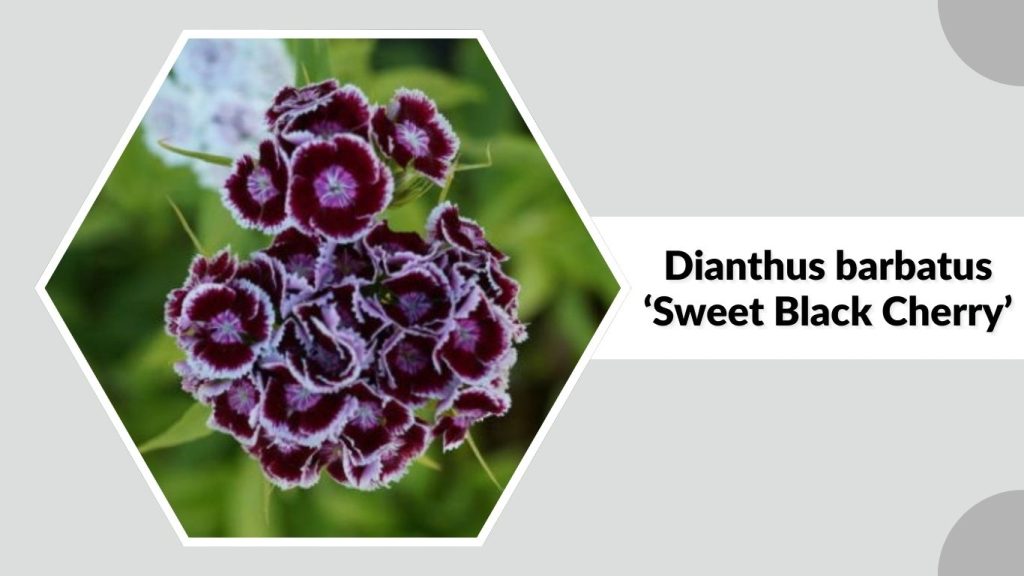
Sweet William ‘Sweet Black Cherry’ is a popular cultivar known for its deep cherry-red to almost black blooms and sweet, spicy fragrance. Its rich color and dense flower heads make it a standout choice for borders and traditional cottage-style gardens.
Identification
- Biennial or short-lived perennial
- Deep cherry-red to near-black flower clusters
- Rounded, tightly packed bloom heads
- Upright stems
- Narrow, dark green leaves
Appearance
The flowers appear in dense clusters, with each small bloom contributing to the overall dark, velvety look. The intense coloration creates strong visual contrast, especially against lighter flowers and green foliage.
Habitat
‘Sweet Black Cherry’ grows well in full sun to partial shade and prefers well-drained soil. It is commonly planted in garden beds, borders, and containers.
Blooming Season
Blooming generally occurs from late spring through early summer. Regular deadheading helps extend the flowering display and keeps plants looking fresh.
10. Dianthus barbatus ‘Sweet Scarlet’
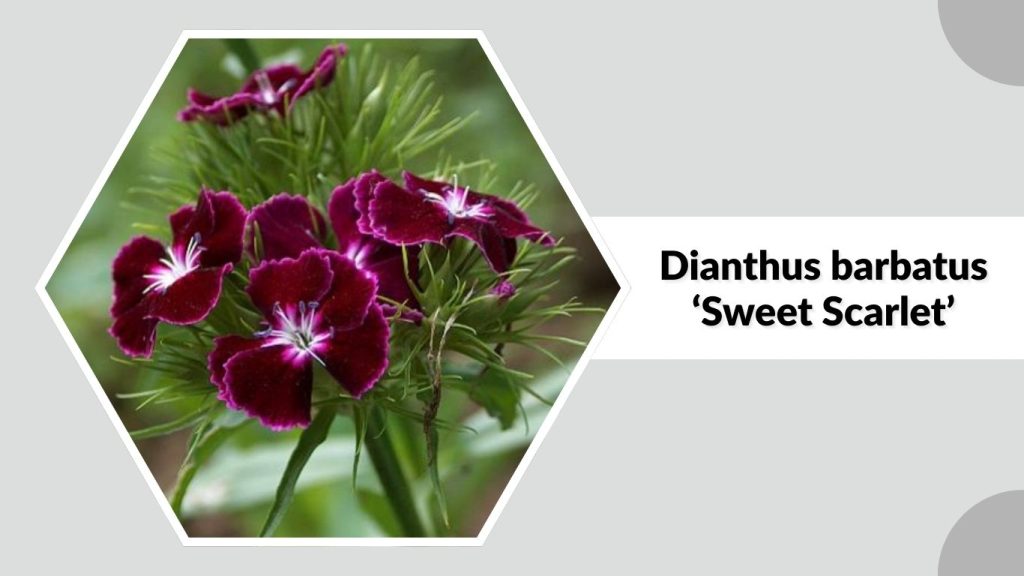
Sweet William ‘Sweet Scarlet’ is a bright, eye-catching variety admired for its vivid scarlet-red blooms and classic Sweet William fragrance. Its bold coloring makes it an excellent choice for adding strong highlights to flower beds, borders, and cottage gardens.
Identification
- Biennial or short-lived perennial
- Bright scarlet-red flower clusters
- Dense, rounded bloom heads
- Upright, compact stems
- Narrow, pointed green leaves
Appearance
The flowers form tight, rounded clusters of many small, intensely red blooms. Their brilliant scarlet shade remains strong throughout the blooming period, creating a lively and cheerful garden display.
Habitat
‘Sweet Scarlet’ prefers full sun to light partial shade and grows best in well-drained, moderately fertile soil. It performs well in borders, mixed beds, and decorative containers.
Blooming Season
This variety typically blooms from late spring to early summer. Removing spent flowers can help encourage longer-lasting blooms and a tidy appearance.
11. Dianthus barbatus ‘Wee Willie Mix’
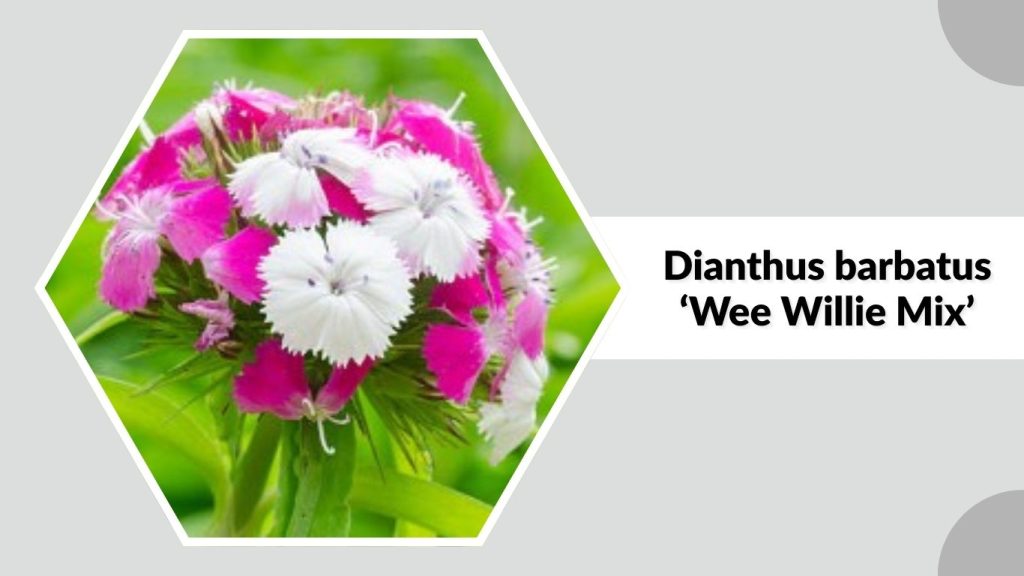
Sweet William ‘Wee Willie Mix’ is a compact, dwarf variety known for its cheerful mix of bright flower colors and neat growth habit. Because of its shorter height, it is especially popular for edging, rock gardens, and container planting, where it forms colorful, low-growing clumps.
Identification
- Biennial or short-lived perennial
- Mixed-color flower clusters (red, pink, white, and bicolors)
- Dense, rounded bloom heads
- Dwarf, compact growth habit
- Narrow, green leaves
Appearance
The flowers grow in tight clusters above short stems, creating a mound of bright, mixed-color blooms. The varied shades give each planting a lively, decorative look, perfect for small spaces.
Habitat
‘Wee Willie Mix’ grows best in full sun but tolerates partial shade. It prefers well-drained soil and adapts well to borders, rock gardens, and containers.
Blooming Season
Flowering usually occurs from late spring into early summer. With proper care and deadheading, blooms can last for several weeks.
12. Dianthus barbatus ‘Festival Bicolor’
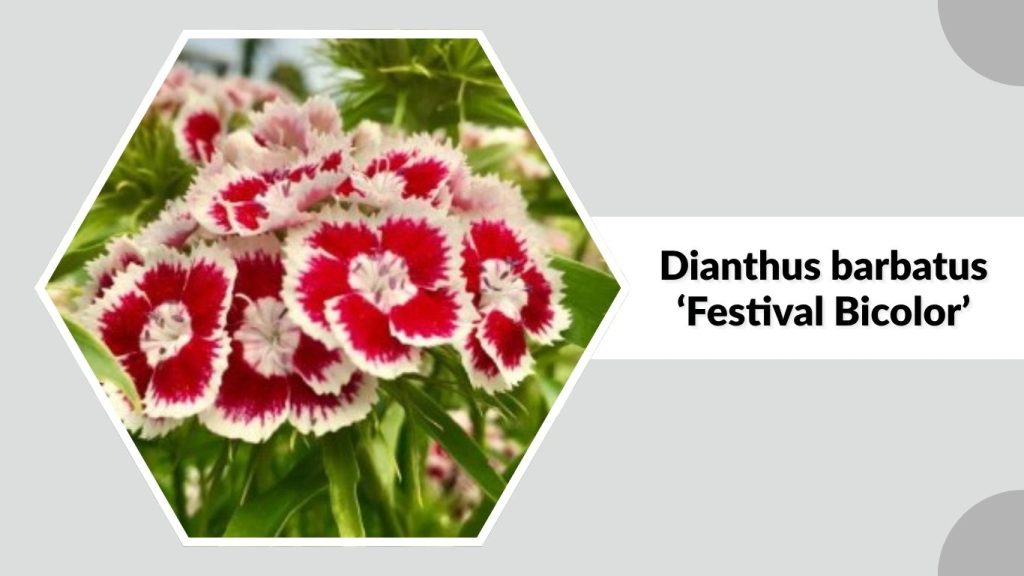
Sweet William ‘Festival Bicolor’ is a lively cultivar known for its two-toned flowers that combine contrasting colors within each bloom. The dense flower heads create a festive look in garden borders and mixed beds, making this variety especially popular for decorative planting schemes.
Identification
- Biennial or short-lived perennial
- Bicolor flower clusters with contrasting shades
- Dense, rounded bloom heads
- Upright, moderately compact growth
- Narrow, lance-shaped green leaves
Appearance
The flowers commonly display combinations such as red and white, pink and white, or purple and white. Each small bloom contributes to a striking, multi-colored cluster that stands out clearly in the garden.
Habitat
‘Festival Bicolor’ prefers full sun to light partial shade and grows best in fertile, well-drained soil. It is well suited to borders, cottage gardens, and large containers.
Blooming Season
This variety usually blooms from late spring through early summer. Deadheading spent flowers can help extend the blooming period and improve overall appearance.
13. Dianthus barbatus ‘Roundabout Rose’
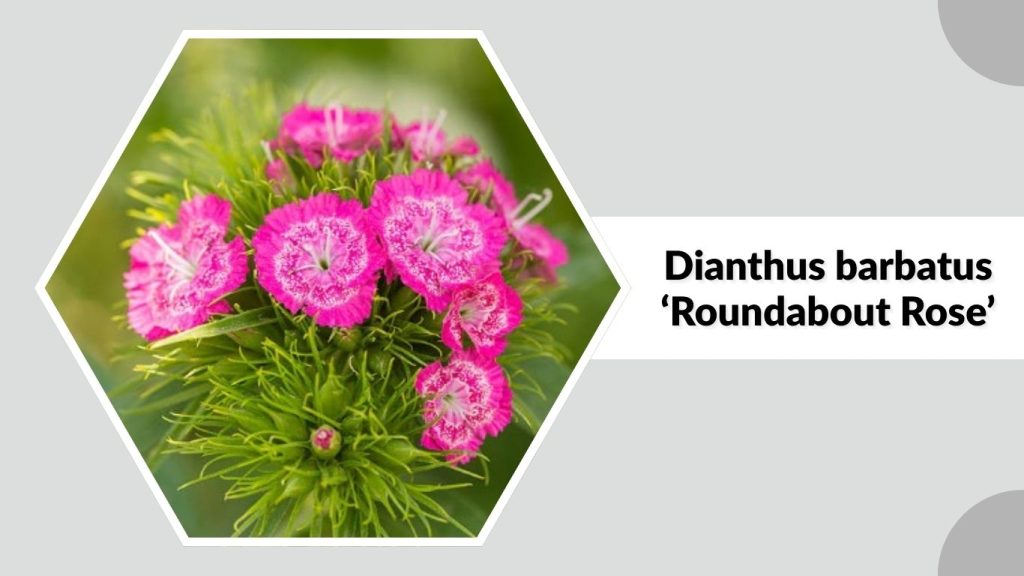
Sweet William ‘Roundabout Rose’ is a charming cultivar appreciated for its soft rose-pink flowers and compact, uniform growth. It is often grown in borders and containers where a gentle, consistent color display is desired. The plant also produces a light, pleasant fragrance.
Identification
- Biennial or short-lived perennial
- Rose-pink flower clusters
- Dense, rounded bloom heads
- Compact, upright growth habit
- Narrow, green leaves
Appearance
The flowers form neat, rounded clusters made up of many small rose-colored blooms. Their soft, warm tone blends well with both pastel and brighter garden plants, creating a balanced visual effect.
Habitat
‘Roundabout Rose’ grows best in full sun to partial shade and prefers well-drained soil. It performs well in garden borders, decorative pots, and mixed flower beds.
Blooming Season
Blooming usually begins in late spring and continues into early summer. With regular deadheading, flowering can last longer and maintain a tidy appearance.
14. Dianthus barbatus ‘Corona Cherry Magic’
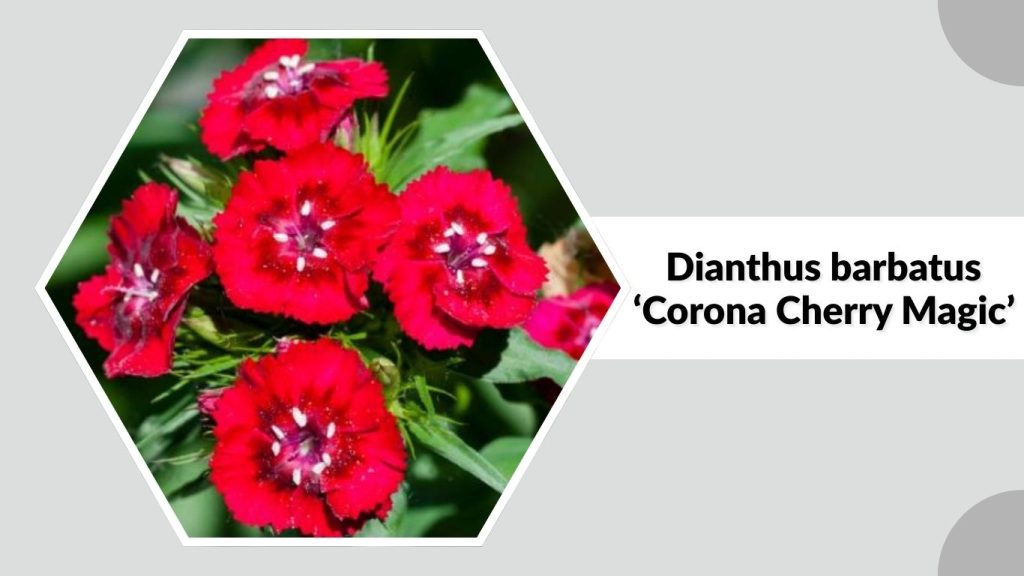
Sweet William ‘Corona Cherry Magic’ is a modern cultivar valued for its vivid cherry-red flowers with lighter centers and its excellent garden performance. It produces large, well-formed flower heads and is known for good uniformity, making it popular for both garden beds and container displays.
Identification
- Biennial or short-lived perennial
- Cherry-red flowers with lighter or contrasting centers
- Large, dense flower clusters
- Upright, strong stems
- Narrow, glossy green leaves
Appearance
The blooms form impressive rounded heads made up of many small flowers, often showing a lighter eye or subtle color variation. The bright cherry tones give this variety a fresh, vibrant look.
Habitat
‘Corona Cherry Magic’ grows best in full sun but tolerates light partial shade. It prefers fertile, well-drained soil and performs well in borders, patio containers, and landscape plantings.
Blooming Season
This variety typically flowers from late spring into early summer. Removing spent blooms can help extend flowering and encourage a fuller display.
15. Dianthus barbatus ‘Green Trick’
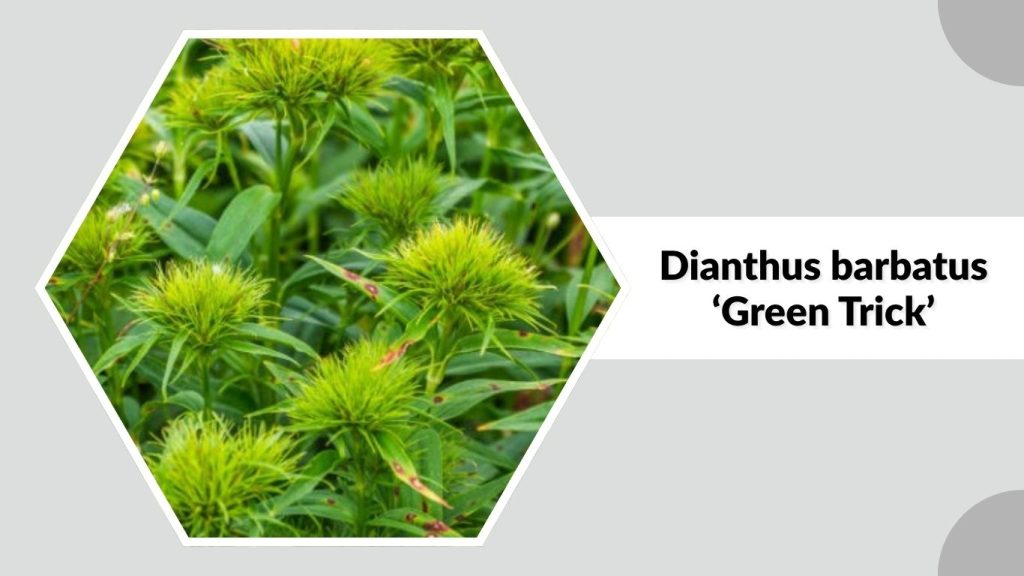
Sweet William ‘Green Trick’ is a unique and unusual cultivar known for its bright green, pom-pom–like flower heads that look more like mossy balls than traditional flowers. Because of its distinctive texture and long-lasting blooms, it is especially popular in ornamental gardens and as a cut flower.
Identification
- Biennial or short-lived perennial
- Bright green, round, pom-pom–shaped flower heads
- Dense, ball-like bloom clusters
- Upright, sturdy stems
- Narrow, green leaves
Appearance
Instead of typical colorful petals, ‘Green Trick’ produces tight spheres of finely divided, green bracts that create a soft, textured look. The unusual form makes it a striking contrast plant among traditional flowering varieties.
Habitat
‘Green Trick’ grows best in full sun to partial shade and prefers well-drained, fertile soil. It is widely used in borders, decorative beds, and floral arrangements.
Blooming Season
Blooming usually occurs from late spring through early summer, and the flower heads often remain attractive for an extended period, both in the garden and after cutting.
FAQs
What is Sweet William most commonly used for?
Sweet William is most commonly used in garden borders, cottage gardens, and container displays because of its dense flower clusters, bright colors, and pleasant fragrance. It is also popular as a cut flower, as the blooms last well in vases and floral arrangements.
Is Sweet William an annual or perennial plant?
Sweet William is usually grown as a biennial, meaning it produces leaves the first year and flowers the second year. However, in favorable climates, some varieties can behave like short-lived perennials and may return for more than one season.
Does Sweet William need full sun or shade?
Sweet William grows best in full sun, which helps produce compact plants and abundant flowers. It can tolerate light partial shade, but too much shade may reduce blooming and lead to weaker, leggy growth.
How long does Sweet William bloom?
Sweet William typically blooms from late spring to early summer. With regular deadheading and proper care, the flowering period can last several weeks, providing a long-lasting display of colorful, fragrant blooms.
Is Sweet William easy to grow from seed?
Yes, Sweet William is considered easy to grow from seed. Seeds are usually sown in late spring or summer, and the plants develop foliage the first year before producing flowers the following season.