





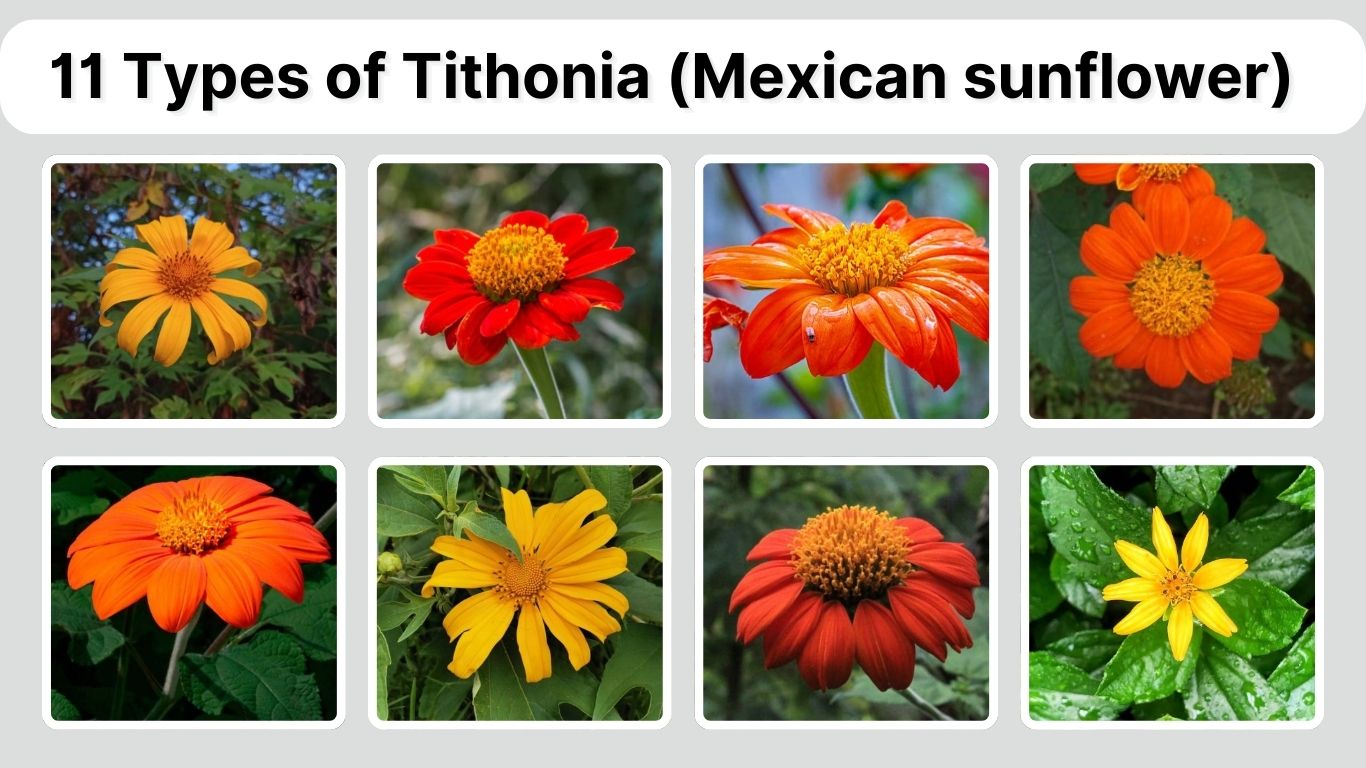
Tithonia, commonly known as Mexican sunflower, is a vibrant group of flowering plants admired for their bold, daisy-like blooms and rapid growth. Native mainly to Mexico and Central America, these sun-loving plants are famous for attracting butterflies, bees, and other pollinators. With their bright orange and yellow flowers, tall stems, and long blooming season, Tithonia species add dramatic color to gardens and natural landscapes. They are widely used in pollinator gardens, wildlife plantings, and as eye-catching background flowers.
1. Tithonia rotundifolia (Mexican Sunflower)
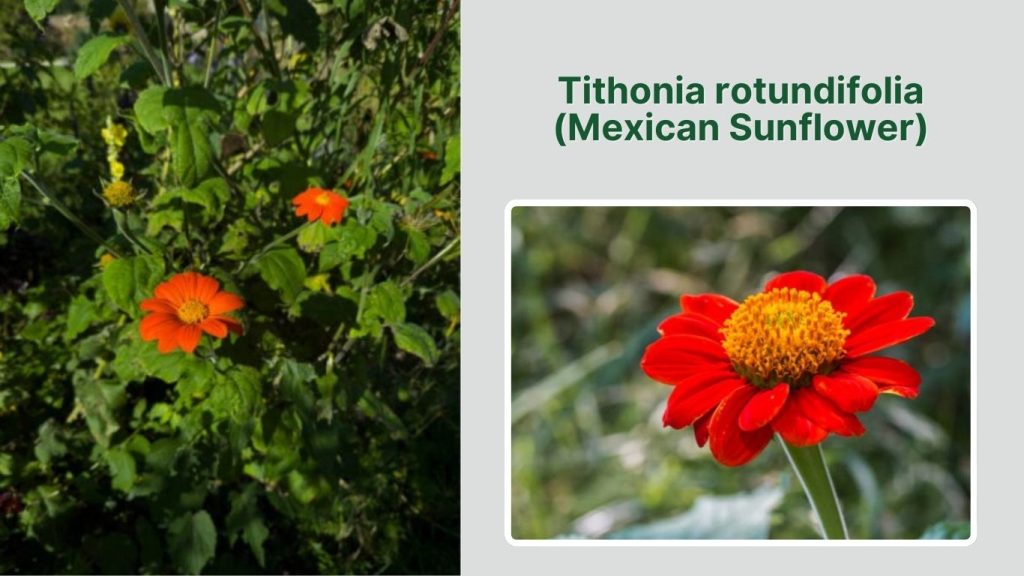
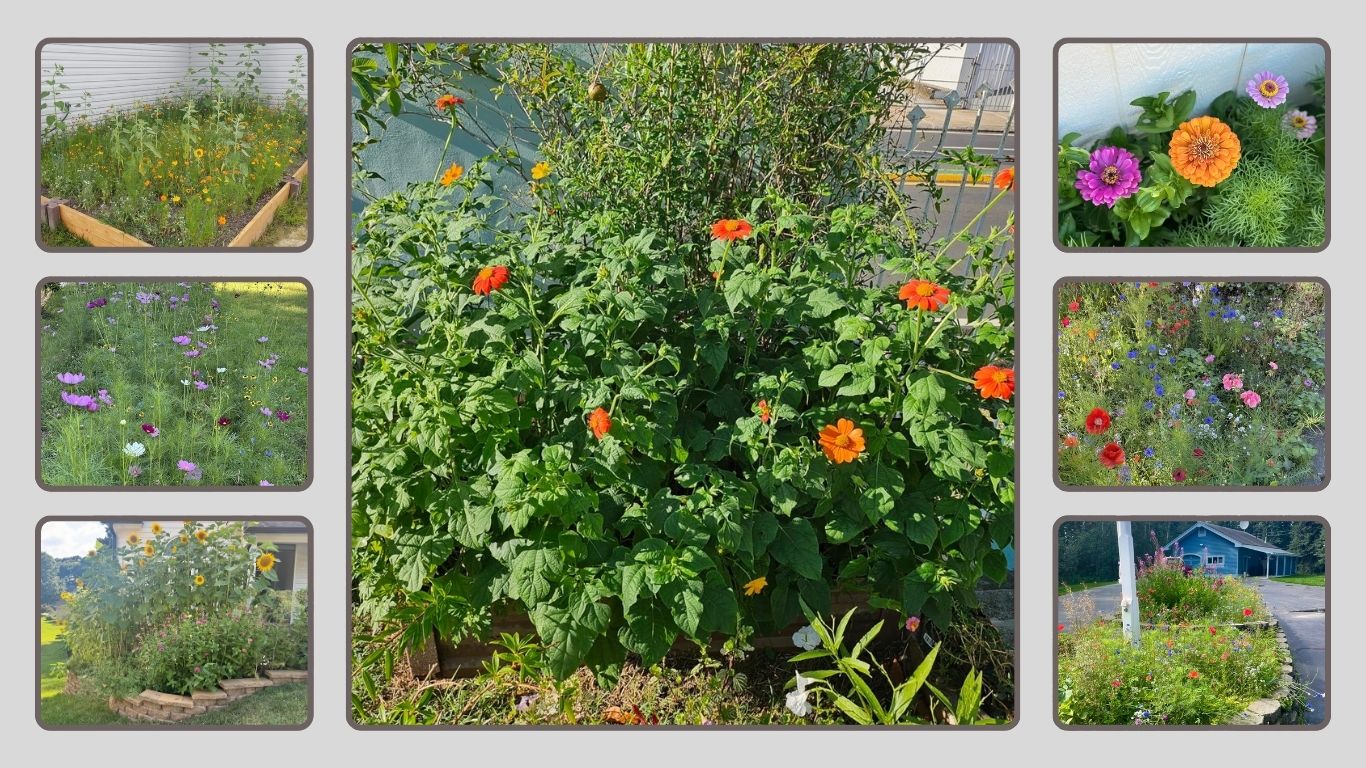
Tithonia rotundifolia is the most well-known and widely cultivated species of Mexican sunflower, admired for its large, fiery-orange blooms and fast-growing nature. Native to Mexico and Central America, this annual plant is famous for attracting butterflies, bees, and other pollinators. Its bold flowers and tall, bushy form make it a striking choice for garden borders, wildlife gardens, and cut-flower plantings.
Identification
- Large, daisy-like orange to reddish-orange flowers
- Dark central disk surrounded by broad ray petals
- Rough, heart-shaped to triangular green leaves
- Tall, upright, branching stems
- Plants commonly grow 4 to 6 feet tall
- Coarse, slightly hairy texture on leaves and stems
Habitat and Growing Conditions
Mexican sunflower thrives in full sun and prefers well-drained soil. It is naturally adapted to warm, open environments and performs best in hot climates. The plant is drought-tolerant once established but flowers more profusely with moderate, regular watering.
Blooming Season and Growth Pattern
Tithonia rotundifolia typically blooms from mid-summer through fall. It grows rapidly from seed, forming tall, bushy plants with many side branches. Each branch produces multiple flower buds, resulting in a long and colorful blooming period.
Uses and Significance
This Mexican sunflower is widely planted to attract pollinators, especially butterflies. It is also popular as a cut flower, in cottage gardens, and in wildlife landscapes. In some regions, related Tithonia species are used in green manure and traditional practices, highlighting the plant’s ecological value.
2. Tithonia diversifolia (Tree Marigold)
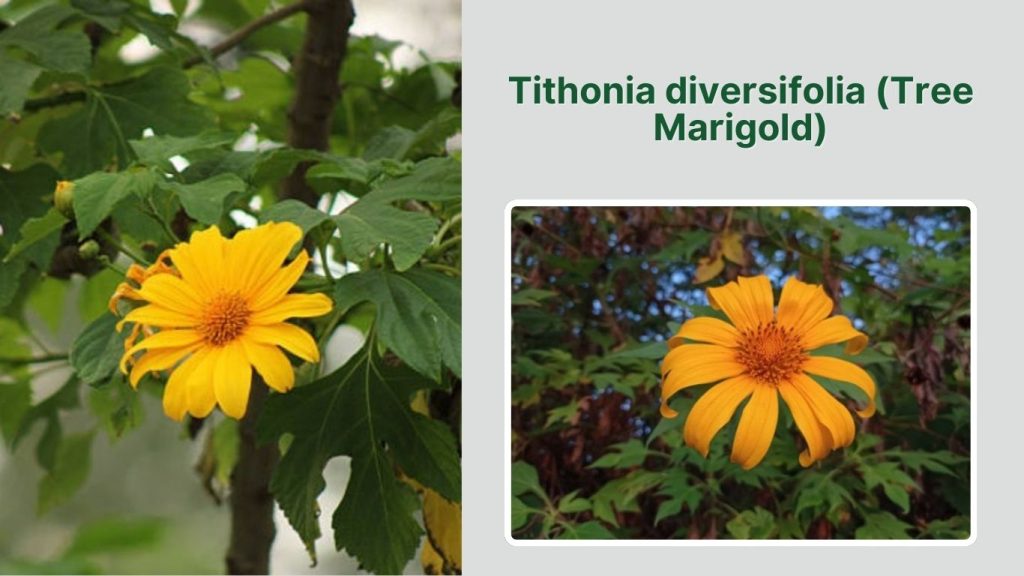
Tithonia diversifolia, often called tree marigold or Mexican tournesol, is a fast-growing perennial or shrubby Mexican sunflower known for its bright yellow to orange daisy-like flowers. Native to Mexico and Central America, this species is valued not only for its ornamental beauty but also for its agricultural and ecological benefits. It is commonly used in tropical regions for soil improvement, living fences, and pollinator support.
Identification
- Large yellow to golden-orange daisy-like flowers
- Prominent dark yellow central disc
- Broad, deeply lobed green leaves
- Tall, woody, hollow stems
- Shrub-like growth, often 6 to 12 feet tall
- Soft, slightly hairy foliage
Habitat and Growing Conditions
Tithonia diversifolia thrives in full sun and grows well in a wide range of soils, including poor or degraded ground. It prefers warm, tropical to subtropical climates and tolerates heavy rainfall as well as short dry periods. Because of its vigorous growth, it easily naturalizes in open fields, roadsides, and disturbed areas.
Blooming Season and Growth Pattern
Blooming often occurs from late summer through winter in warm climates. The plant grows rapidly into a large, bushy shrub with many branching stems. It can be cut back regularly, which encourages fresh growth and repeated flowering.
Uses and Significance
Tree marigold is widely used as green manure and compost material because its leaves are rich in nutrients. It is also planted as a living fence, erosion control plant, and nectar source for pollinators. Ornamentally, it adds height and bright seasonal color to large gardens.
3. Tithonia tubaeformis (Wild Mexican Sunflower)
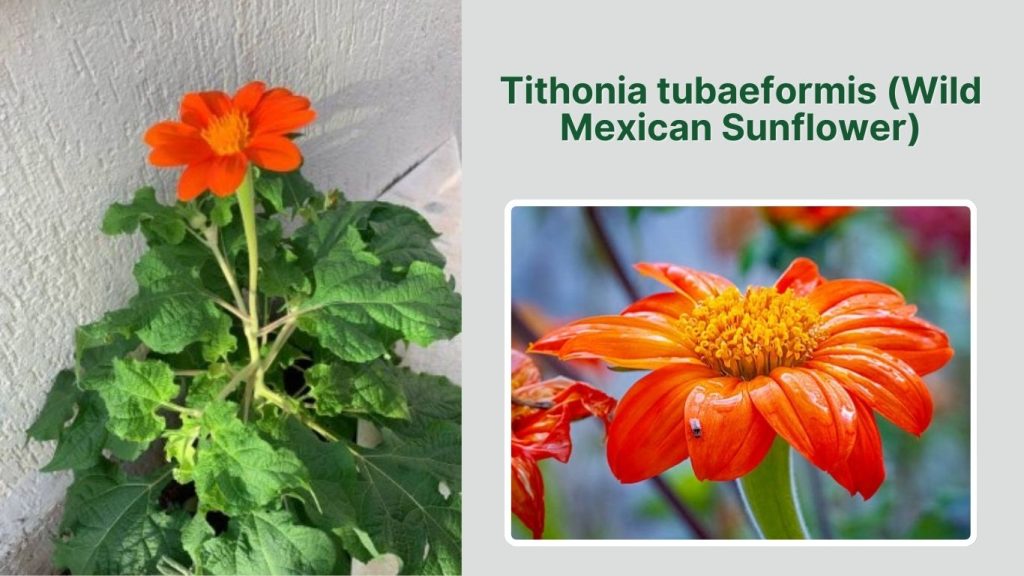
Tithonia tubaeformis, commonly known as wild Mexican sunflower, is a branching annual species valued for its cheerful orange to yellow blooms and adaptability to open landscapes. Native to Mexico and parts of Central America, this plant often grows along roadsides, fields, and disturbed ground. Its long blooming season and easy growth make it popular in naturalized gardens and pollinator-friendly plantings.
Identification
- Medium-sized orange to yellow daisy-like flowers
- Tubular central disc with surrounding ray petals
- Rough, triangular to lobed green leaves
- Upright, freely branching stems
- Plants usually grow 3 to 6 feet tall
- Slightly hairy leaves and stems
Habitat and Growing Conditions
Wild Mexican sunflower thrives in full sun and prefers well-drained soil. It is highly tolerant of poor soils and dry conditions, which allows it to colonize open, disturbed sites easily. The plant performs best in warm climates and is commonly found in agricultural margins and open fields.
Blooming Season and Growth Pattern
Blooming typically begins in mid-summer and can continue until late fall. The plant grows quickly from seed, producing many side branches that carry multiple flowers. Its open, spreading habit gives it a more natural, wildflower-like appearance.
Uses and Significance
Tithonia tubaeformis is frequently used in wildflower mixes, erosion control projects, and pollinator gardens. It attracts butterflies, bees, and other beneficial insects. In rural areas, it is sometimes allowed to grow naturally as a nectar source and seasonal ornamental.
4. Tithonia fruticosa
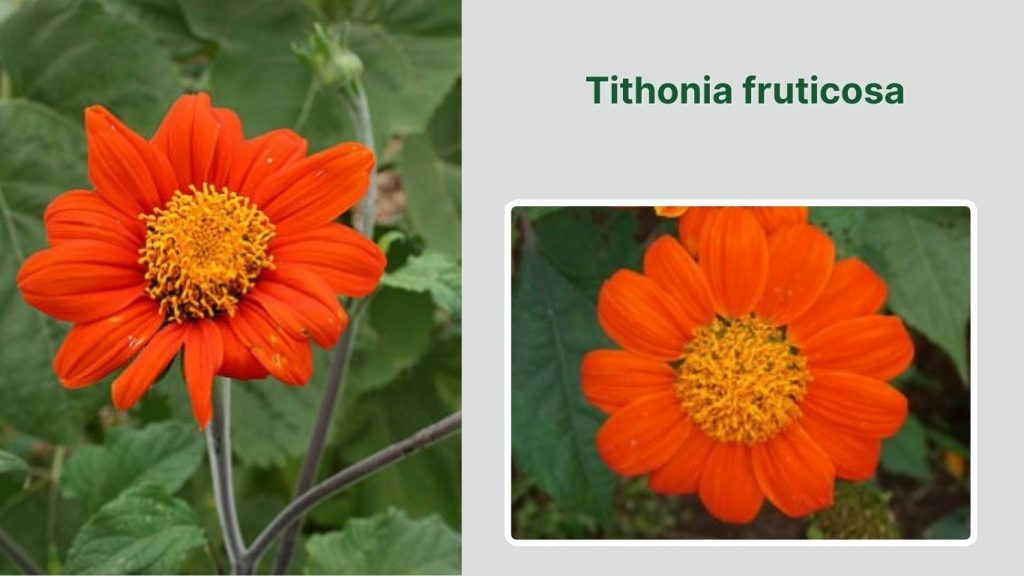
Tithonia fruticosa is a lesser-known species of Mexican sunflower characterized by its shrubby growth habit and bright daisy-like flowers. Native to parts of Mexico, this species is adapted to warm climates and open environments. Though not as widely cultivated as Tithonia rotundifolia, it is valued in botanical gardens and native plant collections for its vigorous growth and strong ornamental appeal.
Identification
- Bright yellow to orange daisy-like blooms
- Prominent central disc
- Shrub-like, branching growth form
- Broad, slightly lobed green leaves
- Woody lower stems in mature plants
- Typically grows 5 to 8 feet tall
Habitat and Growing Conditions
This species thrives in full sun and prefers well-drained soil. It naturally grows in open scrublands and forest edges where there is plenty of light. Tithonia fruticosa tolerates heat well and performs best in frost-free or mild climates.
Blooming Season and Growth Pattern
Flowering generally occurs from late summer into fall. The plant develops a bushy, upright structure with many side branches that support numerous blooms. In warm regions, it may behave as a short-lived perennial.
Uses and Significance
Tithonia fruticosa is mainly grown as an ornamental plant and for conservation of native species. Its tall, flowering habit makes it useful as a seasonal screen or background plant. Like other Tithonia species, it provides nectar for butterflies and other pollinators.
5. Tithonia brachycalyx
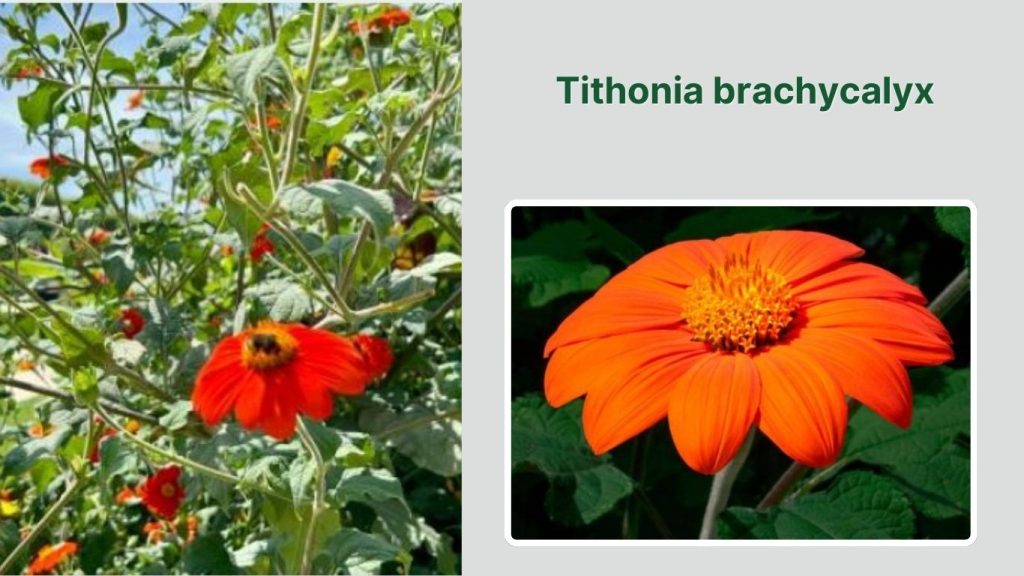
Tithonia brachycalyx is a relatively rare Mexican sunflower species noted for its bright blooms and compact, bushy form compared to taller Tithonia types. Native to Mexico, it grows naturally in warm, open habitats where sunlight is abundant. Because of its attractive flowers and manageable size, it is sometimes cultivated in specialty gardens and native plant collections.
Identification
- Bright yellow to orange daisy-like flowers
- Shorter flower stalks compared to other Tithonia species
- Broad, green, slightly lobed leaves
- Upright but compact branching habit
- Semi-woody stems as the plant matures
- Typically grows around 3 to 5 feet tall
Habitat and Growing Conditions
This species prefers full sun and well-drained soil. It naturally occurs in open fields, hillsides, and forest margins. Tithonia brachycalyx tolerates heat and moderate drought and performs best in warm climates with good air circulation.
Blooming Season and Growth Pattern
Blooming usually takes place from mid-summer through fall. The plant forms a dense, bushy structure and produces numerous blooms on branching stems. Regular pruning can encourage fuller growth and increased flowering.
Uses and Significance
Tithonia brachycalyx is valued mainly as an ornamental species and for botanical interest. Its flowers attract pollinators, including butterflies and bees. In gardens, it works well as a mid-height background plant or in native and wildlife-focused landscapes.
6. Tithonia pedunculata
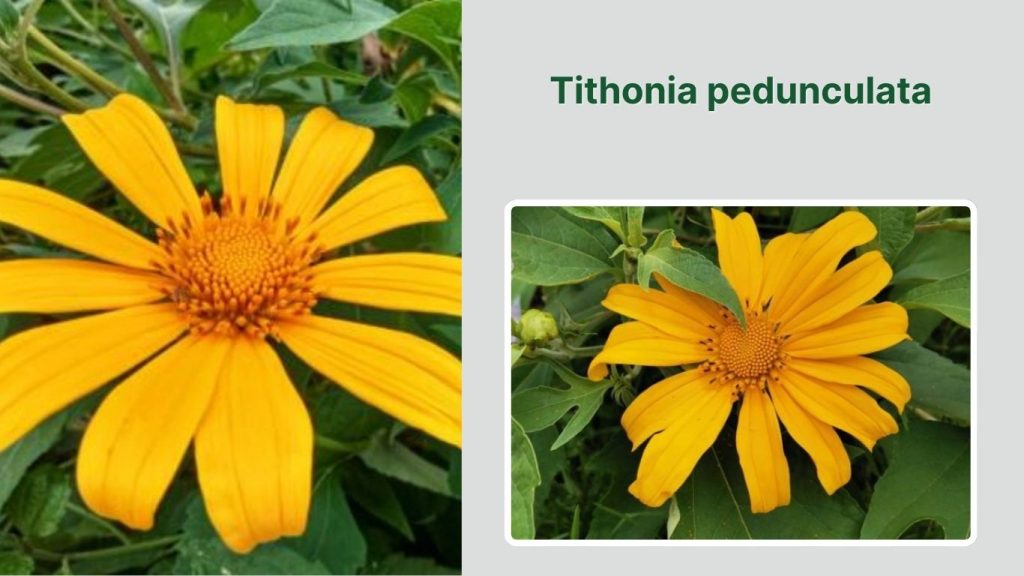
Tithonia pedunculata is a Mexican sunflower species recognized for its long flower stalks and open, airy growth habit. Native to Mexico, it grows naturally in sunny, open landscapes and disturbed areas. Although less commonly cultivated than some other Tithonia species, it is appreciated in native plant collections and ecological gardens for its graceful form and bright blooms.
Identification
- Bright yellow to orange daisy-like flowers
- Long, slender flower stalks (peduncles)
- Rough, green, slightly lobed leaves
- Upright, branching stems with open structure
- Slightly hairy foliage
- Plants often reach 4 to 7 feet tall
Habitat and Growing Conditions
This species thrives in full sun and prefers well-drained soils. It naturally grows along roadsides, hillsides, and open fields. Tithonia pedunculata tolerates heat and seasonal dryness and establishes well in warm climates.
Blooming Season and Growth Pattern
Flowering usually occurs from mid-summer into fall. The plant grows quickly, producing tall stems with spaced branching. Its long peduncles hold flowers above the foliage, giving it a light, airy appearance.
Uses and Significance
Tithonia pedunculata is mainly used for ornamental and conservation purposes. It attracts butterflies and bees and contributes to biodiversity in pollinator gardens. Its tall stems and bright flowers also make it suitable for background plantings in large landscapes.
7. Tithonia longiradiata
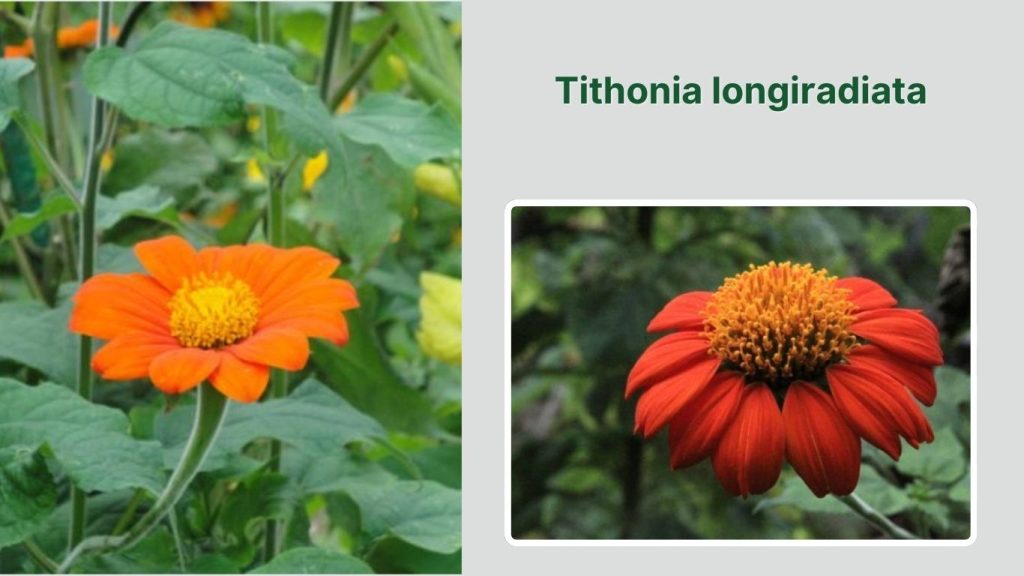
Tithonia longiradiata is a distinctive Mexican sunflower species named for its long, narrow ray petals that give the blooms a star-like appearance. Native to Mexico, this plant grows in warm, open habitats where it receives full sunlight. It is less commonly cultivated but is valued in native plant gardens and botanical collections for its unusual flower form and bright color.
Identification
- Daisy-like flowers with long, narrow ray petals
- Bright yellow to orange blooms
- Prominent central disc
- Rough, green, lobed leaves
- Upright, branching growth habit
- Plants typically grow 3 to 6 feet tall
Habitat and Growing Conditions
This species prefers full sun and well-drained soil. It naturally grows in open grasslands, slopes, and disturbed sites. Tithonia longiradiata tolerates heat and moderate drought, making it suitable for warm-climate gardens.
Blooming Season and Growth Pattern
Blooming generally begins in mid-summer and continues into fall. The plant develops multiple branches, each producing flowers held above the foliage. Its open growth pattern allows good air circulation and light penetration.
Uses and Significance
Tithonia longiradiata is mainly of ornamental and botanical interest. Its flowers provide nectar for butterflies and bees. In native and wildlife gardens, it adds diversity and supports local pollinator populations.
8. Tithonia thurberi
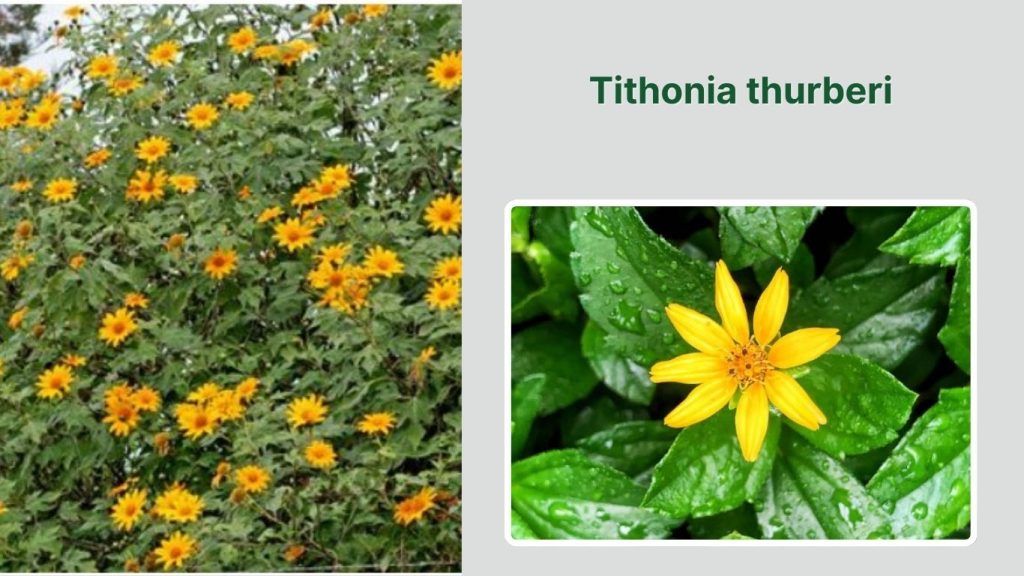
Tithonia thurberi is a lesser-known Mexican sunflower species valued for its bright, sunflower-like blooms and its role in native ecosystems. Native to northwestern Mexico and parts of the southwestern United States, this species grows naturally in open, sunny habitats. It is mainly found in wild populations and botanical collections rather than in common ornamental gardens.
Identification
- Bright yellow to orange daisy-like flowers
- Darker yellow central disc
- Rough, triangular to lobed green leaves
- Upright, freely branching stems
- Coarse texture on foliage
- Plants usually grow 3 to 5 feet tall
Habitat and Growing Conditions
This species thrives in full sun and naturally occurs in desert margins, open woodlands, and grasslands. It prefers well-drained soils and tolerates heat and seasonal drought. Tithonia thurberi is well adapted to arid and semi-arid environments.
Blooming Season and Growth Pattern
Blooming typically takes place from late summer into fall. The plant grows from seed into a moderately tall, branching form. Flowers appear at the ends of stems, providing late-season color in warm landscapes.
Uses and Significance
Tithonia thurberi is important ecologically as a nectar source for native pollinators. It is occasionally grown in native plant gardens and restoration projects. Its bright blooms add seasonal interest to dry-climate and wildlife-focused landscapes.
9. Tithonia hondurensis
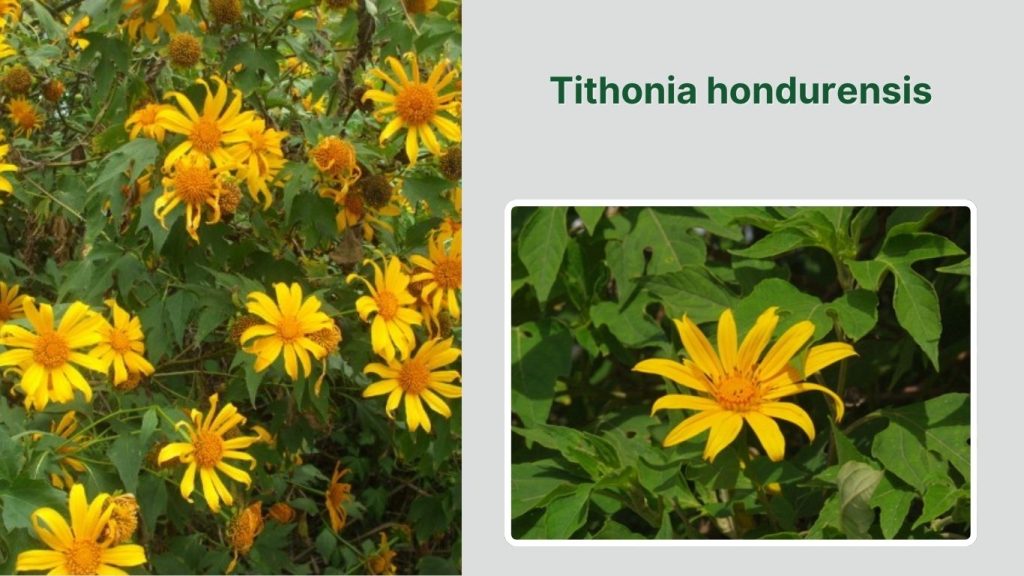
Tithonia hondurensis is a Central American Mexican sunflower species appreciated for its bright blooms and adaptation to warm, open environments. Native to Honduras and nearby regions, this plant grows naturally in sunny fields, hillsides, and disturbed areas. It is relatively rare in cultivation but valued in botanical collections and native plant gardens.
Identification
- Bright yellow to orange daisy-like flowers
- Prominent central disc
- Broad, green, slightly lobed leaves
- Upright, branching stems
- Coarse leaf texture
- Plants typically grow 3 to 6 feet tall
Habitat and Growing Conditions
This species thrives in full sun and prefers well-drained soil. It naturally occurs in tropical to subtropical climates where temperatures are warm year-round. Tithonia hondurensis tolerates seasonal drought and grows well in open, sunny landscapes.
Blooming Season and Growth Pattern
Blooming generally occurs from mid-summer through fall. The plant grows rapidly from seed, producing a bushy structure with many flowering branches. Its extended blooming period supports pollinators late into the season.
Uses and Significance
Tithonia hondurensis is mainly grown for conservation and botanical interest. Like other Tithonia species, it attracts butterflies, bees, and other nectar-feeding insects. It contributes to biodiversity in native plant gardens and ecological landscapes.
10. Tithonia maxima
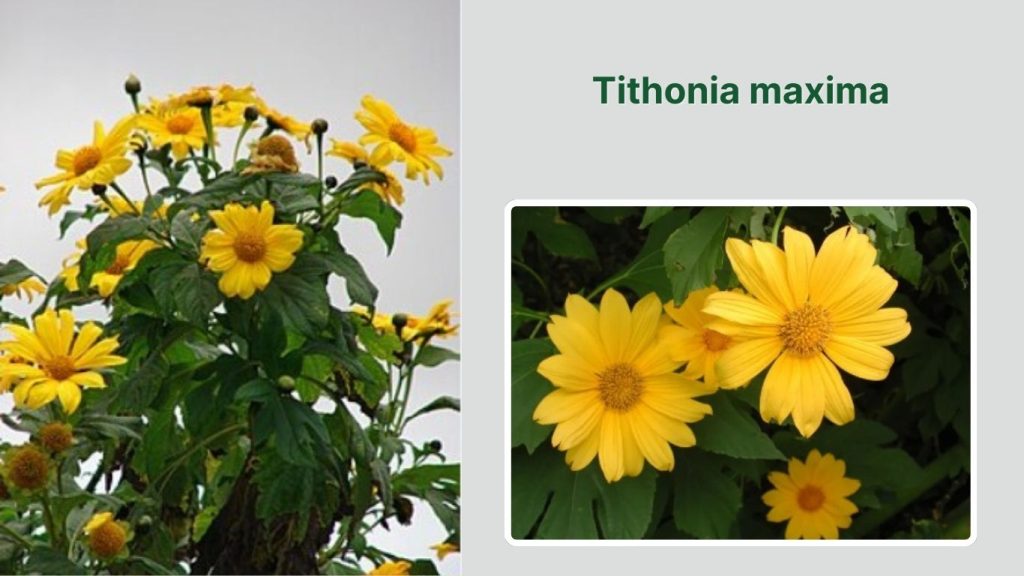
Tithonia maxima is a robust Mexican sunflower species noted for its large leaves and bold, showy flowers. Native to parts of Mexico, it grows naturally in warm, open regions with abundant sunlight. Though not commonly found in home gardens, it is valued in botanical collections and native plant projects for its impressive size and strong ornamental presence.
Identification
- Large, bright yellow to orange daisy-like flowers
- Prominent central disc
- Very broad, coarse green leaves
- Thick, sturdy, branching stems
- Tall, upright growth habit
- Plants often reach 6 to 10 feet tall
Habitat and Growing Conditions
This species prefers full sun and well-drained soil. It naturally grows in open hillsides, forest margins, and disturbed land. Tithonia maxima tolerates heat and moderate drought and performs best in warm climates.
Blooming Season and Growth Pattern
Blooming usually occurs from late summer into fall. The plant grows quickly, forming a tall, bushy structure with large foliage. Flowers are produced on strong stems and are easily visible above the leaves.
Uses and Significance
Tithonia maxima is primarily grown for ornamental and conservation purposes. Its large form makes it suitable for background planting and habitat gardens. The flowers attract pollinators and add height and dramatic color to native and wildlife-focused landscapes.
11. Tithonia calva
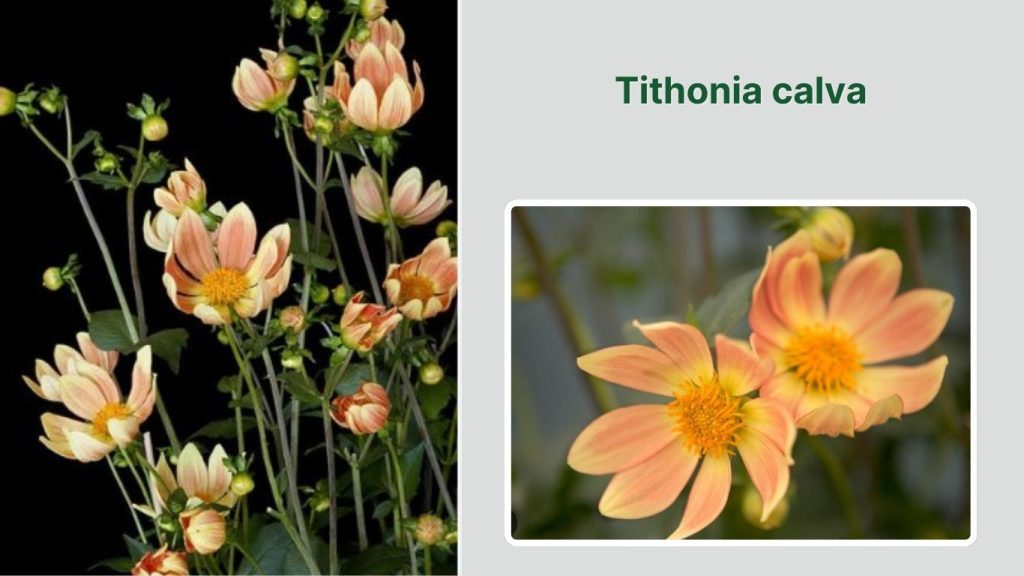
Tithonia calva is a rare Mexican sunflower species recognized for its clean-stem appearance and bright, daisy-like blooms. Native to Mexico, this plant grows naturally in warm, open habitats where sunlight is abundant. It is mainly of botanical interest and is occasionally included in native plant collections and conservation-focused gardens.
Identification
- Bright yellow to orange daisy-like flowers
- Smooth (less hairy) stems compared to other species
- Prominent central disc
- Broad, green leaves with light lobing
- Upright, branching growth habit
- Plants generally grow 3 to 6 feet tall
Habitat and Growing Conditions
This species thrives in full sun and prefers well-drained soil. It naturally occurs in open grasslands, slopes, and disturbed areas. Tithonia calva tolerates heat and moderate drought and is best suited to warm climates.
Blooming Season and Growth Pattern
Blooming usually occurs from mid-summer through fall. The plant develops an upright, bushy form with multiple flowering branches. Its smoother stems give it a slightly cleaner, less coarse appearance than many other Tithonia species.
Uses and Significance
Tithonia calva is mainly grown for conservation, research, and ornamental interest. Like other Mexican sunflowers, it provides valuable nectar for butterflies and bees. In native gardens, it adds diversity and late-season color.
FAQs
What is Tithonia, or Mexican sunflower?
Tithonia is a genus of flowering plants commonly known as Mexican sunflowers. They are native mainly to Mexico and Central America and are known for their bright, daisy-like blooms, fast growth, and strong attraction to butterflies and bees. Most species thrive in warm, sunny environments.
Is Mexican sunflower easy to grow?
Yes, most Tithonia species are very easy to grow from seed. They prefer full sun and well-drained soil and grow quickly in warm weather. Once established, they tolerate drought and poor soil, making them suitable for low-maintenance and pollinator-friendly gardens.
When does Mexican sunflower bloom?
Mexican sunflowers usually begin blooming in mid-summer and continue through fall. Their long blooming season provides late-season color when many other plants start to fade. Regular cutting or deadheading can encourage even more flower production.
How tall do Tithonia plants grow?
Depending on the species, Tithonia plants can grow anywhere from about 3 feet to over 10 feet tall. Common garden types like Tithonia rotundifolia typically reach 4 to 6 feet, while larger species can form tall, bushy background plants.
Why is Mexican sunflower good for pollinators?
Mexican sunflowers produce large, nectar-rich flowers that attract butterflies, bees, and other beneficial insects. Its long blooming season provides an important food source late in the year. This makes Tithonia an excellent choice for wildlife gardens and ecological landscapes.