





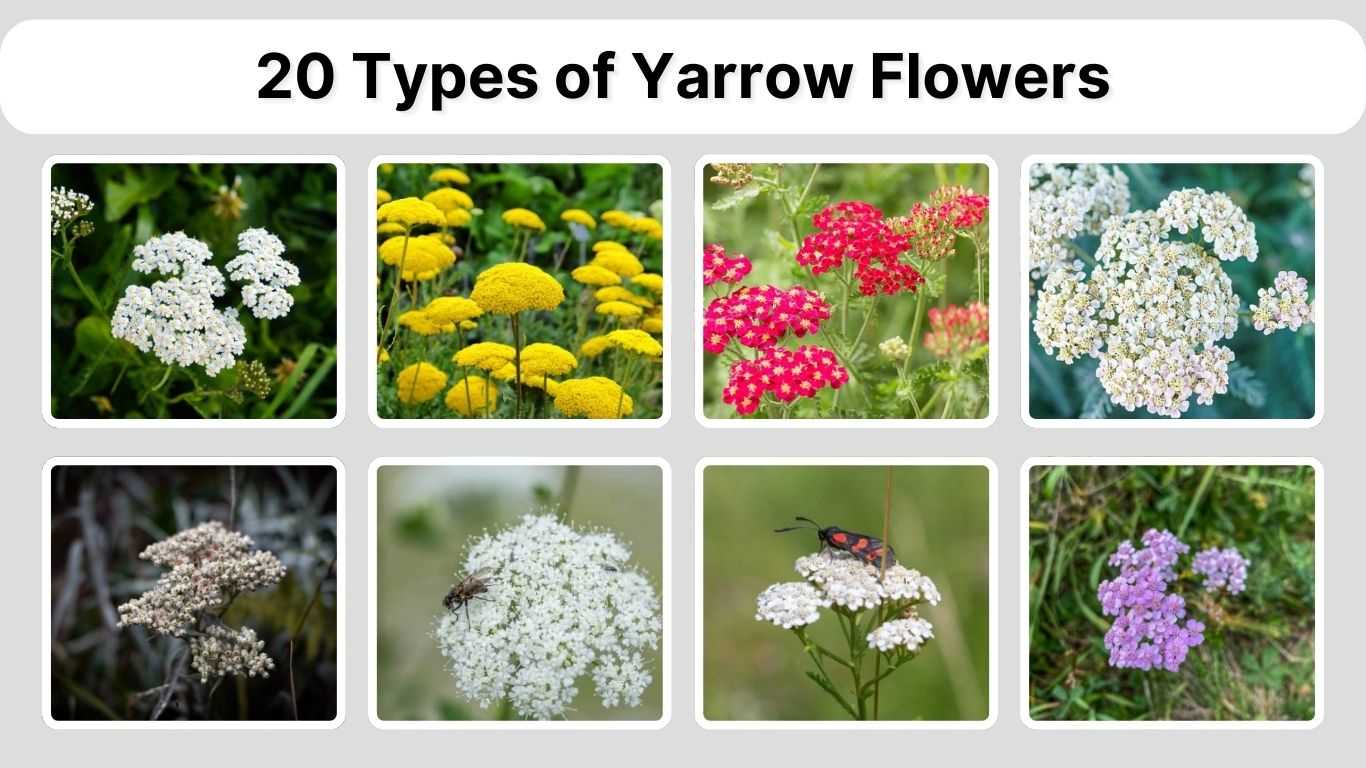
Yarrow flowers are hardy, versatile perennials known for their delicate foliage and vibrant, flat-topped blooms. With over 20 species ranging from low-growing alpine varieties to tall, striking garden types, they add texture, color, and structure to any landscape. Popular in rock gardens, borders, and wildflower meadows, yarrows thrive in sunny, well-drained conditions and attract bees, butterflies, and other pollinators. Beyond their ornamental value, many species have traditional medicinal uses, making them both beautiful and functional additions to gardens.
1. Common Yarrow (Achillea millefolium)

Common yarrow is a hardy, fast-spreading perennial flower known for its flat clusters of tiny blooms and finely divided, feathery leaves. It grows naturally across Europe, Asia, and North America and is widely cultivated in gardens for its long flowering season, pollinator value, and traditional medicinal uses.
Identification
- Flat-topped flower clusters made of many tiny daisy-like blooms
- Flowers usually white, but can appear pink or pale lavender
- Soft, feathery, aromatic leaves
- Upright, slender stems
- Average height: 1–3 feet (30–90 cm)
Appearance
Common yarrow has a delicate, lacy look because of its finely cut foliage. The flower heads form dense, umbrella-shaped clusters that sit above the leaves. Its soft texture contrasts beautifully with bold garden plants, making it popular in borders and wildflower gardens.
Habitat
This plant thrives in meadows, grasslands, roadsides, and open fields. It prefers full sun and well-drained soil but is extremely adaptable and drought-tolerant. Common yarrow can grow in poor soils where many other flowering plants struggle.
Uses
Common yarrow is often grown as an ornamental plant, but it is also famous in traditional herbal practices. It has been used historically for wound care, teas, and natural remedies. In gardens, it attracts butterflies and beneficial insects and works well in dried flower arrangements.
2. Fernleaf Yarrow (Achillea filipendulina)

Fernleaf yarrow is a tall, bold yarrow species valued for its bright yellow flower clusters and fern-like foliage. It is commonly grown in ornamental gardens for its long-lasting summer blooms, upright growth habit, and excellent performance in hot, dry conditions.
Identification
- Large, flat-topped clusters of golden-yellow flowers
- Deeply divided, fern-like gray-green leaves
- Strong, upright stems
- Average height: 3–5 feet (90–150 cm)
- Long flowering period from early summer to fall
Appearance
Fernleaf yarrow has a more dramatic look than common yarrow, with thick stems and large flower heads that stand well above the foliage. The golden blooms create strong visual impact in borders, cottage gardens, and cut-flower beds.
Habitat
This species prefers full sun and well-drained soil and performs best in dry to moderately fertile conditions. It is native to parts of Asia and southeastern Europe but is widely cultivated and naturalized in warm, open landscapes.
Uses
Fernleaf yarrow is popular for landscaping, dried flower crafts, and pollinator gardens. Its sturdy flower heads are excellent for fresh or dried arrangements, and the plant is often used to add height, color, and structure to perennial borders.
3. Sneezewort Yarrow (Achillea ptarmica)
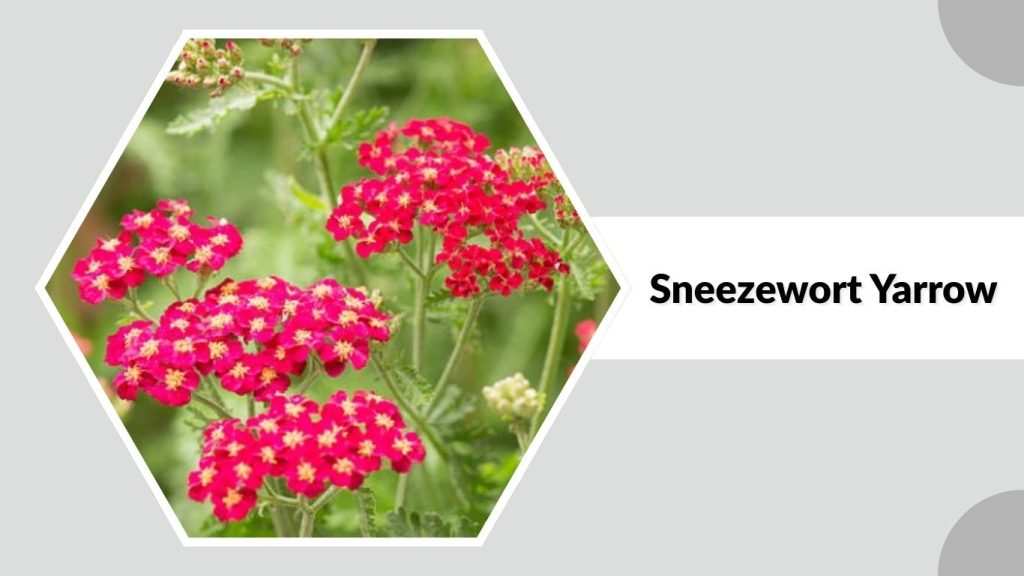
Sneezewort yarrow is a graceful yarrow species known for its bright white, button-like flowers and soft, green foliage. Unlike many other yarrows, it prefers slightly moist soils and is often grown in cottage gardens and naturalistic landscapes.
Identification
- Small, round, daisy-like white flowers
- Flat to slightly domed flower clusters
- Smooth, narrow, bright-green leaves
- Slender, upright stems
- Average height: 2–3 feet (60–90 cm)
Appearance
Sneezewort yarrow has a lighter, more delicate appearance than common yarrow. Its crisp white blooms create a clean, airy effect in flower beds, and many garden varieties produce double flowers that resemble small pom-poms.
Habitat
This species naturally grows in damp meadows, stream edges, and open woodland margins. It thrives in full sun to partial shade and prefers consistently moist, well-drained soil compared to other drought-tolerant yarrow types.
Uses
Sneezewort yarrow is widely used as an ornamental plant, especially in cottage-style gardens and cut-flower beds. Its long-lasting blooms are excellent for bouquets, and the plant is also valued for attracting bees and butterflies.
4. Woolly Yarrow (Achillea tomentosa)
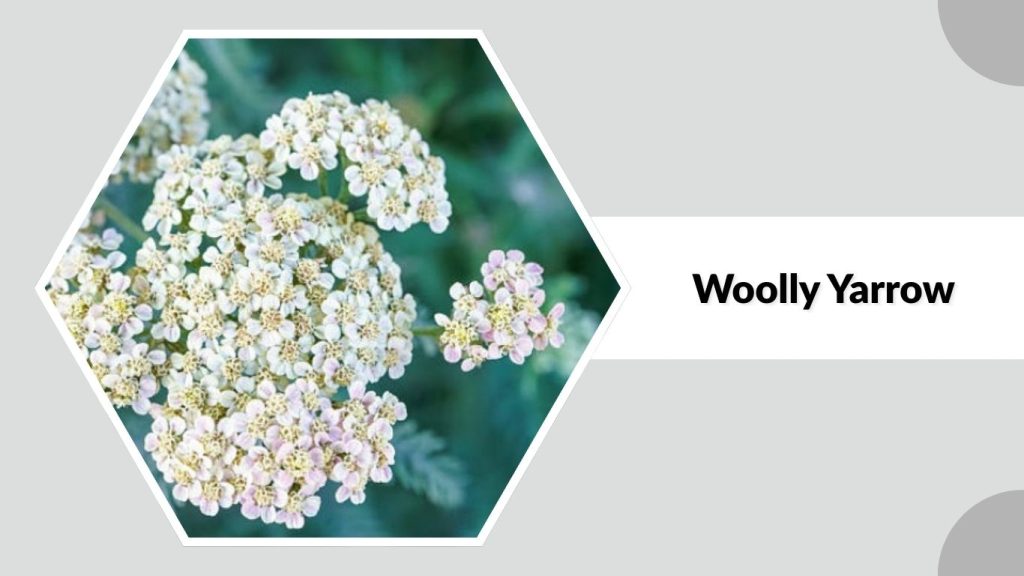
Woolly yarrow is a low-growing, mat-forming yarrow species admired for its soft, silvery foliage and bright yellow flower clusters. It is especially popular in rock gardens and groundcover plantings because of its compact size and high tolerance for drought and poor soil.
Identification
- Low, spreading growth habit
- Dense clusters of small, golden-yellow flowers
- Soft, woolly, silver-gray leaves
- Short, creeping stems
- Average height: 6–12 inches (15–30 cm)
Appearance
Woolly yarrow has a cushion-like form, with fuzzy leaves that give the plant a silvery glow. The bright yellow flowers rise slightly above the foliage, creating a striking contrast that works beautifully in rock gardens and along sunny borders.
Habitat
This species is native to mountainous regions of southern Europe. It thrives in full sun and well-drained, sandy, or rocky soils. Woolly yarrow is extremely drought-tolerant and does not perform well in wet or heavy soils.
Uses
Woolly yarrow is mainly grown as an ornamental groundcover. It is ideal for edging paths, stabilizing slopes, and filling gaps in dry gardens. The flowers also attract pollinators, especially bees and small butterflies.
5. Silver Yarrow (Achillea ageratifolia)
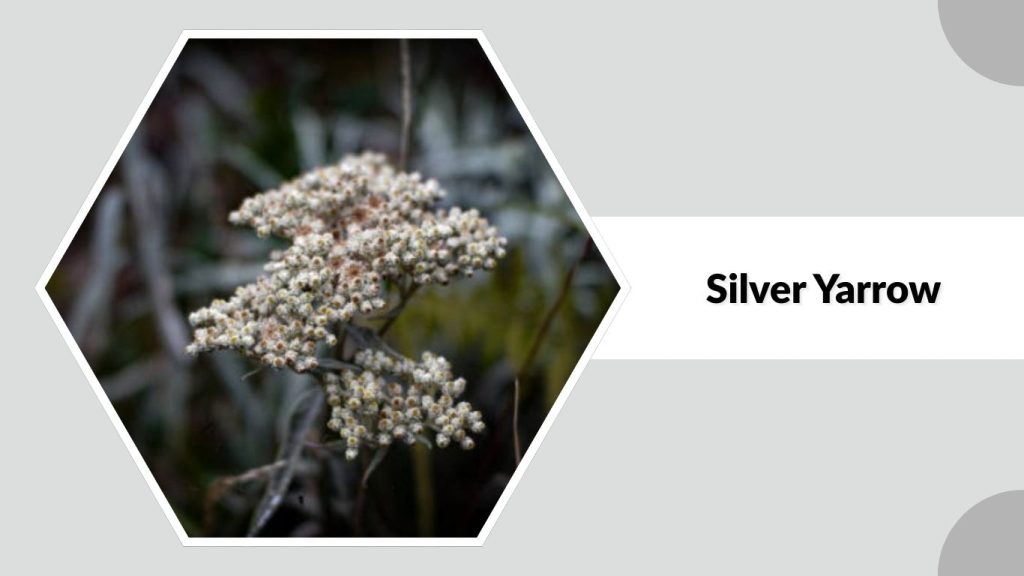
Silver yarrow is a compact, ornamental yarrow species prized for its soft, silvery-white foliage and neat clusters of creamy-white flowers. It is commonly used in rock gardens and alpine plantings because of its tidy form and attractive leaf color.
Identification
- Low-growing, mound-forming plant
- Small, creamy-white flower clusters
- Thick, velvety, silver-gray leaves
- Short, upright flowering stems
- Average height: 6–10 inches (15–25 cm)
Appearance
Silver yarrow forms dense, rounded clumps of fuzzy, bright silver leaves that remain decorative even when the plant is not in bloom. The pale flowers sit just above the foliage, giving the plant a soft, elegant look.
Habitat
This species is native to the rocky mountains of Greece and the Balkans. It prefers full sun and sharply drained soil and thrives in alpine gardens, gravel beds, and rocky slopes.
Uses
Silver yarrow is grown mainly as an ornamental foliage plant. It works well as a groundcover, edging plant, or contrast plant among darker green perennials, and it also attracts pollinators when in flower.
6. Alpine Yarrow (Achillea alpina)
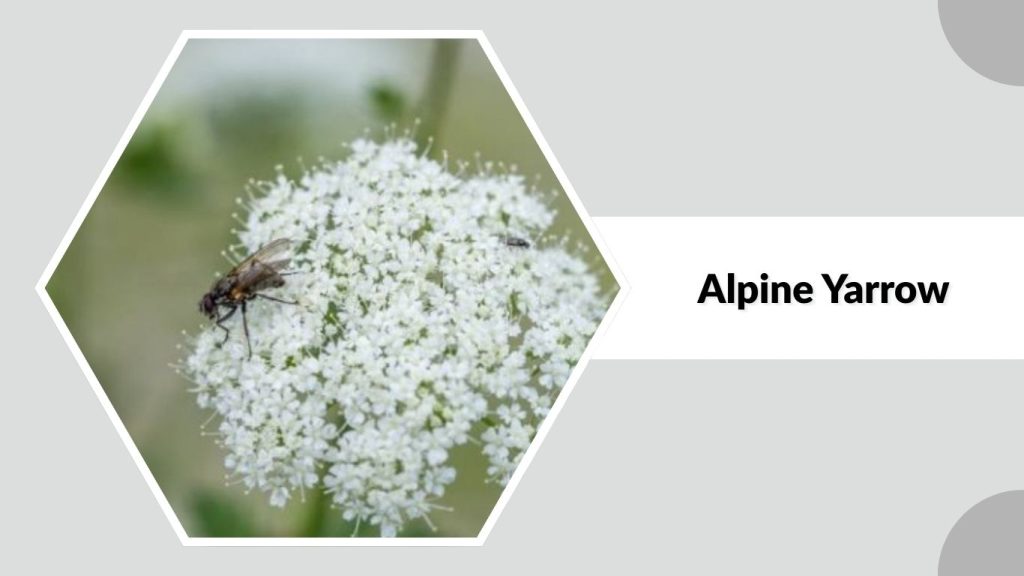
Alpine yarrow is a hardy, upright yarrow species known for its bright white to pale pink flower clusters and strong, straight stems. It is often found in cooler climates and mountainous regions, where it grows in open, sunny habitats.
Identification
- Flat-topped clusters of white to light pink flowers
- Narrow, finely divided green leaves
- Upright, sturdy stems
- Clump-forming growth habit
- Average height: 1–2.5 feet (30–75 cm)
Appearance
Alpine yarrow has a clean, simple look with crisp flower heads held well above the foliage. The blooms create a light, airy effect, while the narrow leaves give the plant a refined, grass-like texture.
Habitat
This species is native to northern Asia and parts of eastern Europe. It naturally grows in alpine meadows, open hillsides, and grasslands. Alpine yarrow prefers full sun and well-drained soil and tolerates cold climates very well.
Uses
Alpine yarrow is used in ornamental gardens, wildflower meadows, and naturalized plantings. It is valued for its cold hardiness, pollinator-friendly flowers, and suitability for low-maintenance landscapes.
7. Noble Yarrow (Achillea nobilis)
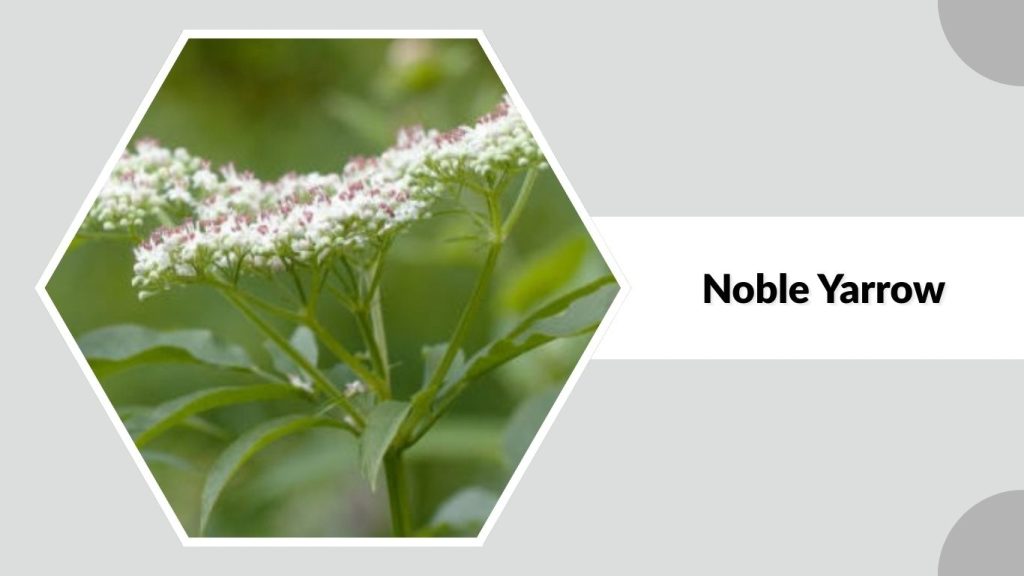
Noble yarrow is an upright, aromatic yarrow species recognized for its creamy-white flower heads and finely divided, gray-green leaves. It has a more formal, tidy growth habit compared to common yarrow and is often found in dry, open habitats.
Identification
- Flat clusters of creamy-white flowers
- Finely cut, gray-green, aromatic leaves
- Upright, branched stems
- Compact, clump-forming growth
- Average height: 1–2 feet (30–60 cm)
Appearance
Noble yarrow has a neat, structured look, with softly textured foliage and evenly shaped flower heads. The pale blooms stand out clearly above the leaves, giving the plant a light, refined presence in garden settings.
Habitat
This species is native to parts of central and southern Europe and western Asia. It grows naturally in dry grasslands, steppes, and sunny slopes, preferring full sun and well-drained soils.
Uses
Noble yarrow is grown as an ornamental and aromatic plant. It is suitable for herb gardens, dry borders, and naturalistic landscapes, and it also attracts bees and butterflies during its long flowering period.
8. Black Yarrow (Achillea atrata)
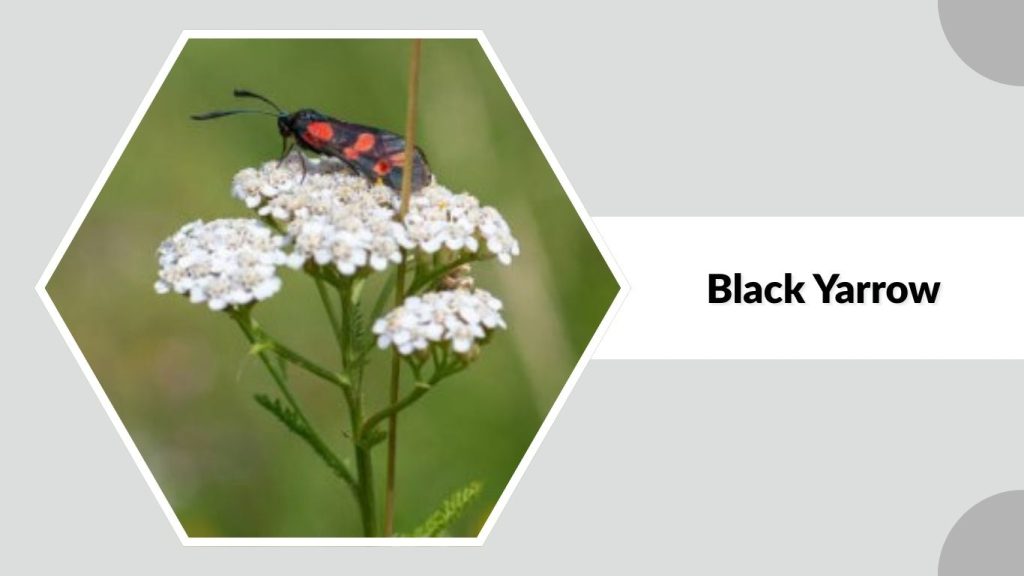
Black yarrow is a striking alpine yarrow species known for its dark-centered white flowers and compact, tidy growth habit. It is especially valued in rock gardens for its neat form and ability to thrive in cool, mountainous conditions.
Identification
- White flower heads with dark gray to nearly black centers
- Flat-topped, dense flower clusters
- Deeply divided, dark green leaves
- Low, compact, clump-forming habit
- Average height: 8–16 inches (20–40 cm)
Appearance
Black yarrow has a bold, high-contrast look. The bright white petals surrounding the dark central discs create a dramatic effect, while the finely cut foliage forms dense, attractive mounds.
Habitat
This species is native to the Alps and other mountainous regions of central Europe. It grows naturally in alpine meadows, rocky slopes, and open mountain grasslands, preferring full sun and well-drained, gritty soil.
Uses
Black yarrow is mainly cultivated as an ornamental alpine plant. It is ideal for rock gardens, troughs, and small borders, and its flowers attract bees and other pollinators despite its compact size.
9. Musk Yarrow (Achillea moschata)
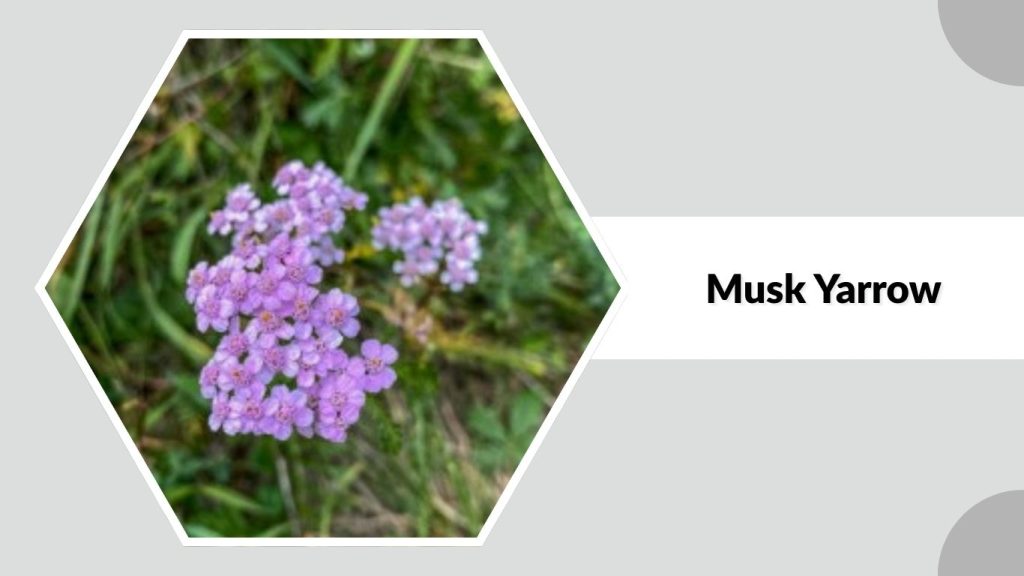
Musk yarrow is a fragrant alpine yarrow species prized for its sweet scent, soft foliage, and creamy-white flower clusters. It is best known as a mountain plant and is often associated with traditional herbal and aromatic uses.
Identification
- Small, flat clusters of creamy-white flowers
- Narrow, finely divided, aromatic leaves
- Compact, low-growing habit
- Short, upright flowering stems
- Average height: 6–12 inches (15–30 cm)
Appearance
Musk yarrow has a delicate, cushion-like form with soft green to gray-green foliage. The subtle flowers blend gently with the leaves, giving the plant a refined, alpine appearance rather than a bold, showy one.
Habitat
This species is native to the alpine regions of the Alps. It naturally grows on rocky slopes, mountain meadows, and well-drained, gravelly soils. Musk yarrow prefers full sun, cool conditions, and excellent drainage.
Uses
Musk yarrow is cultivated for rock gardens, alpine houses, and herb collections. Its pleasantly scented leaves and flowers have been traditionally used for flavoring and herbal preparations, and the blooms also support pollinators.
10. Siberian Yarrow (Achillea sibirica)

Siberian yarrow is a robust, cold-hardy yarrow species valued for its broad flower clusters and strong, upright growth. It is well adapted to harsh climates and is commonly found in northern and mountainous regions.
Identification
- Flat-topped clusters of white to pale pink flowers
- Coarsely divided, deep green leaves
- Tall, sturdy, upright stems
- Spreading, clump-forming growth habit
- Average height: 2–4 feet (60–120 cm)
Appearance
Siberian yarrow has a bold, upright form with wide flower heads that create a soft, cloud-like effect when in bloom. The darker green foliage gives it a heavier texture compared to many other yarrow species.
Habitat
This species is native to Siberia, northern China, and parts of Mongolia. It naturally grows in open grasslands, riverbanks, forest edges, and mountain slopes. Siberian yarrow prefers full sun and well-drained to moderately moist soils.
Uses
Siberian yarrow is grown in ornamental borders, wildflower gardens, and naturalized plantings. It is valued for its extreme cold tolerance, ability to attract pollinators, and suitability for large landscape areas.
11. Ligustica Yarrow (Achillea ligustica)
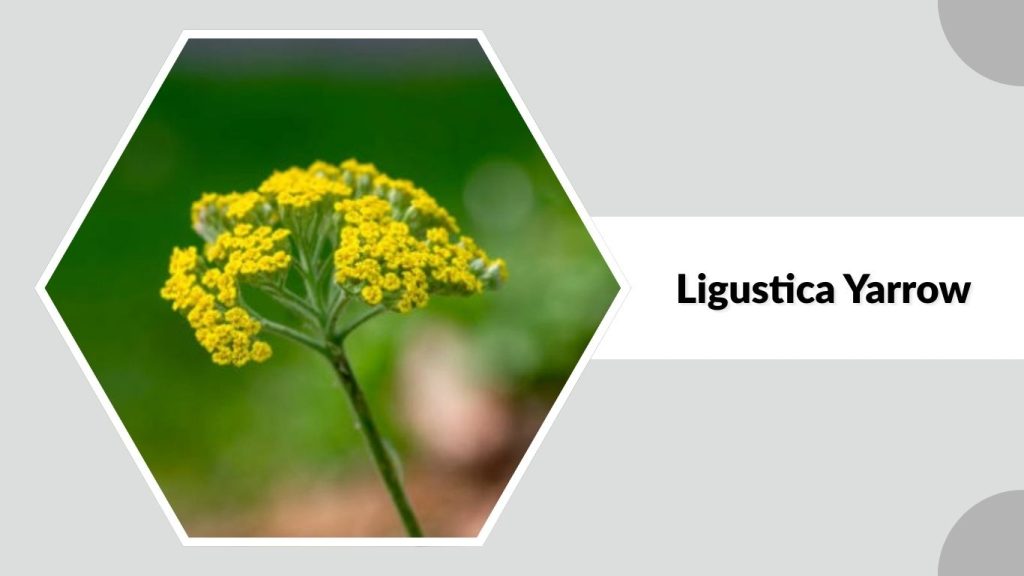
Ligustica yarrow is a delicate, airy yarrow species known for its finely textured foliage and small, pale flower clusters. It has a lighter growth habit than many common garden yarrows and blends well into naturalistic and Mediterranean-style plantings.
Identification
- Small, flat clusters of white to creamy flowers
- Very finely divided, soft green leaves
- Slender, branching stems
- Loose, upright growth habit
- Average height: 1.5–3 feet (45–90 cm)
Appearance
Ligustica yarrow has a soft, feathery look, with thin stems and light flower heads that create a misty effect in the garden. Its fine foliage gives it an elegant texture that contrasts nicely with bold-leaved plants.
Habitat
This species is native to southern Europe, especially coastal and hilly regions around the Mediterranean. It naturally grows in dry meadows, open slopes, and sunny scrublands, preferring full sun and well-drained soil.
Uses
Ligustica yarrow is mainly grown as an ornamental plant in natural gardens, wildflower borders, and drought-tolerant landscapes. It is valued for adding light texture, attracting pollinators, and softening mixed perennial plantings.
12. Balkan Yarrow (Achillea clypeolata)
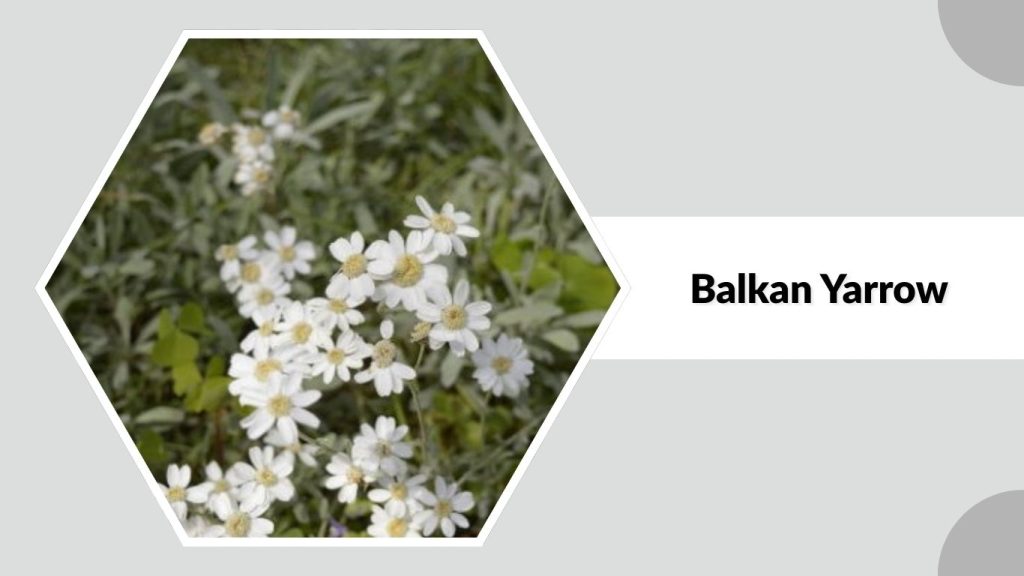
Balkan yarrow is a bright, ornamental yarrow species famous for its vivid yellow flower clusters and silvery-green foliage. It is widely cultivated in gardens for its long-lasting blooms and strong performance in dry, sunny conditions.
Identification
- Large, flat-topped clusters of bright yellow flowers
- Finely divided, gray-green to silvery leaves
- Upright, sturdy stems
- Bushy, clump-forming habit
- Average height: 1.5–3 feet (45–90 cm)
Appearance
Balkan yarrow has a cheerful, sunlit appearance, with intense yellow blooms that stand out strongly against its pale foliage. The flowers form dense plates that hold their color well even in hot summer weather.
Habitat
This species is native to southeastern Europe, especially the Balkan region. It naturally grows on rocky slopes, dry grasslands, and open hillsides, thriving in full sun and well-drained soils.
Uses
Balkan yarrow is popular in ornamental borders, pollinator gardens, and cut-flower beds. Its blooms are excellent for fresh or dried arrangements, and the plant is valued for its drought tolerance and long flowering season.
13. Erba-rotta Yarrow (Achillea erba-rotta)
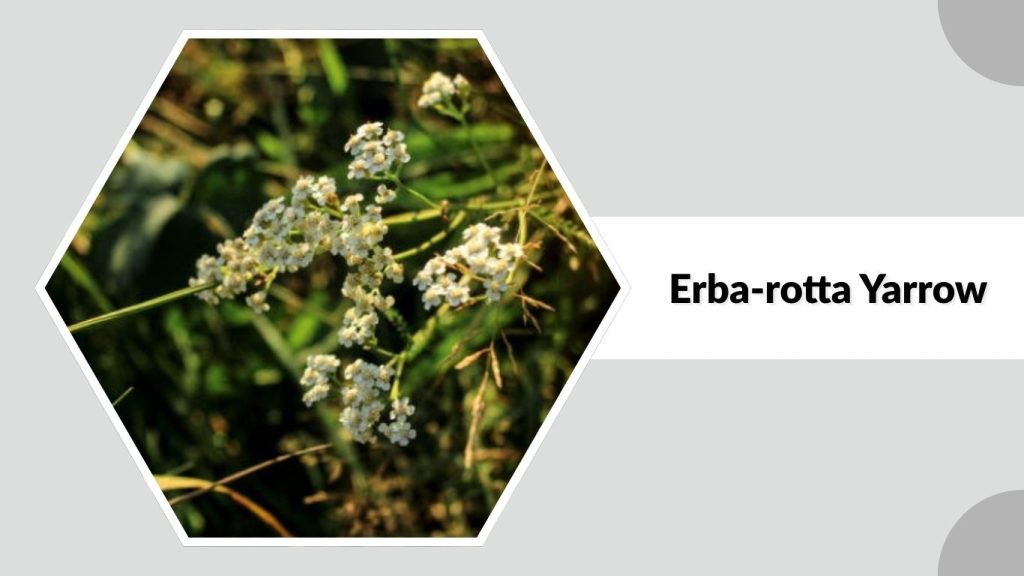
Erba-rotta yarrow is a compact alpine yarrow species known for its aromatic foliage and neat clusters of white flowers. It is traditionally associated with mountain regions and has long been valued for both ornamental and herbal purposes.
Identification
- Small, flat clusters of white flowers
- Finely cut, strongly aromatic leaves
- Low, cushion-forming growth habit
- Short, upright flowering stems
- Average height: 4–10 inches (10–25 cm)
Appearance
Erba-rotta yarrow forms dense, rounded mats of delicate green leaves. When in bloom, its small white flower heads sit just above the foliage, giving it a tidy, refined alpine look.
Habitat
This species is native to the Alps and nearby mountain systems of southern Europe. It naturally grows in rocky alpine meadows, gravel slopes, and open mountain pastures, preferring full sun and sharply drained soils.
Uses
Erba-rotta yarrow is grown in rock gardens, alpine houses, and herb collections. Its aromatic leaves have been traditionally used in herbal preparations, and the plant also attracts bees and other small pollinators.
14. Woolly Balkan Yarrow (Achillea coarctata)
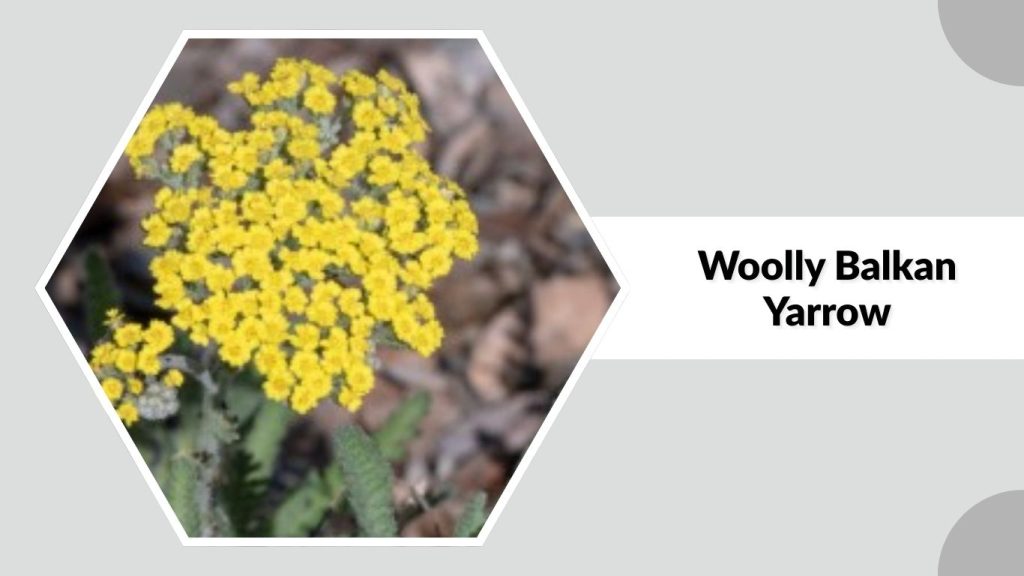
Woolly Balkan yarrow is a drought-tolerant yarrow species appreciated for its dense silvery foliage and soft yellow flower clusters. It is often grown in dry gardens and rocky landscapes where low-maintenance, sun-loving plants are needed.
Identification
- Tight, flat clusters of pale yellow flowers
- Thick, woolly, silver-gray leaves
- Compact, spreading growth habit
- Short, sturdy flowering stems
- Average height: 8–18 inches (20–45 cm)
Appearance
This yarrow forms thick, textured mounds of fuzzy leaves that give the plant a bright, silvery look even when not in bloom. The soft yellow flowers rise slightly above the foliage, adding gentle color without overpowering nearby plants.
Habitat
This species is native to southeastern Europe and parts of Turkey. It grows naturally on dry slopes, rocky hillsides, and open scrubland. Woolly Balkan yarrow prefers full sun and sharply drained soil and tolerates heat and drought very well.
Uses
Woolly Balkan yarrow is mainly used as an ornamental plant for rock gardens, gravel beds, and drought-tolerant borders. It provides excellent ground coverage, reflects heat, and attracts pollinators during its flowering season.
15. Alpine Sneezewort (Achillea stricta)
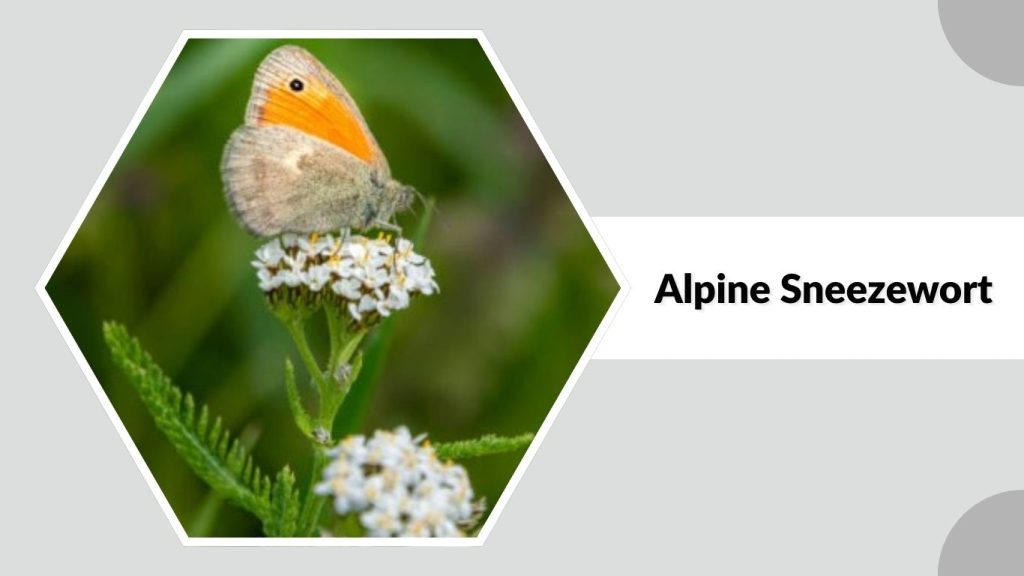
Alpine sneezewort is an upright, elegant yarrow species characterized by its clean white flower heads and narrow, finely divided leaves. It has a lighter structure than many garden yarrows and fits well into naturalistic and meadow-style plantings.
Identification
- Flat-topped clusters of pure white flowers
- Narrow, deeply cut green leaves
- Slender, upright stems
- Clump-forming growth habit
- Average height: 1–2.5 feet (30–75 cm)
Appearance
Alpine sneezewort has a graceful, vertical form with delicate foliage that creates a fine-textured background for its crisp white blooms. The flowers sit neatly above the leaves, producing a soft, meadow-like effect.
Habitat
This species is native to mountainous and open regions of southeastern Europe. It naturally grows in alpine grasslands, rocky meadows, and sunny slopes, preferring full sun and well-drained soils.
Uses
Alpine sneezewort is grown as an ornamental plant in wildflower gardens, meadow plantings, and mixed borders. It is valued for its refined appearance, pollinator-friendly blooms, and adaptability to dry, sunny conditions.
16. Kellerer’s Yarrow (Achillea kellereri)
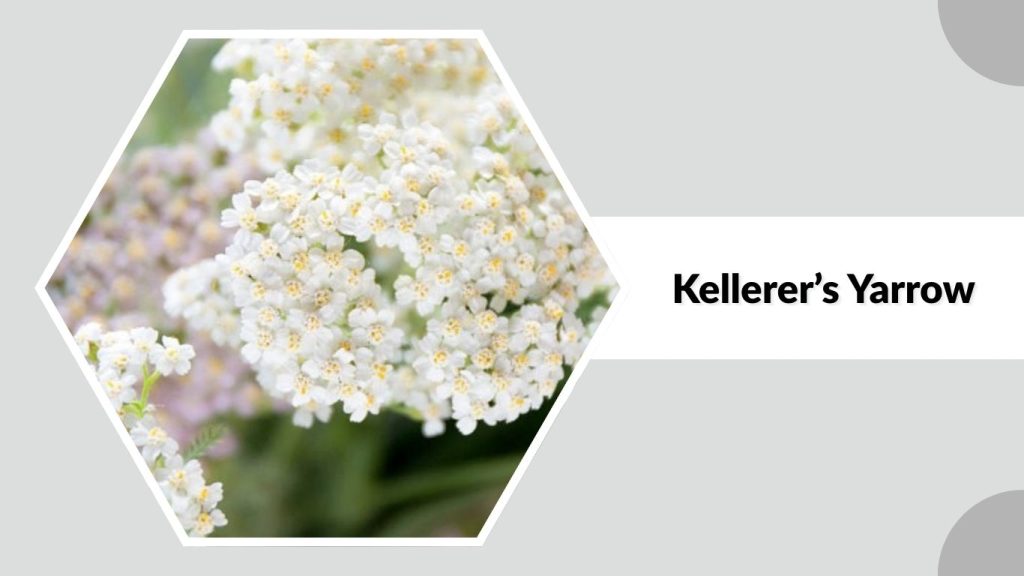
Kellerer’s yarrow is a compact, low-growing species known for its creamy-white flower clusters and aromatic, finely divided foliage. It is particularly suited to rock gardens and alpine plantings due to its small stature and drought tolerance.
Identification
- Flat clusters of creamy-white flowers
- Finely divided, aromatic green leaves
- Low, mat-forming growth habit
- Short, upright flowering stems
- Average height: 6–12 inches (15–30 cm)
Appearance
Kellerer’s yarrow forms dense, rounded mats of soft green foliage. The small flower heads rise slightly above the leaves, creating a tidy, understated alpine look that works well in rockeries and gravel gardens.
Habitat
Native to mountainous regions of Europe, this species grows on rocky slopes, open meadows, and alpine pastures. It prefers full sun and sharply drained soils, thriving in cool climates and dry conditions.
Uses
Kellerer’s yarrow is primarily grown for ornamental purposes in rock gardens, alpine collections, and low-maintenance landscapes. Its aromatic foliage adds sensory appeal, while the flowers attract bees and other pollinators.
17. Large-Headed Yarrow (Achillea macrocephala)
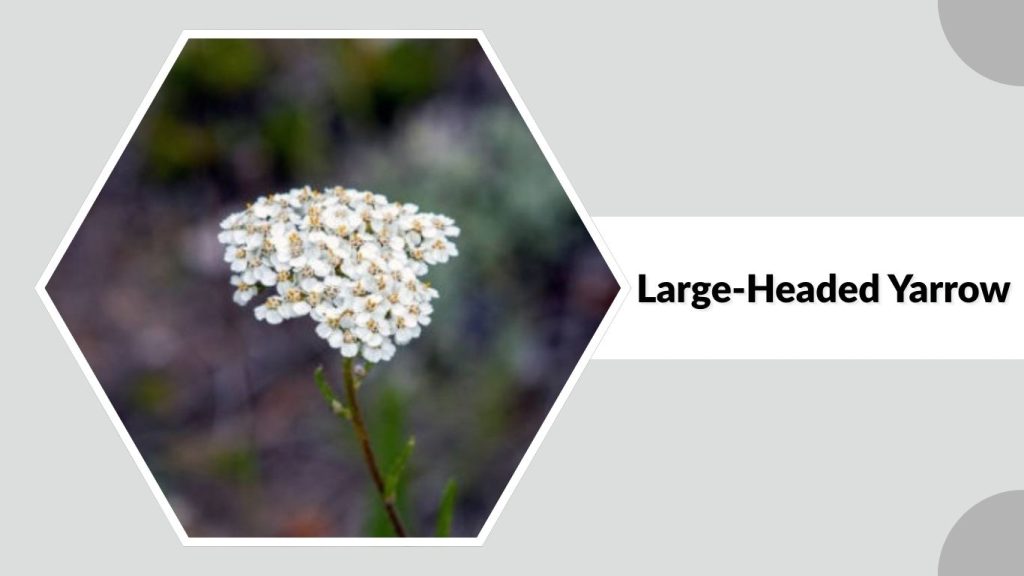
Large-headed yarrow is a bold ornamental species known for its unusually large, flat clusters of creamy-white flowers and strong, upright stems. It adds height and structure to borders and perennial gardens.
Identification
- Very large, flat-topped clusters of creamy-white flowers
- Finely divided, gray-green leaves
- Sturdy, upright stems
- Clump-forming growth habit
- Average height: 3–5 feet (90–150 cm)
Appearance
Large-headed yarrow stands out due to its prominent, cloud-like flower clusters held high above its foliage. The thick, upright stems give it a structural presence, making it a focal point in mixed perennial beds.
Habitat
Native to parts of southeastern Europe and the Caucasus, this species naturally grows on open slopes, dry meadows, and rocky terrain. It prefers full sun and well-drained soils and tolerates drought conditions well.
Uses
This yarrow is widely used in ornamental borders, cut-flower gardens, and pollinator-friendly landscapes. Its large flower heads are ideal for fresh or dried floral arrangements, and the plant attracts bees and butterflies.
18. Clavennae Yarrow (Achillea clavennae)
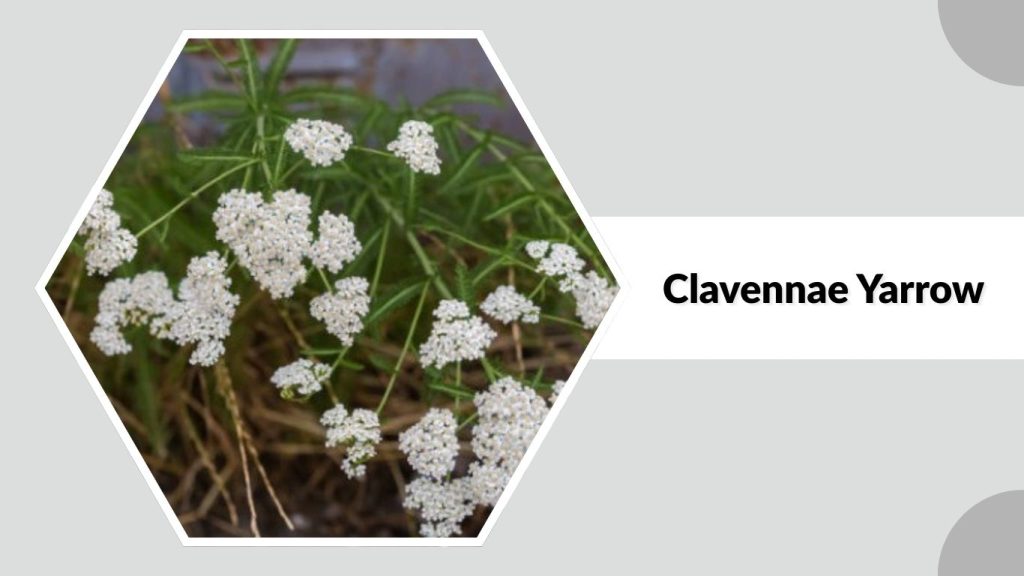
Clavennae yarrow is a hardy, aromatic species with small, creamy-white flower clusters and finely divided foliage. It is well-suited to alpine gardens, rockeries, and low-maintenance landscapes.
Identification
- Flat clusters of small, creamy-white flowers
- Finely divided, aromatic green leaves
- Low, compact growth habit
- Short, upright stems
- Average height: 8–14 inches (20–35 cm)
Appearance
Clavennae yarrow forms tidy, cushion-like mounds of soft green foliage. The delicate flower heads sit slightly above the leaves, creating a neat, understated appearance that blends well in alpine and rock gardens.
Habitat
This species is native to southern Europe and grows naturally in dry meadows, rocky slopes, and open mountainous areas. It thrives in full sun and well-drained soils, tolerating poor and rocky conditions.
Uses
Clavennae yarrow is grown for ornamental purposes, particularly in rock gardens, alpine plantings, and low-maintenance borders. Its aromatic foliage adds interest, while the flowers attract pollinators and provide subtle beauty.
19. Tomentose Yarrow (Achillea crithmifolia)
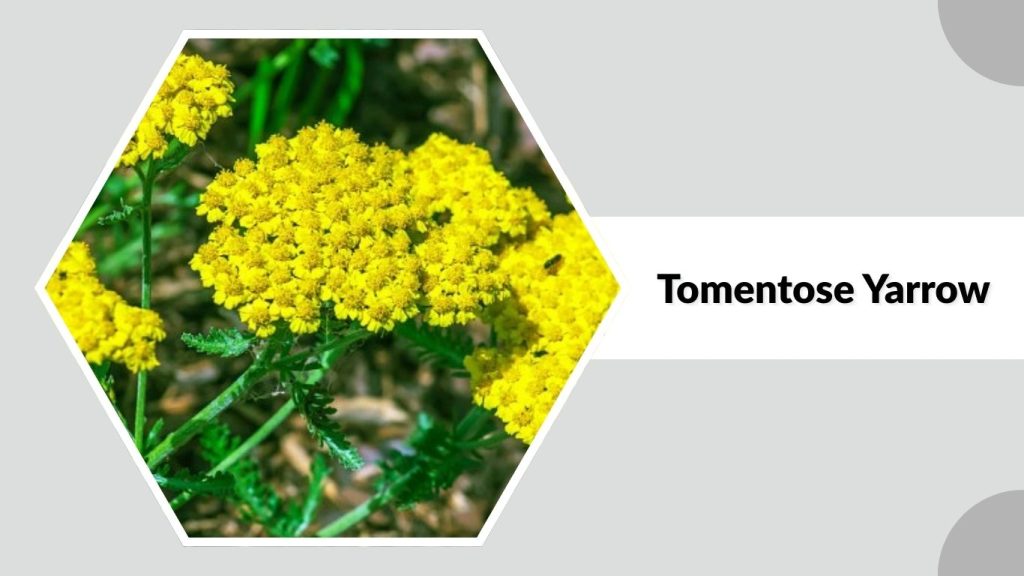
Tomentose yarrow is a low-growing, mat-forming species valued for its soft, woolly foliage and small clusters of yellowish-white flowers. Its compact habit makes it ideal for rock gardens, slopes, and groundcover in sunny locations.
Identification
- Small, flat clusters of yellowish-white flowers
- Soft, woolly, gray-green leaves
- Creeping, spreading stems
- Dense, cushion-like growth
- Average height: 6–12 inches (15–30 cm)
Appearance
Tomentose yarrow forms a silvery-green carpet with fuzzy foliage. The subtle flower clusters rise slightly above the mat, creating gentle color contrast and a soft texture perfect for rocky or dry garden areas.
Habitat
This species is native to southern Europe and grows on rocky hillsides, alpine meadows, and well-drained slopes. It prefers full sun and dry, gritty soil, thriving in low-maintenance and drought-prone gardens.
Uses
Tomentose yarrow is primarily used as an ornamental groundcover. It works well in rock gardens, gravel beds, and dry borders. Its flowers attract pollinators, and the plant’s woolly foliage provides a soft, silvery texture.
20. Woolly Musk Yarrow (Achillea moschata var. tomentosa)
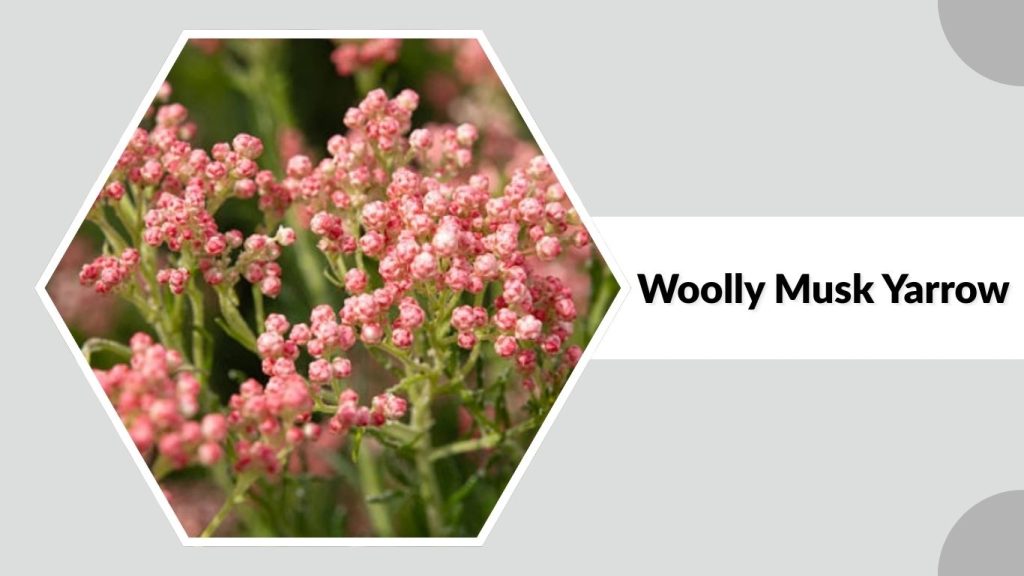
Woolly musk yarrow is a compact, aromatic yarrow variety known for its soft, silvery foliage and creamy-white flower clusters. It is particularly suited to alpine gardens, rockeries, and low-maintenance sunny landscapes.
Identification
- Flat clusters of creamy-white flowers
- Soft, woolly, aromatic gray-green leaves
- Low, cushion-forming growth habit
- Short, upright flowering stems
- Average height: 6–12 inches (15–30 cm)
Appearance
Woolly musk yarrow forms dense, rounded mounds with velvety leaves that remain attractive year-round. The small flower heads rise slightly above the foliage, creating a delicate, refined alpine effect.
Habitat
This variety is native to alpine regions of Europe, growing naturally on rocky slopes, meadows, and well-drained mountainsides. It prefers full sun and thrives in dry, gritty soils.
Uses
Woolly musk yarrow is grown mainly for ornamental purposes in rock gardens, alpine collections, and low-maintenance borders. Its aromatic leaves and flowers attract pollinators, while the soft foliage adds texture and visual interest.
FAQs
What is the best growing condition for yarrow flowers?
Yarrow flowers thrive in full sun and well-drained soil. They are drought-tolerant, prefer slightly sandy or rocky soil, and grow well in gardens, meadows, and rockeries. Overly wet or heavy soils can reduce flowering and encourage disease.
How tall do yarrow plants typically grow?
Yarrow height varies by species. Low-growing varieties like Woolly Yarrow reach 6–12 inches (15–30 cm), while taller types like Fernleaf Yarrow and Large-Headed Yarrow can grow 3–5 feet (90–150 cm).
Are yarrow flowers good for pollinators?
Yes, yarrow flowers attract bees, butterflies, and other beneficial insects. Their flat-topped clusters make it easy for pollinators to access nectar and pollen, making them excellent for wildlife-friendly gardens.
Can yarrow be used for medicinal purposes?
Traditionally, yarrow has been used for wound healing, teas, and natural remedies due to its anti-inflammatory and astringent properties. However, it should be used with caution and proper guidance, as not all species are suitable for consumption.
How do I propagate yarrow flowers?
Yarrow can be propagated by seeds, cuttings, or division. Seeds should be sown in well-drained soil in spring, while division of mature plants in spring or fall ensures healthy growth and maintains plant vigor.