





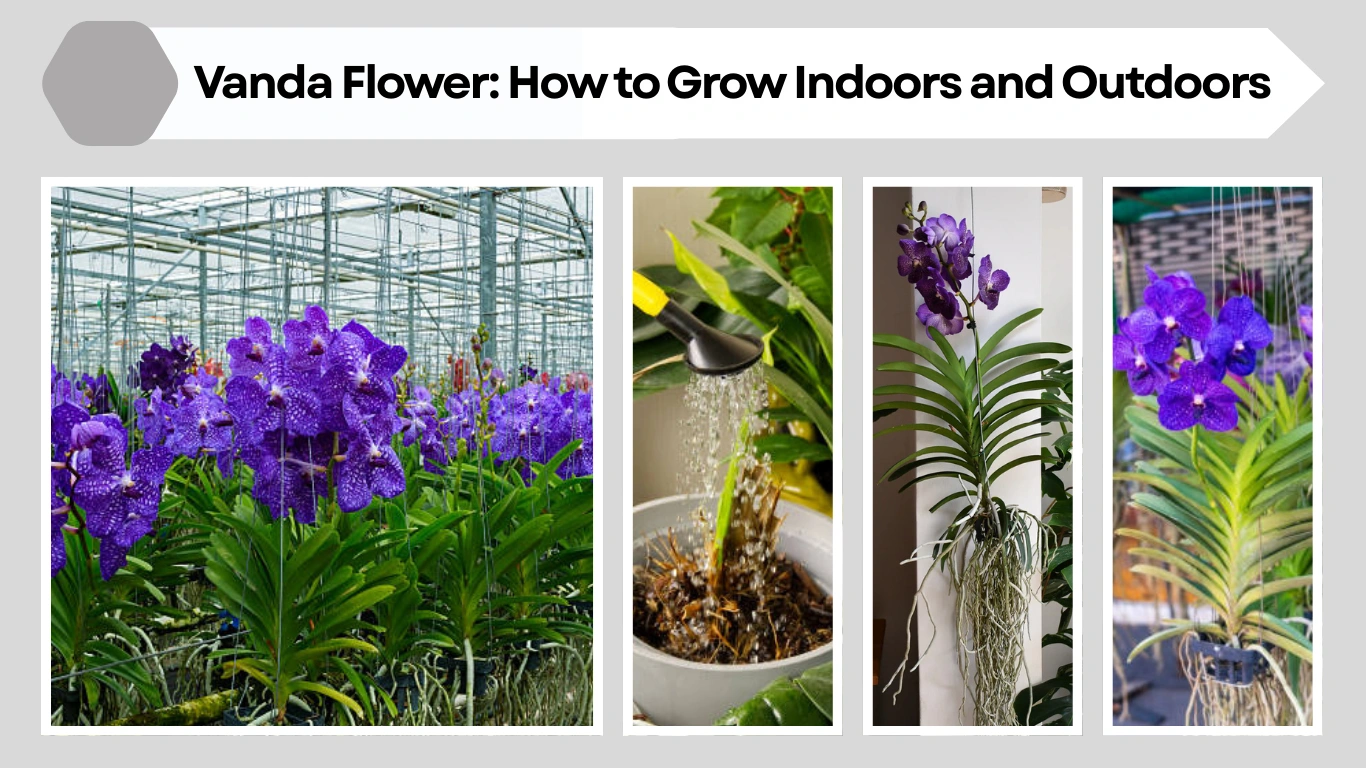
Vanda flowers are among the most striking orchids in the world, known for their large, flat blooms, intense colors, and often sweet fragrance. Native to tropical regions, Vanda orchids are popular with collectors because of their long-lasting flowers and ability to bloom multiple times a year when grown correctly. Although they need brighter light and higher humidity than many orchids, they can be successfully grown both indoors and outdoors with the right setup and daily care routine.
Understanding Vanda Flowers
Vanda orchids are native to Southeast Asia, India, southern China, and northern Australia. In nature, they grow attached to trees, with long aerial roots hanging freely in the air. These roots absorb moisture and nutrients directly from rainfall and humidity rather than from soil.
Unlike many orchids, vandas grow upright from a single central stem instead of producing pseudobulbs. Thick, strap-shaped leaves grow in rows along the stem, and long flower spikes emerge from between the leaves. Because vandas lack water-storing bulbs, they rely heavily on frequent watering, high humidity, and excellent air circulation.
Vandas are warm-growing orchids that prefer bright light, warm temperatures, and constant airflow. Their natural growth habit explains why they are often grown bare-root in hanging baskets rather than in traditional pots.
How to Identify a Healthy Vanda Orchid
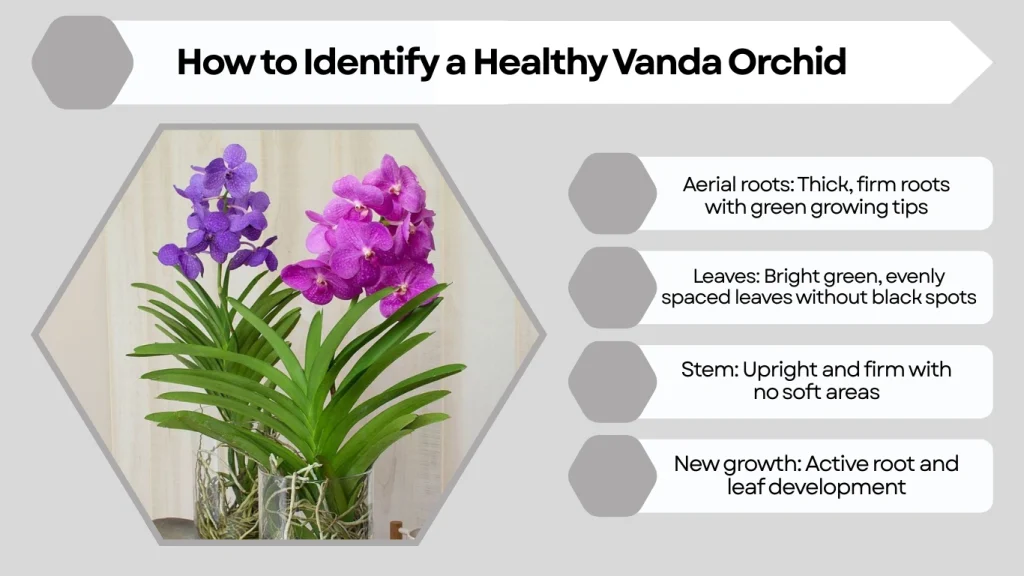
Choosing a healthy vanda is essential for long-term success.
- Aerial roots: Thick, firm roots with green growing tips
- Leaves: Bright green, evenly spaced leaves without black spots
- Stem: Upright and firm with no soft areas
- New growth: Active root and leaf development
- Overall condition: No pests, mold, or sour odor
Healthy vandas establish quickly, adapt better to new environments, and flower more reliably.
Light Requirements for Vanda Orchids
Indoor Light Conditions
Vanda orchids require very bright light indoors. South- or southeast-facing windows are ideal. They should receive strong light for several hours daily, but direct midday sun should be filtered to prevent leaf scorch.
Leaves should appear light to medium green. Dark green leaves indicate insufficient light, while yellowing or reddening suggests too much sun. When natural light is limited, high-output grow lights placed 8–12 inches above the plant can successfully support growth and flowering.
Outdoor Light Conditions
Outdoors, vandas thrive in bright, filtered sunlight. Morning sun with light afternoon shade works best. In tropical and subtropical climates, they are often hung under shade cloth, pergolas, or tree canopies.
Too much direct sun causes burned leaves, while heavy shade reduces flowering. Outdoor placement should allow constant airflow and quick drying of roots.
Temperature and Humidity Needs
Vandas prefer warm temperatures between 21–32°C (70–90°F) during the day and above 16°C (60°F) at night. They are not cold-tolerant and must be protected from temperatures below 13°C (55°F).
High humidity is critical. Vandas grow best in 60–80% humidity, combined with strong air movement. Indoors, humidifiers, frequent misting, and humidity trays help maintain moisture. Outdoors, natural humidity and airflow usually provide ideal conditions.
Without sufficient humidity, leaves wrinkle and roots dry rapidly.
Watering Vanda Orchids Correctly
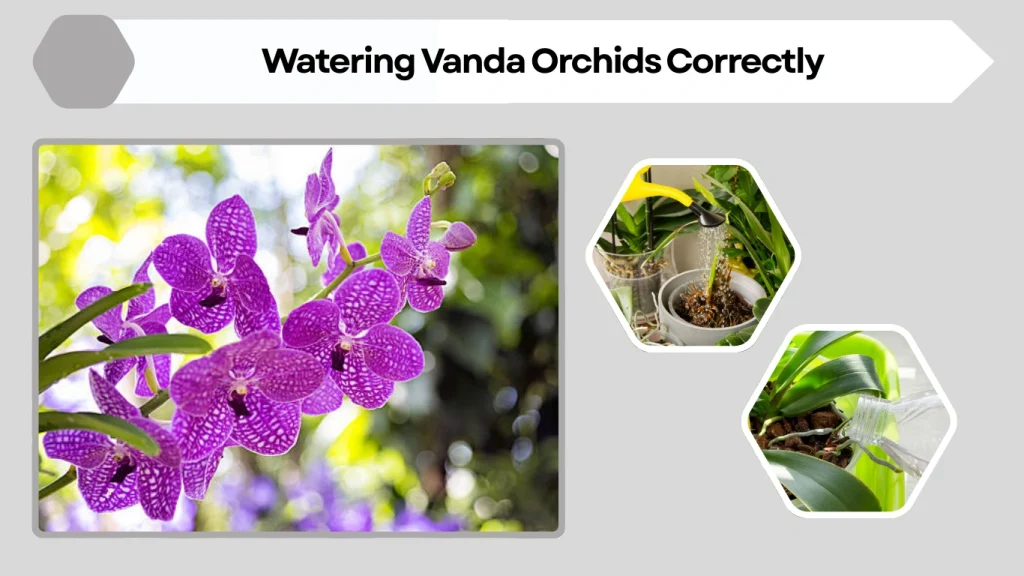
Because vandas are usually grown bare-root, they dry quickly and need frequent watering.
- Indoor watering: Usually once daily; twice in hot, dry conditions
- Outdoor watering: Daily, sometimes twice daily in summer
- Best method: Soak roots thoroughly for 10–20 minutes
- Dehydration signs: Wrinkled leaves, silver dry roots
- Overwatering risks: Crown rot if water sits in leaf joints
Water in the morning so roots dry by night. Always ensure good airflow.
Choosing the Right Growing Method
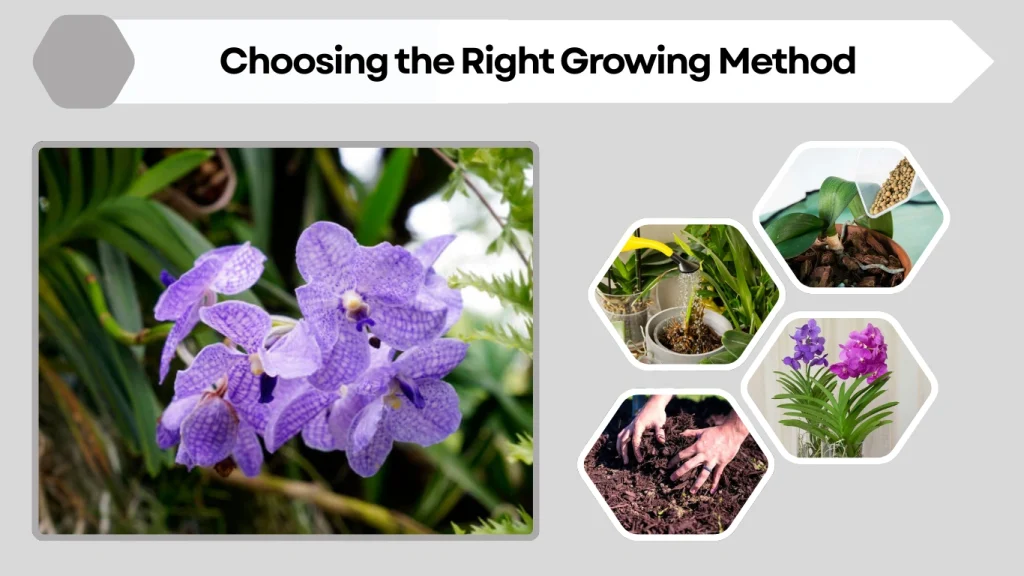
Bare-Root, Basket, and Mounted Growing
The most common method is hanging vandas in wooden baskets with no media. This allows roots to hang freely, maximizing airflow and rapid drying. Mounted vandas on bark slabs also thrive but require very frequent watering.
This growing style closely matches their natural environment and supports strong root health.
Growing Vandas in Pots
Vandas can be grown in pots using very coarse bark, charcoal, or lava rock. Pots must have large drainage holes. Potted vandas retain more moisture and suit indoor growers who cannot water daily. However, airflow must remain excellent to prevent root rot.
How to Grow Vanda Orchids Indoors
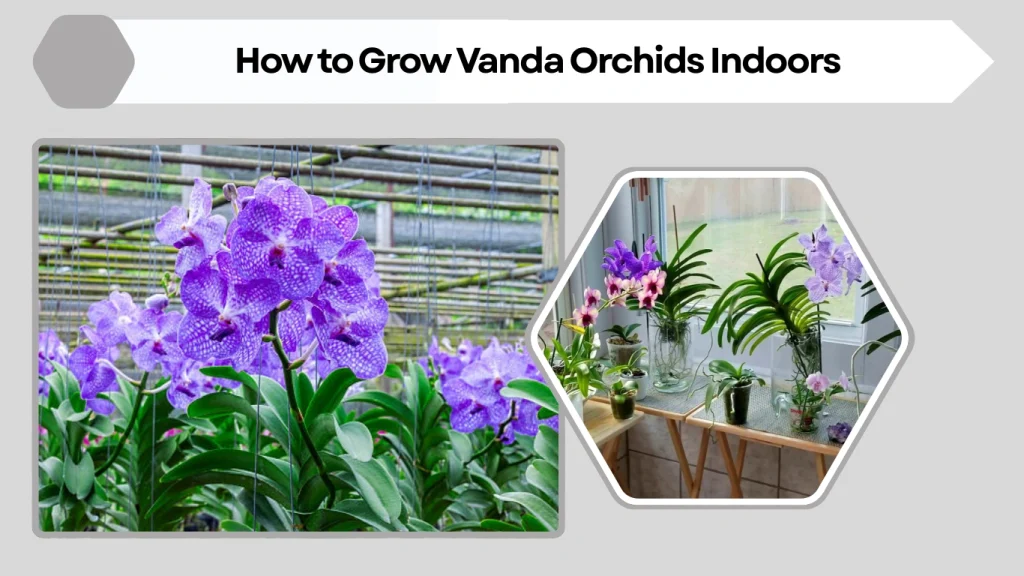
Growing vandas indoors requires bright light, warm temperatures, and high humidity. Hang them near the brightest window available or under strong grow lights. Bathrooms and sunrooms often work well.
Water roots thoroughly each morning. In dry indoor air, misting between soakings helps prevent dehydration. Use a humidifier if possible. Feed lightly but regularly, and ensure constant gentle air circulation from a fan placed across the room.
Indoor vandas adapt well when light, moisture, and airflow remain stable.
How to Grow Vanda Orchids Outdoors

Vanda orchids thrive outdoors in tropical and subtropical climates where temperatures remain warm year-round. They grow best when hung in open, airy locations such as patios, pergolas, balconies, or under shade trees. Outdoor growing provides natural humidity, strong airflow, and bright light—conditions vandas love.
Hang plants where they receive morning sun and bright filtered light throughout the day. Protect them from harsh midday sun and heavy winds. Outdoor vandas often benefit from natural rainfall, but roots may still need daily watering during dry periods.
When temperatures drop below 13°C (55°F), vandas should be moved indoors or into a greenhouse. Outdoor care often results in faster growth, thicker roots, and more frequent blooming.
Fertilizing Vanda Orchids for Vigorous Growth
Vandas are heavy feeders because of their rapid growth and frequent watering.
- Best fertilizers: Balanced orchid fertilizer or 20-20-20 formula
- Indoor feeding: Once a week at quarter strength
- Outdoor feeding: Weekly during active growth
- Flushing roots: Rinse roots with plain water once weekly
- During blooming: Continue light feeding to support flowers
Liquid fertilizer can be added to soaking water for even distribution.
How to Encourage Flowering and Reblooming
Vanda orchids flower when they receive enough light, warmth, and nutrients. Mature plants with several sets of healthy leaves bloom most readily. Bright light is the most important factor—insufficient light is the main reason vandas fail to flower.
Consistent feeding, daily watering, and warm temperatures support spike development. Unlike many orchids, vandas do not require a cool rest period. After flowering, cut spent spikes and continue normal care.
With proper conditions, vandas can bloom multiple times a year.
Common Problems and How to Fix Them
Root and Leaf Problems
Wrinkled leaves indicate dehydration or low humidity. Brown or black roots may signal sunburn or salt buildup. Crown rot results from water sitting in leaf joints. Improve airflow and always water early in the day.
Flowering and Pest Issues
Lack of blooms usually means insufficient light. Bud drop can occur from sudden temperature or humidity changes. Thrips, scale, spider mites, and mealybugs should be treated quickly using appropriate orchid-safe pest control methods.
Seasonal Care Tips for Indoor and Outdoor Vandas
In summer, vandas need more frequent watering and protection from intense sun. In winter, indoor plants require maximum light and continued humidity support. Outdoor plants should be brought indoors when temperatures fall.
Seasonal changes in light may require repositioning plants or adjusting growth light duration.
FAQs
Can vanda orchids grow indoors permanently?
Yes, vanda orchids can grow indoors year-round if provided with very bright light, high humidity, warm temperatures, and daily watering. Sunrooms, bright windows, and grow lights help recreate outdoor tropical conditions needed for healthy growth and regular flowering.
How often should vanda orchids be watered?
Vanda orchids usually need daily watering, especially when grown bare-root. In hot weather, they may require watering twice daily. Roots should be soaked thoroughly and allowed to dry quickly. Consistent moisture combined with airflow prevents dehydration and rot.
Do vanda orchids need direct sunlight?
Vandas need very bright light, including gentle morning sun, but should be protected from harsh midday sunlight. Direct strong sun can scorch leaves. Bright filtered light for several hours daily is ideal for growth and flowering.
Why are my vanda roots turning brown?
Brown roots may result from sunburn, salt buildup, dehydration, or poor airflow. Healthy vanda roots are firm and green when wet. Rinse roots regularly, adjust light exposure, and ensure daily watering with good air circulation.
How long do vanda orchid flowers last?
Vanda flowers typically last four to eight weeks. Cooler temperatures, stable humidity, and indirect light can extend bloom life. With strong care routines, healthy plants often produce flowers several times each year.