





Saffron is widely known as the world’s most expensive spice, but its value is not limited to the kitchen. For thousands of years, saffron has been used in cooking, traditional medicine, beauty treatments, and cultural rituals. Its deep golden color, unique aroma, and complex flavor make it highly desirable across many fields. Understanding what saffron is used for reveals why this delicate spice continues to play an important role in cuisines, wellness traditions, and luxury products around the world.
What Saffron Is and Why It Has So Many Uses
Saffron comes from the dried red stigmas of the flower Crocus sativus. Each flower produces only three stigmas, which must be carefully removed and dried by hand. This limited yield and labor-intensive process contribute to saffron’s rarity and high market value.
What makes saffron so versatile is its powerful natural compounds. These compounds give saffron its strong color, distinctive aroma, and slightly bitter yet floral taste. Even a few strands can transform the appearance and flavor of food or drinks.
Because saffron offers visual, aromatic, and flavor benefits at the same time, it is useful across multiple industries. From gourmet kitchens to herbal medicine and cosmetics, saffron provides qualities that very few natural substances can match.
Culinary Uses of Saffron

Saffron as a spice
Saffron is primarily used as a spice to add golden color, fragrance, and flavor to food. Its taste is often described as honey-like, earthy, and slightly metallic. Only a small amount is needed, making it one of the most concentrated flavoring agents in the world.
Popular foods that use saffron
Saffron appears in many famous dishes. It is used in rice recipes such as biryani, paella, and risotto. It flavors sweets, ice creams, and baked goods. In some cultures, saffron is added to milk, tea, or syrups to create aromatic beverages.
How saffron is prepared for cooking
Before cooking, saffron threads are usually soaked in warm water or milk. This releases their color and aroma. The liquid and softened threads are then added to dishes, allowing the spice to spread evenly and intensify flavor.
Traditional and Medicinal Uses of Saffron
Ancient medicinal traditions
Saffron has been used in traditional medicine systems such as Ayurveda, Persian medicine, and Chinese herbal practices. Historically, it was used for digestion, respiratory issues, and emotional balance. Ancient healers valued saffron for its perceived strengthening and calming properties.
Common health-related purposes
In traditional use, saffron has been associated with mood support, appetite balance, and general wellness. It has also been used in teas and tonics. Today, saffron continues to appear in herbal preparations marketed for relaxation and vitality.
Modern research directions
Modern scientific studies are exploring saffron’s antioxidant compounds and their possible effects. While research is ongoing, interest in saffron as a wellness ingredient has grown, leading to its inclusion in supplements and functional foods.
Saffron in Beauty and Cosmetic Products
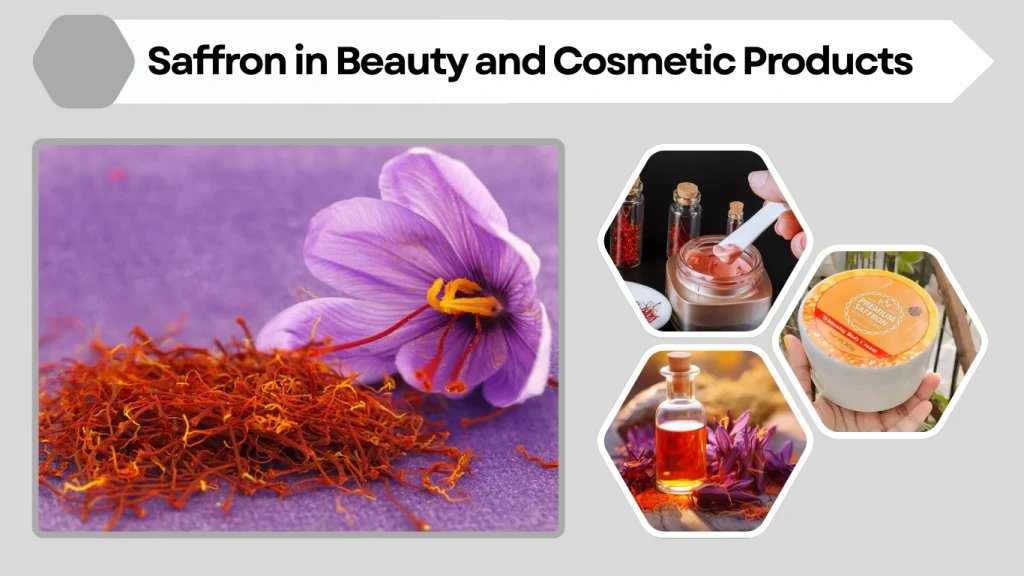
Saffron has long been used in beauty routines, especially in South Asia and the Middle East. It is often added to facial masks, creams, and oils. Traditional beauty practices use saffron to promote a glowing appearance and even skin tone.
In hair care, saffron has been mixed into oils and treatments believed to support scalp health and shine. Its pleasant aroma also makes it attractive in natural cosmetic formulations.
Luxury skincare brands now use saffron extracts in high-end products. Its association with rarity and tradition enhances its appeal in premium beauty markets.
Cultural and Religious Uses of Saffron
Saffron in ceremonies and rituals
Saffron has deep cultural meaning in many societies. It has been used in religious ceremonies, temple offerings, and sacred markings. Its golden color often symbolizes purity, prosperity, and spirituality.
Saffron as dye and fragrance
Historically, saffron was used as a dye for royal clothing and ceremonial fabrics. It was also blended into perfumes and incense, valued for its warm and distinctive scent.
Saffron in festivals and traditions
Saffron continues to appear in wedding rituals, seasonal festivals, and traditional foods. Its presence often represents celebration, abundance, and cultural heritage.
Commercial and Industrial Uses of Saffron
Saffron plays an important role in the modern food industry. It is used in packaged foods, beverages, and flavoring blends, especially in gourmet and premium products.
In the wellness and supplement market, saffron appears in capsules, powders, and extracts. It is often included in mood-focused or antioxidant formulations.
The fragrance industry also uses saffron. Its unique scent profile adds depth to perfumes, oils, and luxury aromatherapy products.
Common Products Made from Saffron
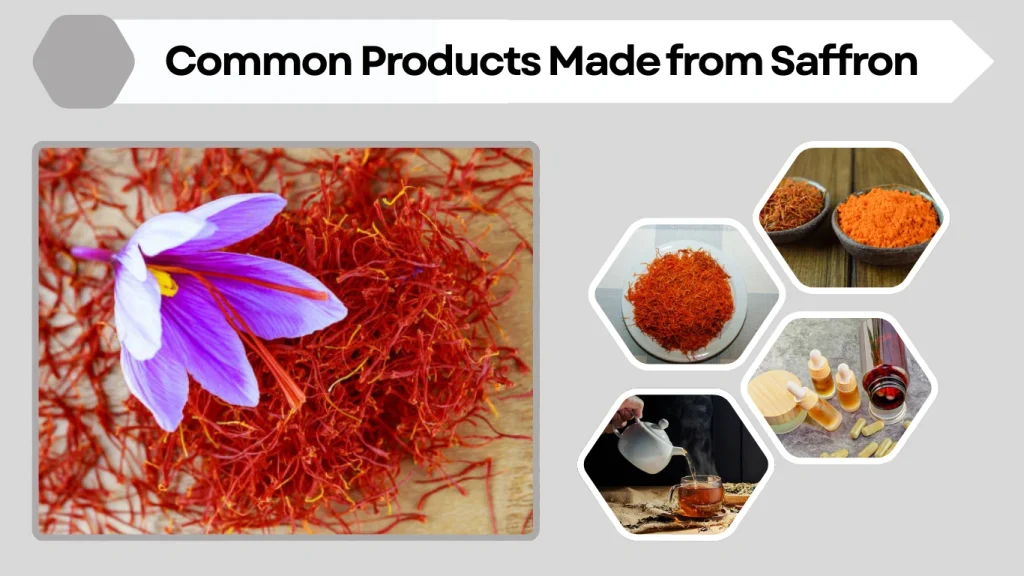
Saffron is sold and used in many different forms. These products make it easier for people to use saffron in cooking, wellness routines, and beauty care.
- Saffron threads: Whole dried stigmas used in cooking and tea
- Saffron powder: Ground saffron for faster mixing
- Herbal teas: Blends containing saffron threads or extract
- Capsules and extracts: Concentrated forms used in supplements
- Skincare products: Creams, masks, and serums
- Perfumes and oils: Fragrance blends and essential oils
Why Saffron Is So Widely Valued
Unique chemical compounds
Saffron contains natural compounds such as crocin, safranal, and picrocrocin. These are responsible for its deep color, strong aroma, and distinct flavor. They are also the reason saffron attracts interest in scientific research.
Sensory qualities
Few natural substances provide intense color, aroma, and taste at the same time. Saffron’s golden hue, floral scent, and complex flavor make it highly prized in both food and non-food industries.
Cultural and economic importance
Saffron has been traded for thousands of years. It continues to hold economic importance in producing countries and cultural value in traditional cuisines, rituals, and luxury markets.
How Saffron Is Used in Modern Lifestyles
In home kitchens, saffron is used to elevate everyday meals. A small amount can turn simple rice, desserts, or drinks into aromatic dishes with rich color and depth.
In wellness trends, saffron is included in herbal teas, supplements, and functional foods. People are increasingly interested in natural ingredients with traditional backgrounds.
In gourmet markets, saffron is featured in premium chocolates, cheeses, beverages, and restaurant dishes, where its rarity and quality enhance product appeal.
Safe Use and Proper Handling of Saffron

Culinary use and quantity
Saffron is very potent, so only a few threads are needed. Using too much can overpower flavor and waste the spice. Normal culinary use is safe when used in small amounts.
Supplements and concentrated forms
When saffron is taken in concentrated extracts or capsules, moderation is important. Excessive amounts may cause side effects. It is always wise to follow product guidelines and consult a professional if used for wellness purposes.
Storage and freshness
Saffron should be stored in an airtight container, away from light, heat, and moisture. Proper storage preserves its aroma, color, and flavor for long-term use.
Common Myths About Saffron Uses
There are many misunderstandings about saffron that can confuse consumers.
- “All yellow spices are saffron” – Many yellow spices are turmeric or safflower, not saffron.
- “More saffron always means better results” – Small amounts are more effective.
- “Powdered saffron is always pure” – Powder is easier to adulterate than threads.
- “Saffron works instantly” – Its effects are subtle and gradual.
- “All saffron is medicinal grade” – Quality and purity vary widely.
FAQs
What is saffron mainly used for?
Saffron is mainly used as a spice to add golden color, aroma, and flavor to food. It is also used in traditional medicine, beauty products, perfumes, and cultural rituals, making it one of the most versatile natural ingredients in the world.
Is saffron used in medicine?
Yes, saffron has been used in traditional medicine for thousands of years. Today, it appears in herbal teas and supplements and is studied for its antioxidant properties and potential wellness benefits.
Can saffron be used in skincare?
Saffron is commonly used in skincare products such as creams, masks, and serums. Traditional beauty practices have used saffron for glowing skin, and modern brands include it in luxury cosmetic formulations.
How is saffron used in cooking?
In cooking, saffron threads are usually soaked in warm liquid to release their color and aroma. The infusion is then added to rice dishes, desserts, sauces, and drinks for flavor and fragrance.
Is saffron safe to use every day?
Saffron is safe in small culinary amounts when used daily in food. However, concentrated supplements should be used carefully and according to recommended guidelines.