




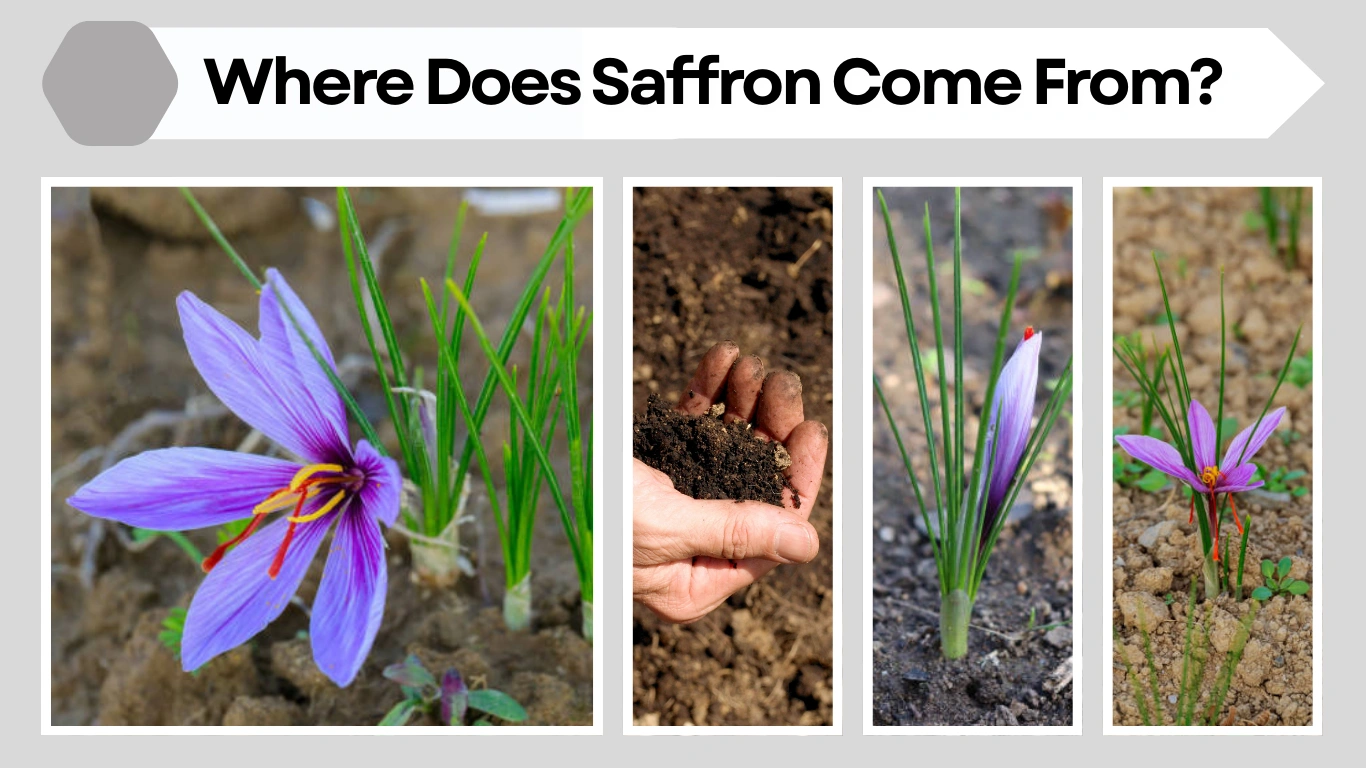
Saffron is known as the world’s most expensive spice, yet many people are surprised to learn that it does not come from a seed, fruit, or bark. Instead, saffron comes from a delicate purple flower that blooms only once a year. Because each flower produces just a few tiny threads, saffron harvesting is slow and highly labor-intensive. Understanding where saffron comes from helps explain its high value, limited supply, and deep historical roots across several ancient civilizations.
What Saffron Actually Comes From
Saffron comes from the dried red stigmas of a flowering plant, not from a powdered root or capsule. These thin red threads are carefully removed from each flower and then dried to become the saffron spice used in cooking, medicine, and cosmetics.
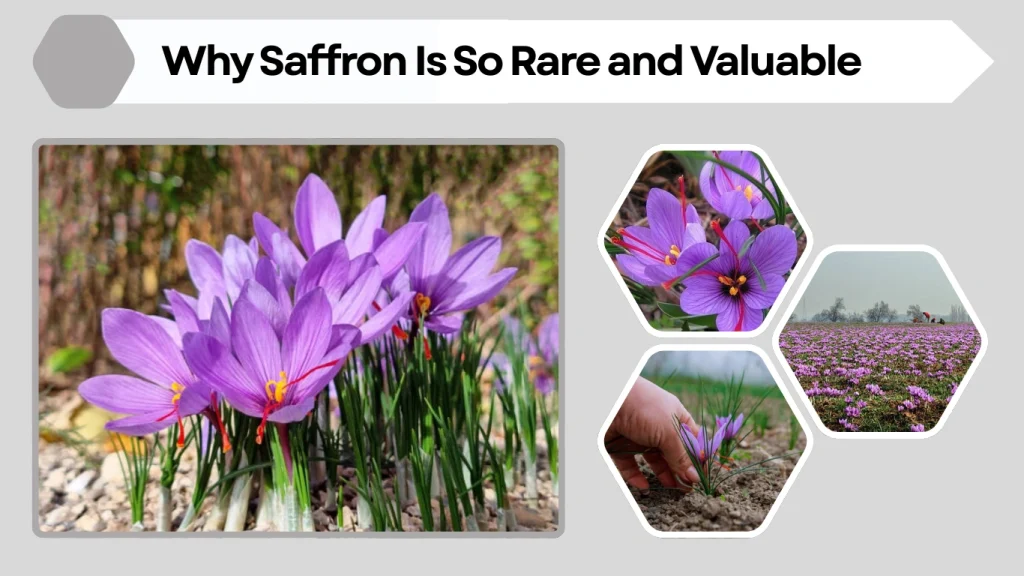
Each saffron flower produces only three stigmas. This extremely small yield is one of the main reasons saffron is so valuable. Thousands of flowers must be harvested to produce even a small amount of spice.
The process is also seasonal. Saffron flowers bloom only in autumn and only for a short period. Harvesting must be done quickly and entirely by hand, which further limits production.
The Plant That Produces Saffron
Scientific name and classification
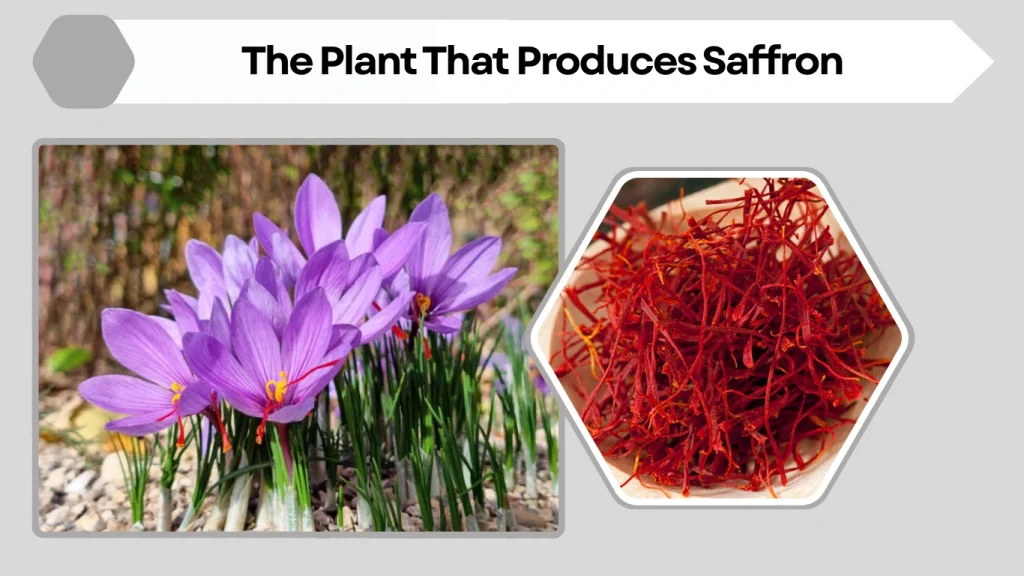
Saffron comes from a plant known as Crocus sativus, a member of the iris family. It is not the same as common garden crocus that bloom in spring. This specific autumn-flowering crocus is the only plant in the world that produces true saffron.
Flower structure and saffron threads
The saffron flower is purple with six petals and a pale yellow center. Rising from the center are three long, deep red stigmas. These stigmas are the only part of the plant used to make saffron. Once removed and dried, they become the fragrant threads sold worldwide.
Why saffron plants are human-grown
Crocus sativus is a sterile plant, meaning it does not produce seeds. It survives only through underground corms that are replanted by humans. Because of this, saffron cannot truly grow wild and has depended on human cultivation for thousands of years.
Original Homeland of Saffron
Saffron is believed to have originated in Southwest Asia, an area that includes parts of modern-day Iran, Greece, and surrounding regions. Archaeological records, ancient texts, and artwork show saffron being used more than 3,000 years ago.
Early civilizations cultivated saffron not only as a spice, but also as a dye, perfume, and medicine. Ancient Persians, Greeks, and Indians valued saffron highly, often associating it with royalty, healing, and religious rituals.
From these early farming centers, saffron spread slowly along ancient trade routes. Because it was lightweight, potent, and valuable, saffron became one of the earliest global luxury products.
How Saffron Spread Around the World

Saffron in ancient civilizations
Saffron played an important role in Persian culture, where it was used in food, medicine, and textiles. In ancient Greece, saffron appeared in myths, frescoes, and healing practices. In India, it became deeply connected with traditional medicine and spiritual customs.
Role of trade routes
Merchants carried saffron along major trade networks such as the Silk Road. These routes connected Asia, the Middle East, and Europe, allowing saffron cultivation knowledge and corms to move between regions.
Entry into Europe and other regions
By the Middle Ages, saffron farming had spread across the Mediterranean, especially into Spain and Italy. European monasteries and farms cultivated saffron both for medicine and for culinary use, firmly establishing it as a valuable crop.
Where Saffron Is Grown Today
Today, saffron is produced in several parts of the world, but only a few regions dominate global supply. These places offer the right mix of climate, soil, and traditional knowledge needed for successful saffron farming.
- Iran – the world’s largest saffron producer
- India (Kashmir region) – known for premium-quality saffron
- Spain – famous for high-grade saffron used in European cuisine
- Afghanistan – rapidly growing in global saffron markets
- Greece – traditional Mediterranean producer
- Morocco – important North African source
- Italy – small but high-quality production
- China – limited but expanding cultivation
Why Certain Regions Produce Most Saffron
Climate requirements
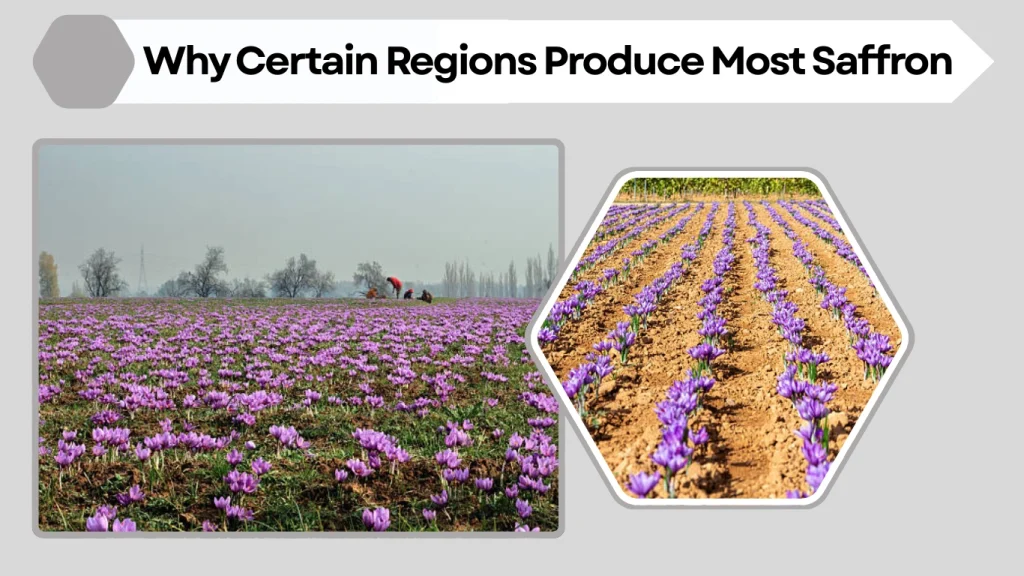
Saffron grows best in areas with hot, dry summers and cool to mild winters. This climate allows the underground corms to mature properly during dormancy and supports strong flowering in autumn. Too much rainfall or constant humidity increases the risk of rot and disease.
Soil and geographic conditions
Well-draining soil is essential for saffron farming. Sandy or rocky soils prevent water from collecting around the corms. Many major saffron-producing regions are located in mountainous or high-altitude areas where air circulation is good and rainfall is limited.
Traditional cultivation knowledge
Saffron farming depends heavily on manual labor and experience. In major producing countries, families have passed down saffron-growing skills for generations. This traditional knowledge ensures proper planting, harvesting, and drying methods that protect saffron quality.
How Saffron Is Harvested from Its Source
Saffron harvesting takes place in autumn, when the purple crocus flowers bloom. Each morning, farmers carefully walk through the fields and pick flowers by hand before the sun becomes strong.
Once collected, the flowers are taken indoors, where workers gently open them and remove the three red stigmas. These stigmas are the raw saffron.
The fresh threads are then dried to reduce moisture and concentrate aroma, flavor, and color. Drying transforms the delicate plant part into the spice sold worldwide.
Why Saffron Is So Rare and Valuable
Low yield per flower
Each saffron flower produces only three threads. It takes around 150 to 170 flowers to make just one gram of dried saffron. This extremely low yield limits supply and increases cost.
Labor-intensive harvesting
There is no efficient machine to harvest saffron. Every step, from picking flowers to removing stigmas, must be done by hand. This makes saffron one of the most labor-intensive crops in the world.
Limited growing environments
Saffron requires very specific growing conditions. Only certain regions can consistently produce high-quality saffron, which keeps global production relatively small.
How Saffron Goes from Farm to Market
After drying, saffron threads are carefully sorted. Broken pieces, yellow parts, and low-quality threads are removed. The remaining saffron is graded based on color, aroma, and thread length.
Next, the saffron is packed into moisture-proof containers to protect it from air and light. It is then distributed through local markets or exported internationally.
By the time saffron reaches consumers, it has passed through many careful handling stages designed to preserve its strength and purity.
How to Tell Where Saffron Comes From
Understanding saffron’s origin helps buyers choose high-quality, authentic products.
- Label and origin marks: Genuine saffron often lists the producing country and grade.
- Thread shape and color: Real saffron has trumpet-shaped red threads, not powder.
- Aroma strength: Authentic saffron has a strong, honey-like, earthy scent.
- Price signals: Very cheap saffron is often fake or diluted.
- Common substitutes: Safflower and turmeric are often sold as false saffron.
Can Saffron Be Grown Outside Its Native Areas
Home and garden growing
Saffron can be grown in many countries outside its original homeland. Gardeners successfully cultivate saffron in containers, raised beds, and small farms using well-draining soil and controlled watering.
Greenhouse and indoor cultivation
In unsuitable climates, saffron can be grown indoors or in greenhouses where temperature and moisture are controlled. This allows farmers to expand saffron production into new regions.
New saffron-producing countries
Countries beyond the traditional producers are experimenting with saffron farming. With modern techniques, saffron cultivation is slowly expanding worldwide.
Cultural and Historical Importance of Saffron
Saffron has been used for thousands of years in food, medicine, perfumes, and dyes. Ancient civilizations valued it as a healing herb, a sacred substance, and a luxury ingredient.
Royal garments were once dyed with saffron. It appeared in religious ceremonies, traditional medicine systems, and early culinary traditions across Asia and Europe.
Today, saffron remains a symbol of richness, celebration, and cultural heritage in many countries.
FAQs
Where does saffron originally come from?
Saffron is believed to have originated in Southwest Asia, particularly in regions that include modern-day Iran and nearby areas. Early civilizations cultivated saffron more than 3,000 years ago for spice, medicine, dye, and religious uses.
Which country produces the most saffron today?
Iran produces the majority of the world’s saffron, accounting for over 80 percent of global supply. Its climate, soil, and long-standing farming traditions make it ideal for large-scale saffron cultivation.
Does saffron come from a flower or a seed?
Saffron comes from the dried red stigmas of a flower called Crocus sativus. It does not come from seeds, fruits, or bark. Only this specific crocus plant produces true saffron.
Why must saffron be harvested by hand?
Saffron flowers are delicate, and the valuable stigmas are very small. Machines cannot accurately separate them without damage, so harvesting and processing must be done carefully by hand.
Can saffron grow in any country?
Saffron can grow in many countries if the climate is suitable or controlled. It needs dry summers, cool winters, and well-draining soil. With greenhouse or container growing, saffron cultivation is expanding worldwide.