
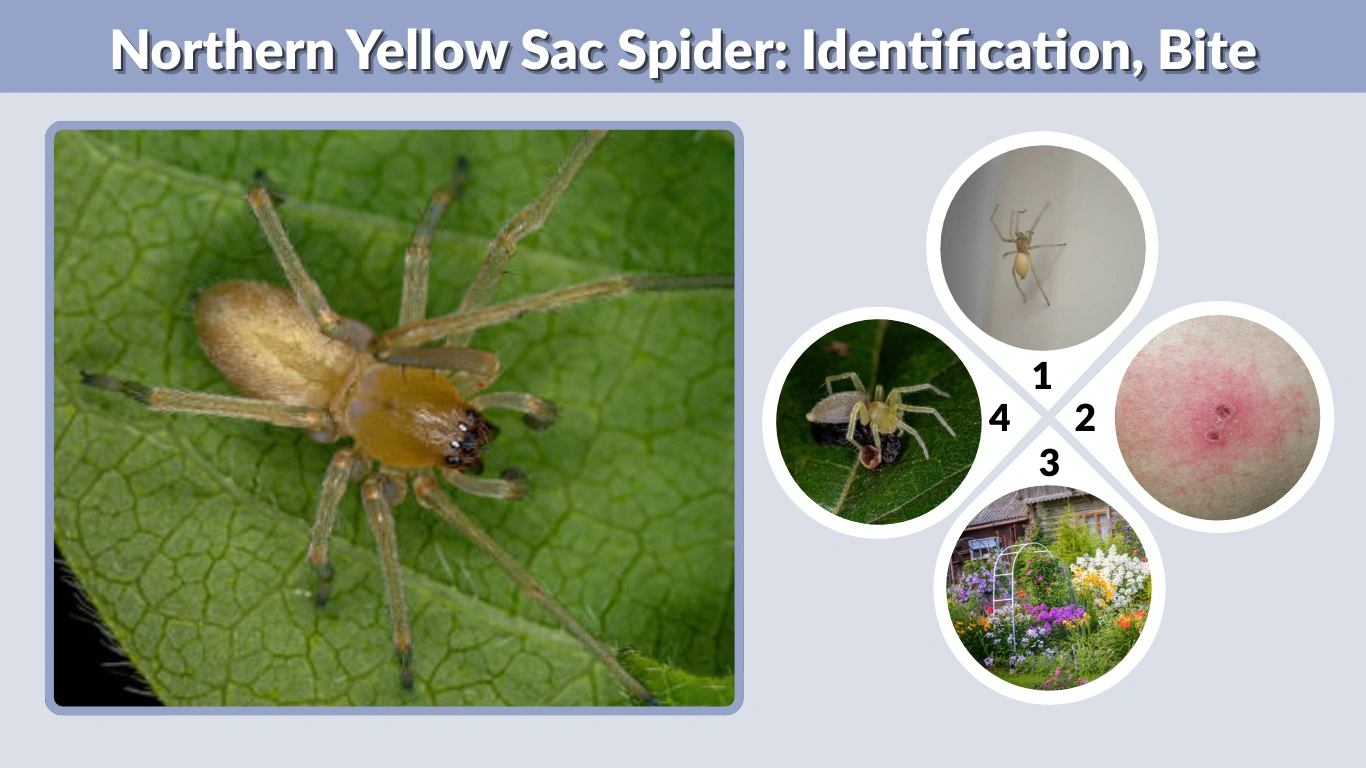
The northern yellow sac spider is a small, pale-colored spider commonly found in homes, gardens, and urban environments. Scientifically known as Cheiracanthium mildei, this spider is recognized for building small silk sacs where it hides during the day. Although encounters with this spider are fairly common, many people know little about its behavior or role in the ecosystem. While its bite may cause mild irritation, the northern yellow sac spider is generally harmless and actually helps control insect populations around homes.
What Is the Northern Yellow Sac Spider?
The northern yellow sac spider belongs to the genus Cheiracanthium, a group of spiders known for creating silk sacs used as resting shelters. Unlike web-building spiders that trap prey in webs, this species is an active hunter that searches for insects during the night.
Scientific Classification
- Scientific name: Cheiracanthium mildei
- Family: Cheiracanthiidae
- Common name: Northern yellow sac spider
This species was originally native to parts of Europe but has spread widely across North America and is now commonly found in houses, apartments, and gardens.
Overview of the Species
Northern yellow sac spiders are small but fast-moving spiders that typically avoid human contact. They prefer quiet places where they can build their silk sacs and rest during daylight hours. At night, they leave their shelter to hunt insects.
Unlike many spiders that spin elaborate webs to catch prey, yellow sac spiders hunt actively, making them efficient predators of common household pests.
How to Identify a Northern Yellow Sac Spider
Correct identification of this spider can help homeowners distinguish it from other common household spiders.
Physical Appearance
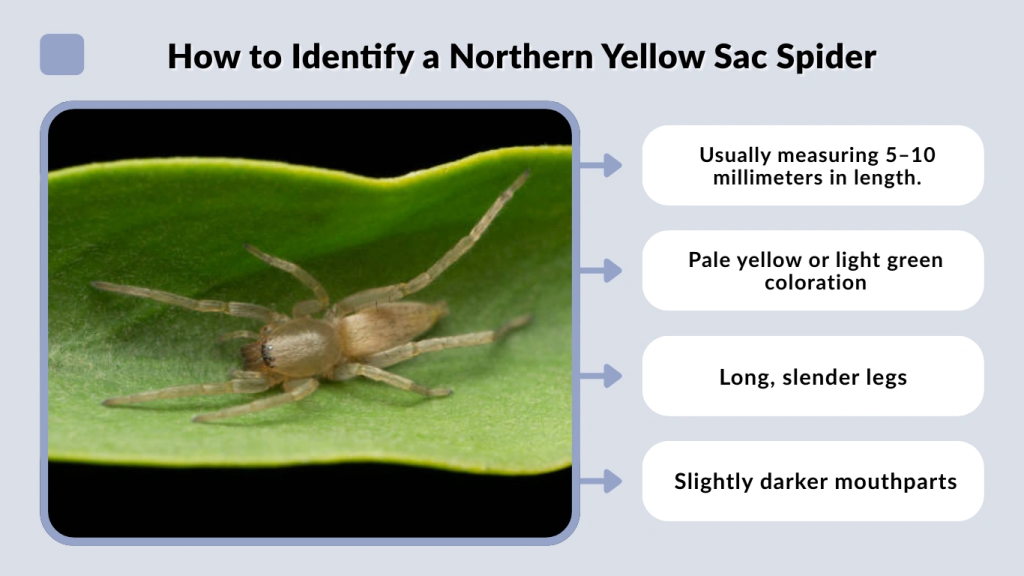
The northern yellow sac spider has a light yellow, pale green, or beige body that sometimes appears slightly translucent. Its body is relatively small, usually measuring 5–10 millimeters in length.
Key physical characteristics include:
- Pale yellow or light green coloration
- Long, slender legs
- Slightly darker mouthparts
- Oval-shaped abdomen
- Smooth body without obvious markings
Because of their pale color, these spiders often blend easily into walls, ceilings, and plant leaves.
Key Identification Features
One of the easiest ways to identify a northern yellow sac spider is by looking for the small silk sac it builds. These sacs are usually found in corners of walls, ceilings, or on the underside of leaves.
Additional identifying traits include:
- Fast and agile movement
- Preference for resting inside small silk tubes
- No large prey-catching web
The silk sac serves as a protective retreat where the spider hides during the day.
Northern vs. Southern Yellow Sac Spider
Two yellow sac spider species are commonly found in North America:
- Northern yellow sac spider (Cheiracanthium mildei)
- Southern yellow sac spider (Cheiracanthium inclusum)
Although they look very similar, there are some differences:
- The northern species is more commonly found indoors.
- The southern species is often found outdoors in vegetation.
- Slight differences exist in body coloration and habitat preference.
Despite these differences, both species share similar behavior and ecological roles.
Habitat and Distribution
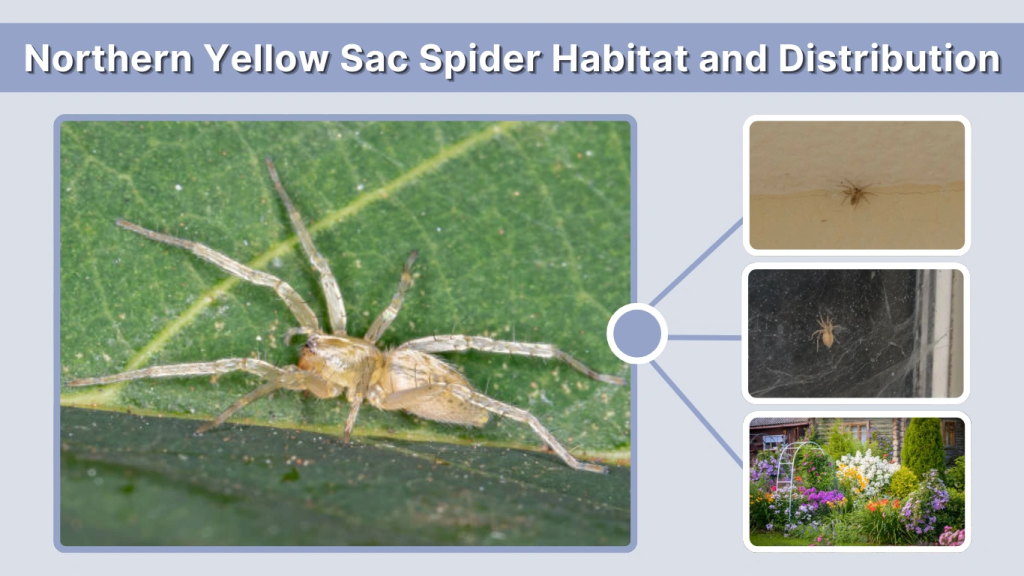
The northern yellow sac spider has adapted well to human environments and can be found in many parts of the world.
Geographic Range
This spider is widely distributed across North America, particularly in the United States and Canada. It is also present in parts of Europe and Asia.
Urban and suburban environments provide ideal conditions for this species because buildings offer many protected hiding places.
Indoor Habitat
Inside homes, northern yellow sac spiders often choose quiet locations where they can build their silk sacs. Common indoor hiding places include:
- Corners of ceilings and walls
- Behind furniture
- Along window frames
- Inside closets or storage areas
Because they hunt insects that enter homes, they are often found near light sources or windows where flying insects gather.
Outdoor Habitat
Outdoors, these spiders live in vegetation and sheltered areas such as:
- Garden plants and shrubs
- Tree bark and leaves
- Woodpiles and fences
- Under stones or debris
They build their silk sacs on leaves or branches where they remain hidden during the daytime.
Behavior and Lifestyle
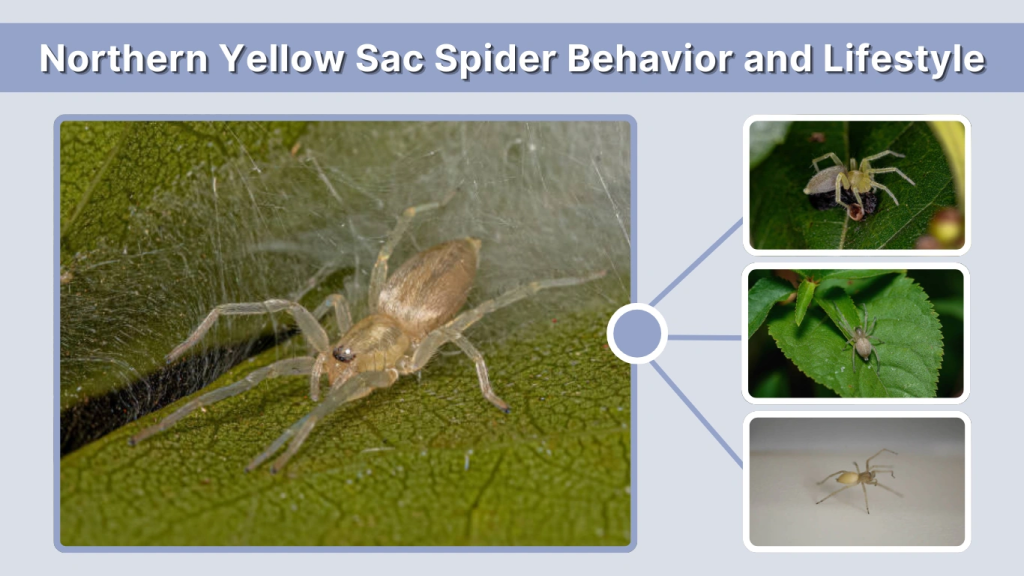
Northern yellow sac spiders have unique hunting and resting habits that distinguish them from many other spider species.
Nocturnal Hunting
These spiders are primarily nocturnal, meaning they become active after dark. At night, they leave their silk sacs and begin searching for prey.
Instead of waiting in a web, they wander across walls, ceilings, and plants looking for insects to capture.
Their diet typically includes:
- Flies
- Mosquitoes
- Moths
- Small beetles
- Other tiny arthropods
This hunting behavior helps reduce insect populations around homes.
Silk Sac Creation
During the day, the spider rests inside a small silk tube or sac. This sac acts as a protective shelter where the spider hides from predators and environmental hazards.
These sacs may appear as small white patches of silk in corners or on leaves. Female spiders also use them to protect their eggs.
Northern Yellow Sac Spider Bite
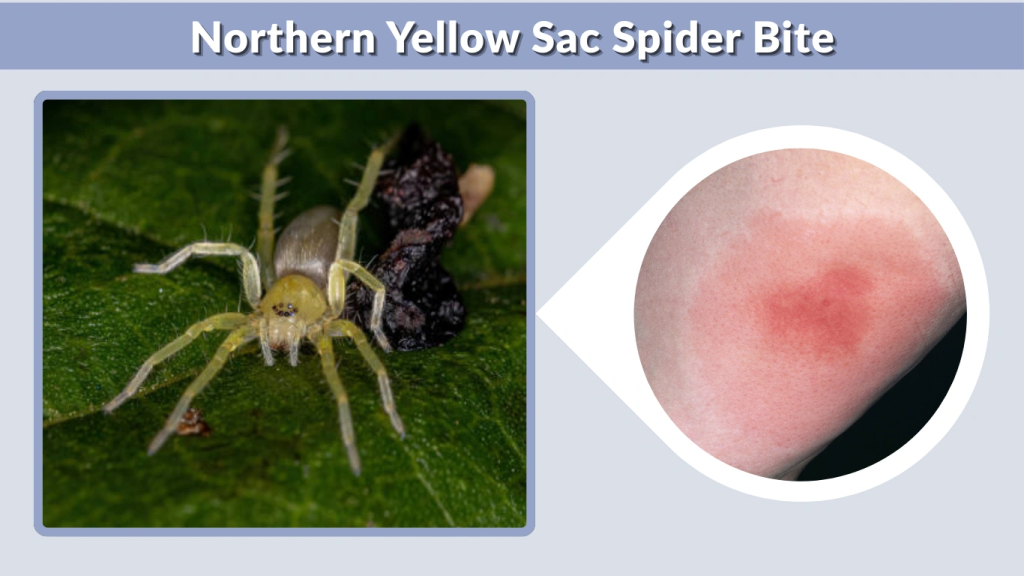
Although the northern yellow sac spider is not considered highly dangerous, it can bite if it feels threatened or becomes trapped against human skin. Most bites occur accidentally, such as when a spider is caught in clothing, bedding, or while someone is handling objects where the spider is hiding.
Do Yellow Sac Spiders Bite Humans?
Yes, yellow sac spiders can bite humans, but it is relatively uncommon. These spiders are not aggressive and typically try to escape when disturbed. Bites usually happen only when the spider cannot retreat.
For example, a bite might occur if:
- A person rolls onto a spider in bed
- The spider becomes trapped inside clothing
- Someone accidentally presses against the spider while cleaning or gardening
Even when bites occur, they are usually mild and temporary.
Bite Symptoms
A northern yellow sac spider bite may cause symptoms similar to a mild insect bite. Reactions can vary slightly from person to person, but most cases involve minor irritation.
Common symptoms include:
- Redness around the bite area
- Mild pain or burning sensation
- Slight swelling
- Itching
In some cases, a small blister may develop. The discomfort usually improves within a few hours to a couple of days.
Is the Bite Dangerous?
In most situations, a yellow sac spider bite is not medically dangerous. Earlier reports sometimes exaggerated the severity of these bites, but modern studies show that serious complications are rare.
Most bites heal without medical treatment. However, individuals with sensitive skin or allergies may experience stronger reactions.
Treatment for Yellow Sac Spider Bites
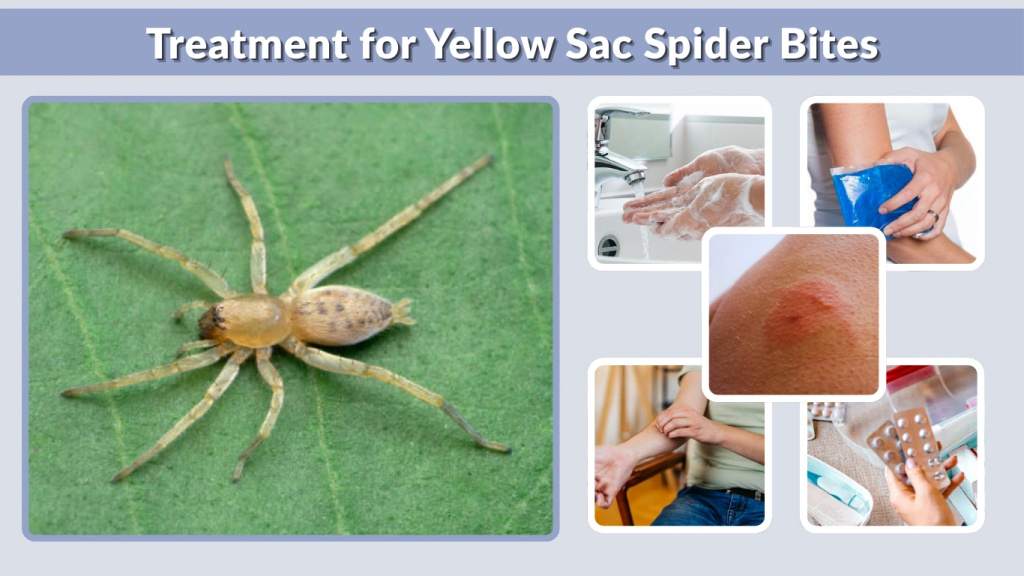
If you suspect a bite from a northern yellow sac spider, simple first aid is usually enough to manage symptoms.
First Aid Steps
Follow these steps to treat a mild spider bite:
- Wash the area with soap and warm water to prevent infection.
- Apply a cold compress for 10–15 minutes to reduce swelling.
- Avoid scratching the bite area.
- Use antihistamines or mild pain relievers if itching or discomfort occurs.
These steps can help reduce irritation and promote faster healing.
When to Seek Medical Help
Although serious reactions are rare, medical attention may be needed if symptoms worsen or unusual reactions occur.
Seek medical help if you notice:
- Severe swelling or spreading redness
- Fever or chills
- Signs of infection such as pus or increasing pain
- Difficulty breathing or allergic reactions
If symptoms continue to worsen after several days, a healthcare professional should evaluate the bite.
How to Prevent Northern Yellow Sac Spiders in Your Home
Because these spiders often live near human environments, prevention mainly involves reducing hiding spots and limiting insect activity around the home.
Home Prevention Tips
You can reduce the chances of encountering yellow sac spiders indoors by following these simple steps:
- Seal cracks and gaps around windows and doors
- Keep rooms clean and reduce clutter
- Vacuum corners, ceilings, and baseboards regularly
- Install or repair window screens
- Shake out clothing or bedding that has been left unused
These steps make it harder for spiders to find shelter inside your home.
Outdoor Prevention
Since yellow sac spiders often live outdoors before entering houses, maintaining your yard can also help.
Helpful outdoor measures include:
- Trimming bushes and shrubs near the house
- Removing leaf piles and yard debris
- Storing firewood away from walls
- Reducing outdoor lighting that attracts insects
When insect populations decrease, spiders are less likely to move indoors in search of food.
Are Northern Yellow Sac Spiders Beneficial?
Despite their reputation, northern yellow sac spiders can actually be helpful to humans because they control insect populations.
Role in Pest Control
These spiders feed on many insects that people consider pests, including:
- Mosquitoes
- Flies
- Small moths
- Agricultural pests
By hunting these insects, yellow sac spiders help maintain a natural balance in the ecosystem.
Ecological Importance
Spiders play an essential role in food chains. They serve as both predators and prey within their ecosystems.
Birds, reptiles, and other animals often rely on spiders as a food source, making them an important part of biodiversity.
Common Myths About Yellow Sac Spiders
Several myths about yellow sac spiders have spread online, often exaggerating the risks associated with them.
Myth: Their Bite Causes Severe Skin Necrosis
Some early reports suggested that yellow sac spider bites cause severe tissue damage. However, scientific research has shown that most bites do not cause necrosis.
Myth: They Are Highly Aggressive
Yellow sac spiders are not aggressive toward humans. They prefer to hide or run away rather than bite.
Myth: They Are Rare
In reality, these spiders are quite common, especially in urban environments where insects are plentiful.
FAQs
Are northern yellow sac spiders poisonous?
Like most spiders, they have venom used to immobilize prey. However, their venom is not dangerous to humans in most cases.
How big are northern yellow sac spiders?
Adults typically measure 5–10 mm in body length, with legs that make them appear slightly larger.
Where do yellow sac spiders hide in houses?
They often hide in corners of ceilings, behind furniture, inside closets, and near windows or light fixtures.
How long do yellow sac spiders live?
Most yellow sac spiders live about one year, depending on environmental conditions.
What attracts yellow sac spiders indoors?
They are attracted to areas with abundant insects, warm shelter, and quiet hiding places.
Conclusion
The northern yellow sac spider is a small but fascinating species commonly found in homes and gardens. Although its bite can cause mild irritation, it is rarely dangerous and usually heals without complications. These spiders are beneficial predators that help control insect populations, making them an important part of the ecosystem. By understanding their behavior, habitat, and prevention methods, homeowners can safely manage encounters while appreciating the role these spiders play in maintaining a balanced environment.