
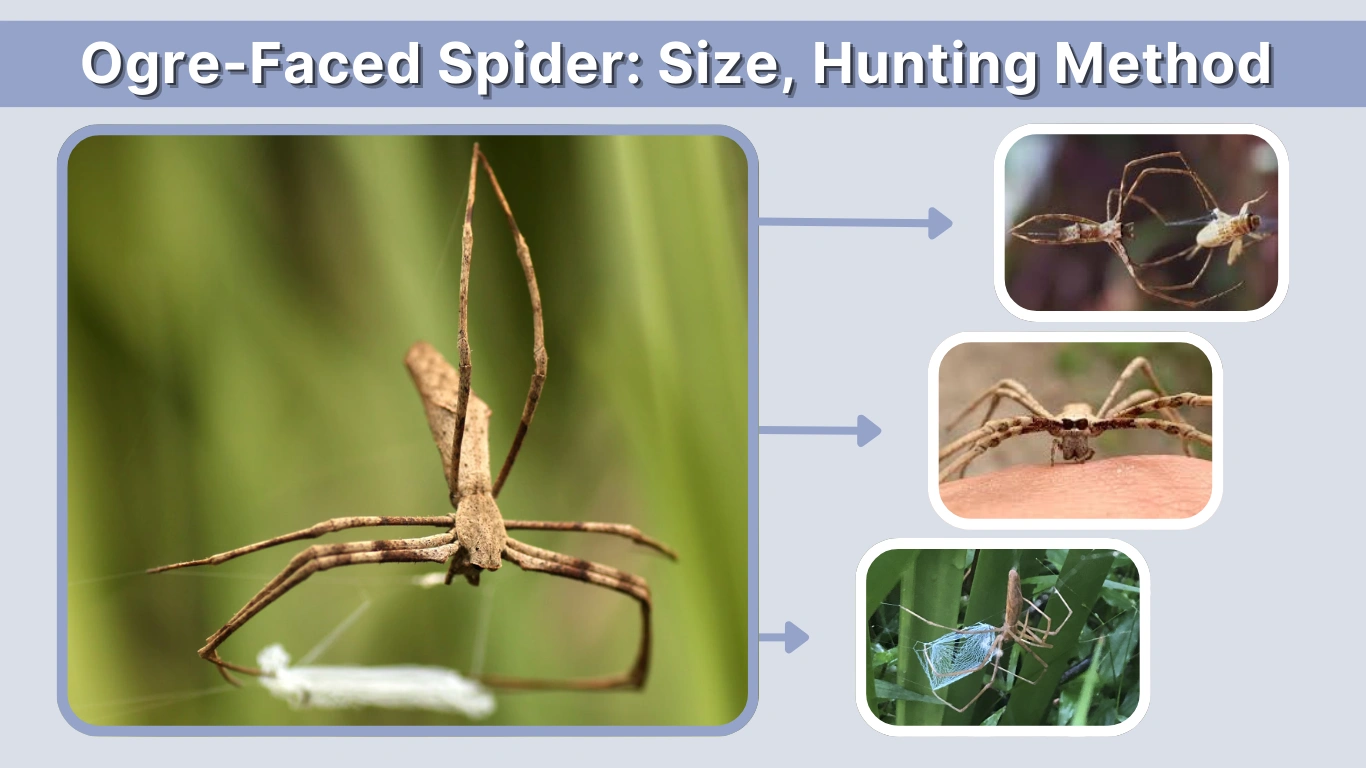
The ogre-faced spider is one of the most unusual and fascinating spiders found in nature. Known for its enormous forward-facing eyes and strange hunting technique, this spider stands out from many other species. Instead of spinning large webs to trap prey, the ogre-faced spider catches insects using a small net-like web that it throws over its victims. Many people are curious about the ogre faced spider size and lifespan because of its distinctive appearance. Understanding its behavior, habitat, and life cycle reveals why this spider is such a remarkable predator.
What Is an Ogre-Faced Spider?
The ogre-faced spider belongs to a unique group of spiders famous for their excellent night vision and unusual hunting strategy. These spiders are often seen hanging upside down at night while waiting for prey to pass beneath them.
Scientific Classification
Ogre-faced spiders belong to the Deinopidae family. Members of this family are also commonly called net-casting spiders because of the special web they use to catch prey.
There are several species of ogre-faced spiders distributed across different continents, particularly in tropical and subtropical regions. Despite their somewhat frightening name, these spiders are generally harmless and rarely interact with humans.
The Deinopidae family is known for its remarkable adaptations for nocturnal hunting. Their eyesight and web-casting technique make them very effective predators in low-light environments.
Why It Is Called an Ogre-Faced Spider
The name “ogre-faced spider” comes from the spider’s unusual facial appearance. When viewed from the front, the spider’s large forward-facing eyes resemble the face of a mythical ogre or monster.
These spiders have two extremely large middle eyes, which dominate the front of their head. These oversized eyes allow them to see very well at night, helping them detect the movement of insects in the dark.
Because of this distinctive look, the spider has gained attention from scientists and nature enthusiasts alike.
Discovery and Evolution
Ogre-faced spiders are believed to have evolved specialized hunting methods to survive in environments where traditional webs might not work effectively.
Over time, these spiders developed strong night vision and the ability to capture prey using a small web that functions like a net. This unique adaptation allows them to hunt actively instead of waiting passively for prey to become trapped in a web.
Their evolutionary development shows how spiders can adapt to different environments and hunting strategies.
How to Identify an Ogre-Faced Spider
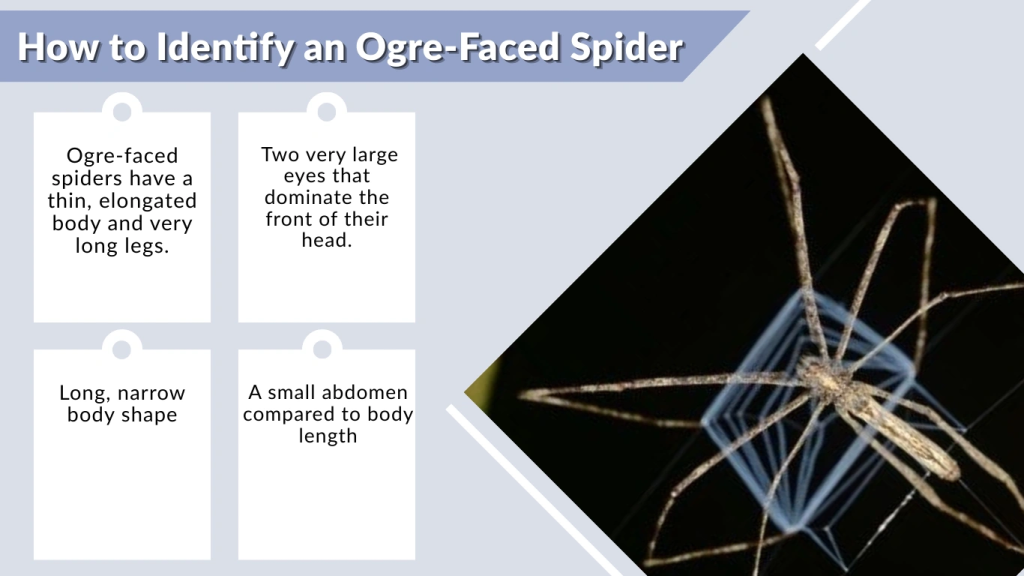
Although ogre-faced spiders have a very distinctive appearance, they can still be difficult to spot because they often blend into their surroundings.
Physical Characteristics
Ogre-faced spiders have a thin, elongated body and very long legs. Their bodies are typically slender compared to many other spider species.
Key identifying features include:
- Long, narrow body shape
- Extremely large forward-facing eyes
- Thin legs that stretch outward
- A small abdomen compared to body length
When resting during the day, these spiders often stretch their legs along branches or twigs to make their bodies look like part of the plant.
Ogre-Faced Spider Eyes
One of the most remarkable features of the ogre-faced spider is its eye structure.
Most spiders have multiple small eyes, but ogre-faced spiders possess two very large eyes that dominate the front of their head. These eyes are specially adapted for night vision.
The large eyes allow the spider to detect motion and shapes even in very dim light. Scientists have discovered that these spiders actually lose and regenerate part of their visual sensitivity every day to maintain their powerful night vision.
This adaptation makes them extremely effective nocturnal hunters.
Color and Body Pattern
Ogre-faced spiders usually have colors that help them blend into natural environments.
Common color patterns include:
- Brown or gray tones
- Slight reddish or earthy shades
- Subtle patterns that resemble bark or dried leaves
This camouflage allows them to remain hidden from predators during the daytime.
Ogre-Faced Spider Size
Many people are surprised by the size of ogre-faced spiders when they see them for the first time. Although their bodies are relatively small, their long legs can make them appear larger than they actually are.
Average Body Length
The typical body length of an adult ogre-faced spider is about 15 to 25 millimeters (roughly half an inch to one inch). This measurement refers only to the spider’s body and does not include the legs.
While this body size is moderate compared to some larger spider species, the spider’s unusual proportions make it appear larger.
Leg Span and Overall Appearance
The long legs of the ogre-faced spider greatly increase its overall size when measured from leg to leg.
In some species, the leg span can reach 5 to 7 centimeters, giving the spider a striking appearance when viewed up close. The long legs also help the spider hold and stretch the net-like web used during hunting.
Because of these extended legs, the spider can spread its web wider when capturing prey.
Female vs Male Size Differences
Like many spider species, female ogre-faced spiders are usually slightly larger than males.
Females require additional body size to produce eggs and carry egg sacs during reproduction. Males are typically smaller and more slender.
However, both sexes share the same distinctive eye structure and hunting behavior.
Unique Hunting Method of Ogre-Faced Spiders
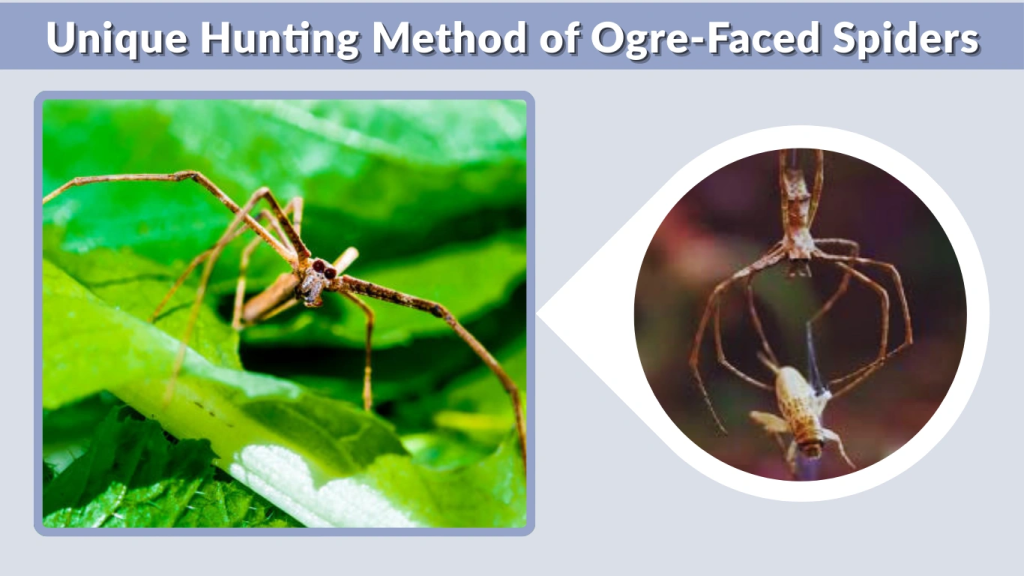
One of the most fascinating features of the ogre-faced spider is its unusual hunting technique. Unlike most spiders that build large stationary webs, this spider actively captures prey using a net-casting method.
What Is Net-Casting Hunting?
Ogre-faced spiders create a small rectangular web made of sticky silk. Instead of attaching this web to branches like traditional spider webs, the spider holds the web with its front legs while waiting for prey.
The spider usually hangs upside down from a branch or twig while holding this small net-like web. It stays perfectly still, watching the ground or vegetation below for insects passing underneath.
This method allows the spider to catch prey that might otherwise avoid a normal web.
How the Spider Captures Prey
When an insect such as a beetle, ant, or small grasshopper walks beneath the spider, the ogre-faced spider reacts extremely quickly.
In a split second, the spider stretches the web outward and throws the net over the prey, trapping it instantly. Once the insect is caught in the sticky web, the spider quickly bites it and injects venom to immobilize it.
This hunting method is very effective and allows the spider to capture insects that move along the ground rather than through the air.
Night Hunting Behavior
Ogre-faced spiders are primarily nocturnal, meaning they hunt during the night.
Their large forward-facing eyes provide excellent night vision, allowing them to detect movement in extremely low light conditions. During the night, they actively search for suitable hunting positions and remain alert for passing insects.
Because of their strong night vision and fast reaction time, these spiders are very successful nighttime predators.
Habitat and Distribution
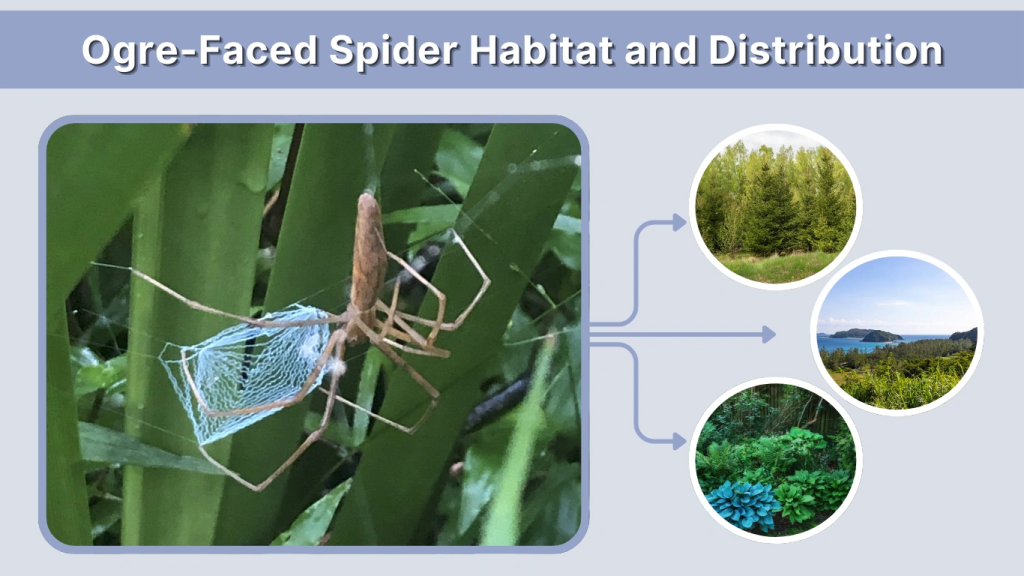
Ogre-faced spiders are typically found in warm environments where insect populations are abundant. Their hunting style works best in areas with vegetation and natural structures that provide suitable resting and hunting spots.
Where Ogre-Faced Spiders Live
These spiders prefer habitats with trees, shrubs, and tall plants. Such environments allow them to suspend themselves while holding their net-like web.
Common habitats include:
- Tropical forests
- Woodland areas
- Gardens and backyard vegetation
- Forest edges and bushy landscapes
They usually remain hidden during the day and become active after sunset.
Global Distribution
Ogre-faced spiders live in many regions of the world, especially in warm climates.
They are commonly found in:
- Australia, where several species are well documented
- Asia, particularly in tropical regions
- Africa, in forest and woodland habitats
- North and South America, where different species inhabit forests and gardens
Although they are widespread, their nocturnal behavior makes them difficult to observe.
Common Places to Spot Them
People who are searching for ogre-faced spiders often find them in quiet outdoor locations.
They may be seen:
- Hanging from tree branches
- Among bushes and shrubs
- In gardens with dense vegetation
- Near forest paths or woodland edges
At night, a flashlight can sometimes reveal the reflection from their large eyes.
Ogre-Faced Spider Lifespan
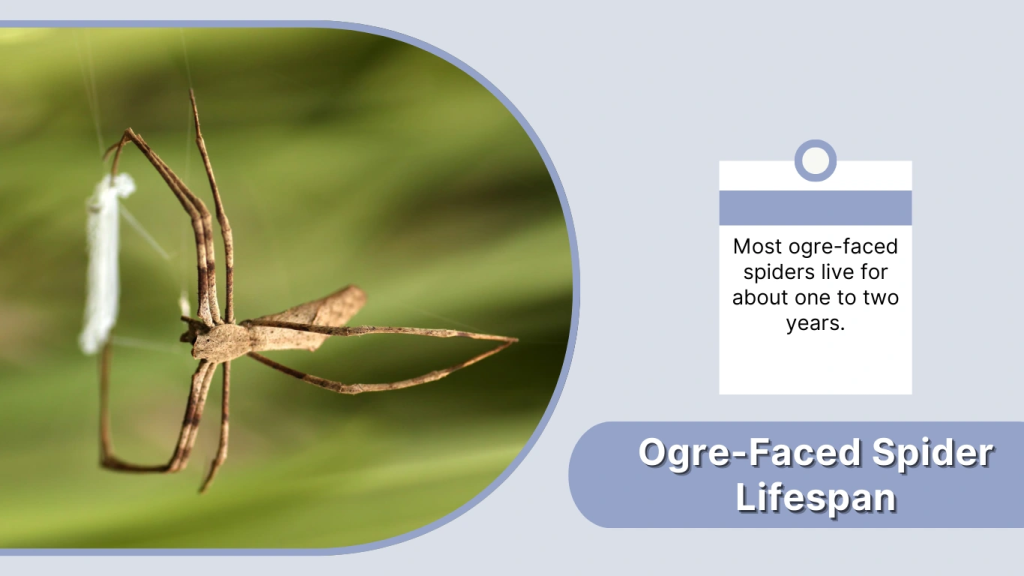
The lifespan of an ogre-faced spider varies depending on environmental conditions, food availability, and predators.
Average Lifespan
Most ogre-faced spiders live for about one to two years. This lifespan is typical for many medium-sized spider species.
During this time, they grow, reproduce, and contribute to controlling insect populations in their habitat.
Factors That Affect Lifespan
Several factors can influence how long an ogre-faced spider lives.
These factors include:
- Climate conditions
- Availability of food
- Presence of predators
- Environmental disturbances
Spiders living in stable environments with plenty of insects often have better chances of reaching their full lifespan.
Life Cycle Stages
The life cycle of the ogre-faced spider includes several stages of development.
Egg Stage
Female spiders lay eggs inside protective silk sacs. These egg sacs are usually hidden in vegetation to protect them from predators.
Spiderling Stage
After hatching, the young spiders—called spiderlings—begin their development. They gradually grow larger through a series of molts, shedding their exoskeleton as they grow.
Adult Stage
Once they reach adulthood, the spiders begin hunting independently and eventually reproduce to continue the life cycle.
Ogre-Faced Spider Bite
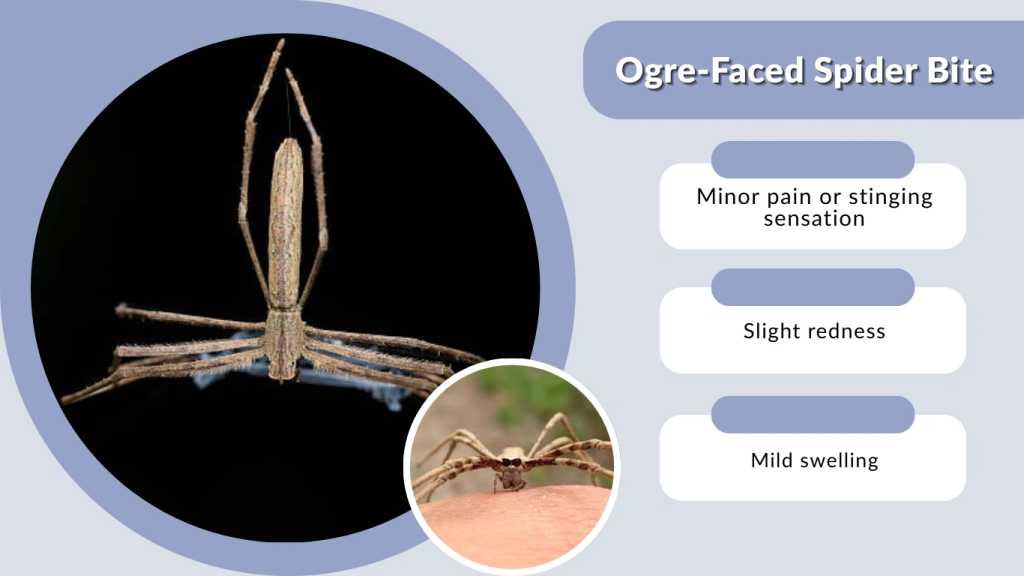
Because of their unusual appearance, some people worry that ogre-faced spiders might be dangerous.
Do Ogre-Faced Spiders Bite Humans?
Ogre-faced spiders are generally not aggressive toward humans. They prefer to remain hidden and avoid confrontation.
A bite may occur only if the spider feels trapped or threatened, such as when it is accidentally touched.
Bite Symptoms
If a bite occurs, the symptoms are usually mild.
Possible symptoms include:
- Minor pain or stinging sensation
- Slight redness
- Mild swelling
These symptoms typically disappear quickly.
Bite Treatment
Simple first-aid treatment is usually enough for a spider bite.
Recommended steps include:
- Cleaning the bite area with soap and water
- Applying a cold compress to reduce swelling
- Avoiding scratching the area
Serious reactions are extremely rare.
Behavior and Adaptations
Ogre-faced spiders have several interesting adaptations that help them survive in the wild.
Camouflage Strategy
During the daytime, these spiders often stretch their bodies along branches to resemble sticks or twigs. This camouflage helps them avoid predators.
Daytime Resting Behavior
They typically remain inactive during the day and begin hunting only after sunset.
Predator Avoidance
Their camouflage, quiet behavior, and nighttime activity reduce the chances of being detected by predators such as birds.
Benefits of Ogre-Faced Spiders in Ecosystems
Despite their unusual appearance, ogre-faced spiders play an important role in natural ecosystems.
Natural Pest Control
By feeding on insects, they help reduce populations of pests that may damage plants.
Role in Food Chains
They serve as both predators and prey within the ecosystem, supporting biodiversity.
Importance for Biodiversity
Their presence contributes to the health and balance of many natural habitats.
Conclusion
The ogre-faced spider is one of the most fascinating spiders in the natural world. Its enormous eyes, unique net-casting hunting method, and excellent night vision make it a highly specialized predator. Although its appearance may seem intimidating, it is harmless to humans and rarely bites. With a moderate size and a lifespan of around one to two years, this spider plays a valuable role in controlling insect populations and maintaining ecological balance.