

The order Araneae comprises what we commonly know as spiders. Araneae is one of the most diverse and widespread orders in the class Arachnida, containing over 50,000 described species globally. These creatures are distinguished by their two main body segments (cephalothorax and abdomen), eight legs, and the ability to spin silk. The name “Araneae” is derived from Latin, meaning spider. From urban corners to deep forests and deserts, Araneae can be found in nearly every terrestrial ecosystem on Earth.
Defining Characteristics of Araneae

Spiders in the Araneae order share several anatomical and functional characteristics:
- Body Structure: Two main body parts connected by a narrow waist called the pedicel.
- Silk Production: All spiders can produce silk, though not all spin webs. Silk is used for web construction, prey capture, egg sacs, and movement.
- Venom: Most species have venomous fangs used to immobilize prey, though very few are dangerous to humans.
- Eyes: Typically, spiders have eight eyes, though some may have six or fewer.
Araneae Families

The Araneae order includes more than 100 families, showcasing a wide variety of survival strategies and adaptations. Key families include:
- Salticidae (Jumping Spiders): Known for their excellent vision and leaping ability.
- Theridiidae (Cobweb Spiders): Includes the notorious black widow.
- Araneidae (Orb-Weavers): Famous for their intricate web patterns.
- Lycosidae (Wolf Spiders): Ground-dwelling hunters.
- Liocranidae: Typically nocturnal ground hunters that don’t use webs.
Each family brings its own unique behavior, physiology, and role in the ecosystem.
Notable Species in Araneae
Araneae mactans (Black Widow)

One of the most recognized spiders globally, Latrodectus mactans is part of the Theridiidae family. Found primarily in North and South America, it has a glossy black body with a distinctive red hourglass on its abdomen. The female’s venom can be harmful to humans but is rarely fatal.
Araneae salticidae (Jumping Spiders)

Salticids are visually oriented hunters that stalk and pounce on their prey. They are small to medium in size, often with vibrant colors and excellent depth perception. Common in gardens and homes, these spiders are curious and sometimes appear to watch humans.
Araneae liocranidae (Ground Hunters)
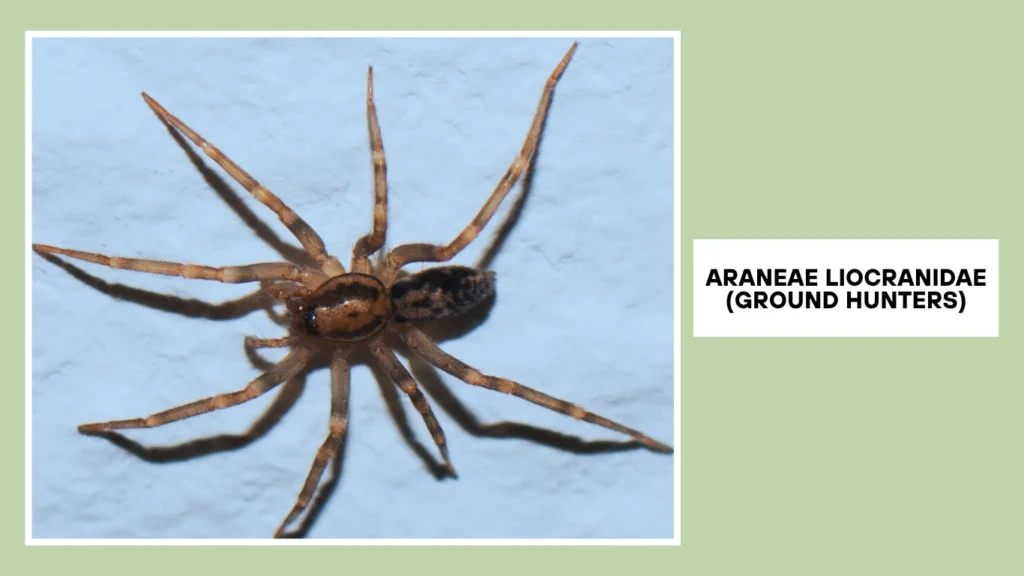
Less well-known than other families, liocranids are free-roaming nocturnal hunters. They are found in leaf litter, under stones, and within bark. Their role in controlling insect populations is significant, especially in forest ecosystems.
Araneae by Region

Araneae of India
India is home to a diverse array of spiders, with hundreds of endemic and native species documented. From tropical rainforests to deserts, India’s spider fauna includes representatives from Salticidae, Araneidae, Thomisidae, and Lycosidae families.
Araneae Spiders of Europe
European spiders include a wide variety of species across climates. Countries like Germany, France, and the UK are home to garden spiders (Araneus diadematus), cellar spiders, and wolf spiders. European research institutions also contribute heavily to spider taxonomy and documentation.
Habitats: Where Araneae Live

Spiders in the Araneae order are highly adaptable. They are categorized based on their preferred habitats:
- Terrestrial: Found on land, often under rocks, in foliage, or within soil.
- Semi-aquatic: Species like Argyroneta aquatica, the diving bell spider, can live underwater by creating air pockets.
- Arboreal: Tree-dwelling species that often build webs among branches.
- Cave-dwelling: Troglobitic spiders have adapted to dark environments with reduced eyesight.
Their ability to survive in extreme conditions, from mountaintops to basements, shows their evolutionary success.
Examples of Organisms in the Order Araneae
Here are a few notable examples of true spiders:
- Latrodectus mactans (Black widow)
- Phidippus audax (Bold jumping spider)
- Araneus diadematus (European garden spider)
- Dolomedes triton (Six-spotted fishing spider)
- Argiope aurantia (Yellow garden spider)
- Argyroneta aquatica (Diving bell spider)
Are Daddy Long Legs True Araneae?
No, daddy long legs (harvestmen) are not true spiders. Though they resemble spiders, they belong to the order Opiliones, not Araneae. Key differences include:
- A fused body without the distinct two-segment structure of spiders.
- Lack of silk production and venom glands.
- Different eye arrangement (typically one pair).
Despite the confusion, they pose no harm to humans and play a useful role in decomposing plant and animal material.
Araneae Species Identification Tips

Identifying spiders within the Araneae order can be challenging, but a few key traits help:
- Eye Arrangement: The pattern and number of eyes can narrow down the family.
- Web Type: Orb, sheet, tangle, or no web at all.
- Leg Length & Hair: Some families have thick, hairy legs (Lycosidae), others have smooth, thin legs (Theridiidae).
- Color Patterns: Bright markings, stripes, or abdominal patterns can signal species.
- Location: Knowing the region and habitat narrows possibilities greatly.
Field guides and online databases like the World Spider Catalog (NMBE) are helpful resources.
Araneae Spider Bites and Symptoms

Most spiders within the order Araneae are harmless to humans, and many do not bite unless provoked or handled roughly. However, a few species—such as those in the Latrodectus (black widow) and Loxosceles (brown recluse) genera—can deliver medically significant bites. Below is a general guide to understanding spider bites and what symptoms to look for.
Common Bite Symptoms (Non-dangerous Species)
For the majority of Araneae spiders:
- Mild pain or itching at the bite site
- Redness or slight swelling
- Small puncture marks (sometimes invisible)
- Resolves on its own within a few hours to a couple of days
FAQs
What does the name Araneae mean?
The name Araneae comes from Latin, meaning “spider.” It is the scientific name for the entire order of true spiders, encompassing tens of thousands of species across the globe.
How many species are there in the Araneae order?
There are over 50,000 described species of spiders in the Araneae order, with new species discovered regularly. Scientists estimate the actual number may exceed 100,000 worldwide.
Do all Araneae spiders spin webs?
No, not all spiders in the Araneae order spin webs to catch prey. Some, like wolf spiders and jumping spiders, are active hunters that rely on speed and vision rather than web traps.
Are Araneae spiders blind?
Most Araneae spiders are not blind. In fact, families like Salticidae (jumping spiders) have excellent vision. However, some cave-dwelling or nocturnal species may have reduced or poorly developed eyes.
How do Araneae spiders help the environment?
Araneae spiders play a crucial role in ecosystems by controlling insect populations. They reduce the spread of pests and act as both predators and prey in the food chain, contributing to overall biodiversity.
Summary
Spiders in the Araneae order are vital for ecological balance. As natural pest controllers, they reduce insect populations in forests, gardens, and even agricultural fields. They contribute to scientific research in neurotoxin studies, silk biomechanics, and evolutionary biology.
Despite fear or misunderstanding, Araneae are mostly harmless and incredibly beneficial. Understanding their roles, diversity, and behavior helps promote their conservation and appreciation.