
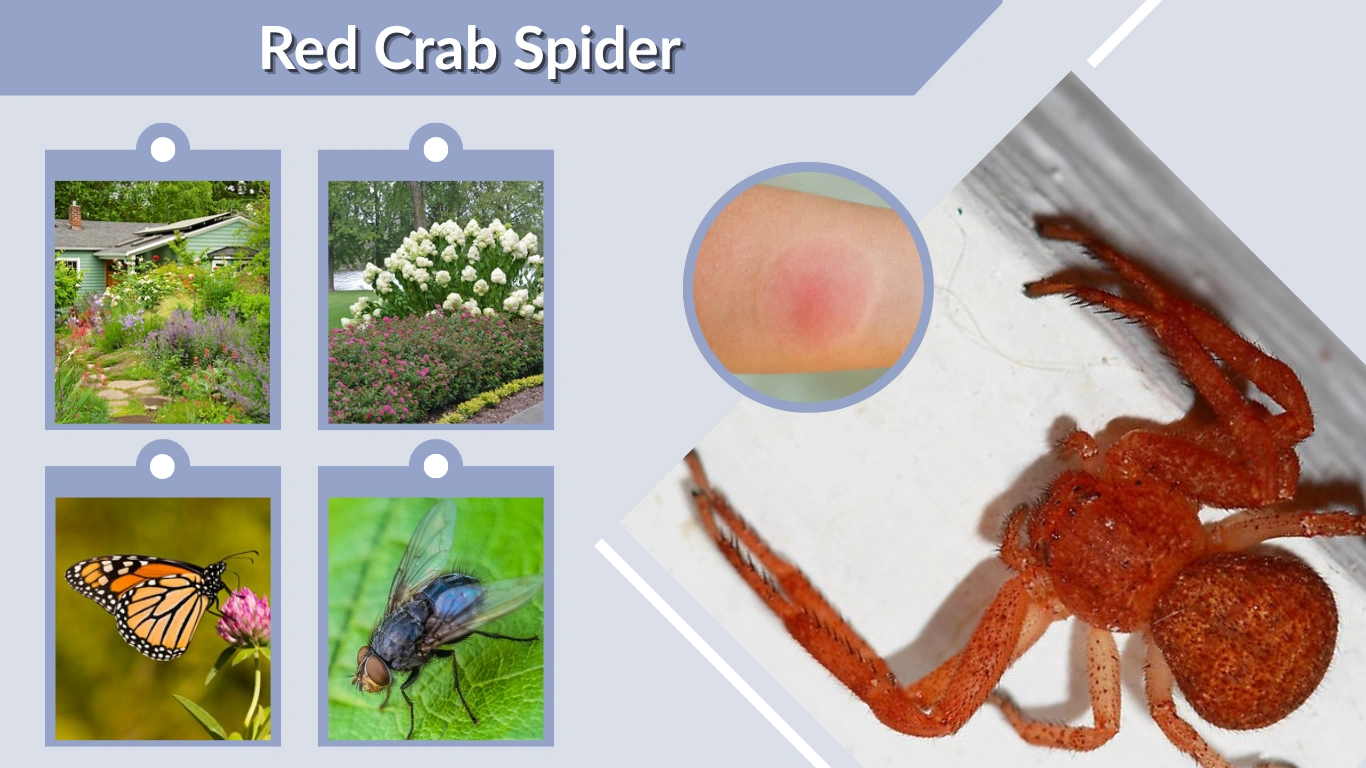
The Red Crab Spider is a small, brightly colored arachnid known for its bold red body and crab-like shape. Frequently spotted in gardens, meadows, and forest edges, this spider’s striking appearance makes it stand out among other crab spider species. Despite its vivid color and intimidating look, the red crab spider is not dangerous to humans and plays a vital ecological role.
Identification and Appearance
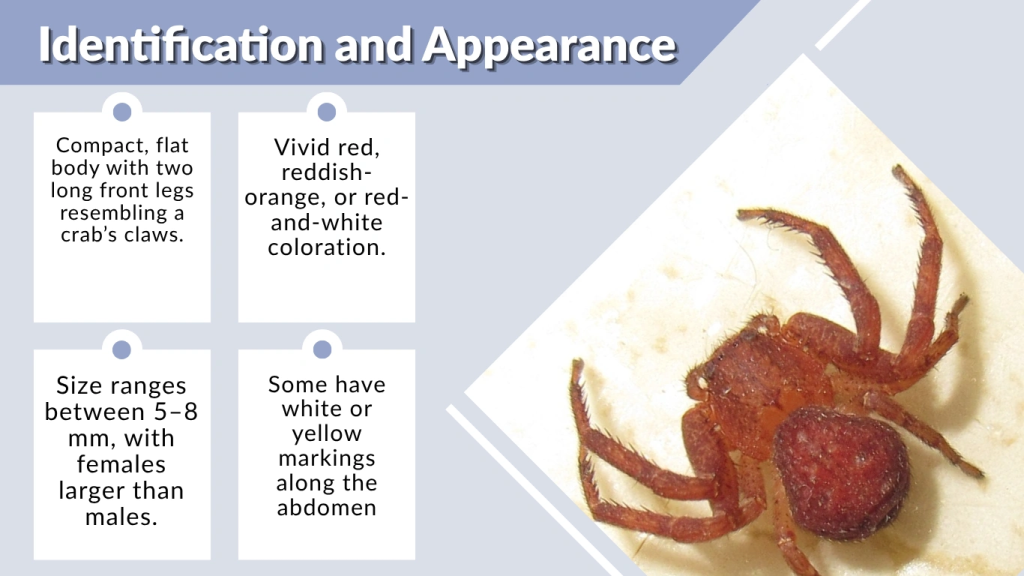
Physical Features
- Compact, flat body with two long front legs resembling a crab’s claws.
- Vivid red, reddish-orange, or red-and-white coloration.
- Size ranges between 5–8 mm, with females larger than males.
- Some have white or yellow markings along the abdomen, aiding camouflage.
Similar Species
- Red and White Crab Spider (Misumena vatia) – found on bright flowers.
- Red-Banded Crab Spider (Thomisus onustus) – distinguished by red stripes.
- Goldenrod Crab Spider with reddish spots is often mistaken for this species.
Habitat and Range
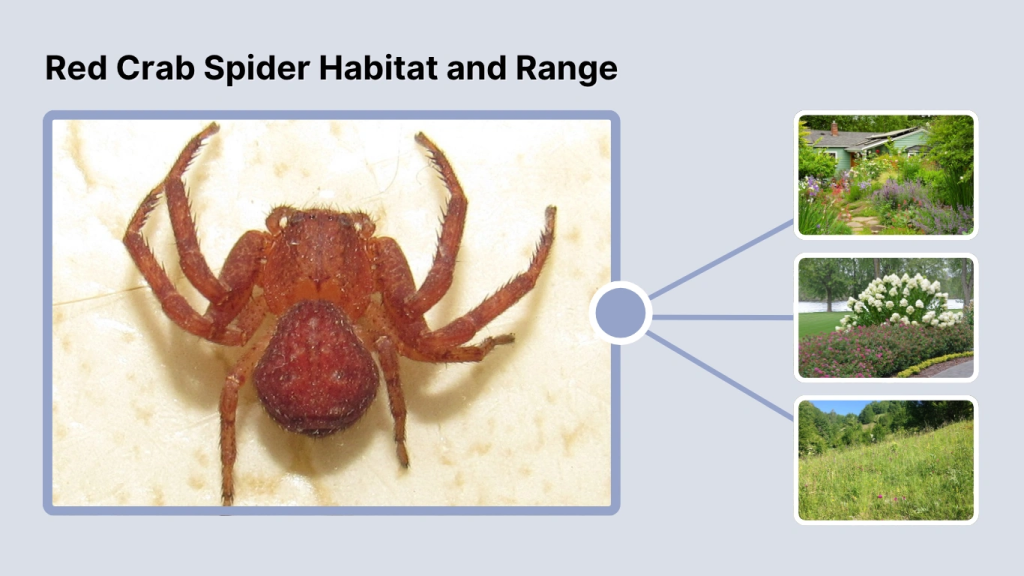
The Red Crab Spider inhabits North America, especially in states like Texas, Oklahoma, and Florida. It prefers warm regions with abundant flowering plants. Typical habitats include:
- Gardens and meadows
- Shrubs and hedges
- Forest edges and grasslands
- Flowering plants such as daisies and goldenrods
Their bright coloration helps them blend with red or pink flowers, making them effective ambush predators.
Behavior and Diet
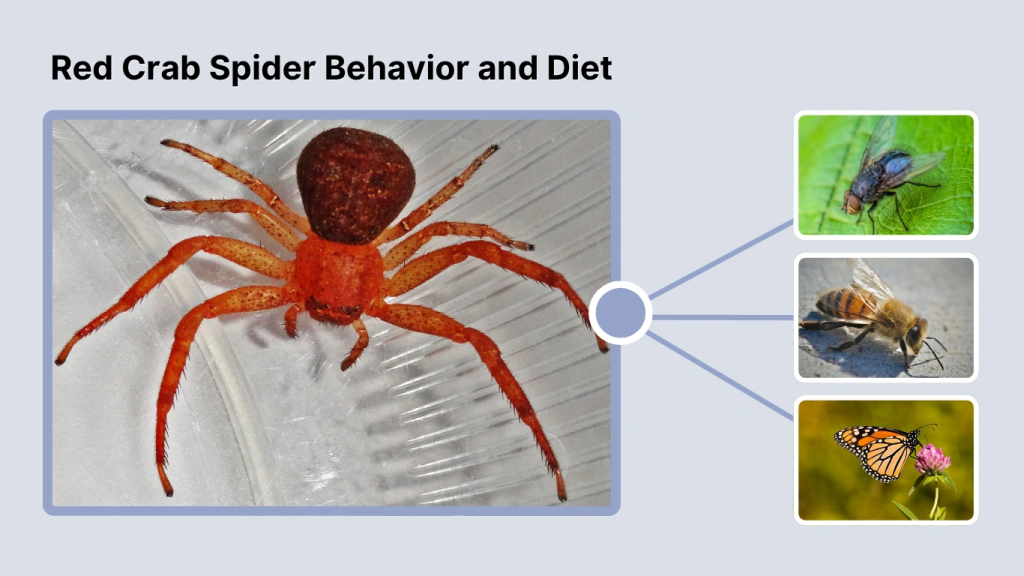
Hunting Style
Red crab spiders are sit-and-wait hunters. They do not spin webs to catch prey. Instead, they hide among flowers, relying on their color to blend in until prey appears. Once an insect lands nearby, the spider grabs it with its powerful front legs and injects venom to immobilize it instantly.
Diet
Their diet mainly consists of:
- Flies
- Bees
- Butterflies
- Small beetles
By preying on pollinators, they maintain balance within ecosystems and act as natural pest controllers in gardens.
Venom and Bite Information

Is the Red Crab Spider Poisonous?
The red crab spider is venomous to insects but harmless to humans. Its venom is used to paralyze and digest prey, not to defend itself against larger animals. The bite has minimal impact on humans and is rarely reported.
Bite Symptoms
If a person is bitten (usually when handling the spider), mild symptoms may appear, such as:
- Localized redness
- Slight itching or swelling
- Temporary sensitivity
Symptoms disappear within hours, and no medical attention is necessary unless an allergic reaction occurs
Species Variants and Distribution
Red Crab Spider in Texas and Oklahoma
The Red Crab Spider is most frequently observed in Texas and Oklahoma, where its bright coloration contrasts beautifully against native wildflowers. In Texas gardens, these spiders are commonly seen on red and yellow blooms, waiting patiently for prey. Their population thrives in these regions due to warm temperatures and abundant pollinating insects.
Color Variations
While typically red, some individuals display:
- Red and white patterns on the abdomen
- Yellow-red shades blending into floral surroundings
- Black and red or red-banded patterns on their backs
These variations are natural adaptations for camouflage and species differentiation. Some even appear reddish-orange under sunlight, helping them stay hidden from predators.
Other Locations
The species also appears in Florida, Louisiana, and parts of the Midwest, including Wisconsin and Colorado. They favor open meadows, forest edges, and flower gardens rather than dense forests or desert regions. Their presence across multiple states highlights their adaptability to diverse ecosystems.
Interesting Facts
- Scientific Classification: Belongs to the family Thomisidae, the true crab spiders.
- Color Change Ability: Certain individuals can slightly shift hues based on light and background.
- No Webs: They do not spin capture webs but build small silk retreats for resting or egg-laying.
- Protective Mothers: Females guard their egg sacs until spiderlings hatch, showing rare parental behavior among spiders.
- Mimicry Advantage: Their resemblance to flower petals and red blossoms makes them nearly invisible to pollinating insects.
- Natural Pest Control: Farmers and gardeners appreciate them for reducing harmful insect populations naturally.
FAQs
Are red crab spiders dangerous to humans?
No, red crab spiders are not dangerous. Their venom is effective only against small insects. Human bites are extremely rare, and even when they occur, symptoms are mild — usually limited to brief redness or itching.
Where can you find red crab spiders?
They are common across the southern and central United States, particularly in Texas, Oklahoma, and Florida. They prefer bright flowers, meadows, and sunny gardens where they can blend into red or yellow petals.
What do red crab spiders eat?
Red crab spiders mainly consume bees, flies, moths, and butterflies. They lie in wait on flowers and ambush insects that come to collect nectar. This ambush hunting style helps control the population of garden pests.
Are there red crab spiders in Texas?
Yes. Texas is one of the best states to spot them. They are commonly seen in wildflower fields and gardens during spring and summer, particularly on brightly colored plants that match their red tones.
Can red crab spiders change color?
Some species can slightly adjust their color tones, shifting between red, pink, and orange hues for camouflage. However, they cannot change color as dramatically as goldenrod crab spiders, which can turn from white to yellow.