

The red garden spider is one of the most eye-catching arachnids found in outdoor spaces. Known for its bold color variations ranging from bright crimson to deep reddish-brown, this spider is often mistaken for dangerous species. However, most red garden spiders are harmless orb-weavers that play an important role in maintaining garden ecosystems by keeping insect populations in check.
These spiders are seen across North America, the United Kingdom, Australia, and New Zealand. While many people use the term “red garden spider” to describe colorful orb-weavers, it can also refer to red spider mites, which are actually tiny plant pests. Understanding the difference between them is essential for both gardeners and nature enthusiasts.
Identification and Physical Features
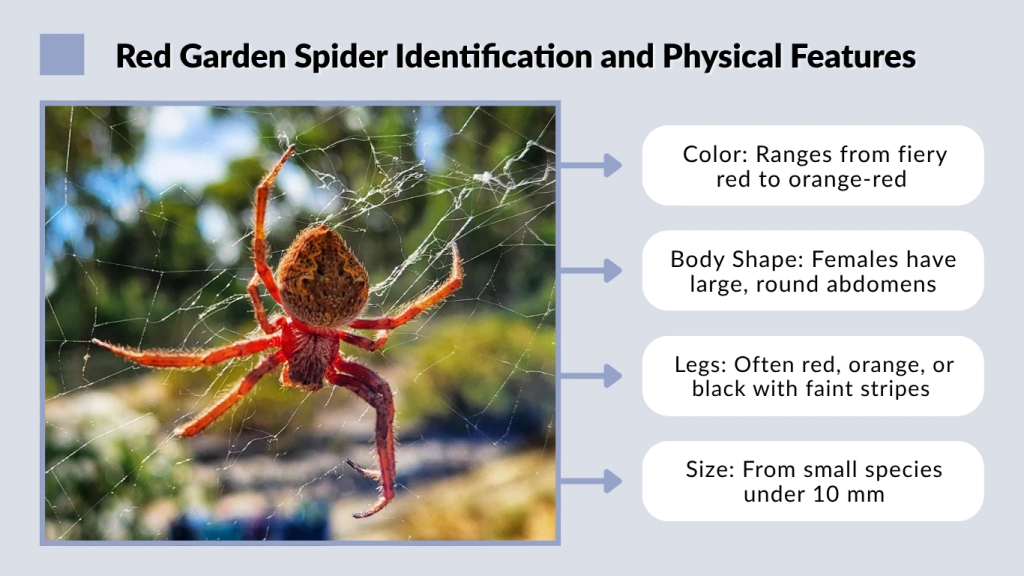
Red garden spiders come in various sizes and patterns, but their bright coloration makes them easy to notice. Despite the name, they’re not a single species — the phrase refers to several red-colored garden-dwelling spiders and, sometimes, to red mites.
Key Traits to Identify Red Garden Spiders:
- Color: Ranges from fiery red to orange-red or reddish-brown; some show black, white, or yellow accents.
- Body Shape: Females have large, round abdomens; males are smaller and slimmer.
- Legs: Often red, orange, or black with faint stripes or darker tips.
- Web Structure: Most spin circular, orb-like webs between plants, fences, or garden posts.
- Size: From small species under 10 mm to large orb-weavers reaching nearly 25 mm in body length.
These spiders use their vibrant colors for camouflage among flowers and autumn leaves. The hue also acts as a warning to potential predators, even though they pose no real threat.
Common Types of Red Garden Spiders

Several species and color morphs fall under the “red garden spider” label. Each has unique markings, sizes, and web designs, but they share a similar hunting style and habitat.
1. Red Orb-Weaver Spider
The red orb-weaver is one of the most frequently encountered types. It builds large, round webs in gardens and is active at dusk. Its abdomen is often deep red or orange with faint spots or cross patterns. This species helps control flying insects such as flies, gnats, and mosquitoes.
2. Black and Red Garden Spider
This spider combines black and red tones, often with a red belly or red-striped legs. It looks intimidating but is harmless to humans. The contrast helps it blend into shadows and leaves, offering both camouflage and visual warning to predators.
3. Red-Backed or Red-Legged Spiders
Found mostly in warm areas like Georgia, California, and parts of Australia, these spiders have bright red legs or backs. While Australia’s redback spider (Latrodectus hasselti) is venomous, it is not the same as the harmless red-legged garden orb-weaver.
4. Red and Yellow Garden Spider
A colorful variation often found in flower gardens, this spider displays red, yellow, and black stripes. It resembles the banded garden spider but has more reddish tones along the abdomen.
5. Tiny Red Spider or Mite
Sometimes confused with actual spiders, red spider mites are minuscule pests that live on plants. Unlike spiders, they don’t spin webs to catch prey but create fine silk threads on leaves and stems. These mites suck sap and can harm plant health.
Red Garden Spider vs. Red Spider Mite
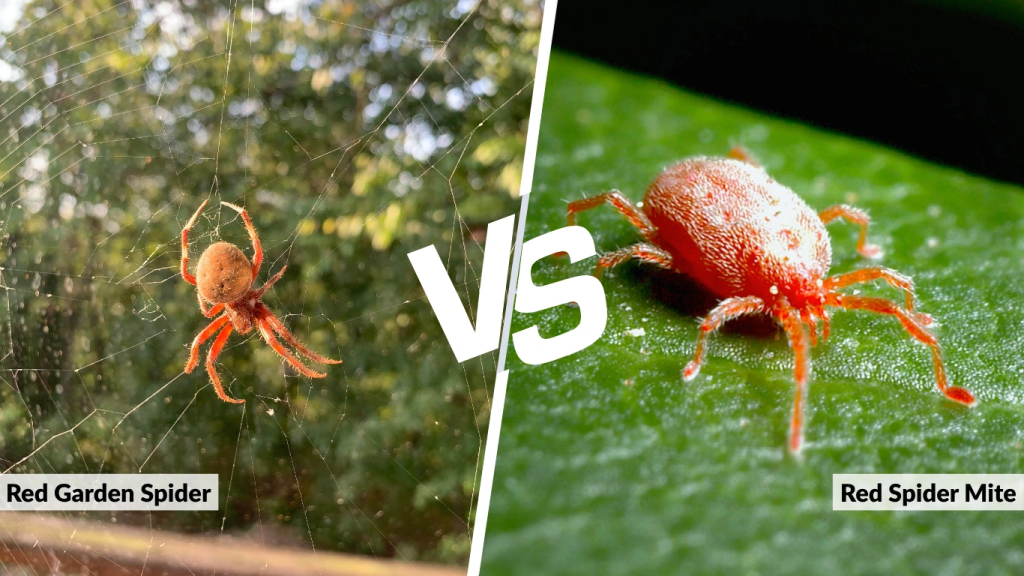
Gardeners often confuse true spiders with red spider mites because both are red and tiny at times. However, they differ greatly in behavior, size, and ecological role.
| Feature | Red Garden Spider | Red Spider Mite |
| Classification | True spider (Arachnid) | Mite (Arachnid) |
| Size | 5–25 mm, visible to the eye | Less than 1 mm, barely visible |
| Web Type | Circular orb web for catching prey | Fine silk on plant leaves |
| Diet | Feeds on insects | Sucks plant sap |
| Effect on Garden | Beneficial predator | Harmful pest |
True red garden spiders are helpful — they reduce harmful insect populations naturally. On the other hand, red spider mites weaken plants, turning leaves yellow and dry.
Habitat and Behavior
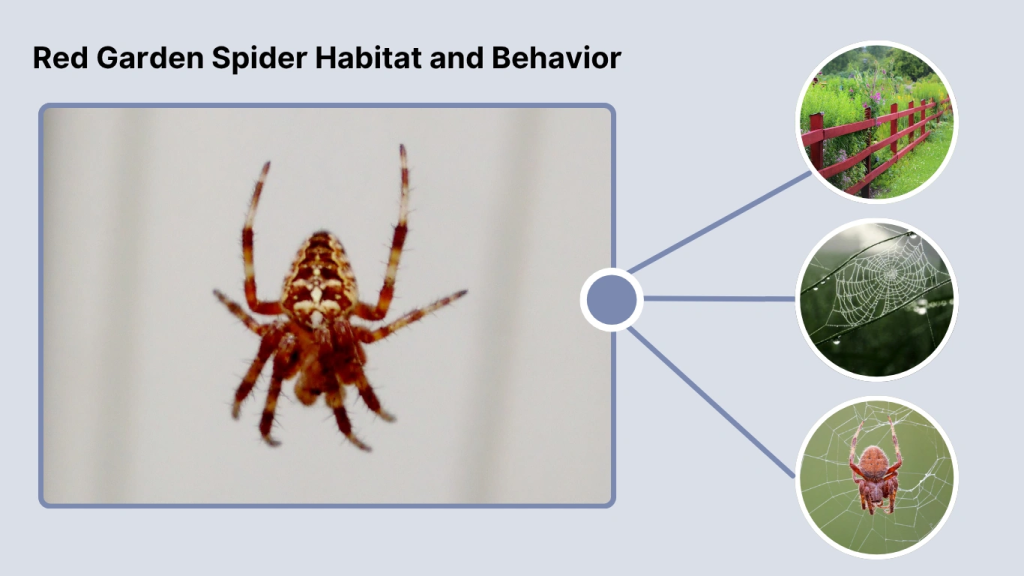
Red garden spiders prefer warm, open environments filled with vegetation and flying insects. They are usually seen in gardens, meadows, or forest edges where they have space to anchor their webs.
Typical habitat characteristics:
- Found on shrubs, fences, window corners, and flowerbeds.
- Webs appear overnight and glisten with dew in the morning.
- Prefer sunny, sheltered spots where insects frequently pass.
- Active mainly in late summer and early autumn.
Behaviorally, these spiders are patient ambush hunters. They rest at the center of their web, waiting for vibrations from trapped prey. Once an insect is caught, the spider quickly wraps it in silk before delivering a mild venomous bite to paralyze it.
Most red garden spiders are solitary, rebuilding their webs daily. They rarely enter homes and are not aggressive toward humans. Their vivid red coloration often deepens during the breeding season, making them even more visible in gardens.
Are Red Garden Spiders Poisonous?
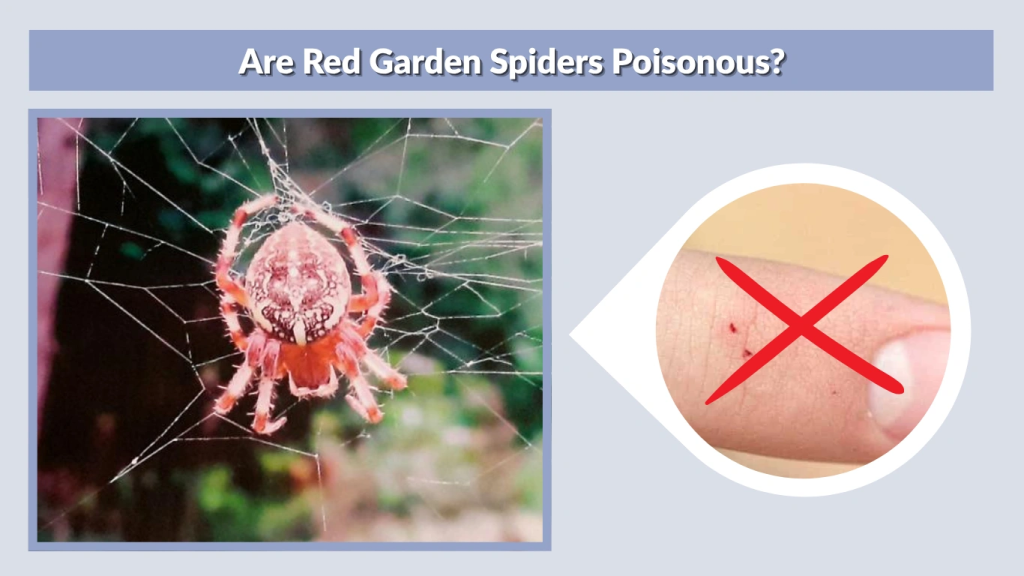
Despite their alarming colors, red garden spiders are not dangerous to humans. Their venom is designed for small prey like flies and beetles, not for large animals or people.
Quick facts about their venom:
- Their bite is extremely rare and typically occurs only when handled.
- The venom causes mild pain or redness, similar to a mosquito bite.
- They do not attack unless threatened or trapped.
- Many red spiders, especially orb-weavers, retreat when disturbed rather than bite.
Only the Australian redback spider (a close relative of the black widow) poses medical danger, but it’s a different species that lives in drier, hidden environments — not open gardens.
Gardeners can safely coexist with red garden spiders, as these arachnids help control pest insects naturally, reducing the need for chemical pesticides.
Regional Variations and Sightings
Red garden spiders appear worldwide in slightly different forms. Their colors, size, and seasonal habits depend on temperature and available prey, but their behaviors remain similar everywhere.
a. United Kingdom
In the U.K., red garden spiders are often seen in late summer when they reach maturity. The red orb-weaver and crimson cross spider are common species, frequently building webs across hedges and patios. Some appear reddish-brown rather than pure red, blending with autumn leaves. They are harmless and usually active from August to October.
b. United States (California, Georgia, Pennsylvania)
Across the U.S., red garden spiders are widespread. In California, large red orb-weavers often appear around outdoor lights and garages, preying on moths and flies. In Georgia, red-legged and red-bellied varieties dominate during humid months. Pennsylvania gardens often host reddish cross spiders that resemble the brown garden orb-weaver but display more vivid coloration.
c. Australia and New Zealand
Australia is home to both harmless red garden orb-weavers and the more infamous redback spider, which is not a true garden species. The orb-weaver versions spin visible webs near plants and lights, while the redback hides under debris or furniture. New Zealand gardens mainly feature bright orange-red orb-weavers that appear in late summer.
d. Canada and Northern Regions
In cooler climates, red garden spiders are slightly smaller but equally colorful. They build webs in sunny corners of gardens during late August and September, laying eggs before frost. The next generation hatches in spring, ensuring year-round presence in local ecosystems.
Red Spider Mites: Garden Pest Infestation
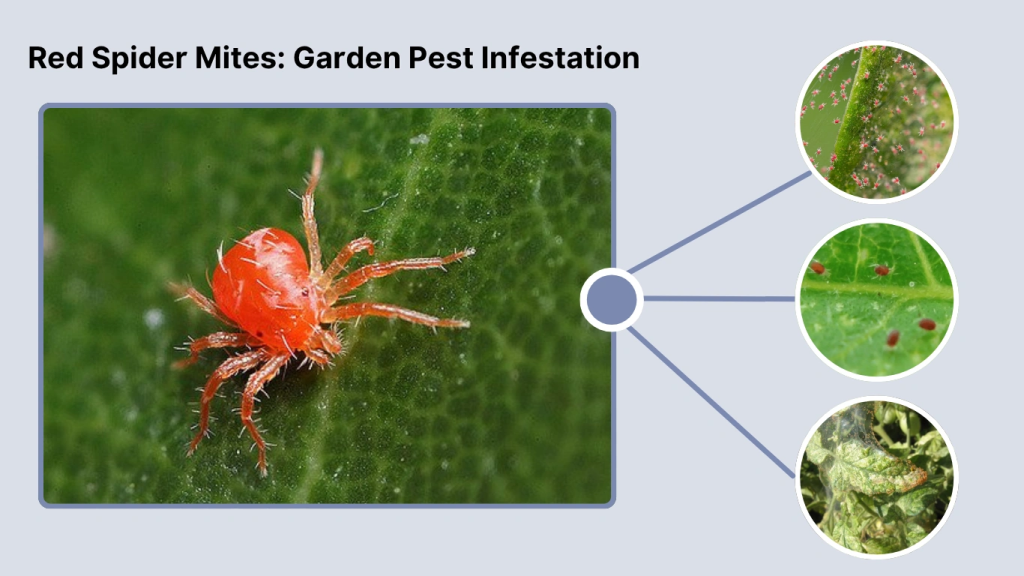
Not every red creature in your garden is friendly. The red spider mite is a common plant pest that feeds on the sap of leaves, weakening plants over time. Although they share the name “spider,” they’re tiny mites that cause damage rather than prevent it.
Common signs of a red spider mite infestation:
- Fine silk webs under leaves or along stems.
- Tiny red specks moving on plant surfaces.
- Yellowing or curling leaves.
- Stunted growth or dried patches on foliage.
These mites thrive in dry, warm conditions — especially in greenhouses. They attack a wide range of plants, including tomatoes, roses, cucumbers, and ornamental flowers.
How to Get Rid of Red Spider Mites Naturally
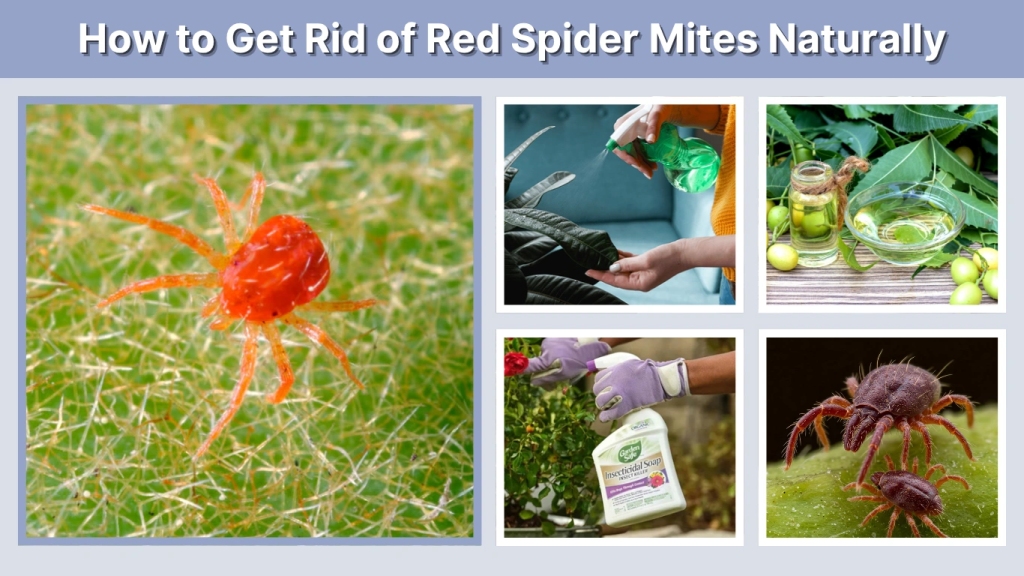
Eliminating red spider mites requires persistence and environmentally safe methods. Chemical sprays often harm beneficial insects, so natural control is the best long-term strategy.
Effective natural treatments:
- Water Spray: Regularly mist or hose plant leaves to knock mites off and increase humidity, which they dislike.
- Neem Oil: A natural pesticide that suffocates mites while protecting beneficial bugs.
- Insecticidal Soap: Effective for killing mites on contact; apply weekly until infestation is gone.
- Predatory Mites: Introduce natural enemies like Phytoseiulus persimilis to control populations.
- Pruning: Remove heavily infested leaves or stems and dispose of them carefully.
Also, keep your garden moist and shaded when possible, since mites thrive in hot, dry conditions.
Role of Red Garden Spiders in the Ecosystem
True red garden spiders are allies, not pests. They serve as natural pest controllers and contribute to a balanced ecosystem.
Their ecological importance includes:
- Pest Reduction: Consuming mosquitoes, flies, beetles, and moths daily.
- Pollination Support: By controlling harmful insects, they allow pollinators to thrive.
- Soil and Food Balance: They’re prey for birds and small reptiles, maintaining the natural food chain.
- Chemical-Free Control: Reduce the need for insecticides, helping organic gardeners maintain plant health.
Allowing them to remain in your garden ensures fewer harmful insects and a more balanced natural habitat.
Interesting Facts About Red Garden Spiders
- Some red orb-weavers glow faintly under ultraviolet light due to reflective silk proteins.
- Females often eat the males after mating, ensuring nutrients for egg production.
- Their webs can cover an area up to two feet wide and are rebuilt every night.
- Spiderlings use ballooning to travel long distances by catching wind currents.
- The red coloration intensifies after molting or before egg-laying, especially in females.
These details show that despite their striking appearance, red garden spiders are complex, vital creatures that deserve appreciation rather than fear.
Seasonal Activity and Life Cycle
The lifecycle of the red garden spider follows a seasonal rhythm:
- Spring: Eggs hatch; tiny spiderlings disperse to new locations.
- Summer: Rapid growth phase with frequent web-building and feeding.
- Autumn: Mating season; webs are most visible during this time.
- Winter: Adults die after laying eggs, leaving sacs that protect embryos until spring.
In mild climates, some adults survive winter in hidden shelters such as sheds or thick vegetation.
Interaction with Humans
Red garden spiders are not aggressive and rarely bite. They prefer to retreat rather than defend themselves. If accidentally encountered indoors, they can be gently relocated using a cup and a sheet of paper.
Gardeners should avoid destroying their webs — they act as natural traps for mosquitoes and garden pests. Observing them up close provides an educational and fascinating look into nature’s pest control system.
FAQs
Are red garden spiders dangerous to humans?
No. Red garden spiders are harmless and beneficial. Their venom is mild and used only to subdue insects. Bites are extremely rare and result in temporary redness or mild irritation similar to a mosquito bite.
How can I tell if I have red spider mites or real red spiders?
Red spider mites are microscopic plant pests that form fine webs on leaves. Real red garden spiders are much larger, visible to the naked eye, and build large orb-shaped webs to catch insects, not to harm plants.
Where do red garden spiders live?
They prefer sunny, open areas with plenty of vegetation. You’ll find them on fences, flowerbeds, or around outdoor lights. They thrive during late summer and early autumn when insects are abundant.
How do I control red spider mites without chemicals?
Use neem oil or insecticidal soap weekly, mist plants regularly, and remove infected leaves. You can also release beneficial predators like ladybugs and predatory mites to naturally reduce populations.
Are red garden spiders helpful in my garden?
Yes. They are natural pest controllers that feed on mosquitoes, flies, and crop-damaging insects. Their presence indicates a balanced ecosystem, reducing your need for pesticides while protecting plant health.