
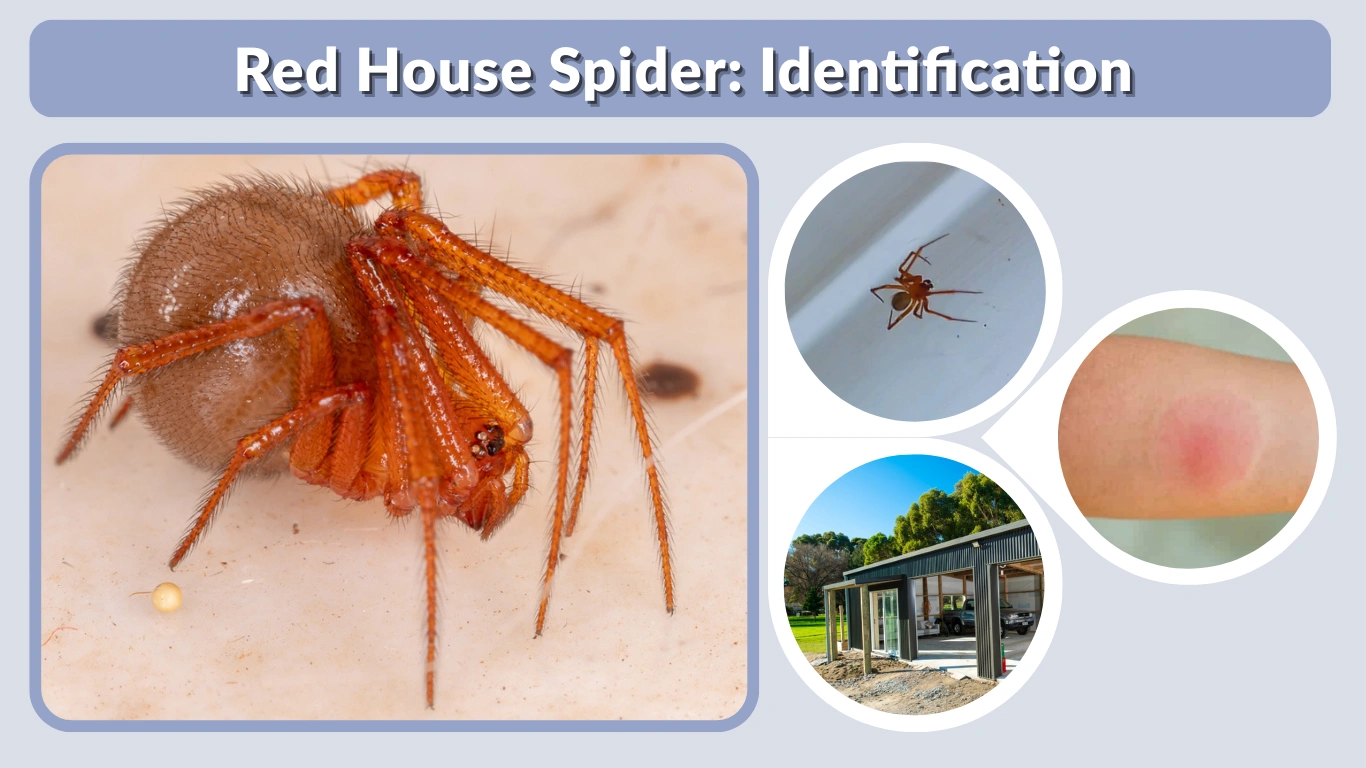
The red house spider is a small spider commonly found in homes, garages, and other buildings in warm climates. Known for its reddish legs and messy cobwebs, this species often lives quietly in corners where insects gather. Its scientific name is Nesticodes rufipes, and it belongs to the cobweb spider family. Although many people feel uneasy when they see spiders indoors, the red house spider is generally harmless to humans and actually helps control household pests by feeding on flies, mosquitoes, and other small insects.
What Is a Red House Spider?
The red house spider is a common cobweb spider that thrives in areas close to human structures. It is well adapted to living indoors or around buildings where it can easily find shelter and food. This spider is known for its reddish coloration and tangled web structures that trap small insects.
Scientific Classification
The scientific name of the red house spider is Nesticodes rufipes. It belongs to the family Theridiidae, which is commonly known as the cobweb spider family. This family includes many spiders that build irregular webs rather than the symmetrical webs often associated with garden spiders.
Members of the Theridiidae family usually create messy webs in corners, cracks, or hidden areas where insects are likely to pass. The red house spider shares these characteristics and is closely related to other common house spiders found around the world.
Origin and Global Spread
The red house spider is believed to have originated in tropical regions. Over time, it spread to many parts of the world through human travel and trade. Because this species can easily live inside buildings, it often travels unnoticed in cargo, shipments, or household goods.
Today, the red house spider can be found in many tropical and subtropical regions across the globe. It is particularly common in areas with warm climates where insects are plentiful. Its ability to adapt to indoor environments has helped it become widely distributed.
How to Identify a Red House Spider
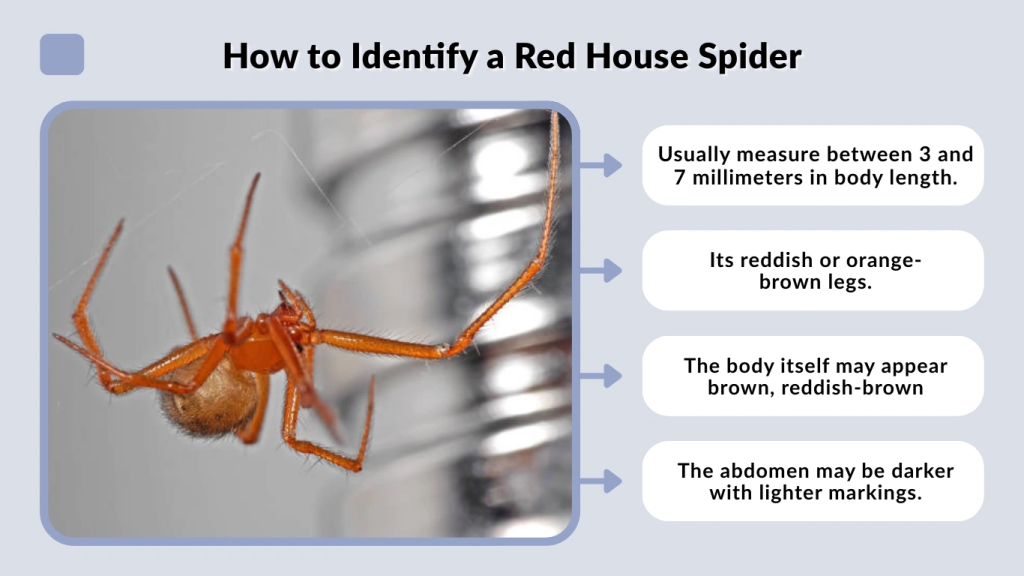
Although it is small, the red house spider has several distinct features that make it recognizable. Understanding its appearance can help people distinguish it from other spiders commonly found in homes.
Size and Body Structure
Red house spiders are relatively small spiders. Adult spiders usually measure between 3 and 7 millimeters in body length. As with many spider species, females are typically larger than males.
Their bodies have a rounded abdomen and relatively slender legs. The abdomen is often slightly bulb-shaped, which is typical for cobweb spiders. Despite their small size, these spiders can be easily noticed when sitting in their webs.
Color and Appearance
One of the most noticeable features of the red house spider is its reddish or orange-brown legs. These legs give the spider its common name. The body itself may appear brown, reddish-brown, or sometimes darker in color.
The abdomen may display faint patterns or markings, though these can vary between individuals. In some cases, the spider may appear almost entirely reddish-brown, while in others the abdomen may be darker with lighter markings.
This coloration allows the spider to blend into corners, wooden surfaces, and other indoor structures where it builds its web.
Web Structure
Red house spiders build irregular, tangled webs rather than neat circular ones. These webs are commonly referred to as cobwebs. They consist of sticky silk threads arranged in a messy network designed to trap small insects.
These webs are often found in quiet areas such as ceiling corners, behind furniture, or inside storage spaces. Once an insect becomes stuck in the sticky threads, the spider quickly moves in to capture it.
Habitat and Distribution
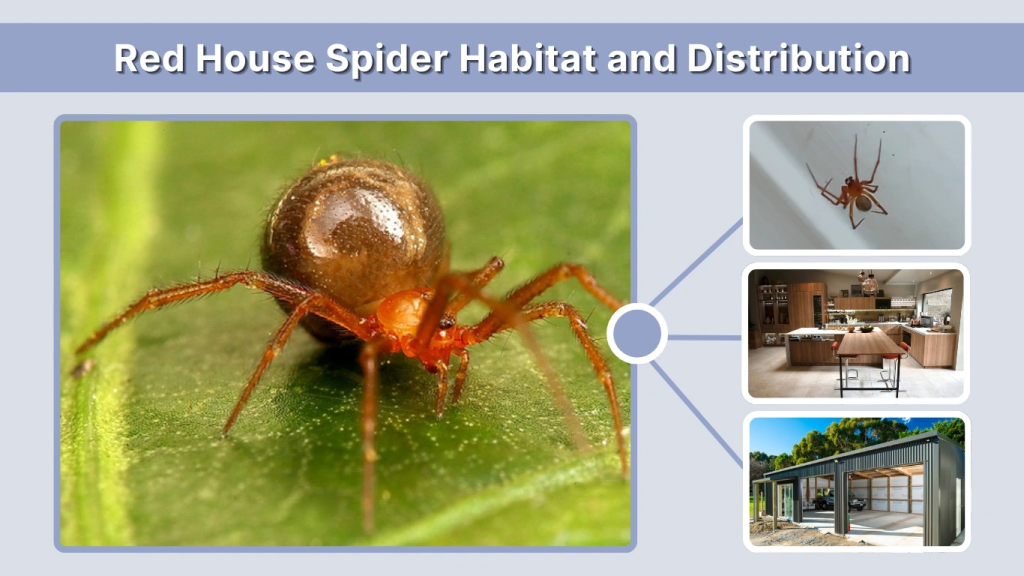
The red house spider is highly adaptable and can live in many different environments. It is especially successful in places where human structures provide shelter and food sources.
Geographic Distribution
This spider species is widely distributed throughout the world. It is commonly found in tropical and subtropical regions across North America, South America, Asia, Africa, and Australia.
Because of its close association with human buildings, the red house spider can appear almost anywhere people live. Its spread across continents has largely been aided by global trade and transportation.
Common Indoor Locations
Inside homes and buildings, red house spiders prefer areas that are quiet and undisturbed. These locations provide ideal places for building webs and waiting for prey.
Common indoor locations include:
- Corners of ceilings
- Behind furniture or appliances
- Garages and sheds
- Basements or storage rooms
These areas often attract insects, which makes them perfect hunting spots for the spider.
Outdoor Habitats
Although they are frequently found indoors, red house spiders can also live outside. Outdoors, they often build webs around structures that provide shelter and access to insects.
You might find them around window frames, under roof edges, or near outdoor lights where insects gather at night. Gardens, fences, and walls can also provide suitable locations for their webs.
Behavior of Red House Spiders
Red house spiders are quiet and secretive creatures that spend most of their time in or near their webs. Unlike hunting spiders that actively chase prey, these spiders rely on their webs to capture insects. Their behavior is generally calm, and they tend to avoid interaction with humans whenever possible.
Web-Building Behavior
The red house spider builds tangled, irregular webs commonly known as cobwebs. These webs are made of sticky silk threads designed to trap small insects that accidentally fly or crawl into them.
The spider usually stays close to the web, waiting for vibrations that signal trapped prey. When an insect becomes caught, the spider quickly moves toward it and wraps it tightly in silk before delivering a venomous bite.
Because their webs are not symmetrical like those of orb-weaving spiders, they often appear messy or disorganized. However, these webs are very effective at trapping insects.
Activity Patterns
Red house spiders are mostly nocturnal, meaning they are more active at night. During the daytime, they often remain hidden in dark corners or inside their webs.
At night, when many insects become active, the spider monitors its web closely for movement. This nighttime activity helps them capture prey more easily and avoid many predators.
Defensive Behavior
Red house spiders are generally shy and non-aggressive. If they feel threatened, their first instinct is usually to retreat deeper into their web or hide in a nearby crack or corner.
They rarely attempt to bite unless they are directly handled or trapped against the skin. Even in such cases, bites are uncommon.
Diet and Hunting Strategy
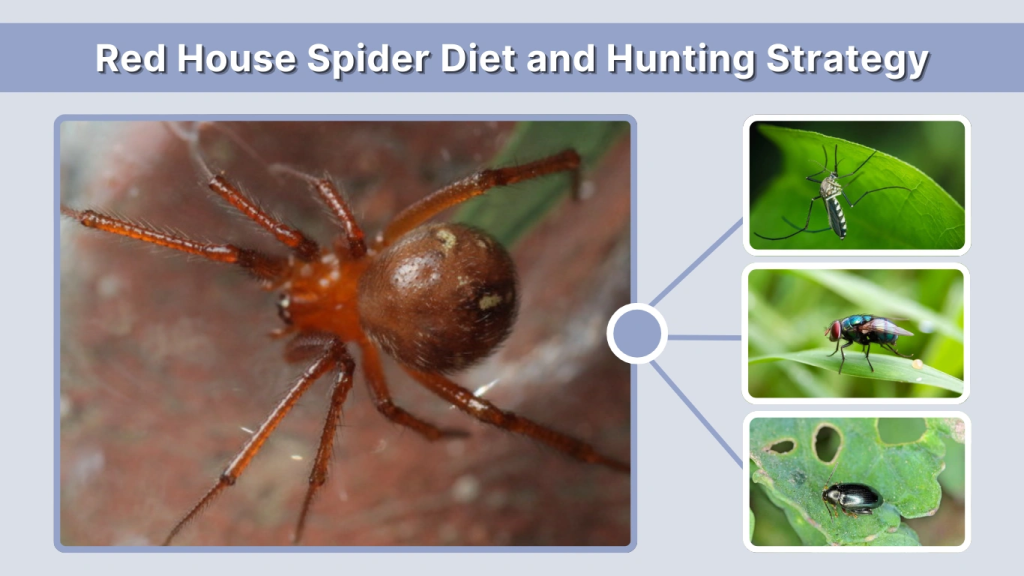
The red house spider plays an important role in controlling insect populations. By feeding on a variety of small insects, these spiders help reduce pests inside homes and buildings.
Common Prey
Red house spiders feed primarily on small insects that become trapped in their webs. Some of their most common prey include:
- Flies
- Mosquitoes
- Ants
- Small beetles
- Gnats and other tiny insects
Because their webs are often located in places where insects gather, they are able to capture prey regularly.
How They Capture Prey
When an insect flies into the web, it becomes stuck in the sticky silk strands. The trapped insect struggles, creating vibrations that alert the spider.
The spider quickly rushes out from its hiding spot and begins wrapping the prey in silk. Once the insect is secured, the spider bites it and injects venom that immobilizes the prey. Afterward, the spider feeds by slowly consuming the liquefied tissues of the insect.
Role in Pest Control
Although many people may feel uncomfortable seeing spiders indoors, red house spiders can actually be beneficial. By feeding on flies, mosquitoes, and other insects, they help keep pest populations under control.
In homes where insects are common, these spiders may help reduce the number of pests without the need for chemical insecticides.
Life Cycle of the Red House Spider
Like most spiders, the red house spider goes through several stages during its life cycle, from egg to adult.
Mating Behavior
When it is time to reproduce, the male spider carefully approaches the female’s web. Because the female may mistake him for prey, the male usually moves slowly and cautiously.
If the female recognizes him as a potential mate rather than food, mating can take place. After mating, the male usually leaves the web.
Egg Sacs
The female spider produces small silk egg sacs that contain many eggs. These sacs are often attached to the web or hidden nearby in a protected area.
The silk covering protects the eggs from predators and environmental conditions while they develop.
Spiderling Development
After several weeks, the eggs hatch into tiny spiderlings. These young spiders often remain near the egg sac for a short period before dispersing to find their own space.
As they grow, spiderlings molt several times. Molting is the process of shedding their outer skeleton so their bodies can expand. After several molts, they reach adulthood and begin building their own webs.
Are Red House Spiders Dangerous?
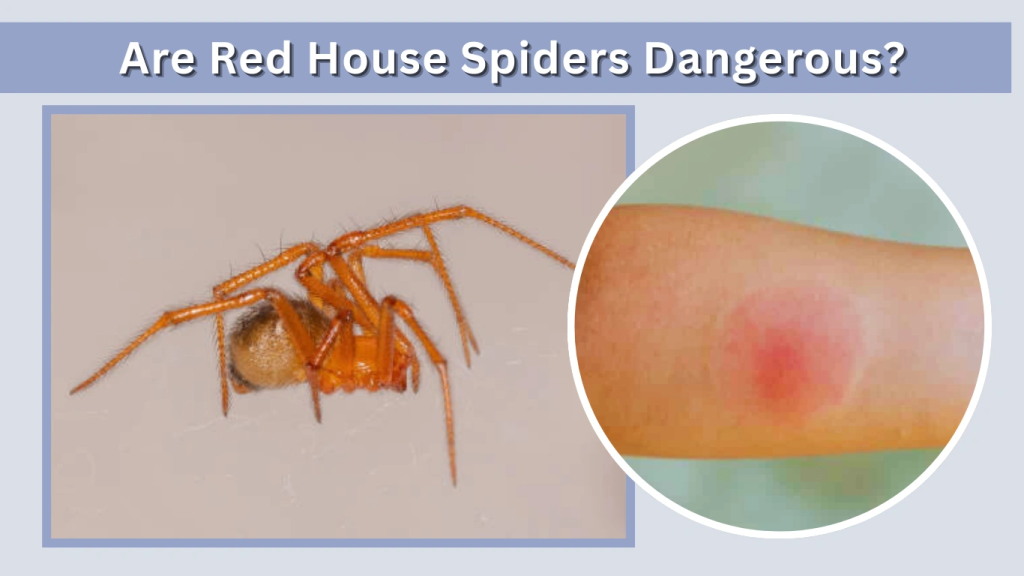
Many people worry about the presence of spiders in their homes, but red house spiders are generally harmless.
Venom and Bite Risk
Like most spiders, red house spiders have venom that they use to subdue their prey. However, their venom is not considered dangerous to humans.
Bites from this species are extremely rare because the spiders usually avoid contact with people.
Possible Bite Symptoms
In the unlikely event that a bite occurs, symptoms are usually mild. A bite may cause minor redness, slight swelling, or mild irritation similar to a small insect bite.
Serious reactions are very uncommon.
Interaction with Humans
Red house spiders typically prefer to stay hidden and avoid human activity. When disturbed, they usually retreat quickly rather than defend themselves.
Because of this behavior, they rarely cause problems in homes.
Interesting Facts About Red House Spiders
There are several interesting facts about this common household spider:
- They are found around the world due to human travel and trade.
- Their webs are irregular and messy compared to the symmetrical webs of many spiders.
- Females often remain in the same web for long periods.
- They can survive indoors for months as long as insects are available.
These features make them well adapted to living near human environments.
How to Prevent Red House Spiders in Your Home
Although these spiders are harmless, some people prefer to reduce their presence indoors.
Regular Cleaning
One of the simplest ways to discourage red house spiders is by removing webs regularly. Vacuuming corners, ceilings, and hidden areas can help prevent spiders from settling in.
Reduce Indoor Insects
Because spiders follow their food sources, reducing insects inside the home can help discourage them. Keeping food sealed, using screens on windows, and turning off unnecessary lights at night can help reduce insect activity.
Seal Entry Points
Spiders often enter homes through small cracks or gaps around windows and doors. Sealing these openings and repairing damaged screens can help prevent them from getting inside.
Conclusion
The red house spider is a small but adaptable spider that commonly lives in homes and buildings around the world. Recognizable by its reddish legs and tangled cobwebs, this spider quietly hunts insects and helps control household pests. Although many people may feel uneasy about spiders indoors, the red house spider is generally harmless and rarely bites. Understanding its behavior and benefits can help people appreciate its role in keeping insect populations under control.