
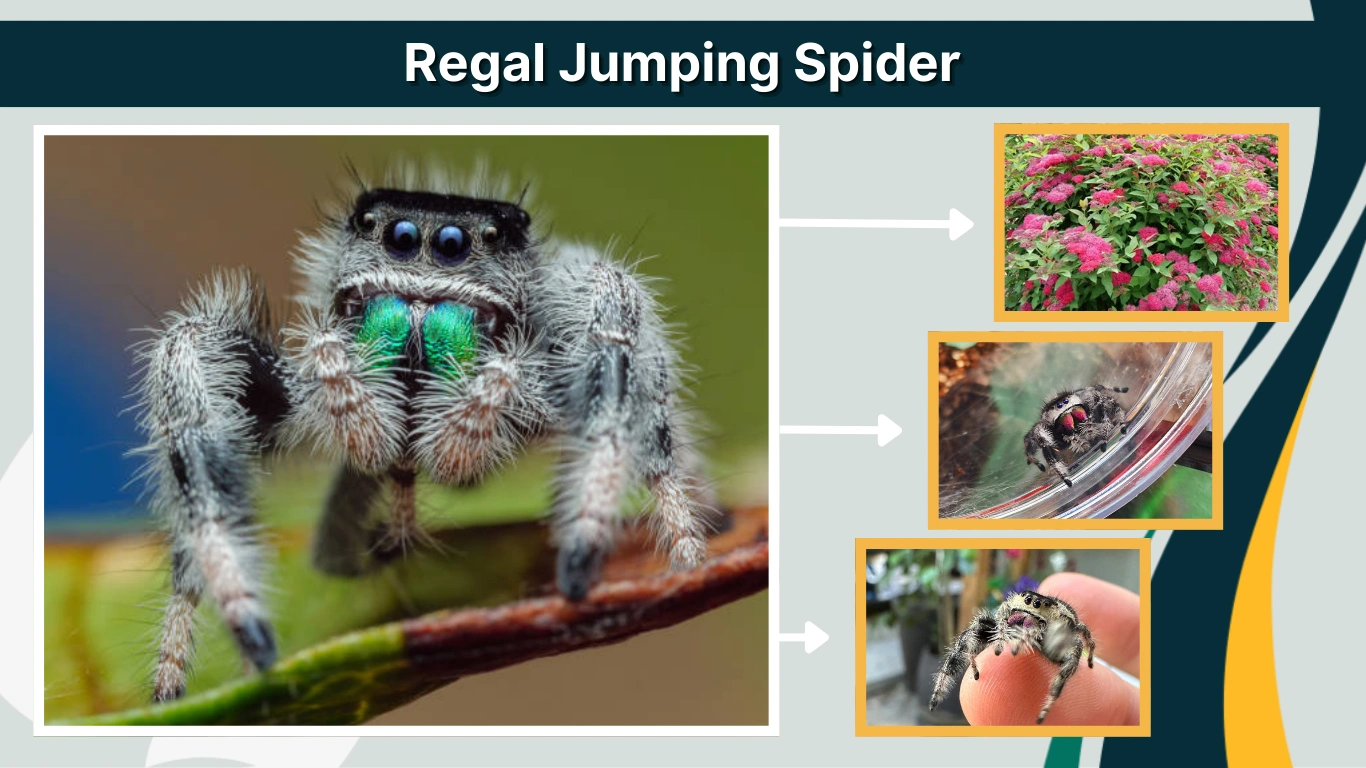
The Regal Jumping Spider (Phidippus regius) is one of the most fascinating arachnids in North America. Known for its impressive size, striking colors, and curious behavior, this spider has gained popularity among enthusiasts and pet owners. Native to Florida and nearby regions, it’s admired for being harmless to humans yet fierce hunters in the insect world. In this guide, we’ll explore their size, lifespan, male vs female differences, care needs, and how they compare with other jumping spiders like the bold jumping spider.
What is a Regal Jumping Spider?
The Regal Jumping Spider, scientifically known as Phidippus regius, belongs to the Salticidae family, which includes all jumping spiders. Unlike web-building spiders, they rely on their powerful eyesight and agility to stalk and pounce on prey. These spiders are most commonly found in Florida, parts of the southeastern United States, and the Caribbean.
Their name “regal” reflects their striking appearance and bold personality. With large front-facing eyes and the ability to leap several times their body length, they display intelligence and curiosity uncommon in many other spiders.
Regal Jumping Spider Size and Growth
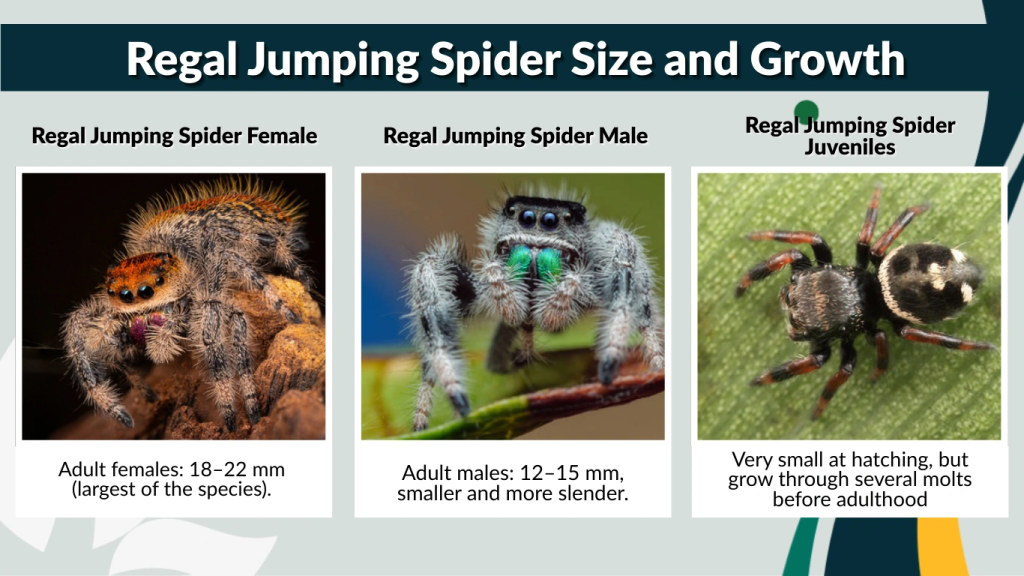
Size Chart and Stages
- Adult females: 18–22 mm (largest of the species).
- Adult males: 12–15 mm, smaller and more slender.
- Juveniles: Very small at hatching, but grow through several molts before adulthood.
These spiders are considered large among jumping spiders, especially the females, which can appear stocky compared to males. Their size contributes to their reputation as one of the most impressive members of their family.
Full Grown Appearance
A fully grown regal jumping spider has a robust body with thick, hairy legs. They have iridescent chelicerae (mouthparts), which often shimmer green or blue in males. Females show more variety in body color, ranging from white and orange to brown. This color variation is one reason they are so admired by spider enthusiasts.
Regal Jumping Spider Lifespan and Life Cycle

Lifespan
In the wild, regal jumping spiders typically live between one and two years. However, in captivity—where they are protected from predators and have a consistent food supply—they can live longer, often reaching two to three years with proper care.
Life Cycle Stages
- Egg Stage: Females lay eggs in a silken sac.
- Spiderlings (babies): Tiny versions of adults that disperse shortly after hatching.
- Juvenile Stage: They molt several times as they grow, gradually developing adult coloration and patterns.
- Adult Stage: Fully developed males and females, capable of mating and hunting larger prey.
Their development is influenced by food availability and environmental conditions, which is why captive spiders often outlive their wild counterparts.
Male vs Female Regal Jumping Spider

Identification Differences
- Size: Females are larger and bulkier.
- Coloration:
- Females: Often white, orange, or brown with patterns across their abdomen.
- Males: Typically black with striking iridescent green or blue chelicerae.
- Females: Often white, orange, or brown with patterns across their abdomen.
- Behavior: Males are more active and often bolder, while females appear more robust and cautious.
Side by Side Comparison
When observed side by side, it’s easy to see the difference. A male appears lean, dark, and more agile, while a female looks bigger and can be more vibrantly colored. This difference is important for breeders and hobbyists who want to identify their spiders correctly.
Regal Jumping Spider Colors and Morphs

One of the most attractive features of the regal jumping spider is its color variation. Unlike many spiders that stick to browns and greys, regals show off a wider palette.
- White Morph: Especially common in females, featuring pale markings.
- Orange Morph: Vibrant and popular in the pet trade.
- Black Morph: Often seen in males with their shiny black bodies.
- Brown Morph: Less common but provides camouflage in natural habitats.
In Florida, regal jumping spiders show an even greater variety of colors, making them a fascinating species for researchers and collectors alike.
Habitat and Range

The regal jumping spider’s natural range includes Florida, other southeastern U.S. states, the Bahamas, and parts of the Caribbean. They thrive in warm, humid environments, which makes Florida one of the best places to spot them.
Typical habitats include:
- Gardens and shrubs
- Tree bark and branches
- Wooden fences and outdoor walls
- Occasionally inside homes near windows or doorways
They do not spin traditional webs for catching prey but use silk to build retreats or create egg sacs. Their strong jumping ability allows them to hunt efficiently in open spaces.
Regal Jumping Spider Bite – Are They Dangerous?
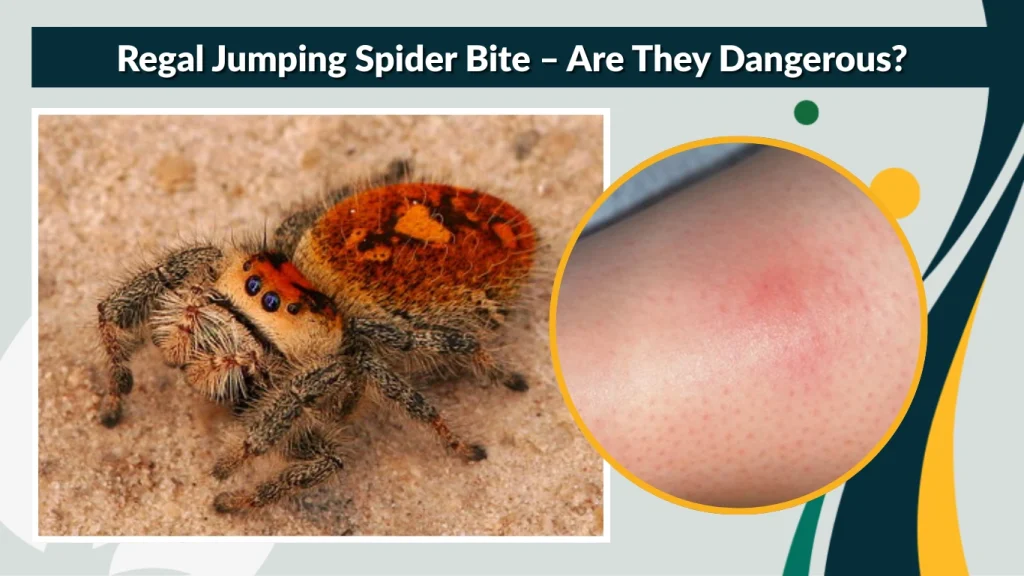
Despite their fierce appearance, regal jumping spiders are not dangerous to humans. They do have venom, but it is designed for subduing small insects, not harming people.
- To Humans: A bite is very rare and usually harmless. At most, it may cause mild redness, slight swelling, or itching, similar to a mosquito bite.
- To Prey: Their venom is highly effective against insects, paralyzing them quickly so the spider can feed.
Because they are curious but not aggressive, regals often make excellent display pets. Handling them should still be done carefully, as they can jump suddenly and stress easily.
Caring for a Regal Jumping Spider as a Pet
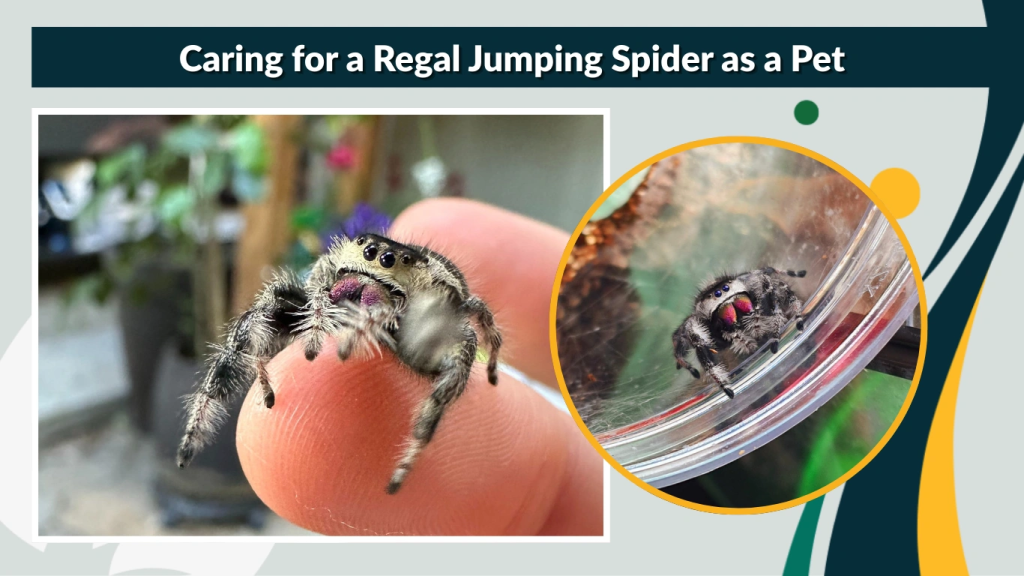
Regal jumping spiders have become increasingly popular in the exotic pet hobby. Their manageable size, docile nature, and fascinating behaviors make them a great choice for beginners.
Enclosure Setup
A proper enclosure is essential to keep a regal jumping spider healthy. A small terrarium or acrylic enclosure around 5x5x8 inches is usually sufficient. Since they are arboreal, providing vertical climbing space is important. Include:
- Ventilation holes for airflow.
- Artificial or live plants for climbing and hiding.
- A secure lid to prevent escapes.
Humidity levels should be moderate, with light misting a few times a week. Room temperature (70–80°F / 21–27°C) is usually adequate.
Feeding & Diet
These spiders are skilled hunters and enjoy a diet of live insects. Common foods include:
- Fruit flies for spiderlings.
- Small crickets, roaches, and flies for juveniles and adults.
- Occasional mealworms or waxworms for variety.
Feeding is best done 2–3 times per week. They will not overeat, but uneaten prey should be removed to prevent stress.
Handling & Safety
While regal jumping spiders can be handled, it should be done gently and infrequently. They are quick jumpers and may leap off your hand if startled. To handle safely:
- Sit close to the ground or a soft surface.
- Allow the spider to walk onto your hand rather than grabbing it.
- Limit handling sessions to a few minutes.
With patience, many regals become comfortable being observed and may even display curious interactions with their owners.
Baby Regal Jumping Spider
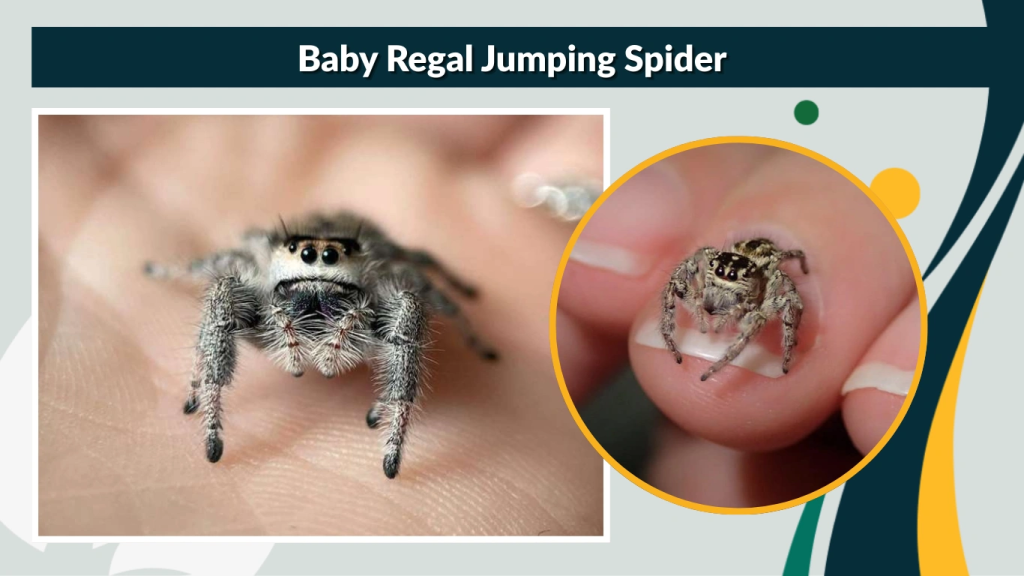
After mating, the female regal jumping spider produces an egg sac within a silk retreat. Spiderlings emerge after several weeks and disperse into the environment.
In captivity, raising baby regals requires careful attention. They need very small prey such as fruit flies or pinhead crickets. Their growth involves multiple molts, and during this time they are vulnerable. Providing plenty of hiding spots helps reduce stress.
Spiderlings are often sold or traded among hobbyists, making them accessible for those who want to raise their spider from a young age.
Regal Jumping Spider vs Bold Jumping Spider
The regal and the bold jumping spider (Phidippus audax) are often confused because they share similar traits. However, there are clear distinctions.
Physical Comparison
- Regal Jumping Spider (Phidippus regius): Larger overall, with females reaching up to 22 mm. Displays greater color variety including orange, white, and brown morphs.
- Bold Jumping Spider (Phidippus audax): Smaller in size (10–18 mm). Usually black with three distinctive orange or white spots on the abdomen.
Behavior and Habitat
Both species are active hunters with excellent eyesight. The bold jumping spider has a wider range across North America, while the regal is more concentrated in Florida and the Caribbean. In terms of temperament, both are generally harmless to humans, though regals tend to be calmer when kept in captivity.
Regal Jumping Spider for Sale & Price
With their rising popularity, regal jumping spiders are often available in the exotic pet market. Prices vary depending on age, color morph, and breeder reputation.
- Spiderlings: $20–$30
- Juveniles: $30–$50
- Adults / Rare Morphs: $50–$60+
It is highly recommended to purchase from captive breeders rather than collecting from the wild. Captive-bred spiders are usually healthier, free from parasites, and adapted to enclosures.
FAQs
How long does a regal jumping spider live?
Regal jumping spiders typically live 1–2 years in the wild, but with proper care in captivity, they can survive up to 3 years.
Are regal jumping spiders poisonous to humans?
No, they are not dangerous. While they have venom to subdue insects, it only causes mild irritation at most in humans.
What’s the difference between a male and female regal jumping spider?
Females are larger and often show more color variation, while males are smaller, darker, and have bright iridescent mouthparts.
Can you keep a regal jumping spider as a pet?
Yes, many hobbyists keep them. They are relatively low-maintenance, needing a small enclosure, live food, and moderate humidity.
How big do regal jumping spiders get?
Adult females can reach 18–22 mm, making them among the largest jumping spiders. Males are smaller, around 12–15 mm.