
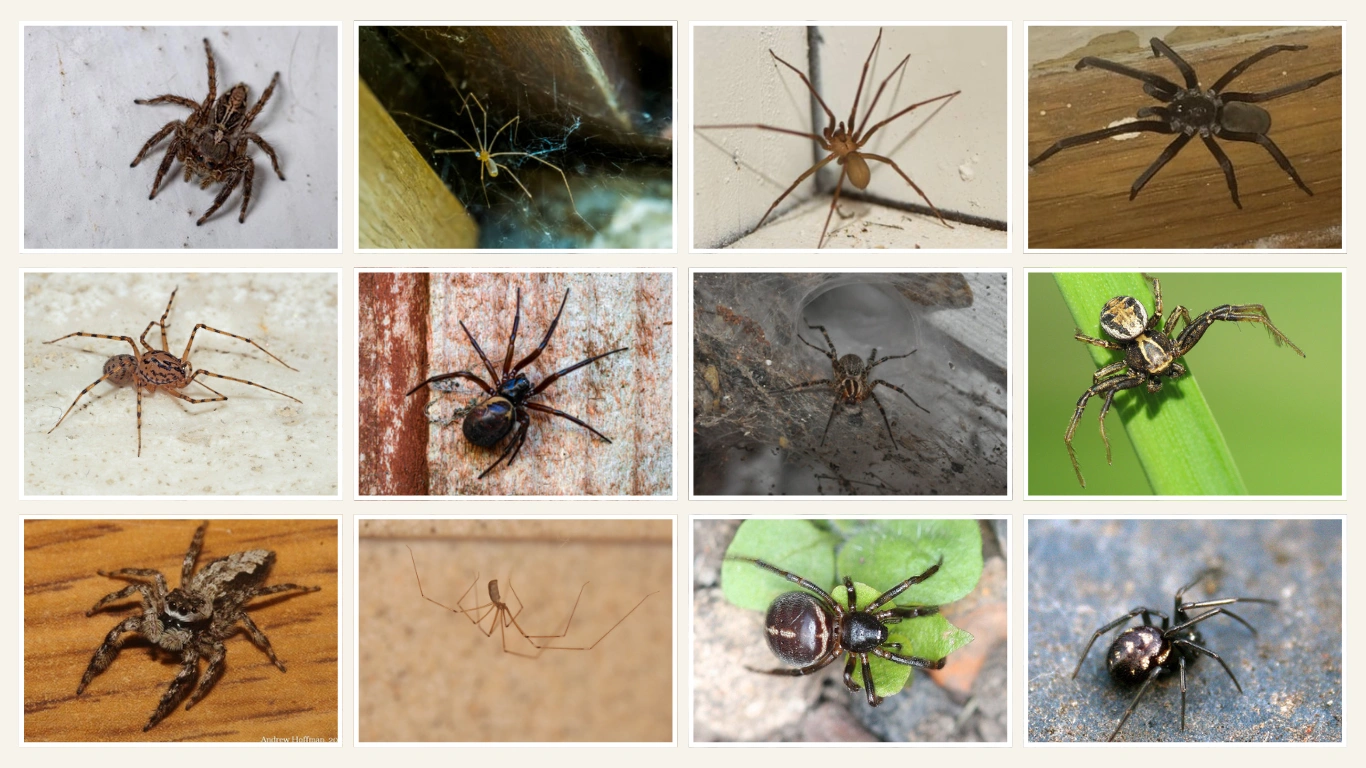
Small brown spiders are some of the most common household arachnids, often seen scurrying across walls or hiding in quiet corners. Though their size and color make them easy to overlook, each species has its own habits, appearance, and role in the home ecosystem.
In this guide, we’ll explore 12 small brown spiders frequently found indoors across various U.S. states—from harmless cobweb weavers to occasional wanderers.
1. Common House Spider (Parasteatoda tepidariorum)
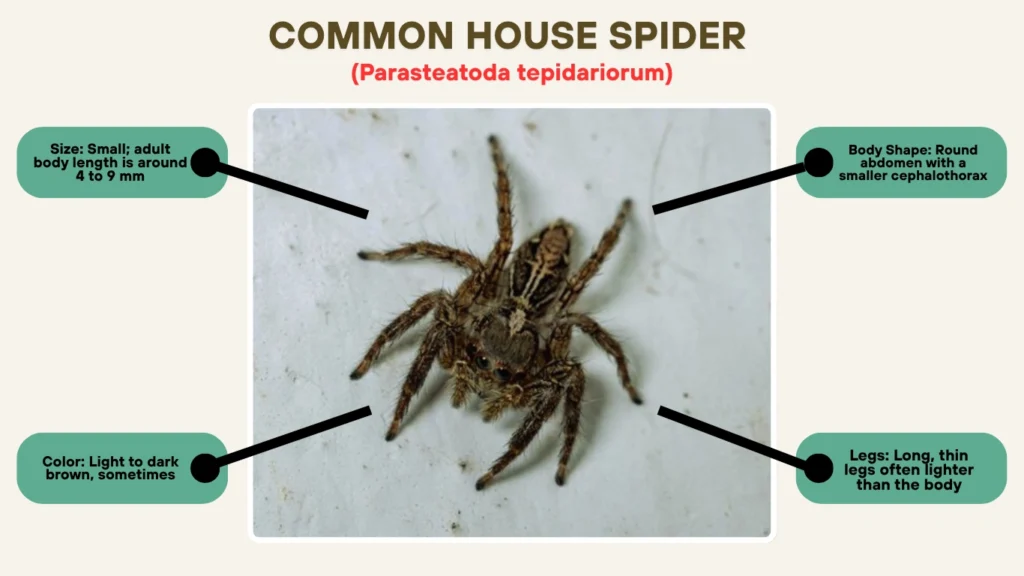
The Common House Spider is one of the most frequently seen small brown spiders found inside homes. Often hiding in quiet corners, basements, or ceilings, this spider is known for its messy cobwebs and harmless nature. Its small size and brownish body allow it to blend into domestic settings easily, making it a familiar but often unnoticed resident.
Identification
- Size: Small; adult body length is around 4 to 9 mm
- Color: Light to dark brown, sometimes with subtle patterns on the abdomen
- Body Shape: Round abdomen with a smaller cephalothorax
- Legs: Long, thin legs often lighter than the body
- Markings: Some individuals may have faint white or darker brown markings on the back
Habitat and Behavior
The Common House Spider thrives in man-made environments. It prefers undisturbed indoor locations like closets, attics, basements, and behind furniture. Outdoors, it may also be found around sheds, under eaves, or tucked inside hollow logs. This spider spins tangled webs to catch prey and rarely ventures far once it establishes a web.
Bite and Human Interaction
While these spiders can bite, they are not aggressive and only do so when provoked. Their bites are considered medically insignificant, causing minimal symptoms like slight redness or itching. Most people live peacefully alongside this spider without ever noticing it.
Distribution
The Common House Spider is widespread across the United States, including states like California, Texas, Florida, North Carolina, Georgia, and Colorado. It’s adaptable and survives well in both warm and cooler indoor climates, making it a true household companion across the country.
2. Cellar Spider (Pholcus phalangioides)
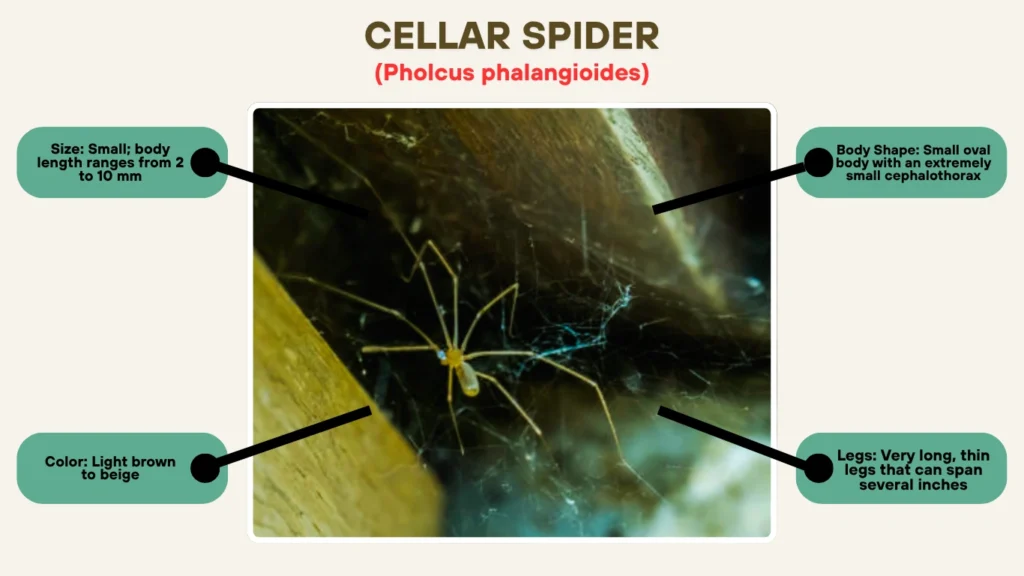
The Cellar Spider, often mistaken for a daddy longlegs, is a delicate, small brown spider known for its long, thin legs and tiny body. Common in homes, basements, and crawl spaces, its presence is usually non-threatening and even beneficial, as it feeds on other household pests. Despite its spindly legs, its actual body size is quite small.
Identification
- Size: Small; body length ranges from 2 to 10 mm
- Color: Light brown to beige with a slightly translucent appearance
- Body Shape: Small oval body with an extremely small cephalothorax
- Legs: Very long, thin legs that can span several inches
- Markings: May have faint grayish or darker spots on the body
Habitat and Behavior
This spider prefers dark, humid areas like cellars, bathrooms, basements, and corners of ceilings. It builds irregular webs and often hangs upside down. When disturbed, it vibrates rapidly in its web, creating a blur that makes it harder for predators to focus on it.
Bite and Human Interaction
Though urban legends claim they have the most venomous bite but can’t penetrate human skin, this is false. They rarely bite, and their venom is mild. They are safe around humans and actually help reduce populations of other indoor pests.
Distribution
Cellar Spiders are common in all regions of the United States and thrive indoors. They can be found year-round and are especially common in places like Florida, Texas, and Tennessee due to their preference for warmth and humidity.
3. Brown Recluse Spider (Loxosceles reclusa)
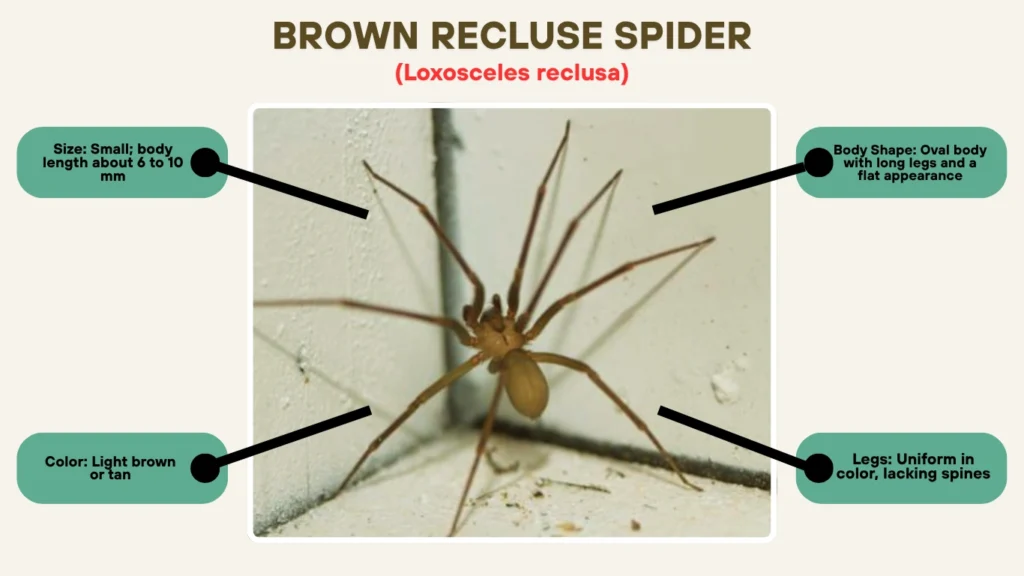
The Brown Recluse is a small, light brown spider often associated with serious bites, although encounters are rare. It’s one of the most medically significant spiders in the U.S. Despite its reputation, it is not aggressive and tends to remain hidden in dark, undisturbed places. Its small size and brown coloration often lead to confusion with harmless house spiders.
Identification
- Size: Small; body length about 6 to 10 mm
- Color: Light brown or tan
- Body Shape: Oval body with long legs and a flat appearance
- Legs: Uniform in color, lacking spines
- Markings: Distinct dark violin-shaped mark on its back
Habitat and Behavior
Brown Recluses prefer dark, quiet areas like closets, attics, sheds, and beneath furniture. Outdoors, they may hide under rocks, woodpiles, or debris. They build irregular webs but are often seen roaming at night in search of food rather than staying in webs.
Bite and Human Interaction
Unlike most small brown spiders, the Brown Recluse can cause medically significant bites, especially if pressed against skin. However, bites are rare and occur mostly when the spider is disturbed. Symptoms may include redness, swelling, and in some cases, necrosis, requiring medical attention.
Distribution
Brown Recluse spiders are primarily found in the central and southern United States, including Texas, Tennessee, Georgia, and parts of Oklahoma and Arkansas. Their range is limited, and true infestations are uncommon outside their native region.
4. American House Spider (Kukulcania hibernalis)
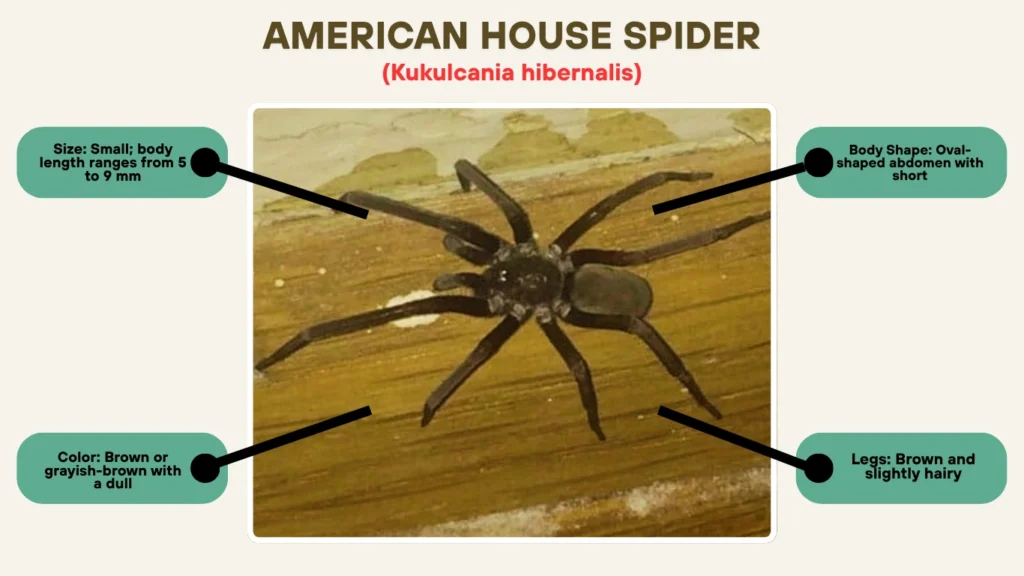
The American House Spider is another small brown spider commonly found in homes, especially in the southern and eastern parts of the United States. It often goes unnoticed because of its reclusive nature and neutral brown coloring. While it resembles other cobweb weavers, this spider is slightly more robust and tends to hide in cracks or behind furniture.
Identification
- Size: Small; body length ranges from 5 to 9 mm
- Color: Brown or grayish-brown with a dull, non-glossy appearance
- Body Shape: Oval-shaped abdomen with short, compact cephalothorax
- Legs: Brown and slightly hairy
- Markings: May have faint markings or stripes, but often blends in with surroundings
Habitat and Behavior
This spider is a web builder, creating irregular cobwebs in quiet areas such as behind cabinets, under appliances, or near baseboards. It’s not aggressive and rarely seen out in the open. It patiently waits in its web for insects to become trapped and feeds mostly at night.
Bite and Human Interaction
Bites from the American House Spider are rare and usually harmless. If bitten, symptoms are mild and may include slight swelling or redness. Its presence indoors is typically more beneficial than dangerous, as it helps control insect populations.
Distribution
This spider is commonly found in the southeastern United States, including states like Florida, Georgia, and Texas. Its preference for indoor habitats makes it a regular sight in homes year-round, especially in warmer climates.
5. Spitting Spider (Scytodes thoracica)

The Spitting Spider stands out for its unique hunting method—it spits a sticky, venomous silk to trap its prey. Despite this fascinating behavior, it’s a small brown spider that often lives indoors and doesn’t pose a threat to humans. Its slow movements and domed head make it easy to recognize once spotted.
Identification
- Size: Small; body length around 3 to 6 mm
- Color: Light brown or tan with darker brown spots
- Body Shape: Rounded, bulbous body with a raised cephalothorax
- Legs: Thin legs with a speckled appearance
- Markings: Characteristic brown spots or speckles across the body
Habitat and Behavior
Spitting Spiders prefer quiet corners inside homes, garages, and sheds. They do not build webs to catch prey in the traditional sense. Instead, they actively hunt and immobilize prey using their unique silk-spitting technique. They’re nocturnal and slow-moving, often hiding during the day.
Bite and Human Interaction
Although their hunting style seems aggressive, these spiders are harmless to humans. Their bite is rare and not medically significant. Most people never realize they’ve been sharing space with one, due to its discreet behavior.
Distribution
Spitting Spiders are found throughout much of the United States, especially in warmer regions like California, Texas, and Florida. They adapt well to indoor environments and can be found in both rural and urban homes.
6. False Widow Spider (Steatoda grossa)
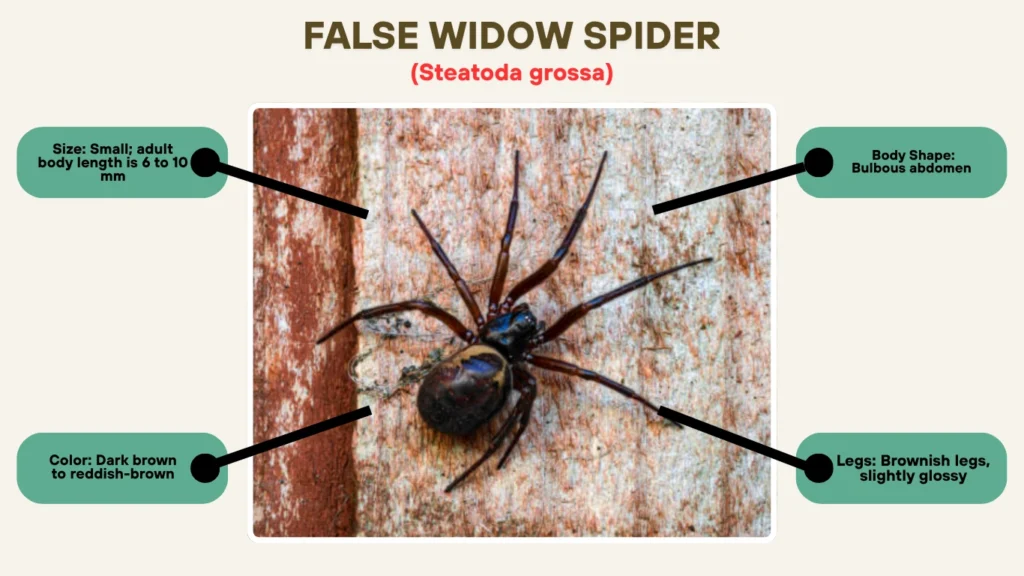
The False Widow Spider is a small brown spider often confused with the infamous black widow due to its shape and behavior. However, it is less dangerous and has a more subdued brown coloring. Its compact size and tendency to stay hidden make it a common yet overlooked presence in homes.
Identification
- Size: Small; adult body length is 6 to 10 mm
- Color: Dark brown to reddish-brown, sometimes purplish
- Body Shape: Bulbous abdomen and relatively small cephalothorax
- Legs: Brownish legs, slightly glossy
- Markings: Some may have faint patterns or lighter-colored markings, but not always visible
Habitat and Behavior
False Widow Spiders prefer dark, sheltered places indoors—closets, basements, and garages are common hiding spots. They build irregular webs and wait patiently for prey. Unlike aggressive spiders, they tend to stay motionless in their web unless disturbed or hungry.
Bite and Human Interaction
Although their bite can cause mild discomfort, including redness or a burning sensation, it’s not considered dangerous. Most bites occur when the spider feels trapped, such as inside clothing or bedding. They are shy by nature and prefer to avoid contact.
Distribution
These spiders are commonly found in both urban and suburban homes across the United States, especially in coastal states like California, Texas, and Florida. They thrive indoors and can live undetected in human environments for long periods.
7. Funnel-Web Grass Spider (Agelenopsis spp.)
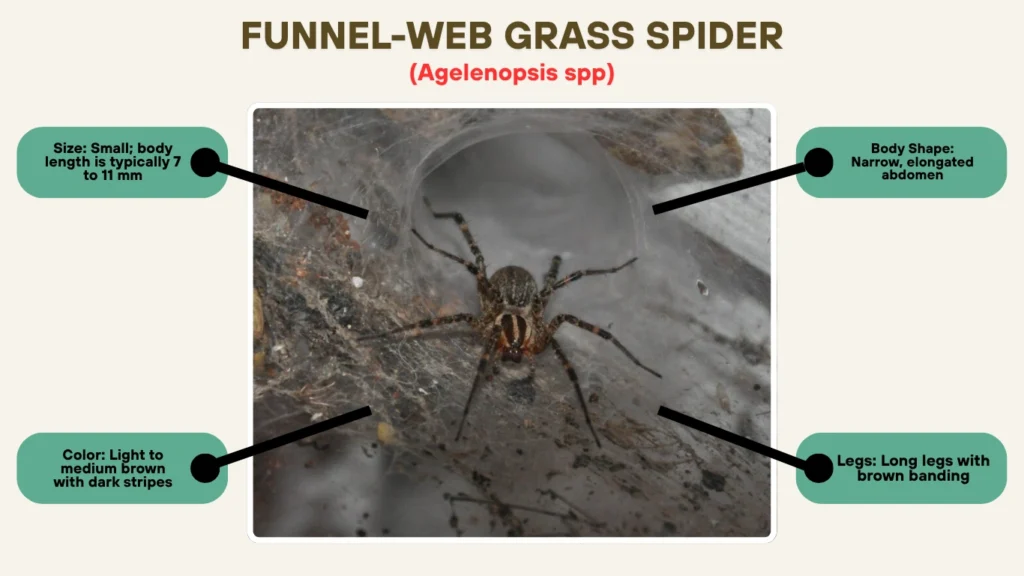
Funnel-Web Grass Spiders are small, quick brown spiders commonly seen in gardens and yards, but they may also wander into homes. Known for their distinctive horizontal webs with a funnel-like retreat, they are more active during warm months and are harmless to humans.
Identification
- Size: Small; body length is typically 7 to 11 mm
- Color: Light to medium brown with dark stripes on the cephalothorax
- Body Shape: Narrow, elongated abdomen with a slightly flattened appearance
- Legs: Long legs with brown banding
- Markings: Darker longitudinal stripes on the head and sometimes faint markings on the body
Habitat and Behavior
These spiders prefer grassy areas, shrubs, and the base of walls or trees outdoors. When they enter homes, they typically seek shelter in cracks, corners, or windowsills. They are not web-wanderers; instead, they wait at the end of their funnel for prey to pass by.
Bite and Human Interaction
Funnel-Web Grass Spiders are not aggressive and very rarely bite. If they do, symptoms are mild and may include slight irritation. Their main benefit lies in pest control, feeding on insects that get caught in their webs.
Distribution
This spider is common throughout North America, especially in states like Colorado, Georgia, and North Carolina. While often outdoors, it may occasionally be found indoors during cooler seasons or when disturbed from its natural habitat.
8. Crab Spider (Xysticus spp.)
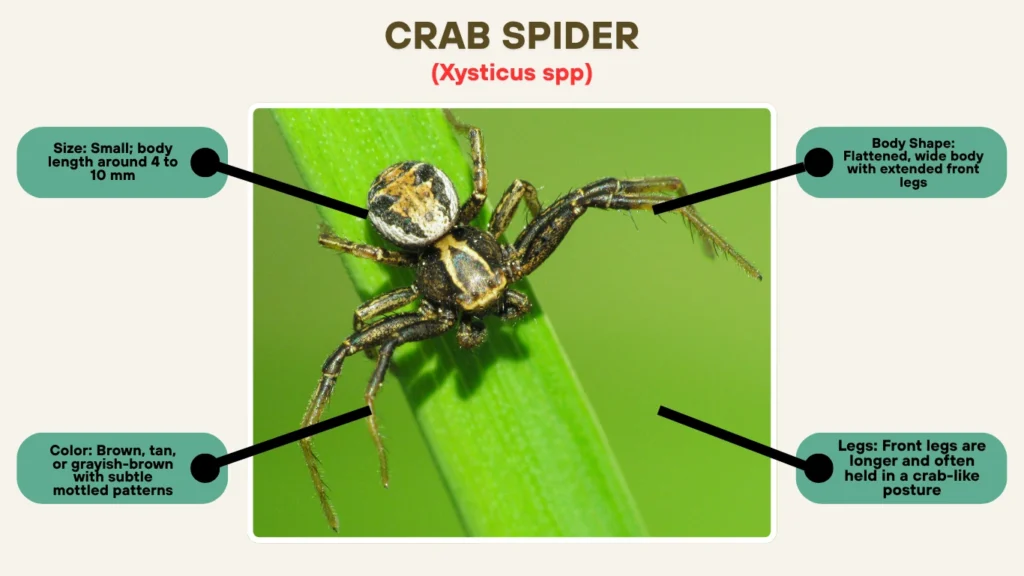
Crab Spiders are small brown spiders known for their crab-like stance and ability to walk sideways. Though they’re most commonly found outdoors on flowers or plants, some may find their way inside homes, especially in warmer regions. Their compact size and muted colors make them hard to spot.
Identification
- Size: Small; body length around 4 to 10 mm
- Color: Brown, tan, or grayish-brown with subtle mottled patterns
- Body Shape: Flattened, wide body with extended front legs
- Legs: Front legs are longer and often held in a crab-like posture
- Markings: Often have faint stripes or mottled patches on the back
Habitat and Behavior
Crab Spiders don’t build webs to catch prey. Instead, they are ambush hunters, staying still on surfaces like leaves, walls, or floors until an insect comes close. Indoors, they may be seen near windowsills or plants. They are solitary and inactive during the day, preferring stillness over movement.
Bite and Human Interaction
These spiders are not aggressive and are very unlikely to bite. Even if they do, the bite is harmless to humans and usually causes no more than minor skin irritation. They are more interested in catching flies or ants than interacting with people.
Distribution
Crab Spiders are found across most of the United States, including states like Texas, Florida, and California. Their excellent camouflage allows them to live undetected in both gardens and quiet corners of homes.
9. Woodlouse Spider (Dysdera crocata)
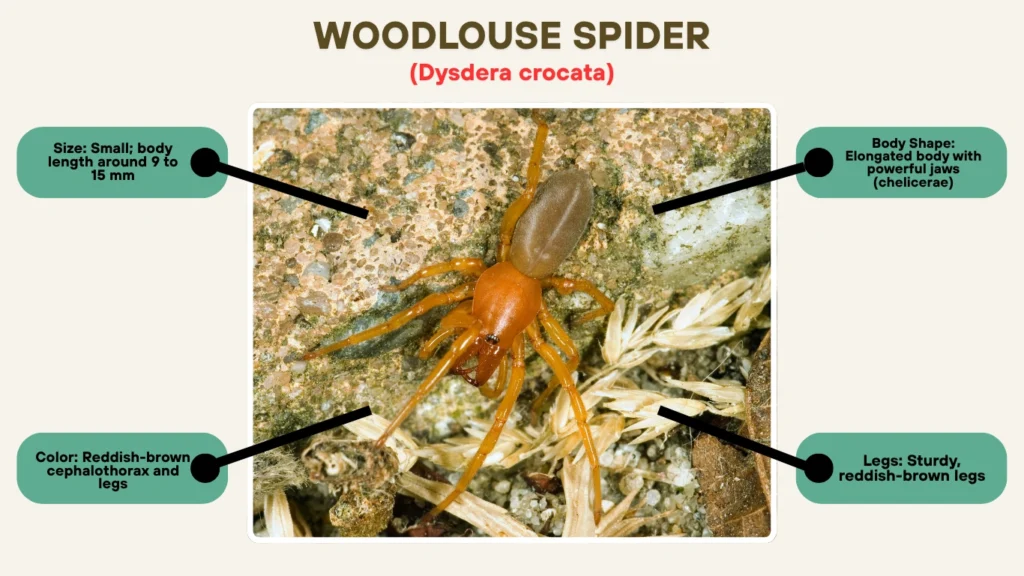
The Woodlouse Spider is a small reddish-brown spider known for its large fangs and preference for eating pill bugs (woodlice). It may occasionally be found indoors, especially in basements or under household clutter. Its unique appearance and color often cause confusion with more harmful species, but it is generally harmless.
Identification
- Size: Small; body length around 9 to 15 mm
- Color: Reddish-brown cephalothorax and legs, with a shiny, tan or brown abdomen
- Body Shape: Elongated body with powerful jaws (chelicerae)
- Legs: Sturdy, reddish-brown legs
- Markings: Lacks distinctive markings but is notable for its color contrast and shiny body
Habitat and Behavior
This spider prefers moist environments and hides under rocks, logs, and debris. Inside homes, it’s often found in bathrooms, basements, or behind baseboards. It actively hunts prey rather than using webs and is mostly seen at night.
Bite and Human Interaction
Though it has large fangs capable of piercing skin, its bite is typically mild, resulting in localized pain or redness. It does not seek human interaction and usually retreats when disturbed.
Distribution
The Woodlouse Spider is widespread in the U.S., especially in humid areas like Georgia, North Carolina, and coastal California. While it’s more common outdoors, it often wanders indoors during wet weather or when disturbed from its natural hiding places.
10. Tan Jumping Spider (Platycryptus undatus)

The Tan Jumping Spider is a small, curious brown spider known for its large front eyes and energetic movements. Unlike web-builders, it actively hunts during the day and is often seen indoors on walls or windowsills. Its compact body and natural camouflage help it blend into wood and concrete surfaces.
Identification
- Size: Small; body length ranges from 7 to 11 mm
- Color: Light brown or tan with darker wave-like patterns
- Body Shape: Flat, wide body with a square-shaped front
- Legs: Short, stout legs covered in fine hairs
- Markings: Dark brown or black wavy lines and faint stripes on the abdomen and head
Habitat and Behavior
This spider prefers vertical surfaces like tree bark, fences, walls, or ceilings. Inside homes, it often roams along window ledges and furniture in search of insects. It doesn’t spin webs to catch prey but uses silk to anchor itself while jumping. It’s highly alert and visually oriented, often turning to watch people who approach it.
Bite and Human Interaction
Jumping spiders are not aggressive and rarely bite. When they do, the bite is usually harmless, with minor redness or swelling. Their confident behavior and “curious” staring can be startling, but they are completely safe around humans.
Distribution
Tan Jumping Spiders are common across the United States, particularly in sunny states like Florida, Texas, and California. They are often found both indoors and outdoors and adapt well to human environments.
11. Long-Bodied Cellar Spider (Pholcidae family)
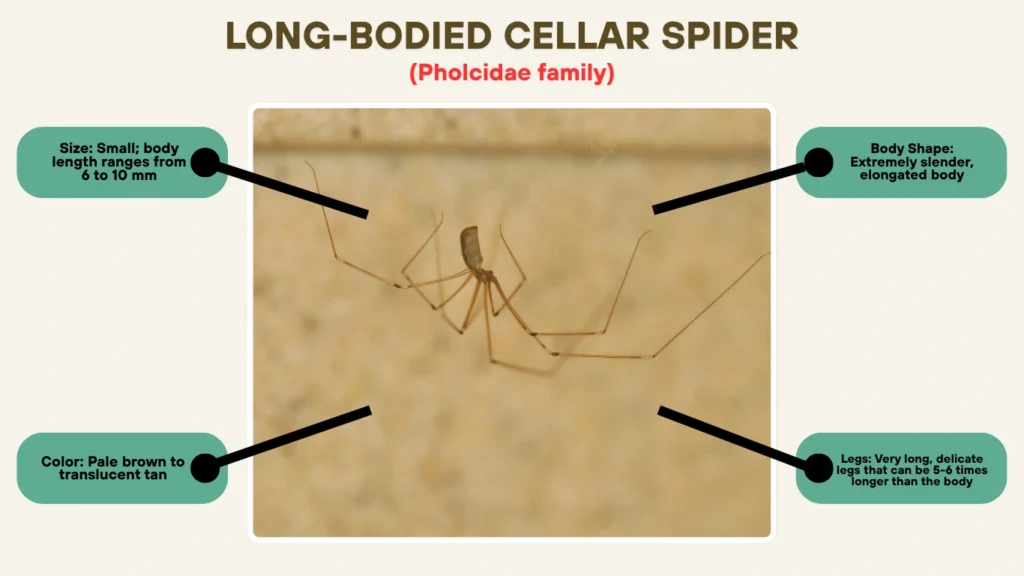
The Long-Bodied Cellar Spider is another spider often mistaken for a “daddy longlegs,” and while it resembles the standard Cellar Spider, it has an even more elongated body and legs. It’s one of the most recognizable small brown spiders seen in quiet, undisturbed areas of homes.
Identification
- Size: Small; body length ranges from 6 to 10 mm (legs can span much longer)
- Color: Pale brown to translucent tan
- Body Shape: Extremely slender, elongated body
- Legs: Very long, delicate legs that can be 5-6 times longer than the body
- Markings: May have faint spots or lines, though usually uniform in tone
Habitat and Behavior
This spider prefers quiet, damp locations like cellars, garages, or bathroom ceilings. It spins messy, irregular webs in corners and often hangs upside down while waiting for prey. When disturbed, it rapidly vibrates in place as a defense mechanism.
Bite and Human Interaction
While urban myths exaggerate its venom strength, the Long-Bodied Cellar Spider’s bite is harmless to humans. It is non-aggressive, does not wander far from its web, and often coexists with humans unnoticed.
Distribution
These spiders are widespread across the U.S., with particularly high visibility in basements and attics in states like North Carolina, Colorado, and Tennessee. They thrive in both warm and cool indoor environments.
12. Rabbit Hutch Spider (Steatoda bipunctata)

The Rabbit Hutch Spider is a small brown spider often found in and around human dwellings. Though not as widely known as some others, it belongs to the same family as the False Widow and shares a similar appearance. Its small size and subdued brown color help it go unnoticed in garages, sheds, and quiet corners of the home.
Identification
- Size: Small; body length is typically 4 to 7 mm
- Color: Reddish-brown to chestnut brown
- Body Shape: Rounded, shiny abdomen with a compact cephalothorax
- Legs: Brown legs with possible faint banding
- Markings: Often has two pale spots on the top of the abdomen (which give it the name “bipunctata”)
Habitat and Behavior
This spider favors outdoor structures like rabbit hutches, sheds, and fences, but it may wander indoors, especially in cooler seasons. It builds irregular cobwebs and stays hidden in crevices, only emerging when prey is detected. It is mostly nocturnal and reclusive by nature.
Bite and Human Interaction
Though it can bite when disturbed, the bite is mild and not medically significant. Most people never notice its presence, and it helps by feeding on flies and other small insects around homes and pet areas.
Distribution
The Rabbit Hutch Spider is found throughout North America, including regions like California, Texas, and Georgia. It is especially common in outdoor animal shelters and sheds, but its adaptability allows it to survive indoors as well.