

Both spider bites and mosquito bites are common, especially during warmer months—but they’re not the same. While a mosquito bite usually means temporary itchiness, a spider bite could indicate something more serious. Misreading the signs might lead to the wrong treatment or unnecessary worry.
In this guide, we’ll explore seven key differences between spider and mosquito bites, including how to identify each type based on appearance, symptoms, and potential risks. Whether you’re curious or dealing with a mystery bite, this breakdown can help you figure out what bit you.
Spider Bite vs Mosquito Bite

| Feature | Spider Bite | Mosquito Bite |
| Marks | Two small puncture points | Single raised bump |
| Pain | Mild to intense, may worsen | Minimal or no pain |
| Itching | Mild, comes later | Immediate and intense |
| Swelling | Localized, can spread or harden | Small, soft, and contained |
| Reaction Time | Delayed, hours after bite | Appears within minutes |
| Risk of Infection | Higher, especially with venom | Low unless scratched repeatedly |
| Systemic Symptoms | Possible in venomous bites | Rare unless disease is transmitted |
| Location | Covered or undisturbed body parts | Exposed areas like arms and neck |
| Time of Bite | Often at night | Common in early morning and evening |
1. Bite Appearance
Spider Bite Identification

- Often shows two small puncture marks
- May look red, swollen, and raised in the center
- Sometimes forms a blister or ulcer
- The skin may feel firm or warm to the touch
Mosquito Bite Identification
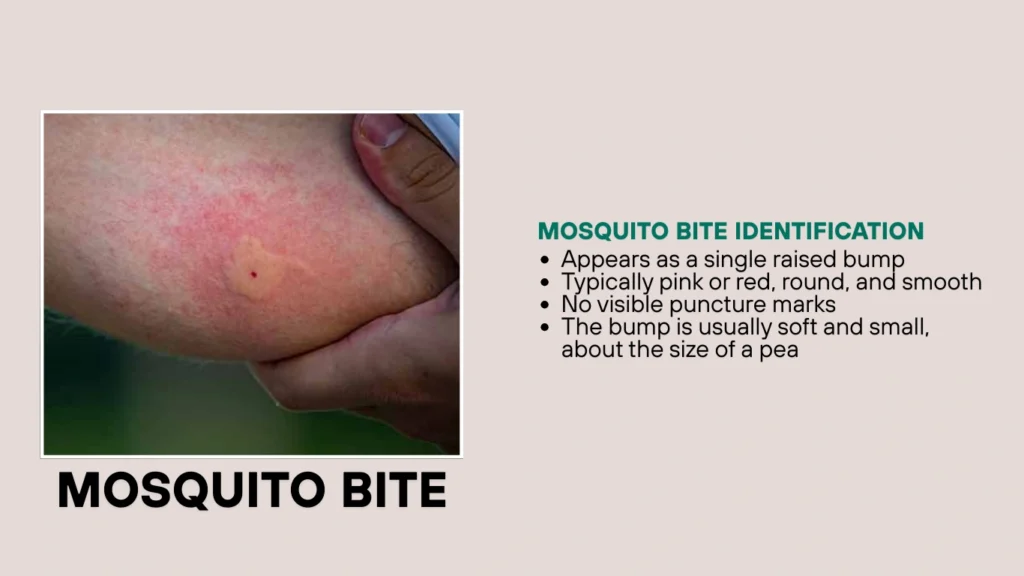
- Appears as a single raised bump
- Typically pink or red, round, and smooth
- No visible puncture marks
- The bump is usually soft and small, about the size of a pea
Spider bites can sometimes resemble pimples or small wounds, while mosquito bites are usually more superficial and uniform in look.
2. Itching and Pain
Spider Bite

Spider bites may cause mild to intense pain, depending on the species. Some bites feel like a sharp sting, while others cause a slow, burning discomfort. Itching can occur but usually comes later. In cases involving venomous spiders, pain might worsen over time and spread to surrounding areas.
Mosquito Bite

Mosquito bites are known for their intense itching rather than pain. The itch begins almost immediately and can last for hours or even days. Most people feel only a slight prick during the bite itself, followed by persistent irritation from the body’s allergic response to the mosquito’s saliva.
3. Swelling and Size
Spider Bite
Swelling from a spider bite is usually localized but can become larger or firmer over time. The affected area may harden or develop into a blister or sore, especially with venomous bites. In some cases, swelling can extend beyond the bite site, causing discomfort in the surrounding skin and tissue.
Mosquito Bite
Mosquito bites cause small, soft swellings that are typically less than an inch wide. They remain contained and usually go down within a day or two. Unless scratched excessively or infected, they don’t expand or become firm.
4. Reaction Time
Spider Bite
Symptoms of a spider bite can take several hours to appear. Some people don’t notice the bite at all until it becomes red, painful, or swollen later. Reactions may worsen over 24 to 48 hours, especially if venom was injected.
Mosquito Bite
A mosquito bite causes a nearly immediate reaction. Within minutes, a red, itchy bump appears. This fast response is due to the body’s allergic reaction to mosquito saliva. The itch and bump are typically at their worst within the first few hours.
5. Risk of Infection

Spider Bite
Spider bites carry a higher risk of infection, especially if the skin breaks or if the bite comes from a venomous species like a brown recluse. Infected bites may ooze pus, become increasingly red or warm, and lead to open sores or tissue damage. Without proper care, these can worsen and require medical attention.
Mosquito Bite
Mosquito bites are less likely to get infected, but frequent scratching can break the skin, leading to secondary infections. Signs of infection include crusting, pus, or increased swelling, but this usually happens only if the bite is irritated repeatedly.
6. Systemic Symptoms
Spider Bite
In some cases—particularly with venomous spiders—bites can cause systemic symptoms like fever, chills, muscle pain, headache, nausea, or even dizziness. More severe effects such as tissue necrosis or allergic reactions may occur and should be treated immediately.
Mosquito Bite
Mosquito bites rarely cause systemic reactions, unless a person is allergic or the mosquito transmits a disease like dengue, malaria, or Zika. Most bites result in localized itching only, with no further complications.
7. Bite Location and Timing
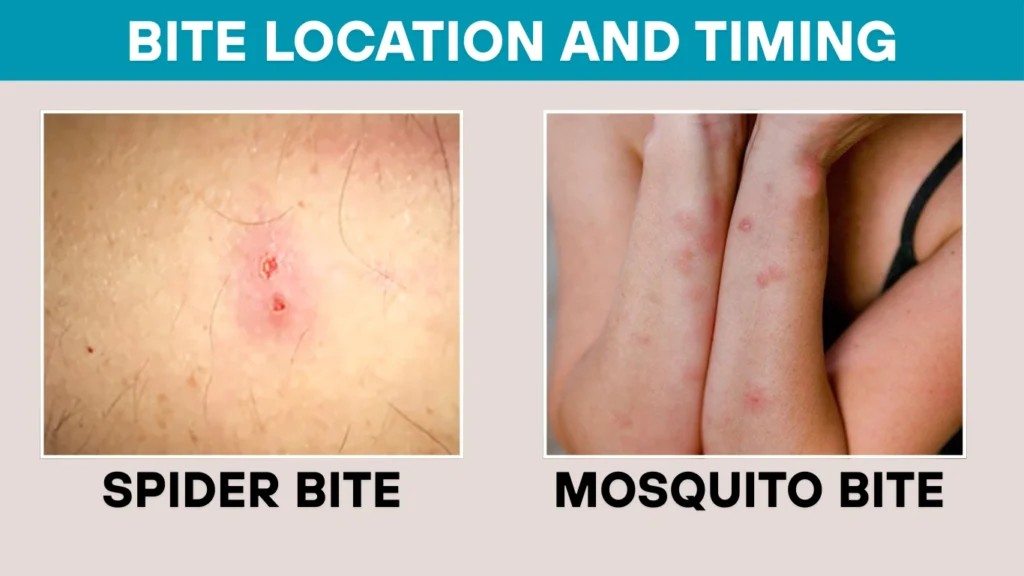
Spider Bite
Spider bites often occur in hidden or undisturbed areas, such as inside clothing, shoes, bedding, or beneath furniture. They typically affect areas like the legs, arms, abdomen, or back. Most spider bites happen at night when the person is sleeping or resting in one place for a long time.
Mosquito Bite
Mosquitoes usually bite exposed skin, especially on the arms, neck, ankles, and face. Bites are more common during early morning or evening hours, particularly in humid environments or near standing water. Unlike spiders, mosquitoes are active and bite outdoors or indoors in open air.
When to See a Doctor
If you’re uncertain whether a bite is from a spider or a mosquito, watch for warning signs. A spider bite may require medical attention if it worsens over 24–48 hours, becomes increasingly painful, develops pus or open sores, or if fever, chills, or muscle pain set in. These may indicate infection or a venomous bite.
On the other hand, mosquito bites usually heal on their own, but you should contact a doctor if you experience rashes, high fever, joint pain, or persistent swelling—especially if you’ve recently traveled to a region where mosquito-borne diseases are common.
Final Thoughts
While mosquito bites are annoying and very common, spider bites tend to be more serious—especially if venom is involved. Recognizing the differences in appearance, timing, symptoms, and bite location helps you respond the right way. If symptoms don’t improve or you feel worse, it’s always safer to get a medical opinion. Knowing what bit you is the first step toward proper treatment.