

Both spider crabs and king crabs are fascinating sea creatures known for their massive size and striking appearance. Although they share the “crab” name, these two species differ greatly in anatomy, habitat, and flavor. The spider crab, with its long, spindly legs, is a deep-sea scavenger, while the king crab, known for its rich meat, is a prized catch from cold northern waters. Let’s explore their differences in detail.
Overview of Spider Crab and King Crab
What is a Spider Crab?
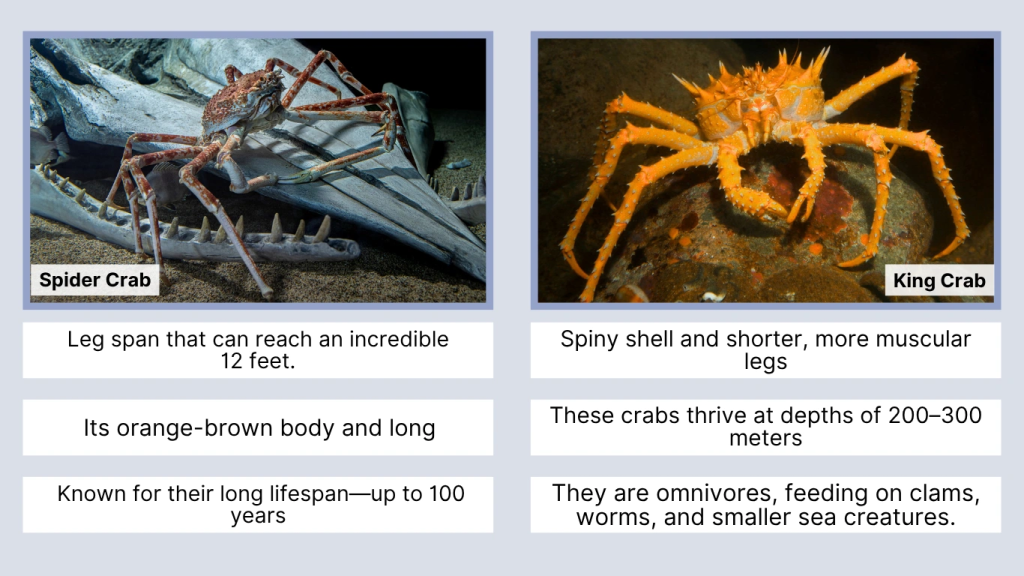
The Japanese spider crab (Macrocheira kaempferi) is the largest crab species in the world, with a leg span that can reach an incredible 12 feet. Its orange-brown body and long, spider-like legs give it a truly alien appearance. Spider crabs inhabit the deep waters around Japan, typically living between 500 and 1,000 meters below the surface. They are slow-moving scavengers that feed on dead animals and plant matter. Known for their long lifespan—up to 100 years—these crabs are gentle giants of the deep sea.
What is a King Crab?
The Alaskan king crab (Paralithodes camtschaticus) is one of the most commercially valuable crabs in the world. Unlike the spider crab, the king crab has a thick, spiny shell and shorter, more muscular legs. Found primarily in the cold waters of the Bering Sea and the Gulf of Alaska, these crabs thrive at depths of 200–300 meters. They are omnivores, feeding on clams, worms, and smaller sea creatures. King crabs are harvested seasonally, making them a highly sought-after delicacy around the globe.
Size Comparison — Who’s Bigger?
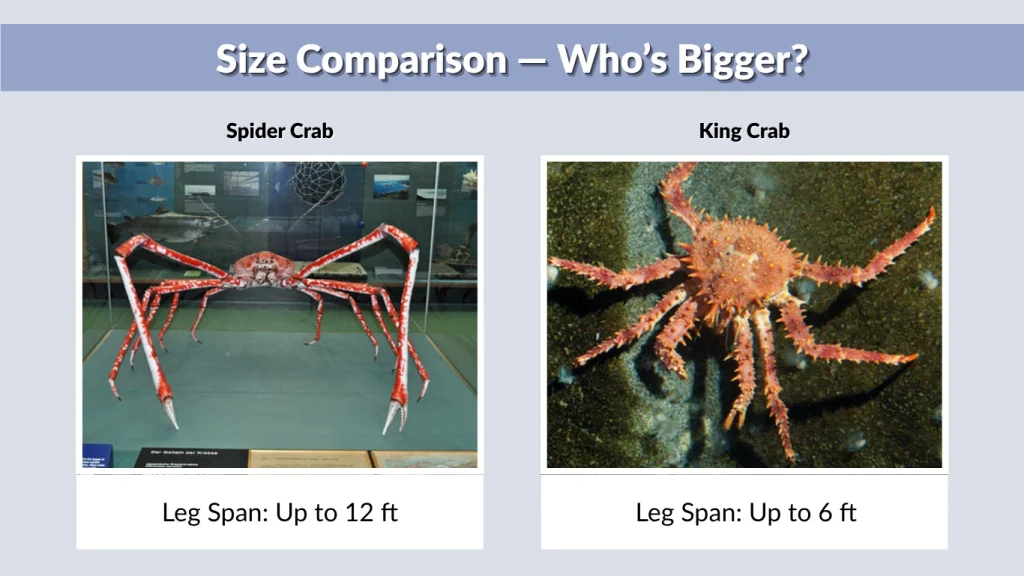
When it comes to size, the spider crab wins in terms of leg span, while the king crab dominates in overall body mass. The Japanese spider crab’s legs can stretch up to 12 feet from claw to claw, making it the largest arthropod alive. However, its body remains relatively small compared to its legs.
The Alaskan king crab, on the other hand, has a more compact body but can weigh between 20 and 25 pounds, with some individuals exceeding 30 pounds. Spider crabs typically weigh around 40 pounds but appear less bulky because of their long limbs.
| Feature | Spider Crab | King Crab |
| Leg Span | Up to 12 ft | Up to 6 ft |
| Weight | 40 lbs avg | 20–25 lbs avg |
| Habitat Depth | 500–1,000 meters | 200–300 meters |
While both are enormous, their differences highlight how evolution has adapted each to its environment. The spider crab’s long legs help it navigate rocky sea floors, while the king crab’s heavy armor offers protection in predator-rich northern waters.
Taste and Texture Comparison
Spider Crab Flavor Profile
Spider crab meat is mild and subtly sweet, offering a delicate texture similar to snow crab. Because it lives in deeper, colder waters, its meat is leaner and slightly brinier, giving it a clean ocean taste. In Japan and Europe, spider crabs are often boiled or used in soups, where their gentle flavor stands out in rich broths.
King Crab Flavor Profile
King crab meat, in contrast, is famous for its rich, buttery sweetness and firm texture. Each leg contains large chunks of juicy, white meat that are easy to extract. The flavor is more intense and satisfying, making it a favorite for luxury dining. It’s often served grilled, steamed, or as part of seafood platters, especially in North America and Asia.
Culinary Uses and Price Difference
Spider crab is more commonly consumed in Japan and coastal European regions, where it’s appreciated for its mild, delicate flavor. King crab dominates global seafood markets due to its flavor, meat yield, and ease of preparation. The limited fishing season and difficult harvesting conditions contribute to its high price, making it one of the most expensive crab varieties in the world.
Habitat and Distribution
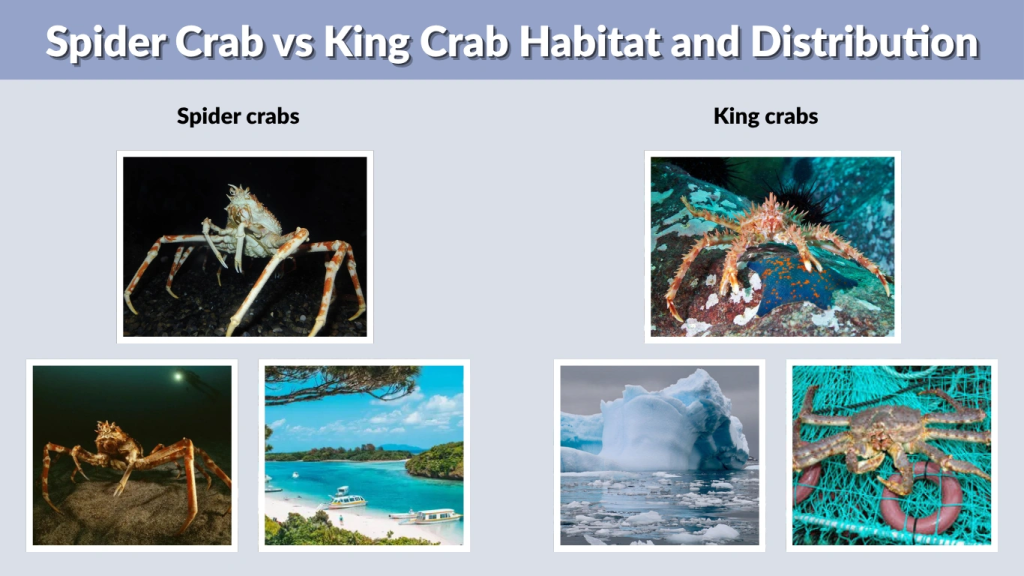
Spider crabs inhabit the Pacific Ocean, particularly around Japan, preferring deep, dark environments. They spend most of their lives on the sea floor, camouflaging themselves with shells and seaweed to avoid predators. Their slow, deliberate movement helps conserve energy in low-light conditions.
King crabs, on the other hand, are found in the cold northern waters of Alaska and Russia. They prefer shallower depths, where they can migrate seasonally between feeding and breeding grounds. Their hard shells and spiny texture provide protection from predators like octopuses and large fish.
Morphological Differences
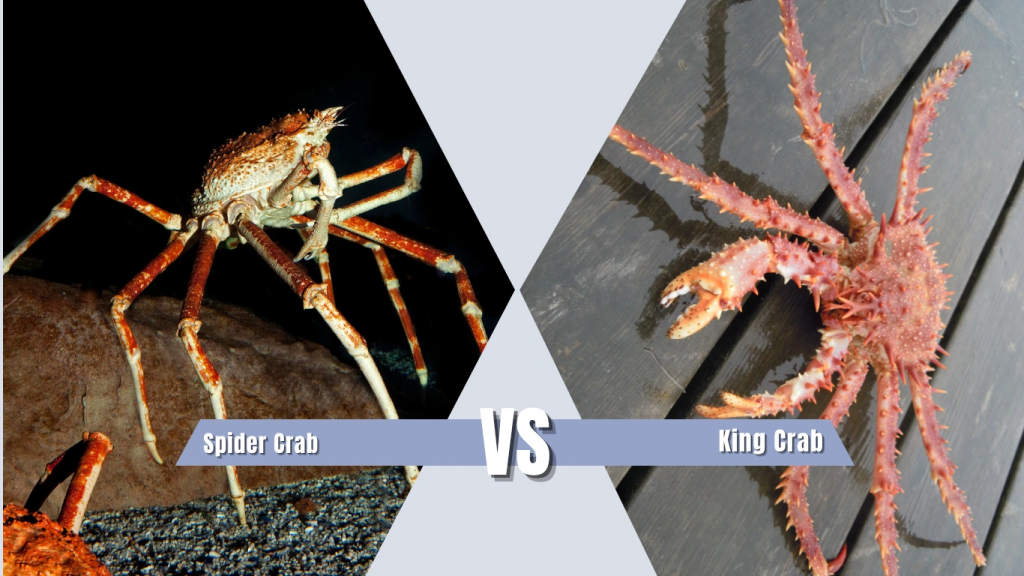
Though both species are crabs, their appearances are strikingly different. The spider crab has an extremely long, thin leg structure and a relatively small, rounded carapace. Its shell is smooth, with subtle orange-brown hues that blend perfectly with the seafloor. Spider crabs also camouflage themselves by attaching shells, sponges, and algae to their exoskeletons for protection from predators.
The king crab, by contrast, has a wide, spiny shell and shorter, robust legs. Its bright red or reddish-brown coloration makes it easily recognizable in seafood markets. Male king crabs are generally larger than females and have more powerful claws. Spider crab males also tend to be larger, but their difference in size is mostly seen in leg length rather than body width.
Which Crab Is More Dangerous?
Despite their intimidating looks, neither the spider crab nor the king crab poses any real danger to humans. Spider crabs are often misunderstood because of their enormous size and alien-like appearance. In reality, they are slow-moving and non-aggressive scavengers that feed mainly on dead animals and organic debris.
King crabs, while stronger and better equipped for defense with their sharp claws, are also not dangerous unless provoked. They can pinch if handled carelessly, but in the wild, they prefer to flee rather than fight. Both species are crucial to marine ecosystems, cleaning the seabed and maintaining ecological balance.
Spider Crab vs King Crab: Summary Table
| Aspect | Spider Crab | King Crab |
| Scientific Name | Macrocheira kaempferi | Paralithodes camtschaticus |
| Average Size | Up to 12 ft leg span | Up to 6 ft leg span |
| Average Weight | Around 40 lbs | Around 25 lbs |
| Taste | Mild, delicate, slightly sweet | Rich, buttery, and sweet |
| Habitat | Deep Pacific Ocean near Japan | Cold northern seas (Alaska, Russia) |
| Lifespan | Up to 100 years | 20–30 years |
| Commercial Use | Limited, local markets | Highly commercialized, global export |
This table makes it clear that while the spider crab holds the record for size, the king crab wins in taste and culinary popularity. Each has its unique place in both nature and the seafood industry.
FAQs
Which is bigger, the spider crab or the king crab?
The Japanese spider crab is the largest in leg span, reaching up to 12 feet from claw to claw. King crabs, while smaller in span, have a bulkier body and thicker legs, giving them more overall meat and a heavier appearance when compared side by side.
Which tastes better, spider crab or king crab?
Most seafood lovers prefer the taste of king crab due to its sweet, buttery flavor and firm meat texture. Spider crab offers a subtler, slightly salty sweetness and is often enjoyed boiled or in traditional Japanese dishes where delicate flavors are valued.
Is the Japanese spider crab edible?
Yes, the Japanese spider crab is edible and considered a delicacy in Japan. Its meat is tender and sweet, though it’s less meaty compared to king crab. It’s often served in soups or lightly boiled, especially during the spring harvesting season.
Why are king crabs more expensive?
King crabs are expensive because of limited fishing seasons, harsh Arctic conditions, and high market demand. Harvesting them requires specialized equipment and strict regulations to protect populations, driving up both labor and retail costs in global seafood markets.
Can a spider crab hurt a human?
Despite their monstrous size, spider crabs are harmless to humans. They move slowly and use their long legs for balance and mobility, not aggression. They are gentle bottom-dwellers that feed on carrion and plants, posing no threat even when approached by divers.