
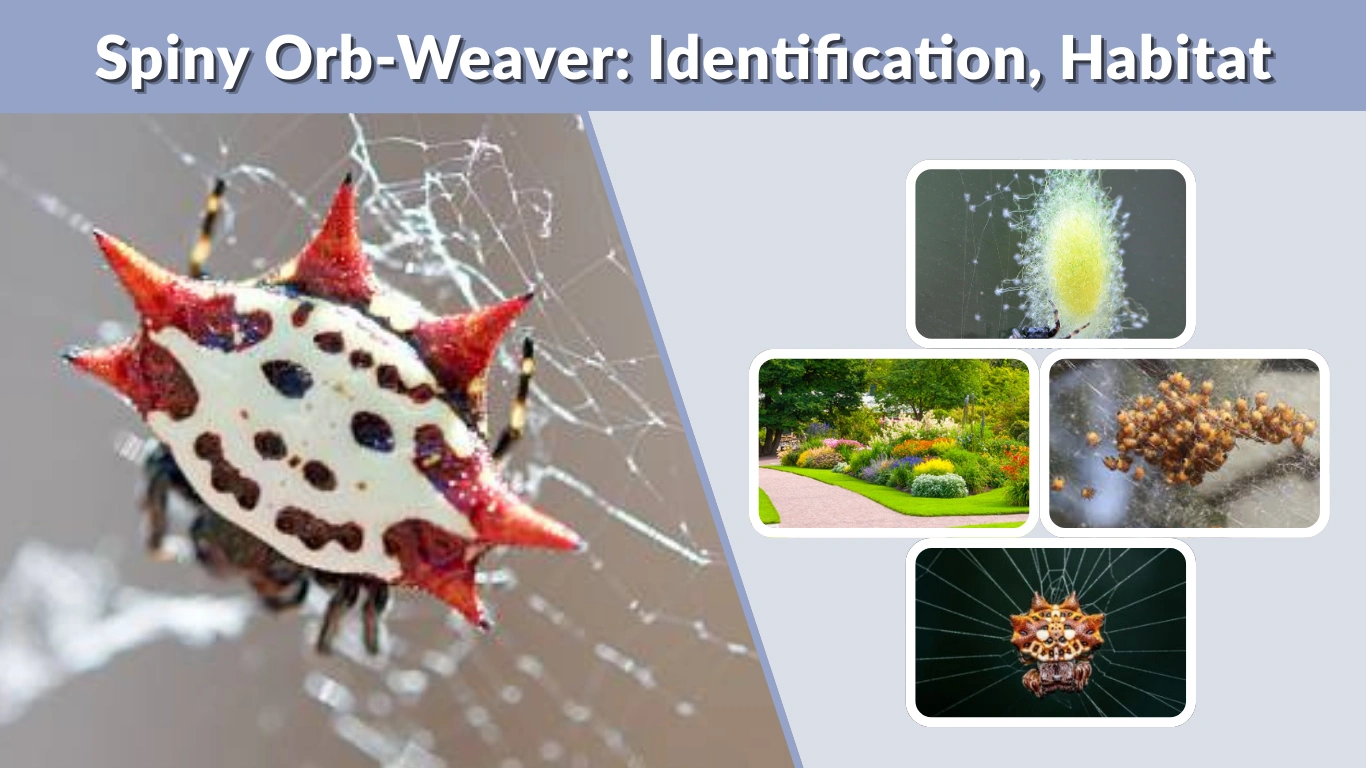
The spiny orb-weaver is one of the most distinctive spiders in the world, easily recognized by its bright colors and unusual spiked body. Belonging to the genus Gasteracantha, this spider is famous for building circular orb-shaped webs used to capture flying insects. Despite its intimidating appearance, the spiny orb-weaver is harmless to humans and plays an important role in controlling insect populations. These fascinating spiders are commonly found in warm regions where gardens, forests, and shrubs provide the perfect environment for web building.
What Is a Spiny Orb-Weaver?
The spiny orb-weaver spider is a member of the orb-weaver family, known for spinning strong and symmetrical circular webs. Unlike hunting spiders that chase their prey, orb-weavers rely on their carefully constructed webs to trap insects.
Scientific Classification
The spiny orb-weaver belongs to the following scientific classification:
- Genus: Gasteracantha
- Family: Araneidae
- Common name: Spiny orb-weaver spider
The genus Gasteracantha includes several species that share the characteristic spiny abdomen. These spiders are often considered among the most visually striking arachnids because of their unique body shapes and vibrant colors.
Overview of the Species
Spiny orb-weavers are relatively small spiders, but their unusual body structure makes them easy to identify. The abdomen is flat, wide, and hardened, with large spines that extend outward. These spines give the spider a crab-like appearance and help protect it from predators.
Unlike many spiders that hide during the day, spiny orb-weavers are often visible sitting in the center of their webs. Their bright colors may serve as a warning to predators that they are difficult to eat due to their hard, spiny bodies.
How to Identify a Spiny Orb-Weaver
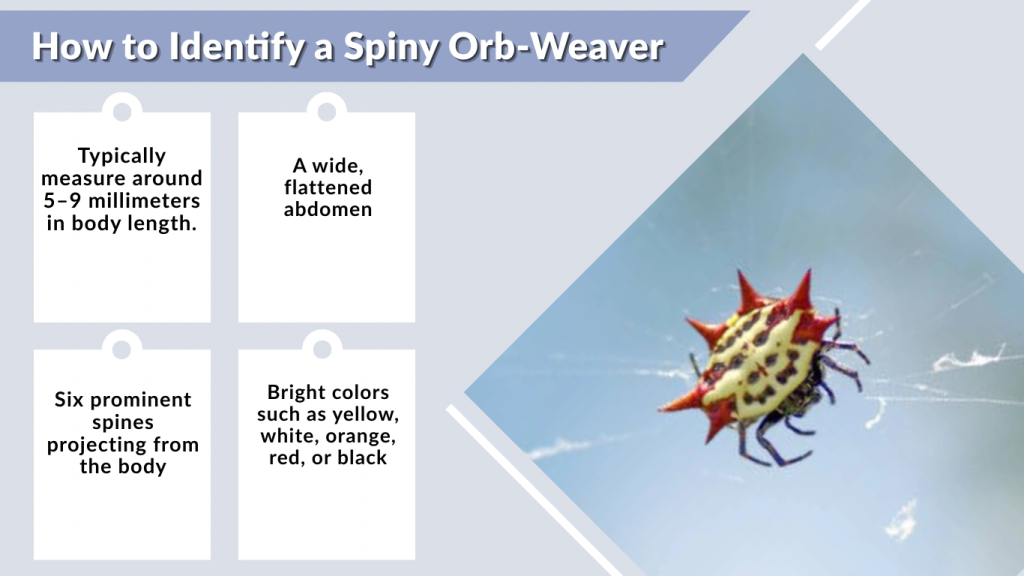
Correctly identifying a spiny orb-weaver is fairly easy because of its unique appearance. These spiders look very different from most other garden spiders.
Physical Appearance
The most recognizable feature of a spiny orb-weaver is its flat, disc-shaped abdomen covered with sharp-looking spines. These spines usually extend outward from the edges of the abdomen.
Typical characteristics include:
- A wide, flattened abdomen
- Six prominent spines projecting from the body
- Bright colors such as yellow, white, orange, red, or black
- A small head and short legs compared to body size
The bright coloration can vary depending on the species and geographic location.
Key Identification Features
Several features make spiny orb-weavers stand out among other spiders.
Six spines:
Most species have six large spines on their abdomen—two on each side and two near the rear. These spines act as a defense against predators such as birds and lizards.
Hard outer shell:
The abdomen has a tough, almost armor-like surface, which helps protect the spider from attacks.
Small body size:
Despite their dramatic appearance, these spiders are actually small. Adult females typically measure around 5–9 millimeters in body length.
Male vs Female Spiny Orb-Weaver
Like many spider species, there is a noticeable difference between males and females.
Female spiny orb-weavers are larger, brightly colored, and the ones most commonly seen in webs. Their striking appearance helps them attract attention but also deters predators.
Male spiny orb-weavers, on the other hand, are much smaller and less colorful. They often stay near the female’s web and are rarely noticed by people.
Spiny Orb-Weaver Habitat and Distribution
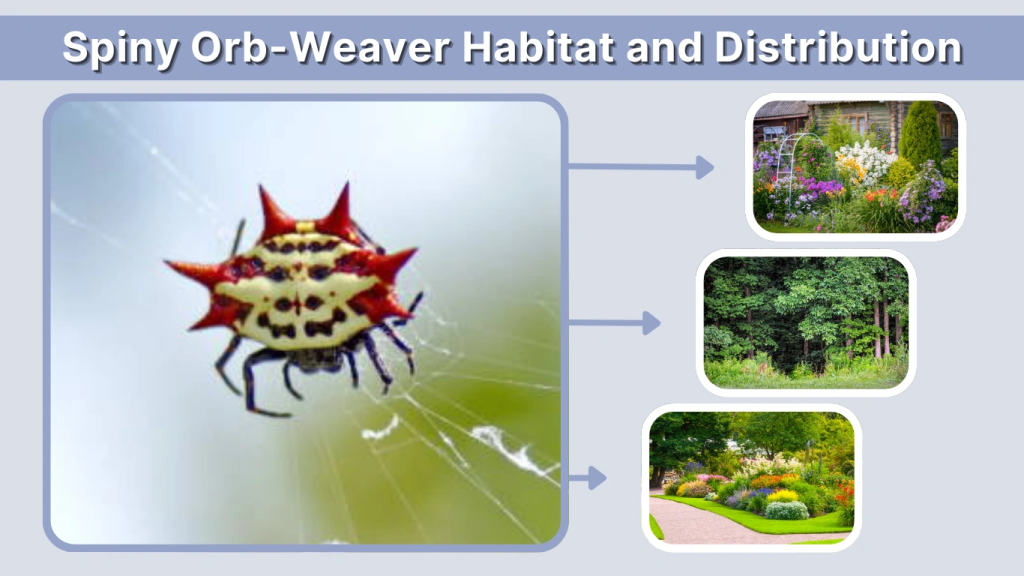
Spiny orb-weavers thrive in warm environments where flying insects are abundant. Their ability to build strong webs between plants allows them to live in a variety of natural and urban settings.
Geographic Range
These spiders are commonly found in tropical and subtropical regions around the world. In North America, they are frequently seen in the southern United States, particularly in states such as Florida, Texas, and Georgia.
They are also widely distributed in:
- Central America
- South America
- Parts of Asia
- Australia and nearby islands
Warm climates provide ideal conditions for these spiders because insect populations remain high throughout much of the year.
Preferred Habitats
Spiny orb-weavers typically build their webs in places where insects are likely to fly. Their webs are often suspended between plants, branches, or structures that create open space for catching prey.
Common habitats include:
- Garden shrubs and flowers
- Forest edges
- Tree branches
- Parks and landscaped areas
Because of their striking appearance, these spiders are frequently noticed in backyard gardens where their webs stretch between bushes or small trees.
Web Structure and Hunting Behavior
One of the most fascinating aspects of the spiny orb-weaver is its web-building ability. These spiders create orb-shaped webs, which are among the most recognizable spider webs in nature.
Orb Web Construction
Spiny orb-weavers spin large, circular webs using strong silk threads. The web typically contains multiple radial lines connected by a spiral pattern that forms the sticky capture area.
These webs are usually built between branches, shrubs, or other structures that provide stable anchor points. The spider carefully positions the web in areas where flying insects frequently pass.
In many cases, the spider sits directly in the center of the web during the day, waiting for prey to become trapped.
How They Catch Prey
When a flying insect becomes stuck in the sticky threads of the web, the spider quickly moves toward it. Using its venom, the spider immobilizes the prey before wrapping it in silk.
Common prey items include:
- Flies
- Mosquitoes
- Moths
- Small beetles
By feeding on these insects, spiny orb-weavers help reduce pest populations in gardens and natural ecosystems.
Daily Behavior
Unlike many spider species that hide during daylight hours, spiny orb-weavers are often active during the daytime. Their bright colors and unusual body shape make them easy to spot when they are sitting in their webs.
These spiders may repair or rebuild parts of their webs if the silk becomes damaged. The web plays a critical role in their survival, providing both food and a place to rest while waiting for prey.
Spiny Orb-Weaver Bite
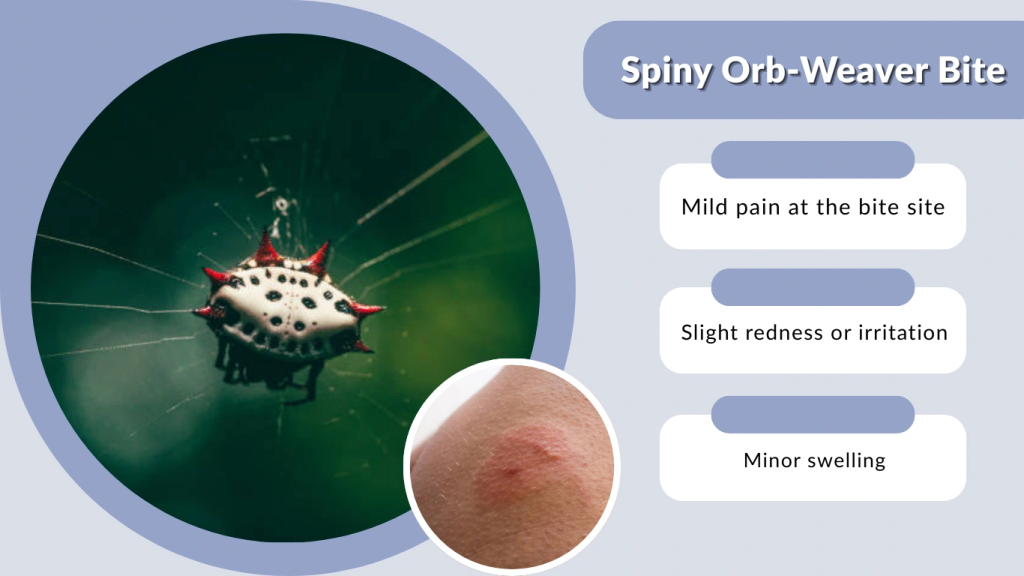
Despite their fierce appearance and sharp-looking spines, spiny orb-weaver spiders are not dangerous to humans. Their unusual body shape may make them look intimidating, but they are actually shy and non-aggressive creatures that prefer to remain in their webs.
Do Spiny Orb-Weavers Bite Humans?
Spiny orb-weavers rarely bite people. Most encounters happen when someone accidentally walks through a web or notices the spider while gardening. In these situations, the spider typically drops from the web or quickly moves away rather than biting.
A bite might only occur if:
- The spider is handled directly
- It becomes trapped against the skin
- Someone tries to disturb or crush it
Even in these cases, bites are extremely uncommon because the spider prefers to escape.
Bite Symptoms
If a spiny orb-weaver does bite, the symptoms are usually mild and similar to other minor insect bites.
Possible symptoms may include:
- Mild pain at the bite site
- Slight redness or irritation
- Minor swelling
- Temporary itching
These symptoms usually disappear within a short time and rarely require medical treatment.
Are Spiny Orb-Weavers Dangerous?
Spiny orb-weavers are not considered medically significant spiders. Their venom is designed to immobilize small insects, not harm humans. In most cases, their bite causes less discomfort than a bee sting or mosquito bite.
Because of their beneficial role in controlling insects, these spiders are generally considered helpful to have in gardens and outdoor spaces.
Life Cycle of a Spiny Orb-Weaver
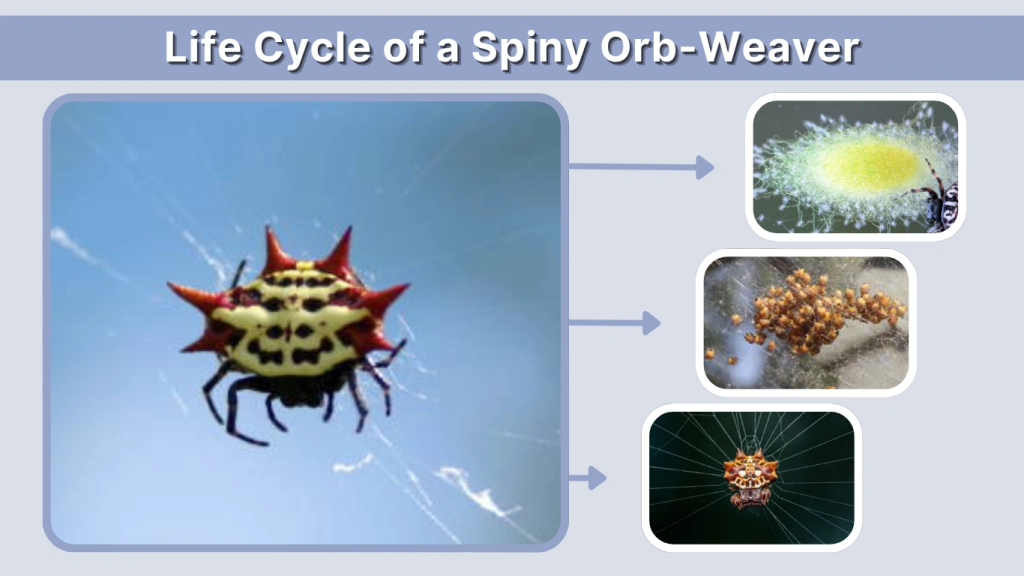
Like many spiders, the spiny orb-weaver goes through several stages during its life, from egg to adult.
Egg Sac and Reproduction
Female spiny orb-weavers produce egg sacs that contain hundreds of tiny eggs. These sacs are usually attached to leaves, branches, or other sheltered areas near the web.
The female may guard the egg sac for a period of time before the spiderlings hatch.
Spiderlings
When the eggs hatch, the young spiders—called spiderlings—emerge and begin their early life stage. Many spiderlings disperse by releasing strands of silk that catch the wind, a process known as ballooning.
This allows them to travel to new locations where they can grow and build their own webs.
Lifespan
Most spiny orb-weavers live for about one year. They usually mature during the warmer months when insect populations are highest. As temperatures drop, many adult spiders die after completing their reproductive cycle.
Why Spiny Orb-Weavers Are Beneficial
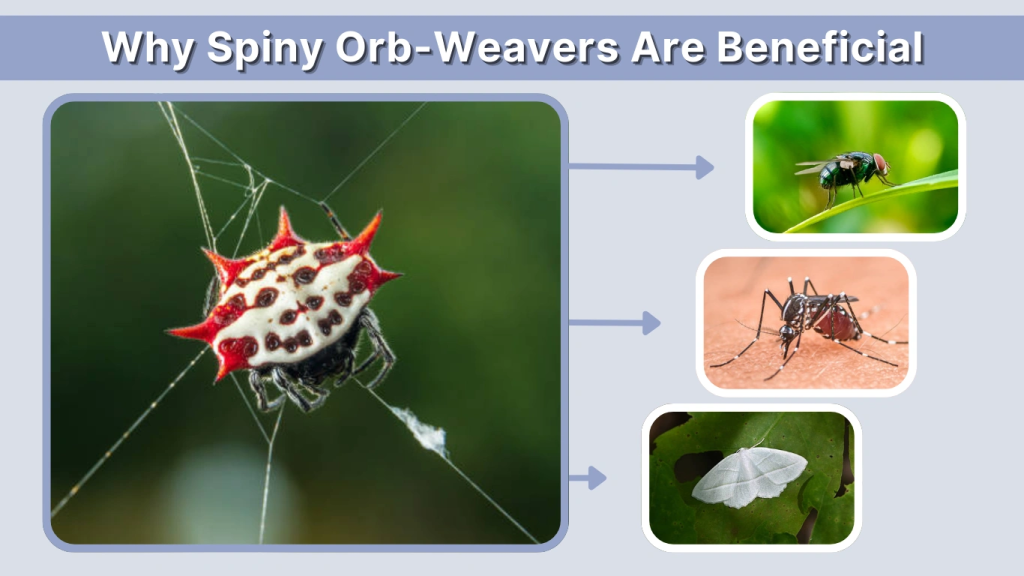
Although their unusual appearance may startle some people, spiny orb-weavers are actually valuable predators that help maintain ecological balance.
Natural Pest Control
These spiders feed on many flying insects that are often considered pests. Their diet commonly includes:
- Flies
- Mosquitoes
- Moths
- Small beetles
By trapping and consuming these insects, spiny orb-weavers help reduce pest populations in gardens and outdoor spaces.
Importance in Ecosystems
Spiders are important members of many ecosystems. As predators, they regulate insect populations, preventing certain species from becoming overly abundant.
At the same time, spiders also serve as food for birds, reptiles, and other animals. This makes them an essential link in many food chains.
Interesting Facts About Spiny Orb-Weavers
Spiny orb-weavers are fascinating spiders with several unique characteristics that set them apart from other species.
Their Spines Are Defensive
The sharp-looking spines on the spider’s abdomen help deter predators. Birds and other animals may find it difficult or uncomfortable to swallow such a spiny prey item.
Their Webs Are Extremely Strong
Orb-weaver webs are known for their impressive structure and strength. The silk used to build these webs is both flexible and durable, allowing the web to absorb the impact of flying insects.
Bright Colors Warn Predators
The bright colors seen on many spiny orb-weavers may act as warning signals to predators. These colors suggest that the spider may not be an easy or desirable meal.
Common Myths About Spiny Orb-Weavers
Because of their unusual appearance, several myths have developed about these spiders.
Myth: Their Spikes Are Dangerous
The spines on a spiny orb-weaver may look sharp, but they are not harmful to humans. They mainly serve as protection against predators.
Myth: They Attack People
Spiny orb-weavers are not aggressive and do not attack humans. If disturbed, they usually drop from their web or hide.
Myth: They Are Harmful to Gardens
In reality, these spiders are beneficial to gardens because they help reduce insect pests that can damage plants.
FAQs
What does a spiny orb-weaver look like?
A spiny orb-weaver has a flat, brightly colored abdomen with six prominent spines, giving it a crab-like or star-shaped appearance.
Are spiny orb-weavers poisonous?
They possess venom used to subdue insects, but it is not dangerous to humans.
Where do spiny orb-weavers live?
They are commonly found in warm climates, especially in gardens, forests, and areas with abundant vegetation.
How big are spiny orb-weavers?
Adult females usually measure 5–9 millimeters in body length, though their spines make them appear larger.
Do spiny orb-weavers make new webs every day?
Many orb-weaver spiders repair or rebuild their webs regularly, especially if the web becomes damaged.
Conclusion
The spiny orb-weaver is one of the most visually striking spiders in nature, known for its colorful body and distinctive spines. Despite its intimidating appearance, this spider is harmless to humans and plays a helpful role in controlling insect populations. By building strong orb-shaped webs and capturing flying insects, spiny orb-weavers contribute to a healthier ecosystem. Learning about these unique spiders can help people appreciate their importance and coexist peacefully with them in gardens and natural environments.