
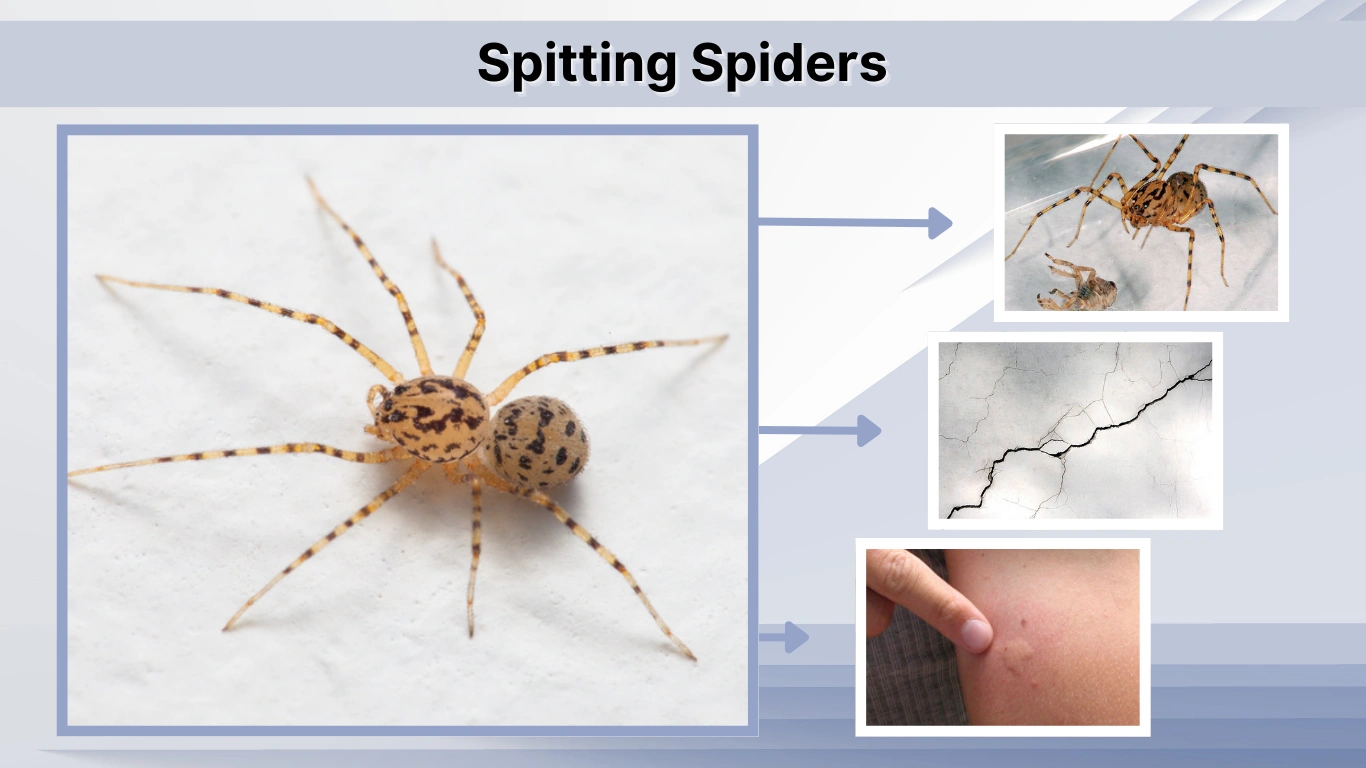
Among the many extraordinary creatures in the spider kingdom, the spitting spider (Scytodes genus) stands out for its unique hunting technique. Unlike typical web-weaving arachnids, these spiders immobilize prey by ejecting a combination of sticky silk and venom in rapid bursts. This strategy has earned them nicknames like “venom spitting spider” and “web spitting spider.” Their ability not only intrigues scientists but also sparks curiosity among people who encounter them across the globe.
What is a Spitting Spider?
The spitting spider is a small to medium-sized arachnid known for its remarkable ability to project a glue-like venom mixture onto its prey. This feature distinguishes it from most other spiders that either weave webs or hunt actively without such adaptations.
The expelled substance is both sticky and toxic, instantly trapping insects in place while beginning the envenomation process. This clever mechanism allows spitting spiders to subdue prey larger than themselves.
Spider Spit Explained
“Spider spit” is essentially a biological weapon that combines two elements: silk for entangling and venom for paralysis. The mixture hardens quickly upon contact, giving the spider a chance to rush in and deliver a final bite. This makes them one of the few arachnids that use both mechanical and chemical tactics in a single strike.
Scientific Classification

Spitting spiders belong to the family Scytodidae, with the most well-known species being Scytodes thoracica. These spiders have been studied extensively due to their unusual predatory adaptations.
- Genus: Scytodes
- Species Example: Scytodes thoracica (the common spitting spider)
- Family: Scytodidae
Several related species exist, often distinguished by their coloration, size, or regional distribution. For researchers, Scytodes spiders represent an evolutionary divergence from traditional web-builders, showing how predatory specialization can shape entire lineages.
Physical Appearance & Size

Spitting spiders are generally modest in size, ranging between 3 to 6 millimeters in body length, though some species may grow larger. Their appearance varies, but several common features help with identification.
Color Variations
- Brown spitting spider – the most recognized, often confused with other harmless brown spiders.
- Pale and ornate variants – lighter or patterned individuals exist in certain regions.
- Black spitting spider – darker morphs occasionally observed.
Body Shape & Legs
Spitting spiders have noticeably long, slender legs, with the front pair adapted for sensing and holding prey. Their overall build gives them a delicate look, but this belies their efficient hunting style.
Eye Arrangement
Unlike most spiders, which have eight eyes, spitting spiders possess six eyes arranged in three pairs. This unique trait helps distinguish them from potentially harmful species like the brown recluse.
Habitat & Global Distribution

Spitting spiders are surprisingly widespread, found in warm and temperate regions around the world. They prefer quiet, sheltered environments such as homes, under rocks, or inside crevices.
Regional Presence
- United States: Common in Texas, Arizona, and Florida.
- Africa: Species recorded in South Africa.
- Australia & UK: Populations adapted to both natural and urban settings.
Their adaptability allows them to thrive both indoors and outdoors. In homes, they often go unnoticed because of their secretive behavior and nocturnal habits.
Preferred Microhabitats
Spitting spiders do not build large webs. Instead, they occupy corners, cracks, or shaded spaces where prey may wander. They rely more on ambush than elaborate web construction. This makes them common “hidden predators” that may live unnoticed alongside humans.
Hunting Method & Web Usage

The spitting spider’s hunting strategy is a spectacle of natural engineering. Instead of relying on a passive web trap, it actively stalks prey and then releases its venomous silk spray with pinpoint accuracy.
The Spitting Process
The spider raises its front legs, takes careful aim, and ejects streams of sticky silk laced with venom in a zigzag pattern. This dual-purpose spray:
- Immobilizes the prey by entangling it.
- Begins envenomation as the venom penetrates through the silk.
The entire process happens in milliseconds, making it difficult to observe without slow-motion video.
Limited Web Use
Although capable of producing silk, spitting spiders do not weave large orb webs. Instead, they may use silk sparingly to secure resting spots or wrap subdued prey after the spitting attack. This sets them apart from web-building relatives and places them closer to active hunters like jumping spiders—though with a far more unusual technique.
Venom & Potential Dangers

One of the biggest questions people ask is whether spitting spiders are dangerous to humans. The short answer: not really.
Nature of the Venom
The venom is primarily designed for small prey like insects. Its paralyzing effect is highly efficient in arthropods but weak against larger animals or humans.
Human Interaction
- Spitting spider bite: Rare and usually harmless, causing only mild irritation.
- Poisonous myths: Despite terms like “acid spitting spider,” their venom is not strong enough to pose significant health risks.
- Danger level: Generally considered non-dangerous, though sensitive individuals may experience mild localized symptoms.
For these reasons, spitting spiders are often classified as “nuisance spiders” rather than threats, unlike the brown recluse or black widow.
Diet & Feeding Habits

Spitting spiders primarily feed on insects and other small arthropods. Their spitting technique gives them an advantage in immobilizing prey that would otherwise be too fast or strong.
What Do Spitting Spiders Eat?
- Flies and mosquitoes
- Small moths
- Ants and beetles
- Occasionally other spiders
After immobilizing prey with their venomous silk, they deliver a bite and consume the liquefied tissues. This diet helps control pest populations, making them surprisingly beneficial in human environments.
Comparisons with Other Species

Because of their small size and brown coloration, spitting spiders are often confused with or compared to other species.
Spitting Spider vs Brown Recluse
- Spitting spider: Six eyes in three pairs, slower moving, non-dangerous.
- Brown recluse: Six eyes in a distinctive pattern, medically significant venom.
This confusion often leads to unnecessary fear of harmless spitting spiders.
Spitting Spider vs Jumping Spider
- Spitting spider: Uses venomous silk spray, hunts by ambush.
- Jumping spider: Relies on vision and leaps to capture prey.
Both are fascinating hunters, but their methods differ dramatically.
Spitting Spider vs Scorpion
While scorpions use venom from a stinger, spitting spiders combine silk and venom. Both are efficient predators, but the spider’s zigzag spray is unique in the arachnid world.
Green Lynx Spider “Spit”
Some confuse spitting spiders with green lynx spiders, which can spit venom defensively. However, they belong to different families, and the lynx spider’s spit lacks the silk component that makes spitting spiders so distinctive.
Unique Features & Fascinating Facts

Spitting spiders have several unusual traits that make them stand out in the arachnid world.
Eye Structure
They possess only six eyes, compared to the usual eight found in most spiders. This unique arrangement makes them instantly recognizable to arachnologists.
Hunting in Slow Motion
In slow-motion videos, their spit attack is mesmerizing. The silk and venom shoot out in crisscross patterns, perfectly targeting the prey. This efficiency is why they rarely miss their mark.
Fun Facts
- They can project silk about 10–20 millimeters from their fangs.
- Their spitting strike is one of the fastest predatory actions in the spider world.
- Spitting spiders may live quietly in homes for years without being noticed.
Cultural Mentions & Toys
Spitting spiders have even found their way into pop culture and children’s products.
Jelly Ball Spitting Spider
This toy, designed to mimic the spider’s spitting ability, became popular among children. Some references also appear in animated shows like Max and Ruby, where a “jelly ball spitting spider” is mentioned for fun.
Pop Culture Fascination
From memes to gifs, spitting spiders are often shared online for their unusual hunting method. Their behavior is both eerie and captivating, making them viral material in nature communities.
Scientific & Collecting Interest
Beyond casual curiosity, spitting spiders hold scientific value.
Research Relevance
Scientists study their venom and silk for insights into biomaterials and pest control methods. Their dual-function spit is unlike any other natural secretion, sparking interest in medical and engineering fields.
Hobbyist Collecting
Some exotic pet keepers keep spitting spiders in captivity. They are occasionally listed “for sale,” though they are less common than tarantulas or orb-weavers in the pet trade.
Regional Variants & Common Species
Several regional forms exist, sometimes labeled by their location or appearance.
- Common spitting spider: Refers to Scytodes thoracica, widespread and frequently observed.
- Brown spitting spider in Florida: Often mistaken for harmful species due to its coloration.
- Other regional variants: South African, Australian, and UK populations with local adaptations.
These variants showcase the spider’s wide ecological success, adapting to different climates and urban landscapes.
Pop Culture Appearance
Spitting spiders even feature in Magic: The Gathering (MTG) as a card, reflecting their reputation as exotic and dangerous predators. They appear in fantasy lore as creatures with unusual abilities, a testament to how nature’s oddities inspire art and gaming.
FAQs
What is a spitting spider?
A spitting spider is a small arachnid from the Scytodes family known for ejecting venomous silk in a zigzag spray to trap prey. Unlike web-builders, it actively hunts using this dual attack method. They are harmless to humans but highly effective predators of small insects.
Are spitting spiders dangerous to humans?
No, spitting spiders are not considered dangerous. Their venom is designed for small insects and is too weak to harm humans. At most, a bite may cause mild irritation. Despite myths of being poisonous, they are harmless house guests that help control insect populations.
Where are spitting spiders commonly found?
Spitting spiders are widespread, living in warm and temperate regions worldwide. They are often found in Texas, Arizona, Florida, South Africa, Australia, and the UK. Preferring sheltered areas, they hide in cracks, corners, and dark spaces indoors or outdoors where insects are abundant.
What do spitting spiders eat?
Spitting spiders primarily feed on insects such as flies, ants, beetles, and small moths. They spit a glue-like silk laced with venom to immobilize prey before biting. This diet makes them valuable natural pest controllers in homes and gardens, especially in warm, insect-rich environments.
How do spitting spiders differ from brown recluse spiders?
Spitting spiders and brown recluses are often confused because both are small and brown. However, spitting spiders have six eyes in three pairs and are harmless. Brown recluses have a distinct violin mark, six eyes in a unique pattern, and venom medically significant to humans.