
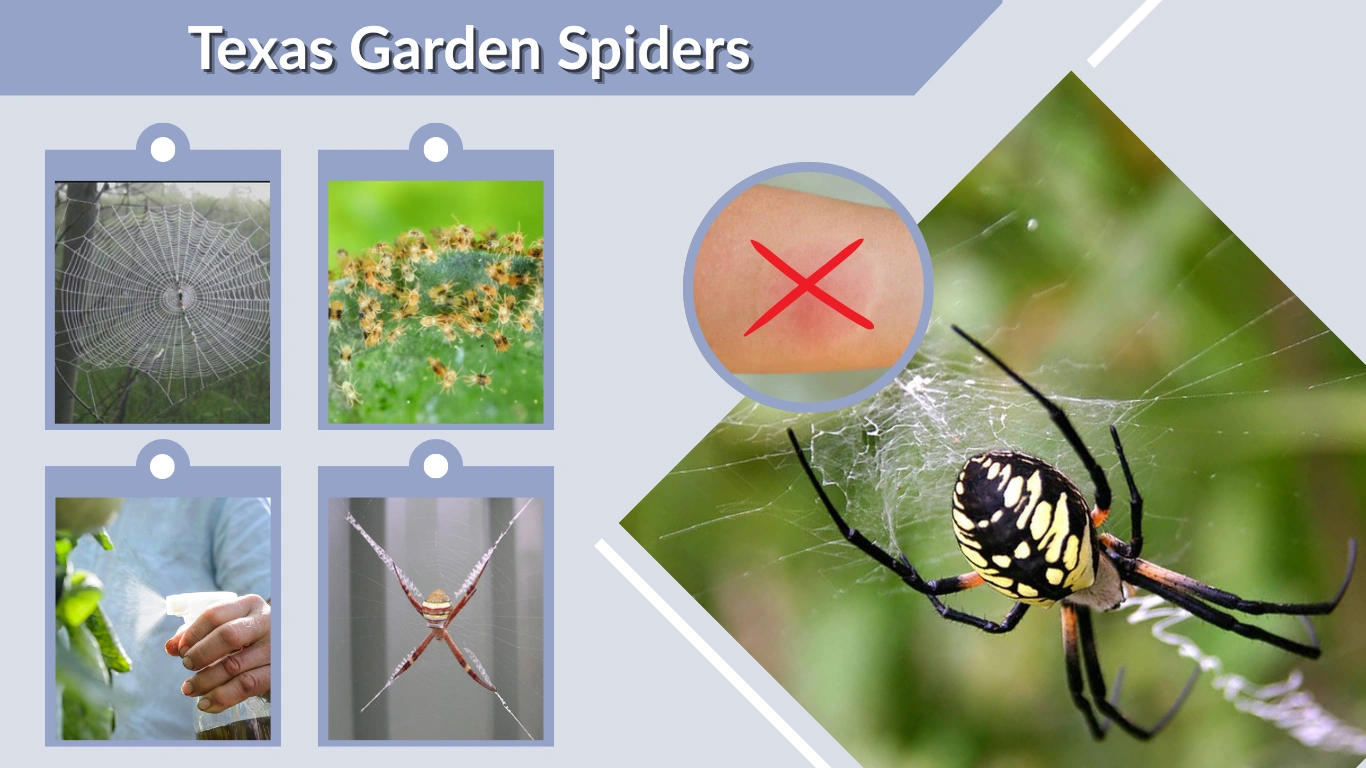
From the warm Gulf Coast to the rolling plains of North Texas, one garden resident never fails to draw attention — the Texas garden spider. Known for their large size, bold colors, and intricate webs, these spiders often spark curiosity (and sometimes fear) among homeowners and gardeners. But despite their intimidating appearance, most garden spiders in Texas are harmless and incredibly beneficial.
Garden spiders are essential predators in local ecosystems. They feed on flies, beetles, grasshoppers, and mosquitoes, helping to naturally control pest populations in vegetable gardens and backyards. Understanding which species you’re seeing — and whether it’s dangerous — can make coexisting with these eight-legged neighbors much easier.
Common Garden Spiders in Texas
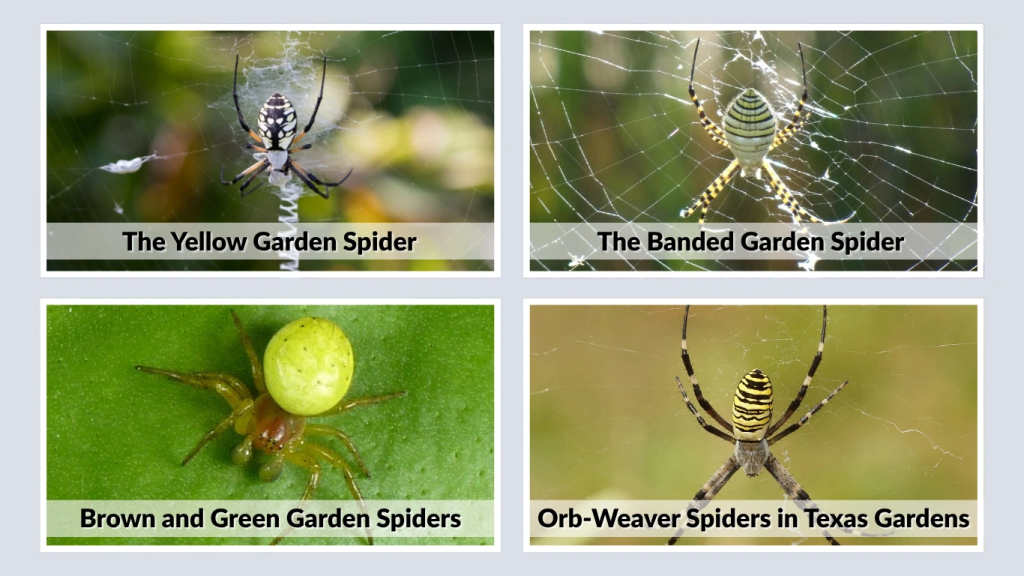
The Yellow Garden Spider (Argiope aurantia)
The yellow garden spider, also known as the black and yellow garden spider, is one of the most recognizable species in Texas. Its bright yellow abdomen, marked with bold black patterns, makes it easy to spot resting at the center of its circular web.
These spiders are found throughout Texas — from Austin and Central Texas to the piney woods of the east and the open plains of the north. Females are significantly larger than males, with bodies measuring up to 1 inch and leg spans reaching nearly 3 inches.
Their webs often feature a distinctive zigzag pattern, known as the stabilimentum, which reflects sunlight and may attract prey. The sight of one shimmering in the morning dew is a hallmark of late summer in the Lone Star State.
Despite their size, yellow garden spiders are gentle. They rarely bite and will retreat if disturbed. Their venom is mild, similar to a bee sting, and poses no danger to humans or pets.
The Banded Garden Spider (Argiope trifasciata)
Another striking Texas species is the banded garden spider, closely related to the yellow garden spider. These spiders feature horizontal silver, black, and yellow stripes across their abdomens, giving them a metallic sheen in sunlight.
You’ll often find them in dry, open areas of South and West Texas, where they build large, round webs among tall grasses or fence posts. The banded garden spider tends to sit upside-down in the center of its web, waiting patiently for prey.
Like its yellow cousin, it’s completely harmless. The banded garden spider helps keep insect populations under control, making it a gardener’s best friend.
Brown and Green Garden Spiders
Not all Texas garden spiders are bright and flashy. Some, like the brown garden spider or green garden spider, use camouflage to blend in with their surroundings.
These spiders can be light brown, gray, or pale green, often with subtle markings that mimic leaves or stems. They prefer hiding among garden plants, shrubs, or vines. Because of their excellent camouflage, they are often noticed only when their webs catch the light.
While less eye-catching than yellow or banded species, they perform the same role — silently controlling insects that might otherwise damage crops or flowers.
Orb-Weaver Spiders in Texas Gardens
The term orb-weaver refers to the entire family (Araneidae) of spiders known for their classic circular webs. Texas is home to many orb-weaver species, including the garden orb spider and Texas garden weaver spider.
Their webs can stretch over two feet in diameter, often glistening between garden stakes, window frames, or tree branches. Orb-weavers build new webs almost every evening, consuming the old ones each morning to recycle the silk.
Although their webs may look spooky when illuminated at night, they are harmless architects that keep flying pests under control. Their presence usually indicates a healthy, insect-rich garden.
Regional Distribution of Garden Spiders in Texas
East Texas
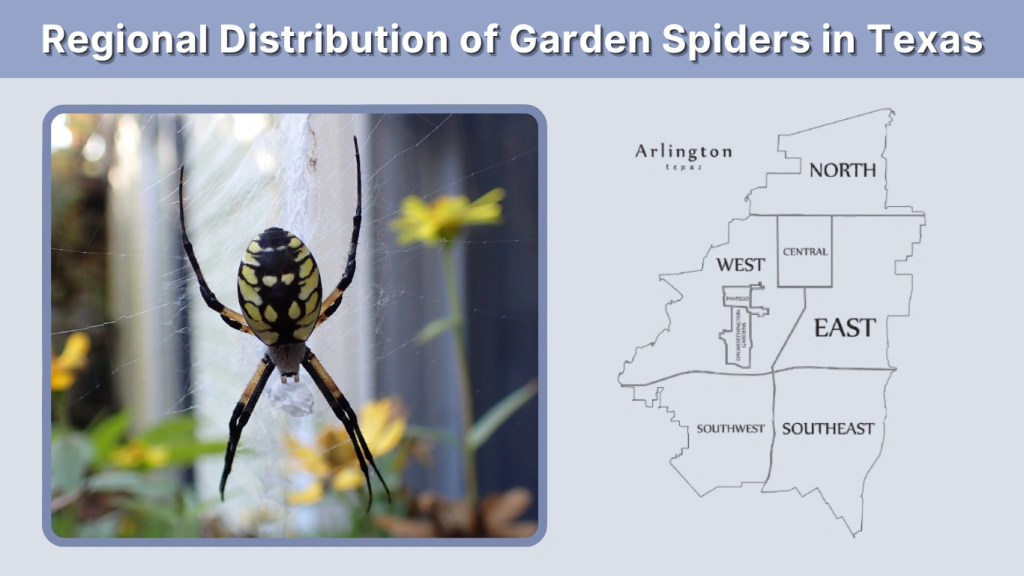
In the humid woodlands of East Texas, yellow garden spiders and cross orb-weavers are especially common. The moisture and abundant vegetation provide ideal conditions for their large webs. Gardeners often find them near fences, porch lights, or vegetable beds.
Central Texas
In Central Texas, including Austin and the Hill Country, both yellow and banded garden spiders thrive. These spiders favor sunny spots with open space for spinning their webs — often near flower beds, shrubs, and garden trellises.
North Texas
Cooler northern regions see smaller variations of the yellow garden spider, which are active from late May through September. These spiders help control insect populations during the warmer months when mosquitoes are at their peak.
South Texas
Further south, the South Texas garden spider grows larger due to the warmer, extended summers. Here, yellow garden spiders and banded garden spiders remain active well into late fall. Their bright colors are a common sight along fences, barns, and rural gardens.
Appearance and Identification
Key Identification Traits
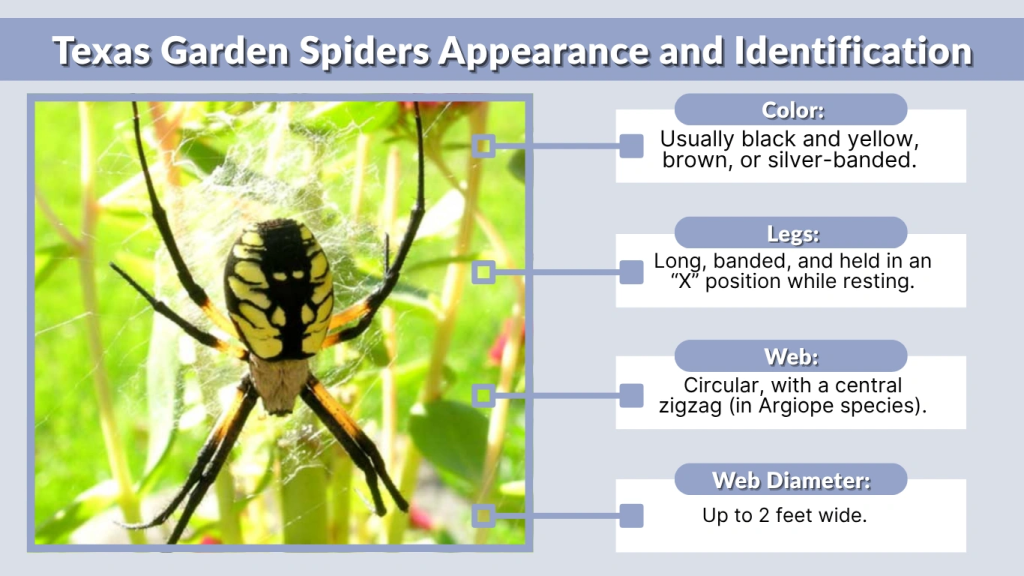
- Color: Usually black and yellow, brown, or silver-banded.
- Legs: Long, banded, and held in an “X” position while resting.
- Web: Circular, with a central zigzag (in Argiope species).
- Body: Round abdomen with symmetrical markings.
- Behavior: Stationary in the web center during the day; rebuilds at night.
Size and Web Structure
- Females: Up to 1 inch in body length; 2–3 inch leg span.
- Males: Smaller, often half the female’s size.
- Web Diameter: Up to 2 feet wide.
- Special Feature: Zigzag stabilimentum — unique to Argiope aurantia and related species.
- Best Seen: During late summer and early fall, when webs are largest.
Behavior and Seasonal Activity
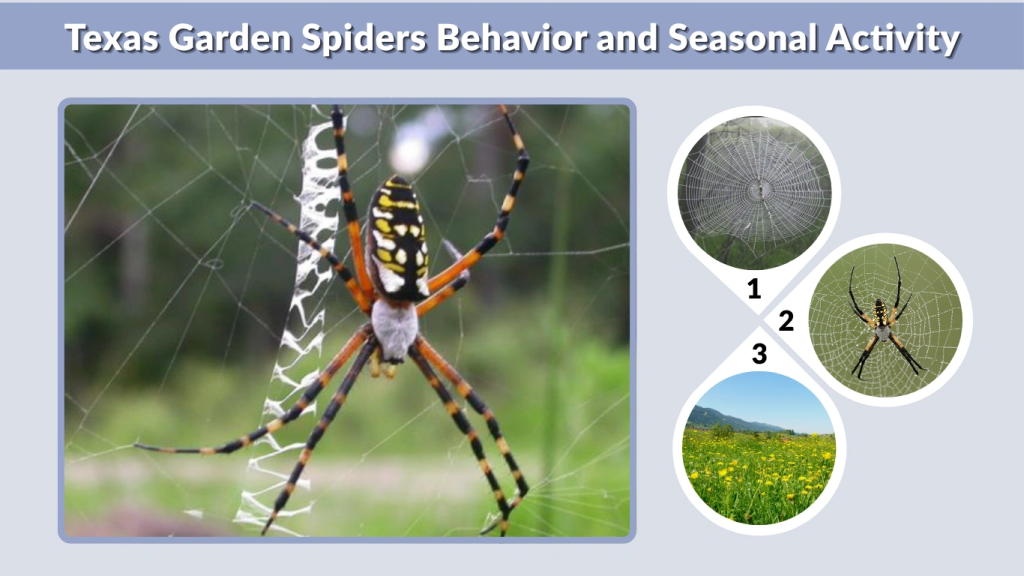
Web Building and Hunting
Texas garden spiders are expert web engineers. They build large, symmetrical orb webs — some over two feet across — that glisten beautifully in the morning sun. These webs serve as both a trap for flying insects and a home base for the spider.
At dawn, garden spiders often sit motionless in the center of the web, waiting for vibrations that signal trapped prey. When an insect hits the silk, the spider rushes in, wraps it tightly, and injects venom to immobilize it. After feeding, the spider repairs or completely rebuilds the web to prepare for the next day.
Their diet includes flies, grasshoppers, beetles, moths, and even small wasps. By consuming so many pests, they play a crucial role in protecting gardens and crops — acting as nature’s pest control system.
Life Cycle and Seasonal Changes
Most garden spiders in Texas live for just one season. Females lay several egg sacs in late summer or early fall, each containing hundreds of eggs wrapped in a tough silk shell. These sacs are often attached to sturdy surfaces like tall grass, fences, or plant stems.
The adult spiders die soon after laying eggs, typically when temperatures begin to drop. The egg sacs survive the winter, and in spring, tiny spiderlings emerge and disperse by “ballooning” — releasing silk threads that catch the wind and carry them to new areas.
By mid-summer, these young spiders mature, continuing the cycle and rebuilding their webs across Texas gardens and fields.
Are Texas Garden Spiders Dangerous?
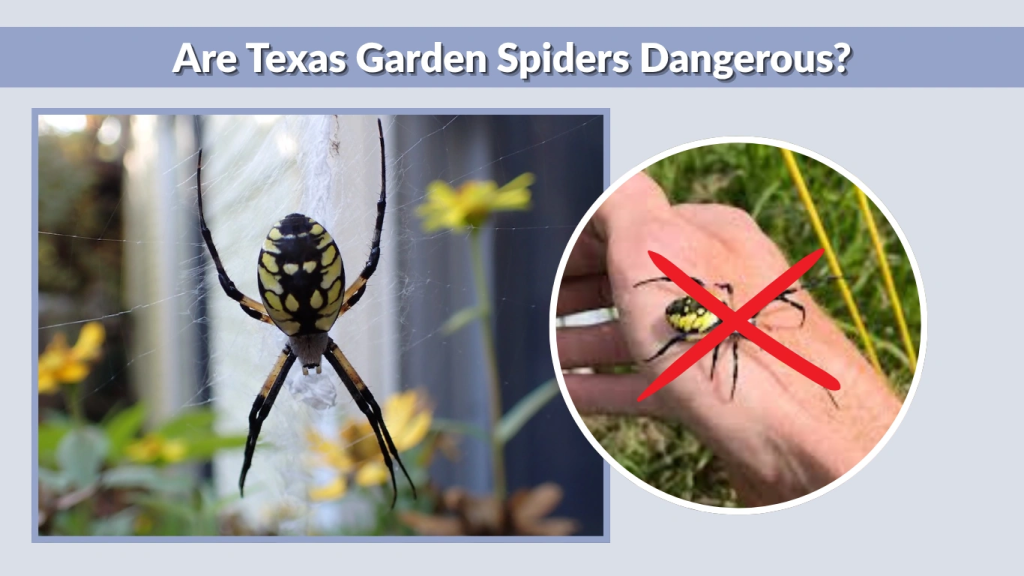
Venom and Bite Information
Many Texans mistake large garden spiders for dangerous species, but the truth is: they’re harmless to humans.
The venom of the yellow garden spider and banded garden spider is designed for small insects, not people. If a bite does occur — which is very rare and usually only if the spider is handled or trapped — symptoms are mild and temporary. You may notice minor redness, swelling, or irritation, similar to a bee sting.
Most garden spiders prefer to flee or drop from their webs when approached rather than bite. They are shy creatures, focused on their webs and prey, not on defending themselves against humans.
Comparison with Black Widow and Other Spiders
It’s easy to confuse large garden spiders with venomous species like the black widow, especially from a distance. However, there are several clear differences:
- Garden spiders have bright yellow, black, or silver markings and build large circular webs.
- Black widows are shiny black with a red hourglass on the underside of their abdomen and build messy, irregular webs in dark corners.
Black widows also prefer hidden areas such as woodpiles, garages, or under outdoor furniture, while garden spiders like open, sunny spaces.
In short, the large colorful spider in your backyard web is almost certainly not a black widow — it’s a harmless garden helper.
Saint Andrew’s Cross Spider Confusion
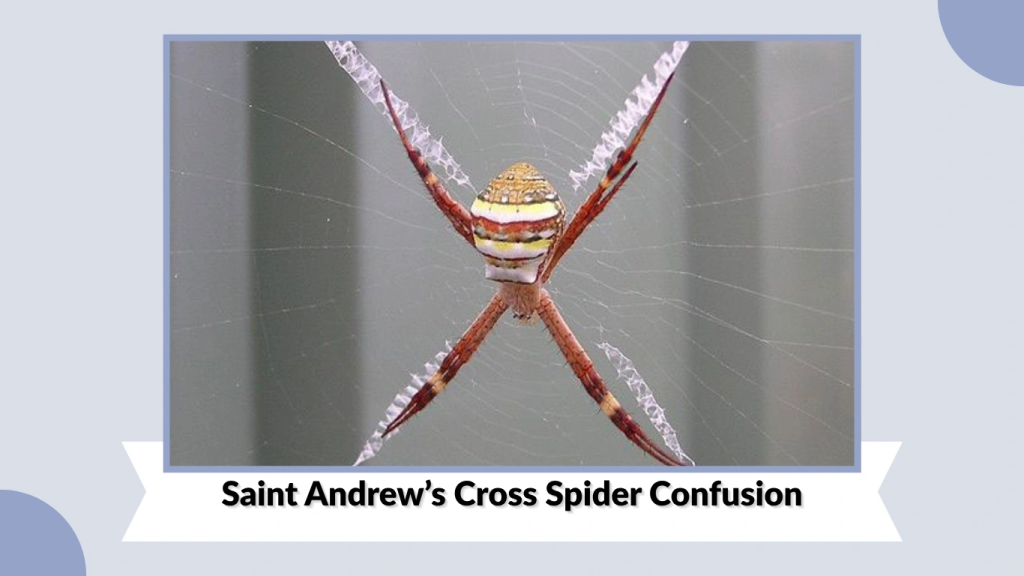
Occasionally, Texans refer to their garden spiders as Saint Andrew’s spiders due to the “X” shape they make with their legs while resting. However, the true Saint Andrew’s Cross Spider (Argiope keyserlingi) is native to Australia, not Texas.
The Texas yellow garden spider (Argiope aurantia) displays similar posture and web style but is a different species. Both belong to the same Argiope genus, which explains the resemblance.
So, while the name “Saint Andrew’s Spider” may pop up locally, the species you’re seeing in your Texas garden is most likely the native yellow garden spider — same family, different origin.
Spider Mites and Garden Pest Treatment in Texas
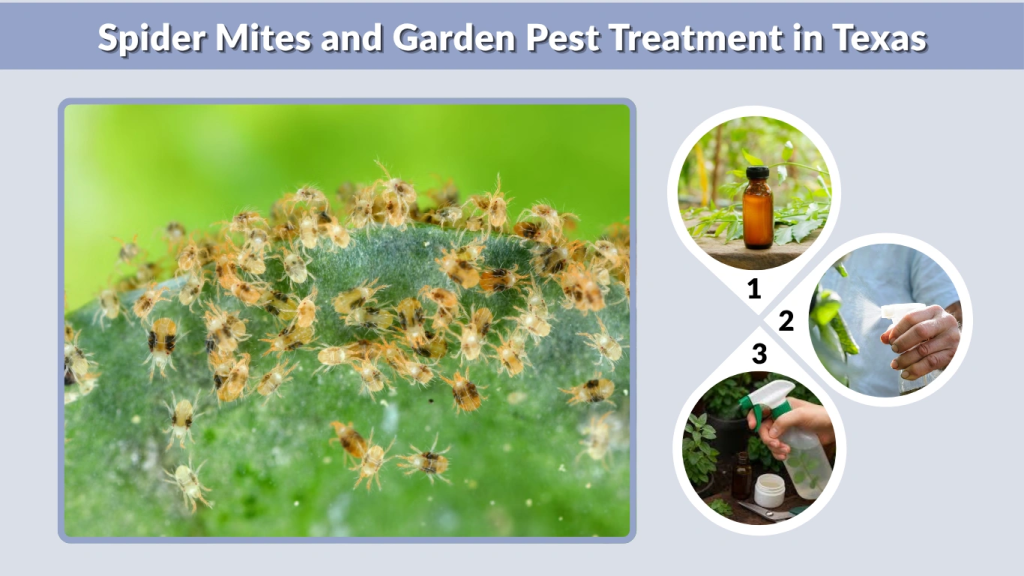
A common point of confusion for gardeners is between garden spiders (beneficial predators) and spider mites (harmful plant pests).
Spider mites are not spiders; they are tiny arachnids that feed on plant sap, causing leaves to yellow and die. They often infest vegetable gardens and indoor plants, especially during Texas’s hot, dry months.
Best Spider Mite Treatments for Texas Gardens
- Neem Oil: Natural and effective for organic gardens.
- Insecticidal Soap: Kills mites without harming beneficial spiders.
- Water Spray: Regularly spraying plant leaves dislodges mites.
- Predatory Mites: Release natural enemies like Phytoseiulus persimilis for biological control.
Remember, garden spiders are your allies, while spider mites are the real threat. Protect the spiders — they’ll help control the mites naturally.
Observing and Photographing Garden Spiders
Garden spiders make fascinating photo subjects. Their webs, especially at sunrise or after rain, create stunning patterns that shimmer with droplets of dew.
Tips for Safe Observation
- Photograph early morning when spiders are less active.
- Avoid touching or disturbing the web.
- Use macro settings or zoom for close-up shots.
- Look for webs near fences, garden beds, and porch lights.
These spiders are patient models — they often remain still for long periods, allowing perfect photo opportunities.
Conservation and Coexistence
Texas garden spiders are an important part of the local environment. Unfortunately, fear and misunderstanding lead many people to destroy their webs or kill them unnecessarily.
Instead, try to coexist with them. If a web is in an inconvenient place — near a doorway or walkway — gently relocate the spider with a soft brush or stick to another area of your yard. Garden spiders rarely survive indoors, so it’s best to move them outside where they can continue to hunt.
Avoid using harsh pesticides, which can harm both spiders and the beneficial insects they depend on. Encouraging a natural garden environment helps maintain a balanced ecosystem.
Conclusion
The garden spiders of Texas — from the brilliant yellow Argiope aurantia to the banded Argiope trifasciata — are some of the most remarkable residents of the Lone Star State’s backyards.
They are not pests or threats, but silent protectors weaving intricate webs that keep insect populations under control. Whether you live in Austin, Dallas, or South Texas, these spiders contribute to the natural balance of your garden.
So, the next time you spot a large yellow and black spider stretched across your tomato plants or porch fence, don’t panic — admire it. You’re witnessing one of nature’s finest engineers at work.
FAQs
Are Texas garden spiders poisonous or dangerous?
No. Garden spiders are harmless and non-aggressive. Their venom is mild and only affects small insects.
How big do yellow garden spiders get in Texas?
Female yellow garden spiders can grow up to 1 inch long in body length, with a 3-inch leg span. Males are smaller.
Where can you find garden spiders in Texas?
They are found throughout Texas — in gardens, fields, and even suburban yards — especially from mid-summer to early fall.
What’s the difference between a garden spider and a black widow?
Garden spiders are bright and patterned, while black widows are shiny black with a red hourglass marking. Garden spiders build circular webs; widows build messy ones.
Do garden spiders help control pests in vegetable gardens?
Absolutely. Garden spiders eat flies, mosquitoes, beetles, and other pests, making them a valuable natural pest control solution for Texas gardeners.