
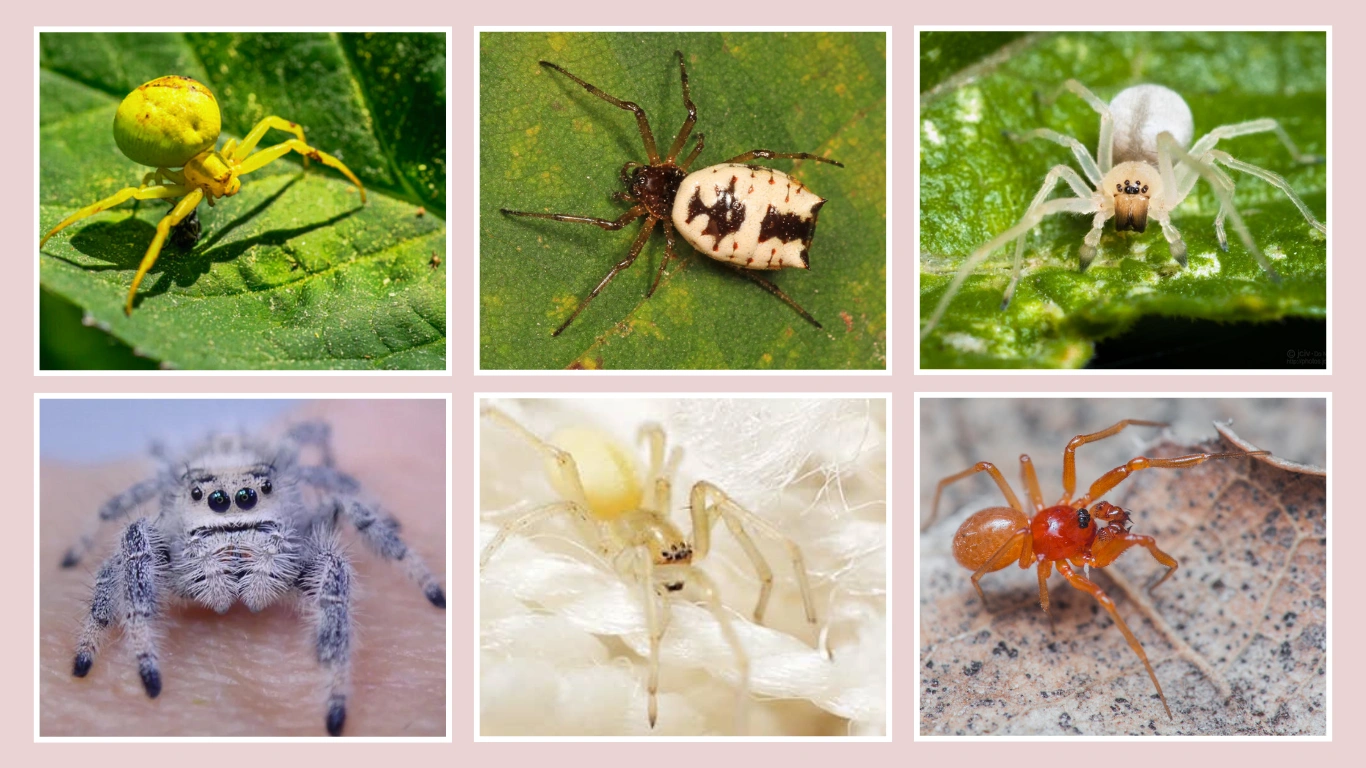
Tiny white spiders often go unnoticed due to their pale color and small size, yet they play an important role in natural pest control. Whether hiding on flower petals or tucked into corners indoors, these delicate-looking arachnids can be found in a variety of environments. In this guide, you’ll discover seven small white spiders, each with unique features, behaviors, and habitats worth knowing.
1. Goldenrod Crab Spider
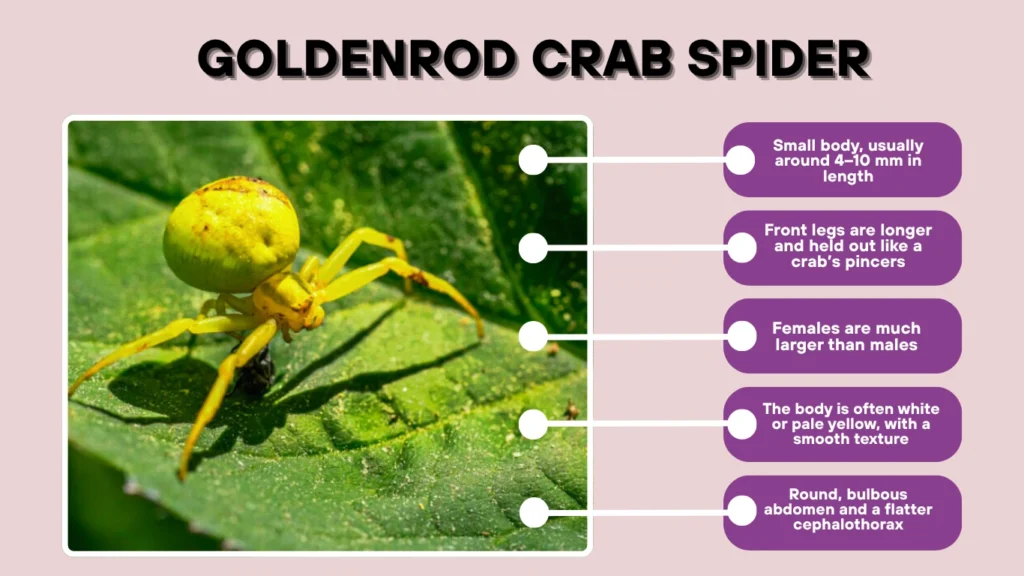
The Goldenrod Crab Spider (Misumena vatia) is one of the most fascinating tiny white spiders commonly found in gardens and meadows. Though it can change color to yellow, it’s often spotted in a bright white form while hunting on flowers. Its crab-like shape and stealthy hunting style make it unique among small white spiders.
Identification Features
- Small body, usually around 4–10 mm in length
- Front legs are longer and held out like a crab’s pincers
- Females are much larger than males
- The body is often white or pale yellow, with a smooth texture
- Round, bulbous abdomen and a flatter cephalothorax
Color, Pattern and Body Details
Goldenrod crab spiders can blend into their environment, changing between white and yellow depending on the flower they inhabit. The white form often has faint greenish or pinkish markings on the sides of the abdomen. The legs and cephalothorax remain pale, sometimes translucent.
Preferred Habitat
These spiders prefer sunny areas with blooming flowers—especially goldenrods, daisies, and yarrow. They don’t build webs to trap prey but sit motionless on petals, waiting to ambush pollinators like bees or flies.
Behavior and Hunting Style
Unlike most web-building spiders, Goldenrod Crab Spiders are ambush predators. They remain still for long periods, using their color camouflage to stay hidden. Once prey lands nearby, they use their powerful front legs to grab and inject venom. Females often stay in one flower for days, while males move around more in search of mates.
2. White Micrathena
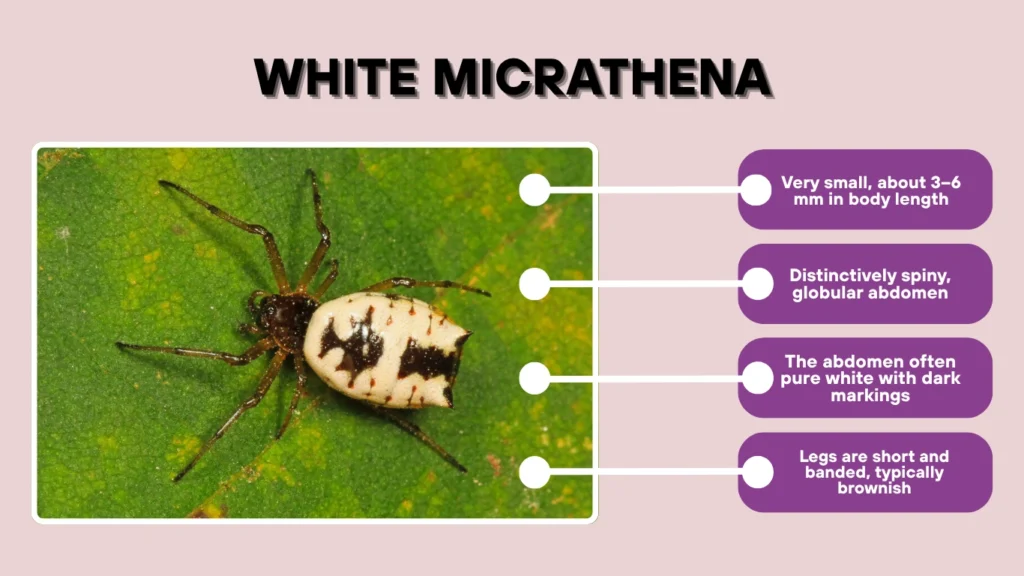
The White Micrathena (Micrathena mitrata) is a tiny orb-weaving spider known for its white, spiky body and unusual appearance. Though small in size, its shape and color make it stand out among forest foliage or brush. It’s often overlooked due to its quiet behavior and compact web-building habits.
Identification Features
- Very small, about 3–6 mm in body length
- Distinctively spiny, globular abdomen
- The abdomen often pure white with dark markings
- Legs are short and banded, typically brownish
Body Color and Markings
The spider’s white abdomen is often glossy and can be dotted or marked with tiny black spots or brown patches. Its rough, spiny appearance helps it resemble plant debris or thorns, which serves as camouflage.
Natural Habitat
White Micrathenas are mostly found in wooded areas, particularly near understory vegetation or low shrubs. They spin small, circular orb webs close to the ground, often between branches.
Behavior and Web Habits
These spiders are solitary and shy. They stay near their webs, rebuilding them daily or as needed. They are more active at night or during early morning hours and prefer shaded, moist environments for better humidity control.
3. Ghost Spider
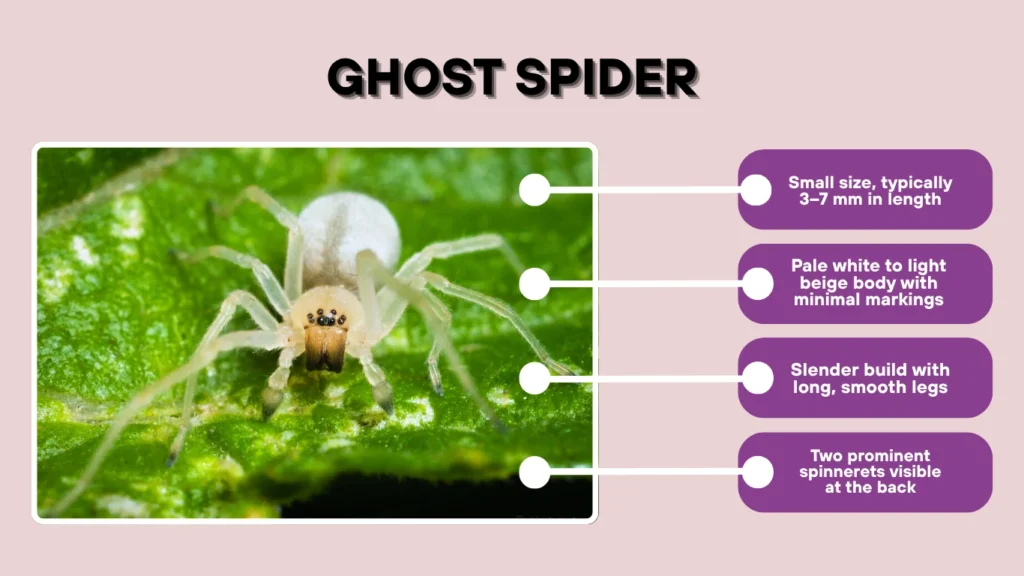
The Ghost Spider (Anyphaena spp.) gets its name from its pale, ghost-like color and fast movements. This small white spider is active mostly at night and often found indoors or in vegetation. It’s a wandering hunter that doesn’t rely on a web to capture prey.
Identification Features
- Small size, typically 3–7 mm in length
- Pale white to light beige body with minimal markings
- Slender build with long, smooth legs
- Two prominent spinnerets visible at the back
Body Color and Appearance
Ghost spiders are almost translucent white or cream, giving them a faint, ghostly look. Their legs may show subtle banding, but overall their bodies remain pale and smooth. Some species may have a faint line down the back.
Common Habitat
You’ll often find ghost spiders under leaves, tree bark, or inside homes—especially in window sills, basements, or attics. Outdoors, they live in shrubs or grassy areas where they hide during the day.
Behavior and Hunting Traits
These spiders are agile and quick. Instead of spinning a sticky web, ghost spiders actively hunt their prey at night, stalking small insects on foot. They’re harmless to humans and usually run away when disturbed.
4. White Jumping Spider

The White Jumping Spider, sometimes seen in pale forms of Lyssomanes viridis or other jumping spider species, is a tiny, alert spider known for its agile movements and curious behavior. While most jumping spiders are dark or colorful, some individuals appear nearly white or translucent.
Identification Features
- Very small, typically 4–6 mm in length
- Compact, slightly fuzzy body
- Short, strong legs adapted for jumping
- Large front-facing eyes for excellent vision
Coloration and Physical Traits
These spiders may appear light white, cream, or translucent greenish-white. Some individuals may reflect iridescent light under sun. Their eyes are a defining feature—big, round, and forward-facing, giving them a “cute” or expressive look.
Natural Habitat
White jumping spiders are found on leaves, flower petals, windowsills, or walls—any place where small insects may land. They prefer sunny, warm areas and are often spotted in gardens or greenhouses.
Behavior and Movement Style
They are curious and often turn to face movement. Instead of spinning webs, they leap on prey using silk draglines for safety. Their visual acuity allows them to judge distances precisely, making their jumps surprisingly accurate.
5. White House Spider (Oecobius navus)

The White House Spider is a tiny, pale-colored cobweb spider commonly found in corners of homes or near windows. Its white or off-white coloring helps it blend into walls and ceilings, making it easy to miss unless you’re looking closely.
Identification Features
- Tiny size, usually 2.5–5 mm
- Flat, circular abdomen with a light-colored body
- Very fine legs, often translucent
- Moves quickly and hides in crevices
Color and Structure
Their bodies are light beige, white, or slightly translucent with a matte texture. Some may show light mottling on the abdomen. Their small size and coloring help them remain nearly invisible against light surfaces.
Usual Habitat
They favor human dwellings—especially corners, ceiling cracks, behind picture frames, or under window sills. Outdoors, they may live under bark or among rocks. They build small, irregular webs close to the surface.
Behavior and Hiding Habits
White House Spiders are reclusive and quick to retreat when disturbed. They wait patiently in their webs to ambush small insects or mites. Their silk is fine and barely visible, and they may live unnoticed for long periods.
6. Dwarf Spider (Erigoninae subfamily)

Dwarf Spiders belong to a large subfamily of tiny spiders, many of which are white or pale-colored. These spiders are incredibly small and often overlooked due to their size and secretive habits. While most aren’t pure white, some species appear pale enough to seem nearly colorless.
Identification Features
- Extremely small: usually 1–3 mm in length
- Oval or rounded abdomen
- Thin, delicate legs
- Hard to spot without magnification
Body Color and Features
Many dwarf spiders have a pale white or light cream body, sometimes translucent. Their legs may appear glass-like or slightly yellow. Some have subtle markings on the abdomen, but others are entirely pale.
Preferred Habitat
You can find them in leaf litter, grass, moss, under stones, or in the soil. They’re common in both woodlands and gardens and are especially abundant in moist, shaded environments.
Behavior and Lifestyle
These spiders are passive hunters, often spinning small sheet webs near the ground. Their tiny size allows them to live in microhabitats that larger spiders cannot access. They are most active in the cooler months and are rarely seen without close inspection.
7. Theridion varians
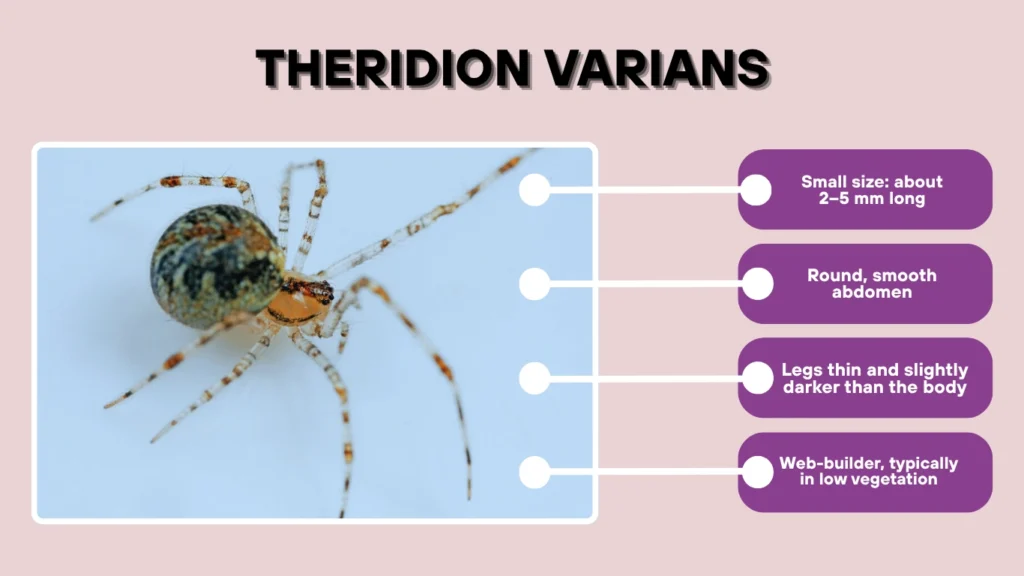
Theridion varians is a small cobweb spider that sometimes displays a white or pale abdomen, depending on the individual. It’s part of the Theridiidae family, which includes many tiny, cryptic spiders often found around vegetation and structures.
Identification Features
- Small size: about 2–5 mm long
- Round, smooth abdomen
- Legs thin and slightly darker than the body
- Web-builder, typically in low vegetation
Body Appearance and Coloration
Some individuals have a white or very light-colored abdomen with brown or gray markings. Their coloration can vary greatly, but white variants blend in with light backgrounds. The body is often glossy and soft-looking.
Common Locations
They are found in shrubs, leaf litter, tall grass, or man-made structures. These spiders create irregular cobwebs in hidden corners or within dense vegetation.
Daily Behavior and Movement
Theridion varians spiders are shy and stay in or near their webs. They are nocturnal and wait for small prey to get caught in the sticky silk. They rarely move unless disturbed and rely on vibration to detect activity in their web.
Summary
Tiny white spiders may be small, but they’re fascinating once you know what to look for. From the flower-dwelling Goldenrod Crab Spider to the nearly invisible Dwarf Spider, each species has its own distinct traits and lifestyle. Some blend perfectly into petals or leaves, while others build delicate webs in quiet corners. This article explored seven unique white spiders you might encounter indoors or outdoors, helping you recognize their identification features, habitats, and behaviors with ease.