
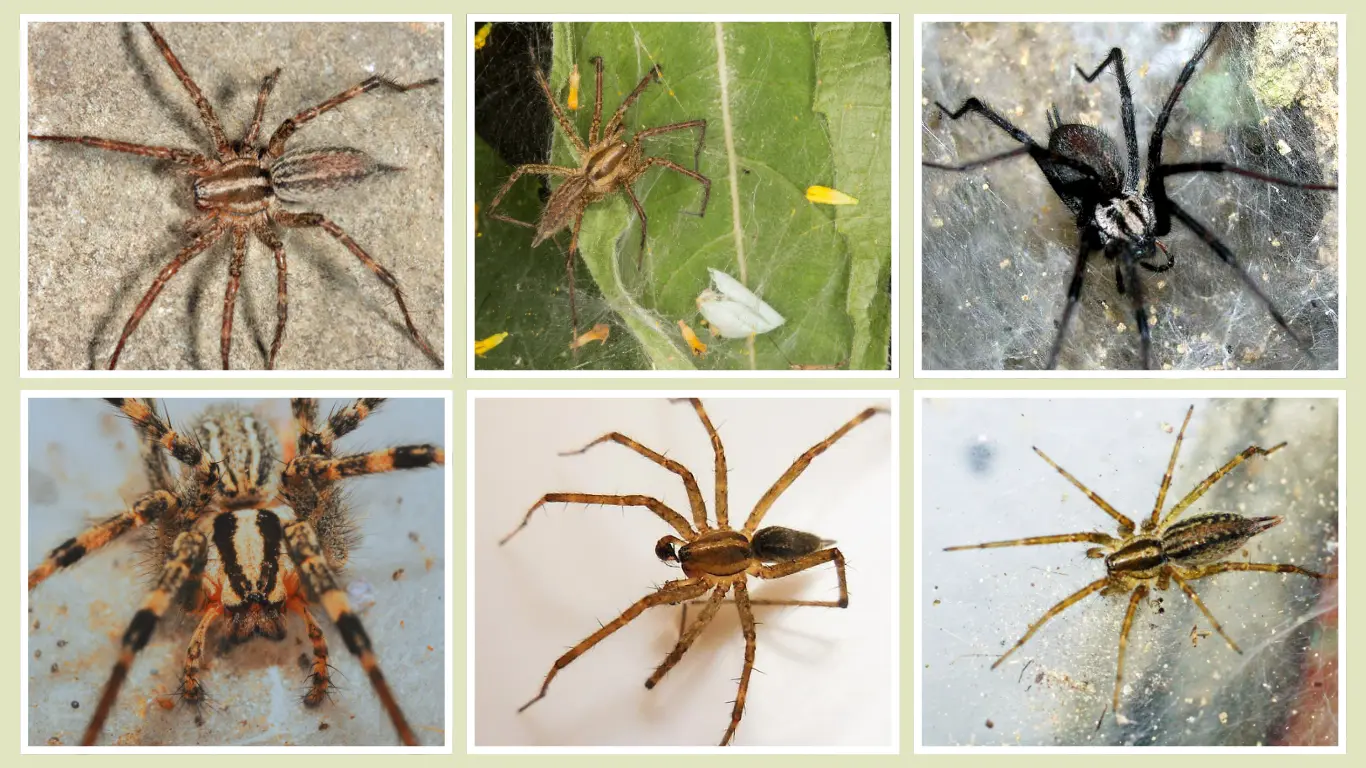
Grass spiders, belonging to the Agelenopsis genus, are fast-moving arachnids known for their distinctive funnel-shaped webs and ground-dwelling habits. Commonly found in lawns, fields, and meadows across North America, these spiders play an important role in controlling insect populations. While they may appear intimidating due to their speed, grass spiders are harmless to humans. This guide covers 7 well-known species—including the Common, Desert, and Utah Grass Spiders—highlighting their appearance, preferred habitats, and hunting behavior.
1. Common Grass Spider (Agelenopsis pennsylvanica)

The Common Grass Spider is the most widespread and recognizable member of the Agelenopsis genus in North America. Known for its fast movements and distinctive funnel-shaped web, this spider is commonly found in lawns, gardens, and fields. Despite its alarming speed and sudden appearance, it is harmless to humans and plays a helpful role in controlling insect populations.
Identification Features
- Color: Brown to gray with two dark longitudinal stripes on the cephalothorax
- Size: Females up to 19 mm; males slightly smaller
- Abdomen with chevron-like markings
- Long spinnerets visible at the rear
- Covered in fine, light-colored hairs
Habitat and Distribution
The Common Grass Spider is found throughout the United States and southern Canada, especially in grassy areas, bushes, hedges, and under debris. It builds horizontal sheet webs with a funnel retreat, often across low vegetation or ground surfaces in both urban and rural settings.
Lifecycle and Web Structure
This species builds a non-sticky, funnel-shaped web that serves as both a hunting platform and hiding spot. The spider hides in the funnel and dashes out to capture prey. Females lay egg sacs in late summer and guard them until spiderlings hatch. The young disperse quickly and mature by the next season.
Behavior and Prey Capture
The Common Grass Spider is a fast ambush predator, relying on vibrations on its web to detect prey. It feeds on flies, ants, moths, and other insects that wander onto its web. Though quick to retreat when disturbed, it is non-aggressive and rarely bites.
2. Western Grass Spider (Agelenopsis actuosa)

The Western Grass Spider is native to the western regions of North America and is known for its agility and impressive web structure. It resembles other Agelenopsis species but is adapted to drier, open landscapes. This spider is a quick hunter, darting from its funnel retreat to snatch prey with remarkable speed.
Identification Features
- Color: Brownish with darker stripes on the cephalothorax
- Size: Females up to 17 mm; males smaller
- Distinct V- or chevron-shaped markings on the abdomen
- Long, thin legs with banding patterns
- Prominent spinnerets at the rear
Habitat and Range
Found mostly in the western U.S. and parts of Canada, especially in prairies, dry grasslands, and shrublands. It constructs its funnel webs on the ground, between rocks, or within dry vegetation. Its web serves as both a retreat and a prey-trapping platform.
Lifecycle and Funnel Retreats
The Western Grass Spider builds a sheet web with a tube-like funnel, where it hides during the day. Females lay eggs in concealed silk sacs during summer. After hatching, young spiders disperse and grow rapidly, often reaching adulthood within one season.
Behavior and Prey Response
It is a passive ambush predator, remaining hidden until it detects prey movement on its web. Once triggered, it quickly emerges to attack. It does not pose any danger to humans and helps control insect populations naturally.
3. Eastern Grass Spider (Agelenopsis naevia)

The Eastern Grass Spider is commonly found in eastern parts of North America. It closely resembles other Agelenopsis species but is often identified by its regional presence and subtle variations in patterning. Like others in the genus, it spins classic funnel webs in grassy or shrubby environments.
Identification Features
- Color: Brownish-gray with dark longitudinal bands
- Size: Females up to 18 mm; males slightly smaller
- Abdomen with leaf- or flame-like markings
- Covered with fine setae (hairs)
- Noticeably long spinnerets at the abdomen’s tip
Habitat and Distribution
Widespread in eastern U.S. and southeastern Canada, especially in lawns, garden borders, meadows, and woodland edges. It builds dense horizontal sheet webs near the ground, often in vegetation or among rocks and logs.
Egg Sacs and Seasonal Cycle
Females lay eggs during late summer in dense, silken sacs. Spiderlings hatch and often stay nearby before dispersing. Adults are mostly seen in late summer and fall, which is when their webs become more noticeable due to morning dew.
Hunting and Movement
The Eastern Grass Spider is a fast and efficient predator, detecting prey through vibrations on its web. It does not use sticky silk but instead relies on quick reflexes and excellent traction to catch insects like crickets, moths, and flies.
4. Desert Grass Spider (Agelenopsis aperta)

The Desert Grass Spider is uniquely adapted to dry, arid environments across the southwestern United States. Despite its name, it still prefers areas with some vegetation and shelter, where it can build its signature funnel-shaped web. This species is especially common in Arizona, New Mexico, and parts of California.
Identification Features
- Color: Pale tan to grayish-brown with dark stripes
- Size: Females up to 16 mm; males slightly smaller
- Subtle abdominal markings, often less bold than other species
- Long spinnerets extend clearly behind the abdomen
- Legs show faint banding and are built for speed
Habitat and Geographic Range
Found in desert grasslands, dry shrubs, and rocky terrain, often near structures or shaded areas. It builds horizontal sheet webs with a funnel retreat, typically among low desert plants or rocks. Despite the harsh climate, it thrives in early mornings and evenings when temperatures are lower.
Lifecycle and Egg Sac Behavior
This spider lays its eggs in late spring to summer inside a protected silk sac, often attached to nearby vegetation or within the funnel retreat. Spiderlings hatch quickly and disperse to form their own webs. Adults are mostly seen in the warmer months.
Behavior and Hunting Approach
Agelenopsis aperta is a fast ground-level hunter, remaining hidden until prey touches its web. It then dashes out at high speed to subdue the insect. Although it looks intimidating, it is harmless to humans and prefers to flee rather than confront.
5. Utah Grass Spider (Agelenopsis utahana)

The Utah Grass Spider is native to the intermountain west of the United States, particularly Utah, Colorado, and Idaho. It closely resembles other grass spiders but tends to inhabit slightly higher elevations and cooler zones, including grassy mountain valleys and woodland edges.
Identification Features
- Color: Brown to dark gray with lighter markings
- Size: Females up to 15 mm; males smaller (~10 mm)
- Broad cephalothorax with two distinct dark stripes
- Abdomen with diffuse or wavy patterns
- Long, straight spinnerets protrude from the abdomen
Environment and Distribution
Preferring moist grasslands, mountain foothills, and forest clearings, A. utahana creates flat sheet webs in grasses or among rock crevices. It is especially active in spring and early summer, when insect prey is abundant and conditions are cool.
Reproduction and Web Usage
Females lay eggs in secure silk sacs and often stay near the retreat to protect them. Young spiders disperse within a few weeks and begin web-building quickly. Adults are more frequently seen in cooler months or at higher altitudes.
Prey Capture and Movement
This spider’s web is non-sticky but highly sensitive to vibration. It reacts immediately to the presence of prey, running across the sheet web to strike. Like other grass spiders, it does not bite unless provoked and poses no threat to humans.
6. Emerton’s Grass Spider (Agelenopsis emertoni)

Emerton’s Grass Spider is a lesser-known but widespread species of the Agelenopsis genus. It is named after the American arachnologist James H. Emerton. This spider is most often found in wooded areas, grass-covered slopes, and shaded garden spots, particularly in the eastern and central United States.
Identification Features
- Color: Light brown to gray with two dark longitudinal stripes on the cephalothorax
- Size: Females up to 14 mm; males slightly smaller
- Abdomen may have faint chevron or wavy markings
- Long legs and visible rear spinnerets
- Often confused with A. pennsylvanica due to similar appearance
Habitat and Regional Range
Common in wooded suburbs, shaded lawns, and grassy patches, especially in Ohio, Pennsylvania, and surrounding states. It builds its funnel web near the base of tall grasses, logs, or among leaf litter, preferring moist, shaded environments over dry, open ones.
Lifecycle and Web Behavior
This species builds the standard sheet web with a funnel-shaped retreat. Females guard their egg sacs, which are laid in summer and attached to nearby vegetation or within the web retreat. Spiderlings hatch and disperse within weeks, maturing by the next warm season.
Hunting Method and Activity
Like other grass spiders, A. emertoni uses speed and vibration sensitivity to detect and capture prey. It remains hidden in its funnel during the day, emerging quickly to grab small insects that touch its web. It is non-aggressive and avoids human contact.
7. Potter’s Grass Spider (Agelenopsis potteri)

Potter’s Grass Spider is one of the rarer and less frequently studied Agelenopsis species, found mainly in central and eastern parts of North America. It prefers grassy fields and meadows and is occasionally seen in suburban gardens. Though not as common, it shares many traits with its more widespread relatives.
Identification Features
- Color: Brownish-gray with less prominent striping
- Size: Females up to 13 mm; males slightly smaller
- Slightly shorter legs than other Agelenopsis species
- Distinct spinnerets visible behind the abdomen
- Subtle abdominal patterns or sometimes nearly plain
Habitat and Geographic Location
Typically seen in open grassy habitats, such as prairies, meadows, and lawns. It prefers moderately moist environments and tends to construct its sheet webs at ground level, sometimes tucked near stones or thick grass tufts.
Reproduction and Lifecycle
Females lay eggs in summer and protect the silk egg sac within or near the funnel retreat. The spiderlings hatch in late summer or early fall and may overwinter as juveniles before reaching maturity the next year.
Prey Capture and Web Usage
Agelenopsis potteri uses its non-sticky but responsive web to detect insects, then rushes out of its funnel to subdue the prey. Like others in its genus, it is harmless to humans and serves as a beneficial insect predator.
Summary
Grass spiders are efficient, non-aggressive predators that build funnel-shaped webs in grassy environments across North America. This guide explores 7 notable species, including the Common Grass Spider (A. pennsylvanica) and Desert Grass Spider (A. aperta), each adapted to specific regions and habitats. While their appearances are similar, subtle differences in markings, environment, and behavior help identify them. With detailed descriptions of each species’ features, life cycle, and web-building habits, this article offers a clear understanding of these quick, beneficial garden dwellers.
