

Lynx spiders are quick, sharp-eyed hunters that don’t spin webs but chase down their prey with agility. Found in gardens, fields, and forests, these spiders play a key role in controlling insect populations. With over 600 species worldwide, a few stand out for their unique colors, behaviors, and habitats. In this article, I’ll introduce five well-known lynx spiders and share how to identify and understand each one.
1. Green Lynx Spider (Peucetia viridans)

The Green Lynx Spider is one of the most recognizable lynx spiders in the world. Native to the southern United States, Mexico, Central America, and the Caribbean, this species thrives in warm climates and is frequently seen on flowering plants, shrubs, and crops. It’s known for its vibrant green body and excellent jumping ability, making it both a beautiful and effective predator.
Identification Features
- Color: Bright green body with red or white markings
- Legs: Long, thin, and covered with black spines
- Eyes: Eight eyes arranged in a hexagonal pattern
- Size: Females are around 12–22 mm long; males are smaller
Behavior
Green lynx spiders are active hunters. They do not build webs to trap prey but instead stalk and pounce like a cat—hence the name “lynx.” Females are especially aggressive during egg guarding and may leap to attack if disturbed. Their main diet includes flies, moths, and small insects found on plants.
Interesting Fact
Unlike many other spiders, the Green Lynx Spider can spray venom defensively when threatened. Although this venom is harmless to humans, it can be fatal to small insect pests, making this spider a natural pest control ally in agriculture.
2. Striped Lynx Spider (Oxyopes salticus)

The Striped Lynx Spider is a fast-moving, agile predator commonly found in North and South America. It thrives in fields, gardens, and agricultural areas, especially where tall grass or crops grow. Recognized for its striped body and spiny legs, this spider plays an important role in controlling crop-damaging insects.
Identification Features
- Color: Yellowish-brown to gray with dark longitudinal stripes
- Legs: Long, slender, with black spines and sometimes translucent bands
- Eyes: Eight eyes in a hexagonal layout
- Size: Around 5–7 mm in males, 6–10 mm in females
Behavior
This species is an active daytime hunter. It doesn’t use webs to capture prey but runs and pounces on small insects like aphids, moth larvae, and leafhoppers. The Striped Lynx Spider is especially valued in farming environments where it naturally reduces pest populations. It’s commonly seen patrolling the surfaces of leaves and stems in crops such as cotton, corn, and soybean.
Role in Agriculture
Because of its hunting efficiency, the Striped Lynx Spider is considered a biological pest control agent. Farmers often encourage its presence in crop fields, as it helps limit the need for chemical insecticides. Despite its fierce appearance, it poses no danger to humans.
3. Asian Green Lynx Spider (Peucetia longipalpis)
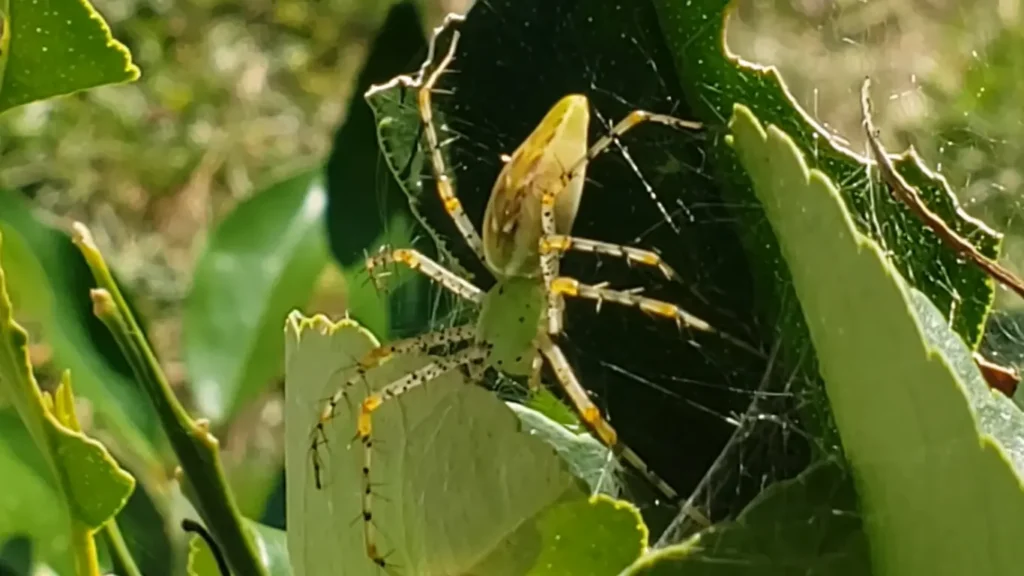
The Asian Green Lynx Spider is closely related to the more widely known Peucetia viridans but is native to regions of South and Southeast Asia, including India, Bangladesh, and Thailand. This spider is commonly found on green foliage, especially in gardens, grasslands, and roadside vegetation, where its green coloration provides perfect camouflage.
Identification Features
- Color: Pale green body with possible yellow or white markings
- Legs: Long, slender, covered with fine black spines
- Distinctive Trait: Enlarged and hairy palps (mouthparts), especially in males
- Size: Females range from 10–16 mm; males are smaller and more slender
Behavior
Like other lynx spiders, Peucetia longipalpis is an active predator that hunts during the day. It waits motionlessly among leaves, then ambushes prey with a swift leap. This spider feeds on various small insects like flies, moths, and beetles, often choosing spots near flowers where prey is abundant. Females build silk egg sacs on leaves and fiercely guard them until the spiderlings hatch.
Unique Traits
Unlike its American cousin (P. viridans), the Asian Green Lynx Spider tends to be slightly smaller and has more delicate coloration, helping it blend seamlessly with tropical plant environments. Its visual hunting method, combined with perfect camouflage, makes it highly effective and rarely seen unless closely observed.
4. Javan Lynx Spider (Oxyopes javanus)

The Javan Lynx Spider is a widely distributed species across Southeast Asia, including Indonesia, the Philippines, Malaysia, and Bangladesh. It’s particularly common in rice fields, gardens, and open grassy areas. With its sharp vision, fast reflexes, and adaptability, this spider plays an essential role in natural pest control.
Identification Features
- Color: Yellowish to reddish-brown with fine black markings
- Legs: Long, spiny legs that often appear striped
- Body Shape: Slender, with a slightly pointed abdomen
- Size: Females around 8–10 mm; males slightly smaller
Behavior
Oxyopes javanus is a visual hunter, relying on quick movements and stealth to capture prey. It does not spin webs for hunting but uses its strong legs and agility to chase and pounce on soft-bodied insects such as leafhoppers, planthoppers, and aphids—common pests in rice fields. The spider is often spotted resting on grass blades or plant stems, where it blends in surprisingly well.
Role in Ecosystem
This species is a natural ally for farmers, especially in rice cultivation. Its presence helps reduce reliance on chemical pesticides. O. javanus is known for its tolerance to various farming environments, including those with some pesticide exposure, making it a resilient and effective predator. It poses no threat to humans and contributes positively to agricultural sustainability.
5. Gray Lynx Spider (Hamataliwa grisea)

The Gray Lynx Spider, scientifically known as Hamataliwa grisea, is a tree-dwelling species native to North and Central America. Unlike its brighter green or striped relatives, this spider has a cryptic gray-brown appearance that allows it to blend in seamlessly with bark and woody surfaces. It is most often found resting motionless on tree trunks, shrubs, and twigs.
Identification Features
- Color: Gray to brown, with irregular patterns resembling bark
- Body Shape: Compact and slightly angular body
- Legs: Shorter and more robust than other lynx spiders, with fewer spines
- Size: Typically 5–8 mm long
Behavior
Hamataliwa grisea is a patient and stealthy hunter. Rather than actively chasing its prey, it relies on camouflage and ambush tactics. The spider remains still for long periods, waiting for unsuspecting insects to come within range before striking with lightning speed. Its flattened body shape and coloration allow it to hide in plain sight, making it nearly invisible against bark or dead leaves.
Camouflage Advantage
This spider’s primary defense and hunting tactic is its exceptional camouflage. It can remain undetected not only by prey but also by predators. Unlike many other lynx spiders that are active in open fields or greenery, Hamataliwa grisea specializes in forested or shrubby habitats, where its bark-like appearance is a powerful survival tool.
Comparison Table About this Spider
| Spider Name | Color | Size (Female) | Habitat | Key Behavior | Special Trait |
| Green Lynx Spider (Peucetia viridans) | Bright green with red spots | 12–22 mm | Flowers, shrubs, open fields | Active hunter, jumps to catch prey | Can spray venom when threatened |
| Striped Lynx Spider (Oxyopes salticus) | Yellowish-brown with stripes | 6–10 mm | Crop fields, grassy areas | Daytime predator, pest controller | Beneficial for agriculture |
| Asian Green Lynx Spider (Peucetia longipalpis) | Pale green, long palps | 10–16 mm | Tropical gardens, foliage | Ambush hunter on leaves | Excellent camouflage in tropical plants |
| Javan Lynx Spider (Oxyopes javanus) | Yellow to reddish-brown | 8–10 mm | Rice fields, grasslands | Fast and agile, hunts crop pests | Common in Southeast Asian farming zones |
| Gray Lynx Spider (Hamataliwa grisea) | Gray to bark-brown | 5–8 mm | Tree trunks, shrubs | Still, ambush-based predator | Bark-like camouflage for perfect hiding |