

The hobo spider (Eratigena agrestis) is a common ground-dwelling arachnid found in Europe and parts of North America, especially in the northwestern United States. While often misunderstood due to past claims about its venomous bite, the hobo spider is more of a reclusive predator than a threat to humans. One of the most intriguing aspects of its behavior is its diet and how it hunts.
In this article, we explore what hobo spiders eat, how they catch their prey, and their role in the local ecosystem.
What Do Hobo Spiders Eat?
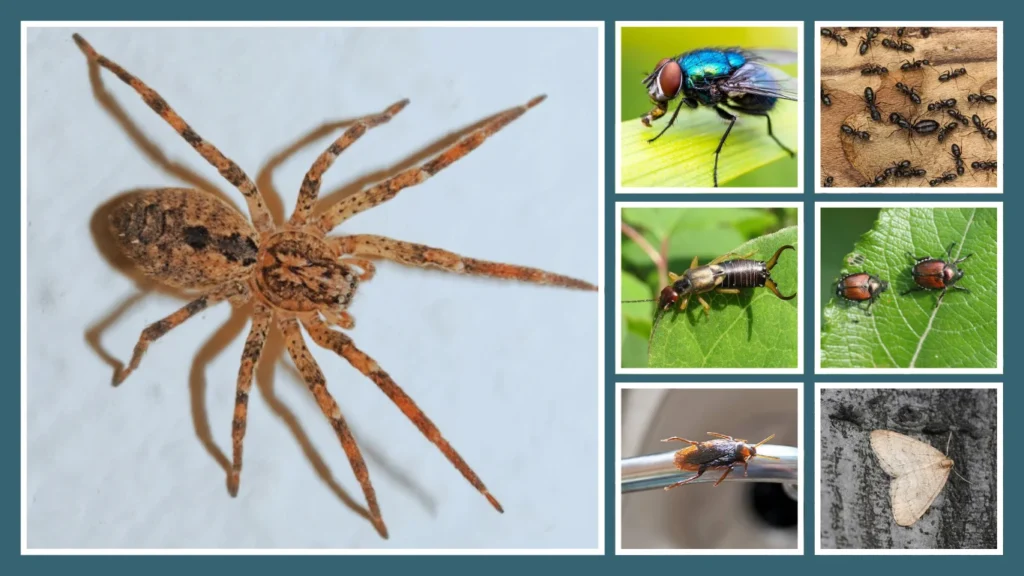
Hobo spiders are insectivorous, meaning they feed on insects and other small arthropods. Their diet includes:
- Flies
- Ants
- Earwigs
- Beetles
- Cockroaches
- Crickets and grasshoppers (smaller-sized)
- Moths
- Other small spiders
They are opportunistic feeders and consume any prey that gets trapped in their web or crosses their path. Because they live close to the ground or in dark, undisturbed areas of homes, they often encounter crawling insects more than flying ones.
How Do Hobo Spiders Hunt?

Hobo spiders use a web-based hunting strategy, but it’s very different from orb-weavers that build round, elevated webs. Their hunting style is a mix of trap setting and ambush.
1. Web Construction
- Hobo spiders build non-sticky, funnel-shaped webs near the ground, often in:
- Basement corners
- Under rocks or logs
- Along walls or floorboards
- In dark, undisturbed corners of homes
- Basement corners
- The web has a flat surface leading into a narrow retreat or tunnel where the spider hides.
2. The Ambush Technique
- The spider waits inside the funnel, its legs touching the web to sense vibrations.
- When prey walks across the flat part of the web, the spider sprints out, bites, and drags it back into the funnel.
- Though the silk isn’t sticky, the web helps slow down prey movement and alerts the spider instantly.
3. Envenomation and Feeding
- After grabbing the prey, the hobo spider delivers a venomous bite to paralyze it.
- It injects digestive enzymes, which liquefy the internal tissues of the insect.
- The spider then sucks out the liquefied insides, discarding the dry husk afterward.
How Often Do Hobo Spiders Eat?

Hobo spiders don’t need to eat every day. Depending on size, prey availability, and temperature, they may feed:
- Every few days in summer (when insect activity is high)
- Less frequently in winter or cooler temperatures
- They can go days or weeks without food if necessary, surviving on stored body energy.
Well-fed females are more likely to produce healthy egg sacs, while males eat less, especially during their search for mates.
Do Hobo Spiders Compete for Food?
Yes, particularly indoors or in dense spider populations. In basements or sheds, multiple spiders may compete for insects like flies or ants. In such cases:
- The dominant spider claims the best web spot.
- Some hobo spiders may relocate or be driven out by more aggressive species (such as giant house spiders).
Hobo spiders are not known to cannibalize, but if food is scarce, smaller spiders—including their own species—can become a food source.
What Do Hobo Spiderlings Eat?
Newly hatched hobo spiders (spiderlings) feed on:
- Tiny insects like springtails, mites, and fruit flies
- Small insect larvae
- Soft-bodied pests
They often remain near the mother’s web before dispersing to build their own funnels and hunt.
Are Hobo Spiders Beneficial?

Yes. Hobo spiders help control indoor and garden pest populations, including:
- Ants
- Flies
- Cockroaches
- Silverfish
- Small beetles
Their appetite for common pests makes them useful natural pest controllers, especially in basements, garages, or crawl spaces.
FAQs
1. Do hobo spiders eat cockroaches?
Yes, hobo spiders do eat cockroaches—particularly small or juvenile ones.
Hobo spiders are opportunistic predators and will attack any appropriately sized insect that enters their web. While large adult cockroaches may be too big or tough to subdue, nymphs and small species (like German cockroaches) are fair game. When a cockroach walks across the flat surface of the funnel web, the spider detects its movement, rushes out, delivers a venomous bite, and drags the prey back into the funnel retreat to feed. This makes them a helpful predator in homes where roaches are a problem.
2. Can hobo spiders survive without food?
Yes, hobo spiders can survive for extended periods without food—often for weeks or even longer.
Like many spiders, hobo spiders have a slow metabolism, which allows them to conserve energy when food is scarce. During cold seasons or dry periods when insect activity drops, they may enter a state of low activity and wait patiently inside their webs. This adaptation enables them to survive in basements, garages, and other undisturbed indoor areas with limited food sources. However, long-term starvation weakens the spider and reduces its ability to reproduce or defend its territory.
3. Do hobo spiders eat other spiders?
Occasionally, hobo spiders will eat other spiders—especially if they’re smaller and trespass into their web.
Cannibalism or predation of other spider species is not a primary part of their diet, but it does occur in the wild and indoors. If prey is scarce or a competitor spider enters the funnel web, the hobo spider may attack and consume it. This behavior helps eliminate food competition and offers a temporary protein source. Hobo spiders are known to defend their web territory, and their powerful jaws allow them to subdue many types of invertebrate intruders.
4. Do hobo spiders chase their prey?
No, hobo spiders are not active hunters—they rely on ambush tactics from their web.
These spiders build funnel-shaped webs with a wide, flat entrance and a narrow tunnel retreat. They remain hidden inside the funnel and wait for vibrations, indicating that an insect has stepped on the web’s surface. Unlike wolf spiders or jumping spiders that chase or stalk prey, hobo spiders rely entirely on the web for prey detection. Once they feel movement, they quickly dart out, attack the prey, and retreat with it. This sit-and-wait strategy is energy-efficient and ideal for their hidden habitats.
Final Thoughts
The hobo spider may have an intimidating look, but its feeding habits are far from aggressive toward humans. Instead, these funnel-web spiders are skilled insect hunters, using their silky tunnels and quick reflexes to capture pests. Their diet is diverse, opportunistic, and highly beneficial to households.