

The Japanese spider crab (Macrocheira kaempferi) is one of the most remarkable creatures of the deep ocean. Famous for its enormous leg span and eerie spider-like appearance, it also plays a vital role in maintaining marine balance. A key part of understanding these giants is exploring what they eat. As omnivorous scavengers, Japanese spider crabs consume a wide variety of food, from dead animals to algae, making them crucial in recycling nutrients on the ocean floor.
Feeding Behavior of Japanese Spider Crabs

Japanese spider crabs are omnivores and scavengers, meaning they eat both plant material and animal matter. They spend most of their time foraging along the seabed at depths of 150 to 300 meters. Their long legs allow them to reach food scattered across the sandy floor without moving much, and their strong claws are perfect for cracking open shells.
Unlike fast predators, these crabs are opportunistic feeders. They prefer already dead animals, decaying organic matter, and slow-moving prey that doesn’t require much effort to catch. This makes them essential “cleaners” of the marine ecosystem, removing waste and preventing harmful buildup.
7 Common Diet of Japanese Spider Crabs
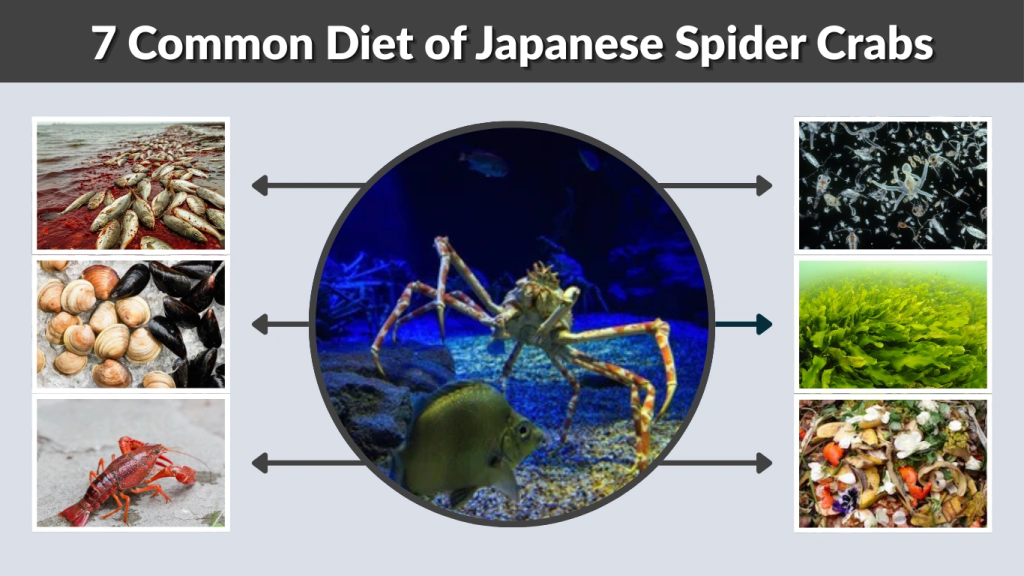
1. Dead Fish
One of the crab’s most common food sources is dead fish. As scavengers, they play a vital role by consuming carcasses that sink to the ocean floor. Without creatures like the Japanese spider crab, decomposing fish would accumulate and disrupt the ecosystem. Their feeding on carrion keeps the seabed clean and helps recycle nutrients back into the food chain.
2. Mollusks (Clams, Oysters, Mussels)
Japanese spider crabs are skilled at eating mollusks, which include clams, mussels, and oysters. With their powerful claws, they can crack open hard shells to access the soft, protein-rich meat inside. Mollusks are a reliable source of food in their habitat, providing essential nutrients that support their large size and long lifespan.
3. Crustaceans (Shrimp, Small Crabs)
While they rarely hunt actively, Japanese spider crabs will feed on smaller crustaceans like shrimp or juvenile crabs when the opportunity arises. Their claws are strong enough to break the exoskeletons of these creatures. By consuming other crustaceans, they add variety to their diet and benefit from the protein and minerals needed to maintain their own hard shells.
4. Algae and Seaweed
Japanese spider crabs are not strictly carnivorous—they also eat algae and seaweed. Plant matter forms an important part of their diet, especially when animal-based food is scarce. Algae and seaweed provide fiber and additional nutrients, ensuring a balanced diet. This shows their adaptability, as they can survive on vegetation when other food sources are limited.
5. Plankton and Small Marine Invertebrates
Young Japanese spider crabs, which are much smaller than adults, rely heavily on plankton and tiny invertebrates. These small organisms provide the nutrients needed for growth during early life stages. As they mature, the crabs gradually transition to larger food sources like fish, mollusks, and carrion. This dietary shift highlights how their feeding behavior changes with size and age.
6. Detritus (Decaying Organic Matter)
Another significant part of their diet is detritus, which consists of decomposing plants and animals. By eating decayed matter, Japanese spider crabs contribute to the recycling of nutrients within the ocean ecosystem. This prevents waste buildup and ensures energy is returned to the food web, supporting other marine life indirectly.
7. Slow or Weak Marine Animals
Although they are not aggressive hunters, Japanese spider crabs occasionally prey on slow or weakened marine animals. This includes snails, worms, and injured or dying fish. Their opportunistic approach means they rarely chase prey, but instead take advantage of easy meals when available. This behavior reflects their role as scavengers first, hunters second.
Role of Diet in the Ecosystem
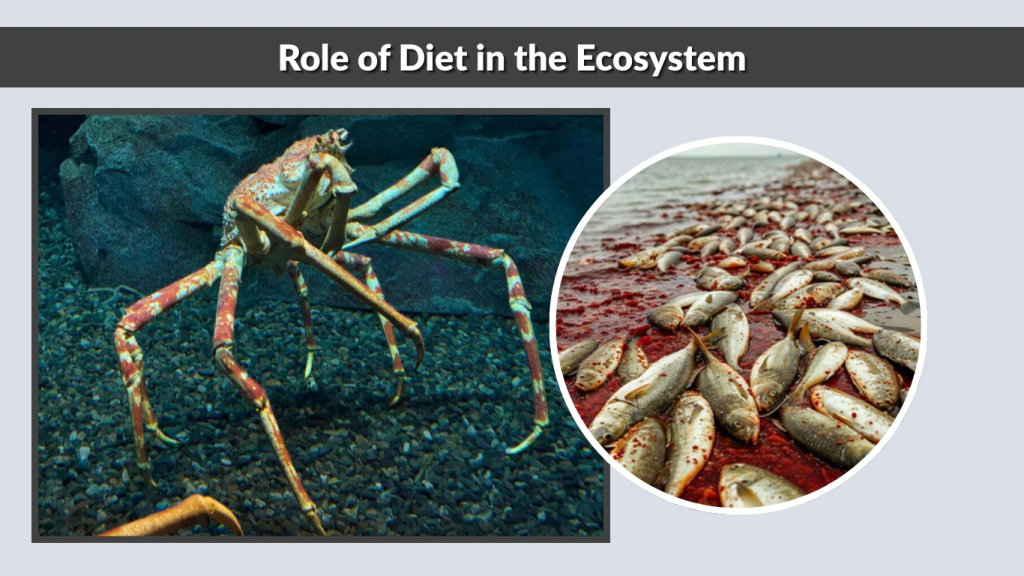
The diet of Japanese spider crabs makes them vital to ocean health. By eating dead fish, detritus, and organic waste, they act as natural recyclers, preventing harmful material from accumulating on the seafloor. Their consumption of both plants and animals also helps balance the food web, ensuring nutrients move efficiently through marine ecosystems.
In this way, Japanese spider crabs are not just fascinating because of their size—they are also key players in maintaining environmental stability. Without them and other scavengers, the deep-sea environment would face much higher risks of pollution and imbalance.
Conclusion
Japanese spider crabs may look intimidating, but their diet reveals their true role as guardians of the deep sea. Feeding on dead fish, mollusks, crustaceans, algae, plankton, detritus, and slow marine animals, they contribute to nutrient recycling and ecosystem balance. Their omnivorous and opportunistic feeding habits make them one of the most important scavengers in the ocean. By studying what they eat, we gain insight not only into their biology but also into the delicate workings of marine life as a whole.
FAQs
What do Japanese spider crabs mostly eat?
Japanese spider crabs primarily eat dead fish, mollusks, and decaying organic matter. As scavengers, they focus on easy-to-access food sources found along the seabed, playing an important role in cleaning the ocean floor.
Do Japanese spider crabs eat plants or only meat?
They are omnivores, meaning they eat both plants and animals. While carrion and shellfish are their main food, they also consume algae and seaweed, especially when animal-based food is scarce in their environment.
Can Japanese spider crabs eat live fish?
Although capable of eating live fish, Japanese spider crabs rarely hunt actively. Instead, they feed on weakened, injured, or dying fish. Their slow movements make them more effective as scavengers rather than hunters.
How do Japanese spider crabs find food in deep water?
They use their long legs and sensitive claws to detect food on the ocean floor. Their ability to scavenge dead animals and debris scattered across large areas makes them efficient feeders in dark, deep-sea environments.
Why are Japanese spider crabs considered important for the ecosystem?
These crabs are vital because they clean the seabed, consuming dead animals and decaying matter. This prevents harmful buildup, recycles nutrients, and helps sustain balance in deep-sea ecosystems. Their feeding habits benefit many other marine species indirectly.