
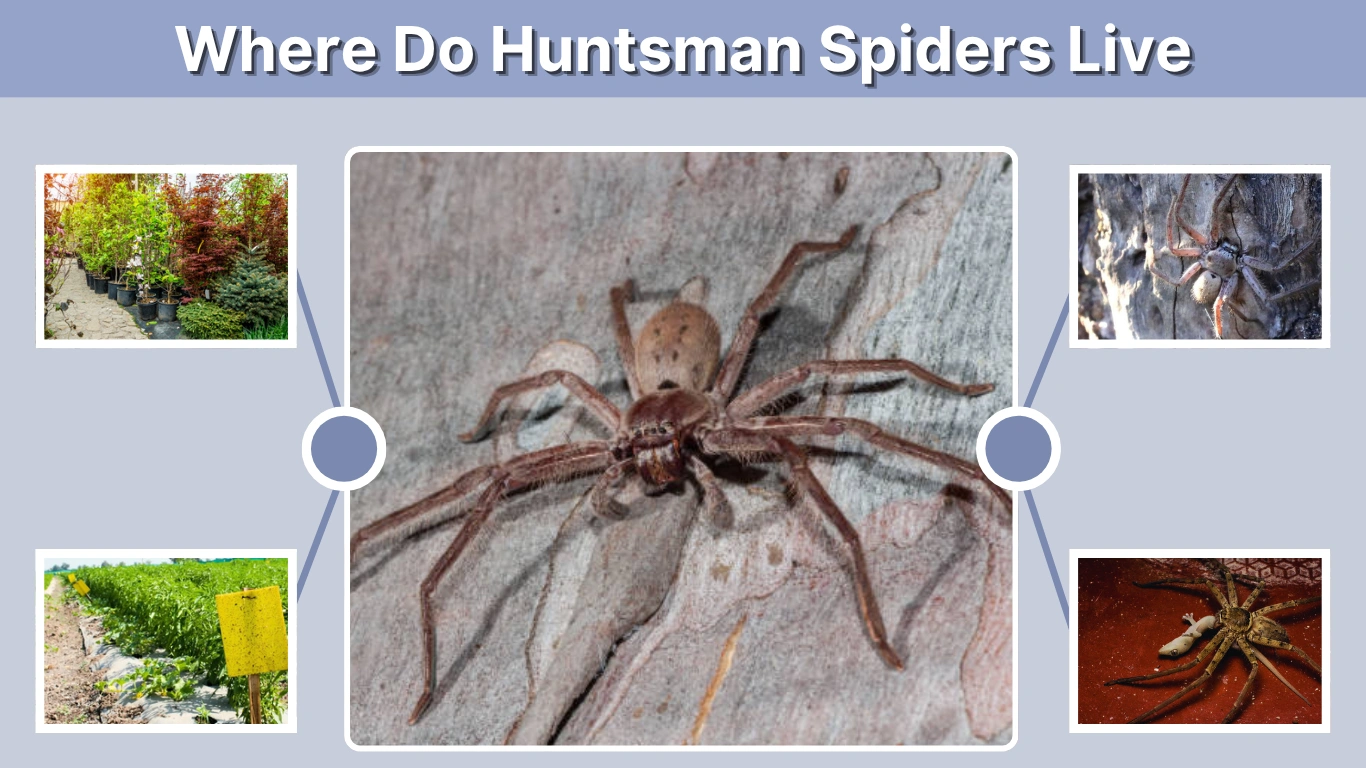
Huntsman spiders are among the most fascinating arachnids in the world, admired for their incredible speed, long legs, and adaptability. Unlike web-builders, they actively hunt prey and can be found across diverse climates and continents. Many people are curious about where these spiders live and how long they survive, especially since they often appear in unexpected places like homes, cars, or gardens. Their distribution is vast, but not universal, and their lifespan is longer than many expect.
Identification of Huntsman Spiders

General Overview
Huntsman spiders (family Sparassidae) are known for their crab-like appearance, flattened bodies, and extremely long legs that often span over 15 cm in some species. Unlike tarantulas, they are relatively lightweight and much faster movers, often startling humans when spotted running across a wall or ceiling. While their size may cause alarm, they are not considered highly dangerous. Their venom is mild compared to more notorious spiders, and their primary role is controlling insects and pests in the ecosystem.
Global Habitat of Huntsman Spiders

Where Do Huntsman Spiders Live in the World?
Huntsman spiders are distributed widely across the tropics and subtropics, thriving in regions with warm climates. They are native to Asia, Africa, and Australia, but have spread to parts of the Americas and Pacific islands through trade and travel. They generally prefer environments with access to warmth and shelter, such as forests, under loose bark, or even inside homes. Cold climates restrict their spread, so they are rarely found in northern latitudes.
Regional Distribution
Huntsman Spiders in Australia & New Zealand
Australia is arguably the true home of huntsman spiders, with multiple species commonly seen across the country. They inhabit eucalyptus forests, suburban gardens, and even houses, often hiding behind curtains or furniture. While their sudden appearances may cause alarm, many Australians consider them beneficial for controlling cockroaches and other pests. In New Zealand, their presence is less widespread, but they can occasionally be found in northern regions where the climate is suitable.
Huntsman Spiders in the United States

Do Huntsman Spiders Live in the US?
Yes, huntsman spiders do exist in the United States, though they are not native. The brown huntsman (Heteropoda venatoria) is the most common species, introduced through shipping routes centuries ago. It is well-established in warm southern states and often lives in sheds, garages, or homes, especially where humidity is high.
State-Specific Distribution
- Florida – Huntsman spiders are commonly found in Florida due to its warm and humid climate. They live in both rural and urban areas, hiding in vegetation or within homes. During the day, they may be found tucked behind furniture, tree bark, or shutters.
- Texas & Arizona – Populations have been reported, especially in southern Texas, where the climate mirrors their native tropical conditions. Arizona sightings are less frequent due to drier conditions, but they can survive in irrigated suburban areas.
- California & Georgia – Sightings have been confirmed, particularly in warmer southern California regions and parts of Georgia.
- Virginia, Ohio, Indiana, Michigan – While possible, they are much rarer in colder states and unlikely to establish sustainable populations.
- New York City & New England – Extremely uncommon, with only isolated cases likely from imports or travel.
- Louisiana & Gulf States – More common in Louisiana and other Gulf states due to high humidity, making them an increasingly visible part of local ecosystems.
Huntsman Spiders in Other Countries
In Canada, huntsman spiders are not found naturally due to the cold climate. Any sightings are usually linked to imports that cannot survive winters. Similarly, in the United Kingdom, huntsman spiders cannot thrive in the cooler weather, though there are occasional reports of individuals arriving via shipments of bananas or plants. These rare appearances often generate headlines, but they do not represent established populations.
Specialized Habitats

Do Huntsman Spiders Live in Trees?
Yes, many huntsman species live in trees and shrubs, especially in tropical and subtropical forests. Their flattened bodies allow them to slip under bark, where they remain hidden during the day. At night, they emerge to hunt insects and small animals. This arboreal lifestyle is particularly common in Australia and Asia.
Do Huntsman Spiders Live in Citrus Plants?
In some agricultural regions, particularly citrus farms, huntsman spiders take shelter among dense foliage. Farmers often tolerate them because they help reduce insect populations naturally. Their presence in crops, however, sometimes leads to accidental encounters during harvesting or packing.
Where Do Green Huntsman Spiders Live?
The green huntsman spider (Micrommata virescens) is an exception to the typically brown or grey family. Found in Europe and parts of Asia, it favors grasslands, meadows, and low shrubs where its bright green body provides camouflage. Unlike tropical huntsman spiders, it inhabits more temperate environments.
Where Do Huntsman Spiders Live During the Day?
During daylight, huntsman spiders are rarely visible, as they hide in dark, protected places. Outdoors, they tuck themselves under bark, rocks, or leaves. Indoors, they may be behind picture frames, curtains, or inside garages. Their nocturnal hunting habits explain why they often surprise people at night when active.
Can Huntsman Spiders Live in Water?
Huntsman spiders are not aquatic and cannot live in water. However, they are capable of briefly surviving on water surfaces due to their light bodies and long legs, similar to water striders. This ability allows them to escape predators or move across puddles but does not make them water-dwelling creatures.
Social Behavior and Living Conditions
Do Huntsman Spiders Live in Groups?
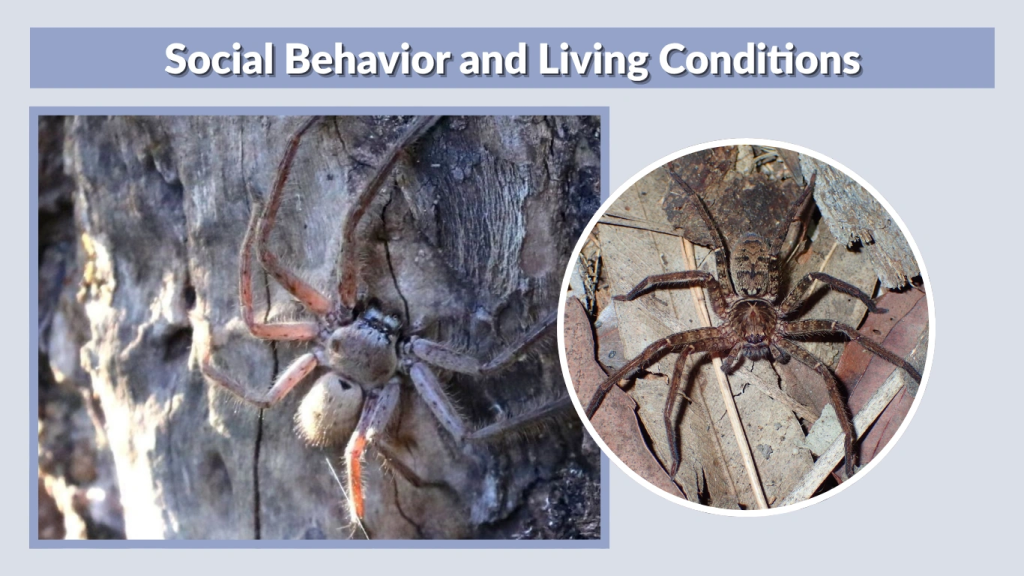
Huntsman spiders are largely solitary creatures. Unlike social insects such as ants or bees, they do not live in colonies or share cooperative behavior. Each huntsman occupies its own territory, usually a sheltered spot like bark or crevices. While young may remain with the mother briefly after hatching, they disperse quickly and lead independent lives.
Do Huntsman Spiders Live in Pairs or Alone?
Although generally solitary, huntsman spiders occasionally share spaces during the mating season. A male and female may occupy the same shelter temporarily until reproduction occurs. However, this coexistence is short-lived. After mating, males typically leave or risk being eaten. Outside of this period, huntsman spiders live and hunt alone.
Do Huntsman Spiders Give Birth to Live Young?
No, huntsman spiders do not give live birth. Instead, the female produces a large silken egg sac, which she guards closely until the spiderlings hatch. Some mothers display protective behavior, staying near the sac to ward off threats. Once the young emerge, they resemble tiny versions of adults and gradually disperse to begin independent lives.
Lifespan of Huntsman Spiders

How Long Do Huntsman Spiders Live?
On average, huntsman spiders live for two to three years, although this varies by species and environment. In the wild, natural predators and environmental pressures may shorten their lifespan, whereas in sheltered conditions (such as inside a home), they can survive longer due to reduced threats and consistent access to prey.
Giant Huntsman Spider Lifespan
The giant huntsman spider (Heteropoda maxima), native to Laos, is the largest species in leg span, often exceeding 30 cm. Despite its intimidating size, its lifespan is similar to smaller huntsman species—typically two years. Like others in the family, its survival depends on climate, food supply, and lack of predators.
How Long Can Huntsman Spiders Live Without Food?
Huntsman spiders are remarkably resilient and can survive weeks to months without food. Their ability to slow metabolism allows them to endure lean periods. In controlled settings, some specimens have been observed surviving up to two months without eating. However, they do require water, and dehydration will shorten their survival dramatically compared to fasting alone.
Human Interaction & Coexistence

Living With Huntsman Spiders
In many countries, especially Australia, people have learned to coexist with huntsman spiders. Some homeowners intentionally leave them alone indoors, recognizing their role in reducing populations of cockroaches, moths, and mosquitoes. While their sudden appearance on walls or ceilings can be startling, they are rarely aggressive and tend to retreat when disturbed.
Huntsman Spiders in Unusual Places
Huntsman spiders have a reputation for surprising humans by appearing in unexpected spots. Reports include spiders emerging from cars, hiding in fruit shipments, or appearing in trailer parks and citrus groves. Their adaptability means they can thrive in man-made environments as long as warmth and shelter are available. These interactions often generate fear but also highlight the spider’s resilience and flexibility.
Key Takeaways
- Huntsman spiders are widely distributed across tropical and subtropical regions.
- They thrive in Australia, Asia, Africa, and warmer U.S. states, but cannot survive in colder climates.
- Specialized habitats include trees, shrubs, citrus plants, and human dwellings.
- They live alone but may briefly pair during mating.
- Lifespan averages 2–3 years, with some surviving longer in protected environments.
- Capable of enduring long periods without food, though water remains essential.
- Despite their size and speed, they are not highly dangerous and often benefit humans by controlling pests.
FAQs
1. Where do huntsman spiders mainly live?
Huntsman spiders primarily live in tropical and subtropical regions around the world. They are most abundant in Australia, Asia, and Africa, but can also be found in warm parts of the Americas. They prefer habitats like forests, under bark, inside homes, and gardens where shelter and prey are readily available.
2. Do huntsman spiders live in the United States?
Yes, huntsman spiders do live in the United States, particularly in southern states with warm, humid climates. Florida, Texas, Louisiana, and parts of California and Georgia are common locations. While they are not native, the brown huntsman species has adapted well and often thrives in suburban and urban environments.
3. How long can huntsman spiders live indoors?
Indoors, huntsman spiders can live up to three years, often longer than in the wild. The protection from predators, stable environment, and regular food supply from insects indoors make homes a favorable habitat. Many people unknowingly share space with them, since they hide during the day and are mostly active at night.
4. Do huntsman spiders live in groups or alone?
Huntsman spiders are solitary hunters. They do not live in groups or form colonies. After hatching, young spiders disperse quickly to live independently. Adults typically only interact during mating periods, after which they separate. This solitary lifestyle helps them avoid competition for food and territory.
5. Can huntsman spiders survive without food for long?
Yes, huntsman spiders are highly resilient and can survive for weeks, sometimes months, without food. Their metabolism slows down in times of scarcity, allowing them to endure fasting periods. However, access to water is critical, and dehydration can kill them much faster than hunger alone.