

With their bold black body and striking red markings, red back jumping spiders are among the most eye-catching arachnids you might come across in your garden or even around your home. But where exactly do they live, and what kind of environments do they prefer?
In this guide, we’ll explore the habitats, geographic range, and behavior of red back jumping spiders so you’ll know where and when to expect them—and how to appreciate their role in the ecosystem.
What is the Red Back Jumping Spider?

The red back jumping spider belongs to the Salticidae family, commonly known as jumping spiders. One of the most recognized species is Phidippus johnsoni, found mostly in North America. While they’re called “red back” due to the red coloration on their abdomen, not all individuals have the same intensity of red.
Natural Habitat of Red Back Jumping Spiders

Common Environments
Red back jumping spiders prefer open, sunny spaces. You’ll often find them in:
- Grassy areas
- Wooded forest edges
- Rocky outcrops
- Desert scrubland
- Urban and suburban yards
They enjoy areas with both open sunlight and small crevices to hide in. Unlike web-building spiders, they’re active hunters, so they roam freely in search of prey.
Microhabitat Preferences
They often take shelter in:
- Rolled leaves
- Bark crevices
- Garden pots
- Under outdoor furniture
- Window sills and door frames
At night or during rest periods, they hide in silk retreats spun in protected spaces.
Geographic Distribution
Countries Where They Are Found
The red back jumping spider (Phidippus johnsoni) is mainly found in:
- Western United States – especially California, Oregon, Washington, and surrounding states
- Canada – southern parts, particularly British Columbia
- Mexico – certain northern regions
There are similar species with red patterns found in Australia and New Zealand, but they are not the same as Phidippus johnsoni.
Regional Climates They Prefer
They thrive in:
- Temperate zones
- Warm, dry regions
- Semi-arid climates
Their ability to adapt allows them to live in desert scrub and also in suburban gardens.
Seasonal Activity and Movement

When They’re Most Active
Red back jumping spiders are diurnal, meaning they’re most active during the daytime. They love basking in sunlight and often appear on sunny walls or garden fences in:
- Spring
- Summer
- Early fall
Seasonal Shelter Preferences
In colder months, they may go dormant or hide in protected areas like woodpiles, sheds, or inside homes. Their silk retreats help them survive chilly nights.
Adaptation to Human Environments
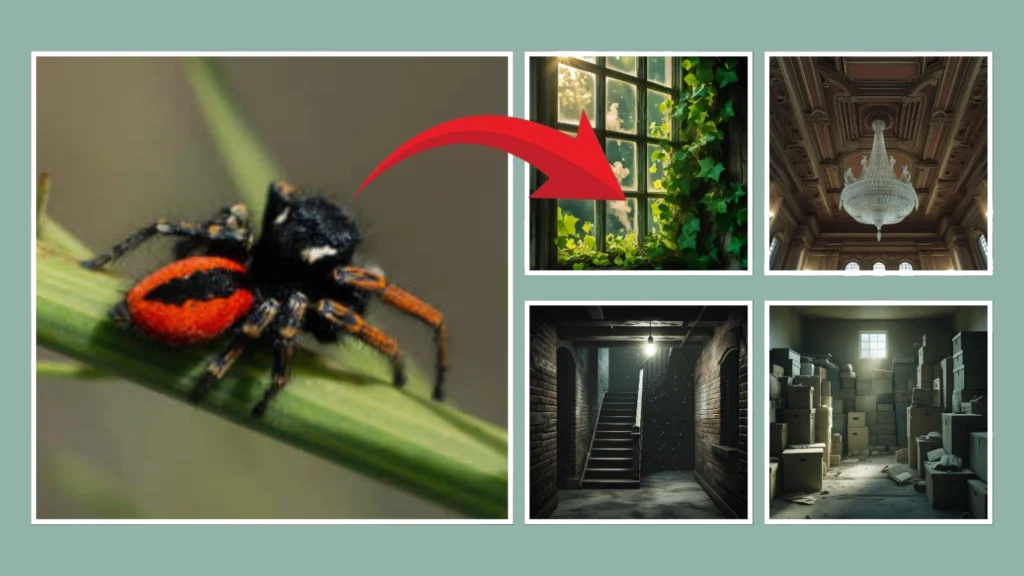
Do They Live Indoors?
While they prefer the outdoors, they can occasionally be found indoors—especially near:
- Windows
- Ceilings
- Basements
- Storage rooms
This typically happens when outdoor temperatures drop or they follow prey inside.
Gardens, Patios, and Outdoor Furniture
They’re frequently seen in:
- Flower beds
- Patio furniture
- Garden walls
They help control insects and are considered beneficial predators.
Why Habitat Matters for Identification and Safety
Not Aggressive, but Curious
Red back jumping spiders have excellent vision and will often turn to face you, giving the impression they’re watching you. While this can feel intimidating, it’s just curiosity. They rarely bite unless provoked or trapped.
Role in the Ecosystem
They control insect populations by hunting:
- Flies
- Moths
- Mosquitoes
- Other spiders
Having them around is usually a good sign of a balanced, pesticide-free environment.
How to Spot a Red Back Jumping Spider in the Wild
Behavior Clues
Look for:
- Sudden, jerky movements
- Hops between leaves or rocks
- Standing still while watching with their front-facing eyes
Visual Clues in Their Surroundings
Check sunlit areas like:
- Brick walls
- Fence tops
- Tree trunks
- Garden edges
Their red and black contrast often makes them visible against pale backgrounds.
Should You Be Concerned If You Find One?
Harmless Nature
There’s no medical danger from their bite for most people. Even if bitten, symptoms are mild—perhaps some local swelling or redness.
Safe Removal and Observation
If one enters your home:
- Gently capture it with a glass and paper
- Release it outside in a garden or bushy area
Many photographers and nature lovers even seek them out due to their vivid colors and curious behavior.
Summary of Their Habitat Needs
Red back jumping spiders prefer sunny, dry places with plenty of small hiding spots. They thrive in both natural and urban environments, making them a common—but often unnoticed—neighbor in gardens and backyards. Their adaptability and hunting skills make them excellent pest controllers with no threat to humans.
FAQs
1. Are red back jumping spiders found in all U.S. states?
No, they are most common in western states like California, Oregon, and Arizona. Their range doesn’t typically extend to the eastern U.S.
2. Do they make webs?
They do not build webs to catch prey. Instead, they spin small silk shelters where they rest, molt, or lay eggs.
3. Can they survive indoors year-round?
They can survive indoors if there’s access to prey and warm temperatures, but they typically prefer outdoor environments.
4. What should I do if I find one near my bed?
Don’t panic. Use a cup and paper method to catch and release it outside. These spiders are harmless and unlikely to bite unless pressed against the skin.
5. Are they dangerous to pets or kids?
No. Their bite is not venomous to humans or pets. They are generally shy and avoid interaction unless disturbed.