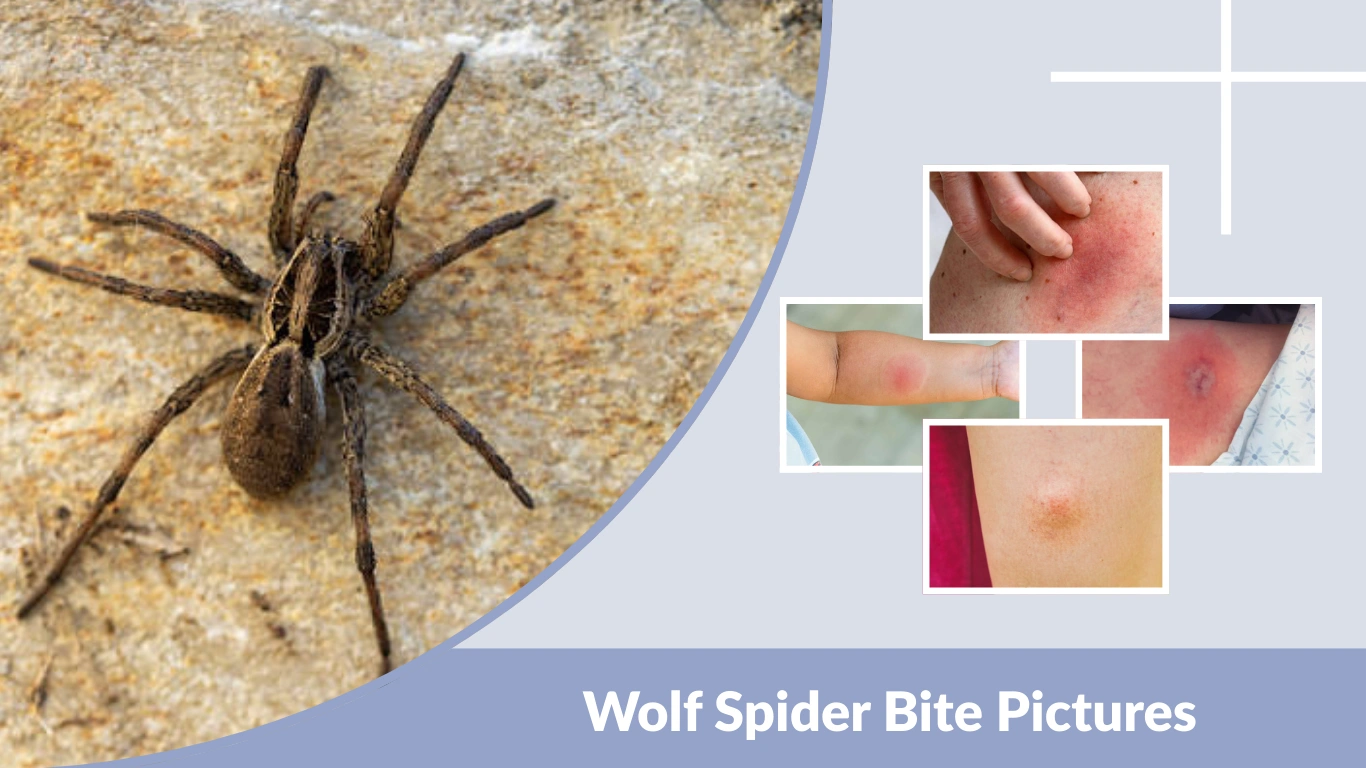
Many people search for wolf spider bite pictures because they want to identify whether a bite on their skin might have come from a spider. Wolf spiders belong to the Lycosidae family and are common hunting spiders found in gardens, forests, and sometimes inside homes. Although their appearance can be intimidating, their bites are usually mild and rarely dangerous. Understanding what a wolf spider bite looks like, how it changes over time, and the symptoms it may cause can help people recognize and manage a bite properly.
What Does a Wolf Spider Bite Look Like?
A wolf spider bite often appears similar to other minor insect bites, which can make it difficult to identify without seeing the spider itself. However, there are several visual characteristics that may suggest a wolf spider bite.
Visual Characteristics
A typical wolf spider bite may show the following signs:
- Two small puncture marks where the spider’s fangs pierced the skin
- Redness around the bite area
- Slight swelling or inflammation
- A small raised bump similar to a mosquito bite
In most cases, the bite area remains small and localized. The surrounding skin may feel warm or slightly tender to the touch.
Some people also experience mild itching or irritation as the bite begins to heal.
Bite Appearance Over Time
The appearance of a wolf spider bite can change during the healing process.
First Few Minutes
Immediately after the bite, a person may feel a sharp sting or mild pain. A small red spot may appear at the bite site.
After Several Hours
The bite area may become slightly swollen and more noticeable. Redness around the puncture marks may spread slightly but usually remains limited to a small area.
After One Day
In many cases, swelling and redness begin to decrease within 24 hours. The bite may look like a small irritated bump.
Healing Stage
Over the next few days, the redness gradually fades and the skin returns to normal. Some bites may develop a tiny scab before completely healing.
Wolf Spider Bite Pictures (Common Examples)
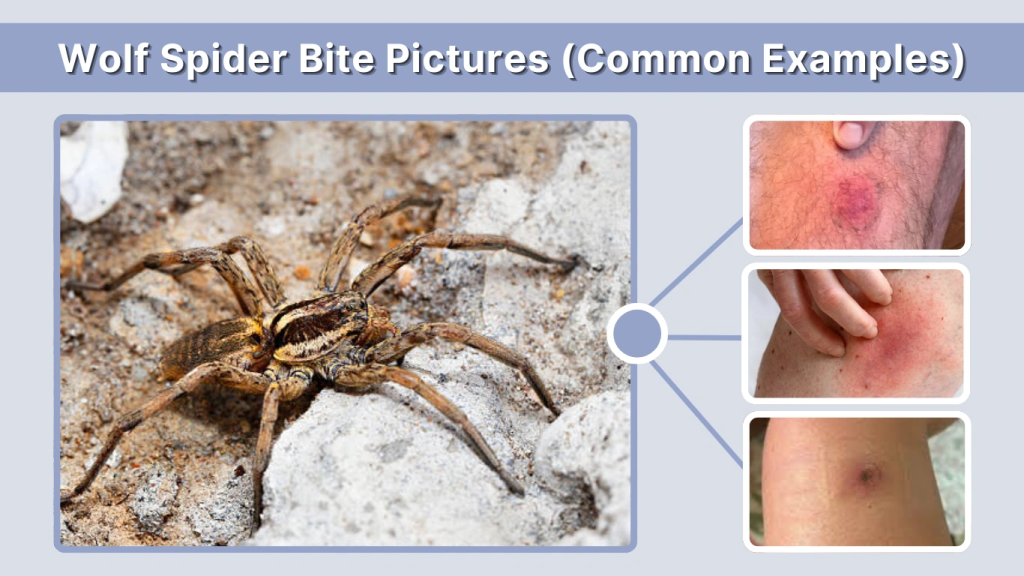
Many online searches focus on pictures of wolf spider bites because visual examples help people compare their own symptoms. While actual images vary depending on skin type and individual reactions, most wolf spider bites follow similar patterns.
Early Bite Stage
In the early stage, the bite often looks like a small red dot or bump. Two tiny puncture marks may sometimes be visible in the center.
Common early signs include:
- Small red spot
- Slight swelling
- Mild tenderness
At this stage, the bite may resemble a mosquito or ant bite.
Moderate Reaction Stage
In some individuals, the bite area may become slightly more noticeable within several hours. The redness may expand a little, and the skin may appear irritated.
Possible signs during this stage include:
- A larger red patch around the bite
- Mild inflammation
- Slight itching or burning sensation
Even in this stage, wolf spider bites usually remain mild compared to bites from more dangerous spiders.
Healing Stage
During the healing stage, the bite begins to improve. The redness slowly fades, swelling reduces, and discomfort becomes minimal.
Typical signs of healing include:
- Reduced redness
- Less swelling
- Formation of a small scab in some cases
Most wolf spider bites heal completely within a few days to about a week.
Wolf Spider Bite Symptoms
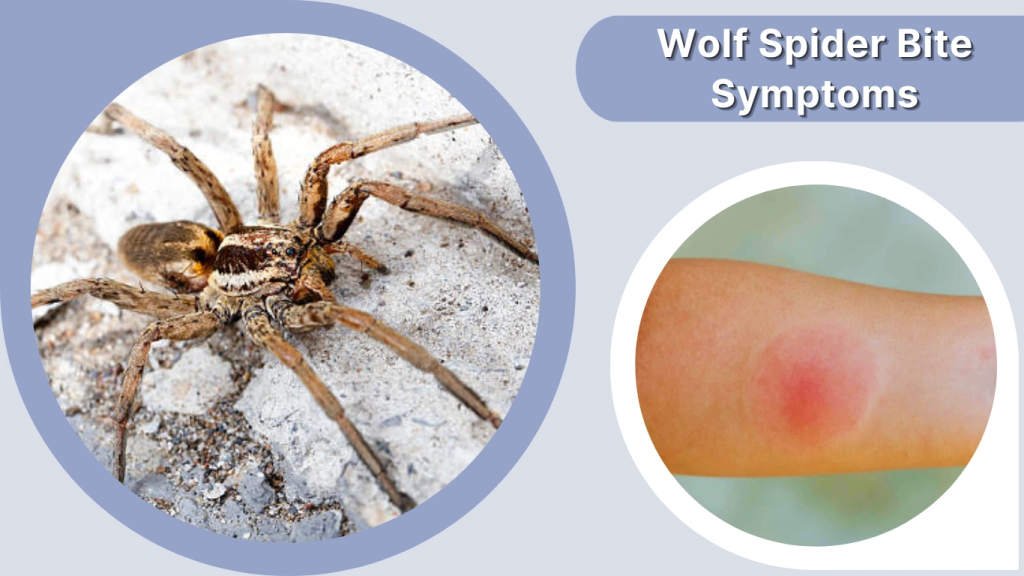
In addition to visible signs on the skin, wolf spider bites can cause several mild symptoms. These symptoms vary depending on a person’s sensitivity and the size of the spider.
Common Symptoms
Most wolf spider bites cause only mild symptoms such as:
- Mild pain at the bite location
- Redness around the bite
- Slight swelling
- Itching or irritation
- Mild burning sensation
These symptoms usually remain localized and gradually improve within a short period.
Rare Symptoms
Although uncommon, some individuals may experience additional symptoms, including:
- Mild headache
- Fatigue
- Nausea
- Slight dizziness
These reactions are rare and generally temporary.
Duration of Symptoms
For most people, wolf spider bite symptoms last between a few hours and several days. In mild cases, the discomfort disappears quickly without treatment.
Keeping the bite clean and avoiding scratching can help the skin heal faster.
Wolf Spider Bite Stages
Understanding the stages of a wolf spider bite can help people monitor how the bite changes and determine whether it is healing normally.
Stage 1: Immediate Bite Reaction
When a wolf spider bites, the first sensation is usually a quick sting or sharp pain. Small puncture marks may appear on the skin, along with mild redness.
This stage typically lasts only a short time.
Stage 2: Early Inflammation
Within several hours, the bite area may become slightly swollen and irritated. Redness may spread a little around the puncture marks.
Mild itching or burning can occur during this stage, but the reaction usually remains manageable.
Stage 3: Healing Phase
The final stage of a wolf spider bite is the healing phase. During this time, the body gradually repairs the affected skin and inflammation begins to disappear.
Typical signs of healing include:
- Redness slowly fading
- Reduced swelling
- Less itching or irritation
- Skin returning to normal color
In some cases, a small scab may form where the puncture marks were located. This is a normal part of the healing process and usually falls off naturally after a few days.
Most wolf spider bites heal completely within 3 to 7 days without leaving any scars.
Wolf Spider Bite vs Other Spider Bites (Pictures Comparison)
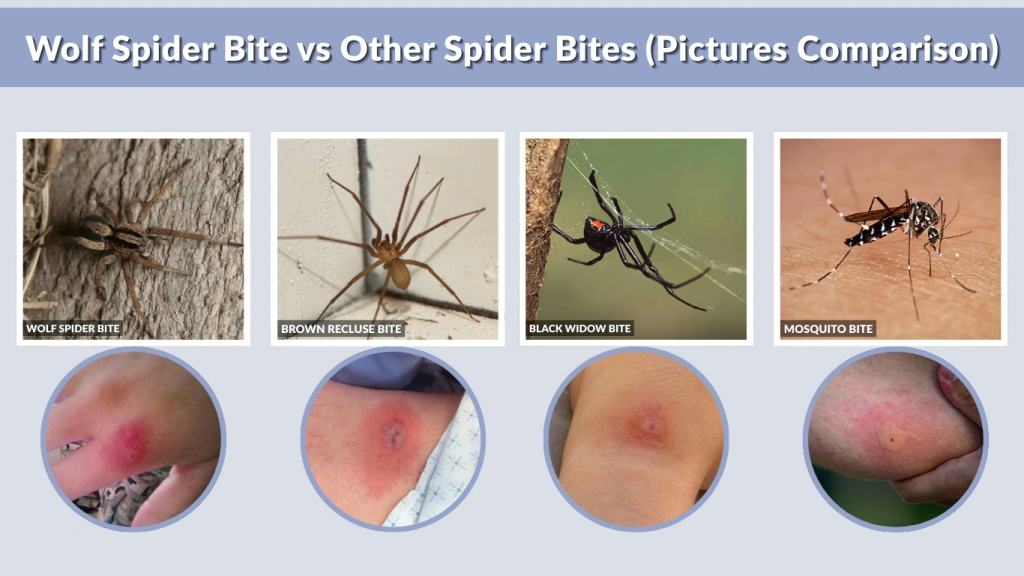
Many people confuse wolf spider bites with bites from other spiders or insects. Looking at visual differences can help identify whether a bite might have come from a wolf spider.
Wolf Spider Bite vs Brown Recluse Bite
The brown recluse spider is often mistaken for wolf spiders, but their bites are very different.
Key differences include:
Wolf Spider Bite
- Usually mild
- Small red bump
- Limited swelling
- Heals within a few days
Brown Recluse Bite
- May cause severe skin damage
- Blister or open wound may develop
- Skin tissue may break down (necrosis)
- Healing may take weeks
Because brown recluse bites can be serious, any bite that worsens significantly should be checked by a medical professional.
Wolf Spider Bite vs Black Widow Bite
Black widow spider bites produce different symptoms compared to wolf spider bites.
Wolf Spider Bite
- Localized redness and swelling
- Mild pain similar to a bee sting
- Usually no serious complications
Black Widow Bite
- Severe pain
- Muscle cramps
- Abdominal pain
- Possible nausea and sweating
Black widow bites often cause systemic symptoms, while wolf spider bites usually remain limited to the skin.
Wolf Spider Bite vs Mosquito Bite
Sometimes people mistake mosquito bites for spider bites.
Wolf Spider Bite
- Two puncture marks
- Slight swelling
- Mild pain
Mosquito Bite
- Round itchy bump
- No puncture marks
- Usually more itchy than painful
Are Wolf Spider Bites Dangerous?
One of the most common questions people ask when searching for wolf spider bite pictures is whether the bites are dangerous.
In most cases, wolf spider bites are not dangerous to humans.
Venom Effects
Wolf spiders use venom to immobilize their prey, mainly insects. The venom is not strong enough to cause serious harm to humans.
Typical effects include:
- Mild swelling
- Temporary redness
- Slight discomfort
These symptoms usually improve within a short time.
Risk Level
Compared with medically significant spiders such as black widows or brown recluses, wolf spiders are considered low-risk.
Serious reactions are extremely uncommon.
When to Seek Medical Attention
Although rare, medical help may be needed if:
- Severe swelling develops
- Signs of infection appear
- Fever or unusual symptoms occur
- The bite continues worsening after several days
These situations are unusual but should be evaluated by a healthcare professional if they occur.
Wolf Spider Bite Treatment
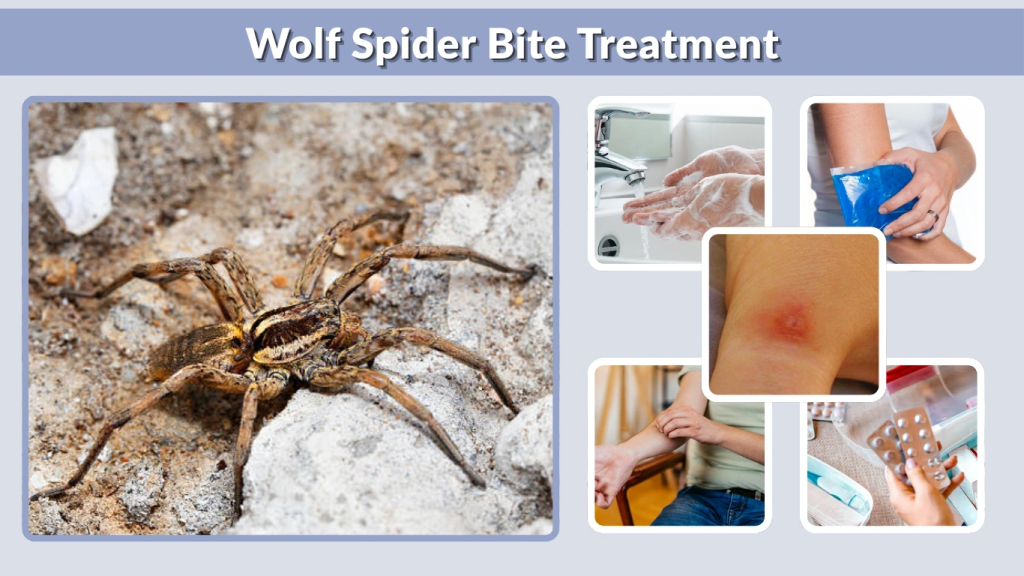
Most wolf spider bites can be treated with simple first-aid measures at home.
First Aid Steps
If you suspect a wolf spider bite, the following steps can help reduce discomfort:
- Wash the bite area with soap and water to prevent infection.
- Apply a cold compress for 10–15 minutes to reduce swelling.
- Use an antihistamine cream or hydrocortisone cream if itching occurs.
- Avoid scratching the bite, which can cause irritation or infection.
These basic treatments usually relieve symptoms quickly.
When to See a Doctor
Medical attention may be necessary if:
- The bite becomes increasingly painful
- Swelling spreads significantly
- Signs of infection appear (pus, warmth, redness spreading)
- Allergic reactions occur
Again, these complications are uncommon with wolf spider bites.
How to Identify a Wolf Spider Bite Correctly
Identifying a spider bite can be difficult because many insect bites look similar.
Signs That Suggest a Wolf Spider Bite
Certain clues may indicate a wolf spider bite:
- Two small puncture marks
- Localized redness and swelling
- Mild pain rather than severe symptoms
- A wolf spider seen nearby
However, in many cases the spider is never seen, which makes identification uncertain.
Why Spider Bite Identification Is Difficult
Many bites that people believe are spider bites are actually caused by other insects such as:
- Mosquitoes
- Fleas
- Bed bugs
- Ants
Because of this, doctors often rely on symptoms and medical evaluation rather than appearance alone.
Preventing Wolf Spider Bites
Although wolf spider bites are rare, taking simple precautions can reduce the chance of encountering these spiders.
Home Prevention Tips
To keep wolf spiders out of your home:
- Seal cracks and gaps around doors and windows
- Reduce clutter in storage areas
- Keep floors and corners clean
- Control insects indoors
Since wolf spiders enter homes mainly to hunt insects, reducing indoor pests can discourage them from staying.
Outdoor Prevention
When working outside, you can reduce the chance of spider encounters by:
- Wearing gloves while gardening
- Shaking out shoes or clothing before wearing them
- Being careful when lifting rocks or logs
These simple precautions can greatly reduce the risk of spider bites.
FAQs
How long does a wolf spider bite last?
Most wolf spider bites heal within a few days to about a week.
Do wolf spiders bite itches?
Yes, mild itching is common as the bite heals.
Can wolf spider bites cause infection?
Infection is rare but can occur if the bite is scratched repeatedly or not kept clean.
Should I worry about a wolf spider bite?
In most cases, there is no need to worry. Wolf spider bites are usually mild and heal without medical treatment.
Conclusion
Many people search for wolf spider bite pictures to determine whether a bite on their skin might be caused by a spider. While these bites can look alarming, wolf spider bites are typically mild and heal within a few days. They usually appear as small red bumps with minor swelling and sometimes visible puncture marks. By understanding the appearance, symptoms, and treatment of wolf spider bites, people can recognize them more easily and know when medical attention might be necessary.