

Wolf spiders are one of the most common spiders in Florida, easily recognized by their hairy bodies, excellent eyesight, and fast hunting skills. They live across the state in gardens, forests, swamps, and even suburban homes. Although their large size often frightens people, wolf spiders are mostly harmless and actually play an important role in controlling insect populations.
What is a Florida Wolf Spider?
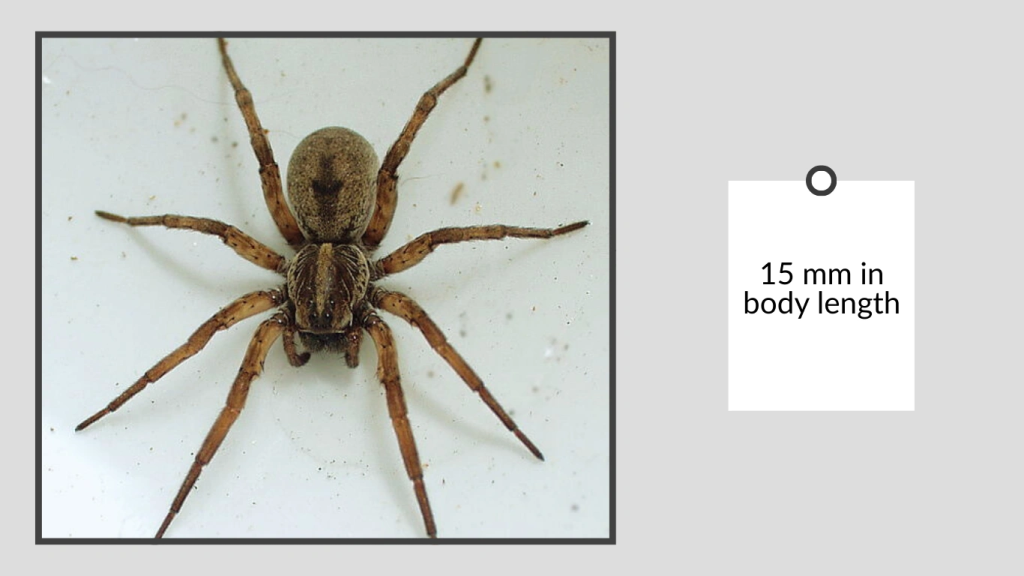
Wolf spiders belong to the family Lycosidae, a group of ground-dwelling hunters. Unlike web-building spiders, they actively chase and ambush their prey. In Florida, wolf spiders are often confused with brown recluse or huntsman spiders due to their size and coloring.
They are nocturnal, relying on their strong vision to locate insects at night. Their glowing eyes, which reflect light in the dark, often reveal their presence when spotted with a flashlight.
Identification and Appearance
Florida Wolf Spider Size
Wolf spiders in Florida vary in size depending on the species. Smaller ones may measure just 15 mm in body length, while larger species can grow up to 35 mm (over an inch long). With legs extended, they can look even bigger—leading to reports of “giant wolf spiders” in Florida.
Although their body bulk makes them look dangerous, they are not nearly as harmful as they appear. Huntsman spiders may have a wider leg span, but wolf spiders appear heavier and more robust.
Color Variations
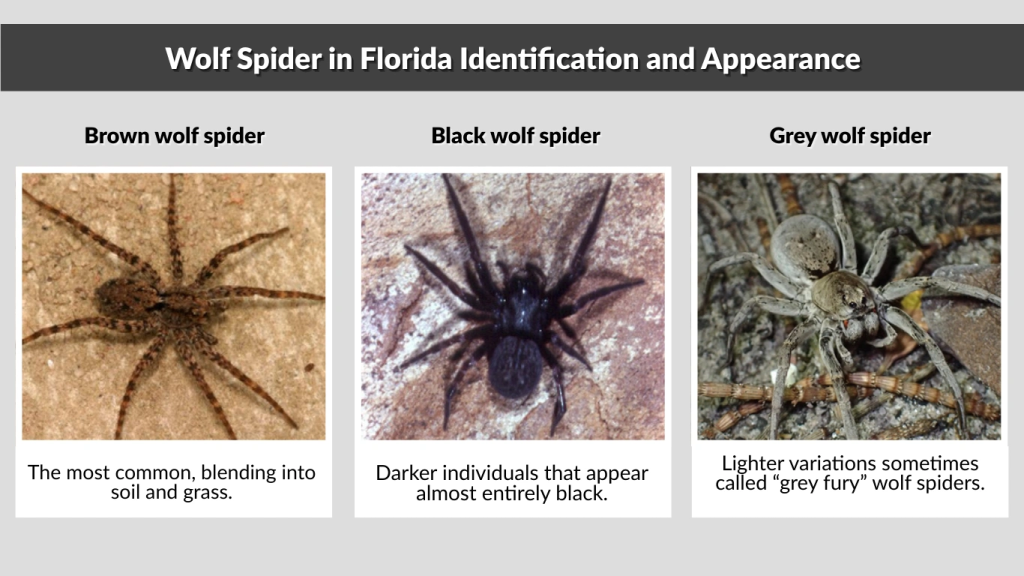
Wolf spiders in Florida come in several shades that help them blend into their environment.
- Brown wolf spider: the most common, blending into soil and grass.
- Black wolf spider: darker individuals that appear almost entirely black.
- Grey wolf spider: lighter variations sometimes called “grey fury” wolf spiders.
These natural patterns allow them to camouflage perfectly in leaf litter, sand, and swampy areas.
Unique Traits
Wolf spiders are best identified by their eye arrangement: eight eyes in three rows, with two large central eyes that shine at night. Their bodies are covered in fine hairs, giving them a fuzzy look. Unlike orb-weavers or cobweb spiders, wolf spiders rarely use webs and instead rely on burrows or ground shelters.
Species of Wolf Spiders in Florida

Commonly Found Species
Florida is home to several wolf spider species, including:
- Rabid wolf spider (Rabidosa rabida) – Known for its bold striping and fast movement.
- Tropical wolf spider – Found in the southern part of the state.
- Field wolf spider – Common in grasslands and suburban lawns.
- False wolf spider – A misidentified lookalike species often mistaken for true wolf spiders.
Regional Distribution
Wolf spiders are found throughout Florida, though some species are more common in certain areas:
- South Florida: tropical wolf spiders thrive in warmer regions.
- North Florida: rabid wolf spiders are more frequently seen.
- Central Florida: wolf spiders are often found in fields, swamps, and suburban neighborhoods.
This wide distribution makes them one of the most frequently encountered spiders in the state.
Habitat and Lifestyle
Where Do Wolf Spiders Live in Florida?
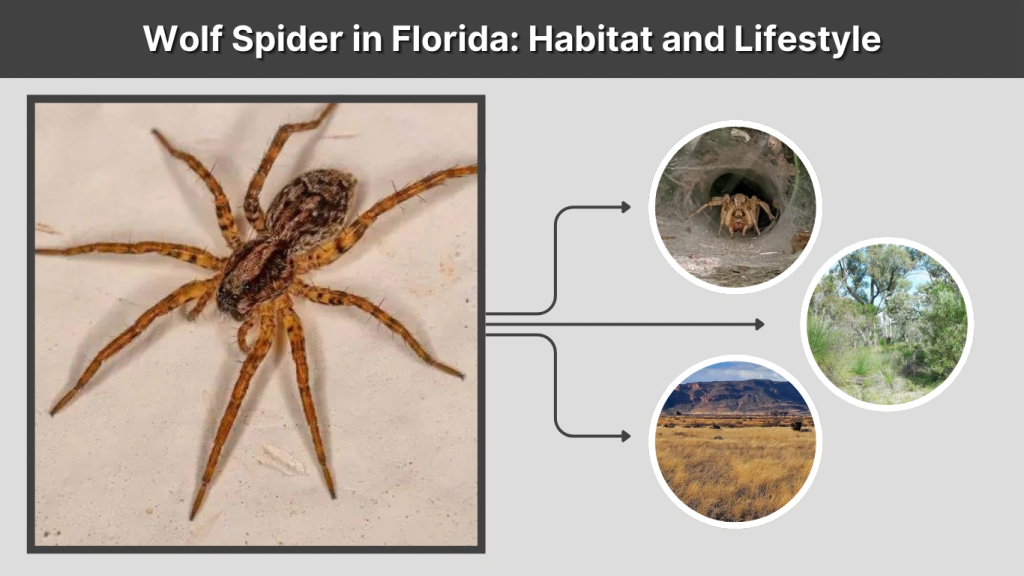
Wolf spiders adapt well to Florida’s diverse environments. They can be found in:
- Forests and swamps – hiding under logs, rocks, and leaf litter.
- Grasslands and fields – ambushing prey from burrows.
- Backyards and homes – drawn indoors when searching for food or shelter.
- Pools and wetlands – some species can even move across the water’s surface.
Burrows and Shelters
Many Florida wolf spiders dig silk-lined burrows that provide safety from predators and heat. Their burrows are often small round holes in soil, lawns, or sandy ground. Some wolf spiders can also run on water, a unique adaptation that helps them escape threats and chase prey near swamps and ponds.
Wolf Spider vs Huntsman Spider in Florida

Size and Body Shape
Both wolf spiders and huntsman spiders are large and commonly spotted in Florida homes. Huntsman spiders have much longer, flatter legs and can stretch up to 15 cm in leg span. Wolf spiders, in contrast, have thicker bodies with shorter, stronger legs.
Behavior
- Huntsman spiders: Excellent climbers, often seen on walls, ceilings, and even inside cars.
- Wolf spiders: Ground hunters, rarely climb smooth vertical surfaces, and prefer burrows.
Which is More Dangerous?
Neither the wolf spider nor the huntsman spider is considered deadly to humans. Both can bite if provoked, but symptoms are usually mild. Huntsman spiders tend to run away, while wolf spiders may hold their ground if threatened, which can make encounters seem more intimidating.
Wolf Spider Bite in Florida

Symptoms of a Bite
Wolf spider bites in Florida are not very common, but they can happen if the spider feels cornered or handled. Typical symptoms include:
- Sharp pain at the bite site
- Redness and swelling
- Mild itching or irritation
Some people may mistake these bites for more dangerous ones, such as those from the brown recluse. However, wolf spider venom is generally not considered medically significant.
Are They Poisonous or Dangerous?
Wolf spiders are venomous, but their venom is designed to subdue insects, not humans. While their bite can be painful, it is not fatal. Myths often exaggerate their danger, leading to unnecessary fear. Compared to medically important spiders like the black widow or recluse, wolf spiders pose a much lower risk.
First Aid and Treatment
If bitten by a wolf spider in Florida:
- Wash the wound with soap and water.
- Apply a cold compress to reduce swelling.
- Take over-the-counter pain medication if needed.
- Seek medical attention if symptoms worsen or if the victim has an allergic reaction.
Most cases resolve within a few days with basic care.
Wolf Spiders in Florida Homes
Why They Enter Houses
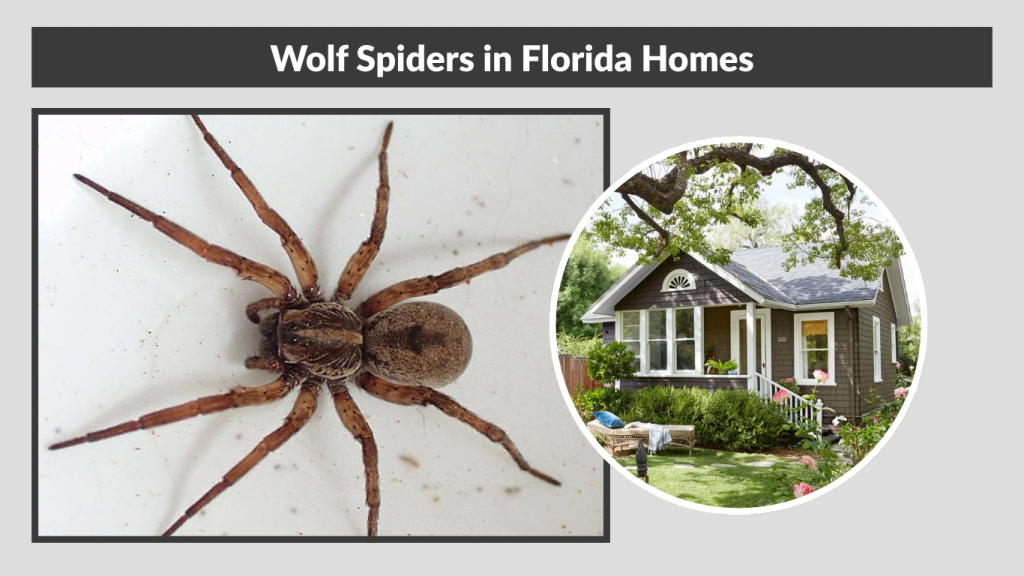
Wolf spiders may occasionally wander indoors, especially during Florida’s rainy season or when searching for prey. Homes with gardens, pools, or basements are more likely to see wolf spiders.
Should You Remove Them?
Yes, relocation is best. Wolf spiders are beneficial because they eat household pests like roaches, flies, and beetles. Using a jar and a piece of cardboard, they can be safely caught and released outdoors. Chemical control is rarely necessary.
Wolf Spider Misidentifications in Florida
Wolf spiders are often confused with other spiders or insects in Florida.
- Brown recluse vs wolf spider Florida – Recluse spiders are rare in Florida, but wolf spiders are often mistaken for them due to size and color.
- False wolf spiders – Other spider families mimic their appearance but are harmless.
- Grass spiders – Frequently misidentified because of similar markings.
- Beetles – Some large beetles resemble wolf spiders at a glance.
Understanding these differences helps reduce unnecessary fear.
Wolf Spider Facts in Florida
- Wolf spiders are one of the largest hunting spiders in the state.
- They have excellent night vision, with eyes that glow under light.
- Female wolf spiders carry egg sacs attached to their spinnerets.
- After hatching, the spiderlings ride on the mother’s back until independent.
- Some species in Florida are capable of running across water, a survival adaptation.
Wolf Spider Pictures in Florida
Wolf spiders are commonly photographed because of their size and unique appearance. Popular photo subjects include:
- Brown and black wolf spider variations.
- Females carrying spiderlings on their back.
- Burrows in lawns and fields.
- Giant wolf spiders near pools, gardens, or swamps.
These images help people identify them correctly and avoid confusion with more dangerous spiders.
FAQs
What is the size of wolf spiders in Florida?
Wolf spiders in Florida range from about 15 mm to 35 mm in body length, with a leg span that makes them appear much larger. Some individuals, often called “giant wolf spiders,” can look especially intimidating, but their size does not mean they are more dangerous than smaller species.
Are wolf spiders in Florida poisonous to humans?
Yes, wolf spiders are venomous, but their venom is not considered harmful to humans. A bite may cause pain, redness, and swelling, but it is not fatal. Most people recover quickly without medical intervention, and serious allergic reactions are very rare in Florida cases.
Do wolf spiders live in houses in Florida?
Wolf spiders occasionally enter houses, especially during the rainy season or when searching for insects. They are more likely to be found at ground level, in basements, or near entry points. While their presence can be alarming, they are not aggressive and can be safely relocated outdoors.
How can you tell a wolf spider from a brown recluse in Florida?
Wolf spiders are often mistaken for brown recluses, but there are clear differences. Wolf spiders are larger, hairier, and have eight eyes in three rows. Brown recluse spiders are smaller, smoother, and have a distinct violin-shaped marking. Recluse spiders are rare in Florida, while wolf spiders are widespread.
Which is more dangerous in Florida, wolf spider or huntsman spider?
Neither spider is considered deadly in Florida. Wolf spiders may bite if provoked, causing pain and swelling, while huntsman spiders prefer to flee rather than fight. Huntsman spiders have longer legs and climb walls, while wolf spiders are ground hunters. Both play a helpful role in controlling insects.