

Wolf spiders are often confused with other large or fast-moving spiders like huntsman, tarantulas, and even black widows. Their size, speed, and hunting habits make them appear intimidating, but their danger level is often exaggerated. This guide explores the wolf spider vs huntsman, tarantula, hobo spider, house spiders, jumping spiders, funnel weavers, and more, highlighting identification, behavior, and bite risks. By comparing species side by side, you’ll learn how to recognize wolf spiders and understand how they differ from their look-alike cousins.
1. Wolf Spider vs Huntsman

Wolf spiders and huntsman spiders are two of the most commonly confused species because of their speed and size. While both look intimidating, their body shape, habitat, and behavior set them apart.
Identification
- Wolf Spider: Stocky body, shorter legs compared to body size, brown or gray with camouflage markings, and large forward-facing eyes.
- Huntsman Spider: Flat body with very long sideways-spreading legs, much larger leg span than wolf spiders, usually brown, gray, or tan in color.
Behavior and Habitat
Wolf spiders are ground-dwelling hunters that stalk prey at night, often hiding in burrows, leaf litter, or under rocks. In contrast, huntsman spiders prefer walls, ceilings, or tree bark, using their speed and climbing ability to catch prey indoors and outdoors.
Bite and Danger
Wolf spider bites cause localized pain, swelling, and redness, usually healing within a week. Huntsman spider bites can feel sharper because of their larger fangs, but their venom is mild. Neither spider poses a serious threat to humans, though allergic reactions are possible.
2. Wolf Spider vs Tarantula

Wolf spiders and tarantulas are both hairy hunters that don’t rely on webs to catch prey. Their similar appearance often leads to confusion, but their size and lifestyle make them easy to distinguish once you know the differences.
Identification
- Wolf Spider: Medium-sized, stocky body, brown or gray with camouflage markings, strong eyesight with large forward-facing eyes.
- Tarantula: Much larger and bulkier, covered in dense hairs, often black or brown with lighter markings, fangs much bigger than wolf spiders.
Behavior and Habitat
Wolf spiders live in fields, forests, and gardens, where they roam at night to ambush prey. Tarantulas are mostly burrowers, spending much of their time underground and emerging to hunt. Unlike wolf spiders, tarantulas move slowly but rely on their size and strength to overpower insects and small animals.
Bite and Danger
A wolf spider bite is painful but usually limited to swelling and redness. Tarantula bites can feel stronger because of their larger fangs, but their venom is not dangerous to humans. Tarantulas may also release irritating hairs as a defense mechanism, which wolf spiders do not.
3. Wolf Spider vs Hobo Spider

Wolf spiders and hobo spiders are often confused because they are similar in size and color. However, their hunting style and web use make them very different.
Identification
- Wolf Spider: Medium to large, hairy body, brown or gray with camouflage markings, strong forward-facing eyes, does not build prey-catching webs.
- Hobo Spider: Similar in size but slimmer, yellowish-brown with herringbone markings, builds funnel-shaped webs, smaller eyes compared to wolf spiders.
Behavior and Habitat
Wolf spiders are ground hunters, relying on their speed and eyesight to stalk prey. They live outdoors under rocks, leaves, or burrows. Hobo spiders are funnel weavers, creating web tunnels in basements, corners, or outdoor structures where they wait for insects to enter.
Bite and Danger
Wolf spider bites cause localized pain, swelling, and redness but rarely serious medical issues. Hobo spider bites were once thought to cause necrosis, but recent studies show they are mostly harmless, with symptoms similar to wolf spider bites.
4. Wood Spider vs Wolf Spider
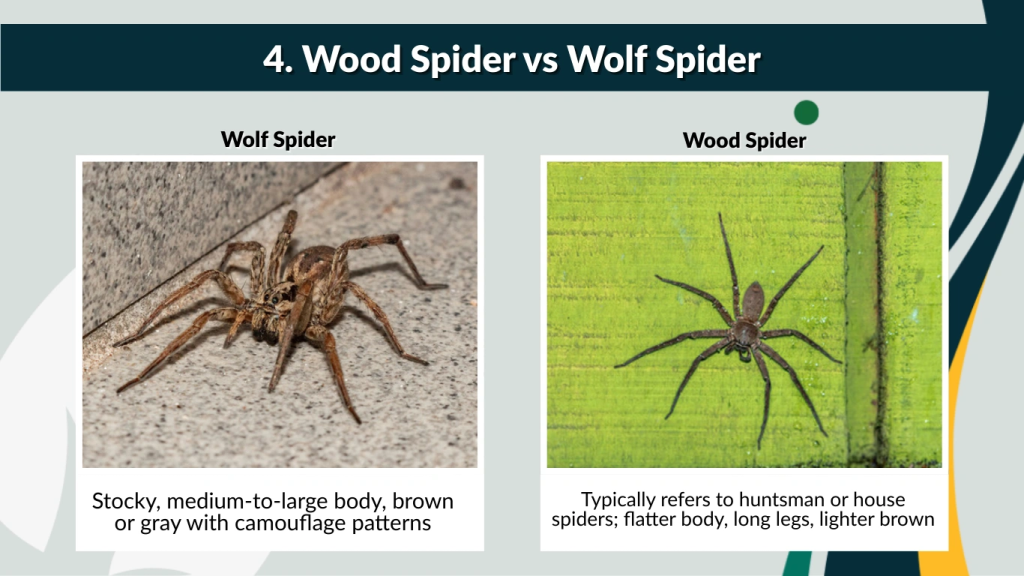
The term “wood spider” is often used as a common name for large spiders such as huntsman or house spiders. This can cause confusion with wolf spiders since both are frequently found near human homes and wooded areas.
Identification
- Wolf Spider: Stocky, medium-to-large body, brown or gray with camouflage patterns, large reflective eyes, and no prey-catching web.
- Wood Spider: Typically refers to huntsman or house spiders; flatter body, long legs, lighter brown or gray coloration, often seen on walls or ceilings.
Behavior and Habitat
Wolf spiders are nocturnal ground hunters that roam fields, gardens, and wooded habitats, hiding under leaves or rocks. Wood spiders (like huntsman or house spiders) usually prefer walls, ceilings, or tree bark, moving quickly when disturbed but relying on ambush rather than active stalking.
Bite and Danger
Wolf spider bites are painful but mild, healing within days. Wood spiders also deliver non-dangerous bites, with symptoms limited to swelling and redness. Both spiders appear intimidating but are rarely a serious health risk.
5. Wolf Spider vs House Spider
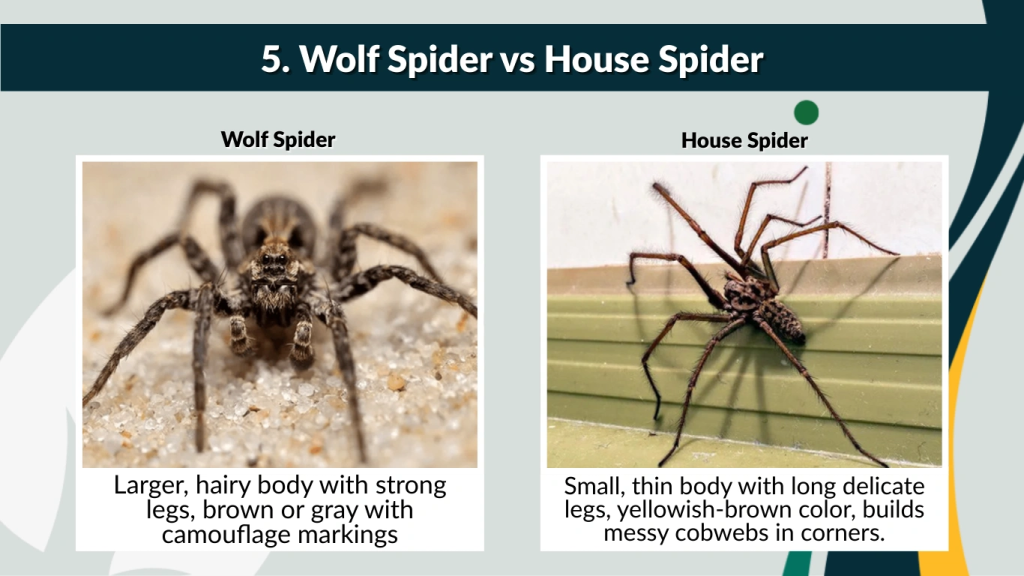
House spiders are some of the most common indoor arachnids, and they are often mistaken for wolf spiders due to similar coloring. However, their size, web-building behavior, and body shape make them easy to tell apart once examined closely.
Identification
- Wolf Spider: Larger, hairy body with strong legs, brown or gray with camouflage markings, large eyes that reflect light, hunts without webs.
- Common House Spider: Small, thin body with long delicate legs, yellowish-brown color, builds messy cobwebs in corners.
- Giant House Spider: Much larger, fast runner, long legs, dark brown with lighter markings, makes sheet webs indoors.
- Black House Spider: Medium size, dark gray to black coloration, web-builder, commonly found in Australia.
Behavior and Habitat
Wolf spiders are ground hunters that roam outdoors, occasionally entering homes while searching for prey. House spiders prefer staying indoors, constructing webs in corners, basements, and undisturbed areas. The giant house spider is especially fast but remains web-bound, while the black house spider spins funnel-like webs in sheltered spaces.
Bite and Danger
Wolf spider bites can be painful with swelling and redness, though not medically dangerous. Common house spiders are too small to cause serious bites. Giant house spiders may nip if handled, but symptoms are mild. Black house spider bites may cause localized pain, but like wolf spiders, they are not considered dangerous to humans.
6. Dark Fishing Spider vs Wolf Spider
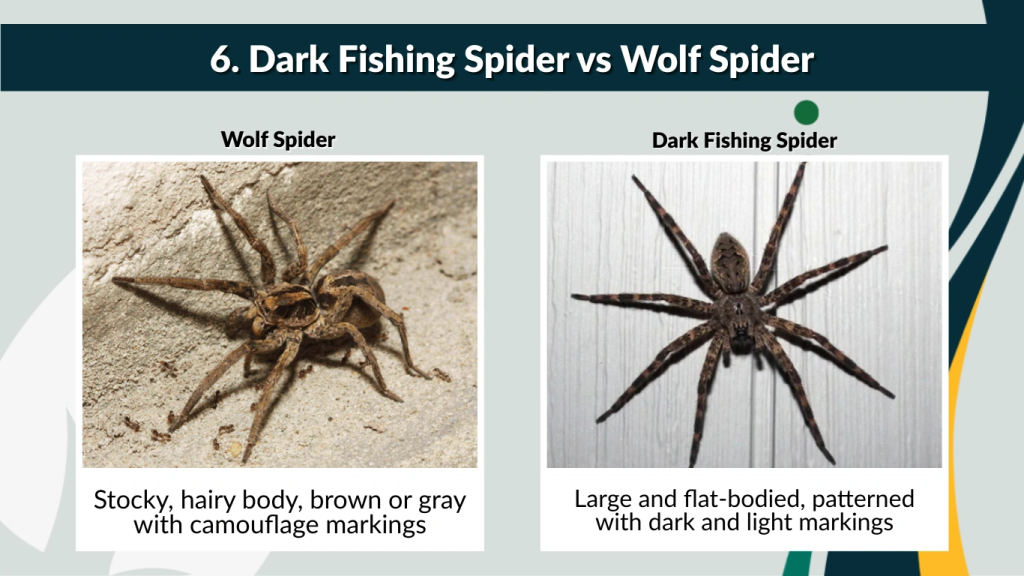
The dark fishing spider and the wolf spider are large, fast-moving arachnids that are often confused because of their similar appearance. However, their habitat preferences and physical traits make them distinct.
Identification
- Wolf Spider: Stocky, hairy body, brown or gray with camouflage markings, large reflective eyes, hunts without webs.
- Dark Fishing Spider: Large and flat-bodied, patterned with dark and light markings, often mistaken for wolf spiders, long legs adapted for moving across water surfaces.
Behavior and Habitat
Wolf spiders prefer dry environments such as grasslands, gardens, and wooded areas, where they actively stalk prey. Dark fishing spiders are semi-aquatic, living near lakes, ponds, and rivers. They can walk on water and even dive beneath the surface to catch small fish or aquatic insects.
Bite and Danger
Wolf spider bites are painful but mild, typically causing swelling and redness. Dark fishing spider bites are similar—painful but not medically significant. Both spiders appear intimidating due to their size, but neither poses a serious threat to humans.
7. Rabid Wolf Spider vs Wolf Spider

The rabid wolf spider is a specific species within the wolf spider family, often confused with other wolf spiders because of its size and speed. Its name sounds intimidating, but it does not carry rabies or pose unusual danger.
Identification
- Wolf Spider (General): Medium to large, brown or gray with camouflage markings, reflective eyes, hunts on the ground.
- Rabid Wolf Spider: Recognizable by two dark stripes running down the cephalothorax and distinct banding on the legs, medium-sized compared to other wolf spiders, with a more streamlined appearance.
Behavior and Habitat
Like other wolf spiders, rabid wolf spiders are nocturnal hunters that stalk prey instead of using webs. They are commonly found in grasslands, wooded areas, and around homes. Despite their name, rabid wolf spiders do not behave more aggressively than typical wolf spiders; their name comes from their quick, jerky movements.
Bite and Danger
Both general wolf spiders and rabid wolf spiders deliver similar bites: painful but not life-threatening. Symptoms include redness, swelling, and tenderness at the bite site. As with other wolf spiders, bites heal within a week unless infection develops.
8. Wolf Spider vs Jumping Spider
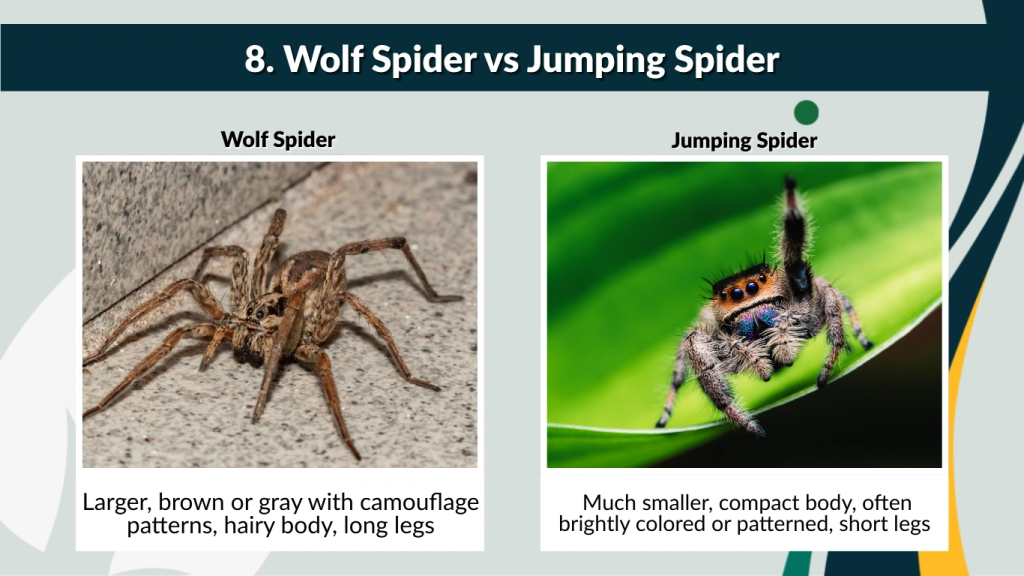
Wolf spiders and jumping spiders are two active hunting spiders that don’t rely on webs to catch prey. They are often compared because of their speed and strong eyesight, but their size and behavior make them quite different.
Identification
- Wolf Spider: Larger, brown or gray with camouflage patterns, hairy body, long legs, and large reflective eyes arranged in three rows.
- Jumping Spider: Much smaller, compact body, often brightly colored or patterned, short legs, with oversized front eyes that give them excellent vision.
Behavior and Habitat
Wolf spiders roam at night, hunting on the ground or hiding in burrows and leaf litter. Jumping spiders are daytime hunters, using quick leaps to ambush prey. They are often seen on walls, plants, and windowsills, and are more curious around humans compared to wolf spiders.
Bite and Danger
Wolf spider bites are painful but mild, causing swelling and redness that heal in days. Jumping spider bites are rare and less severe, often no worse than a bee sting. Neither spider is dangerous to humans, though wolf spiders may appear more intimidating because of their size.
9. Giant House Spider vs Wolf Spider
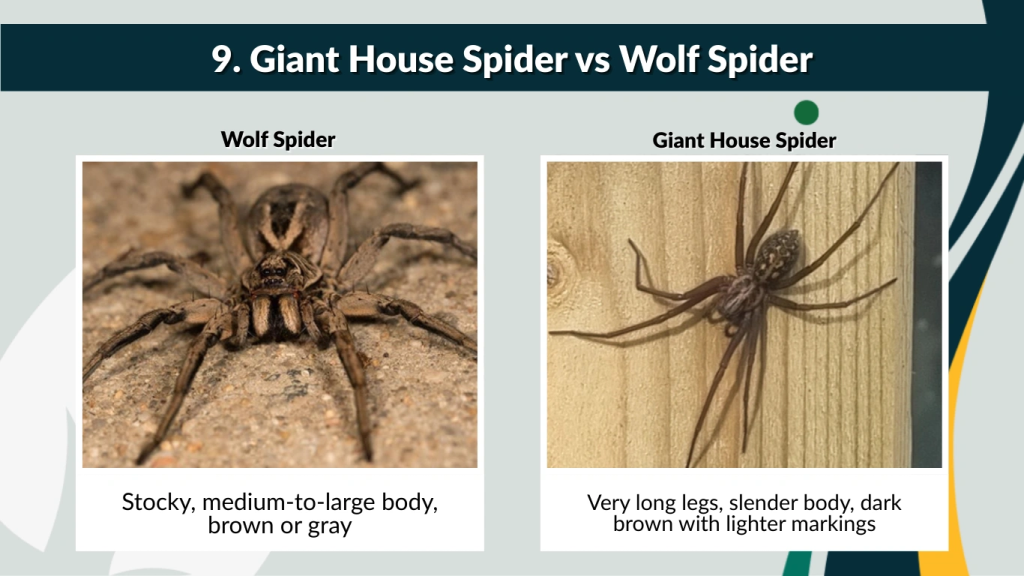
The giant house spider is one of the largest indoor spiders and is frequently mistaken for the wolf spider because of its size and speed. Despite their intimidating looks, both are generally harmless.
Identification
- Wolf Spider: Stocky, medium-to-large body, brown or gray with camouflage markings, hunts without webs, reflective eyes.
- Giant House Spider: Very long legs, slender body, dark brown with lighter markings, builds sheet-like webs indoors, smaller eyes compared to wolf spiders.
Behavior and Habitat
Wolf spiders are outdoor hunters, commonly found in grass, soil, and wooded areas, only entering homes by accident. Giant house spiders prefer indoor spaces such as basements, attics, and corners, where they build large flat webs. While wolf spiders actively stalk prey, giant house spiders rely on their webs and speed to trap insects.
Bite and Danger
Wolf spider bites are painful but usually harmless, causing swelling and redness. Giant house spider bites are rare; when they occur, they cause mild pain and irritation but no lasting harm. Both spiders look intimidating, but neither poses significant danger to humans.
10. Common House Spider vs Wolf Spider
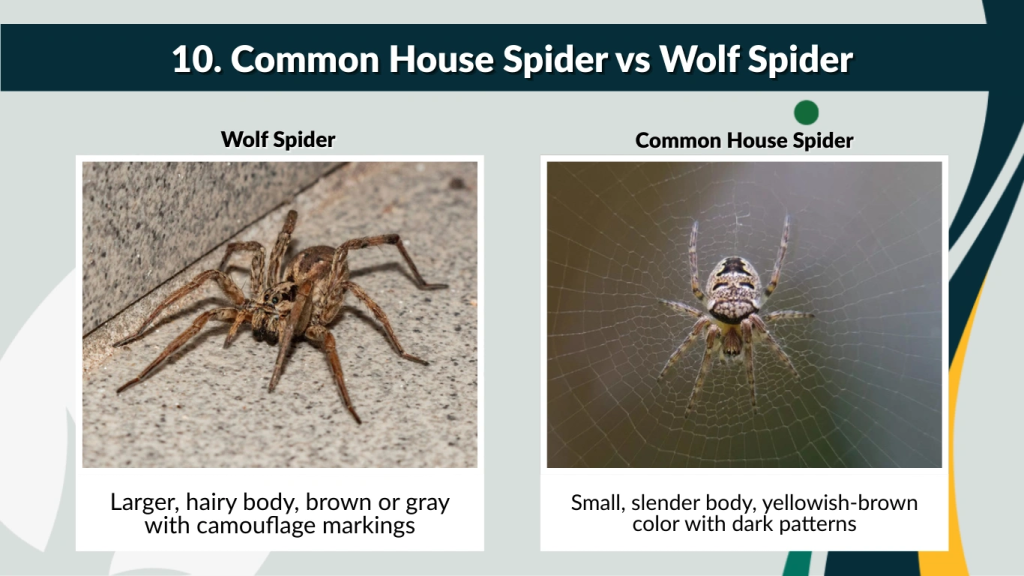
The common house spider is one of the most frequently encountered indoor spiders. Wolf spiders, on the other hand, are outdoor hunters but are sometimes mistaken for house spiders when they wander indoors.
Identification
- Wolf Spider: Larger, hairy body, brown or gray with camouflage markings, hunts without webs, large reflective eyes.
- Common House Spider: Small, slender body, yellowish-brown color with dark patterns, long thin legs, creates messy cobwebs in corners.
Behavior and Habitat
Wolf spiders actively roam outdoors in soil, gardens, and wooded areas, rarely building webs. They may enter homes while searching for prey. Common house spiders spend most of their lives indoors, spinning tangled webs in basements, attics, or corners of ceilings where insects are abundant.
Bite and Danger
Wolf spider bites are noticeable, with swelling and redness that heal in about a week. Common house spider bites are extremely rare and usually harmless, often going unnoticed. Both spiders are more intimidating in appearance than they are dangerous.
11. Black House Spider vs Wolf Spider
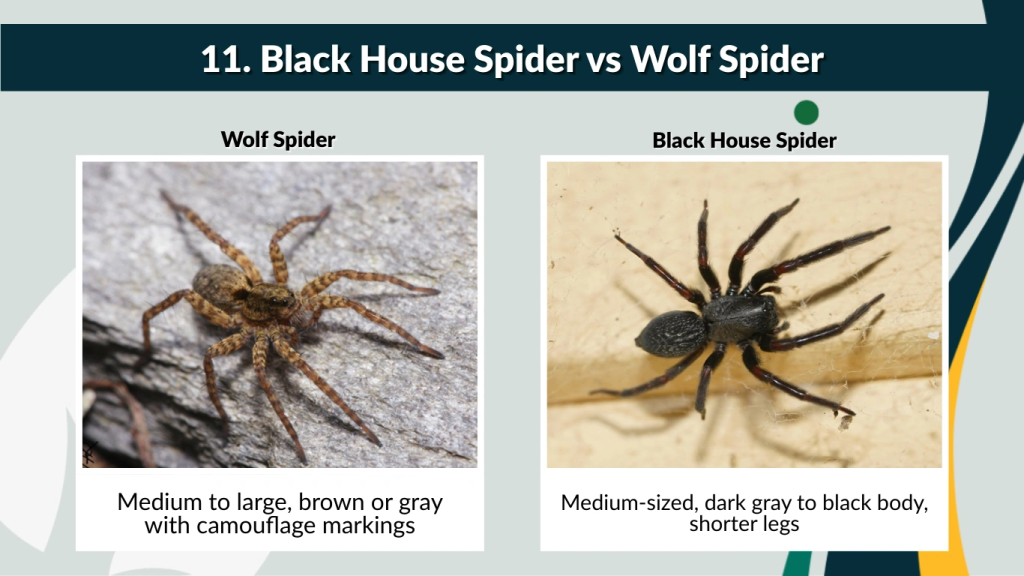
The black house spider is native to Australia and is often confused with the wolf spider because both are medium to large in size and dark in color. Despite appearances, their habits and behaviors are quite different.
Identification
- Wolf Spider: Medium to large, brown or gray with camouflage markings, hairy body, reflective eyes, hunts without webs.
- Black House Spider: Medium-sized, dark gray to black body, shorter legs compared to wolf spiders, constructs funnel-like webs in sheltered areas.
Behavior and Habitat
Wolf spiders are ground hunters that roam through grass, soil, and leaf litter, only occasionally entering houses. Black house spiders prefer sheltered spots such as window frames, rock crevices, and tree trunks, where they spin permanent webs. While wolf spiders chase prey, black house spiders wait for insects to become trapped.
Bite and Danger
Wolf spider bites cause localized pain, redness, and swelling but heal quickly. Black house spider bites are uncommon but may cause mild pain, sweating, or nausea in sensitive individuals. Neither species is considered life-threatening, though medical attention may be needed if allergic reactions occur.
12. Funnel Weaver Spider vs Wolf Spider
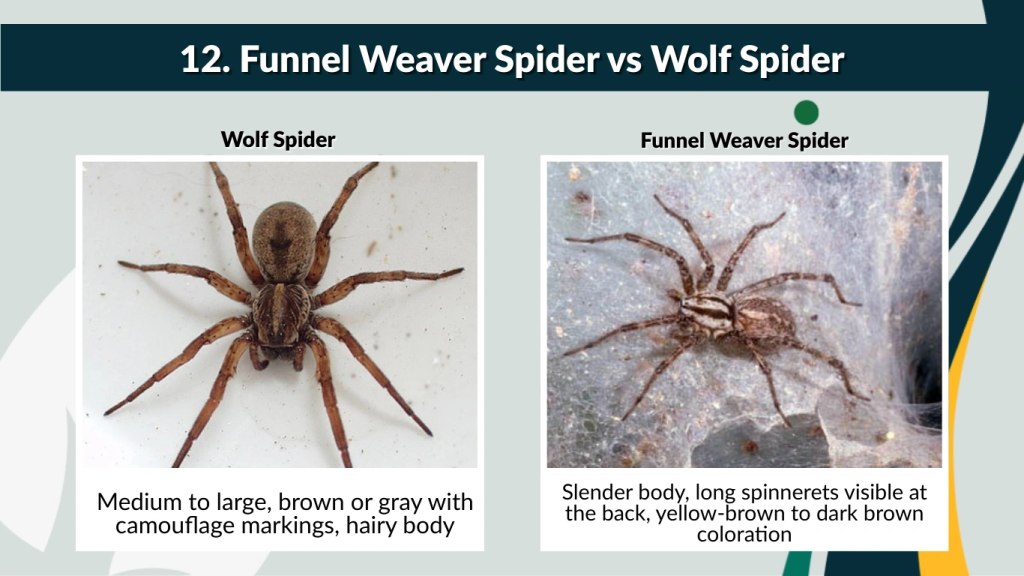
Funnel weaver spiders, also known as grass spiders (genus Agelenopsis), are often confused with wolf spiders because of their size and speed. However, their web-building habits clearly separate them from wolf spiders.
Identification
- Wolf Spider: Medium to large, brown or gray with camouflage markings, hairy body, hunts without webs, large reflective eyes.
- Funnel Weaver Spider (Agelenopsis): Slender body, long spinnerets visible at the back, yellow-brown to dark brown coloration with stripes, builds sheet-like funnel webs.
Behavior and Habitat
Wolf spiders are ground hunters that stalk prey at night and hide under rocks, logs, or burrows. Funnel weaver spiders construct flat sheet webs with a funnel retreat, usually found in grass, bushes, or corners of buildings. They wait inside the funnel until prey lands on the sheet, then rush out to capture it.
Bite and Danger
Wolf spider bites are painful but mild, with redness and swelling. Funnel weaver spider bites are rare and usually less severe, causing only minor irritation. Neither spider is considered dangerous to humans, though funnel weavers may appear aggressive when defending their webs.
13. Black Widow vs Wolf Spider
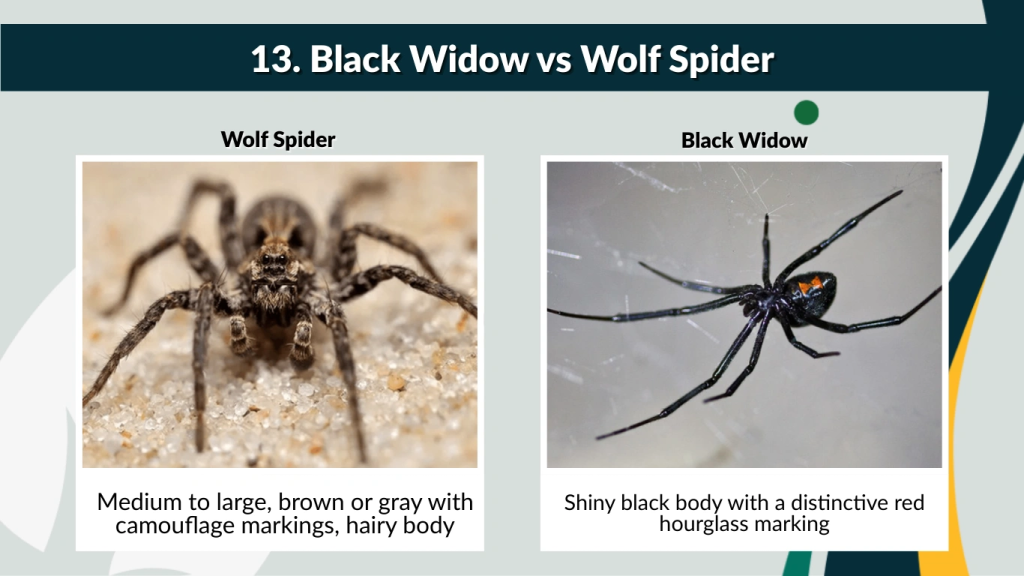
The black widow and the wolf spider are often compared because both look intimidating, but their danger levels are very different. While wolf spiders are mostly harmless, black widows are among the most venomous spiders in North America.
Identification
- Wolf Spider: Medium to large, brown or gray with camouflage markings, hairy body, large forward-facing eyes, hunts without webs.
- Black Widow: Shiny black body with a distinctive red hourglass marking on the underside of the abdomen, slender legs, smaller but more glossy in appearance.
Behavior and Habitat
Wolf spiders are solitary hunters found in gardens, fields, and wooded areas, roaming at night in search of prey. Black widows build irregular, tangled webs in dark, sheltered spaces such as sheds, garages, or woodpiles. While wolf spiders chase prey actively, black widows rely on their webs to trap insects.
Bite and Danger
Wolf spider bites cause localized swelling, redness, and discomfort but are not dangerous to humans. Black widow bites, on the other hand, can inject potent neurotoxic venom that causes muscle pain, cramping, sweating, and nausea. While rarely fatal, black widow bites require medical attention, unlike wolf spider bites that heal naturally within days.
FAQs
How do you tell a wolf spider from a hobo spider?
Wolf spiders do not build funnel webs, while hobo spiders create funnel-shaped silk retreats. Wolf spiders also have larger, more noticeable eyes.
Is a wolf spider more dangerous than a black widow?
No. Wolf spider bites are painful but mild, while black widow bites can cause serious systemic symptoms that require medical attention.
Which is bigger, a wolf spider or a huntsman?
Huntsman spiders are much larger, with leg spans reaching up to 12 inches, while wolf spiders are medium-sized with shorter, stockier legs.
Can wolf spiders be mistaken for tarantulas?
Yes, both are hairy hunters, but tarantulas are bulkier and much larger, while wolf spiders are leaner and smaller.
Do male and female wolf spiders behave differently?
Yes. Females are larger and carry egg sacs or spiderlings, making them more defensive. Males are smaller, lighter, and often seen wandering in search of mates.