

The yellow sac spider might be small, but it’s one of the most misunderstood spiders found in homes and gardens. Known for its pale yellow color and surprising bite, this spider often raises concerns among homeowners. Here, I’ll walk you through everything you need to know — from identifying the yellow sac spider and understanding its behavior to dealing with bites and preventing infestations. Whether you’ve seen one crawling on your wall or are just curious about their role in nature, this article covers it all in detail.
Yellow Sac Spider Identification

Yellow sac spiders are small but distinct spiders that can be identified by their pale coloring and active nighttime behavior. They don’t spin webs to catch prey — instead, they roam in search of insects. These spiders are commonly found indoors and are responsible for many household spider bites.
What is a Yellow Sac Spider?
Yellow sac spiders are fast-moving, active hunters. Instead of building a traditional web, they create silk sacs in hidden locations where they rest during the day. They are most active at night, often seen on ceilings, walls, or among plants.
Yellow Sac Spider Scientific Name: Cheiracanthium inclusum
The most well-known species in North America is Cheiracanthium inclusum, also referred to as the American yellow sac spider. Another related species, Cheiracanthium mildei, is more commonly found in the northeastern U.S. and parts of Europe.
Black-Footed Yellow Sac Spider vs Northern Yellow Sac Spider
- Black-Footed Yellow Sac Spider: Features dark markings on its feet and a slightly more aggressive behavior.
- Northern Yellow Sac Spider: Lighter in color and often found in cooler climates.
While both species have venom that can cause mild reactions in humans, they are not considered medically dangerous.
Yellow Sac Spider Size & Appearance
Adult yellow sac spiders typically range from 4 to 10 millimeters in body length. They have long, slender legs, with the front pair slightly longer. Their body is usually pale yellow, light green, or tan. The cephalothorax (head area) may be slightly darker, and some species have faint markings on the abdomen.
Yellow Sac Spider Habitat and Range

Yellow sac spiders are adaptable creatures that thrive in both outdoor and indoor environments. Their preferred hiding spots include leaves, under stones, woodpiles, and inside human dwellings — especially in warm, undisturbed areas. Their geographic range is wide, making them one of the most common house spiders in many regions.
Yellow Sac Spider Habitat (Indoor & Outdoor)
Outdoors, yellow sac spiders live under tree bark, in leaf litter, gardens, and shrubs. Indoors, they hide behind picture frames, baseboards, ceilings, folded curtains, and closets. They construct their silken sacs in these places to rest during the day.
Where Do Yellow Sac Spiders Live?
They are widespread across North and Central America and parts of Europe, including in urban, suburban, and rural environments. Indoors, they’re drawn to warmth and shelter, especially during colder seasons.
Yellow Sac Spider Range Map & Region
Yellow sac spiders are found in:
- United States: California, Texas, Florida, New York, Michigan, Ohio, Oregon, Virginia, New Jersey, Massachusetts, Minnesota, Utah, Washington, Wisconsin
- Other regions: UK, Australia, Central America
They can adapt to both dry and humid climates, making them common household spiders across different zones.
Yellow Sac Spider in the House
These spiders often enter homes through open doors, windows, or cracks. Once inside, they settle in quiet, dark areas. Their sacs can often be spotted in ceiling corners, baseboards, and folds of furniture. Because of their reclusive nature, infestations may go unnoticed until multiple sightings occur.
Yellow Sac Spider Nest, Egg Sac & Cocoon
Yellow sac spiders create silky white sacs, typically tubular or oval, where they rest or lay eggs. Each egg sac may contain 30–50 eggs. These sacs are hidden in protected spots and can be mistaken for dirt or lint. They don’t create typical webs for catching prey — the silk structures are only for shelter or reproduction.
Country Distribution: US States, UK, and Australia
- United States: Present in nearly all states
- UK: Particularly Cheiracanthium mildei found in homes and gardens
- Australia: Less common but still present in certain regions
Their widespread presence is due to their ability to thrive in human-altered environments.
Yellow Sac Spider Behavior and Diet

Yellow sac spiders are active hunters, unlike many web-building spiders. They are nocturnal and spend their nights searching for small insects. Their quick movements, stealthy hunting style, and tendency to bite when provoked make them both fascinating and sometimes feared.
What Do Yellow Sac Spiders Eat?
Yellow sac spiders feed on a variety of soft-bodied insects and arthropods. Their diet includes:
- Small flies
- Moths
- Crickets
- Aphids
- Other small spiders
They are beneficial in gardens and homes by helping control pest populations.
Yellow Sac Spider Diet and Daily Habits
These spiders are night hunters. They leave their silken sacs at dusk and roam for prey. During the day, they stay hidden in their sacs to avoid predators and disturbances. Yellow sac spiders rely on speed and stealth rather than webs to catch their prey.
Yellow Sac Spider Web: Do They Make Webs?
Yellow sac spiders don’t make classic spider webs to trap insects. Instead, they construct sac-like silk shelters in concealed places. These sacs are used for:
- Daytime resting
- Egg laying
- Molting
- Protection from predators
They may spin silk while moving, but it’s not used to catch prey.
Are Yellow Sac Spiders Active at Night?
Yes, they are nocturnal. Their night activity includes:
- Hunting for food
- Exploring new areas
- Sometimes ending up on walls, ceilings, or beds
This nighttime behavior increases the chances of human contact, which is why people often get bitten while asleep or during evening hours.
Yellow Sac Spider Bite: Symptoms and Treatment
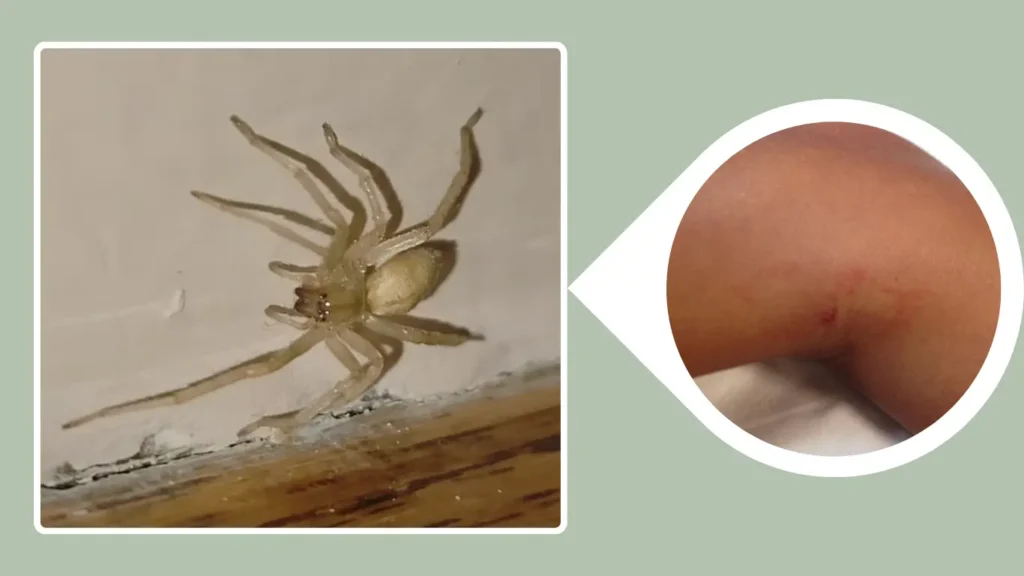
Yellow sac spider bites are among the most reported spider bites in the United States. While they are rarely serious, their bites can cause noticeable pain, redness, and irritation. Understanding the symptoms and how to treat them is important for safety and peace of mind.
Yellow Sac Spider Bite Symptoms
Common symptoms of a bite include:
- Sharp or stinging pain at the moment of the bite
- Redness and swelling at the bite site
- Itching or burning sensation
- Formation of a small blister or ulcer in some cases
- In rare instances, mild systemic symptoms like fever, nausea, or muscle cramps
Most bites are similar to a bee sting and heal without medical intervention.
What Does a Yellow Sac Spider Bite Look Like?
A bite typically appears as a small red bump, which may develop a pale center and a darker red outer ring. In some people, the bite can form a blister that later breaks and forms a shallow open sore. These symptoms often lead to confusion with more dangerous bites, like those from the brown recluse.
Yellow Sac Spider Bite Pictures & Photos
Pictures often show:
- Small puncture marks
- Swollen red areas
- Slight ulceration or tissue damage in more sensitive individuals
Including clear bite photos in your article can help readers identify if they’ve been bitten.
How to Treat Yellow Sac Spider Bites
If bitten, follow these steps:
- Clean the bite area with soap and water
- Apply a cold compress to reduce swelling
- Take an antihistamine to reduce itching
- Use over-the-counter pain relievers if needed
- Monitor for signs of infection such as pus, warmth, or increased pain
If the bite worsens or shows signs of infection, consult a doctor.
Yellow Sac Spider Bite Treatment at Home
Home care is usually enough for most cases. Natural remedies like aloe vera, baking soda paste, or tea tree oil can help soothe the area. However, it’s important not to pick at or scratch the bite site to prevent infection.
Black-Footed Yellow Sac Spider Bite
This species is more likely to bite when disturbed. Bites are similar in appearance and severity to other yellow sac spider species but may cause more irritation due to their aggressive behavior.
Northern Yellow Sac Spider Bite
Bites from the northern species are typically mild and rarely result in skin damage. They are more commonly encountered in northern states and parts of Canada, especially indoors during colder months.
Are Yellow Sac Spiders Dangerous or Poisonous?
The yellow sac spider is often feared due to its bite and indoor presence, but is it truly dangerous? While their bite can be painful, most reactions are mild, and their venom is not considered life-threatening to humans. However, understanding the risks helps people react calmly and appropriately.
Is the Yellow Sac Spider Dangerous or Deadly?
Yellow sac spiders are not deadly to humans. Their bites may be unpleasant, but serious medical issues are extremely rare. They are only mildly venomous and do not cause the kind of necrosis seen with more dangerous spiders like the brown recluse.
Are Yellow Sac Spiders Poisonous or Venomous?
Technically, they are venomous, not poisonous. This means they inject venom through their fangs when biting. The venom is designed to subdue small prey, not to harm humans. In humans, it usually causes only localized irritation.
Yellow Sac Spider vs Brown Recluse: Which Is More Dangerous?
- Yellow Sac Spider: Bites are usually mild, may cause localized redness and blistering. Rarely results in tissue damage.
- Brown Recluse: Bites can cause serious skin necrosis, ulcers, and systemic reactions.
While often confused with each other, the brown recluse poses a higher health risk than the yellow sac spider.
Are Yellow Sac Spider Bites Dangerous to Humans?
For most people, the bite causes minor symptoms that resolve within a few days. Those with sensitive skin or allergic reactions might experience increased swelling or discomfort. Very rarely, a bite may become infected if scratched or untreated.
Are Yellow Sac Spiders an Endangered Species?
No, yellow sac spiders are not endangered. They are common throughout much of the U.S., and their population is stable. In fact, they’re considered one of the most frequently encountered household spiders, particularly in late summer and fall.
Yellow Sac Spider Facts

Yellow sac spiders are more than just occasional home invaders — they have unique behaviors and surprising stories attached to them. Here are some quick, numbered facts that highlight just how fascinating these little arachnids really are.
- They Hunt Without Webs
Yellow sac spiders actively hunt their prey at night instead of spinning webs to trap them. - They Often Bite Unprovoked
These spiders are known to bite humans without warning, especially when accidentally trapped in bedding or clothing. - They Rest in Silk Sacs During the Day
Their name comes from the small, silken sacs they hide in during the day, usually in hidden corners. - Black-Footed Species Have Distinct Leg Tips
The black-footed yellow sac spider has noticeable dark tips on its legs and may be slightly more defensive. - They Lay Multiple Egg Sacs Each Year
A single female can produce several egg sacs annually, with 30–50 eggs in each. - They Caused Mazda Car Recalls
Yellow sac spiders once made headlines for nesting inside Mazda fuel lines, prompting thousands of vehicle recalls.
Summary:
Yellow sac spiders are small, fast-moving hunters commonly found in homes and gardens. Known for their painful, often unprovoked bites, they rest in hidden silk sacs during the day and hunt at night. While not deadly, their bites can cause irritation. These adaptable spiders even made headlines for nesting in Mazda fuel lines, showcasing their persistence and unusual behavior. Understanding them helps reduce fear and improve prevention.