

The redback spider, a close relative of the infamous black widow, has increasingly been spotted in parts of Texas. Known for its potent venom and distinctive red stripe, this spider’s growing presence raises both curiosity and concern. While native to Australia, redbacks have adapted remarkably well to Texas’s dry and warm conditions, particularly in rural and suburban areas where shelter and food sources are abundant. Understanding their physical traits, habits, and nesting behavior is essential for identification and safe management.
Size and Physical Description
The redback spider is small but highly distinctive. Adult females typically measure 10–15 millimeters in body length, excluding legs, while males are much smaller at about 3–5 millimeters. Their legs are long, slender, and glossy, extending their overall size to nearly an inch. This notable sexual size difference often makes females easier to identify. Despite their modest dimensions, their striking coloration and posture make them stand out among Texas arachnids.
Color and Markings

- Females are shiny black with a vivid red or orange stripe running down the upper abdomen.
- Males tend to be lighter brown with faint red or white markings.
- Juveniles often display white or orange spots that fade as they mature.
- Color intensity can vary depending on climate and habitat conditions.
The redback’s red stripe is its defining feature, serving as a warning signal to predators. In Texas, where several dark-bodied spiders exist, this bright marking helps distinguish redbacks from native species such as the southern black widow or false widow.
Identification Guide

- The abdomen features a narrow red or orange stripe, sometimes forming an hourglass shape.
- Long, thin legs with a smooth, glossy surface.
- Prefers dark, undisturbed places like sheds, mailboxes, and garden debris.
- Moves slowly when unprovoked but reacts defensively when threatened.
Redbacks are often mistaken for black widows due to their similar appearance. However, their webs and behavior provide key clues for accurate identification. They are less likely to spin in open corners and prefer secluded, low areas.
Habitat and Distribution

In Texas
Redback spiders are found in dry, sheltered environments, similar to their native Australian habitats. In Texas, they are most commonly reported in Central and Southern regions, where warm temperatures and human settlements provide ideal nesting spots. They inhabit gardens, garages, wood piles, and under outdoor furniture, often hidden from direct sunlight.
Beyond Texas
Though originally from Australia, the redback has spread globally, primarily through human transport and trade. Shipping containers, gardening equipment, and vehicles have allowed the species to expand across North America. Texas, with its subtropical climate, offers favorable conditions for their survival and reproduction.
Behavior and Daily Activity
Redback spiders are nocturnal and prefer to stay hidden during the day. Females typically remain stationary within their web, waiting for prey, while males actively roam in search of mates. Their diet consists mainly of insects and small arthropods, including crickets, beetles, and flies.
When threatened, the female will curl her legs and drop to the ground or retreat deeper into her web. She may also release silk as a defense mechanism to slow down predators. Redbacks rarely bite unless provoked, but their venom is potent and requires medical attention if envenomation occurs.
Nesting and Web Patterns

- The web is irregular and tangled, made of strong, sticky silk.
- Constructed in low, sheltered areas, often close to the ground.
- The structure includes a funnel-like retreat where the female hides.
- Debris, discarded exoskeletons, and prey remains are commonly found underneath.
The web serves both as a hunting trap and protective zone for the female and her eggs. The silk is strong enough to restrain insects much larger than the spider itself. In Texas homes, webs are often discovered in quiet outdoor corners, under furniture, or near doorsteps.
Egg Sac and Reproduction

Egg Sac Description
Female redbacks produce small, cream-colored sacs roughly the size of a pea. Each sac contains around 100 to 250 eggs, carefully secured within the web. The female guards these sacs vigilantly, often weaving additional silk layers for reinforcement.
Life Cycle
After two to three weeks, spiderlings hatch and begin to disperse through ballooning, where they release silk threads carried by the wind. This process enables young spiders to travel long distances, aiding their spread across Texas. They mature within a few months, with females reaching full size much faster than males.
Interaction with Humans
Encounters between humans and redback spiders in Texas are uncommon but not impossible. These spiders prefer secluded and undisturbed places, so most bites occur when people accidentally disturb them. Gardeners, warehouse workers, and homeowners cleaning outdoor storage areas are most at risk.
Redback spider bites can cause pain, sweating, nausea, and muscle weakness, but fatalities are extremely rare thanks to the availability of antivenom and modern medical care. It is crucial not to panic if bitten. Instead, wash the area gently, apply a cold compress, and seek medical assistance immediately. Avoid attempting to capture the spider, as doing so may increase the chance of multiple bites.
Texas residents should learn to recognize these spiders for their own safety. Educating children and maintaining caution when moving outdoor equipment can significantly reduce the risk of encounters.
Natural Predators and Ecological Role
Despite their fearsome reputation, redback spiders play an important role in the environment. They help regulate populations of flies, beetles, mosquitoes, and small insects, contributing to natural pest control. Their presence can indirectly benefit gardens and crops by minimizing harmful insect activity.
Common predators of redback spiders include wasps, birds, geckos, and larger spiders. The mud-dauber wasp, in particular, is known for hunting and paralyzing redbacks to feed its larvae. These natural enemies help keep redback populations balanced, even in areas where human control is limited.
Ecologically, redbacks serve as both predator and prey, maintaining equilibrium within Texas’s ecosystem. Though feared, they are a reminder of the intricate relationships that sustain biodiversity across the state’s landscapes.
Prevention and Control
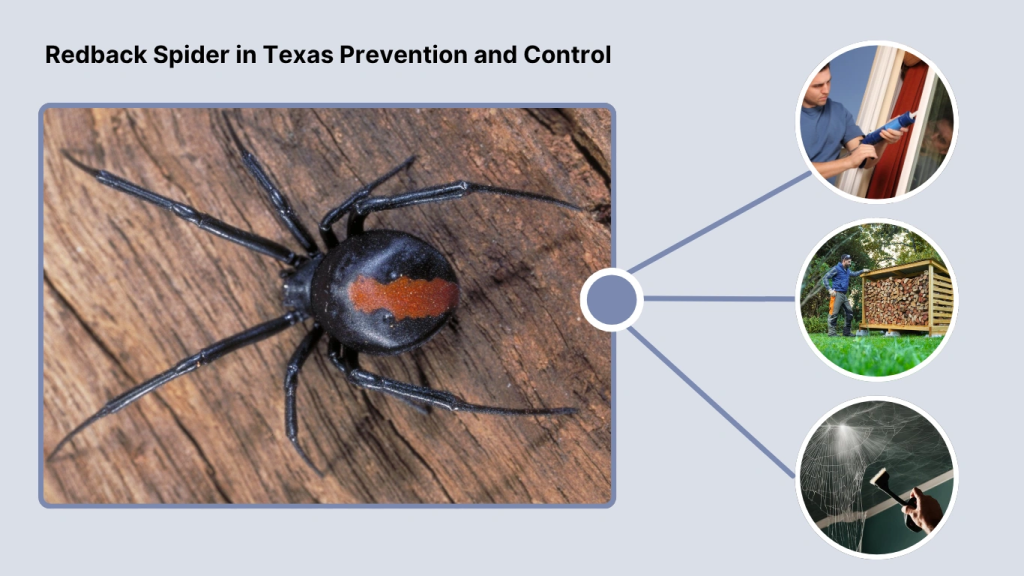
Effective prevention begins with regular inspection and cleanliness. Homeowners should keep their surroundings clear of debris, wood piles, and clutter, as these are common nesting areas. Here are practical steps to manage redback spiders safely:
- Seal cracks and gaps around doors, vents, and windows.
- Store firewood and tools away from the main house or garage.
- Remove old webs with a broom or vacuum but wear gloves during cleaning.
- Install outdoor lighting away from entrances to reduce insect attraction.
- Contact pest control professionals if multiple webs or spiders are found.
While insecticides can eliminate individual spiders, they are often less effective long-term unless nests are directly targeted. Professional pest management services in Texas use specialized treatments to remove webs, eggs, and hidden adults efficiently.
Maintaining vigilance, especially during warmer months, helps prevent infestations from becoming a problem.
Redback Spiders vs. Black Widows
Although the redback and black widow belong to the same genus (Latrodectus), they have subtle differences. Redbacks display a solid dorsal stripe, whereas black widows show a red hourglass mark on the underside of the abdomen. Behaviorally, redbacks are less aggressive and more likely to retreat than bite.
Their venom composition is also slightly different, though both can cause similar neurotoxic effects. Understanding these distinctions helps Texans identify the spider accurately and respond appropriately to encounters.
Human Adaptation and Local Reports
Recent sightings in Texas suggest that redback spiders are adapting to human-altered environments. Warm, dry conditions, combined with ample hiding spots, make suburban and rural properties ideal for their spread. Reports from areas near Austin, San Antonio, and southern Texas indicate growing numbers, though populations remain localized.
Experts believe their presence will stabilize rather than explode, as natural predators and climate variations prevent overpopulation. Still, consistent monitoring by local pest services and residents ensures safety and awareness across communities.
Myths and Facts
Common Myths
- “All redbacks are deadly.” – False. Bites are rarely fatal, and most result in mild symptoms when treated promptly.
- “They attack humans unprovoked.” – False. Redbacks are defensive and only bite when trapped or disturbed.
- “They only live in Australia.” – False. Global trade has allowed them to settle in several regions, including parts of Texas.
Facts
- Females are responsible for almost all bites.
- Redbacks prefer human-made structures to natural environments.
- Their silk is among the strongest biological materials ever tested.
FAQs
What should I do if I find a redback spider in my home?
If you discover a redback indoors, avoid direct contact. Capture it safely using a container or call pest control for removal. Inspect nearby dark corners or storage areas for other webs, and ensure the area remains sealed and clean to prevent return visits.
Are redback spiders spreading rapidly in Texas?
No, their spread is slow and largely contained to warmer southern regions. They thrive in sheltered, dry environments but do not form dense populations like some native spiders. Continuous monitoring helps prevent larger infestations and keeps them under control.
Can redback spiders live outdoors during Texas winters?
Redbacks can survive mild winters but struggle in freezing temperatures. In colder areas, they retreat to sheltered spots such as garages, attics, or sheds. Their survival depends on warmth, food availability, and protection from harsh conditions.
What do redback spiders eat in Texas?
Their diet mainly includes small insects such as beetles, flies, and moths. They also consume other spiders trapped in their webs. This feeding behavior helps naturally control pest populations in homes and gardens without the need for chemicals.
Are redback spider bites common in Texas?
No, bites are extremely rare. Most redbacks avoid human contact and stay hidden. When bites occur, they usually happen during cleaning or when moving outdoor objects. Immediate medical care ensures a full recovery without long-term complications.