

The redback spider, scientifically known as Latrodectus hasselti, is one of the most venomous spiders in the world. Famous for its distinctive red stripe and potent venom, it’s often compared to its close relative, the black widow. Although native to Australia, the redback has now been reported in parts of Asia and even Texas. Known for causing intense pain and systemic symptoms in humans, this spider’s bite has both fascinated and frightened people for decades.
Understanding how poisonous—or more correctly, venomous—the redback spider is helps demystify its reputation and ensures that people know how to handle potential encounters safely.
How Poisonous Is a Redback Spider?

While people often describe it as “poisonous,” the redback spider is technically venomous, meaning it injects toxins through a bite rather than through ingestion or skin contact. Its venom contains powerful neurotoxins known as latrotoxins, which affect the nervous system by overstimulating nerve endings.
A redback bite can cause severe local pain, sweating, nausea, and muscle weakness within minutes. However, fatalities are now extremely rare due to the availability of effective antivenom. The danger lies mainly in untreated bites or allergic reactions.
Despite its small size, the redback’s venom ranks among the most potent in the animal kingdom relative to its body weight—making it a true symbol of deadly efficiency in nature.
Venom Composition and Mechanism of Action

Venom Components
The redback spider’s venom is a complex mix of neurotoxins, proteins, and enzymes. The most active compound, α-latrotoxin, binds to nerve endings and causes massive neurotransmitter release. This overload leads to muscle cramps, pain, and the sweating commonly associated with bites.
Mechanism of Action
When injected, the venom spreads rapidly through the lymphatic system. It disrupts communication between nerves and muscles, leading to overactivity and exhaustion of nerve cells. The body responds with sweating, agitation, and muscle spasms. In severe cases, the victim may experience nausea, vomiting, and high blood pressure.
Interestingly, the venom’s potency varies slightly between spiders from different regions, but its effects remain consistent. The redback’s bite is especially dangerous to small animals and can even paralyze reptiles and birds under certain conditions.
Venom Effects on Humans

A redback spider bite usually starts with sharp pain and localized swelling. Within 30 minutes, systemic symptoms may appear, such as:
- Intense muscle pain, especially in the chest or abdomen
- Headache and sweating
- Weakness and nausea
- Increased heart rate and blood pressure
These symptoms, known collectively as latrodectism, can last several hours or even days. Severe envenomation can cause persistent pain for weeks if untreated.
Antivenom, first developed in 1956, has drastically reduced fatalities. Most modern cases are treated effectively with pain management and a single dose of antivenom. Children, the elderly, and those with medical conditions are more vulnerable to severe effects.
Male vs. Female Redback Spider Poison

The difference between male and female redbacks is significant when it comes to venom. Females are highly venomous, producing large amounts of potent neurotoxins, while males have much weaker venom and smaller fangs.
Females, which are larger and more robust, use venom both for hunting and defense. Males, on the other hand, rarely bite and pose little danger to humans. Their venom is primarily designed for subduing small prey during courtship or self-defense.
This difference explains why nearly all medically significant bites are caused by female redback spiders.
Is the Redback Spider More Poisonous Than a Black Widow?
The redback and the black widow both belong to the genus Latrodectus, and their venom is chemically similar. However, studies show that redback venom may be slightly more potent on a per-drop basis, though both cause nearly identical symptoms.
The black widow is more widespread globally, but the redback’s venom composition is highly concentrated, meaning even a small bite can trigger intense reactions. In medical terms, both spiders are treated with similar antivenom, reflecting their close relationship and nearly equal toxicity.
While neither species is as deadly today as folklore suggests, both remain among the most venomous spiders on Earth, capable of killing small animals and causing severe pain in humans.
Redback Spider vs. Venomous Snakes

- There have been documented cases and viral photos showing redback spiders killing snakes in Australia.
- The spider’s venom works quickly, paralyzing the snake’s muscles and leading to respiratory failure.
- Examples include stories titled “Spider vs Snake: Redback Spider Wins, Snake Dies from Likely Poisoning.”
- Scientists explain that the web traps the snake first, allowing multiple venom injections that overwhelm even large reptiles.
These encounters highlight the extraordinary strength of redback venom. Though rare, such events demonstrate why this small arachnid commands both respect and fascination worldwide.
Redback Jumping Spider vs. True Redback Spider
Many people confuse the redback jumping spider with the true redback spider, but they are entirely different species. The redback jumping spider belongs to the Salticidae family and is harmless to humans. It has a small, compact body and jumps actively to hunt its prey, unlike the web-building redback (Latrodectus hasselti).
The true redback spider, on the other hand, is a web-dwelling species with powerful venom and distinctive markings. While the jumping spider’s red patch can resemble that of the redback, its bite causes no medical concerns. Understanding this distinction helps prevent unnecessary fear of harmless spiders that simply share a similar color pattern.
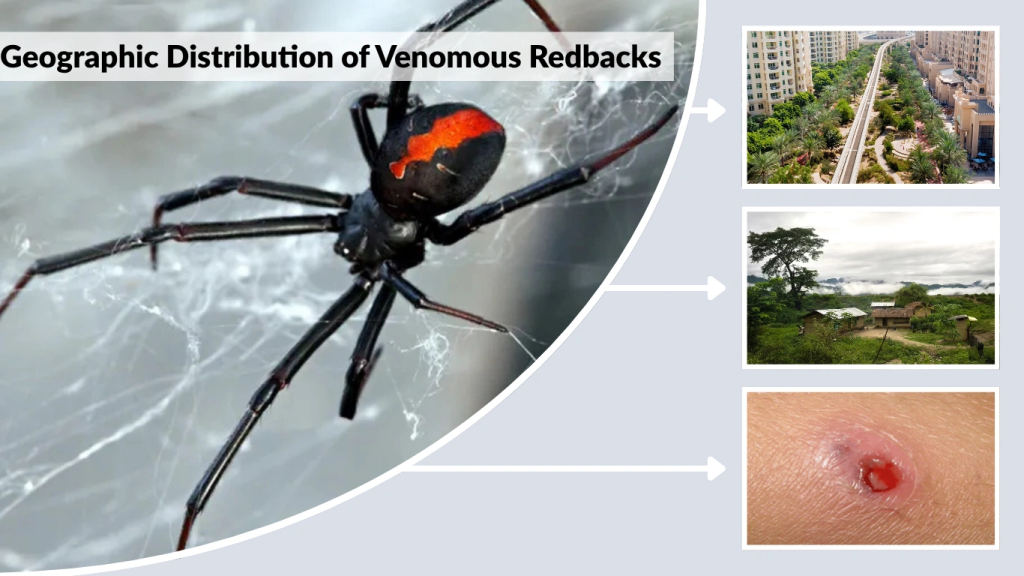
Geographic Distribution of Venomous Redbacks
In Australia
The redback spider is native to Australia, where it thrives in both urban and rural environments. It ranks among the most venomous spiders in Australia and is responsible for hundreds of bite reports each year. The species prefers dry, sheltered areas such as sheds, letterboxes, and outdoor toilets.
In Other Countries
Global trade has helped spread redbacks beyond Australia. Populations have been documented in India, Japan, New Zealand, and parts of Texas. Their adaptability allows them to live in moderate climates and human-made environments. However, strict quarantine measures in many countries aim to prevent further spread.
While their presence outside Australia is concerning, they typically remain localized and do not form large colonies. In most regions, the redback’s venomous reputation far exceeds the actual risk of encountering one.
How Much Venom Can Kill a Human?
A redback spider’s venom is extremely potent, but the amount injected during a bite is very small. Studies estimate that 0.1 mg of pure venom per kilogram of body weight could be fatal if untreated. However, in real-world conditions, redbacks inject only a fraction of this amount, making death unlikely when medical care is available.
Before the introduction of antivenom in 1956, there were a few confirmed fatalities in Australia. Since then, there have been no recorded deaths, though severe envenomation can cause excruciating pain and systemic symptoms. Modern antivenom neutralizes the neurotoxins effectively, allowing patients to recover fully within hours.
The venom’s potency lies in its ability to disrupt nerve communication. It immobilizes insects instantly and can paralyze small vertebrates, explaining rare cases of snakes or lizards dying after entanglement in redback webs.
Medical Treatment and Antivenom

If bitten by a redback spider, the first step is to remain calm and limit movement. Apply an ice pack to reduce pain but avoid tight bandages that trap venom near the wound. Seek medical help immediately, especially if symptoms spread beyond the bite area.
The redback spider antivenom, developed by the Commonwealth Serum Laboratories in Australia, remains the primary treatment. It works by binding to the venom’s neurotoxins, preventing them from attaching to nerve cells. One vial is usually sufficient for full recovery.
Medical professionals may also administer pain relief, fluids, and observation to monitor symptoms. Home remedies and outdated methods, such as cutting the wound or sucking out venom, are dangerous and ineffective.
Venom Myths and Misconceptions
- Myth 1: All redback spiders are deadly.
Fact – Most bites cause moderate symptoms, and fatalities are almost nonexistent today. - Myth 2: Redback spiders attack humans aggressively.
Fact – They are defensive and bite only when disturbed. - Myth 3: Male redbacks are just as venomous as females.
Fact – Only females produce enough venom to harm humans significantly. - Myth 4: Every bite injects venom.
Fact – Around 20 % of bites are “dry,” meaning no venom is released.
These clarifications help reduce unnecessary fear and promote awareness rather than panic.
Role of Venom in the Ecosystem
The redback spider’s venom plays an important ecological role. It allows the spider to capture insects efficiently, helping to control pest populations. In agricultural zones, redbacks reduce numbers of flies, beetles, and crop-damaging pests.
While dangerous to humans, they are valuable components of the ecosystem. Birds, wasps, and lizards keep their numbers balanced, ensuring redbacks remain part of a healthy natural cycle. Their venom’s strength also fascinates scientists, leading to research in neurobiology and pain medicine using latrotoxin derivatives.
Viral Encounters and Pop Culture
Redback spiders frequently appear in viral news stories, particularly those showing them killing snakes or other larger animals. Headlines such as “Venomous Redback Spider Kills Snake in Australia” attract global attention. While these encounters are rare, they highlight the potency of redback venom and its effectiveness even against reptiles.
In popular culture, the redback often symbolizes lethal beauty and resilience. From documentaries to social media clips, its image continues to intrigue audiences worldwide. These stories remind us that even small creatures can wield extraordinary power through evolution.
FAQs
Is a redback spider poisonous or venomous?
The redback spider is venomous, not poisonous. It delivers venom through fangs rather than through touch or ingestion. The venom causes pain, sweating, and muscle cramps but is treatable with antivenom.
Can a redback spider kill a human?
It’s extremely rare. Only untreated bites or severe allergic reactions pose a real threat. With modern medical care and antivenom, recovery is almost always complete within 24 hours.
Are male redback spiders venomous?
Male redbacks produce venom but in much smaller quantities. Their fangs are too small to penetrate human skin effectively, making them practically harmless.
Is the redback spider more dangerous than a black widow?
Both spiders have similar toxins and effects. The redback’s venom may be slightly stronger, but bite outcomes are nearly identical. Both are treated with the same type of antivenom.
What should I do after a redback spider bite?
Stay calm, apply a cold compress, and seek medical help. Avoid cleaning or cutting the bite area and do not apply pressure bandages. Hospital treatment with antivenom provides fast and safe recovery.