
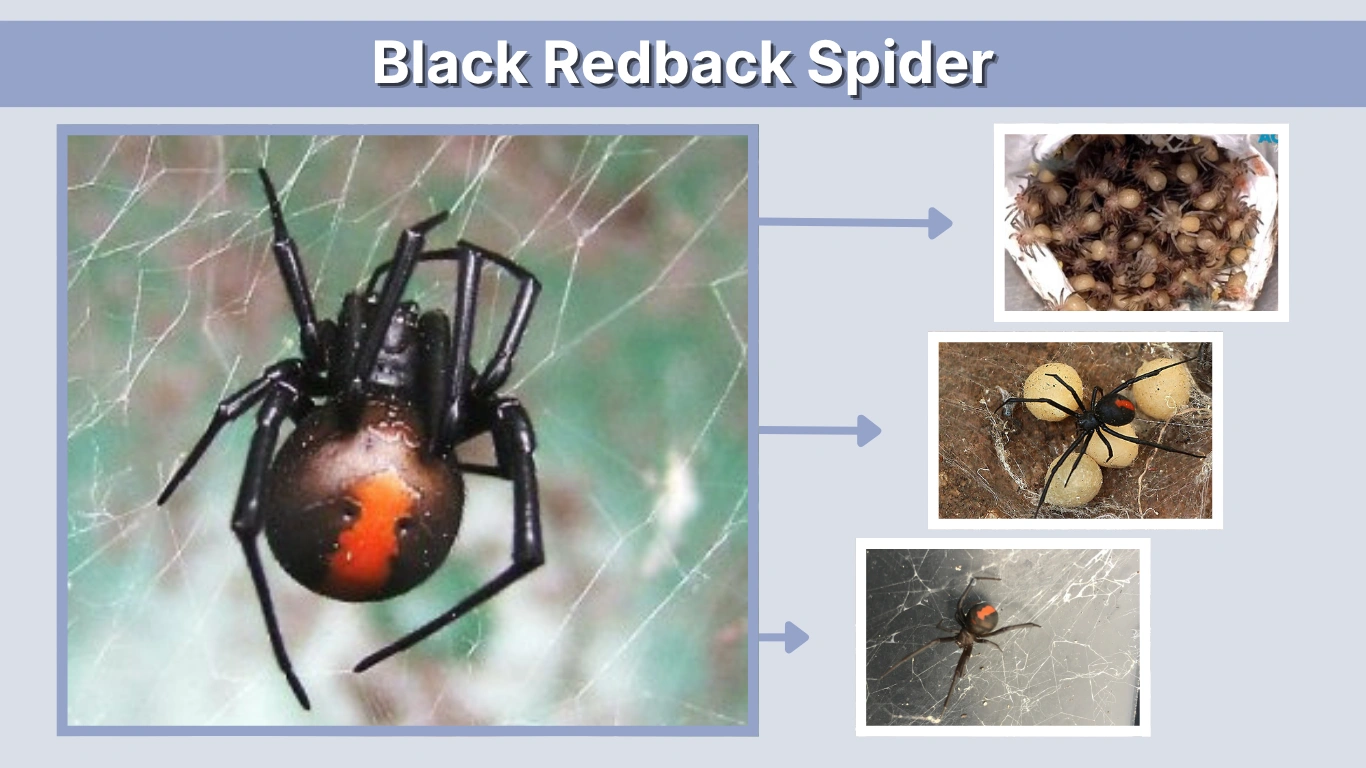
The black redback spider is among the most recognizable and feared arachnids in the world. Famous for its glossy black body and distinctive red stripe, it belongs to the same genus as the black widow. Originally native to Australia, this spider has now established populations in various regions worldwide, including parts of North America. Its striking appearance and potent venom make it one of nature’s most fascinating predators, drawing the attention of scientists and the public alike.
Size and General Appearance
The size of the black redback spider varies noticeably between males and females. Adult females are larger, measuring around 10–15 millimeters in body length, while males are typically just 3–5 millimeters. Despite the smaller body, both genders have long, slender legs that can double their overall reach.
Females have a rounded abdomen and a more prominent red stripe, which contrasts sharply with their deep black coloration. Males, on the other hand, appear lighter and more delicate, often displaying faded or broken markings. The spider’s elegant yet threatening appearance is one of its key identification points.
Color and Distinguishing Markings
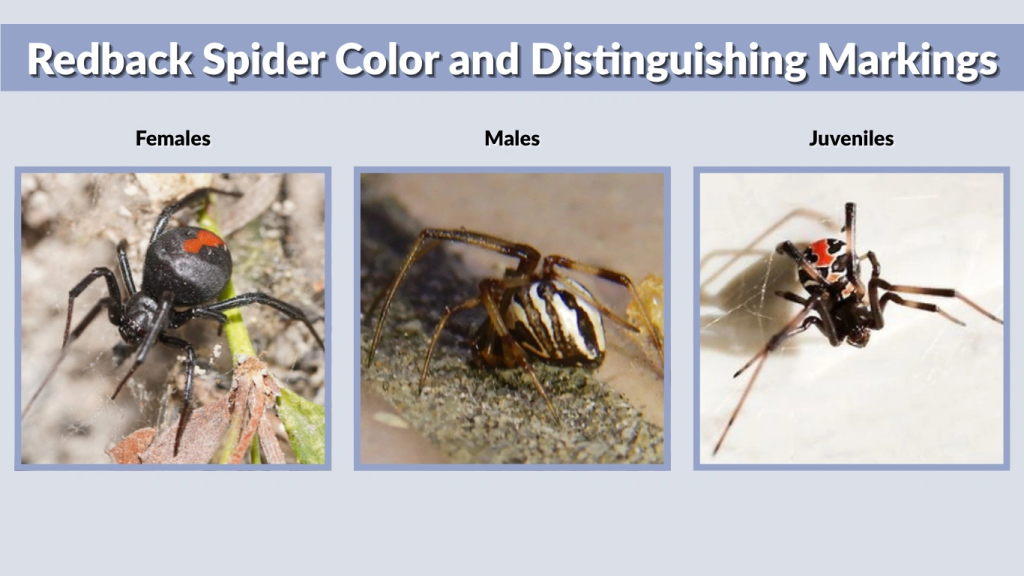
- Females have a glossy jet-black body with a bold red or orange stripe running along the top of the abdomen.
- Males are usually brownish-black with faint red or white lines.
- Juveniles may display white or yellowish spots before their final molt.
- The intensity of red coloration can differ depending on habitat and genetics.
This vivid red stripe acts as a natural warning signal to predators. It tells birds, lizards, and mammals that the spider is venomous and best avoided. When observed closely, the contrast of black and red also helps distinguish the black redback from other harmless house spiders.
Identification Guide
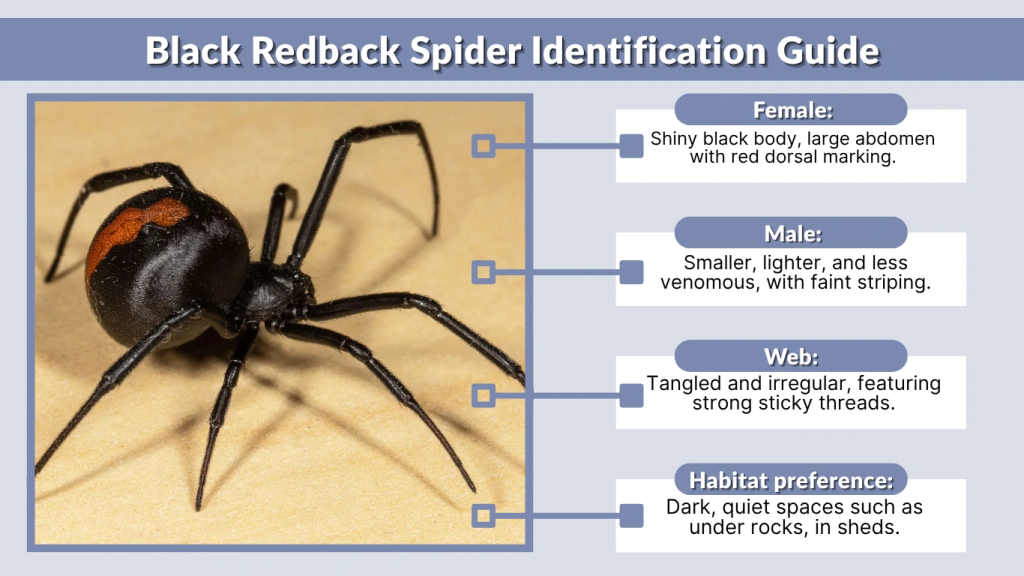
- Female: Shiny black body, large abdomen with red dorsal marking.
- Male: Smaller, lighter, and less venomous, with faint striping.
- Web: Tangled and irregular, featuring strong sticky threads.
- Habitat preference: Dark, quiet spaces such as under rocks, in sheds, or outdoor furniture.
The black redback spider can often be identified by its distinctive web structure and hidden location. Unlike orb-weavers that spin symmetrical webs, redbacks create messy, three-dimensional webs that are hard to see until light catches them. Their webs are designed for both hunting and protection, with sticky lines to trap prey efficiently.
Behavior and Activity Patterns
Daily Behavior
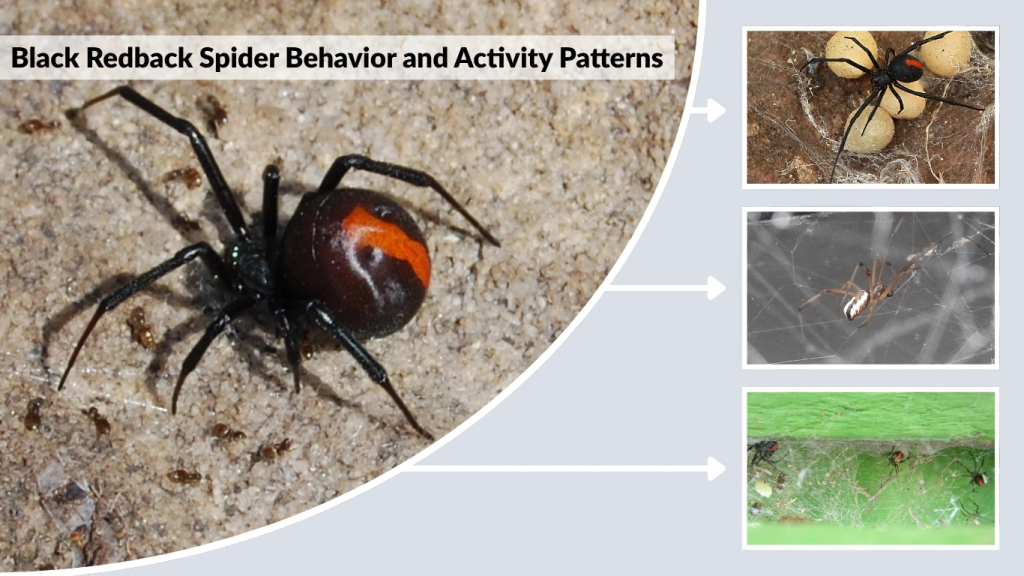
The black redback spider is mostly nocturnal, preferring to stay inactive during daylight hours. Females rarely leave their webs, waiting patiently for prey to become ensnared. Their webs are not only hunting tools but also serve as protective retreats where they hide from predators and harsh weather.
Males, in contrast, are more active wanderers, especially during mating season. They roam in search of females, sometimes risking being mistaken for prey. This behavior often results in the male’s death after mating, a well-known example of sexual cannibalism among spiders.
Defensive Traits
Redbacks are non-aggressive by nature. They typically remain still when disturbed, retreating into the shadows of their webs. However, if cornered or threatened, the female may bite in self-defense. The bite is medically significant, producing pain and neurological symptoms, but fatalities are rare with timely medical care.
The spider’s venom is a complex neurotoxin that affects the nervous system. It is primarily used to subdue prey rather than attack humans. Despite their fearsome reputation, most encounters end without incident if the spider is left undisturbed.
Habitat and Geographic Range
Native and Introduced Regions
The black redback spider originated in Australia, where it is widespread in both urban and rural areas. Over time, global shipping and trade have led to its spread into North America, Asia, and parts of Europe. These spiders adapt easily to human environments, thriving in warm, dry conditions similar to their native climate.
Preferred Environment
They favor sheltered areas with minimal disturbance. Common nesting spots include under rocks, in garden debris, around sheds, or beneath outdoor furniture. The presence of insects is another major factor influencing their habitat choice. Because they depend heavily on prey availability, black redbacks are often found near light sources that attract bugs.
Their adaptability to human surroundings has allowed them to expand their range successfully. In regions outside Australia, they maintain smaller, localized populations but continue to show resilience against varying climates.
Web Structure and Nesting Habits
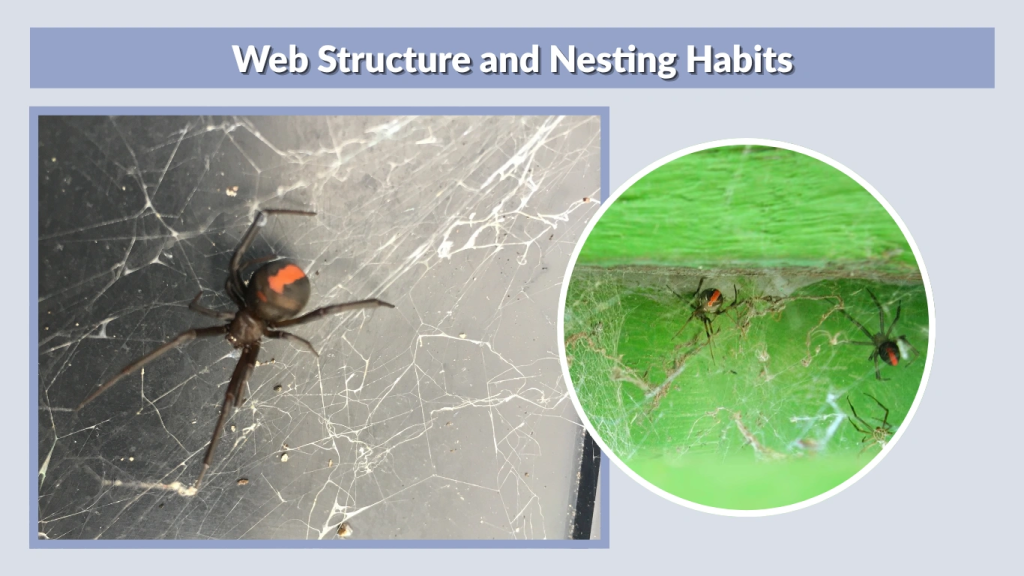
- Webs are irregular and messy, built close to the ground.
- The silk is extremely strong and sticky, capable of restraining insects much larger than the spider itself.
- Females remain hidden near the upper retreat of the web, rarely leaving unless disturbed.
- Prey caught in the web is bitten, injected with venom, and wrapped in silk before consumption.
The black redback’s web serves multiple purposes: hunting, reproduction, and protection. The design includes vertical trap lines that extend to the ground, allowing the spider to detect vibrations from passing insects. These vertical threads act like invisible tripwires, alerting the spider to prey movements instantly.
Reproduction and Egg Sacs
Mating Behavior
The mating behavior of the black redback spider is both fascinating and brutal. During mating, the smaller male approaches the female cautiously, often using specific vibrations on the web to signal his presence. Despite these signals, many males are eaten by the female after or even during mating — a process known as sexual cannibalism. This act, while deadly for the male, increases the chance of successful fertilization.
Egg Sac Details
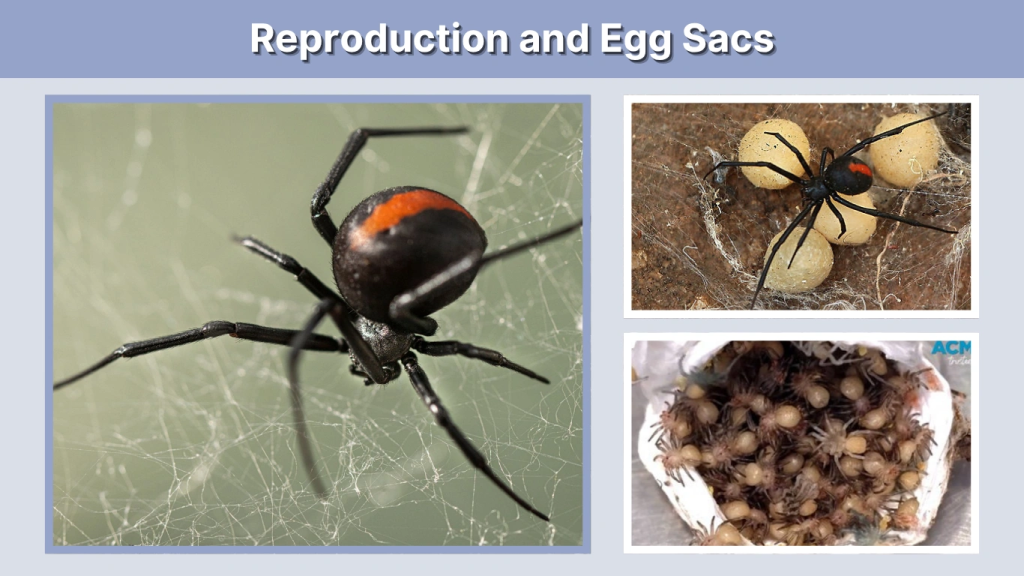
Female black redbacks can produce multiple egg sacs throughout their lifetime. Each sac is small, cream-colored, and carefully attached within the protective web structure. A single sac may contain up to 250 eggs, which hatch after about two to three weeks. The female guards her egg sacs vigilantly, spinning additional silk to reinforce them.
Once hatched, spiderlings remain in the web briefly before dispersing through ballooning — releasing thin strands of silk that allow them to be carried by the wind. This process helps them colonize new areas, contributing to their steady spread across continents.
Interaction with Humans
The black redback spider’s striking appearance often causes fear, but direct encounters are relatively rare. They prefer undisturbed environments, so most bites occur when people unknowingly disturb webs — usually while gardening, cleaning, or moving outdoor objects.
Symptoms of a bite may include localized pain, sweating, nausea, abdominal cramps, and muscle weakness. The effects can last several hours, but fatalities are exceptionally rare due to effective medical treatments. Antivenom is available and widely used in areas where redbacks are common.
For safety, it’s best to wear gloves when working outdoors and shake out shoes or clothing left outside. Keeping living areas clean and clutter-free also reduces the risk of contact. Education and awareness are the best defenses against unnecessary fear or bites.
Predators and Ecological Importance
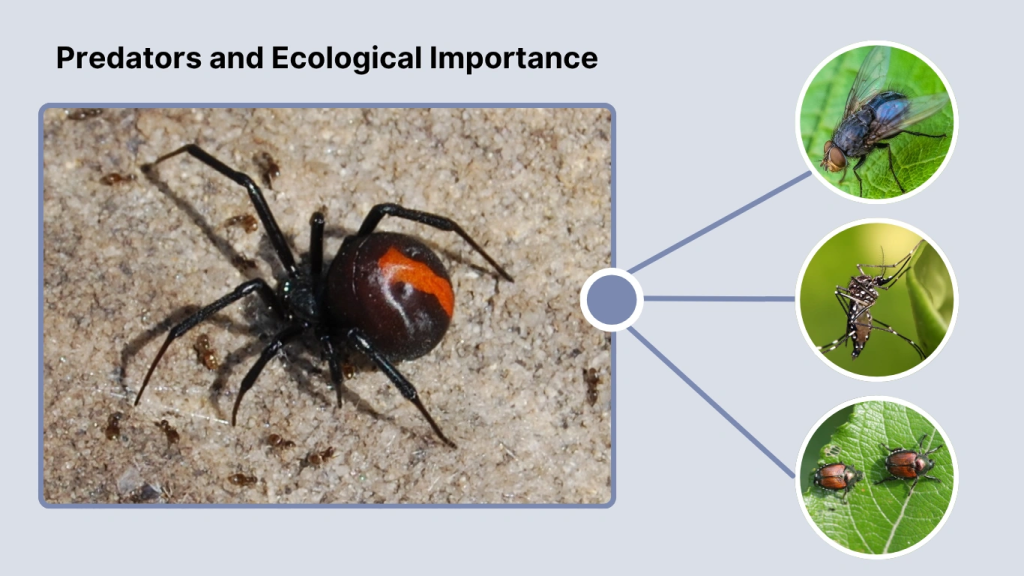
Despite their venomous reputation, black redback spiders play an important ecological role. They help control insect populations by preying on flies, mosquitoes, beetles, and small arthropods. Their diet keeps the environment balanced and reduces the number of pests that affect human life.
Predators of the black redback spider include birds, parasitic wasps, and small reptiles. One notable enemy is the mud-dauber wasp, which hunts spiders to paralyze and feed its larvae. These interactions maintain natural balance and prevent overpopulation.
From an ecological perspective, black redbacks are vital participants in food webs. They demonstrate how even feared species contribute to ecosystem health, acting as both predator and prey in their environment.
Prevention and Control
Managing black redback spiders requires consistent observation and cleanliness rather than chemical intervention. These spiders thrive in cluttered or neglected areas, so prevention starts with maintaining tidy surroundings.
Practical prevention methods include:
- Removing debris and wood piles near homes and sheds.
- Sealing cracks and gaps around doors, windows, and vents.
- Inspecting outdoor furniture regularly for webs.
- Using gloves when gardening or handling stored materials.
- Keeping exterior lights minimal, as bright lights attract insects — a food source for spiders.
If an infestation is suspected, professional pest control can treat affected areas safely. Experts use targeted insecticides and remove egg sacs to prevent re-emergence. However, since redbacks are slow breeders, ongoing maintenance is usually sufficient for control.
Myths and Misconceptions
- “Every black redback bite is deadly.” – False. Most bites are mild, and with modern medical care, recovery is almost guaranteed.
- “They chase humans.” – False. Redbacks are defensive, not aggressive. They only bite when trapped or provoked.
- “They only live in Australia.” – False. Black redbacks now exist in several parts of the world, including North America.
- “Killing them helps the ecosystem.” – False. They play a natural role in controlling pests, making their complete removal unnecessary.
Understanding these truths helps people coexist safely with these spiders without unnecessary fear or overreaction.
Global Spread and Adaptation
Black redback spiders have shown remarkable adaptability. Through trade, transport, and favorable conditions, they have successfully established themselves in temperate regions of Asia, the U.S., and parts of southern Europe. Their survival success lies in their ability to thrive near human environments where insects are plentiful.
In cooler climates, they seek shelter in basements or attics during winter. Their flexible nesting habits and resistance to moderate temperature changes contribute to their expanding presence across continents. Scientists continue to monitor their spread to better understand how invasive populations adapt to new ecosystems.
FAQs
How can I tell a black redback spider apart from a black widow?
While both are shiny black with red markings, the redback’s stripe runs along the top of the abdomen, while the black widow has a red hourglass on the underside. Behaviorally, redbacks are slightly less aggressive and prefer ground-level hiding spots.
What happens if a black redback bites me?
A bite can cause pain, sweating, and muscle cramps. Serious reactions are uncommon but require medical attention. Wash the bite site gently, apply ice, and seek care immediately. Antivenom is effective, and recovery is usually quick with treatment.
Where do black redback spiders usually live?
They prefer warm, dry places close to human activity, such as sheds, garages, mailboxes, and garden corners. They build messy, low-lying webs in quiet spaces that provide safety and access to insect prey.
Are black redback spiders aggressive toward humans?
No, they are shy and defensive. They usually remain still or retreat when disturbed. Bites occur only when they are accidentally trapped or provoked, such as during cleaning or moving stored items.
Can black redback spiders survive in cold climates?
They can endure mild winters by seeking shelter in insulated areas. However, extreme cold limits their spread, as their eggs and webs require warmth for survival. In colder regions, they rely on human-made structures for protection.