
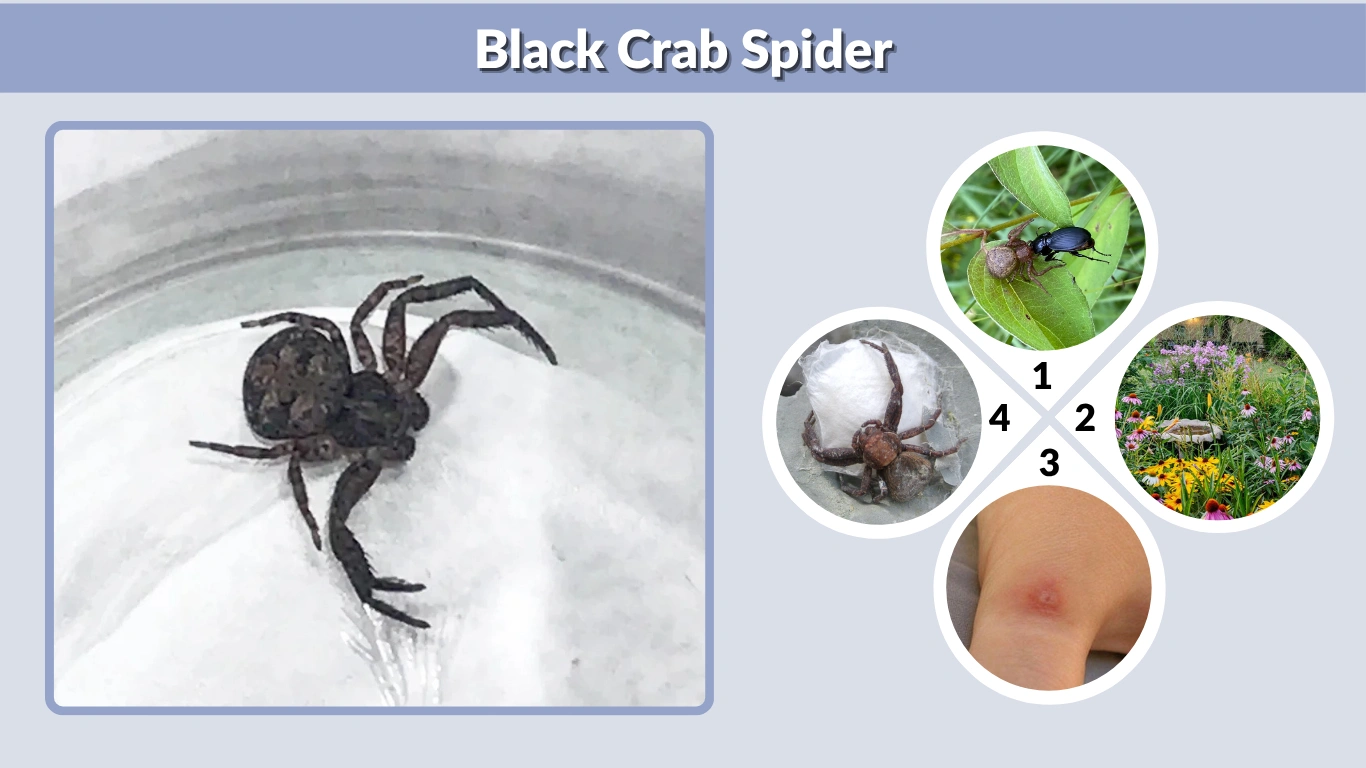
The black crab spider is a small, stealthy hunter known for its crab-like body and sideways movement. With powerful front legs and colors that range from jet black to black-and-white or yellow-striped, these spiders are skilled ambush predators. They’re commonly found in gardens, forests, and even homes, blending into their surroundings to surprise unsuspecting insects. Despite their intimidating look, black crab spiders are harmless to humans and fascinating members of the arachnid world.
Physical Characteristics

Shape and Size
Black crab spiders get their name from their unique shape. Their front two pairs of legs are long and curved, resembling crab claws. These legs allow them to move side-to-side instead of forward like most spiders. The body is compact and slightly flattened, measuring between 5 to 15 millimeters in length depending on the species. Females are typically larger than males.
Color Variations
One of the most striking features of black crab spiders is their wide range of color patterns.
Common variations include:
- Solid black or charcoal gray tones
- Black and white combinations, often with contrasting leg colors
- Yellow, orange, or red markings on the abdomen
- Furry or glossy body textures depending on habitat
These variations help them camouflage effectively on flowers, bark, or soil, depending on where they live.
Behavior and Movement

Crab-Like Motion
Like true crabs, black crab spiders can scuttle sideways. This sideways motion makes them agile and helps them evade predators while sneaking up on prey. They rarely weave webs; instead, they rely on stillness and timing.
Ambush Predation
Rather than capturing prey in webs, black crab spiders are sit-and-wait predators. They position themselves on plants, leaves, or ground surfaces and stay motionless until an unsuspecting insect lands nearby. Then, they strike rapidly, grabbing and injecting venom through their fangs to immobilize the prey instantly.
Habitat and Distribution
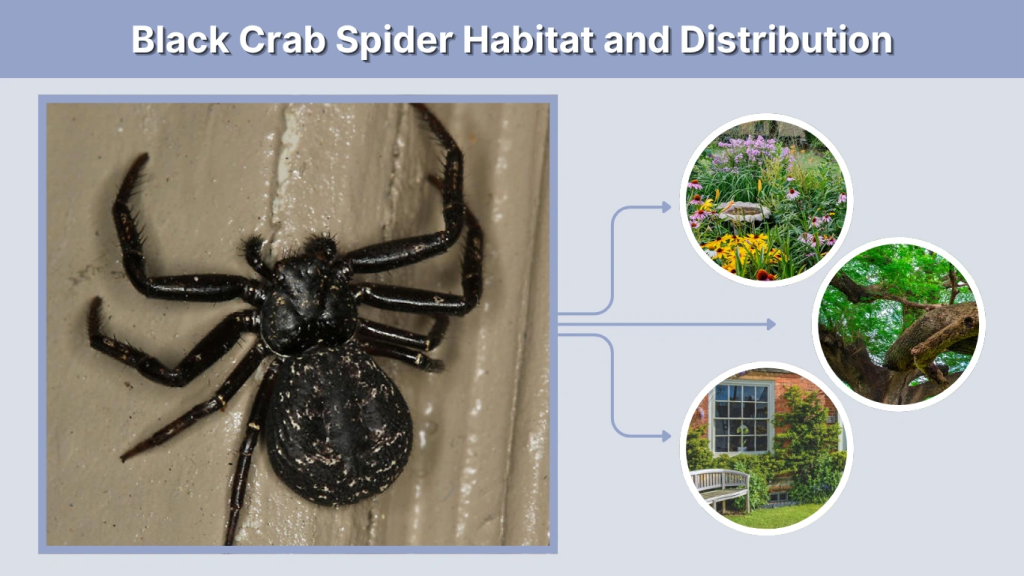
Preferred Environments
These spiders are extremely adaptable. They can thrive in a variety of environments, including:
- Gardens and meadows where flowers attract prey
- Forests and bark surfaces, where they blend into tree trunks
- Residential areas, especially windowsills, walls, or garden edges
Their adaptability makes them common across urban and rural landscapes alike.
Geographic Range
Black crab spiders are found throughout North America, particularly in Florida, Texas, Colorado, and Washington State. They also appear in parts of Canada, the UK, and Australia. Some regional species, like Synema parvulum, are native to specific areas such as Victoria Island or Oregon.
Diet and Hunting Style
Black crab spiders primarily feed on insects such as flies, bees, beetles, and moths. They rely on patience, camouflage, and lightning-fast strikes. Once the prey is subdued, they inject venom that liquefies the internal tissues, allowing the spider to feed efficiently. This hunting method keeps them well-fed without needing to spin webs or chase after prey.
Their diet also benefits the ecosystem — by feeding on insects, they naturally help control pest populations in gardens and crops. This makes them silent allies to gardeners and farmers.
Venom and Bite Information

Are They Dangerous to Humans?
Despite their sinister appearance, black crab spiders are not dangerous to people. Their venom is designed to paralyze insects, not mammals. In rare cases of a bite — usually from accidental contact — symptoms are mild and temporary.
Common Bite Symptoms
- Slight redness or swelling
- Itchiness or mild irritation
- Quick healing without medical attention
A black crab spider bite is far less harmful than that of many common house spiders, and they almost never act aggressively unless provoked or trapped.
Species and Scientific Details
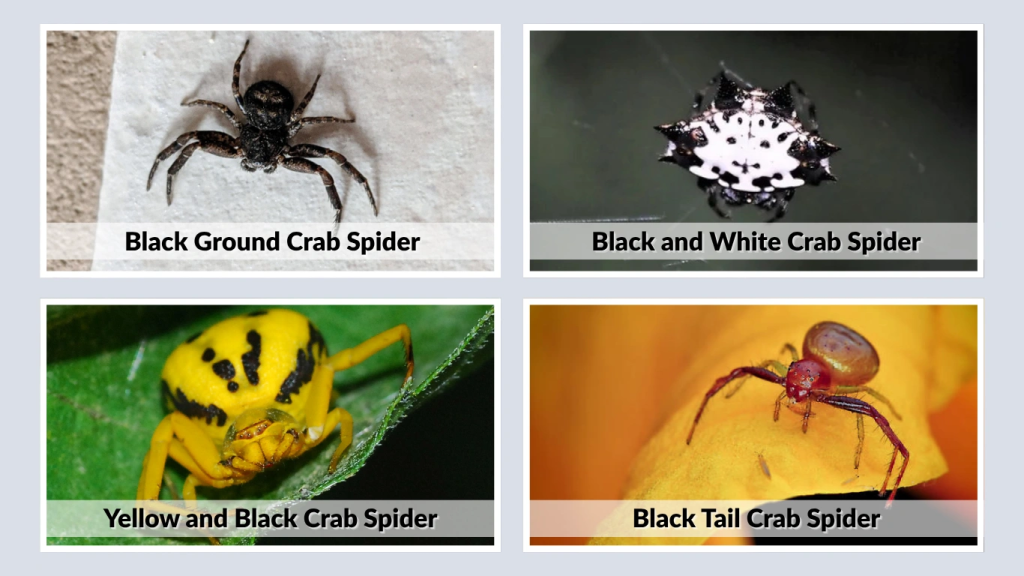
Black crab spiders belong mainly to the family Thomisidae, which includes hundreds of crab-like species. Below are a few of the most notable ones found in North America and beyond:
| Variant | Common Name | Scientific Name | Color Pattern | Region |
| Black Ground Crab Spider | Ground Crab Spider | Synema parvulum | Solid black with gray legs | North America |
| Black and White Crab Spider | Flower Crab Spider | Misumenoides formosipes | White abdomen with black markings | Texas, California |
| Yellow and Black Crab Spider | Goldenrod Crab Spider | Thomisus onustus | Yellow with dark stripes | Europe, Asia, U.S. |
| Black Tail Crab Spider | Bark Crab Spider | Xysticus species | Brown to black body | North America |
| Black and Red Crab Spider | Red-Backed Crab Spider | Philodromus species | Black with red abdomen | Southern U.S. |
Each species varies slightly in size, pattern, and habitat, but all share the same sideways movement and ambush-hunting behavior that defines crab spiders.
Interesting Facts About Black Crab Spiders
- Masters of disguise: They change position and posture to blend in with bark, rocks, or flowers.
- Female dominance: Females are not only larger but more colorful and active hunters.
- No webs needed: Their stealth replaces the need for sticky traps.
- Excellent eyesight: With eight sharp eyes, they detect motion with precision.
- Environmental allies: They help maintain insect balance naturally.
Black crab spiders play a subtle but important ecological role. Their presence in gardens and fields ensures pest populations remain under control without chemical intervention.
Behavioral Adaptations
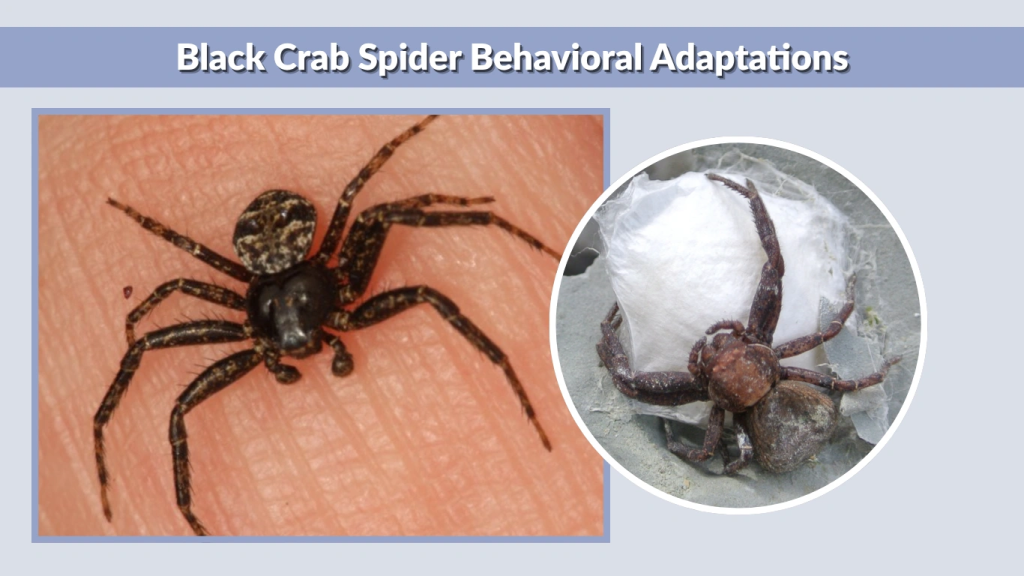
Camouflage and Mimicry
Some black crab spiders can slightly change their coloration to match their surroundings — a trait similar to camouflage species like chameleons. This adaptation helps them hide from predators and surprise prey more effectively.
Mating and Reproduction
Mating occurs during warmer months. Males approach cautiously due to the female’s predatory nature. After mating, females lay eggs in silken sacs and guard them until the spiderlings hatch, ensuring their survival during early development.
Ecological Importance
These spiders are valuable predators in ecosystems. By keeping insect numbers in check, they reduce the spread of plant diseases and crop damage. Their hunting patterns make them indicators of healthy biodiversity and stable insect populations in their habitats.
FAQs
Are black crab spiders poisonous?
Black crab spiders are not poisonous to humans. Their venom is designed only to paralyze small insects. If bitten accidentally, you may feel mild pain or redness, but it typically fades within hours without needing medical care.
Where do black crab spiders live?
They inhabit gardens, meadows, tree bark, and even human homes. They are often spotted in warm, sunny areas with plenty of insects. Common regions include Florida, Texas, Colorado, and the Pacific Northwest.
What makes black crab spiders different from other spiders?
Unlike typical web-builders, black crab spiders are ambush predators. They don’t spin webs to trap food but instead rely on camouflage and quick reflexes to capture prey directly. Their crab-like stance and movement set them apart visually and behaviorally.
Can a black crab spider bite hurt?
A bite from a black crab spider might cause mild stinging or itching. Most bites occur accidentally when the spider is disturbed. The symptoms are minor and subside quickly, making these spiders harmless to humans.
Do black crab spiders have natural predators?
Yes. Birds, lizards, wasps, and larger spiders often prey on them. Their main defense is camouflage — blending into surroundings like dark tree bark or shadows helps them avoid becoming prey themselves.