
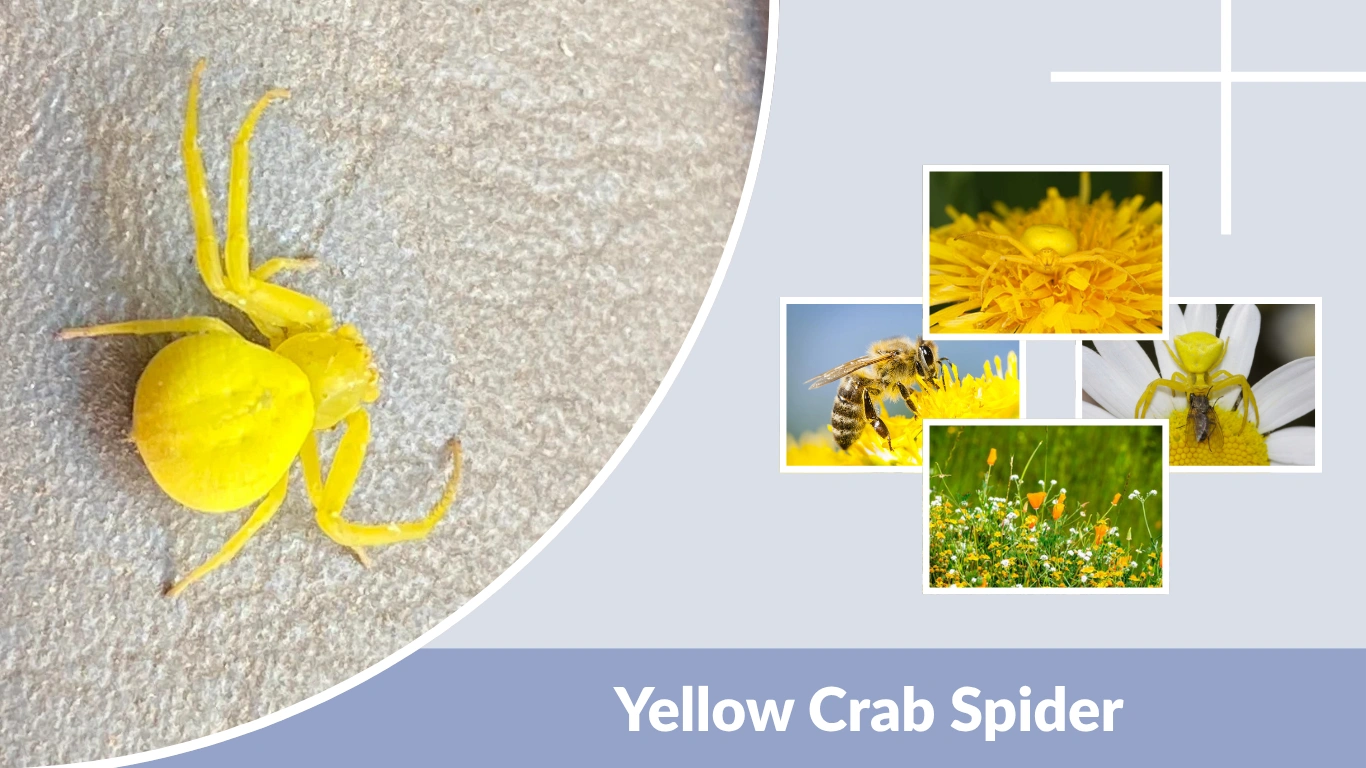
The yellow crab spider is a striking arachnid known for its bright golden hue and crab-like stance. Often seen resting on flowers like daisies or goldenrods, it uses its vivid color for camouflage and ambush. Despite its intimidating look, the yellow crab spider is non-poisonous to humans. Found in gardens across North America, Europe, and Australia, it plays a vital role in controlling insect populations and maintaining ecological balance.
Physical Characteristics
Shape and Size
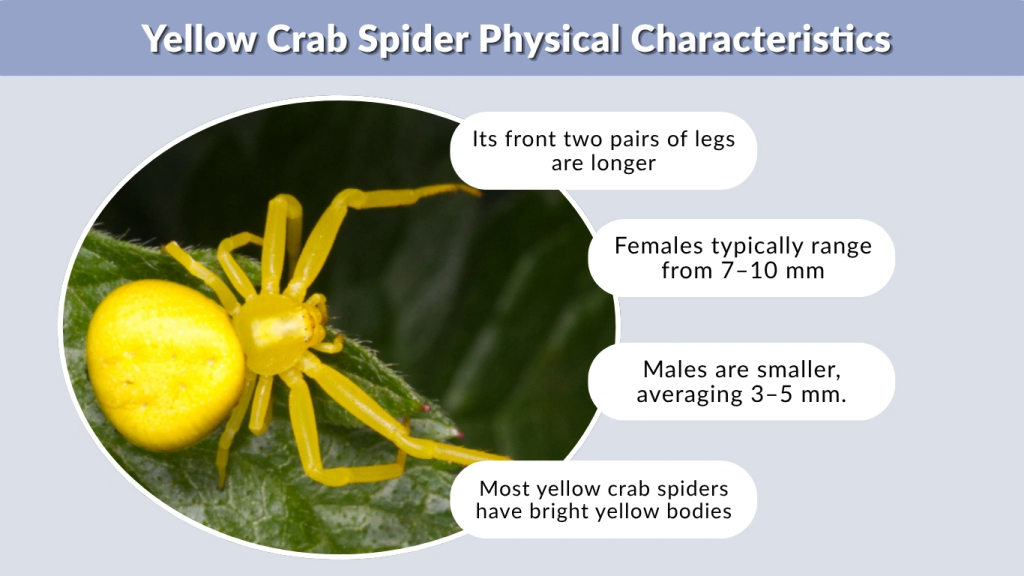
The yellow crab spider’s name comes from its crab-like appearance and movement. Its front two pairs of legs are longer and curved outward, resembling crab claws. These legs allow it to move sideways, an uncommon trait among spiders. Females typically range from 7–10 mm, while males are smaller, averaging 3–5 mm.
Color and Camouflage
Most yellow crab spiders have bright yellow bodies, though some can appear white, greenish-yellow, or golden. Their color serves as camouflage against flowers and leaves.
Common variations include:
- Neon yellow or bright golden tones
- Yellow and black banding
- Yellow and red marks on the abdomen
- Pale white-yellow blends found on lighter blooms
Some species, like Misumena vatia, can even change color from white to yellow over several days depending on the flower they rest on.
Behavior and Movement
Crab-Like Motion
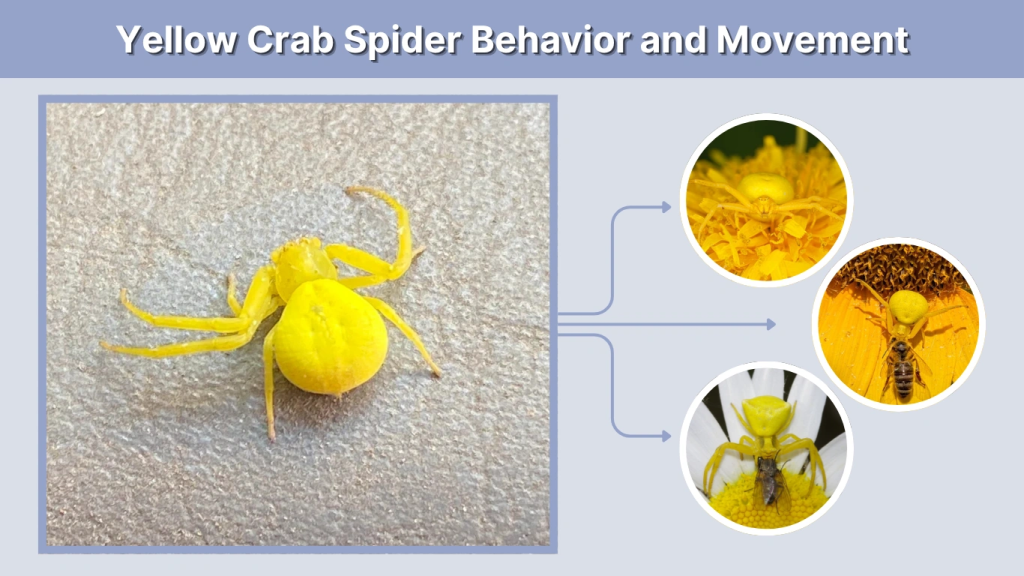
Just like real crabs, these spiders can move sideways or backward using their strong front legs. This helps them reposition silently while stalking or escaping predators.
Hunting Strategy
Yellow crab spiders are ambush predators rather than web builders. They remain motionless on flowers, waiting patiently for pollinators like bees, flies, or butterflies to land nearby. When prey gets close enough, they strike rapidly, grabbing it with their front legs and injecting venom to paralyze it instantly.
Their hunting relies on stillness, camouflage, and timing — making them one of the most efficient hunters among non-web-spinning spiders.
Habitat and Distribution
Preferred Environments
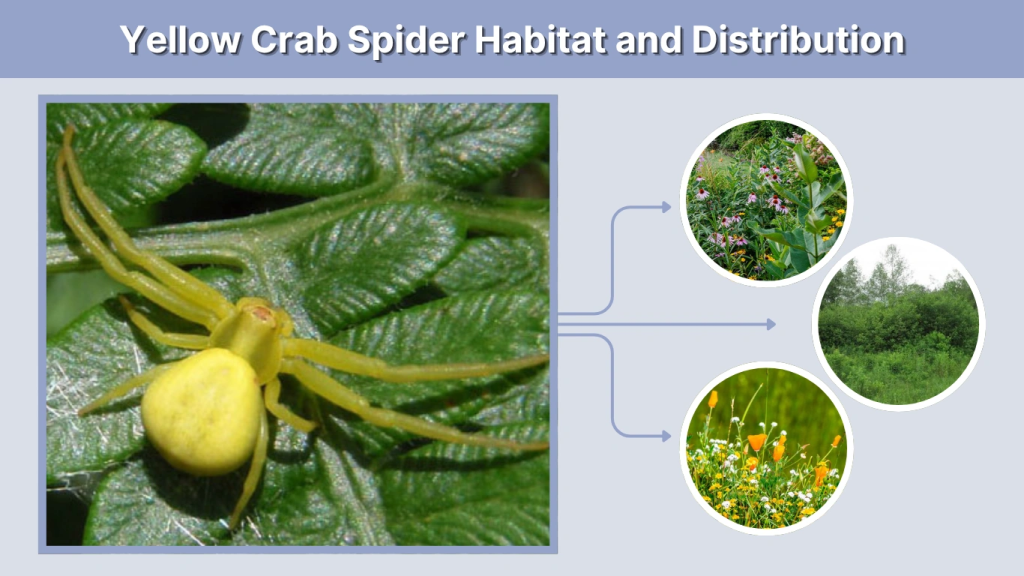
These spiders thrive in sunny, flower-rich areas such as:
- Gardens and meadows
- Forest edges and shrublands
- Grasslands and wildflower fields
They often rest on yellow or white petals that match their body color, giving them near-perfect invisibility.
Global Range
Yellow crab spiders are widespread and adapt well to various climates. They are found in:
- United States: Texas, Arizona, California, and Colorado
- Canada: Ontario, Alberta, British Columbia
- Europe: Particularly common in the UK and France
- Australia and South Africa: Among native wildflowers and dry grasslands
Their adaptability allows them to thrive in both urban gardens and wild ecosystems.
Diet and Predation
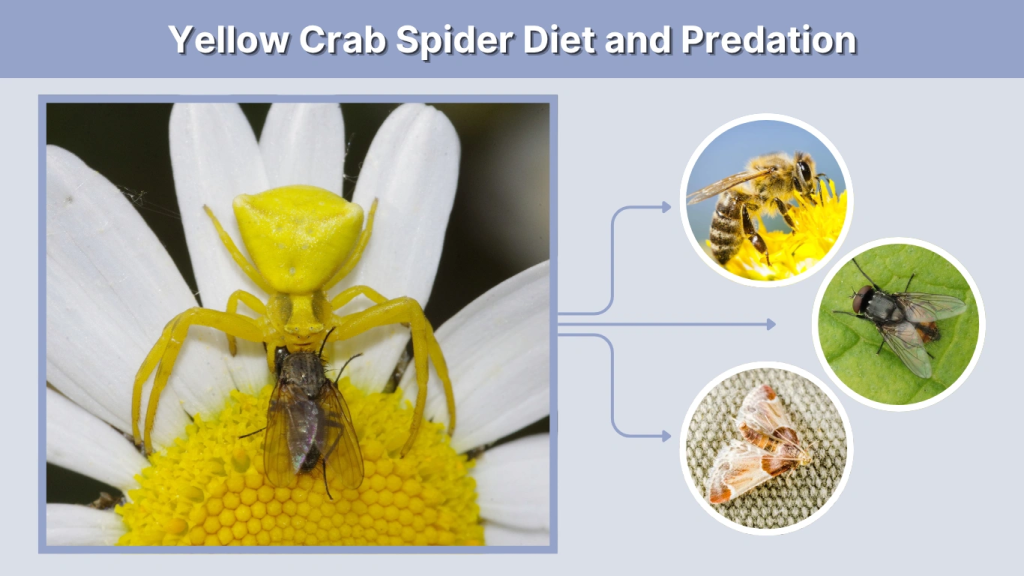
Yellow crab spiders primarily feed on pollinating insects such as bees, flies, moths, and butterflies. They rely on speed and surprise, not webs, to catch prey. Their venom liquefies the insect’s insides, which they then consume through a small opening in the mouthparts.
By hunting pest insects, they serve as natural pest controllers in gardens and farms. Their presence indicates a healthy ecosystem with abundant pollinators and floral diversity.
Venom and Bite Information
Are They Dangerous to Humans?
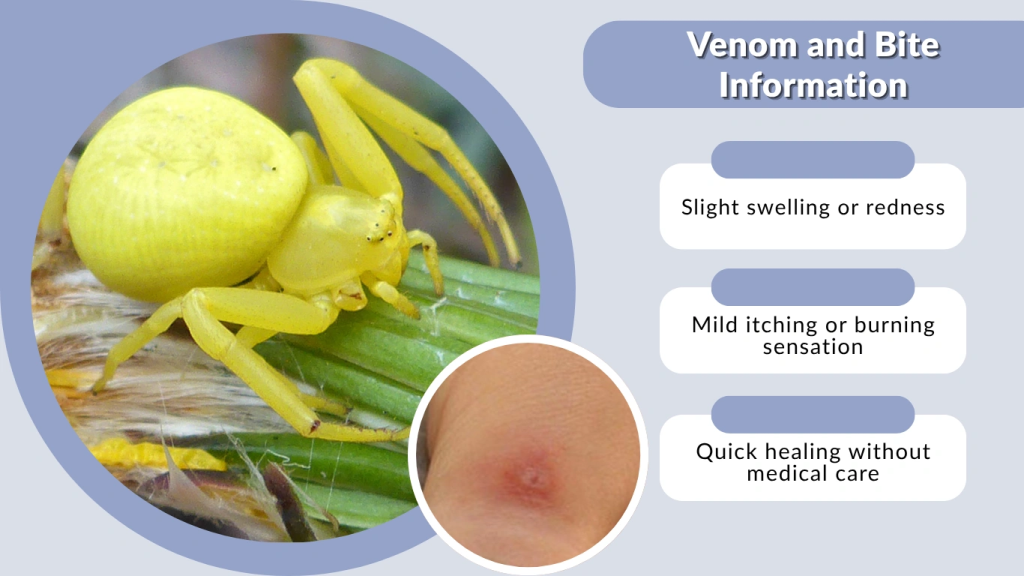
Despite myths about their color signaling danger, yellow crab spiders are not poisonous to humans. Their venom is potent only against small insects. They are shy creatures that avoid confrontation, and bites occur only when handled or trapped accidentally.
Bite Symptoms
If a yellow crab spider does bite — which is extremely rare — the symptoms are mild and temporary:
- Slight swelling or redness
- Mild itching or burning sensation
- Quick healing without medical care
Most people never even realize they’ve encountered one since these spiders prefer stillness and solitude over aggression.
Species and Scientific Classification
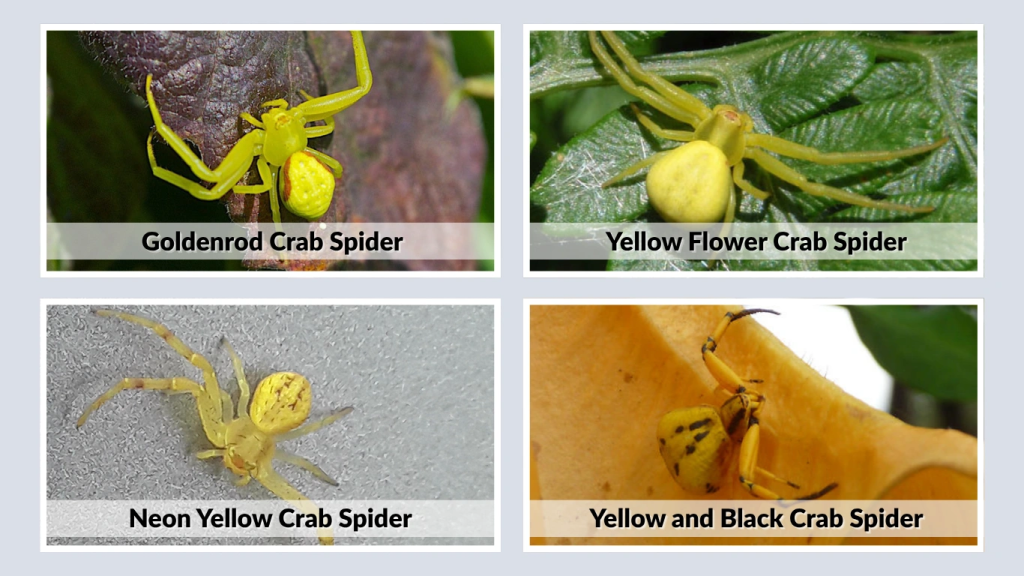
Yellow crab spiders belong primarily to the family Thomisidae, known for their crab-like stance and hunting behavior. Below are some of the most recognized species and their regional distinctions:
| Common Name | Scientific Name | Color Pattern | Region |
| Goldenrod Crab Spider | Misumena vatia | Yellow or white with smooth body | North America, Europe |
| Yellow Flower Crab Spider | Thomisus onustus | Bright yellow or white with pink tinges | Europe, Africa |
| Neon Yellow Crab Spider | Diaea dorsata | Greenish-yellow with semi-transparent legs | UK, Canada |
| Yellow and Black Crab Spider | Runcinia grammica | Yellow body with dark markings | Asia, Australia |
| Yellow Banded Crab Spider | Xysticus species | Yellow with brown or black bands | Global |
Each of these spiders has adapted to its environment, using its unique coloration to hide among the petals and stems of local flowers. Females are typically more colorful and larger than males, reflecting their dominant hunting role.
Behavioral and Biological Adaptations
Camouflage Mastery
One of the most fascinating traits of the yellow crab spider, especially Misumena vatia, is its ability to change color. Depending on the flower, it can shift from white to yellow in a few days, using pigments in its outer skin layers. This helps it remain invisible to both prey and predators.
Mating and Reproduction
During spring and summer, males actively search for females by following pheromone trails. After mating, females lay egg sacs hidden under petals or leaves. The mother guards them until the spiderlings hatch, offering protection from ants and other small predators.
Ecological Importance
Yellow crab spiders play an essential role in the environment as natural pest regulators. By preying on insects like flies, mosquitoes, and aphids, they maintain healthy garden and field ecosystems. Their presence on flowers does not harm pollination; instead, it creates a balance between predator and pollinator populations.
Additionally, their existence indicates healthy floral biodiversity, as they thrive only in areas with abundant flowers and insects.
Interesting Facts
- Some yellow crab spiders can remain still for hours or even days, perfectly blending with their surroundings.
- Their sideways motion helps them sneak onto prey without detection.
- Despite their bright color, they’re completely harmless to humans.
- They use their venom efficiently, paralyzing prey within seconds.
- The yellow crab spider is sometimes called the “flower ambush spider” for its hunting technique.
FAQs
Are yellow crab spiders poisonous?
No, yellow crab spiders are not poisonous to humans. Their venom only affects small insects. While their bright yellow color may look dangerous, it’s a form of camouflage rather than a warning signal.
Where are yellow crab spiders commonly found?
They are found worldwide, particularly in the United States, UK, Australia, and South Africa. You’ll often spot them sitting still on yellow or white flowers like daisies, sunflowers, and goldenrods, waiting for prey to land.
Can a yellow crab spider bite humans?
Bites are extremely rare and harmless. At most, you might experience mild redness or slight itching that disappears within a few hours. These spiders are not aggressive and prefer to avoid human contact.
What do yellow crab spiders eat?
They mainly eat insects such as flies, bees, butterflies, and beetles. They do not spin webs but instead rely on camouflage and ambush tactics, striking when prey comes close enough.
Can yellow crab spiders change color?
Yes, especially the Goldenrod Crab Spider (Misumena vatia). It can shift between white and yellow to match the color of the flower it’s on. This transformation can take several days and helps it stay hidden from both prey and predators.